
Yazd, two days in the city of Zoroastrianism
Home of Zoroastrianism, the ancient religion of Persia until the Muslim conquest in the 7th century, the city of Yazd is a maze of mud-brick streets that surprises you at every corner.
From the impressive Jameh Mosque, a unique sample of Islamic art with the tallest minaret in the country, to the Towers of Silence, where Zoroastrians left the dead bodies of their loved ones under the open sky to purify them in the afterlife, Yazd is certainly a place like no other in Iran!
Follow my visit in this city of the desert while I discover what the Zoroastrian religion is all about!
How to visit Yazd
I reached Yazd by a private transfer from Isfahan organised by Iran’s travel, which included a stop at all the highlights between Isfahan and Yazd, including Nain Mosque, Narin Castle, Chack Chack and Kharanaq. Check out my post from Isfahan to Yazd: discovering Naim Mosque, Meybod, Chak Chak & Kharanaq!
Jameh Mosque
Yazd is a considerably small city, so you can explore all the main sites by foot. The only exception may be the Towers of Silence, which can be easily reached by Snap, the local taxi app. Since there isn’t much information online about this city, I decided to book a guided tour to make sure that I didn’t miss anything!
Once again during my trip, I used the services of TAP Persia and my experience couldn’t have been any better. Their 3h Yazd free walking tour was a fantastic opportunity to explore Yazd at a leisurely pace with the knowledge of a local guide. I was lucky to be the only person who joined that day, so I ended up having a private tour!
TAP Persia is a tour operator whose purpose is to bring foreign guests in Iran and make them feel at home. They offer all type of services that include guided tours and hotel, bus and flight reservations. They accept payments outside of Iran through PayPal, so they’re also great option to organise your trip! In addition to the free walking tour in Yazd, I used them for all my bus tickets as well as my flight from Shiraz back to Tehran and they were very reliable.
History of Yazd
The first mention of Yazd dates back to 3000 BC, when the city was known as Ysatis. Due to its isolated location in the desert, Yazd avoided for centuries the invasion of other nations, keeping its millenary traditions and ancient architecture.
Yazd
During the early 13th century AD, Yazd became home to many artists and intellectuals that were fleeing the war in the rest of Persia, escaping from the destruction by Genghis Khan and Tamerlane.
The city flourished during the 14th and 15th century thanks to its location along the Silk Road, when it became a centre of commerce. The production of silk, carpets and textiles made the city famous across the world. The city is mentioned in Marco Polo’s writing, who titled it “the noble city of Yazd”.
When the Safavids were defeated in 1514, the city started to decline, becoming a small provincial town almost until our days.
Yazd is known for being the main centre of Zoroastrianism in Iran, the main religion of Persia until the Muslim conquest in the 7th century. Although the Zoroastrian population has been in constant decline, they still make up 5 to 10% of the population in Yazd, and the city holds some of the most important Zoroastrian heritage sites, including the Towers of Silence of the Fire Temple.
Day 1
My walking tour started quite early at 8:30 am, as my guide recommended an early start to avoid the heat later in the day. The guide picked me up directly at my hotel. He was local to Yazd and I was lucky enough to be the only person who booked the tour that day.
Our first stop of the day was the Amir Chakhmaq Complex, located literally outside the door. Dating back to the 9th century, it is one of the most significant historical sites of Yazd.
In the Timurid era, Amir Jalal Al-Din Chaghmagh-e Shami was appointed as a ruler of Yazd by the command of Shahkrokh Timurid. In collaboration with his wife, Setti Fatemeh built the New Jameh Mosque in the Dehuk Sofla district and commenced constructing a spacious square ahead of it, building numerous buildings around it during their lifetime.
This valuable complex now includes a square, mosque, the Setti Fatemeh Mausoleum or a water reservoir. Several buildings such as the bathhouse, the caravanserai, the monastery, the cold water wells and confectionery have been destroyed over time and there is no trace of them.
Amir Chakhmaq Complex
Most of the visit would take place in what is considered the old town of Yazd, located about 10 minutes walking from my hotel.
Our first stop was Hazireh Mosque. Hidden in a courtyard at the end of the famous Imam Street, this beautiful mosque has a decoration very similar to that of Sheikh Lotfollah Mosque in Isfahan. However, contrary to most other buildings in Iran, in the inside, the ceiling is actually flat.
Right across the street, you will reach to the unmissable Jameh Mosque of Yazd. Completed in the 14th century, it is the perfect reflection of Persian architecture. The two 52 meter tall minarets on the entrance iwan, dating to the Safavid times, are the tallest in all of Iran.
As you access the main iwan, you’ll reach the courtyard of the mosque. The vast courtyard of the mosque is rectangular, with a rectangular platform called Mahtabi in the middle of it where daily prayers used to be held.
Hazireh Mosque
Dome of the mosque
Jameh Mosque
Jameh Mosque is divided into two sections, a summer and winter mosque. The open area, and most impressive, corresponds to the summer mosque, where the dome is located. The beautiful dome of the mosque was built in the Azeri style in the 14th century AD. This space was built in the south-west of the mosque and back to the main iwan. The main mihrab (altar) of the mosque is also located in this area.
The dome, with an emphasis on the important role of the Mihrab, identifies the position of the Qibla. The interior ceiling of the dome is decorated with geometric star-shaped design with a carousel-shaped design surrounded by zigzag patterns in the centre.
The interior dome decoration, with its solar and stellar themes, expresses the close relationship between the vault and the sky. The holy names of God, Allah, and the names of Muhammad and Ali are skilfully written in the tiles in upper walls under the dome.
Summer Mosque
mihrab
Tilework
Dome
Geometrical shapes writing the Name of God and Mohammed
Minaret
Just around the corner from Jameh Mosque, don’t forget to visit the impressive Seyyed Rokn Al-Din Mausoleum.
Seyyed Rokn Al-Din was a mystic and scientist, founder of the Rokni-ye school. According to historians, the magnificent building basted an observatory, a library with over 3000 books, a pharmacy and ceremonial centre for the descends ants of the prophet Mohammad.
The only remains of the school is the mausoleum, which houses the tomb of Seed Rokn al-Din. The square dome, with dimensions of 11.5 metre features ver exquisite plasterwork, gorgeous watercolour paintings and antique inscriptions bearing Quranic verses in Kufic and Sols scripts.
Seyyed Rokn Al-Din Mausoleum
Although not as impressive as those in Kashan, Yazd also has some traditional houses that are worth a visit. Some of them also offer some incredible views from the roof, which is a plus!
My guide brought me to one of them, the Kohan Hotel. This hotel not only has a beautiful courtyard with a pool where most guests where still having breakfast at that time, but it also has one of the highest roofs in the city. The panoramic of Yazd is just fantastic, and you can even access the wind tower of the building!
Windtowers, or windcatchers, are one of the most distinctive sights of Yazd's skyline. These towers provide natural ventilation inside the buildings, something very needed in Yazd's arid climate. The tower has an opening at the very top with the idea that it 'catches' the wind, bringing it down the tower to maintain the airflow inside the building, cooling it down.
Kohan Hotel
Windtower
View of yazd from the roof of Kohan Hotel
We ventured deeper into the old town, enjoying the quiet, deserted streets with its mud-brick construction. After several days travelling around Iran right after Nowruz, the Persian New Year, which is one of the busiest periods of the year, it was a nice change to be able to explore the city without being overwhelmed by tourists.
Our next stop was Lariha House, another example of historical houses in Yazd. Although I had already visited very similar houses in Kashan, I still decided to give it a chance and pay the 150,000 rial entrance fee (approx. €3).
Lariha House
Windcatcher
View of the Mausoleum of 12 imams fro lariha house
The construction date of Lariha House dates back to 1869 AD by the Qajar dynasty. The owner of this building was a merchant named Lari in Yazd. The mansion had been for the Lari family for many years and until the end of this first Pahlavi era, it was considered as one of the houses of the lords and nobles of its era. Unlike the usual houses in Yazd, the wind tower of the Lariha House is not located on the main courtyard, but in the corner of the iwan.
The building of the Lariha House is based on the general style of houses of lords of that time. It has two inner and outer sections with the courtyard in the centre and four-seasoned spaces around it. The northern part of the building, which is located at the entrance, was used in winter, and the southern part, which includes the halls and a wind tower on top, was used in summer. The eastern side, which includes the mirror room, the kitchen and other spaces, was used in autumn and the western side in spring.
Main Courtyard
Interior
Lariha House
We next headed to the Ziai-ye School, best known as Alexander’s Prison. Constructed over 800 years ago in a district of Yazd called Fahadan, the main reason for which this building was known as Alexander’s prison was due to a reference to this place in a Hafez poem. However, it has never been proved that this was actually a prison used by Alexander the Great.
The real origins of this building remain unknown, but currently, it houses the Ethnographic Museum of Yazd. I wasn’t particularly interested in the exhibition so decided not to pay the 150,000 rial entrance fee (approx. €3).
Right in front of Alexander’s Prison, you will find the Mausoleum of 12 Imams. This is the oldest dated historical monument of Yazd, with over 1000 years of history. The building was constructed as a mausoleum for Abu Jafar Alaodowleh. The name of the building was because of a marble stone belonging to the tomb of Sheikh Ahmad Fahadan engraved with the praise to 12 Shiite Imams, which was someday located in the mihrab.
Alexander’s Prison
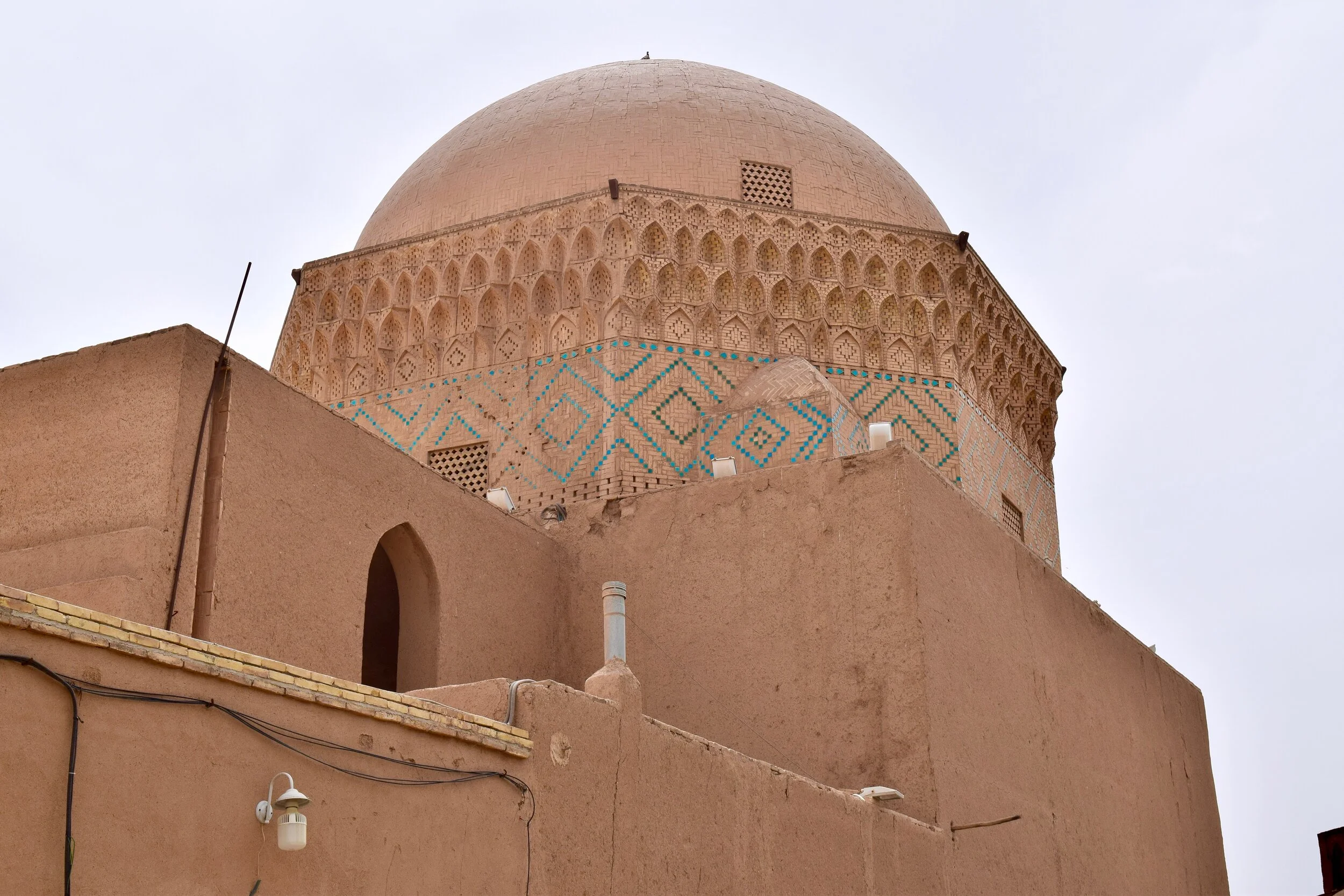
Mausoleum of 12 imams
interior of the mausoleum
From the mausoleum, you can easily reach by foot the city walls of Yazd, or what remains of them. Yazd is already mentioned as a walled city in the writings of Marco Polo after he visited the city.
The walls of Yazd were used for centuries as shelter by the Persian dynasties. They consist of circular barbican towers with double layer walls, however, their design to defend against medieval artefacts such as archers or catapults, they couldn’t handle the firearms of the 19th and 20th centuries, bringing them to a very poor conservation state.
City walls of Yazd
In addition to the main highlights, my guide also wanted to show me some of the hidden spots of Yazd, so we headed to the Yazd Coppersmiths Bazaar. It was still early in the morning, so it was much quiet than the bazaars in Kashan or Isfahan.
The bazaar is especially famous for the copper works, with huge collections of hand-made pots, cutlery and any kitchen utensil that you can imagine. My guide told me how it is very common to bring old cooking pots to the bazaar to restore them and bring them back home as new.
Walking int he bazaar with a local was a very eye-opening experience on how daily life and trade work in Iran. Hidden in the middle of the bazaar, my guide also brought me to a beautiful courtyard where local artists of Yazd were displaying their incredible paintings, most of them in a frame made of copper. I would’ve never found this place on my own!
Roof of the bazaar
Coppersmiths Bazaar
Cooking pots
Courtyard in the Coppersmiths Bazaar
After almost 3 hours with my guide, it was time to conclude the guided visit. My tour was free of charge, but I was happy to leave a generous tip, especially considering that I had a private tour. My guide was incredibly thankful and he even was kind enough to drive me to my last destination of the day, Dolat Abad Garden.
Dolat Abad Garden is a significant sample of Persian gardens in the heart of the desert. Regarding its landscaping, the method of water distribution and richness of architectural design, it is considered as one of the most attractive complexes in Iran. My guide dropped me off at the entrance and I paid the 200,000 tourist fee (approx. €4).
Dolat Abad Garden was constructed in 1750 by Mohammad Tahi Khan-e Bafghi, also known as the Great Khan who was the head of Yazd khans during Zandieh rule. He extended Dolat Abad Qanat from Mehriz as far as Yazd afterwards he constructed Dolat Abad Garden.
Entrance
Windcatcher
Dolat Abad Garden
With its eight hectares area, the complex is composed of several spaces and buildings such as the windcatcher, the all of mirrors, the main entrance on its western side and the entrance on its southern side.
The green spaces of the garden consist of pines, cedars and fruit trees, especially grape and pomegranate, as well as red and damask rose bushes.
The most outstanding characteristic of the building is its octagonal windcatcher, which with its height of 33.8 meters is considered as the highest badger in the world. The wind was directed towards the water basin located under the badger via its blades, which eventually cooled the opposite rooms and summer spaces just like a water cooler. In 2011 the garden together with a series of Persian gardens were registered in the world heritage list of UNESCO.
The gardens were just gorgeous but as usual during my trip, they were incredibly crowded. You may have figured from my previous posts, but travelling during Nowruz is not always the best idea!
Dolat Abad Garden Yazd
Stained glass windows
Stained Glass Windows
External walls
In my original plans, I wanted to visit the Towers of Silence early in the morning next day before taking the bus to Kerman, however, the truth is that it was still rather early when I finished my visit to the Dowlat Abar Garden. Starting the tour so early in the day to avoid the hear really helped make the most out of my day!
Back in my hotel, I checked the Couchsurfing app, that allows you to find fellow travellers near you. I started chatting with a couple of tourists that invited me to go with them to see the sunset from the Towers of Silence, so I quickly changed my plans and joined them! They were a couple living in Switzerland, although she was Irish, such a coincidence! I met them just outside Jameh Mosque and quickly took a Snap to the towers, which had a cost of only 55,000 rials (approx. €1,20 total) to split among the three of us.
The Towers of Silence are one of the most characteristic constructions of the Zoroastrian tradition. When someone died, the body was purified by exposing it to the elements at the top of a flat-topped tower usually located in the desert. Bodies were placed in three circles, with men in the outer circle, women in the centre and children in the inner ring. The bodies were left at the towers until only the bones remained, usually picked clean by the vultures.
view from the entrance
Chambers at the base of the towers
Towers of Silence
Corpses and bones could be seen on top of the towers until approximately 40 years ago when it was made illegal. Since bodies can no longer be purified by exposing them to the elements, the few remaining Zoroastrians in Iran now bury the bodies beneath the concrete to avoid contamination.
The Towers of Silence were by far one of my favourite spots in Yazd. The calmness and history of the place really make it very special, even though we were a bit disappointed that we couldn’t see any bones! Visiting at sunset was certainly a great idea, as there is no shadow at all near the towers, and the views are also far more impressive at dusk!
Towers of Silence
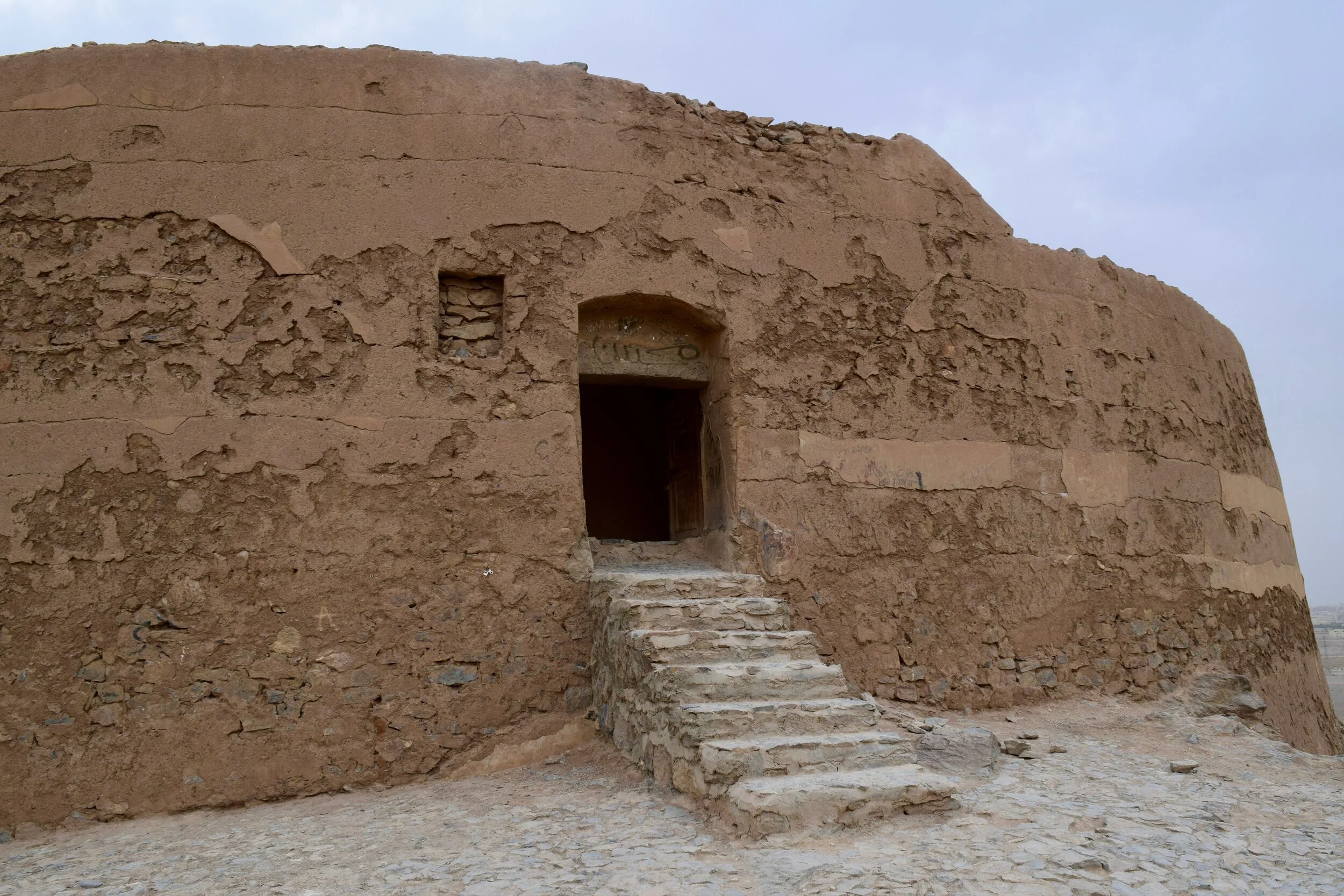
Entrance to the top of the tower
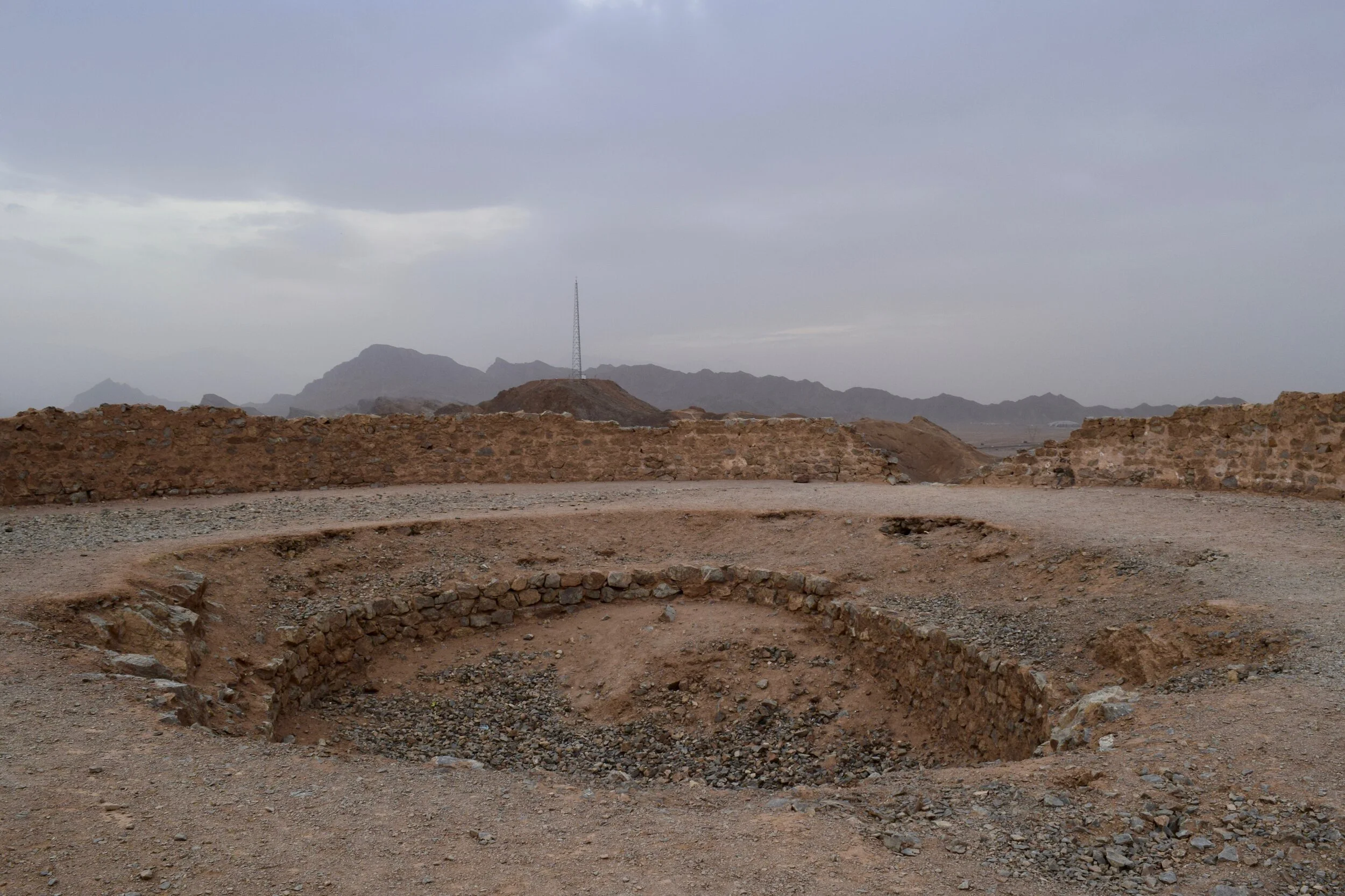
Circle on the ground where dead bodies were placed
View of Yazd from the Towers of Silence
Day 2
Since I ended up visiting way more things that I expected on my first day, I didn’t have much left to do for my second day in Yazd before taking the bus to Kerman.
I left my hotel well past breakfast time and started walking the deserted streets of Yazd for a last time, heading straight to the Fire Temple. In the interior, you will find eternal flame, sacred to Zoroastrians, which has been burned for over 1,500 years.
It is believed that the sacred fire has been burning since 470 AD and was started by the Sassanian Shah. The flamed was moved to different locations along the centuries until it was placed in Yazd in 1934, when the temple was constructed.
Fire Temple
Zoroastrians have venerated fire for centuries. It is believed that this tradition originated in Central Asia, where the first Zoroastrians kept the fire going to protect them from the cold winters, considering it a divinity.
With the end of the Nowruz celebrations coming to an end, the temple was extremely busy with local visitors. To access the main building and see the flame, I had to queue for over half an hour with people pushing and skipping the line.
The eternal flame burns inside a bronze vessel protected by a glass wall. To keep it alive, a person known as the Hirob feeds it with wood multiple times per day.
When I finally reached the flame, the place was so crowded that it was almost impossible to move; visitors only had a few seconds to take a picture with the flame before moving on. I didn't really have much interest in taking a picture with the flame, and the refection on the glass made it almost impossible to even take a proper picture of it.
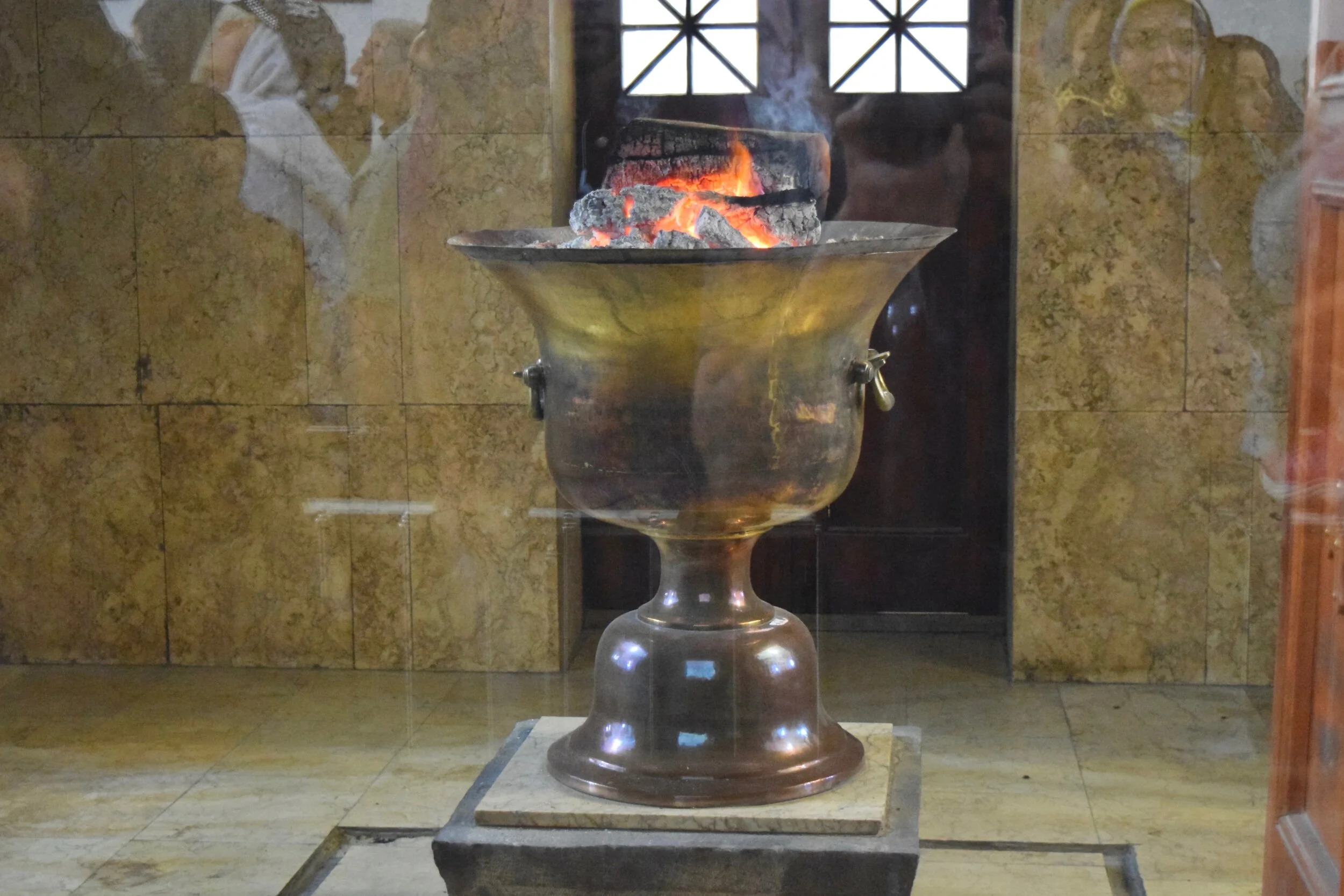
Eternal flame
I had never heard about Zoroastrianism before my trip to Iran, so the exhibition on this religion that you can find in the Fire Temple was incredibly educational. For centuries, it was the primary religion of Iran before the Muslim conquest between 633 and 656 AD.
Zoroastrianism has its origins in Zarathustra, known as the messenger of honesty and wisdom, born in Iran in 1767 BC. According to some Sasanian and Pahlavi inscriptions, the birthplace of this Aryan prophet is believed to be in the vicinity of Uremiyeh, while today’s researchers associate his birthplace to Eastern Iran.
At the age of 20, Zarathustra got deeply disturbed by society’s outlook and considered their beliefs to be wrong. He had numerous thoughts and questions in his minds. In order to discover the secret of creation, he decided to go to a mountain called Oshidarneh and spent 10 years of his life on retreat contemplating and worshipping.
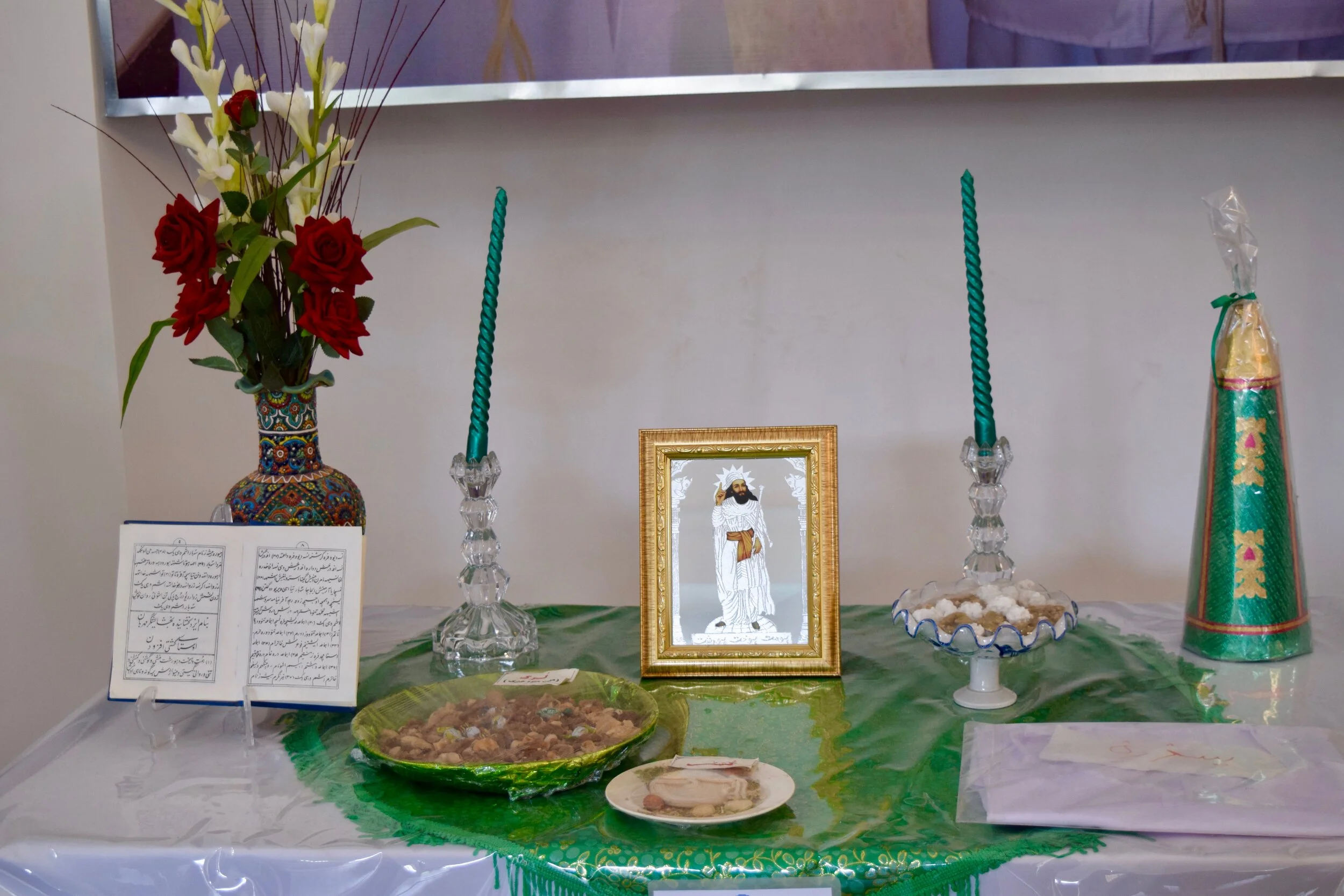
objects for praying
Zarathustra became a prophet at the age of 30 on March 26th. At the age of 42, he visited king Bashtasb Kiyani in Balkh. The king decided to adopt Zoroastrianism as the official religion of the country and invited the public to become Zoroastrians. Then, the religion spread across the Persian empire.
Zarathustra was martyred at the age of 77 in a fire temple in Balkh by an invader from Turan. It is not yet known where exactly his tomb is.
The Avesta Book is undoubtedly the most valuable document of Ancient Persians providing useful clues about their religion, ideology, mythology and accomplishments. The word Avesta can mean either ‘foundation’ or ‘knowledge’. Zoroastrians must perform prayer with a clean body. Thus, they wash their hands and faces, raise their hands towards the light and worship Ahuramazda (God) five times a day.
They also believe that human beings are composed of five forces: body, energy, spirit, conscience and Faravahar. Faravahar is a particle of God’s essence which has been put within human beings at the time of creation. It is constantly guiding human beings towards progress and after death, unchanged it comes back to its Holy essence. Faravahar can be found on the top of the Fire Temple and has remained one of the symbols of Persia until our days.
Zoroastrian woman
Zoroastrians praying
Avesta book
Faravahar is represented with a luminous aged faced: to progress in life, consult with sage, cognisant and wise people. The upward hand represents how to progress in life, you should pray to God, worship Him and be grateful. The ring in the middle is a symbol of the rolling motion of the universe. Any object moving on a circular path gets back to its initial position. If we do good, we are given good, if we do back, we see bad results.
The lower sinker of the figure is composed of three parts and it is a symbol of bad thoughts, bad words and bad deeds. The heavier the sinker of our thoughts, words and deeds, the more impediments appear on the way of our progress in the rolling motion of the universe. On the right-hand side of the lower sinker, pointing back is a representation of the thoughts that should be left behind and be paid no attention. On the opposite side, pointing forward is a representation of the pure and sacred thoughts, which should be placed in the front so they accelerate progress.
The two extended wings, attached to the ring in the middle, has three parts which are symbols of good thoughts, good words and good deeds. The stronger our winds of good thoughts, words and deeds, the higher we can soar in the rolling motion of the universe. Finally, the ring held in the left hand is a symbol of covenant and promise. To progress in life, always keep your promises and keep your covenants. Wedding rings have roots in this symbol.
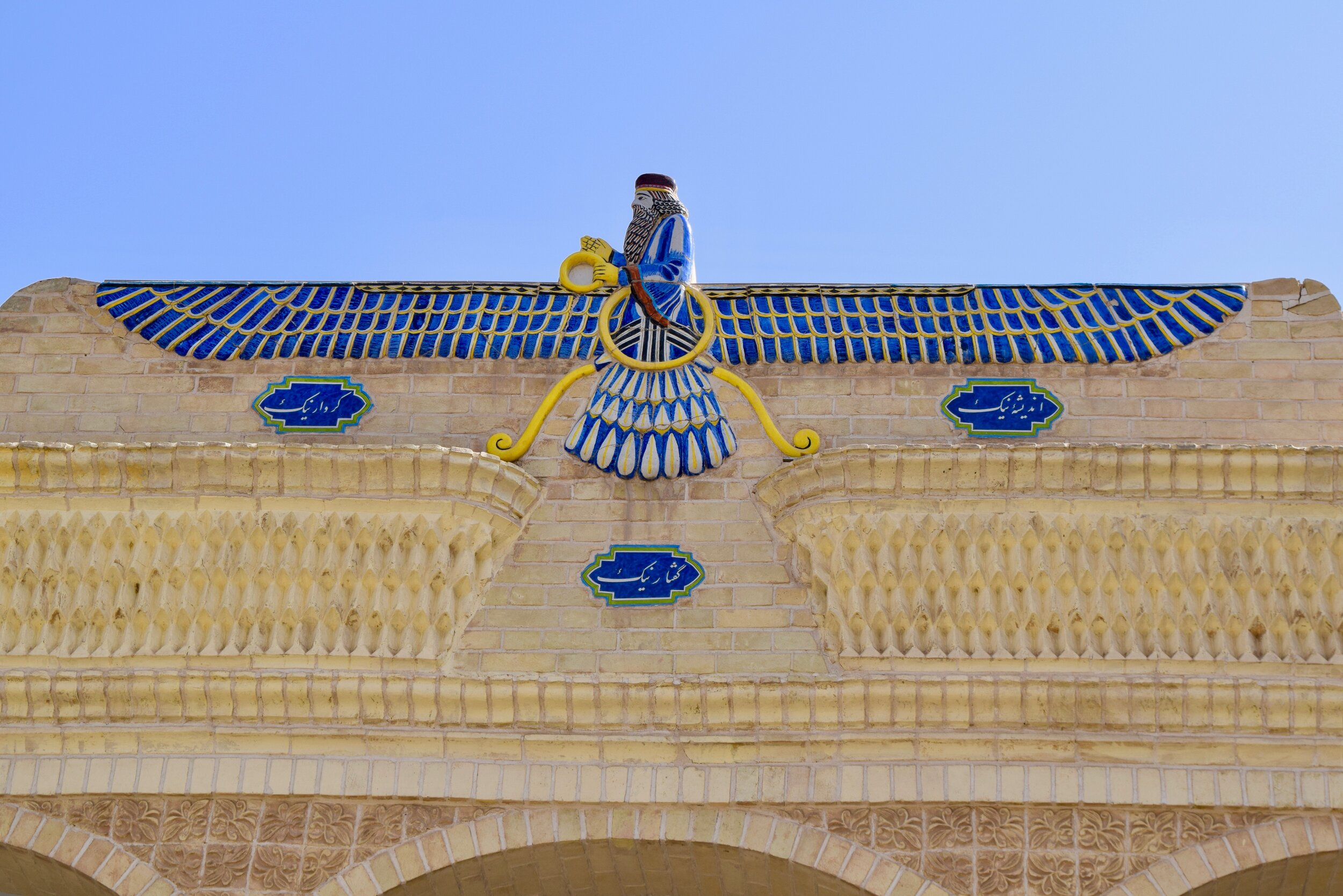
Faravahar at the top of the temple
I headed back to the old town for lunch at the popular Fooka Cafe before checking out at my hotel and heading to the bus station to catch my bus to Kerman at 4:15 pm. I purchased my tickets through TAP Persia, as it isn’t possible to buy bus tickets from abroad without the help of a local agency. The bus ended up arriving 45 minutes left, but after a 5 hours ride, I finally made it to my destination.
I wouldn’t have much time to rest as early next morning, I would take a private tour from Kerman to Bam, Rayen and Mahan, the cities of the desert.
All opinions are my own.
Where to sleep in Yazd
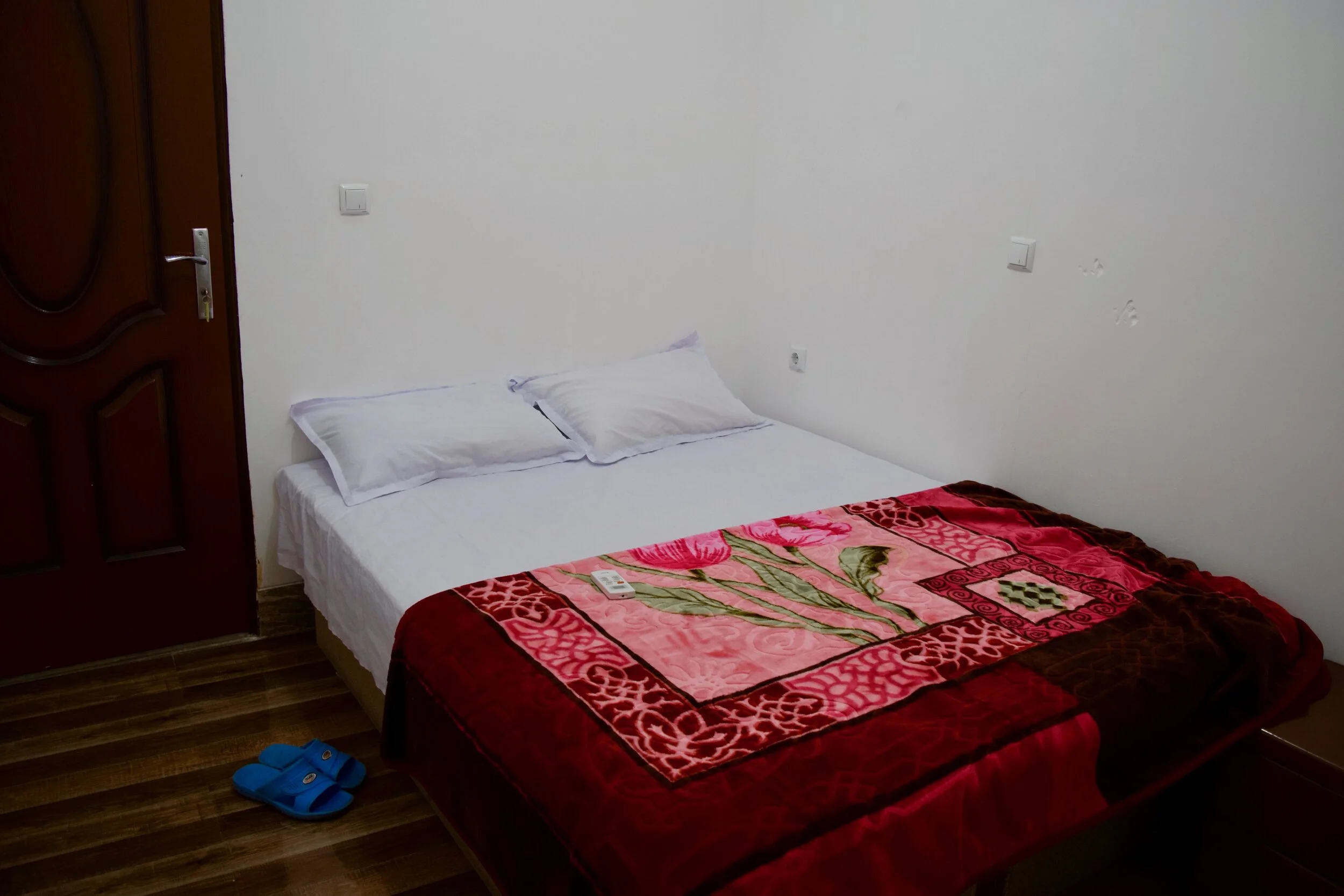
BackPack Hostel
BackPack Hostel in Yazd is the perfect choice if you’d like to stay in the closest you will find in Iran to a western hotel for the price of a hostel.
The rooms, both with private and shared bathrooms, are pretty comfortable for Iranian standards. Although simple, they provide just what you need for a nice stay in the city. The price for a double room is only €16.
The hostel is located right at the entrance of Amir Chakhmaq Complex, one of the liveliest areas of the city. Don’t miss the views from the roof on top!
Where to eat in Yazd
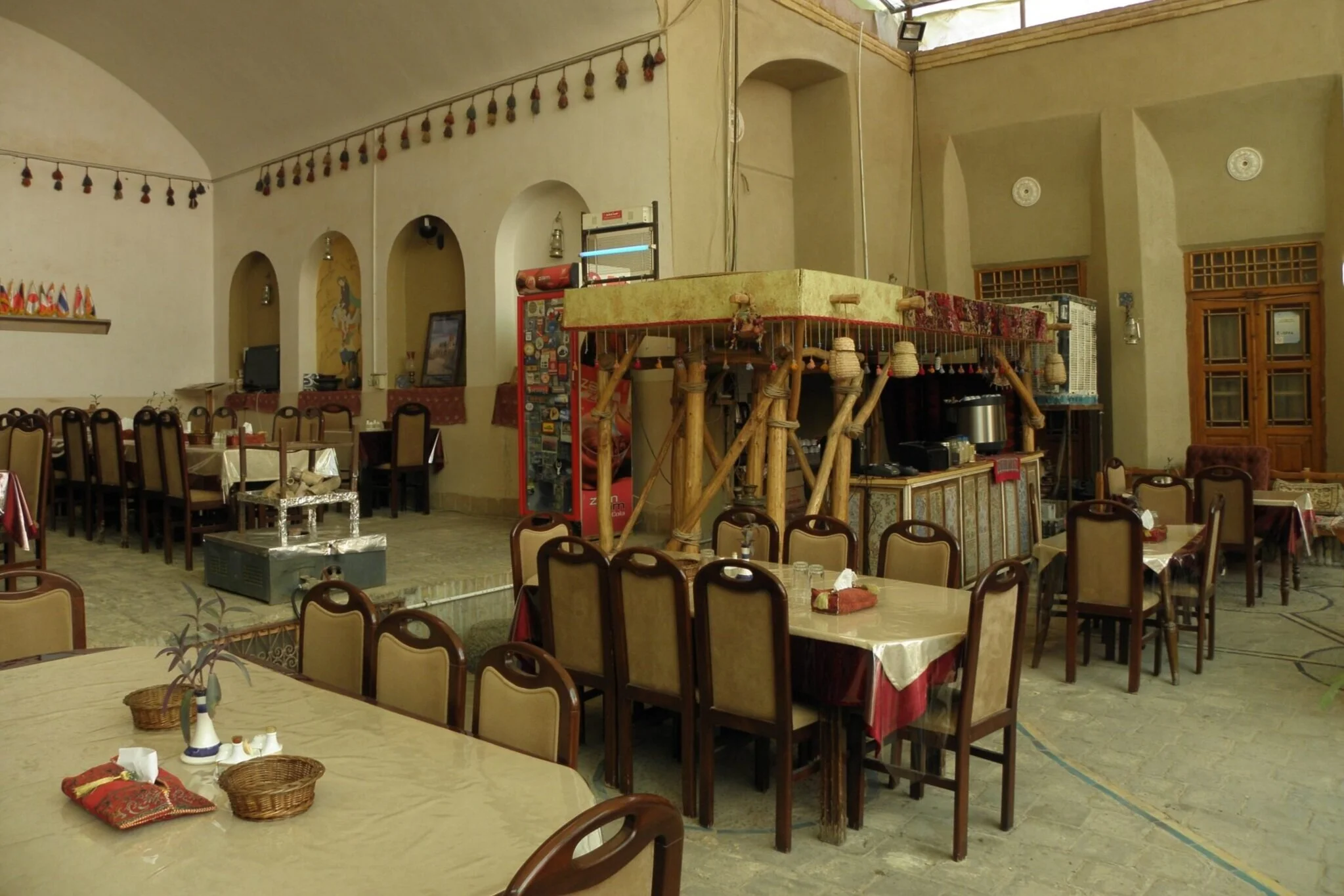
Sil Road Hotel
Located only 100 meters away from Jameh Mosque, the restaurant inside the Silk Road Hotel offers a great selection of Yazdi specialities, as well as Iranian and Mediterranean dishes for pretty good prices.
You can either order a la carte or pay for an open buffet. I ordered a chicken curry from the a la carte menu which was pretty good, at least it was a good change from kebabs!

Marco Polo Restaurant
Located at the top of the Orient Hotel with incredible views of Jameh Mosque and historical Yazd, Marco Polo will give you one of the best eating experiencies that you'll have in Yazd.
I ordered dizi, a traditional Iranian stew that isn't that easy to eat! You first need to pour the soup in a pot, leaving the meat and vegetables inside the soup aside. You then put some bread inside the soup, and start drinking the soup while picking up the meat you left aside. I’m just not too sure what was the point of puouring the soup separately first!
Considering the amazing views, I was expecting a high bill, but I only paid 270,000 rial (approx. €5.5) for the copious dish and a Islamic beer. Of course, it didn't have alcohol, but it was very fruity and sweet. I actually loved it!

Fooka Cafe
This lively and alternative cafe, which can be found right across Jameh Mosque, is the perfect spot in Yazd for a quick lunch while enjoying incredible views.
In spite of the modern decoration, inside you will find the most delicious traditional food. I ordered a lamb kebab with rice and dough (a cold yogurt drink mixed with salt) and the amounts were quite generous. Main courses start at around 150,000 rials (approx. €3)

This article is now available as a mobile app. Go to GPSmyCity to download the app for GPS-assisted travel directions to the attractions featured in this article.


From ancient mud-brick cities and fortifications to one of the holiest sites of Zoroastrianism, the arid landscape in the Iranian province of Yazd hides some of the most unique and unknown sites that you can find in the Islamic Republic.
After spending two days in Isfahan, I ventured in a full day journey to the desert city of Yazd, first stopping at all the hidden sites that this province has to offer. Follow my journey from Isfahan to Yazd while I discover Nain Mosque, the holy Zoroastrian site of Chak Chak, as well as the ancient cities of Meybod and Kharanaq!