
Trogir, Blue Lagoon & Necujam Bay: Day trip from split
If you’re visiting Split, a day trip to Trogir, the Blue Lagoon, and Necujam Bay offers the perfect escape into Croatia’s stunning natural beauty and rich history.
Trogir, often called “Little Venice,” is a UNESCO World Heritage site renowned for its cobbled streets, ancient Roman ruins, and Venetian architecture. Whether you’re strolling through its historic lanes or enjoying the coastal charm, Trogir offers a seamless blend of culture and beauty that captures the essence of Croatia’s Adriatic coast.
A scenic 30-minute speedboat ride will bring you to the Blue Lagoon, a shimmering turquoise haven on the southeastern side of Drvenik Island. Here, the crystal-clear waters and sandy seafloor invite you to swim, snorkel, and soak up the sun in a truly magical setting.
Finish your day in the tranquil Necujam Bay, where the peaceful beaches and calm waters provide the perfect setting to relax and unwind. With its serene atmosphere, Necujam Bay offers a perfect escape before heading back to Split!
Half-day boat tour to Trogir, Blue Lagoon & Necujam Bay
After a full day of exploring Split and its iconic Diocletian’s Palace, we were ready for a more relaxed adventure the next day. Our second day in Croatia was all about unwinding in the crystal-clear waters of the Adriatic Sea. To make the most of our time, we booked a half-day boat tour to Trogir, the Blue Lagoon, and Necujam Bay with GetYourGuide.
Our tour started near Split Riva, where we boarded a boat that brought us to nearby Trogir, known as "Little Venice" for its charming canals and historic architecture. A UNESCO World Heritage site since 1997, Trogir’s ancient streets and buildings date back to Greek times, making it a captivating place to explore.
Next, we hopped aboard a speedboat for a scenic 30-minute ride to the Blue Lagoon. Situated on the southeastern side of Drvenik Island, this shallow, turquoise lagoon is famous for its crystal-clear waters and sandy seafloor, creating a mesmerizing blue hue perfect for swimming and snorkeling.
Our final stop was the peaceful Necujam Bay, where we soaked up the sun, swam in its calm waters, and relaxed on the serene beaches before heading back to Split. The tour was the perfect blend of relaxation and adventure, offering a refreshing escape into the beauty of Croatia’s Adriatic coastline.
Trogir
A short 30 minute boat ride from Split brought us to the first stop of our day tour: the coastal town of Trogir. With origins dating back to its founding as a Greek colony in the 3rd century BC, Trogir boasts over 2,300 years of continuous urban tradition. The town's rich cultural heritage reflects the influences of the Greeks, Romans, and Venetians, and its UNESCO-listed historic centre showcases a remarkable concentration of Romanesque, Gothic, Renaissance, and Baroque architecture.
We got off our boat on the Trogir Promenade, from where we started exploring this charming town. SStretching along the glistening Adriatic Sea, the promenade offers stunning views of the waterfront adorned with colorful boats and the iconic architecture of Trogir’s UNESCO-listed old town. Lined with inviting cafes and restaurants, it’s the ideal spot to savour local delicacies, enjoy a refreshing drink, and soak in the lively atmosphere.
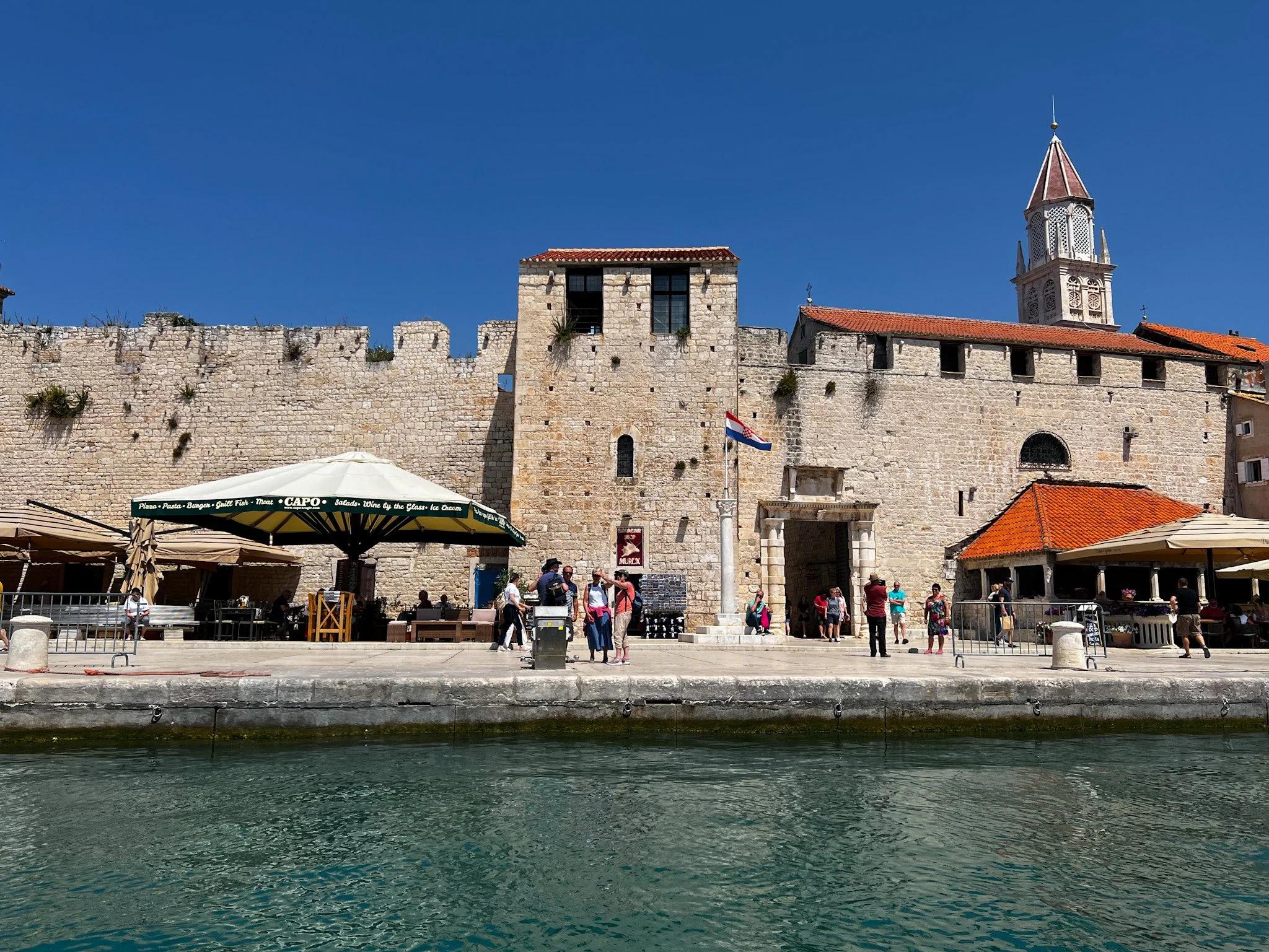
Along the promenade, the Monastery of Saint Dominic and its church are a cherished historic landmark in Trogir.
Founded in 1579 under the guidance of Cardinal Agostino Valier, the church originally featured six altars, each dedicated to revered figures such as Saint Dominic, Mary Magdalene, and Saint Catherine of Alexandria. The interior is an artistic masterpiece, adorned with intricate decorations, inscriptions, and a collection of paintings and drawings.

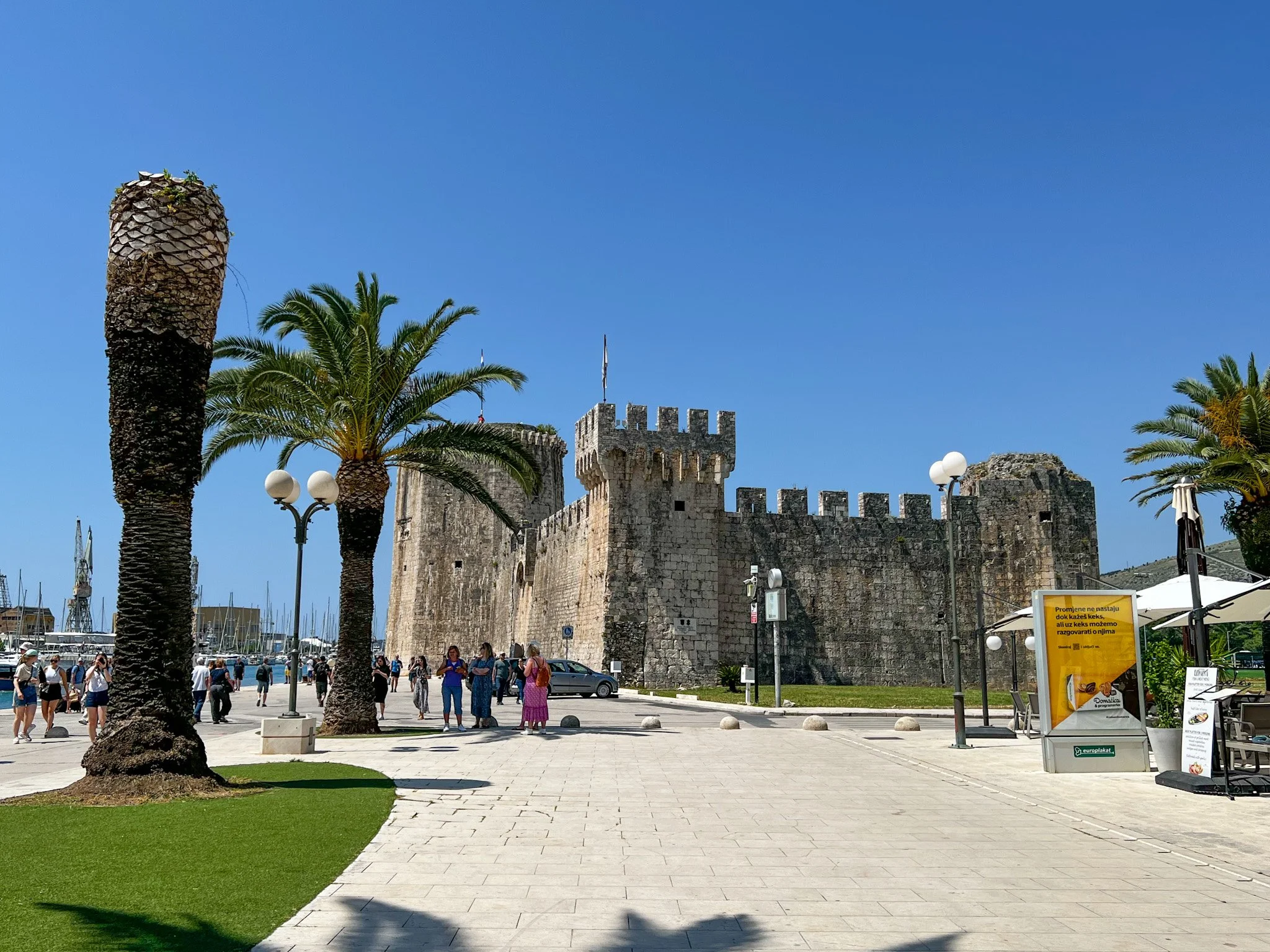
At the very end of the promenade, we reached Kamerlengo Castle, a historic fortress and a protected cultural heritage site. Built between 1420 and 1437 during Venetian rule, it served as a stronghold for the Venetian military garrison, protecting the maritime approach to the town and its harbour.
The fortress features a trapezoidal layout with a prominent polygonal tower overlooking the sea, smaller corner towers, and defensive walls with a patrol walkway. On its northern side, the main gate is adorned with a lunette and a drawbridge, while the interior courtyard once housed accommodations for the castellan and troops, along with a chapel dedicated to St. Mark.
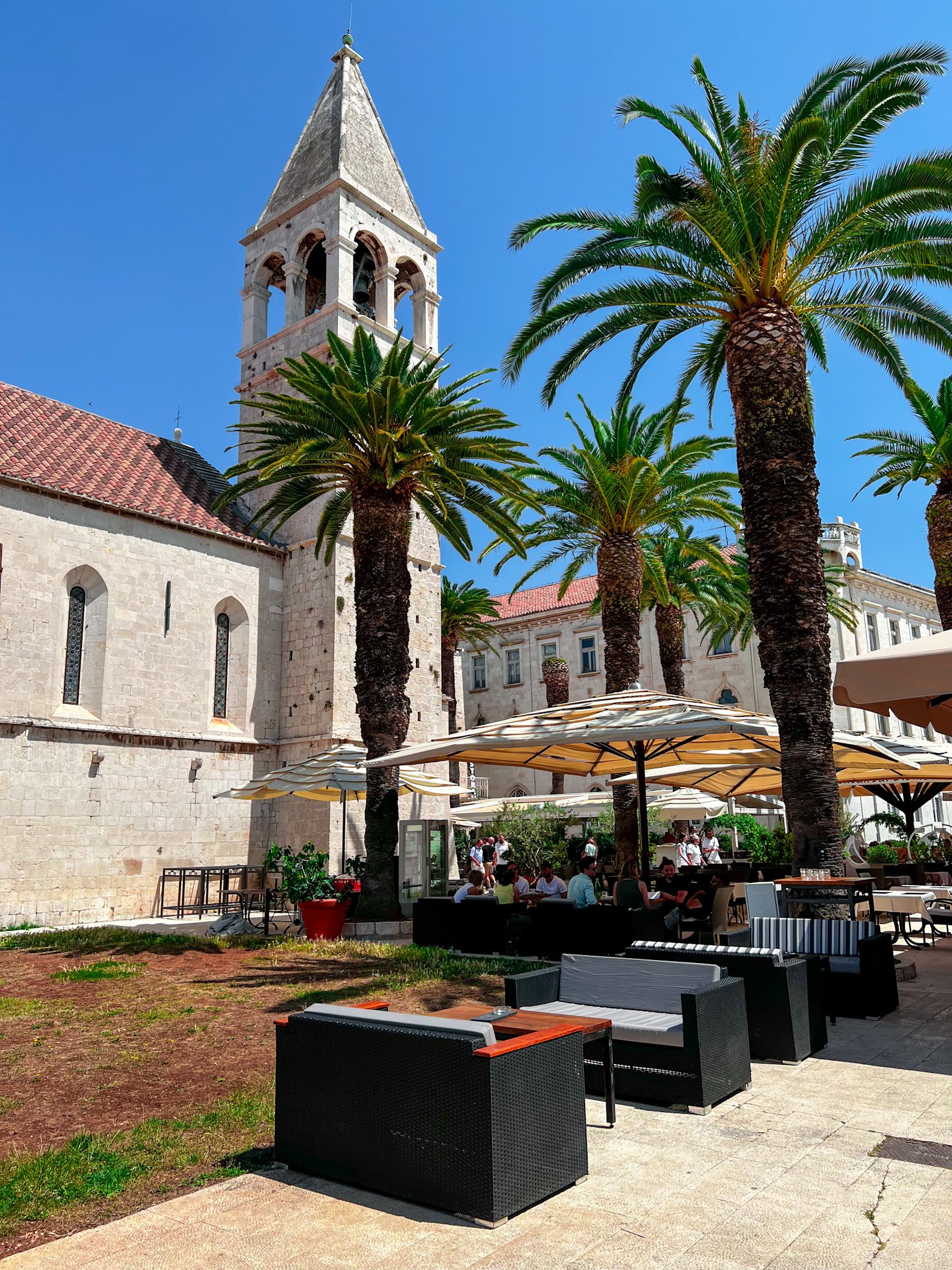
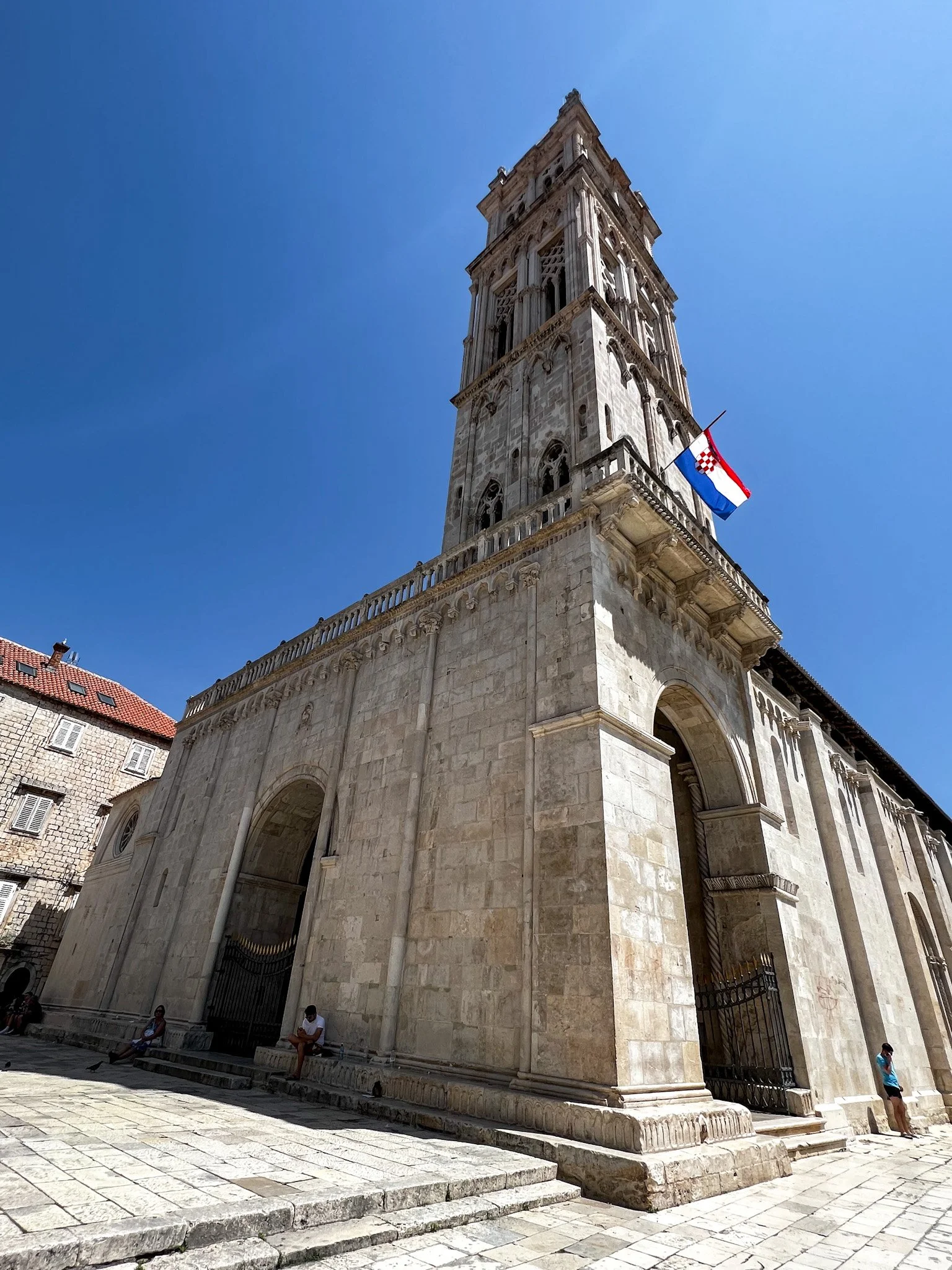
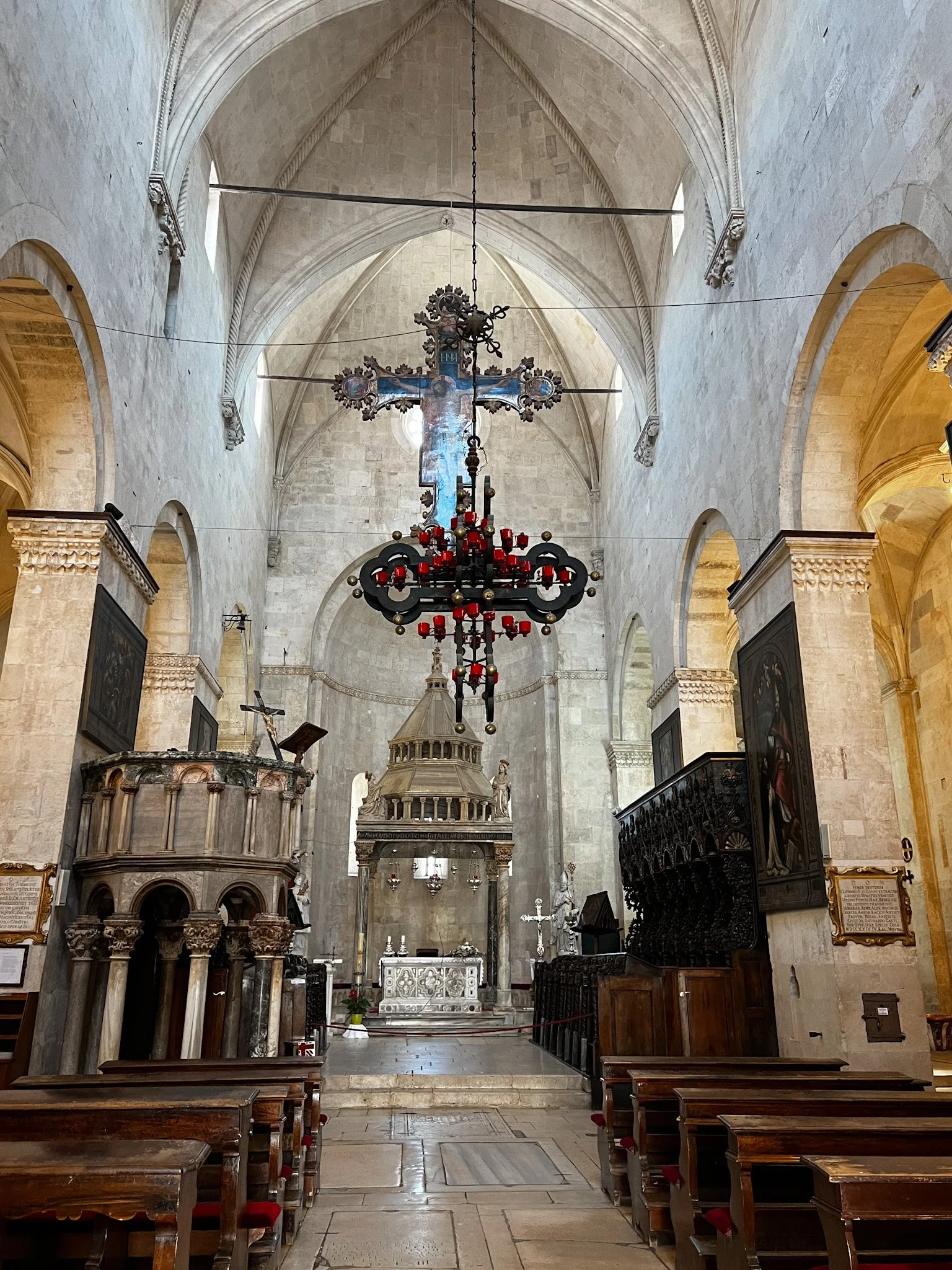
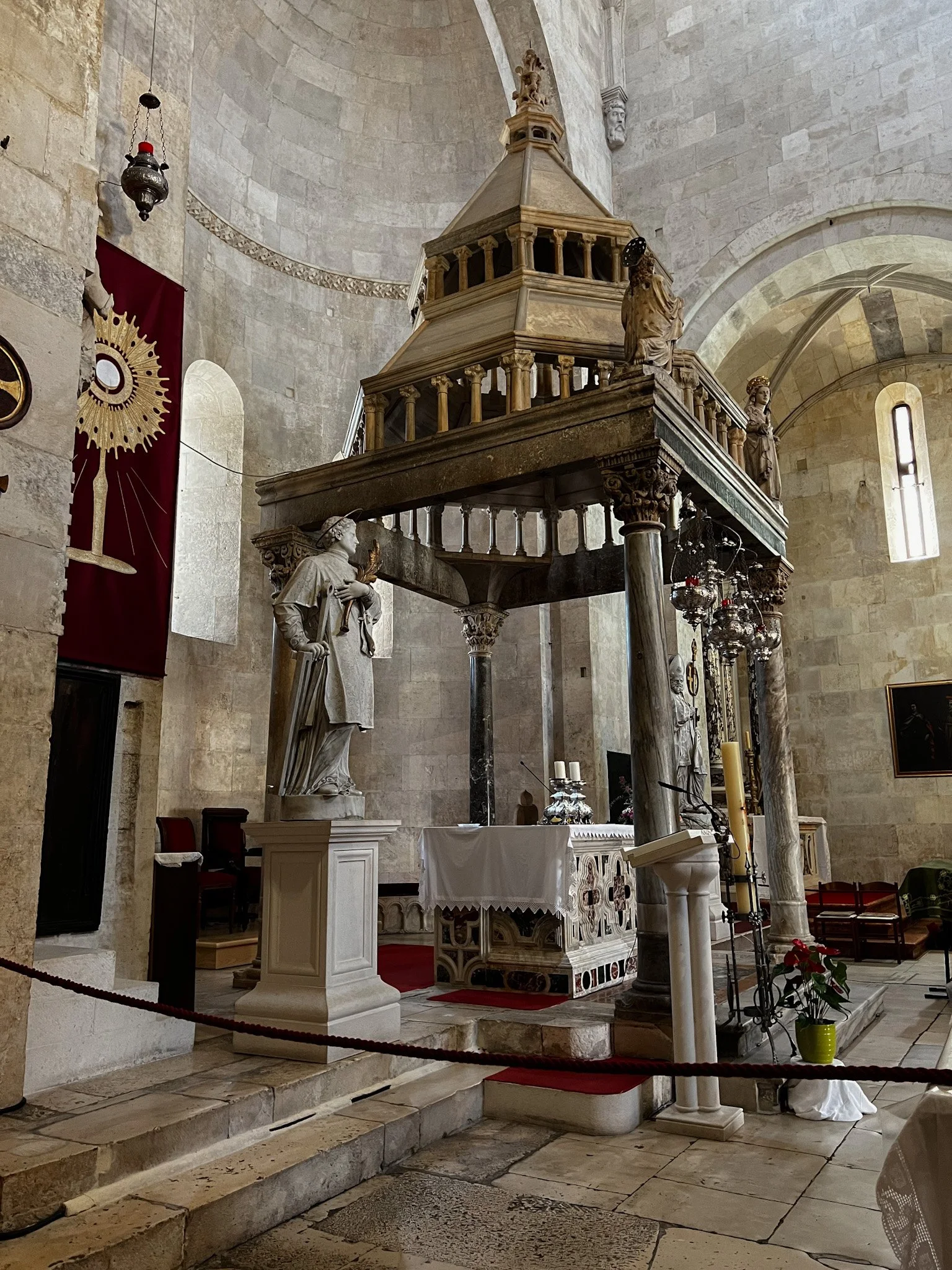
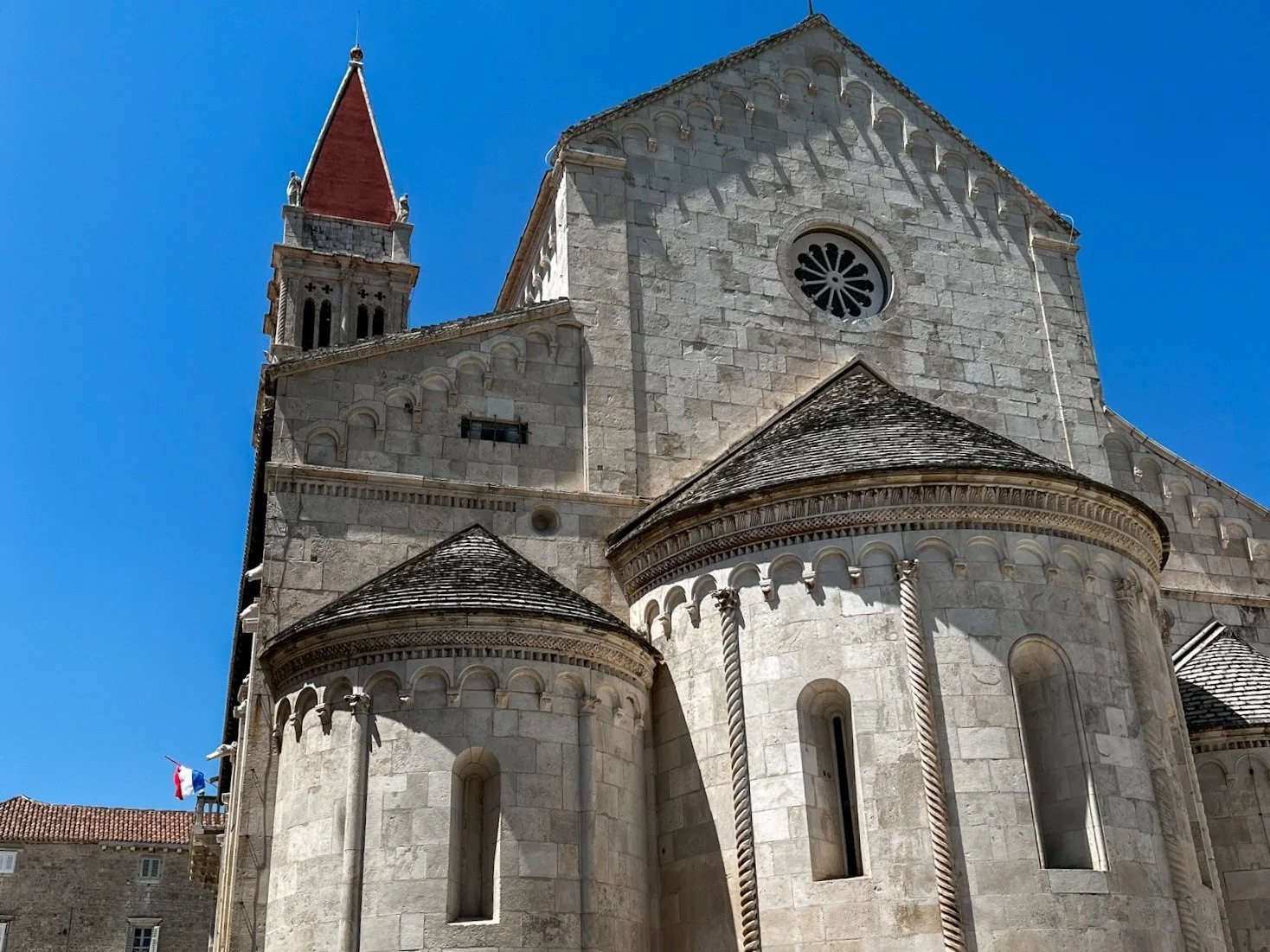
We continued wandering through the narrow streets until we arrived at the Cathedral of St. Lawrence, one of Trogir's jewels. Its construction, which began in 1213 and spanned several centuries, reflects the progression of architectural styles in Dalmatia.
Built on the remnants of an Early Christian cathedral destroyed in the 12th century, the structure predominantly showcases Romanesque design, particularly in its heavy piers and semicircular apses. Gothic influences are visible in its vaulted interiors and the elaborate rose window on the western façade, while elements of Mannerist style are evident in the later additions.
The cathedral's bell tower, completed over three centuries, combines Gothic and Venetian styles. The cathedral is deeply tied to the history and identity of Trogir, serving as one of its most prominent landmarks and a part of its UNESCO World Heritage designation.
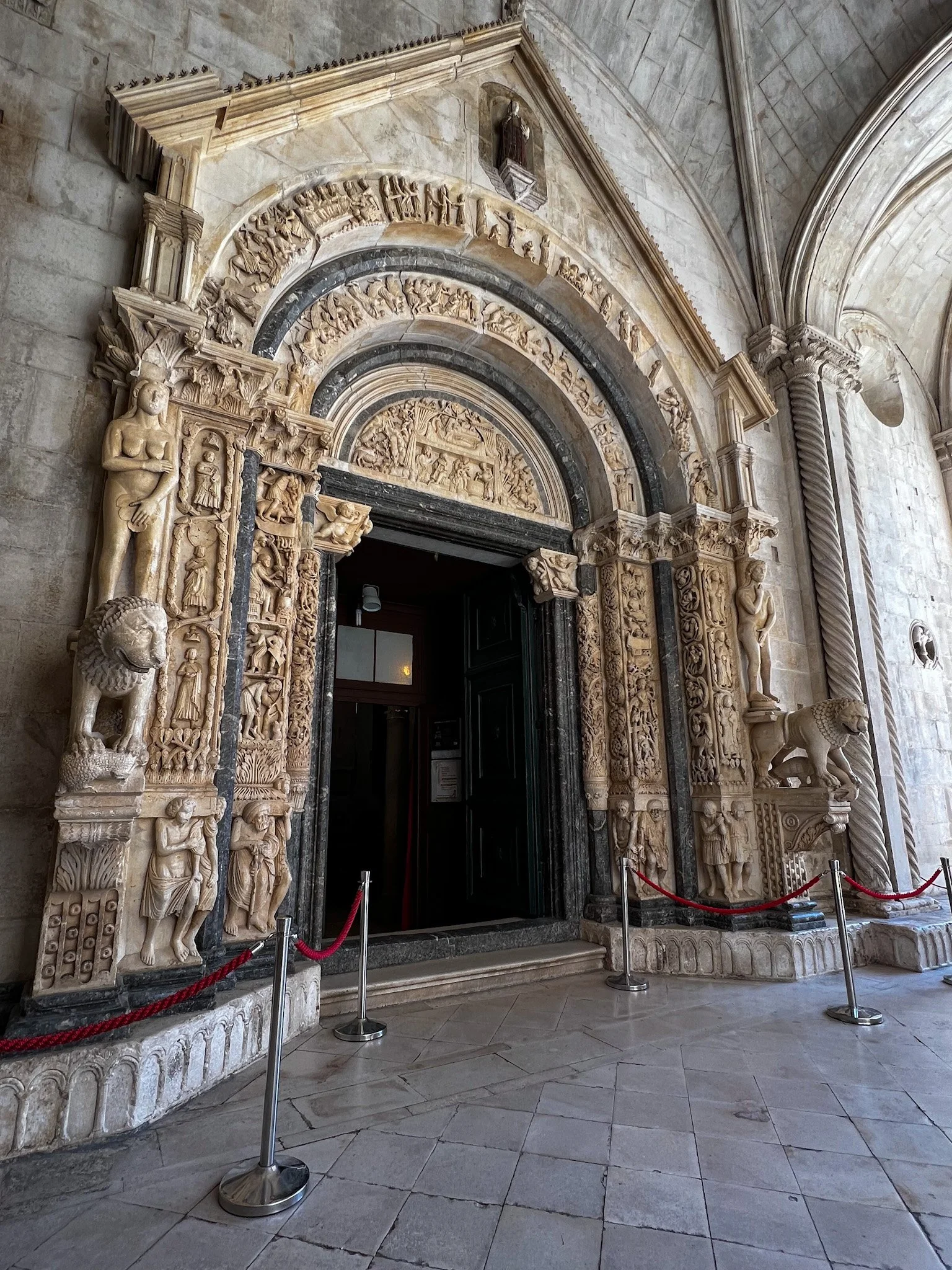
A particularly striking feature of the cathedral is the western portal, crafted by the renowned Croatian sculptor Master Radovan in 1240. This intricately carved gateway is a masterpiece of thematic storytelling, divided into upper and lower sections that depict scenes from the life of Christ and symbolic representations of human labor and the changing seasons. Figures of saints, apostles, exotic animals, and mythical creatures adorn the doorposts, while statues of Adam and Eve stand atop lions beside the portal.
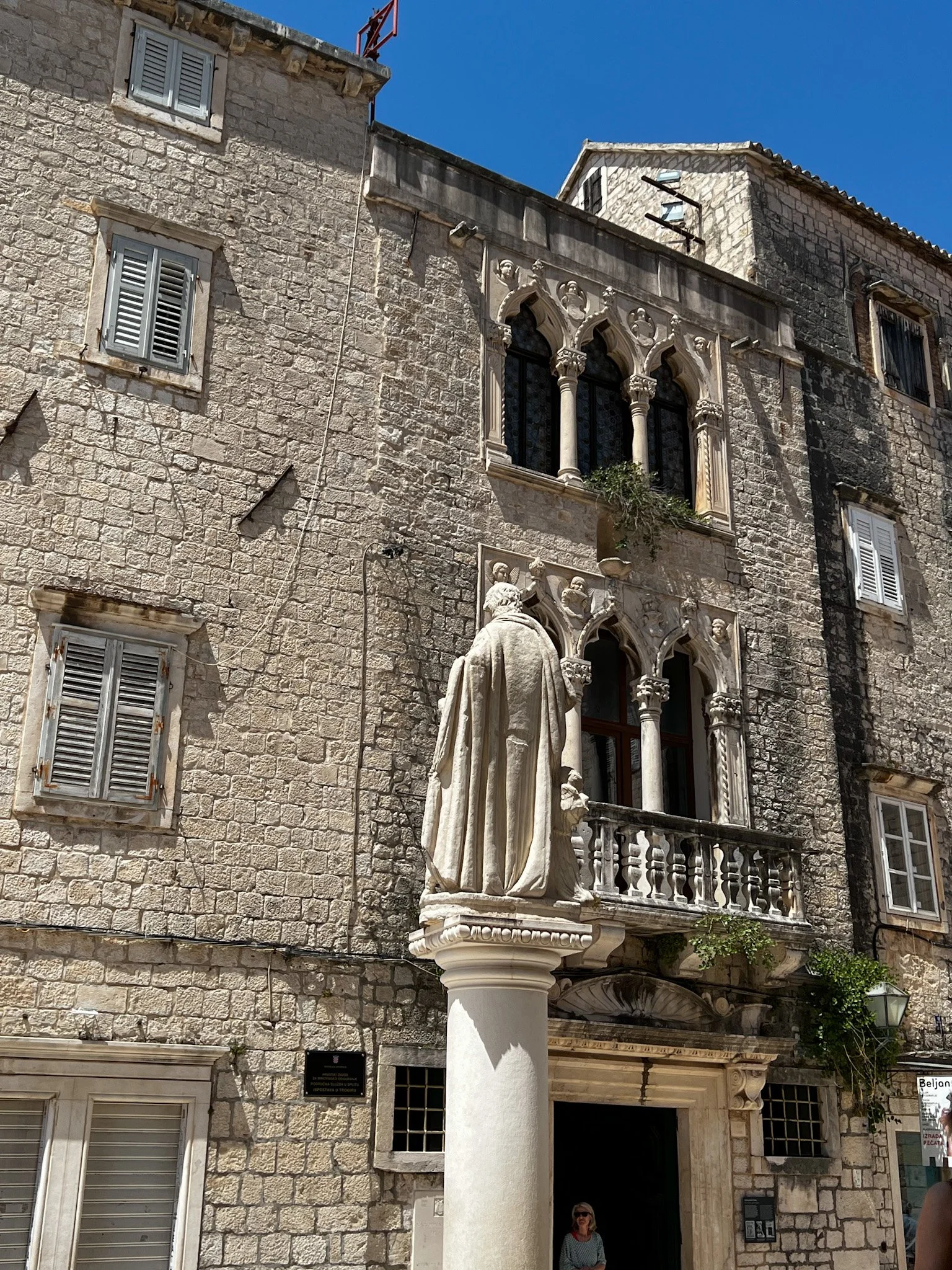
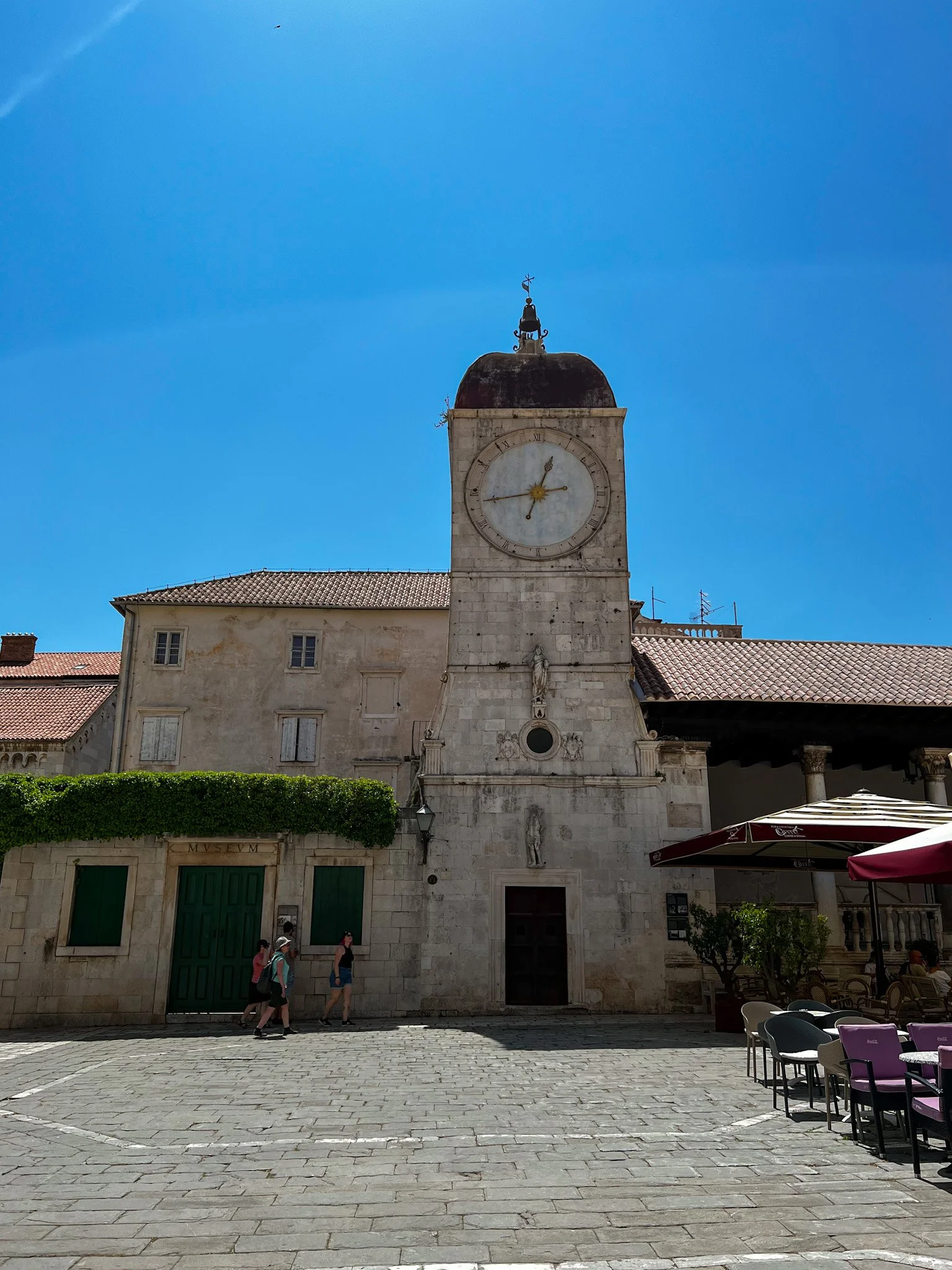
On the southern end of the Cathedral you can’t miss the Town Square, a centrepiece that has served as a hub of communal life throughout history, surrounded by landmarks that embody the town’s rich architectural and cultural heritage.
Dominating the eastern side is the Rector’s Palace, built in the 13th century on the site of the former Church of St. Stephen. The palace is a blend of Gothic and Renaissance styles, showcasing intricate motifs attributed to Nikola Firentinac and a Gothic staircase designed by Matija Gojković. Its inner courtyard, adorned with an ornate well featuring a winged lion of St. Mark and the seal of the Venetian state, hosts classical music concerts and theatrical performances.
On the southern side of the square stands the Church of St. Sebastian, distinguished by its iconic clock tower. Built in 1477 as a vow to combat the plague, the church features a statue of St. Sebastian above its entrance and a figure of Christ in a blessing pose. Inside, a memorial plaque honours those who fought for Croatia's independence.
To the left of the clock tower lies the site of the former Church of St. Mary, now a museum of sacred art. The museum preserves religious artworks from the 13th to the 16th centuries, showcasing Trogir’s artistic legacy.
On the western side of the square stands the town loggia, first mentioned in the 14th century serving as a Renaissance temple of justice. Its columns, sourced from ancient ruins, frame a space that once served as a courtroom. A notable relief of Croatian ban Petar Berislavić, created by Ivan Meštrović, adorns the loggia’s southern wall.
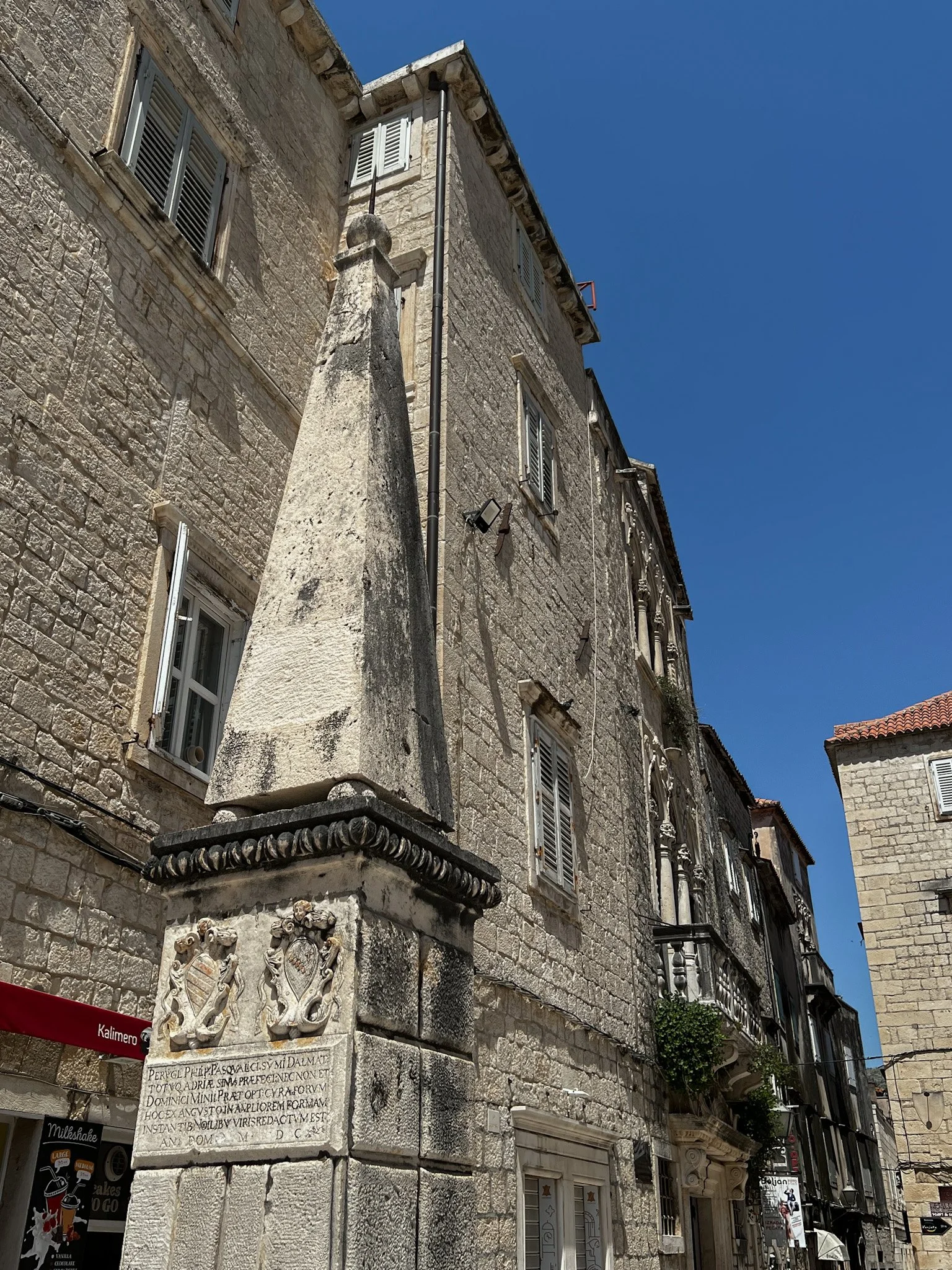

Our final stop in Trogir was the Benedictine Monastery of St. Nicholas. Founded in 1064 under the guidance of St. John of Trogir, a Camaldolese Benedictine and papal legate, the monastery's origins were rooted in a mission to provide spiritual support to the city and beyond.
Established with contributions from local patricians, the monastery began with the Church of St. Domnius and adjacent lands, later adopting St. Nicholas as its patron due to the church’s popularity among fishermen and sailors. Over the centuries, the monastery expanded architecturally, incorporating elements of Romanesque and Gothic styles, and its complex grew to include the Cega and Vitturi Palaces, as well as their tower. Central to the monastery is its 16th-century bell tower and atrium, which preserves Trogir’s oldest Greek inscription.
Blue Lagoon
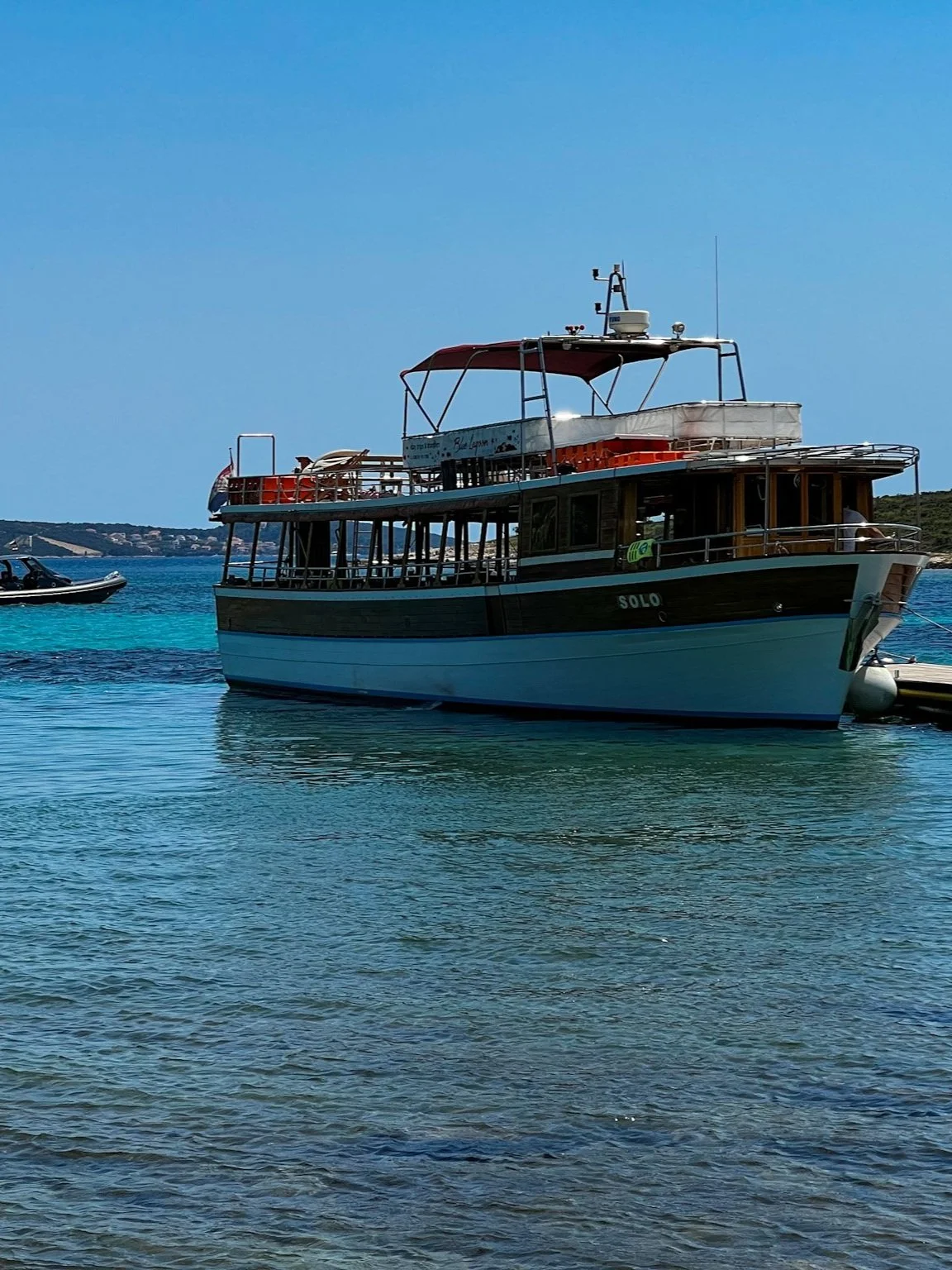
After enjoying ample free time to explore Trogir, we boarded our high-speed boat again, heading to our next destination: the famous Blue Lagoon.
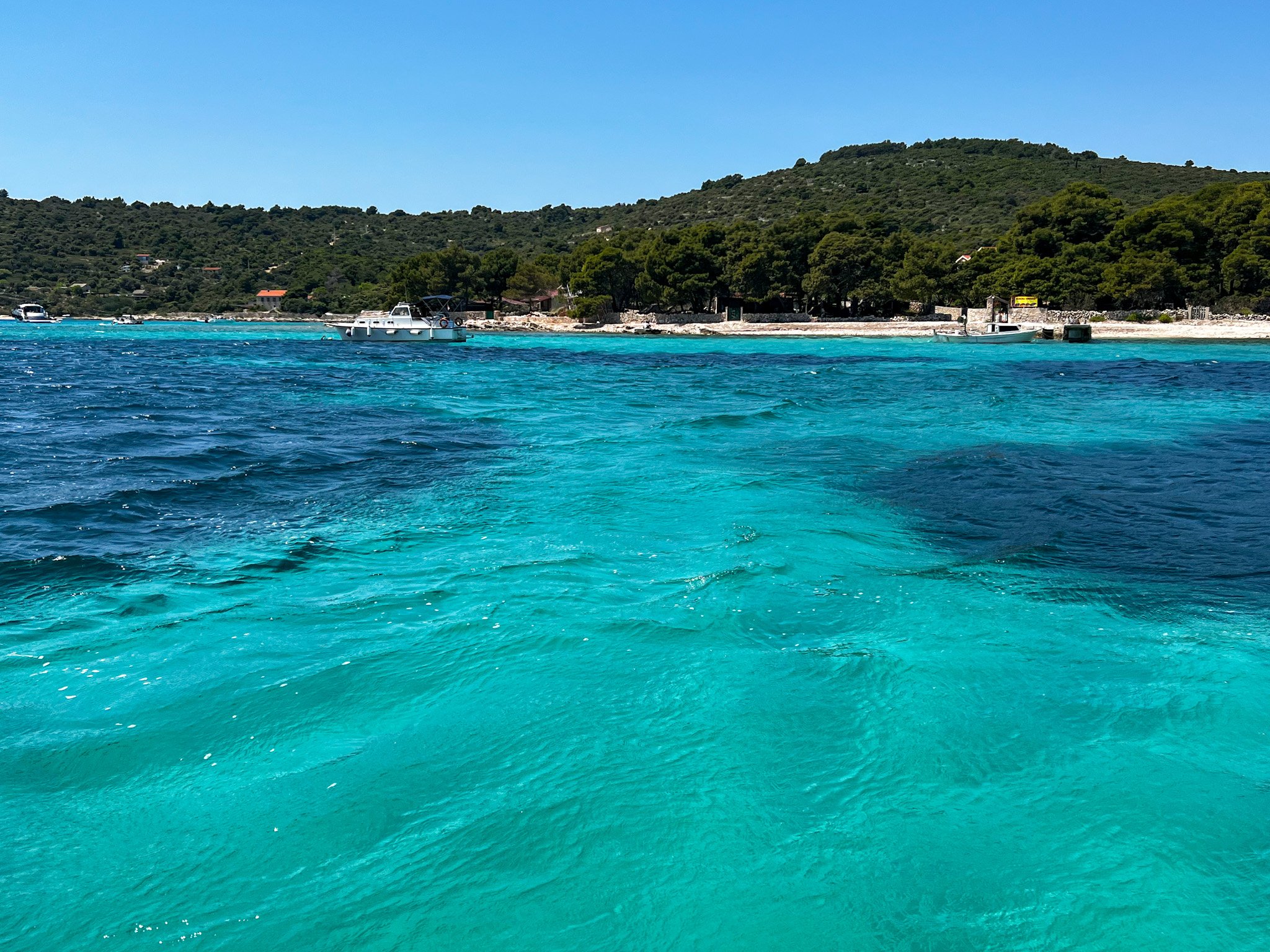
Nestled between the islands of Drvenik Veli, Drvenik Mali, and the Krknjaši islets, the Blue Lagoon is famed for its crystal-clear turquoise waters and serene, unspoiled surroundings. This enchanting destination is a haven for swimming, snorkeling, and relaxation, offering a glimpse of the Adriatic Sea's pristine beauty. The shallow, sandy seabed reflects sunlight, creating a mesmerizing display of colors that are perfect for both adventure and tranquility.
The lagoon's unique geography provides calm waters, which made it the ideal place to enjoy some snorkeling and exploring the waters teeming with fish. For those who prefer to relax, the lagoon offers secluded spots to sunbathe or simply float in its gentle waves.

Necujam Bay
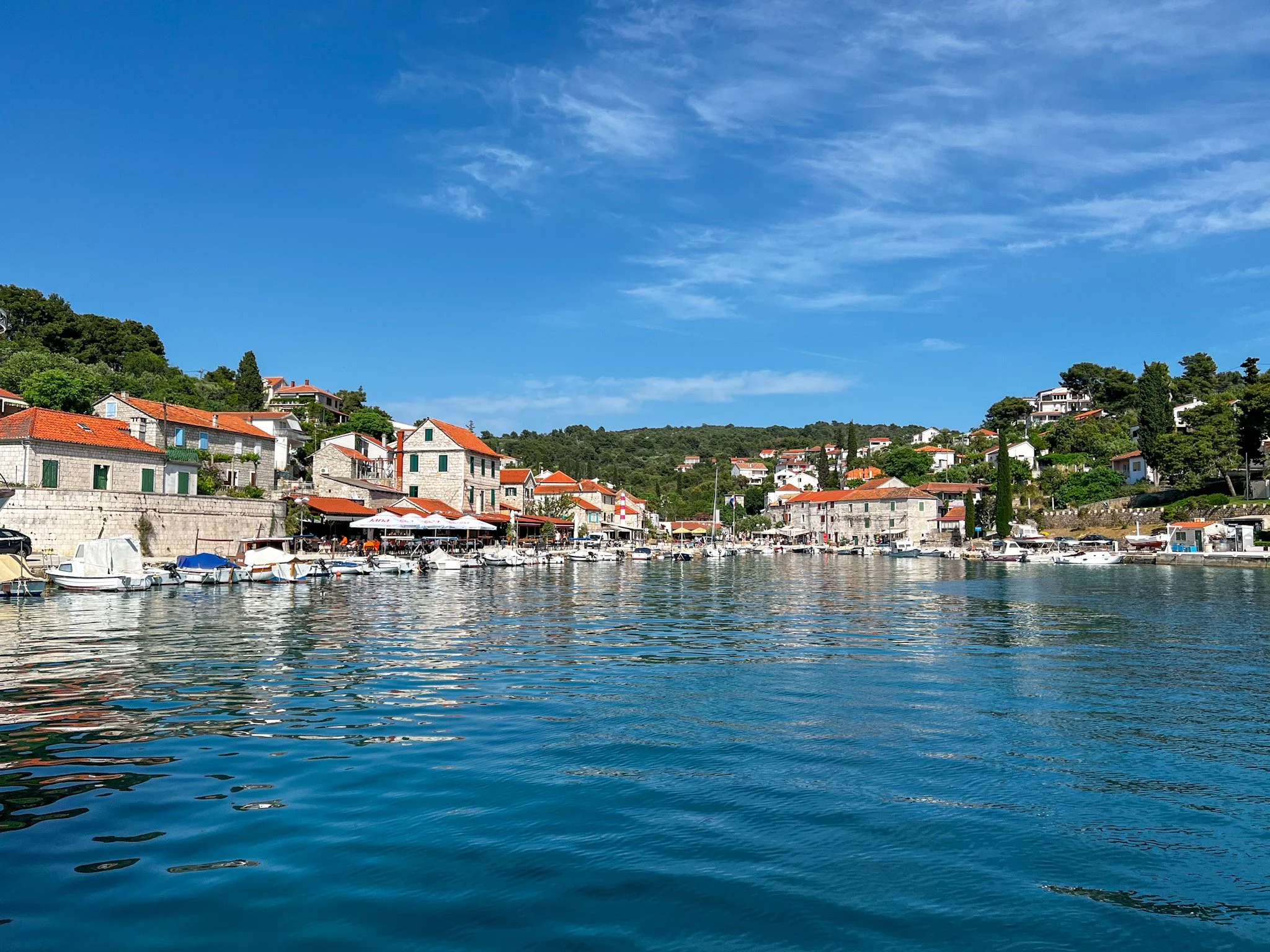
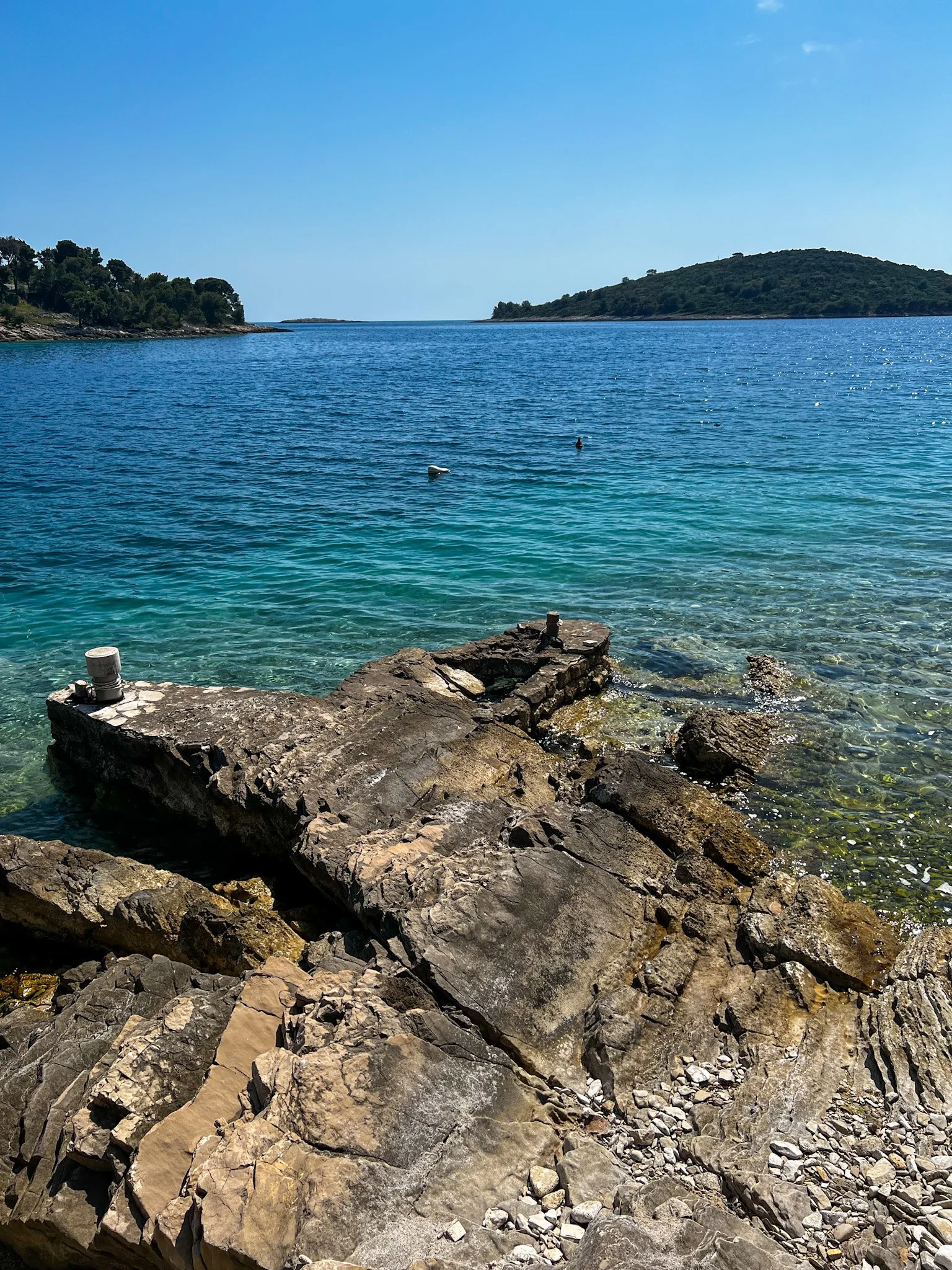
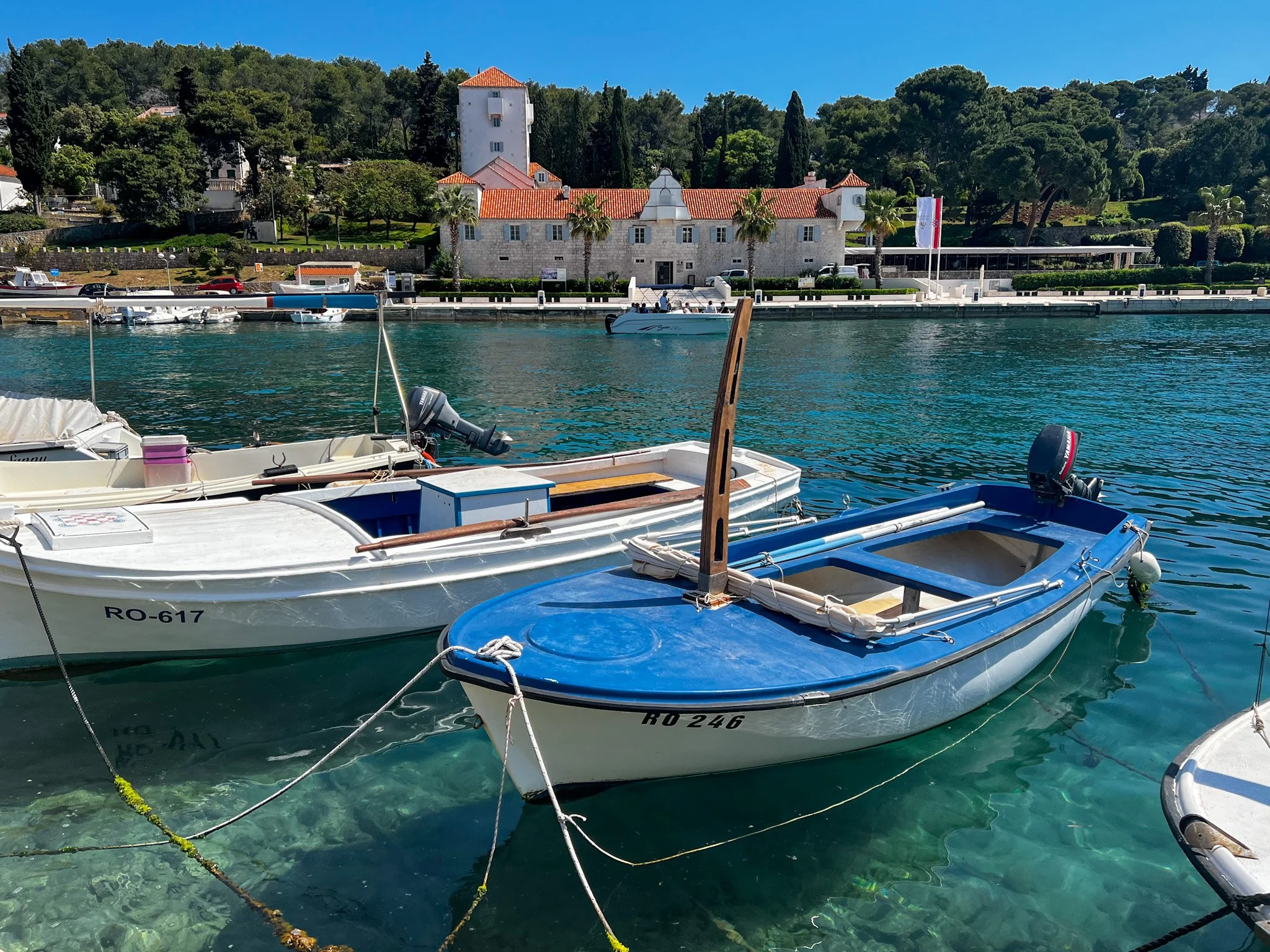
The next and final stop on our trip was Nečujam, a charming port village on the island of Šolta. Once a retreat for Roman Emperor Diocletian, who used the bay as a fishpond and bathhouse in the 4th century, remnants of these ancient structures still lie submerged in the waters today.
Nečujam has long been a place of tranquility, inspiring renowned Croatian poets such as Marko Marulić and Petar Hektorović. Their works, created in the peaceful surroundings of Nečujam, capture the village’s serene atmosphere.
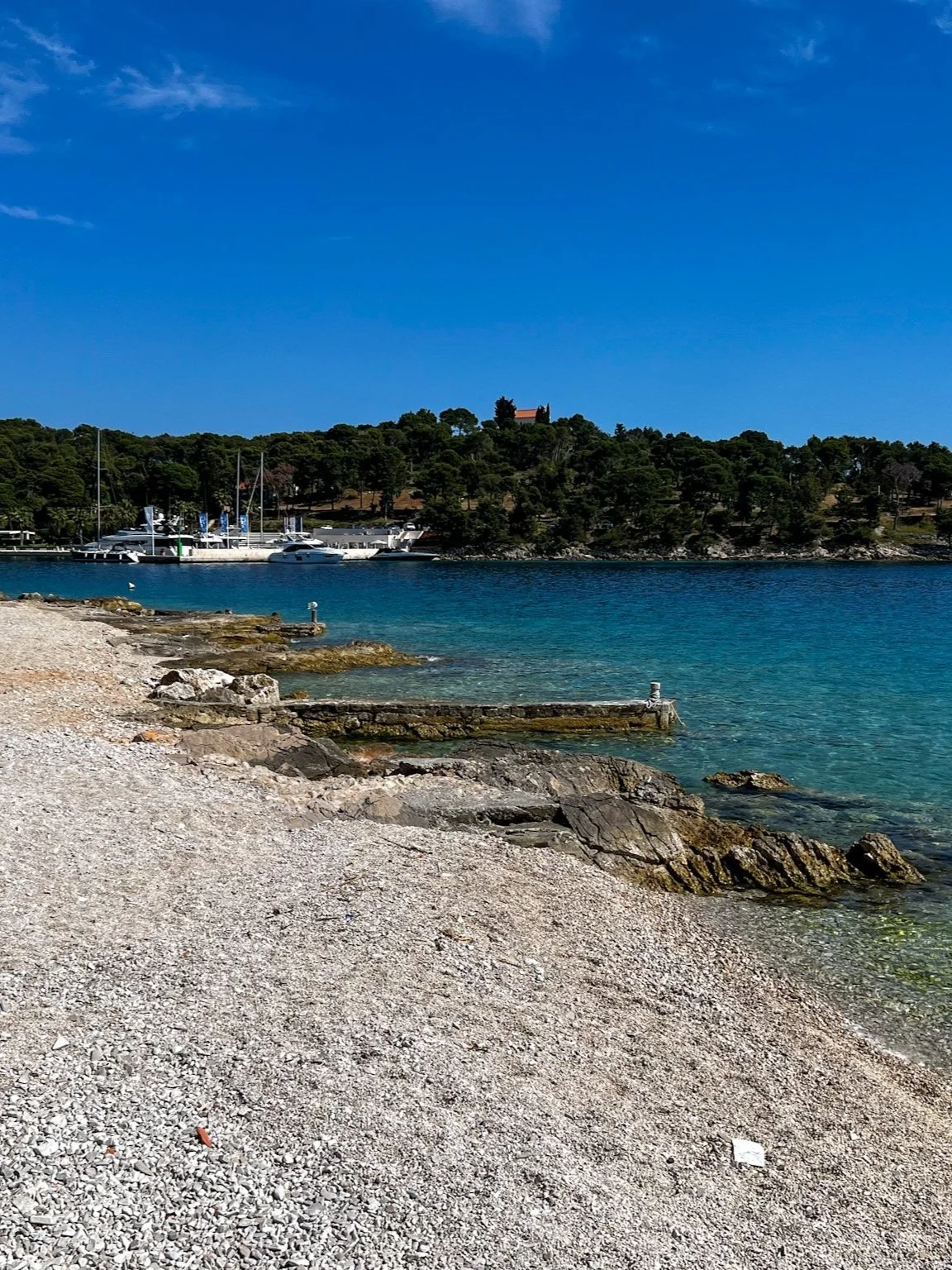
Today, Nečujam has become a modern tourist destination, known for its picturesque coves and crystal-clear waters. Of course, we couldn’t finish our tour in any better way than by spending some relaxing time at the nearby beach!
Our two wonderful days in the picturesque Split area were coming to a close, but our exciting Croatian adventures were only just beginning.
The following day, we cached a ferry that swiftly brought us to the beautiful Korčula Island, the birthplace of Marco Polo, where we planned to explore its charming streets and vibrant culture, before continuing on our onward journey to Dubrovnik, the Pearl of the Adriatic.
Some links in this post are affiliate links, which means that if you buy through them, we’ll receive a small commission. This will never cost you more and in many cases you will receive a special discount.
As always, all opinions are mine. We appreciate your support!


f you’re visiting Dubrovnik, a day trip to Mostar and the Kravica Waterfalls offers an unforgettable journey into the heart of Bosnia and Herzegovina’s history and natural beauty.
Mostar, a city renowned for its iconic Old Bridge, is a cultural gem that blends Ottoman, Balkan, and Mediterranean influences. Stroll through its charming cobbled streets, marvel at its stunning architecture, and immerse yourself in the rich history that makes Mostar a must-visit destination.
A short drive away, the Kravica Waterfalls provide a refreshing escape into nature. These cascading falls, set against a lush green backdrop, are perfect for a swim, a boat ride, or simply relaxing by the tranquil lake at their base. This combination of historical charm and natural splendour made this day trip to Bosnia and Herzegovina an unforgettable experience!