
Cusco, Peru: 3 days in the ancient capital of the Incas
Cusco, the ancient capital of the Inca Empire, is a city where history, culture, and breathtaking landscapes come together. Perched high in the Peruvian Andes, this UNESCO World Heritage site enchants visitors with its cobblestone streets, colonial architecture, and remnants of Incan grandeur. Once the heart of the largest empire in pre-Columbian America, Cusco offers a fascinating glimpse into Peru’s rich and layered past.
In just three days, you can explore Cusco’s most iconic landmarks, vibrant markets, and nearby archaeological wonders. From marvelling at the grandeur of Coricancha to wandering through the bustling Plaza de Armas, every corner of this historic city reveals a piece of its rich and captivating history. Whether you're a history buff or an adventurer acclimating before Machu Picchu, this 3-day guide will help you experience the magic of Cusco to the fullest.
What to see in Cusco: 3 day itinerary
Most travellers land in Cusco with their sights set on the iconic Machu Picchu and the breathtaking Sacred Valley of the Incas. While these world-renowned wonders deserve their fame, Cusco itself is a treasure trove of history, culture, and charm that absolutely warrants at least two days of exploration.
I recommend arriving at least 24 hours before diving into your itinerary to acclimate to the city's high altitude—at 3,400 meters above sea level, it's best to take it slow. Here’s the three-day itinerary we followed to make the most of our time in this enchanting city:
History of Cusco
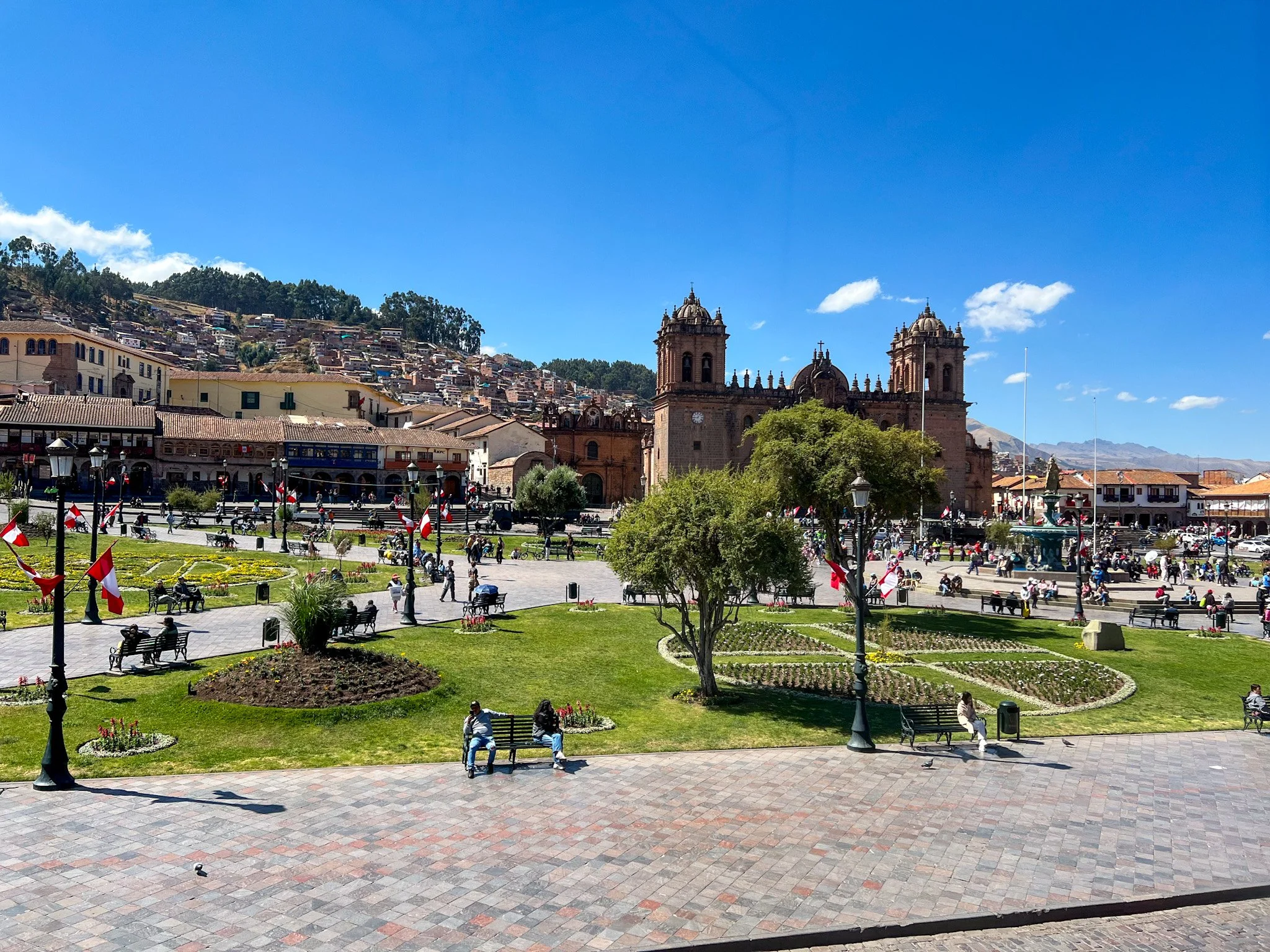
Cusco has a rich history as the centre of various cultures. Before the Incas, the Killke people occupied the region from 900 to 1200 CE, constructing significant structures such as the Saksaywaman fortress.
By the 13th century, the Inca Empire rose to prominence, transforming Cusco into its capital. According to legend, the city was rebuilt under Sapa Inca Pachacuti, who expanded the empire into Tawantinsuyu. The city was planned meticulously, with its layout resembling a puma, a sacred animal. Cusco flourished as the heart of Incan religion, governance, and culture, featuring temples like the Coricancha (Temple of the Sun).
In 1533, Spanish conquistadors led by Francisco Pizarro arrived in Cusco, marking the fall of the Inca Empire. After defeating the Incas, they repurposed the sturdy stone foundations of temples and palaces to construct colonial churches, mansions, and cathedrals. Despite some resistance, such as Manco Inca Yupanqui's failed Siege of Cusco in 1536, the city became a key centre for Spanish Christianisation. The fusion of Inca and Spanish architecture remains visible today, with buildings such as the Santo Domingo Convent built over the Coricancha. Despite these changes, Cusco's Inca heritage endured, with many walls and structures surviving earthquakes that toppled colonial buildings.
Over the centuries, Cusco remained a centre of Christianity and economic activity in the Andes, evolving into a cultural hub. Today, Cusco thrives as Peru's most important tourist destination and a gateway to Machu Picchu. Declared a UNESCO World Heritage Site in 1983, the city attracts millions of visitors annually. The city's Inca roots, Spanish colonial architecture, and vibrant traditions make it one of South America's most captivating destinations.
Day 1: arrival in Cusco
Arriving in Cusco is an exciting experience, but it’s important to take things slow on your first day. Situated at an altitude of 3,399 meters above sea level, Cusco can be challenging for those not accustomed to the height. The first day should be all about resting and allowing your body to adjust to the thin air.
We spent our arrival day exploring the city centre at a very relaxed pace—mainly wandering through the historic Plaza de Armas—while saving most of the sightseeing for the next day. I would highly advise against booking any visits or walking tours on your first day, unless absolutely necessary due to time constraints, in order to give your body time to adapt and avoid any unpleasant experiences during your trip.
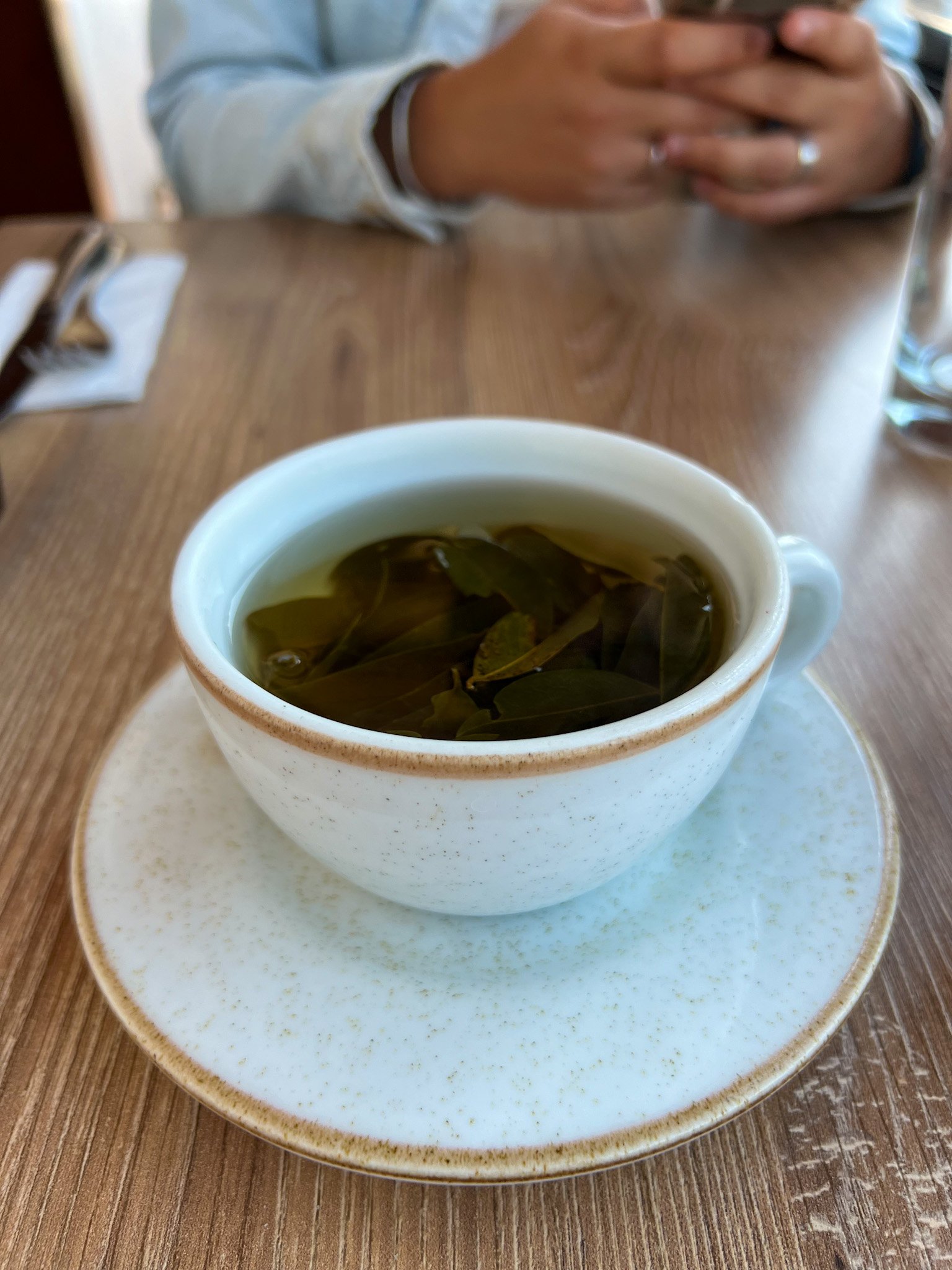
To help combat altitude sickness, it's essential to stay hydrated and avoid heavy physical activity in the first 24 hours. Drinking coca tea, made from the leaves of the coca plant, is a local remedy known to help ease the symptoms of altitude sickness. Coca tea is offered for free in most hotels, and you can also find it in nearly every restaurant. For us, it was a lifesaver and definitely helped with the adjustment!
Day 2
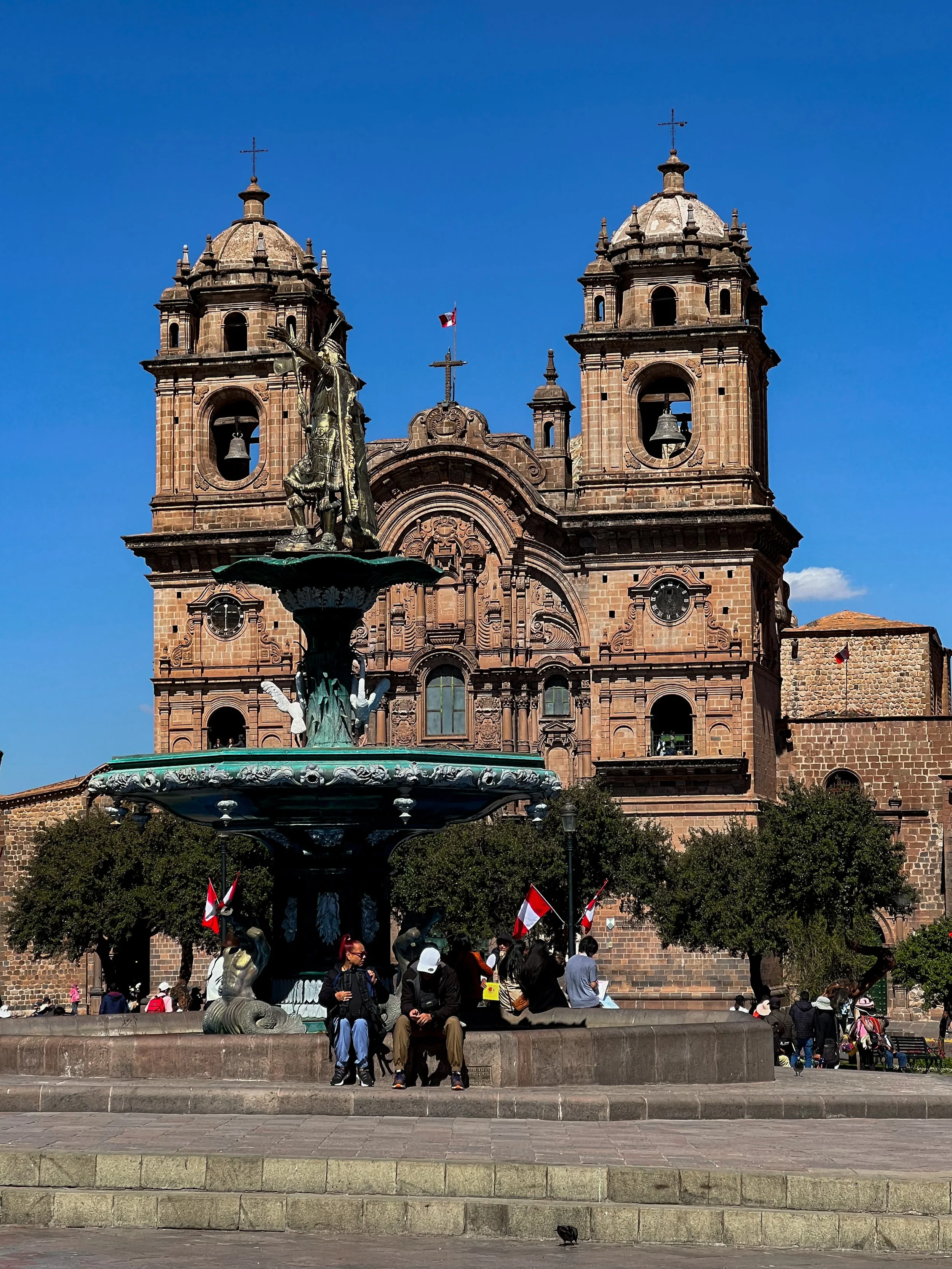
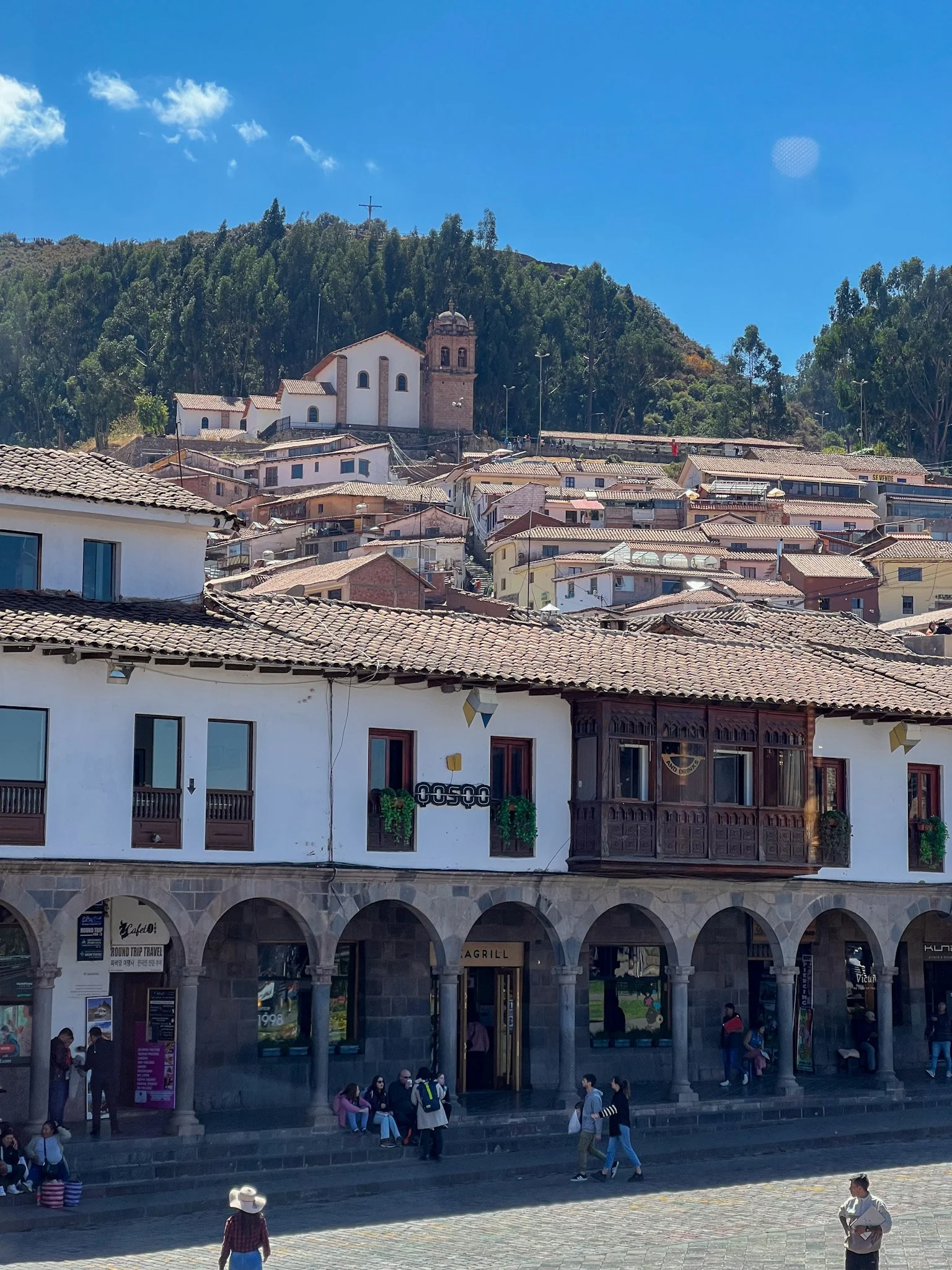
Plaza de Armas
The best place to start exploring Cusco is the famous Plaza de Armas, which has been a central gathering place for centuries. Originally a swamp crossed by the Saphy River, it was transformed during the Inca Empire into the administrative and ceremonial heart of the city. This area hosted significant rituals, celebrations, and victories of the Inca military. Surrounded by royal palaces, it symbolised the empire’s power and spirituality.
Following the Spanish conquest, the square underwent a dramatic transformation. Spanish rulers erected Catholic churches and mansions on the foundations of Inca architecture, overlaying the indigenous legacy with European cultural symbols. The plaza also bore witness to historical events like the execution of Túpac Amaru II, which cemented its role as a site of both celebration and tragedy.
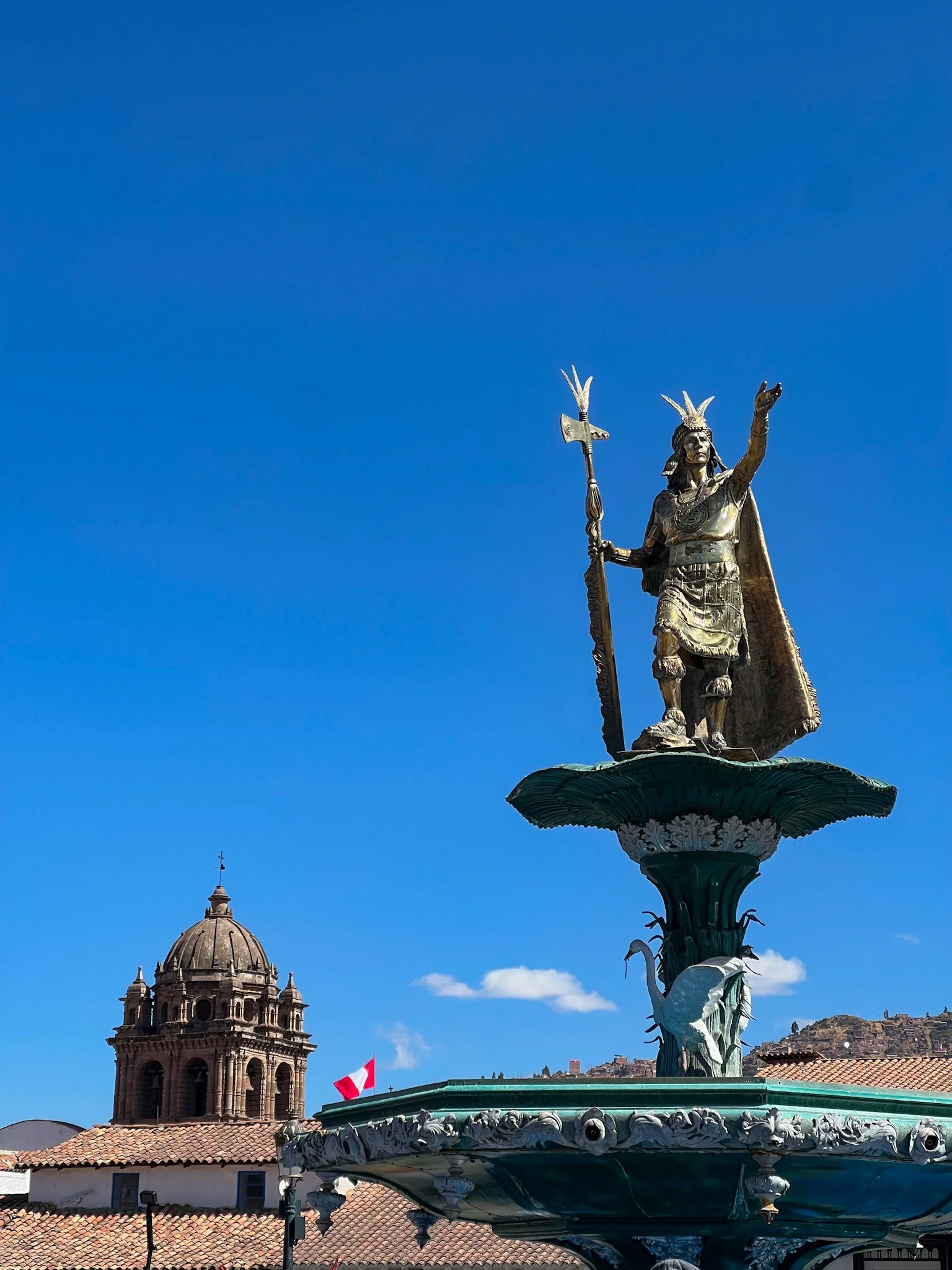
Right at the centre of the square you can find the statue of Pachacuti, honouring the ninth ruler of the Kingdom of Cusco and the Inca Empire, known for expanding Inca dominion and possibly having Machu Picchu built as his estate.
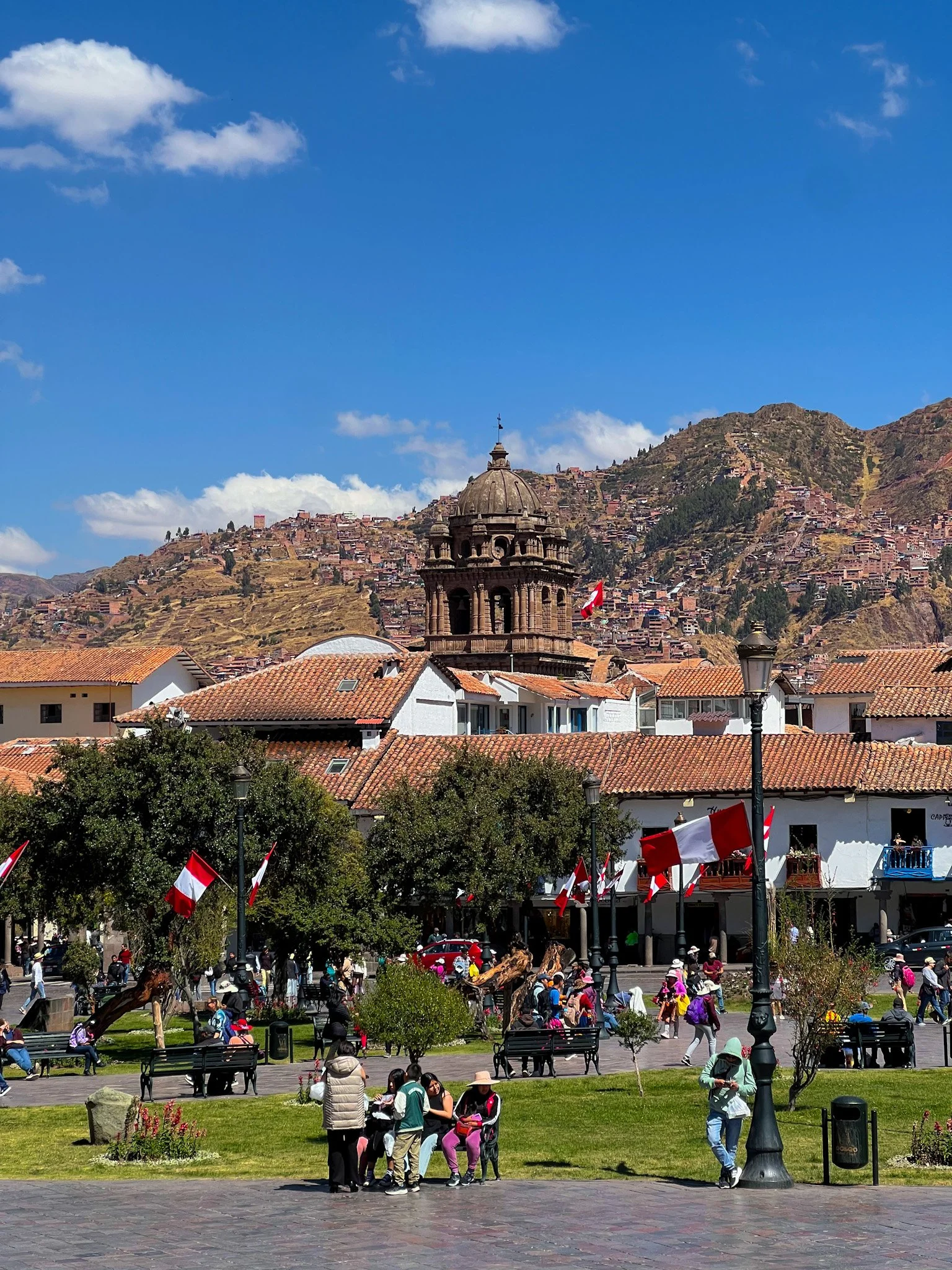
Today, the Plaza de Armas remains the vibrant core of Cusco, blending ancient traditions with modern dynamics. Surrounded by colonial-era buildings, many retaining Inca foundations, the square is now home to restaurants, stores, and international franchises. It continues to host religious and cultural festivities, parades, and concerts, serving as a focal point for local identity and global curiosity. Recognized as a UNESCO World Heritage Site, the plaza is a living monument to the convergence of Inca and colonial histories, embodying Cusco’s unique cultural narrative.
Cusco Cathedral
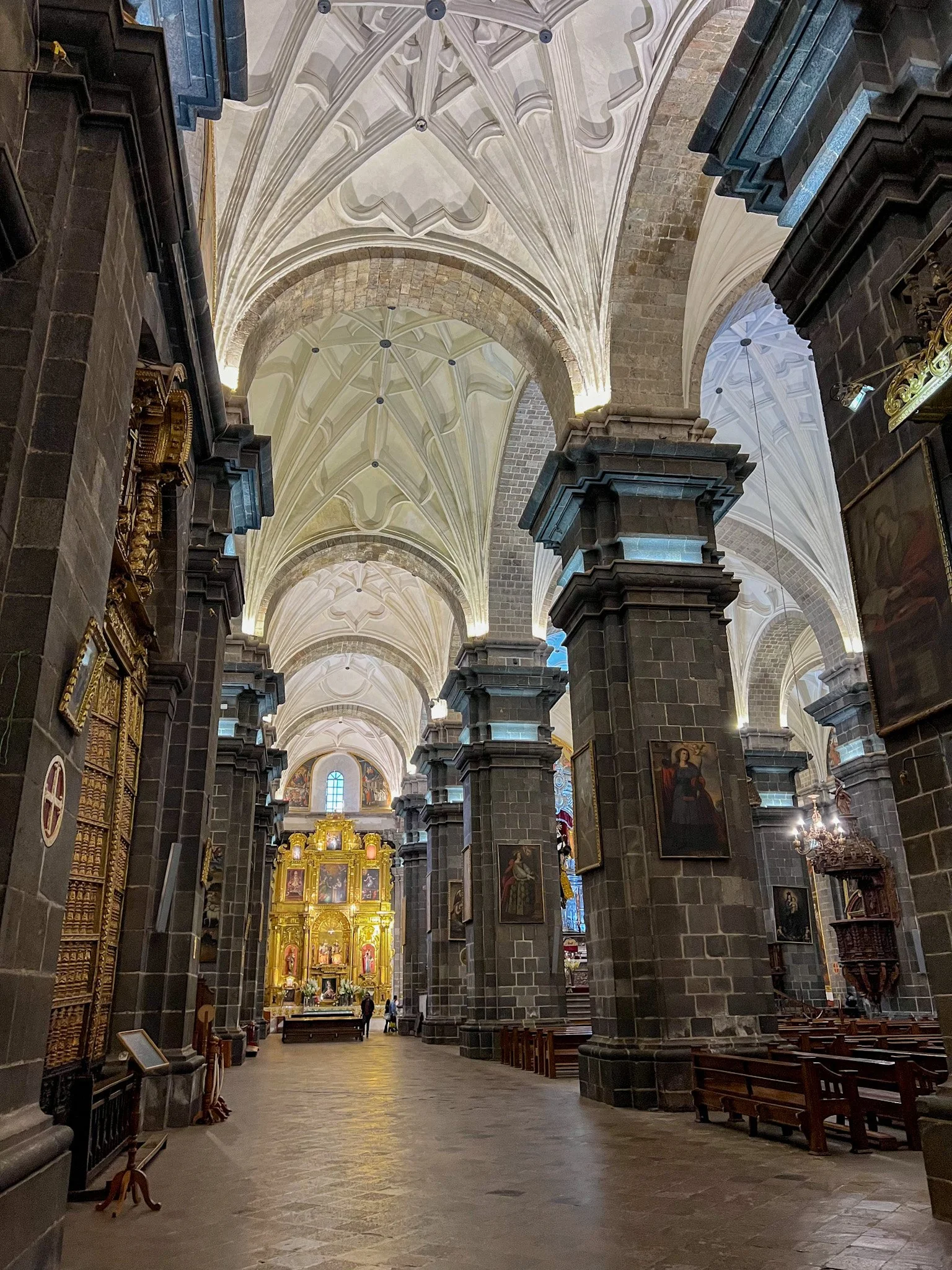
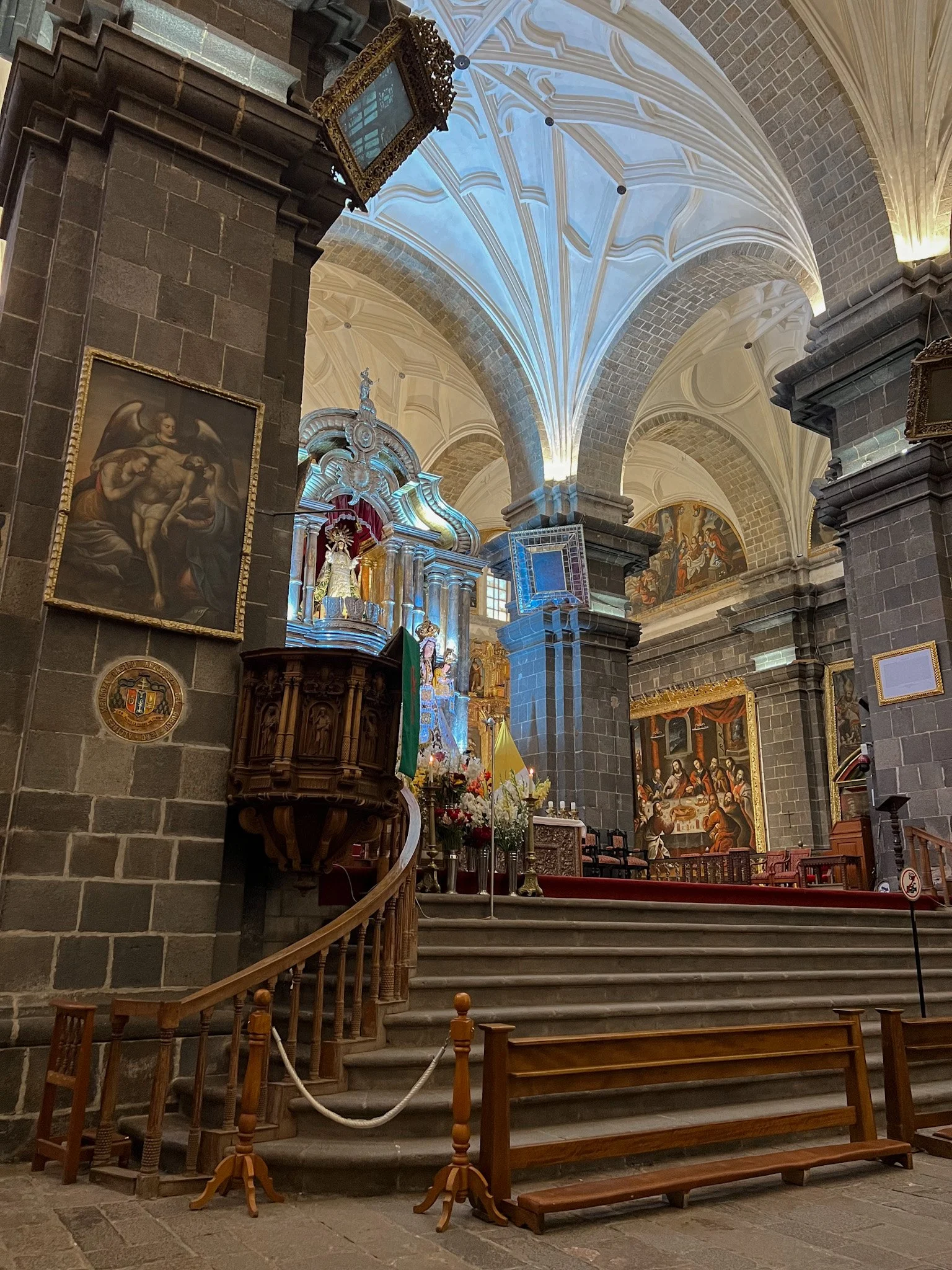
On the northern end of the square stands the Cusco Cathedral. Built over the ruins of previous Inca structures, the cathedral reflects the city’s transition from an Inca imperial centre to a colonial stronghold. Constructed between 1560 and 1664, the edifice combines Renaissance, Baroque, and late Gothic influences, creating a striking visual tapestry that symbolises the fusion of European and Andean traditions. This massive structure incorporates red granite stones from Sacsayhuamán and features Gothic ribbed vaults, a basilica-style layout, and ornate altarpieces carved in wood and gilded with gold. The jaguar heads subtly embedded in its design are a nod to the Inca spiritual worldview, showcasing how indigenous elements endured despite colonial suppression.
Within its walls, the Cathedral of Cusco houses priceless artwork from the Cusco School of painting, a fusion of European techniques and local artistry. Notable pieces include Diego Quispe Tito's series on Christ’s parables and the dramatic "Señor de los Temblores," a painting capturing the city’s response to the 1650 earthquake.
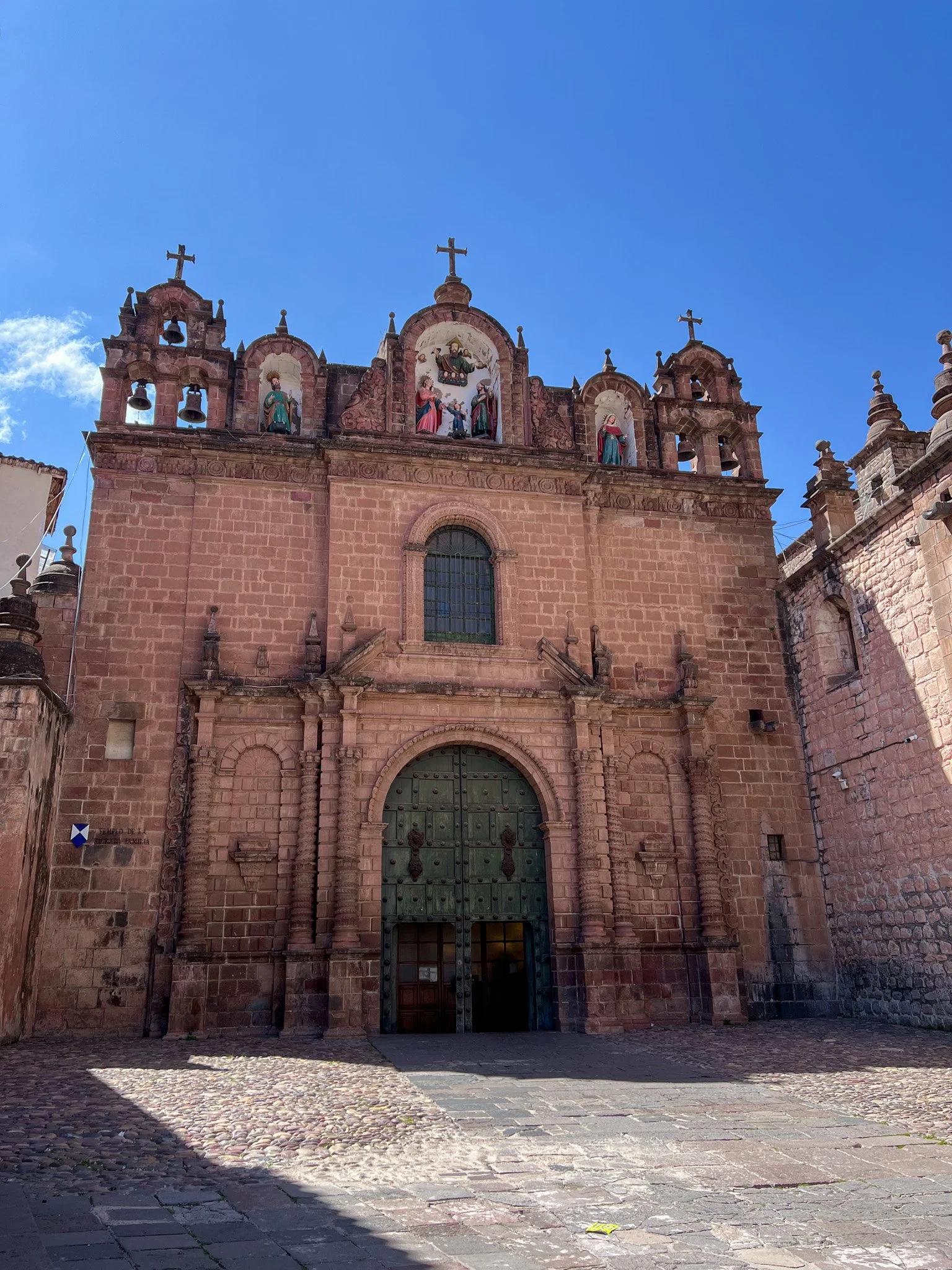
Adjacent to the cathedral is the Iglesia del Triunfo, a smaller chapel with its own historic significance. It commemorates the Spanish victory over the Inca forces during a siege, a moment attributed to divine intervention by Saint James. Together, the cathedral and its auxiliary chapels form a cultural and spiritual complex that represents centuries of religious, artistic, and social evolution in Cusco.



Church of the Society of Jesus
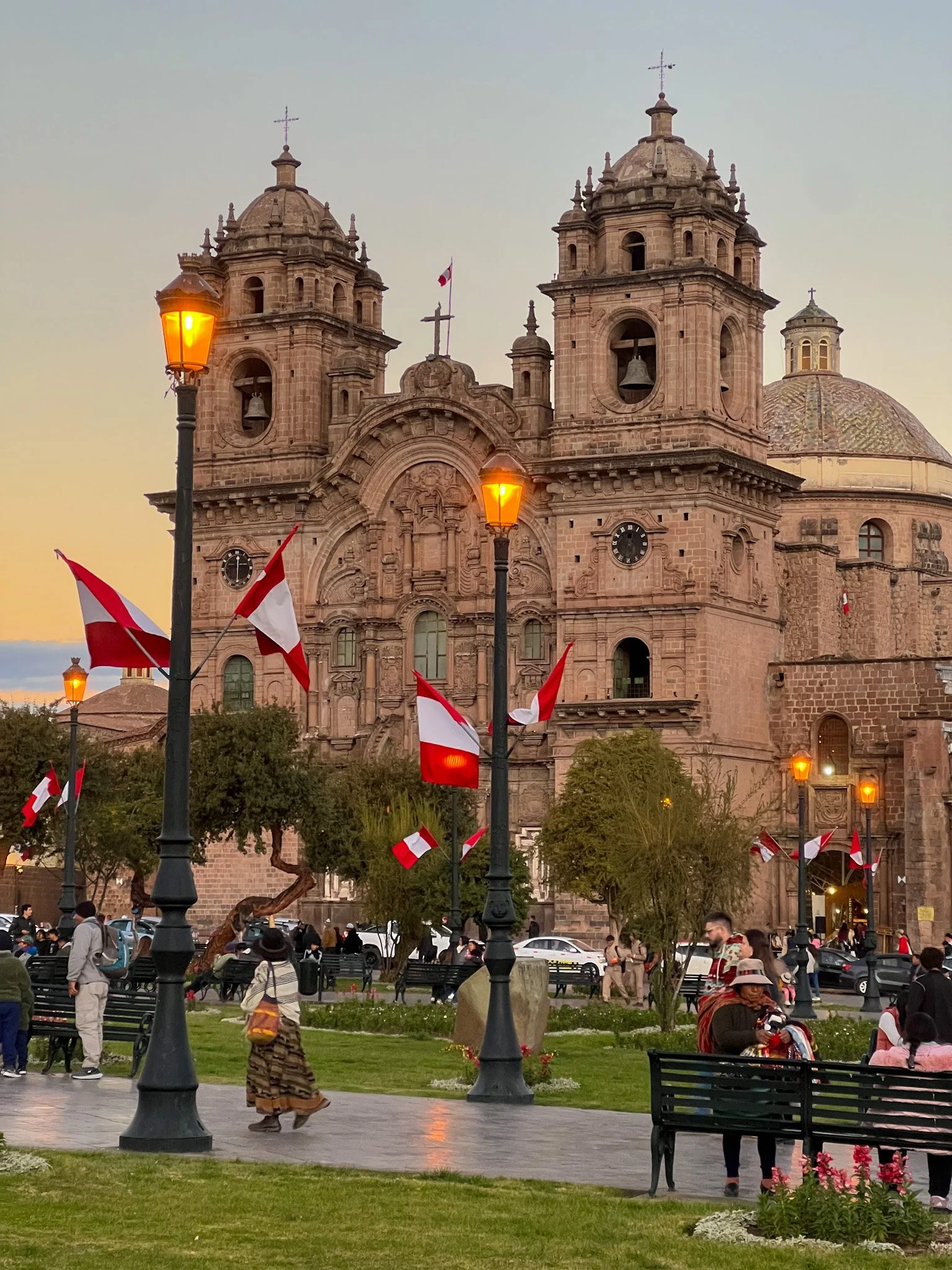
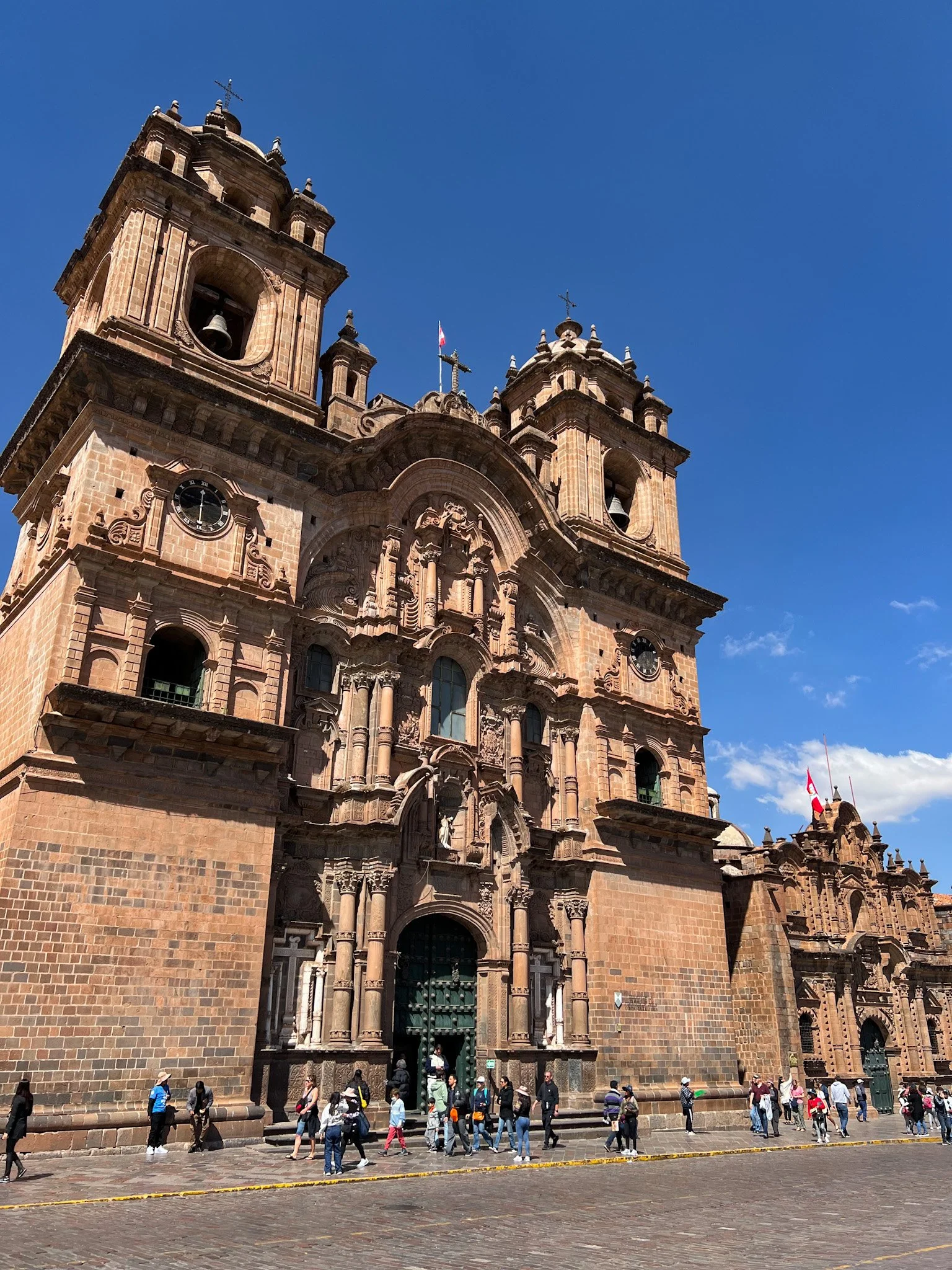
Also located in Plaza de Armas is the Church of the Society of Jesus, a stunning example of Spanish Baroque architecture built on a previous Inca palace. Construction began in 1576, but the church was severely damaged by an earthquake in 1650 and rebuilt by Flemish Jesuit architect Jean-Baptiste Gilles. The new church, completed in 1673, features a grand façade with Corinthian columns, bell towers, and intricate stonework.
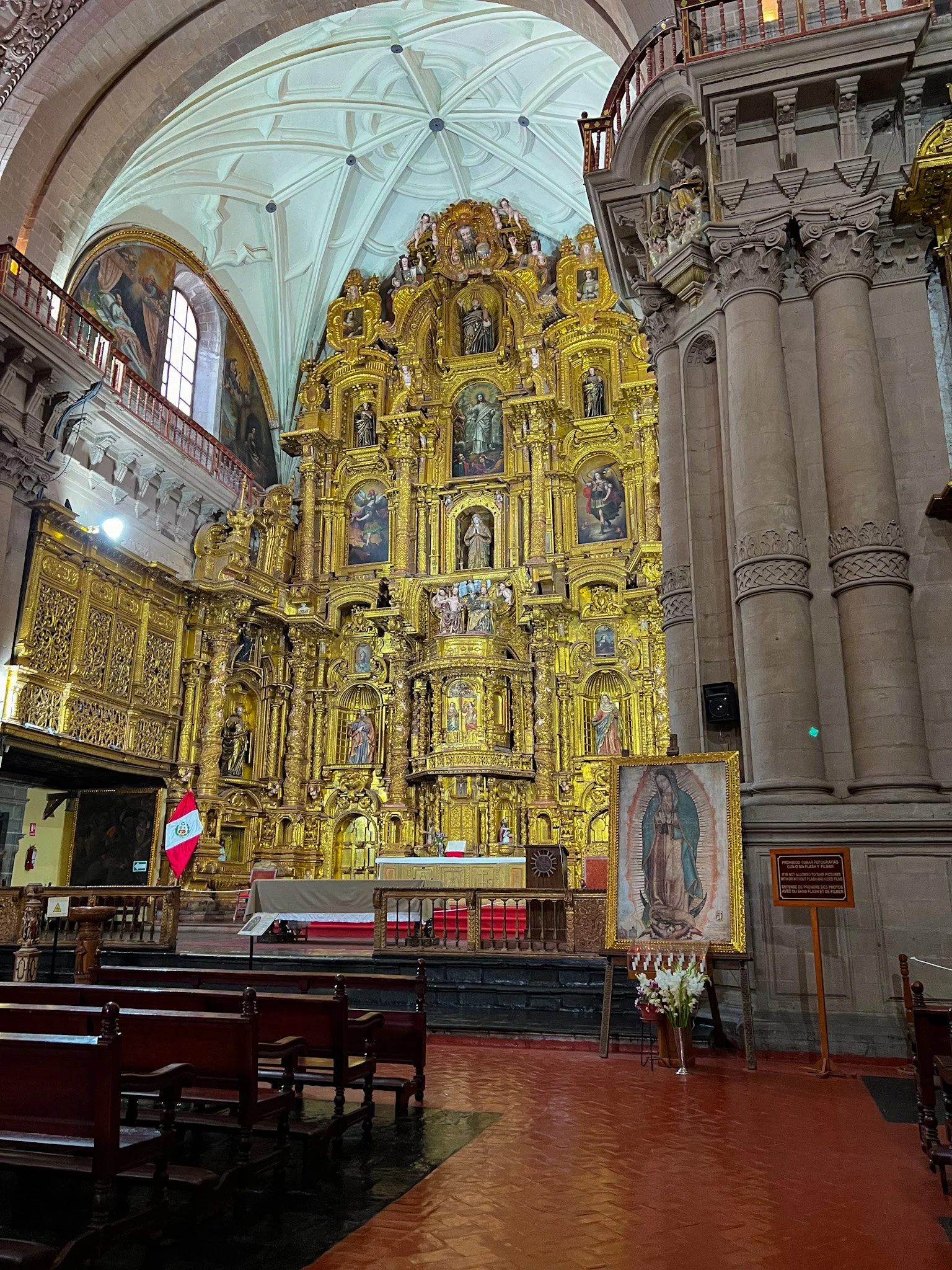
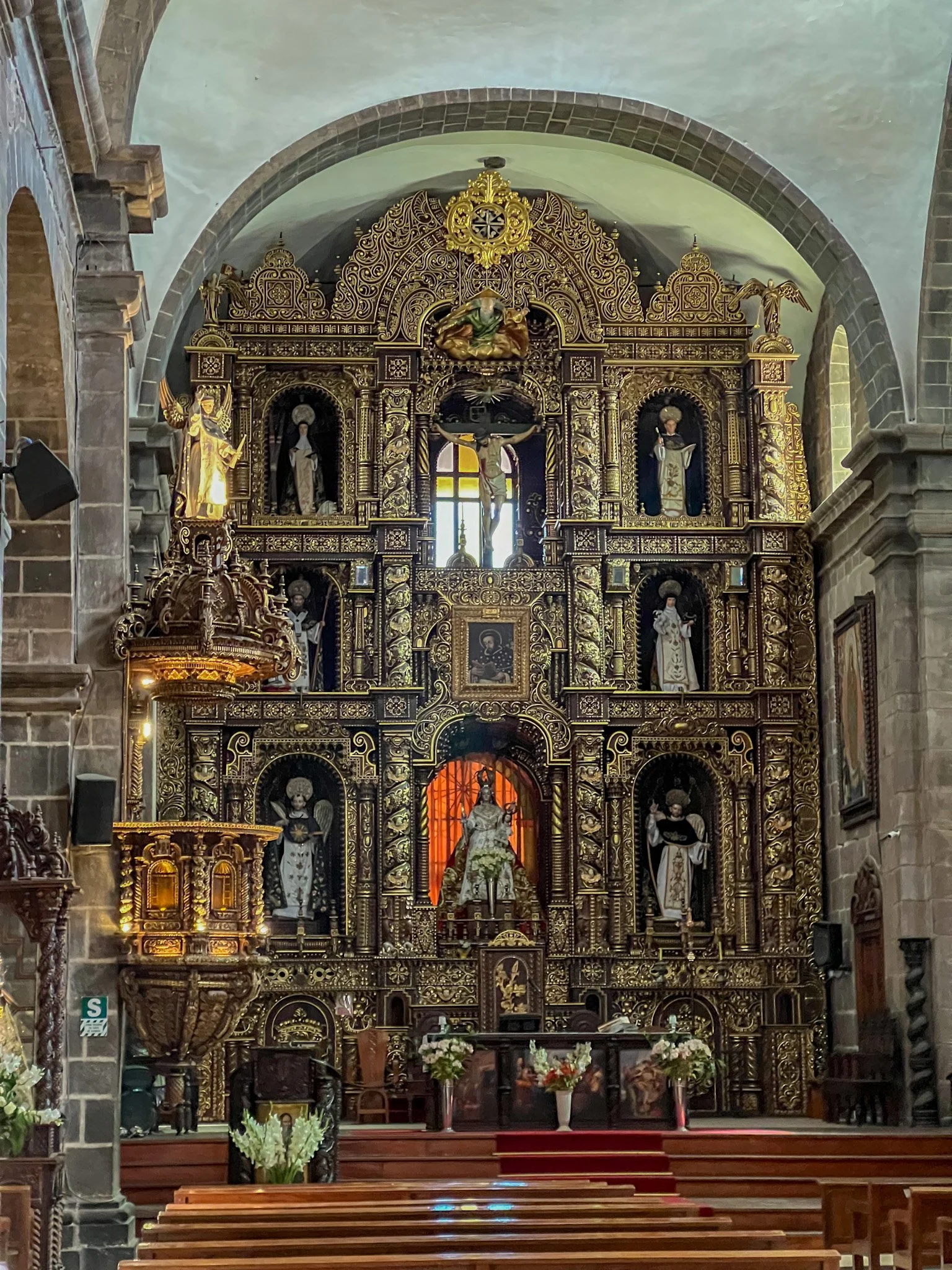
Inside, the church is adorned with a 21-meter tall altarpiece made of cedar and gold leaf, and a large painting of the Transfiguration of Jesus. The church also houses valuable artworks from the Cusco School, such as The Wedding of Martín García Oñas de Loyola and Ñusta Beatriz Clara Qoya, symbolising the union of Spanish and Inca lineages.
Adjacent to the church, the Jesuits also built the University of San Ignacio de Loyola, which later became part of the National University of Saint Anthony the Abbot. The Chapel of San Ignacio de Loyola, a simpler structure now used as an exhibition hall, is located nearby. After the Jesuits were expelled in 1767, the church became the parish of El Sagrario until their return.
Archbishop's Palace Museum
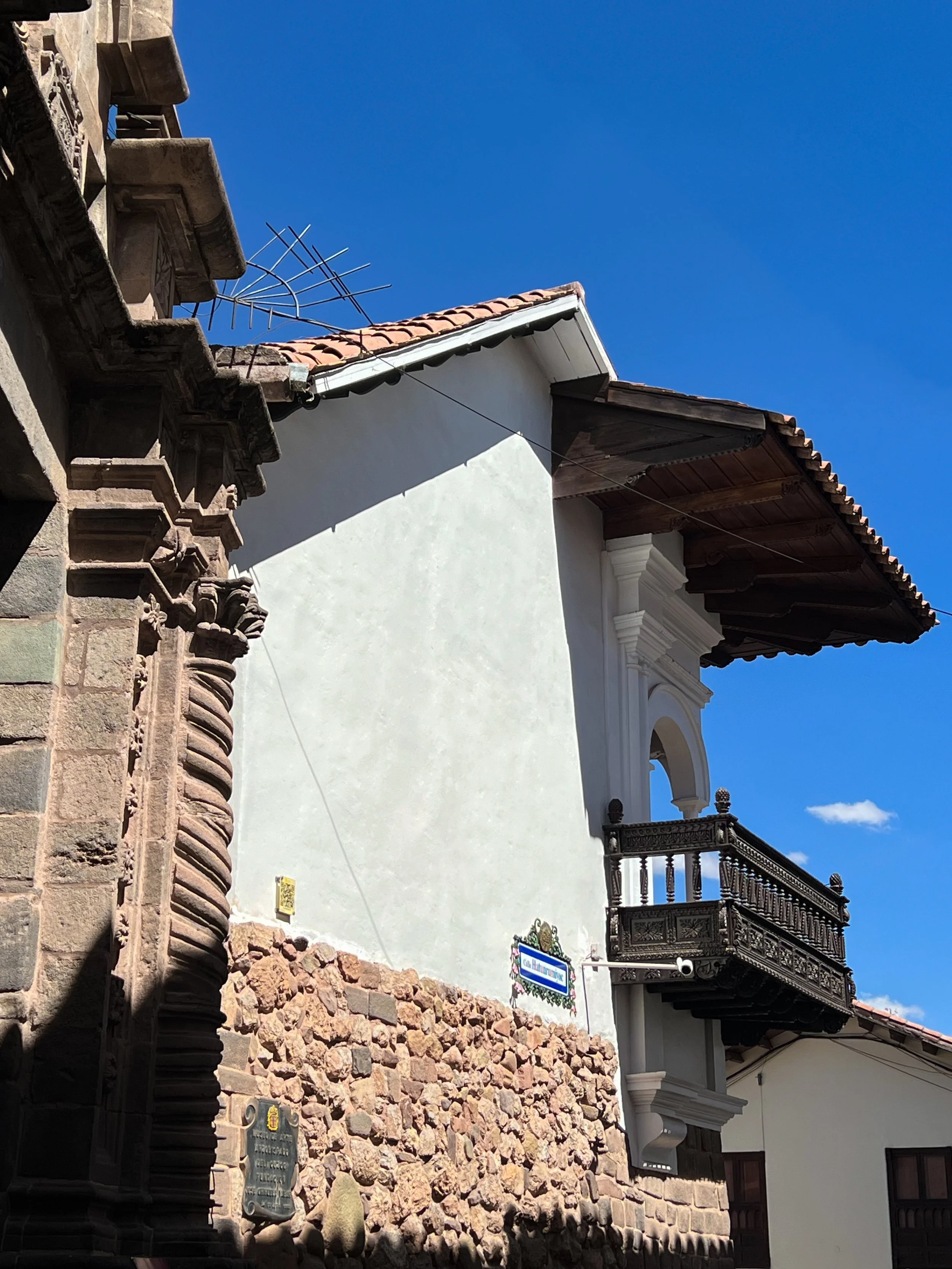
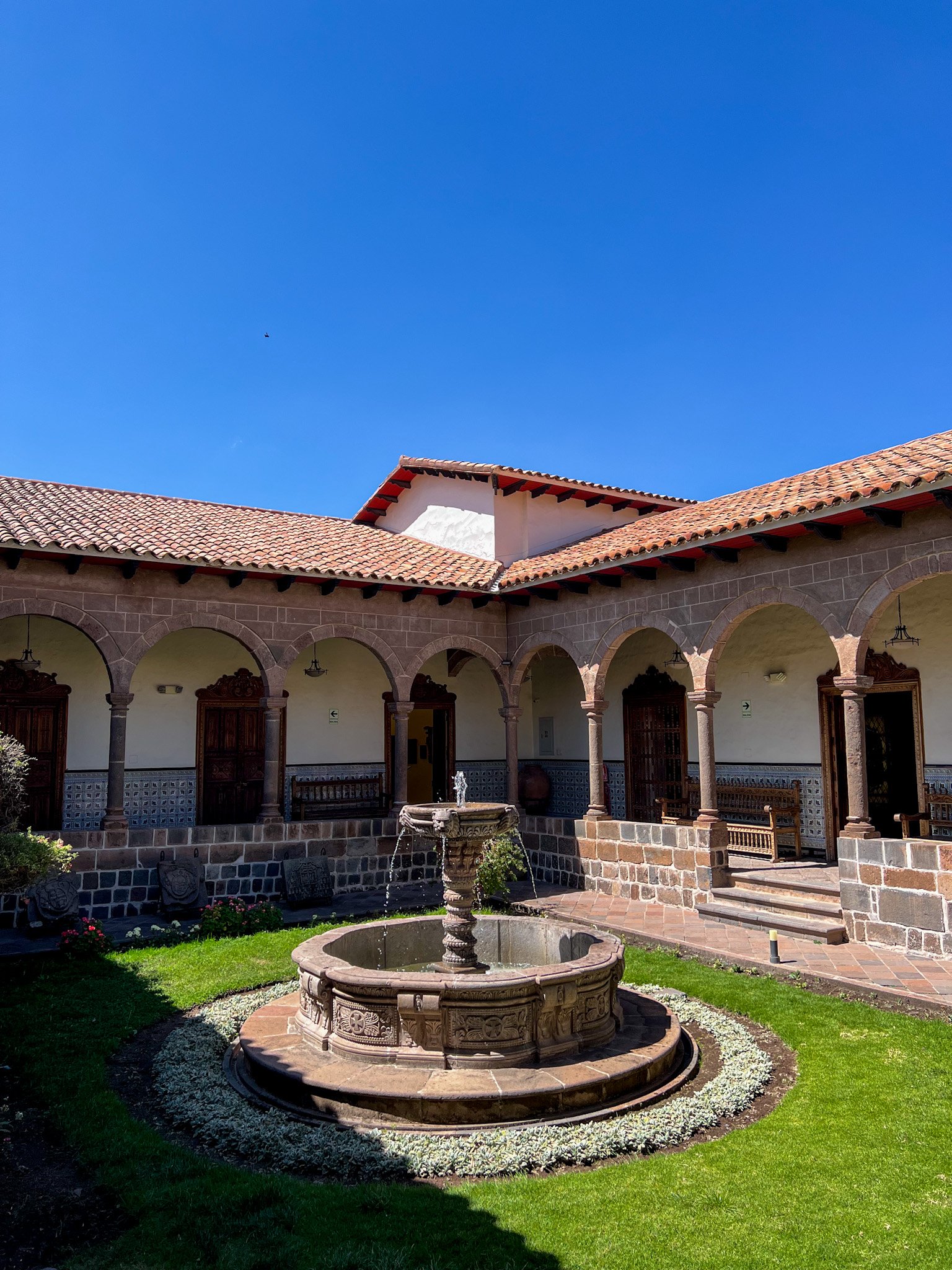
Our next stop was the Archbishop's Palace, originally the palace of Inca Roca that is now home to the Museum of Religious Art of Cusco. The palace, built by the Valverde Contreras y Xáraba family in the colonial era, features a Renaissance-style courtyard with arches and a central pool. Notable for its Inca masonry, the building houses valuable artworks, including pieces by Juan Zapata and other Cusco School artists. The museum, founded in 1966, displays a diverse collection of colonial religious art, including works such as Alonso el Cano's El Cristo Crucificado and Diego Quispe Tito's Zodiac Signs series.
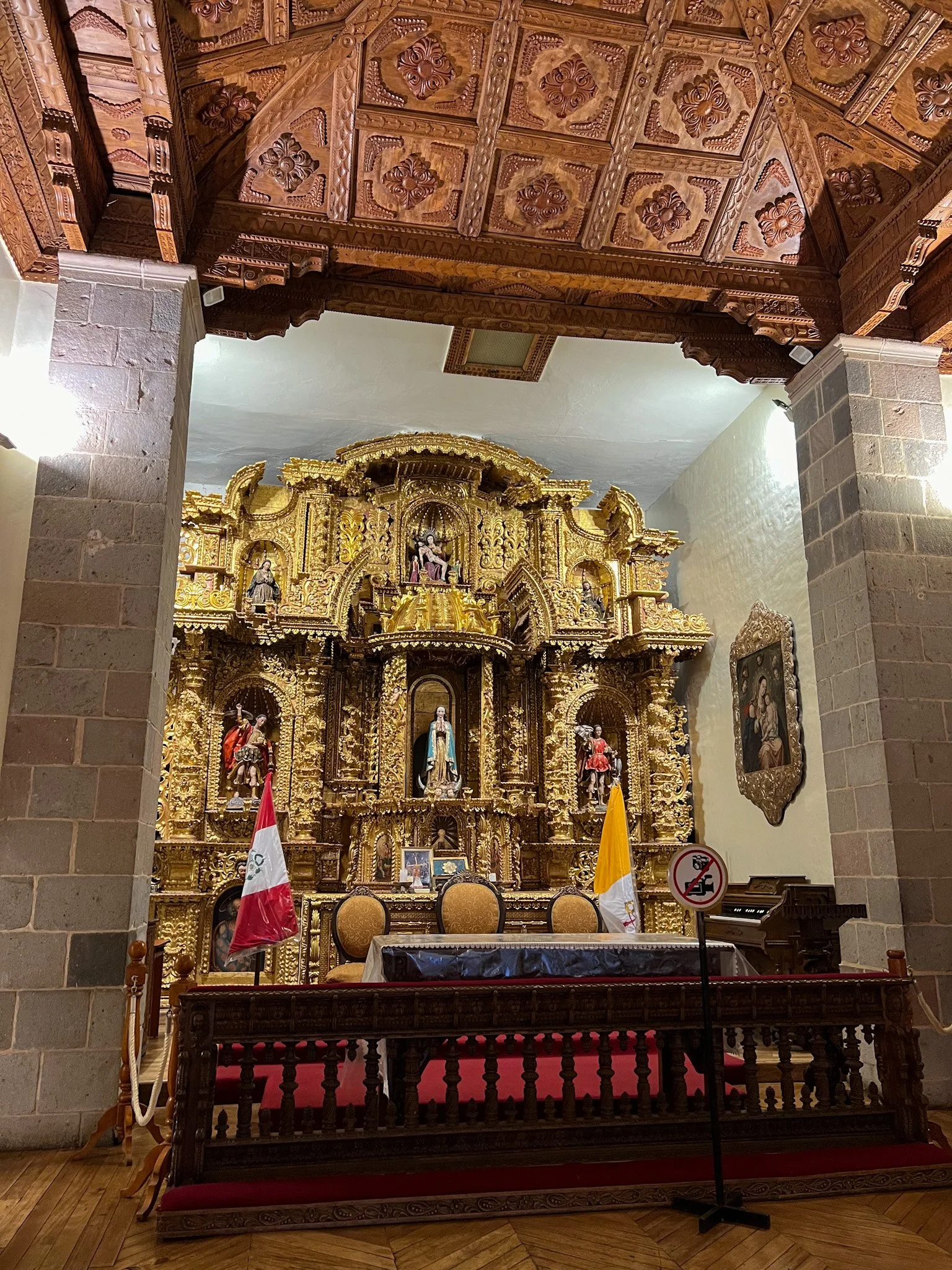
The Museum of Religious Art contains fourteen rooms showcasing centuries-old masterpieces. The Golden Room features brocaded canvases depicting the Virgin Mary, while the Garden Room contains The Garden of San Antonio Abad, representing the connection between education and cultivation. Other rooms, such as the Libertador Room, Origins Room, and Corpus Christi Room, exhibit art related to Cusco’s history, independence, and religious traditions. The chapel, consecrated to the Virgin of the Immaculate Conception, is decorated with an 18th-century baroque altarpiece, and the Zodiac Room displays canvases inspired by Flemish engravings. The museum remains a significant cultural and historical site in Cusco.
Twelve-angled stone
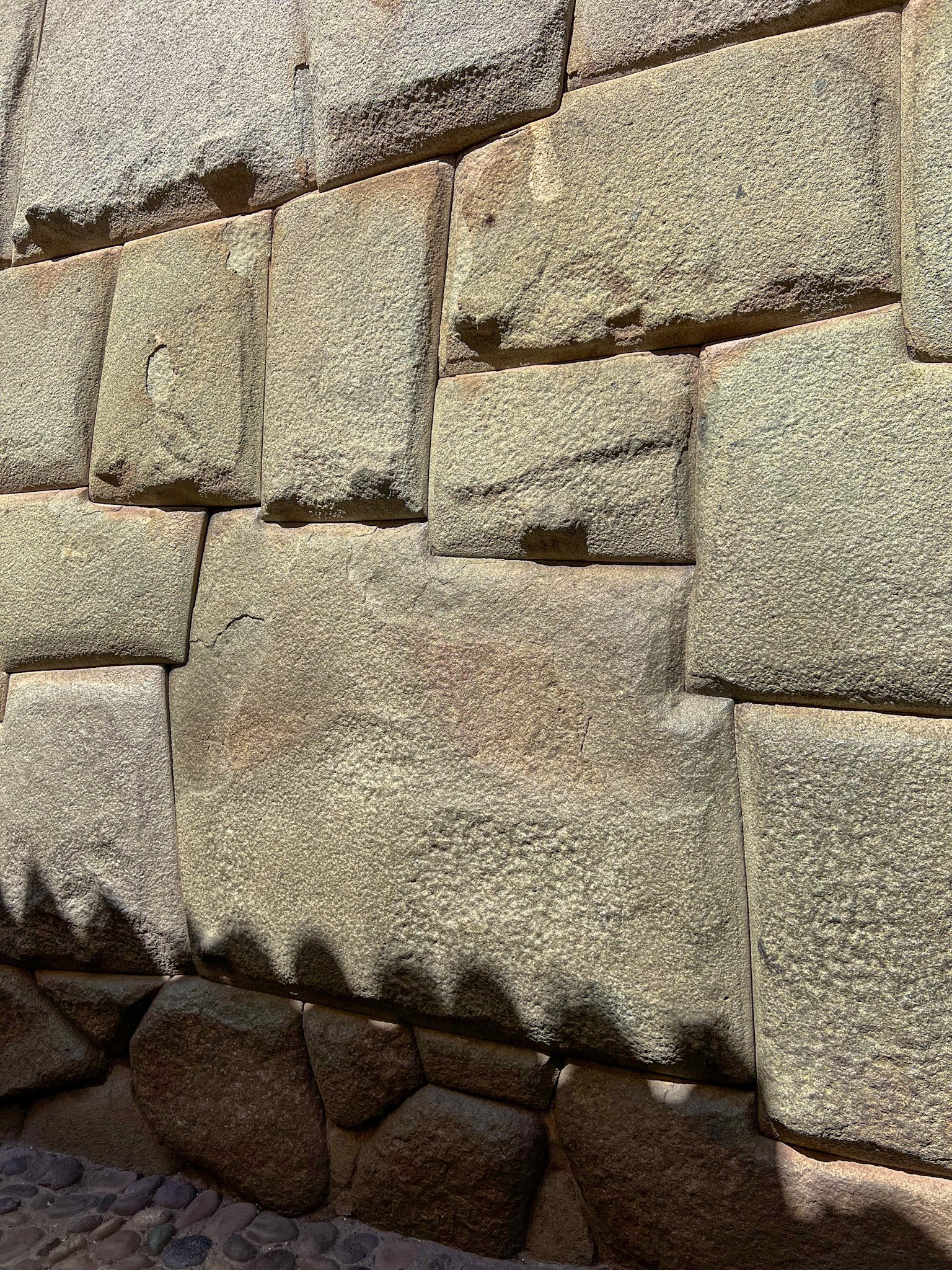
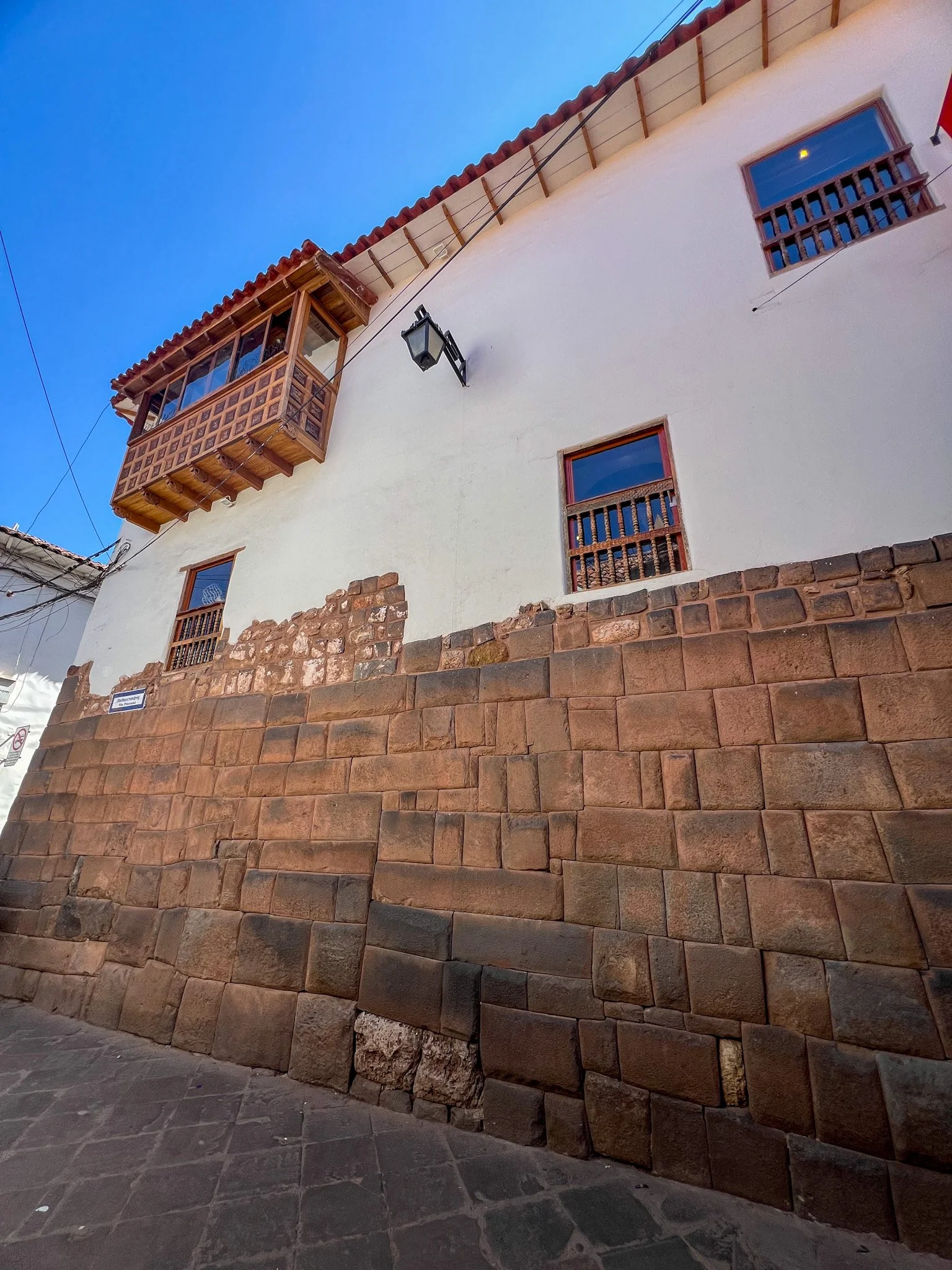
On the façade of the The Archbishop’s Palace you can’t miss the famous Twelve-Angled Stone, a unique example of Inca stonework. The stone is renowned for its fine craftsmanship and twelve-angled edges, showcasing the perfectionist architecture of the Inca civilisation, with no asymmetries in its joints.
The stone, made of diorite, is classified as a Cultural Heritage of the Nation of Peru and is a significant example of Incan construction knowledge. Although other stones with similar or more angles exist, the Twelve-Angled Stone is the most famous and attracts many visitors.
Lunch: Tunupa Restaurant
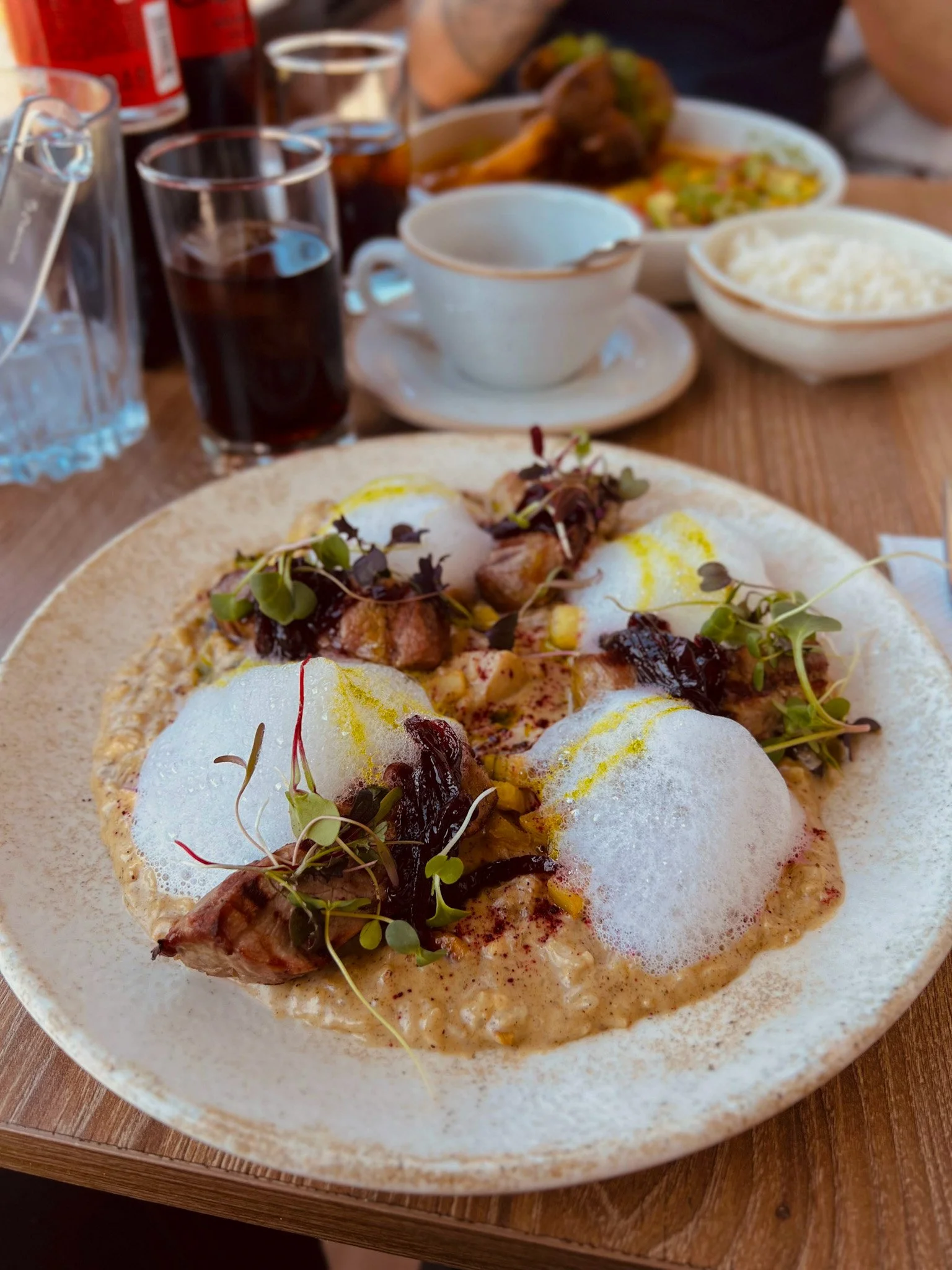
By the time we realised it was already lunchtime, we decided to try Tunupa Restaurant, a restaurant that perfectly captures the spirit of the region. Named after the ancient deity Tunupa, who symbolises nature’s supreme creator and embodies qualities such as leadership and strength, Tunupa offers more than just a meal – it’s an experience. The restaurant’s location couldn’t be better: situated on a high-floor terrace of a building on the edge of Plaza de Armas, it offers incredible views of the square, the cathedral, and the Church of the Company of Jesus.
The menu at Tunupa combines traditional Peruvian flavours with innovative twists, delivering dishes that not only reflect the cultural richness of the Sacred Valley but also push the boundaries of local cuisine. We tried the alpaca with four-cheese risotto and the lamb shank, and both were absolutely delicious.
In the evening, you can enjoy a Peruvian folklore dance while dining, a must-do experience for anyone wanting to immerse themselves in the local culture. I recommend booking in advance the food and folklore show through GetYourGuide, which offers three different menu options, including a vegetarian choice.

Calle Loreto & Kusicancha
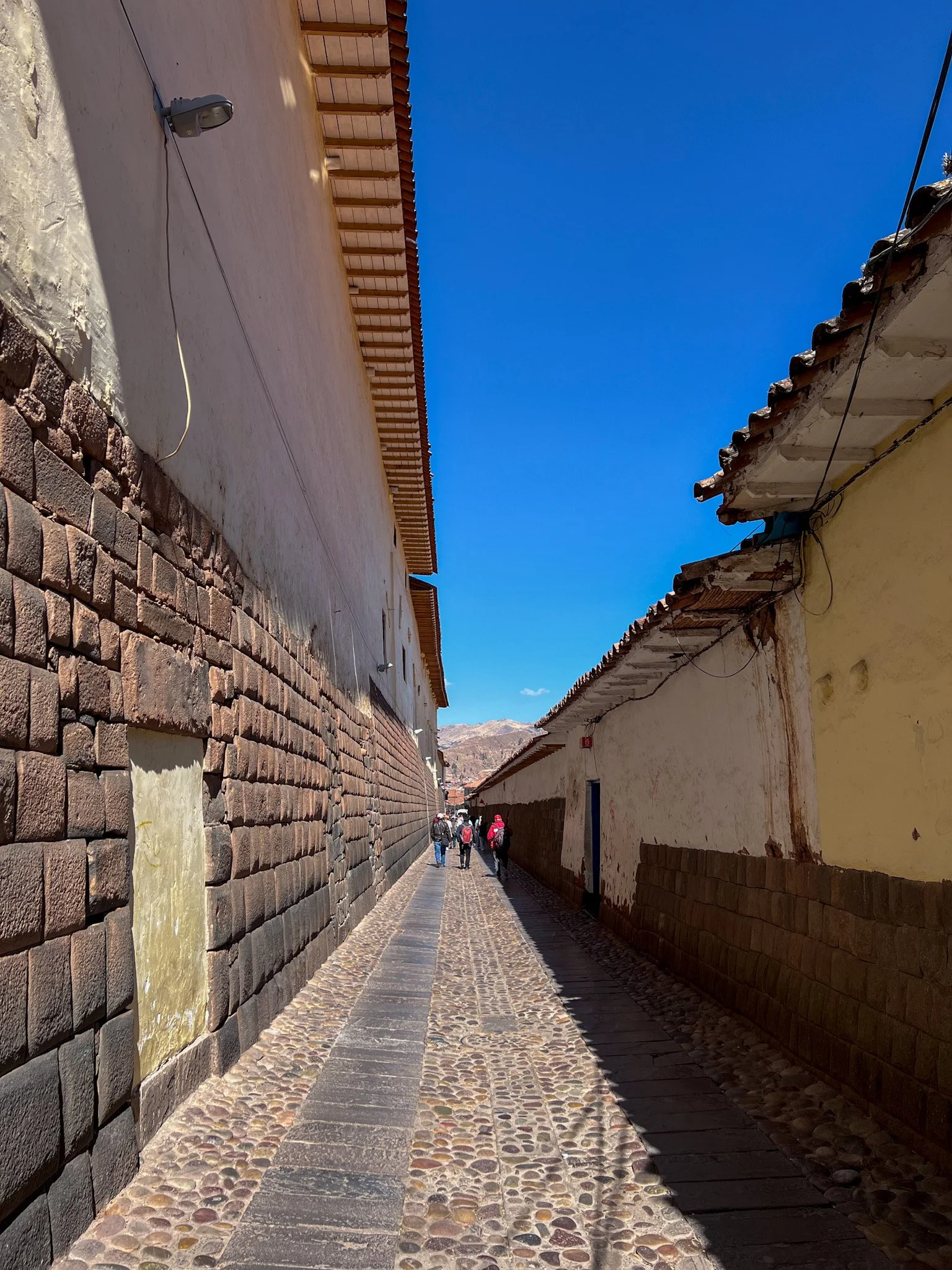
We continued our walk along Cusco’s historical centre with Loreto Street, famous for the well-preserved Inca walls that line it. The exact date of its construction is unknown, but it is known to have existed during the Inca Empire, serving as the road that divided the Amarucancha, the palace of Inca Huayna Cápac, from the Acllawasi palace. The street exemplifies Inca urban planning, with large plazas bordered by stone walls. The current street was named Loreto after the chapel of Our Lady of Loreto, located next to the Church of the Society of Jesus.
At the end of Loreto Street opens up Kusicancha, a lesser-known Inca palace in the heart of Cusco that was a residential area for Inca nobility and is historically significant as the birthplace of Inca Pachacutec, one of the most important figures in pre-Columbian America. Kusicancha was a strategic site, with a layout of interconnected enclosures and courtyards designed to house both nobility and clergy. It also served as a storage area for goods intended for the temple and accommodated priests and their servants. The name Kusicancha means "Happy Enclosure" in Quechua, reflecting its importance as a thriving Inca neighbourhood. Although much of it was destroyed during the Spanish conquest and later converted into colonial mansions and military barracks, the site has been partially restored.
Today, it serves as an archaeological park, offering visitors a glimpse into the advanced Inca construction techniques and the urban planning of ancient Cusco. The site is open to the public for free, making it an accessible and fascinating stop for those exploring the city's historical centre.
Cusco City Tour
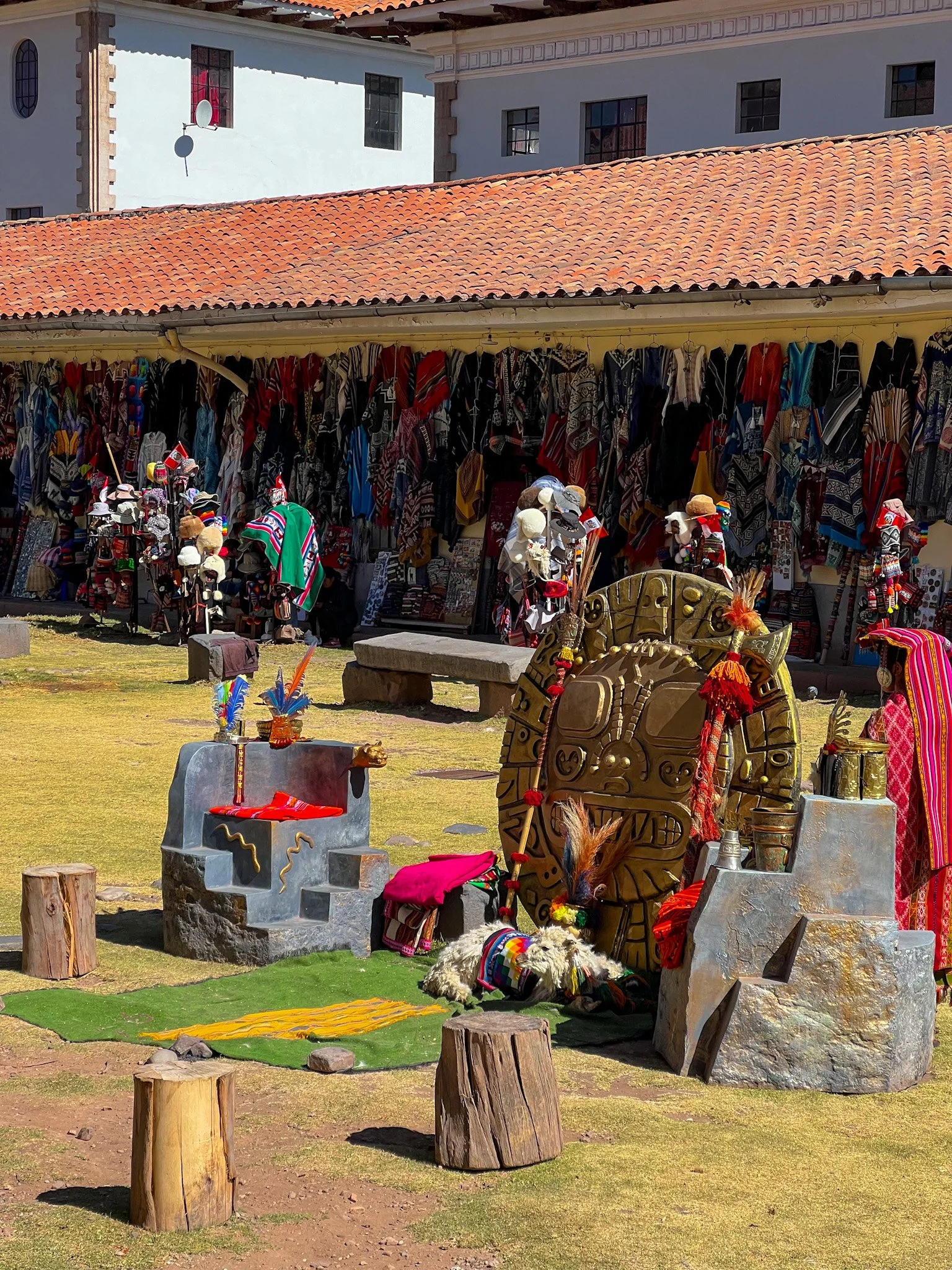
For the rest of the afternoon, we booked the Cusco city tour with GetYourGuide. This tour allowed us to explore five incredible archaeological sites both inside and outside the city.
Our journey began with a visit to the Temple of Coricancha, the Inca's most important temple, often referred to as the Temple of the Sun. From there, we made our way to the mighty Sacsayhuamán, a fortress known for its massive stone blocks, some weighing over 350 tons. The tour continued to the Qenqo amphitheater, an ancient ceremonial site with intricate rock formations and paths.
We then visited the tranquil water temple of Tambomachay, where the Incas performed water worship rituals, with a final stop at Puca Pucara, a former Inca military post that once controlled access to the capital.
Coricancha & Convent of Santo Domingo
We met our guide in Plaza de Armas to start a short walk until we reached Coricancha, also known as "The Golden Temple", the most important religious site in the Inca Empire.
Located in the heart of Cusco, Peru, it was dedicated to Inti, the Sun God, and served as a center of worship and Inca power. The temple was originally named Intikancha or Intiwasi and was renowned for its opulence. Its walls were once covered in sheets of gold, and the courtyard was filled with golden statues. The temple’s intricate stonework, constructed using ashlar masonry, symbolised the Inca's imperial power and the labor required to build such structures. This advanced engineering technique was a demonstration of Inca skill and resource mobilization across the empire. Much of the gold from Coricancha was later taken by the Spanish to raise a ransom for the Inca emperor Atahualpa, highlighting its significance in both Inca culture and Spanish colonial history.
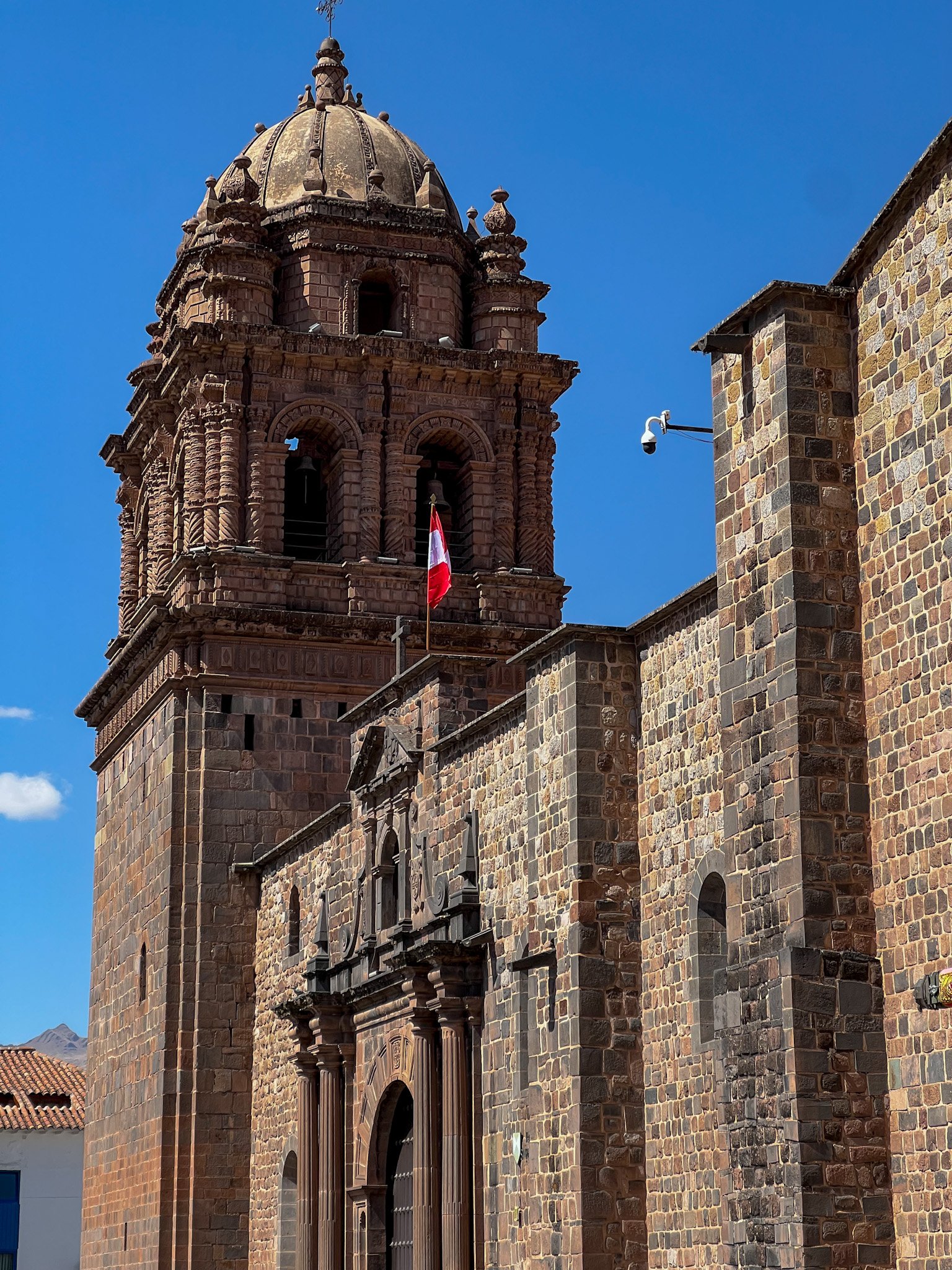
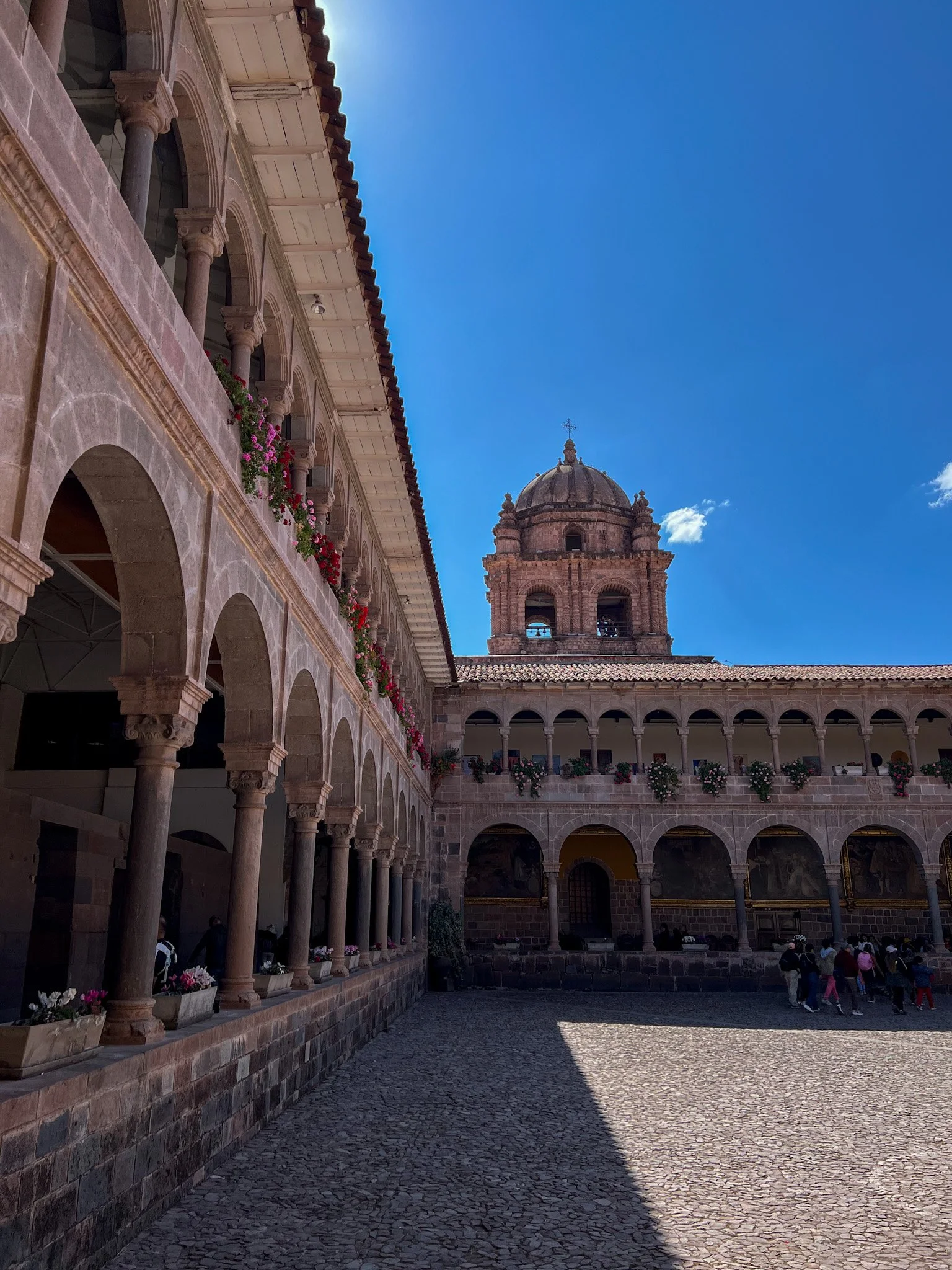
In 1533, the Spanish conquistadors demolished Coricancha and used its foundations to build the Convent of Santo Domingo, a Catholic church. The destruction of the temple was part of the Spanish effort to erase indigenous religious practices and replace them with Christianity. Despite this, the Inca stonework remained intact due to its superior construction, which withstood the damage caused by earthquakes.
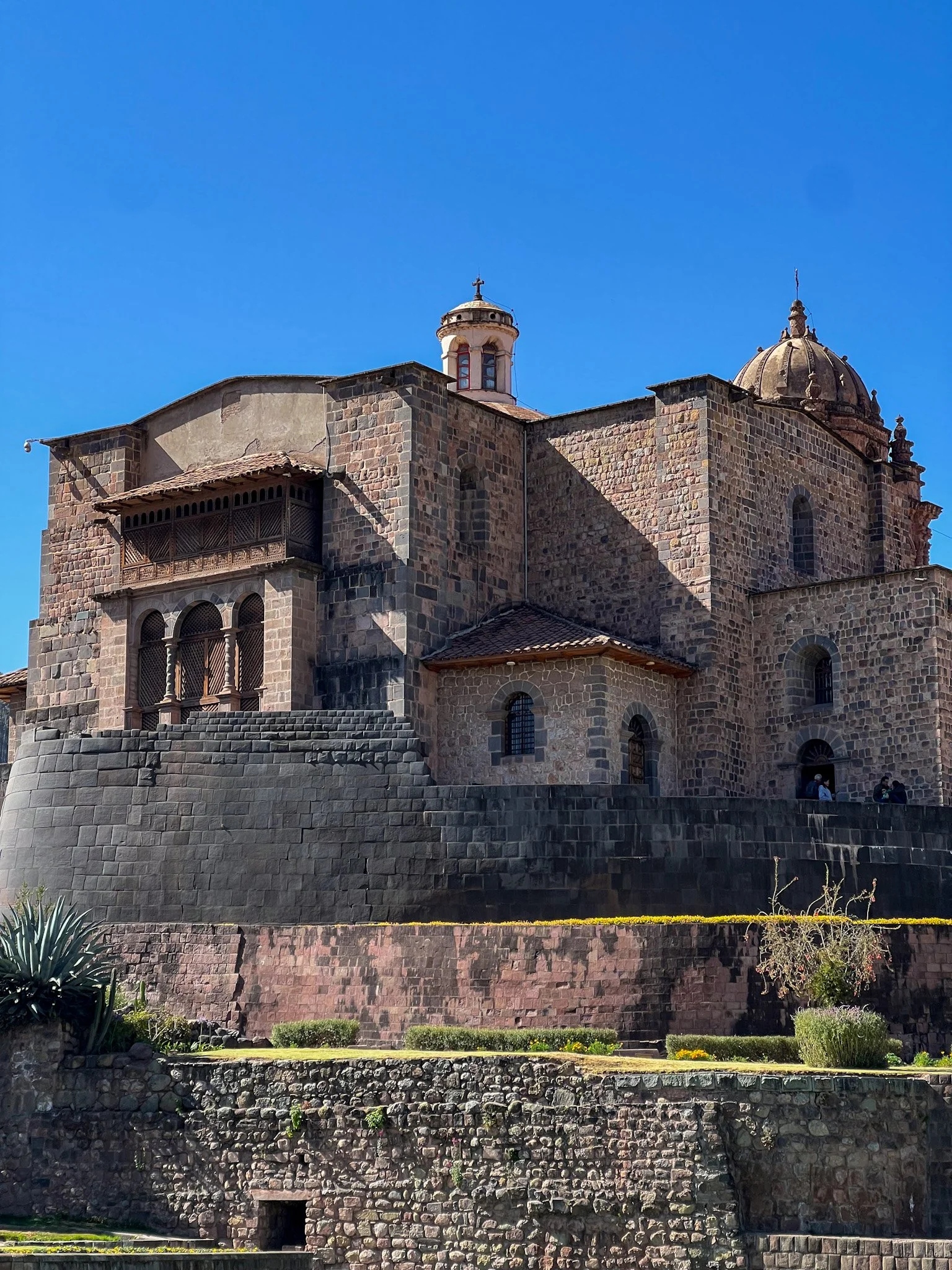
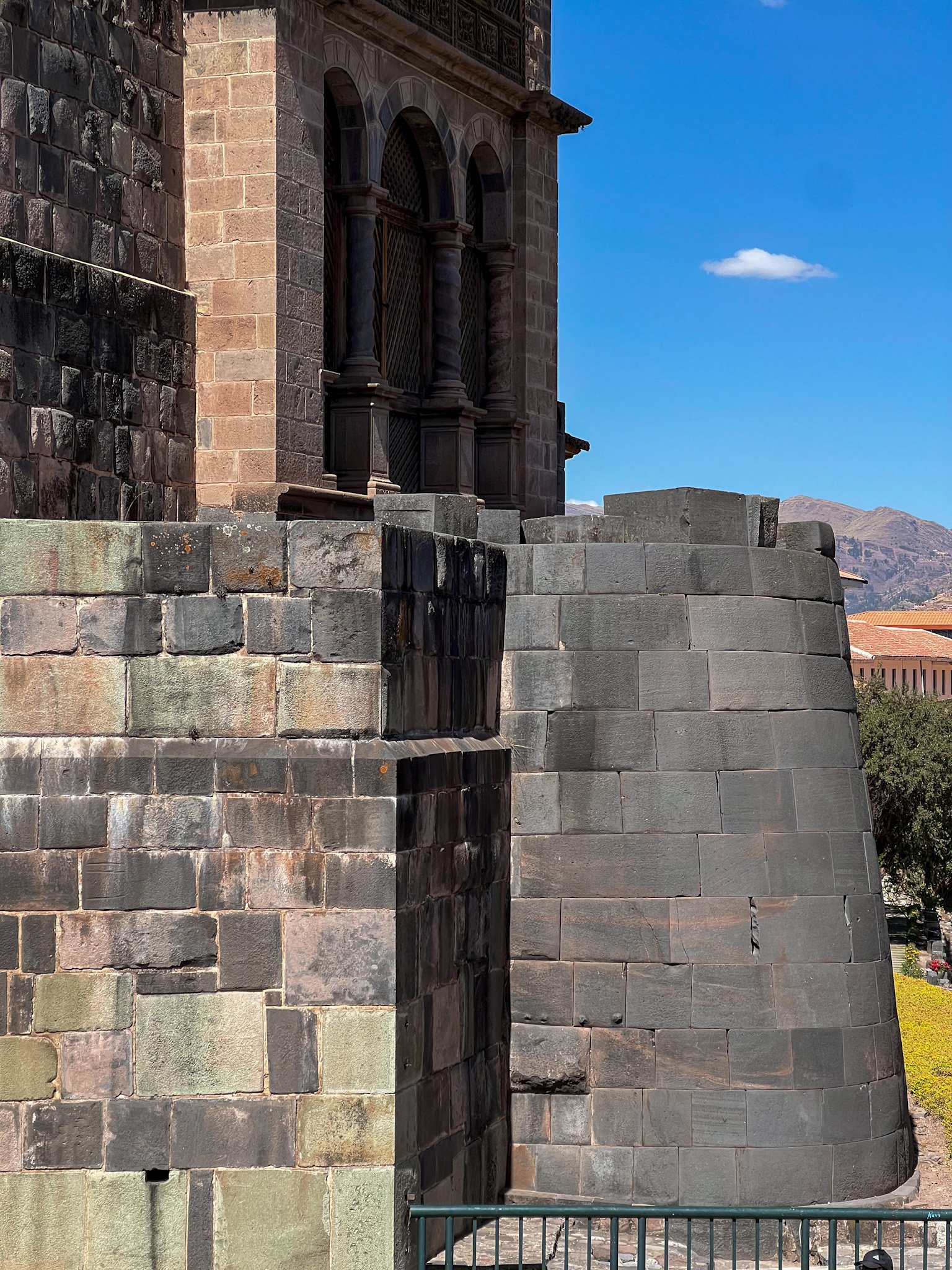
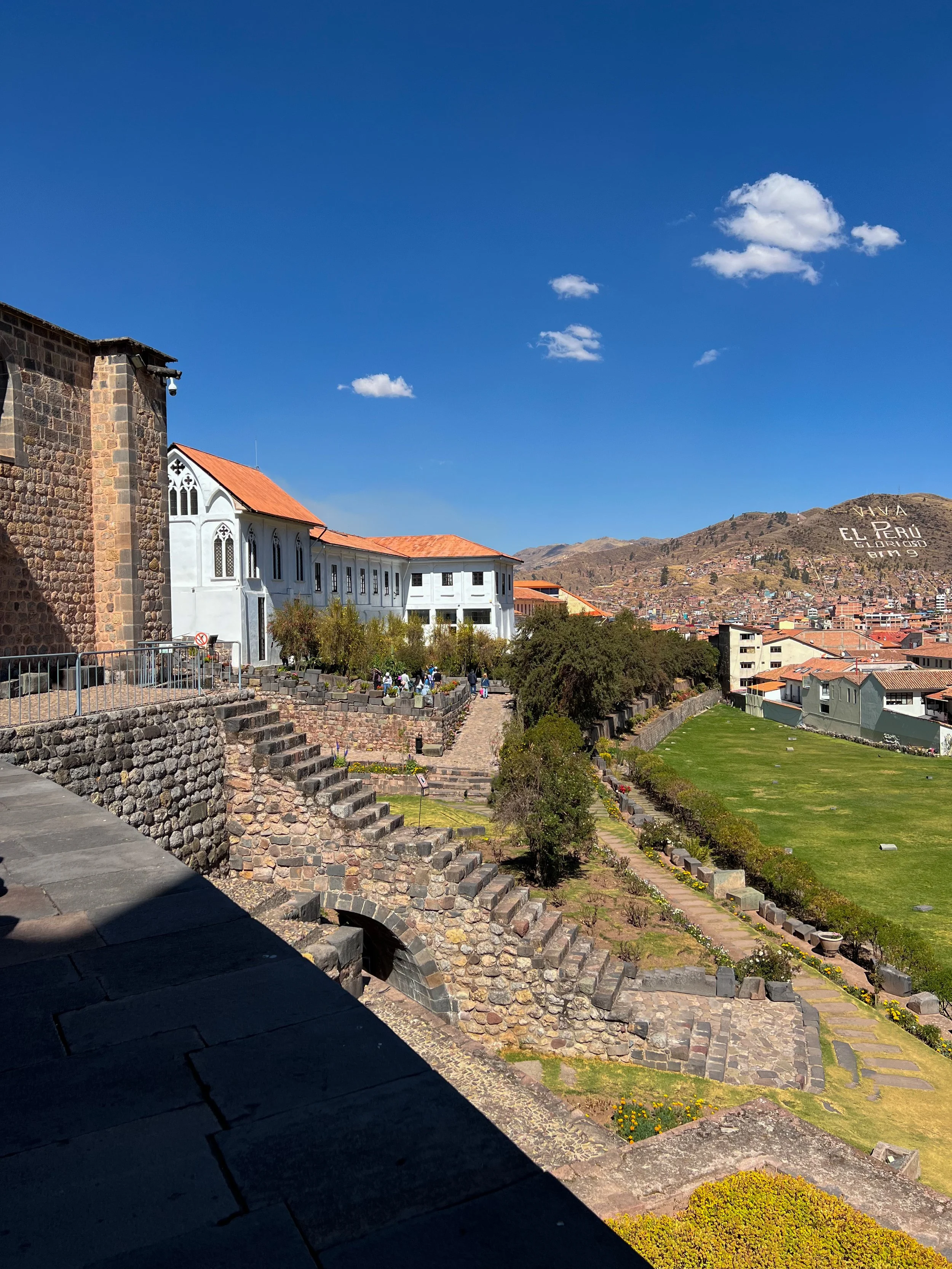
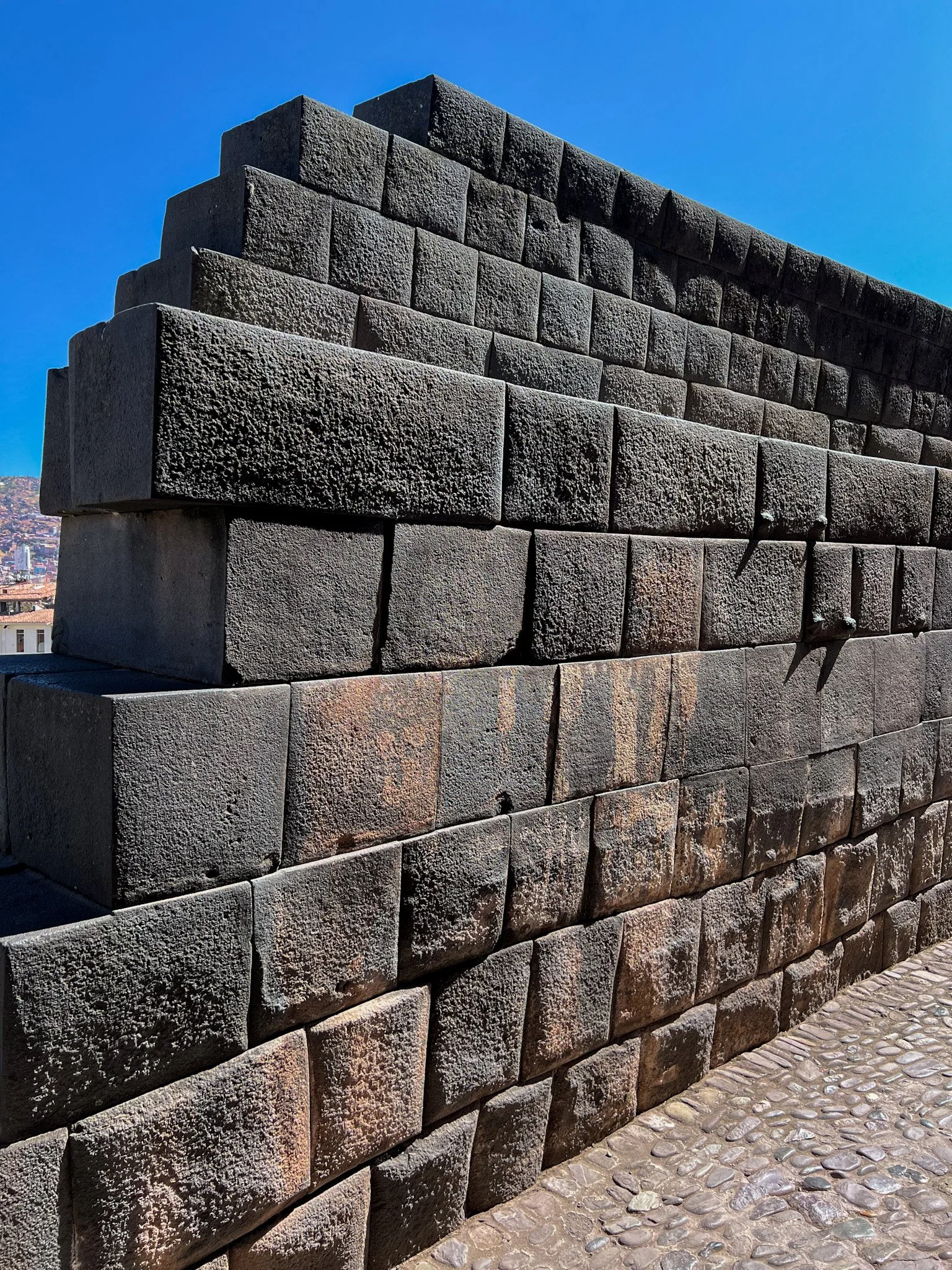
Today, visitors can explore the Convent of Santo Domingo, where remnants of the ancient temple still exist, such as ceremonial niches and intricately carved blocks of stone. These remains offer a glimpse into the original grandeur of Coricancha and its role in Inca religious life. The temple's historical and architectural significance continues to draw attention from both scholars and tourists.
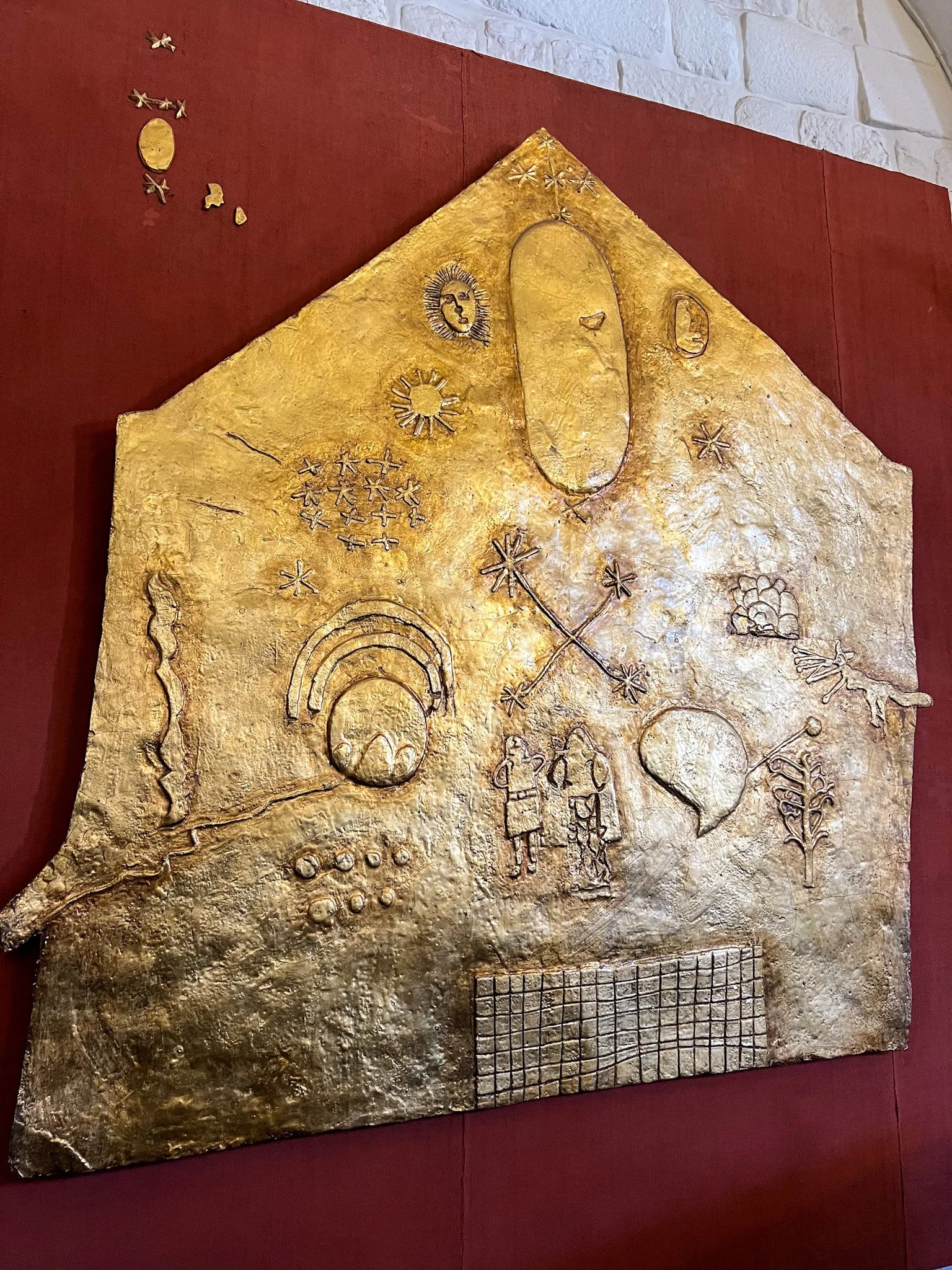
Coricancha also played an important role in Inca astronomy. The temple was aligned with key celestial events, and its layout and structure were designed to facilitate astronomical observations. The Inca had a deep understanding of the stars and constellations, which they integrated into their religious practices. The temple's parabolic walls and concave mirrors were used to focus sunlight during important ceremonies, including the Inti Raymi, the Inca festival celebrating the sun. The Sapa Inca, the emperor, would sit with the mummies of his ancestors in a sunlit room to honour the celestial body that was central to Inca culture.

Sacsayhuamán
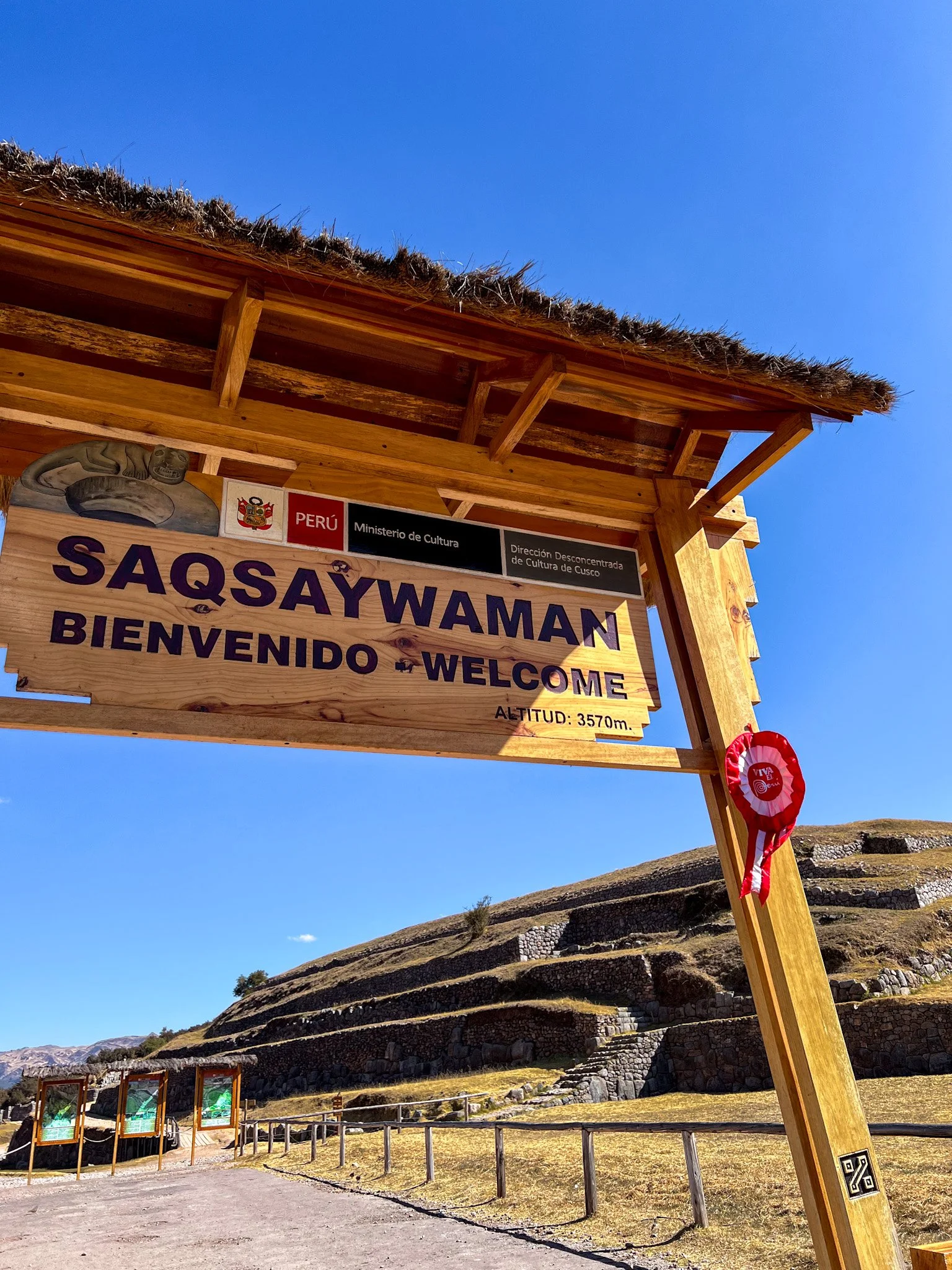
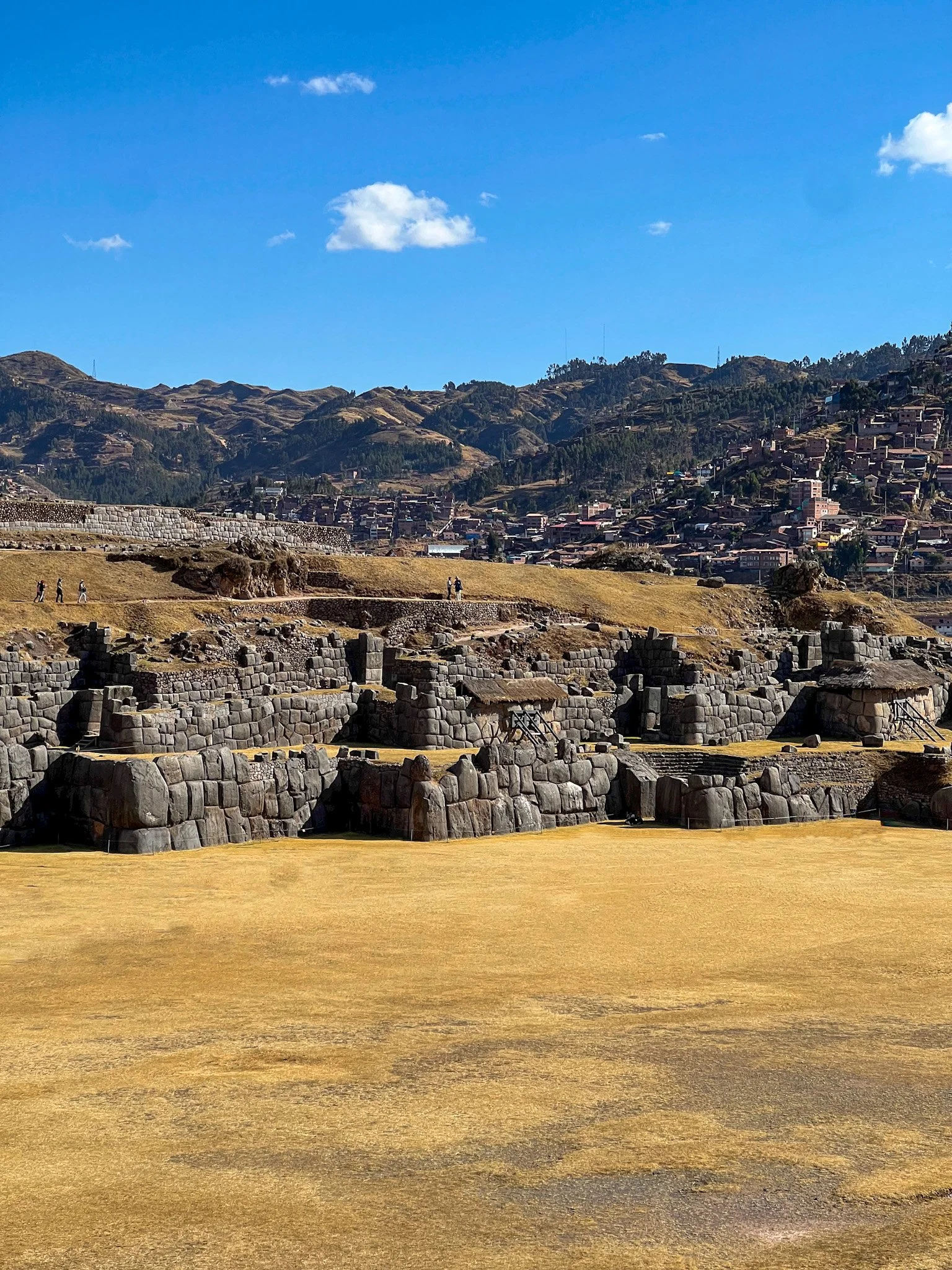
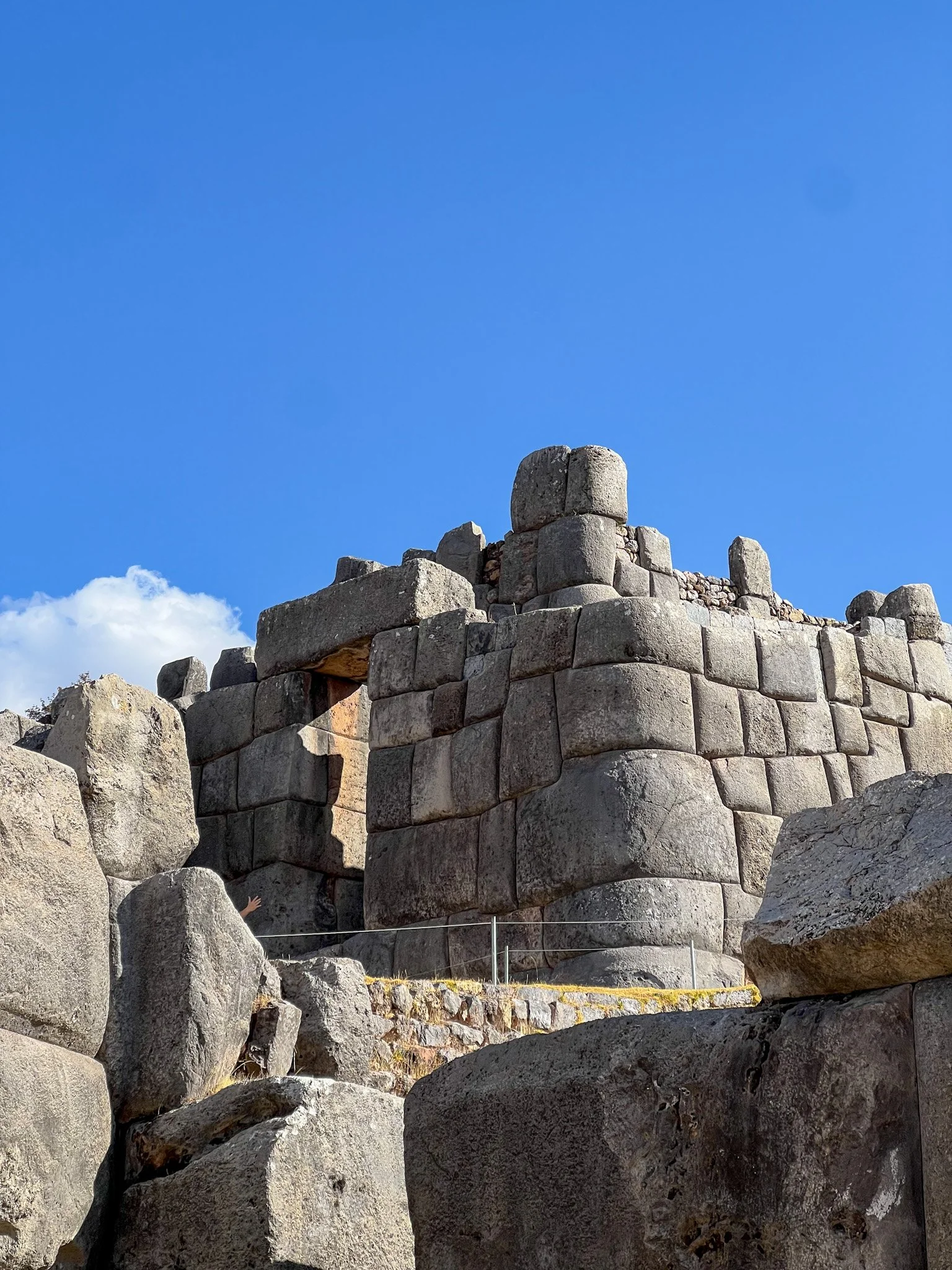
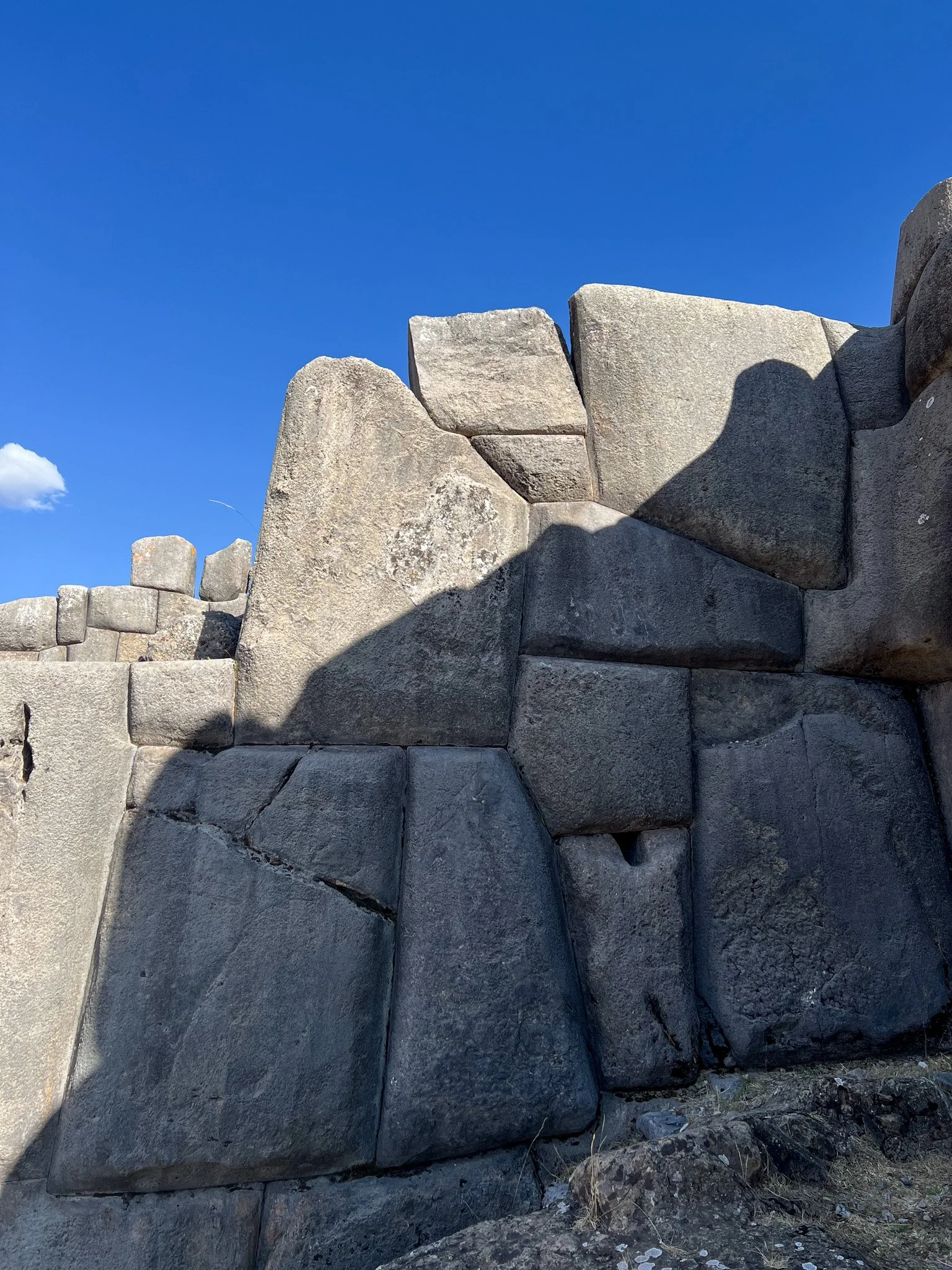
After exploring Coricancha, we boarded a coach that would bring us to our next destination, the grand Inca citadel of Sacsayhuamán. Located on the northern outskirts of Cusco at an altitude of 3,701 meters, it was constructed primarily in the 15th century under the reign of Sapa Inca Pachacuti, and later expanded by his successors. The site is renowned for its massive stone walls, built using dry stone masonry, where huge stones were meticulously cut to fit tightly together. This precision in construction has helped the site endure for centuries, surviving earthquakes that devastated other parts of Cusco. Sacsayhuamán is also a UNESCO World Heritage site, recognized for its cultural and historical significance.
The fortress was strategically positioned on a steep hill, offering a panoramic view of the city and valley below. Its construction involved the labor of thousands of workers, who quarried, transported, and placed enormous stones with remarkable precision. Spanish chroniclers, such as Pedro Cieza de León, marvelled at the size and craftsmanship of the walls, with stones weighing up to 200 tons. The site served not only as a military stronghold but also as a ceremonial space, with large plazas used for communal rituals and ceremonies. However, much of the site was destroyed after the Spanish conquest when the Spaniards dismantled it to use the stones for their own buildings in the colonial city of Cusco.
Today, Sacsayhuamán remains a major archaeological and cultural landmark. It continues to be a site of celebration, with festivals such as Inti Raymi, which marks the winter solstice, taking place near the ruins every year. The large open spaces within the citadel’s walls are used for various activities, including sports and traditional events.
Qenqo
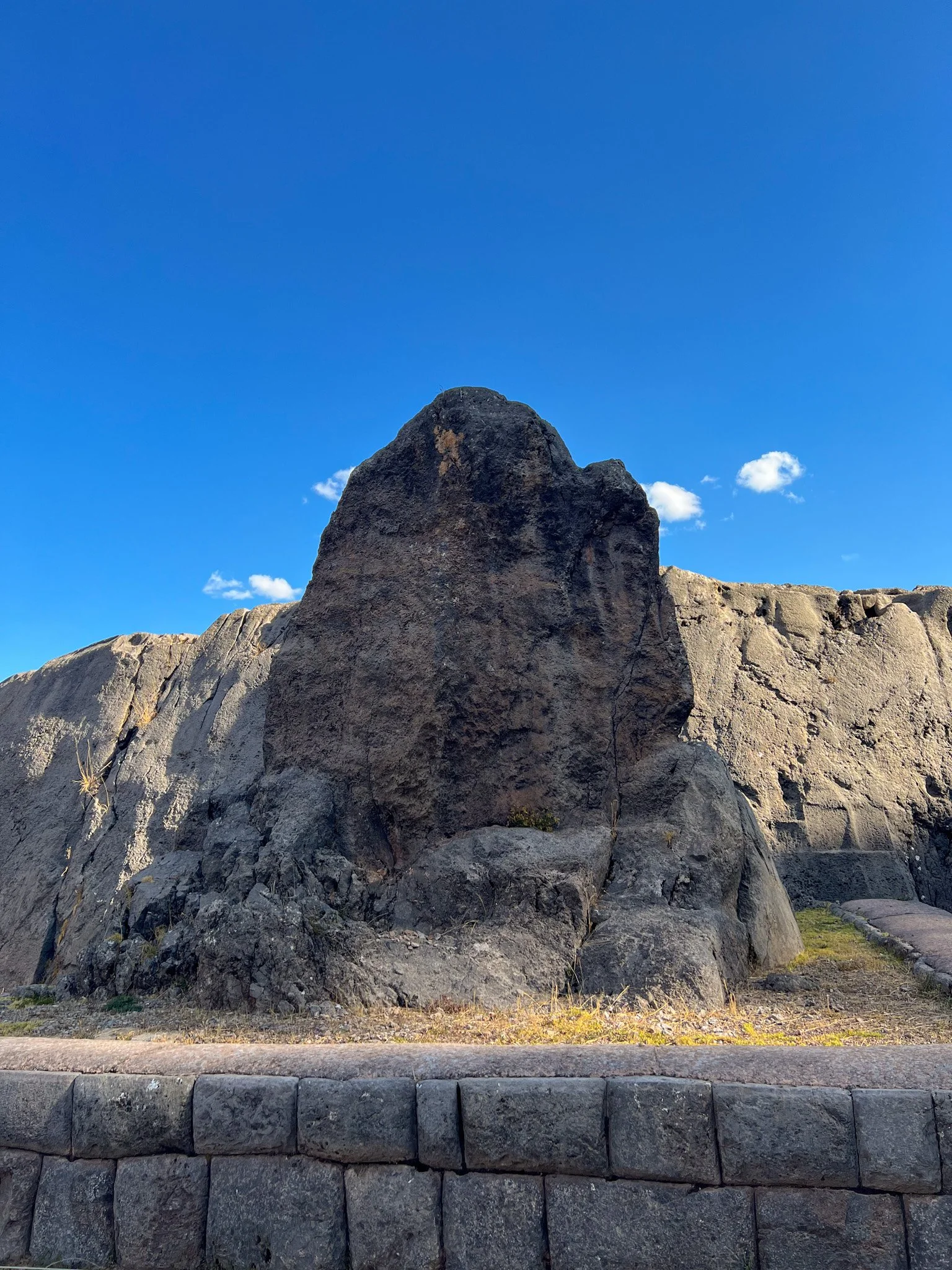
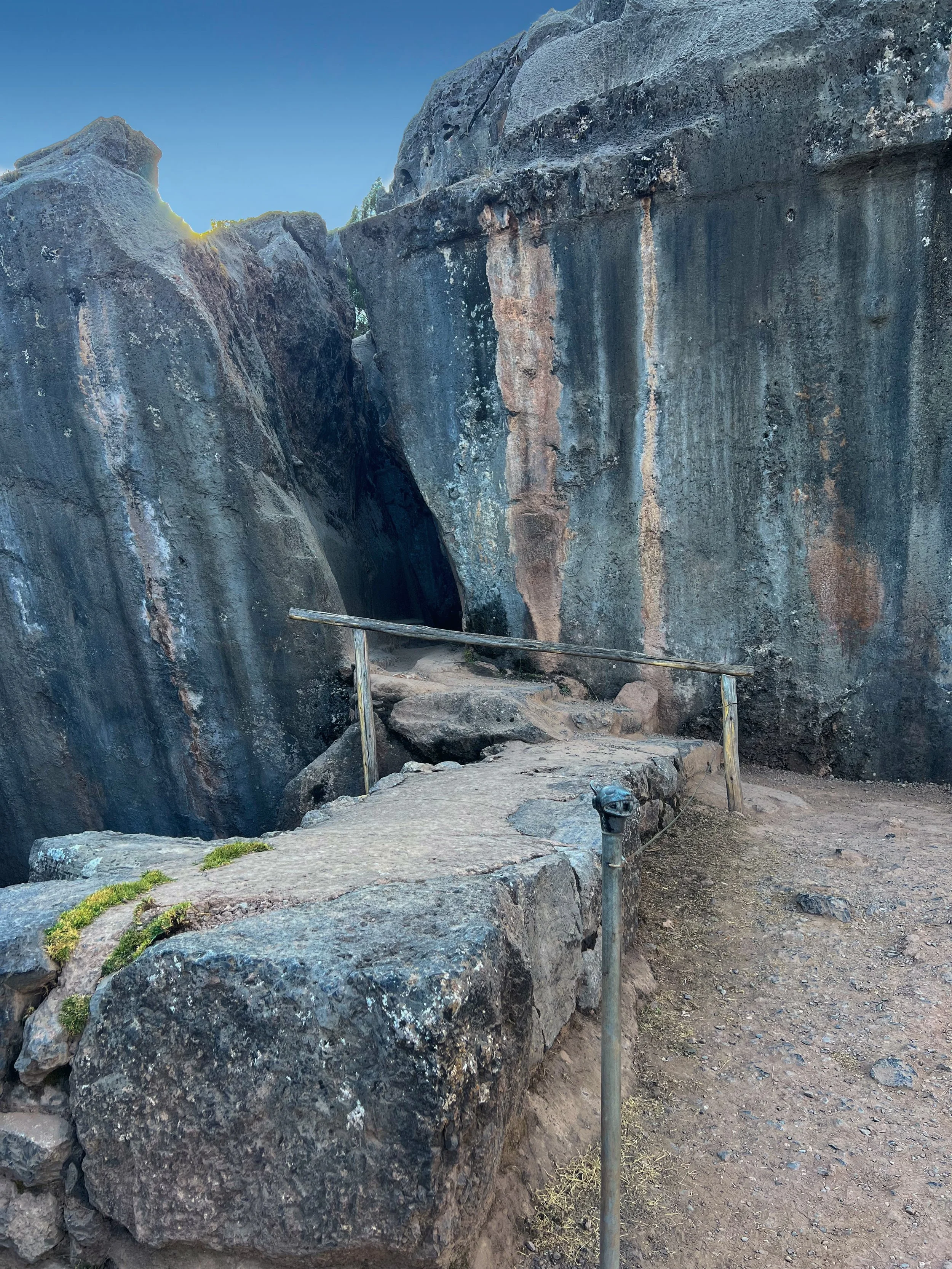
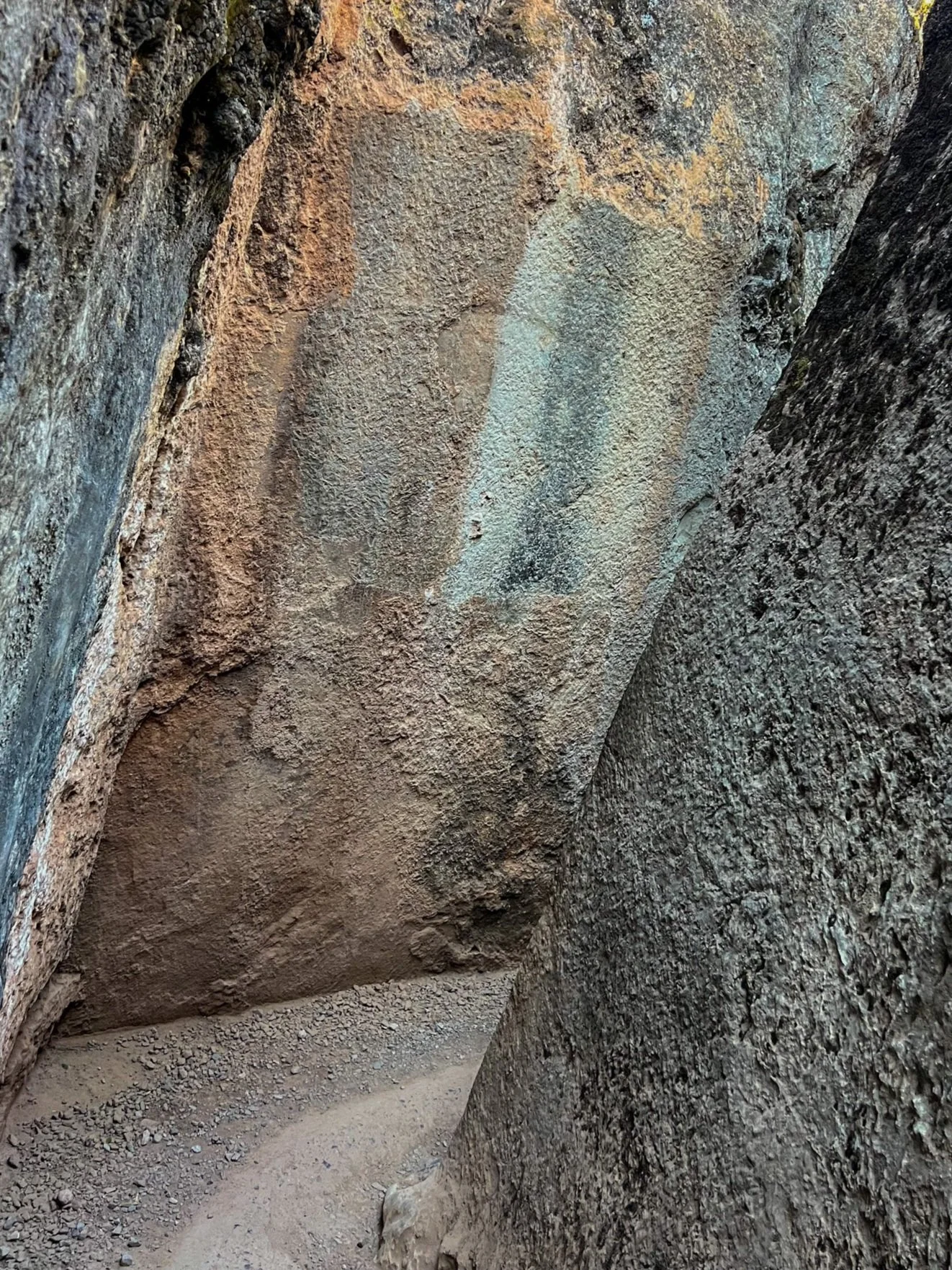
We continued our tour with a visit to Qenqo (from the Quechua word for 'labyrinth'), another archaeological site located near about 2 km northeast of the city.
The site consists of two areas: El Grande, located along the path between Sacsayhuamán and Pisac, and El Chico, which is 350 meters to the west. During the Inca Empire, Qenqo was an important religious centre, notable for its semicircular amphitheater and underground galleries shaped like a labyrinth, with zigzag water channels carved into the rocks. Although its exact purpose is unclear, it is believed to have served as an altar, a tribunal, or a tomb, and was likely a sanctuary dedicated to Inti, the Sun God, and Pachamama, the Earth Goddess.

Tambomachay
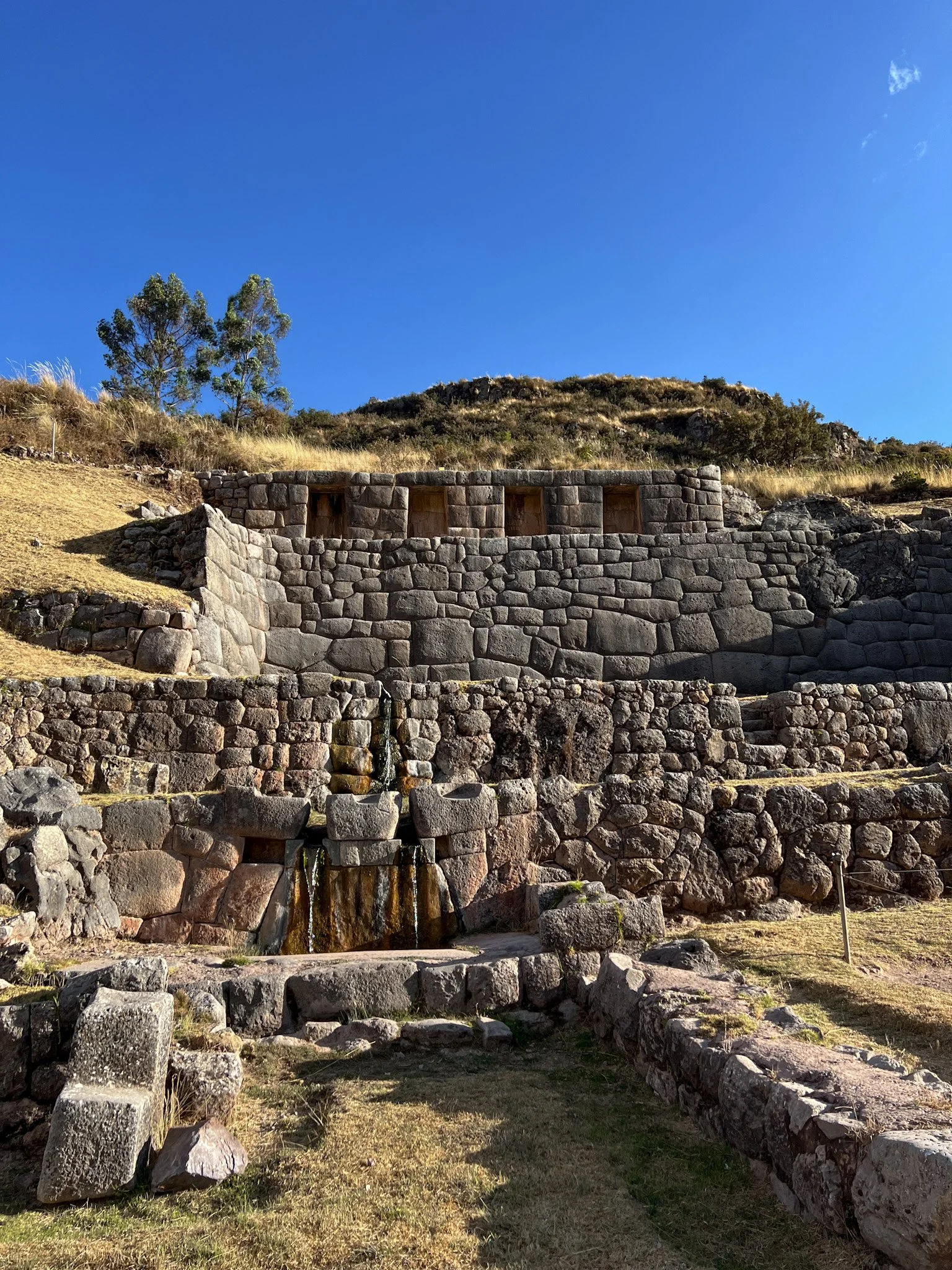
Our next stop was the archaeological site of Tambomachay, consisting of aqueducts, canals, and waterfalls that channel water through terraced rocks. Known as El Baño del Inca ("the bath of the Inca"), it is situated near natural springs, including Timpuc Puquiu.
The exact purpose of the site remains uncertain, with theories suggesting it may have served as a military outpost, a spa for the Inca elite, or even as a religious site for water-related rituals, as sacred fountains were common in major Inca temples like Machu Picchu and Pisac. Tambomachay is also thought to be part of the nine ceques along the Antisuyu road, possibly linked to ceremonial practices and sacrifices.
Puka Pukara
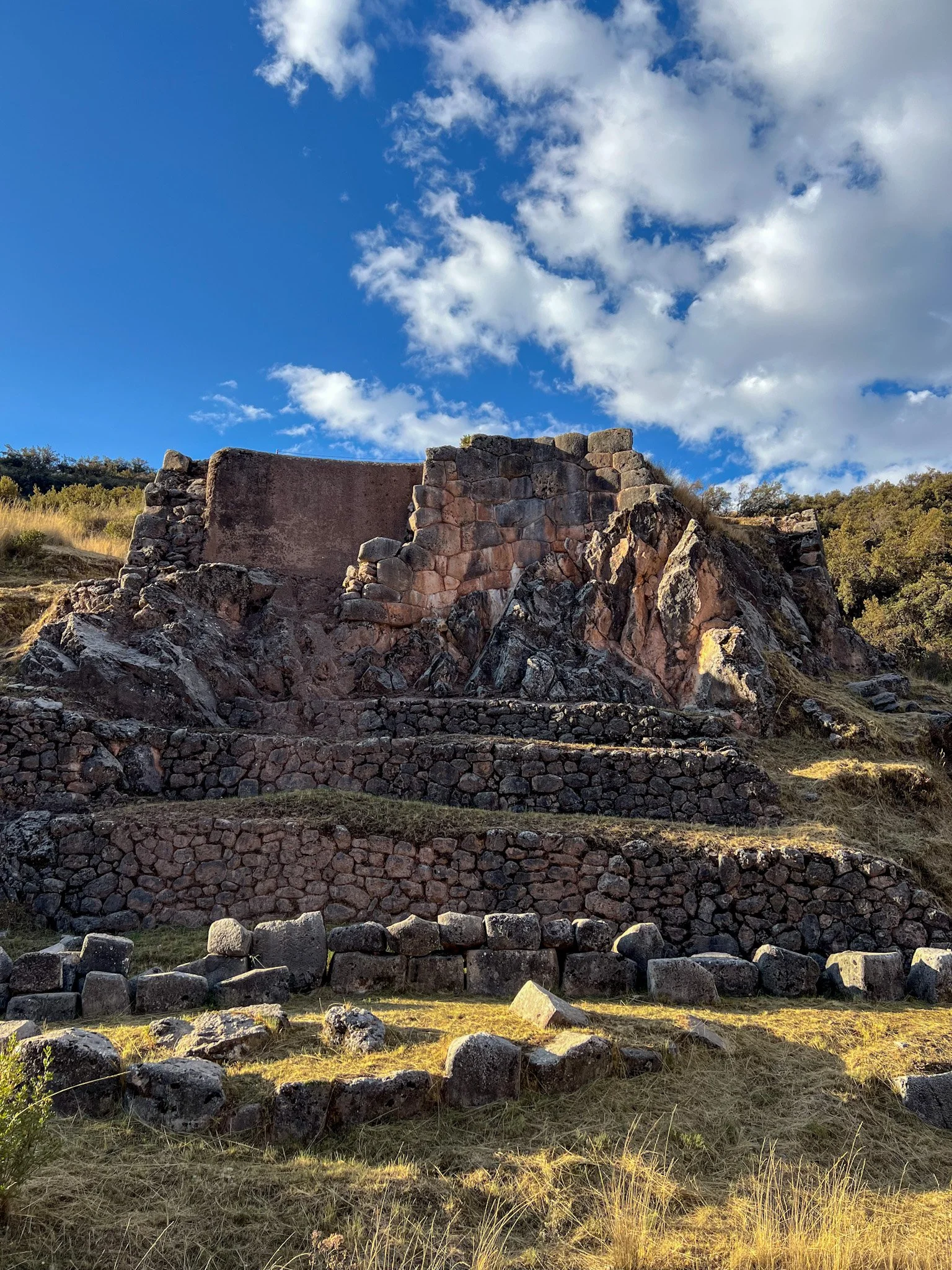
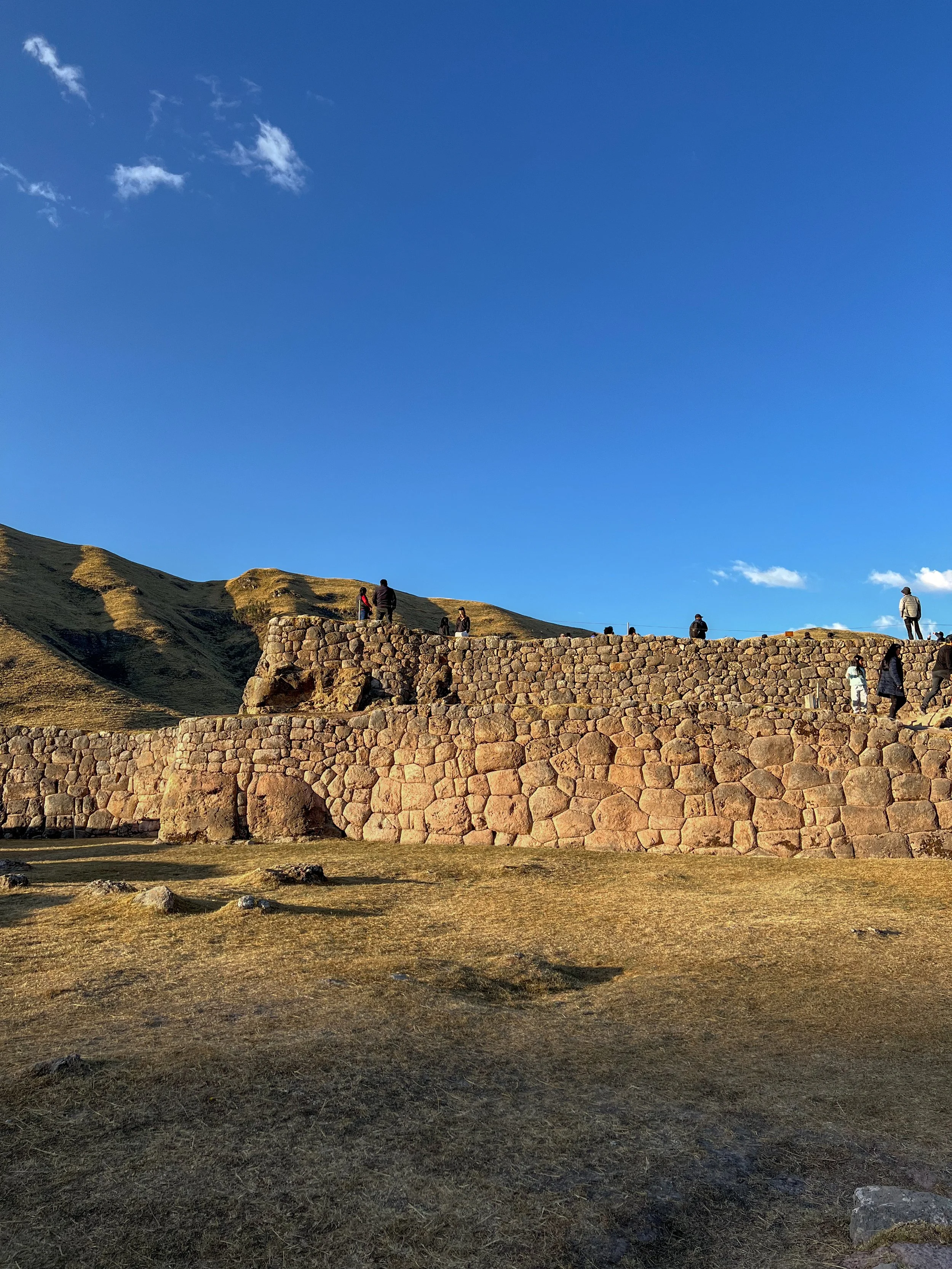
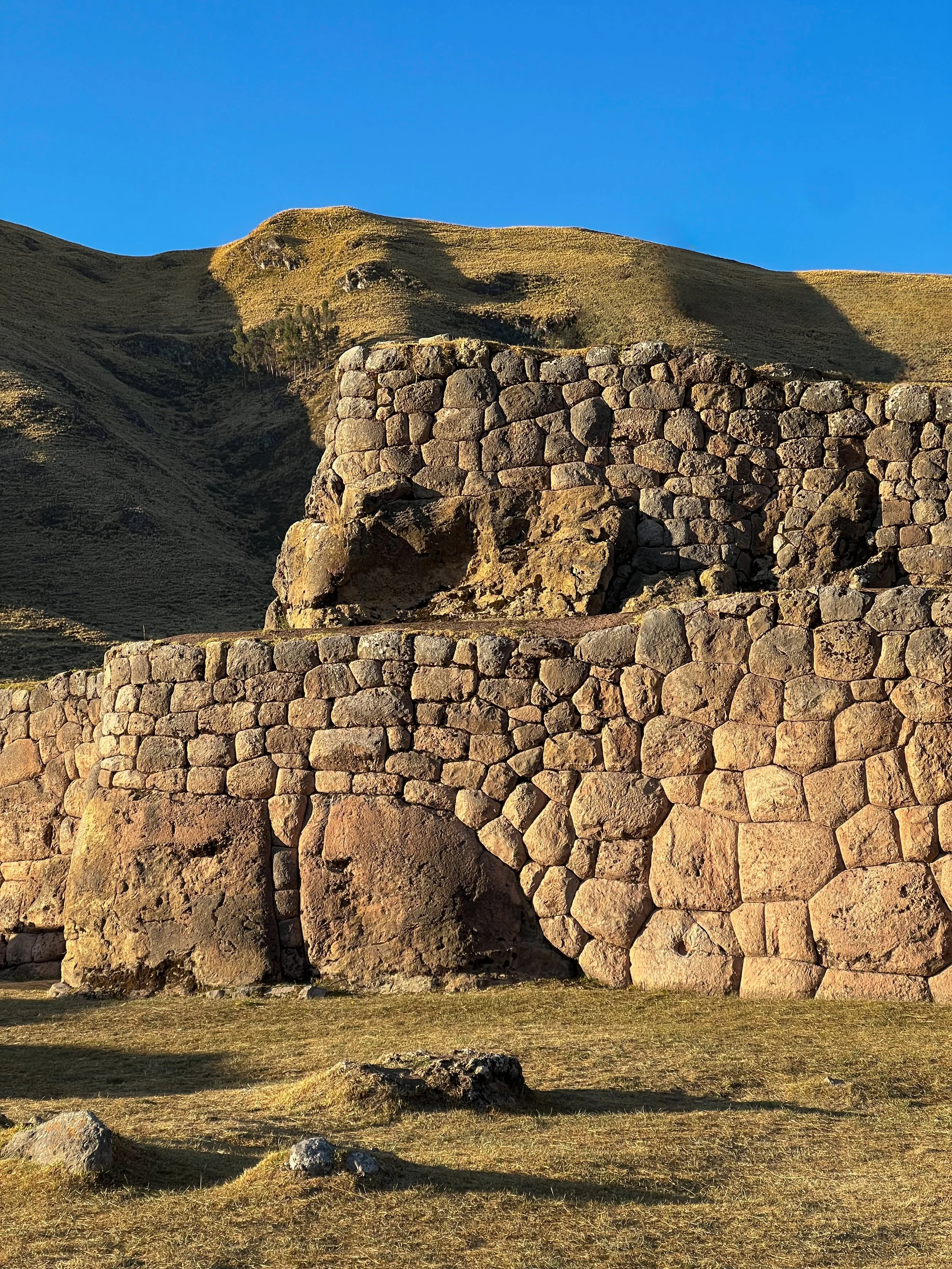
With the sunset approaching, we reached the final destination of our tour: Puka Pukara. Meaning “red fortress” in Qechua, this military fort also served as an administrative centre, consists of large walls, terraces, and staircases. It was strategically built on high ground overlooking the Cusco valley and nearby Tambo Machay, providing a commanding view of the surrounding area.
Puka Pukara was likely constructed during the reign of Pachacuti, the ninth ruler of the Inca Empire, and its irregular stone walls suggest it may have been built quickly for military purposes. The site is thought to have served as a military checkpoint, a resting place for travellers, and possibly a stop for military groups or hunters.
Dinner: Mamaji Restaurant
We were pretty exhausted by the end of the day after a full day of exploring Cusco, so we decided to stop for dinner at Mamaji Restaurant, conveniently located inside the Sonesta Hotel where we were staying.
Mamaji turned out to be a great spot, offering dishes prepared with great attention to detail and inspired by the finest modern Peruvian cuisine. The menu is full of original creations by the talented chefs, ensuring a dining experience that is both refined and constantly evolving.
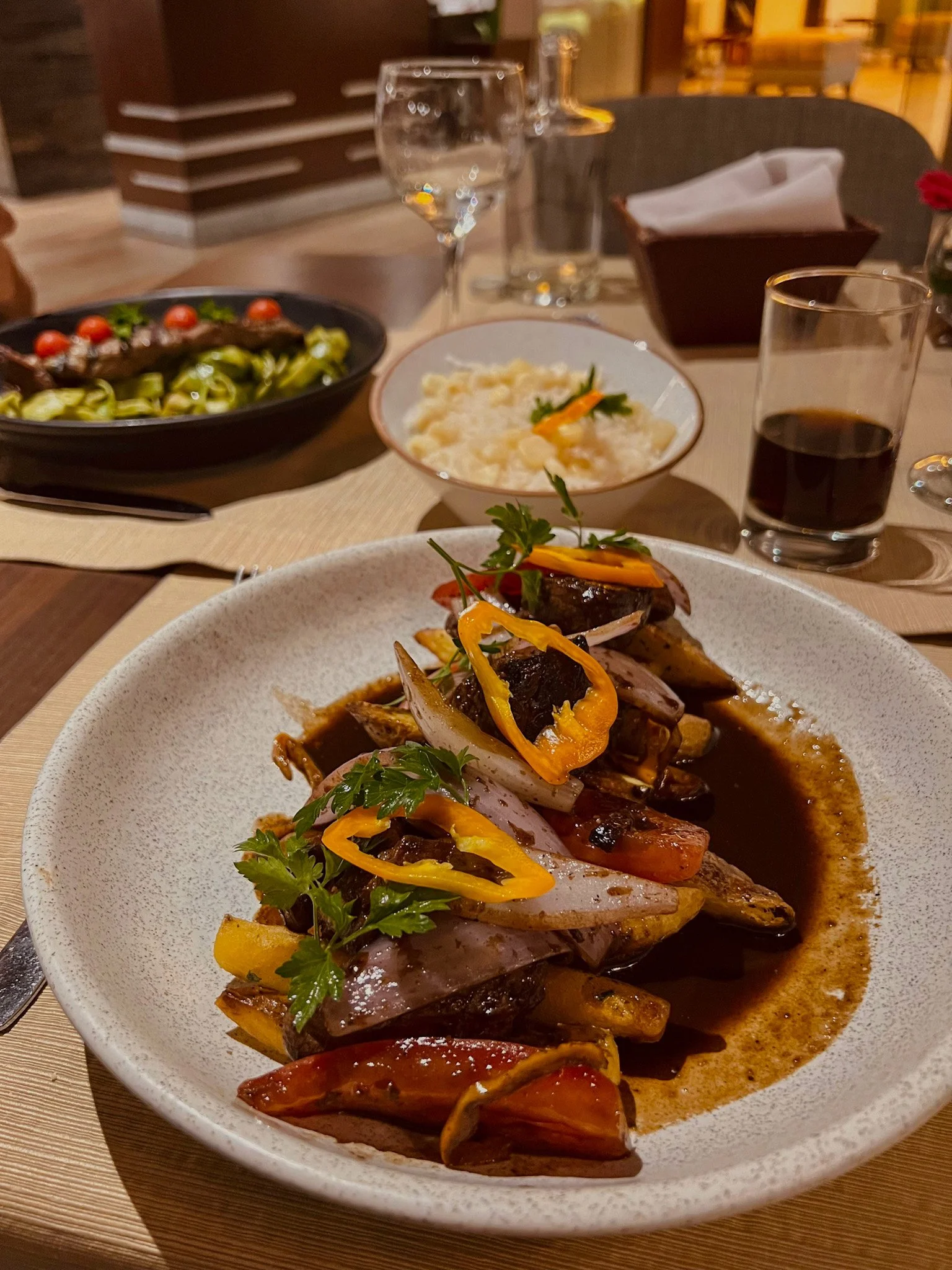
We tried their tamales, beef pesto fettuccine, and the famous lomo saltado, and all were absolutely delicious. For anyone visiting Cusco, Mamaji is a must-try, offering a memorable and innovative approach to Peruvian cuisine.

Day 3
San Pedro Central Market
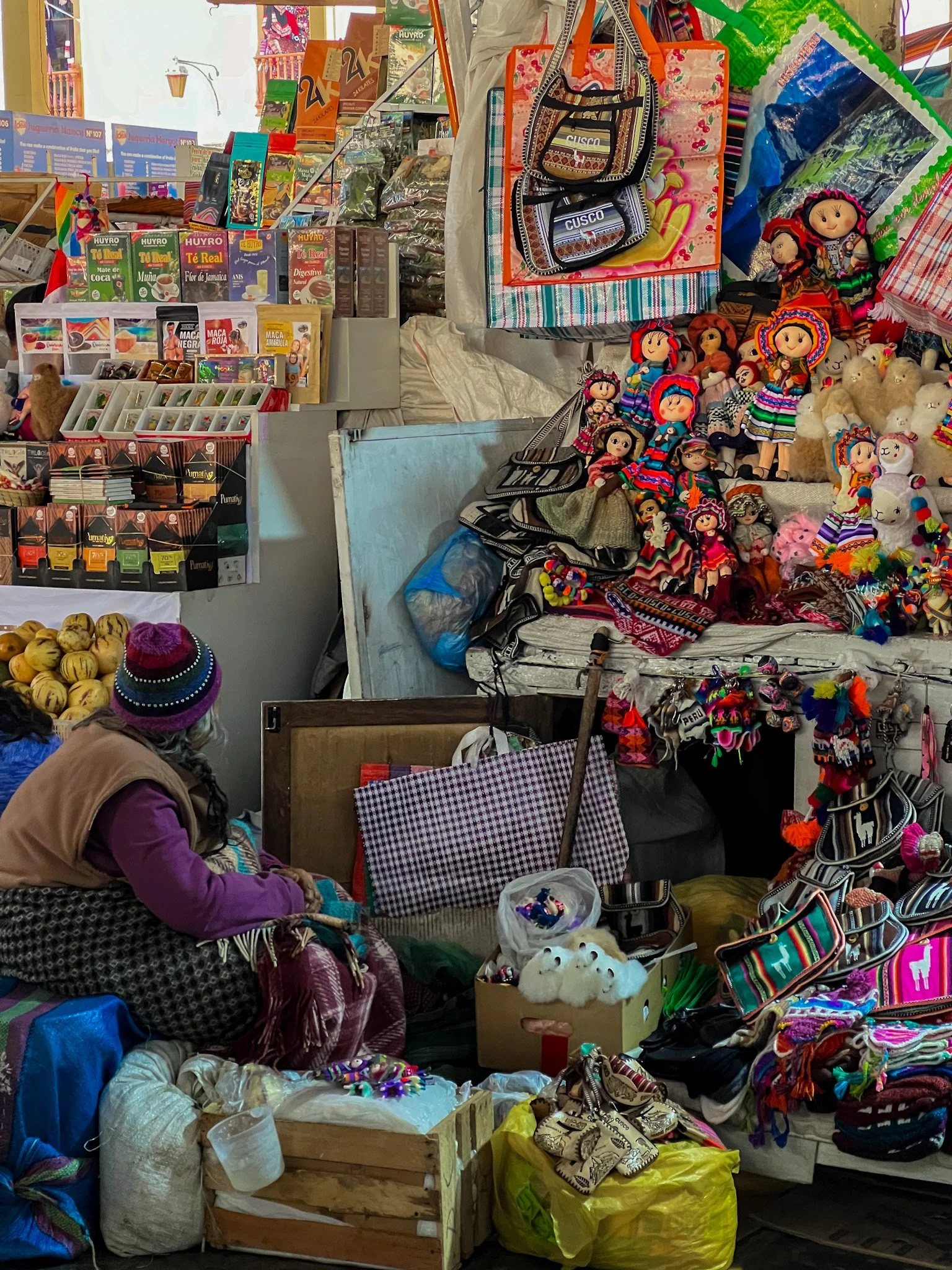
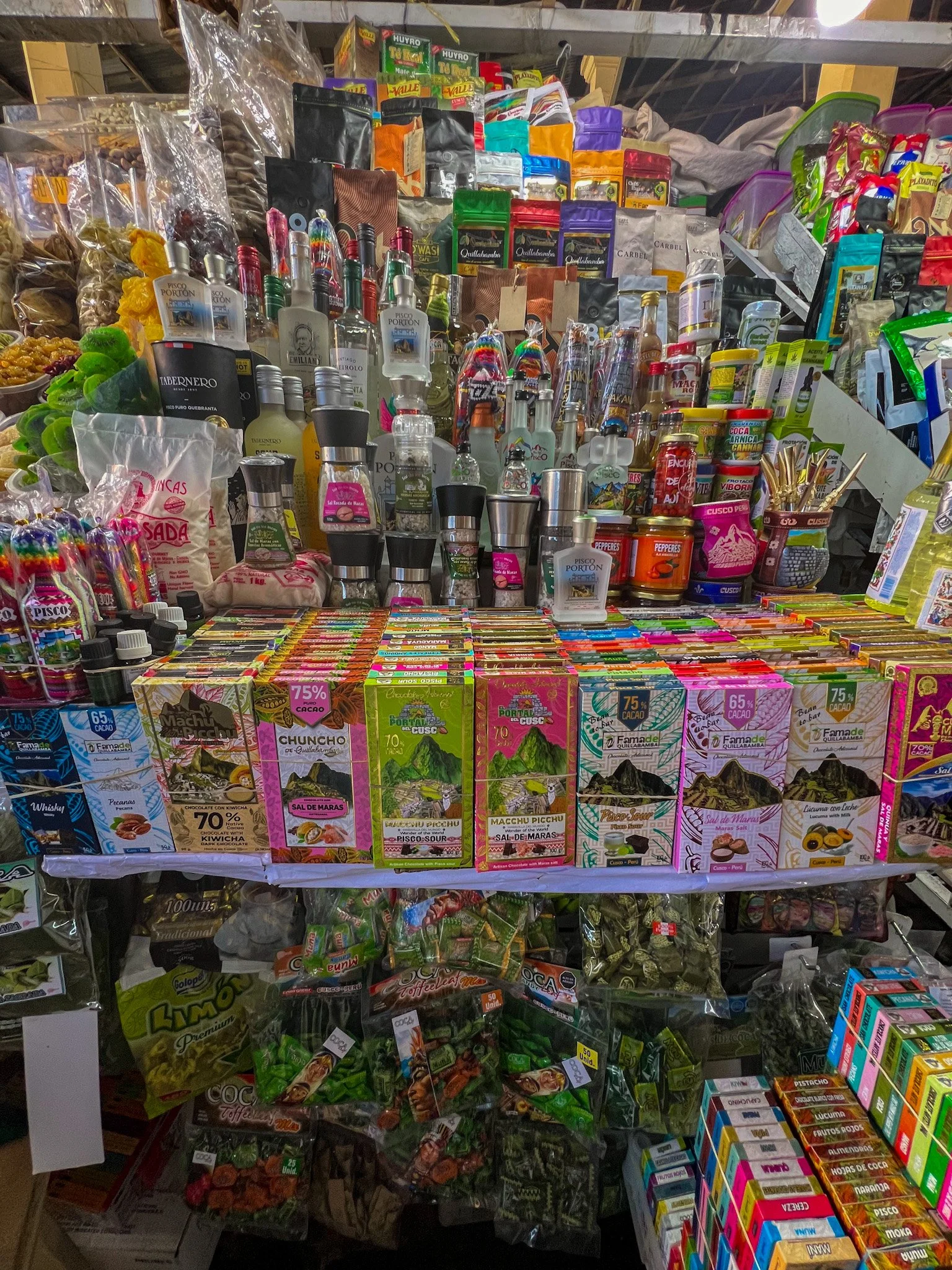
After an intense day visiting all the highlights of Cusco, the second day was more laid back. In the morning, we first headed to San Pedro Central Market. Established in 1925, its initial construction was overseen by French civil engineer Gustave Eiffel and features a neoclassical design with an iron structure, calamine roofs, and wooden trusses made from imported pine.
Originally known as "Mercado Frisancho," it was expanded in 1955 after the 1950 earthquake to accommodate the city’s growing population. Today, the market boasts 1,180 stalls and has transitioned from a local supply hub to a vibrant tourist attraction. Offering a wide range of goods, including fresh produce, meats, clothing, souvenirs and traditional Andean items, it remains a central pillar of Cusco's commercial life.
St. Peter's Church
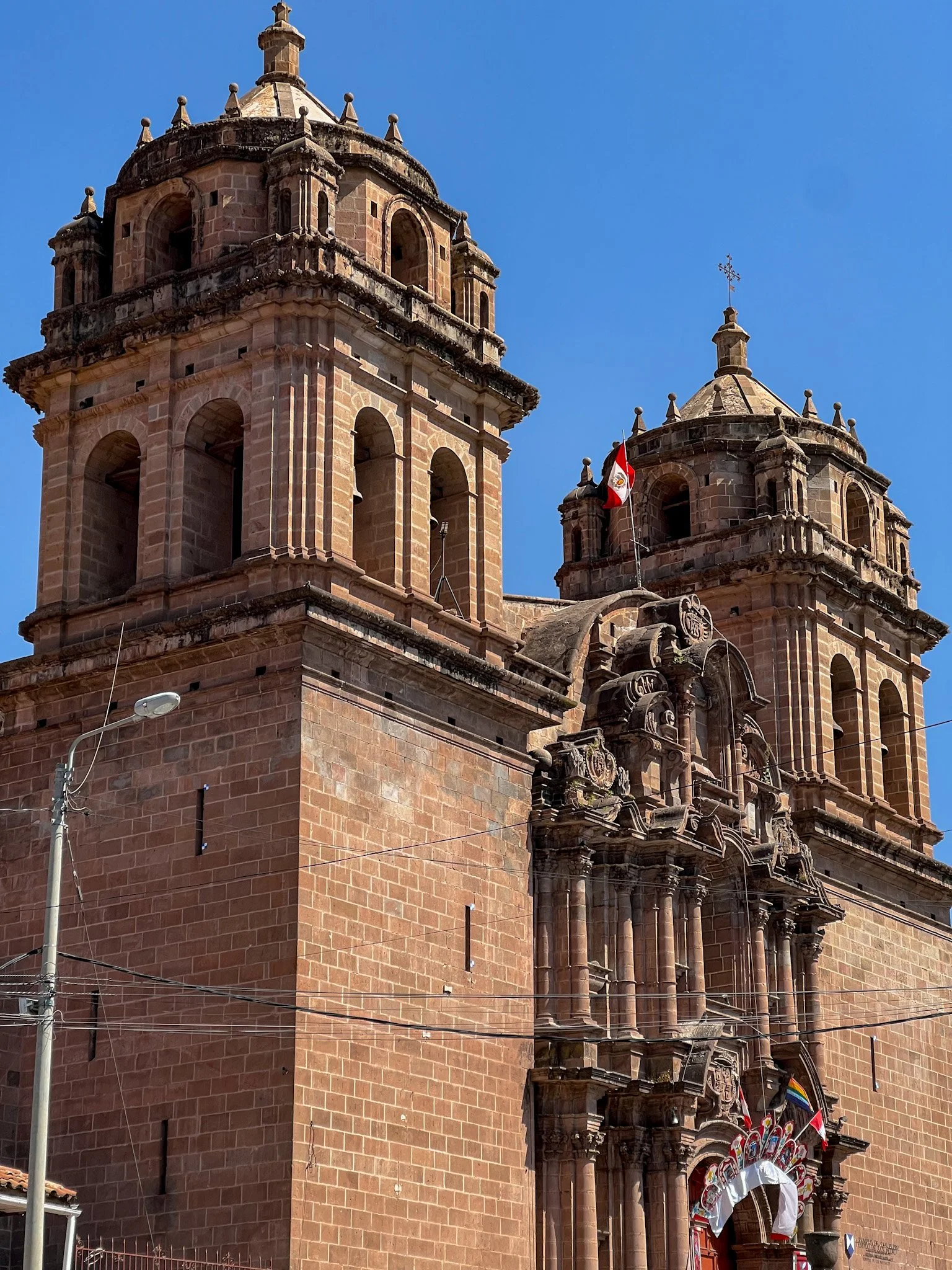
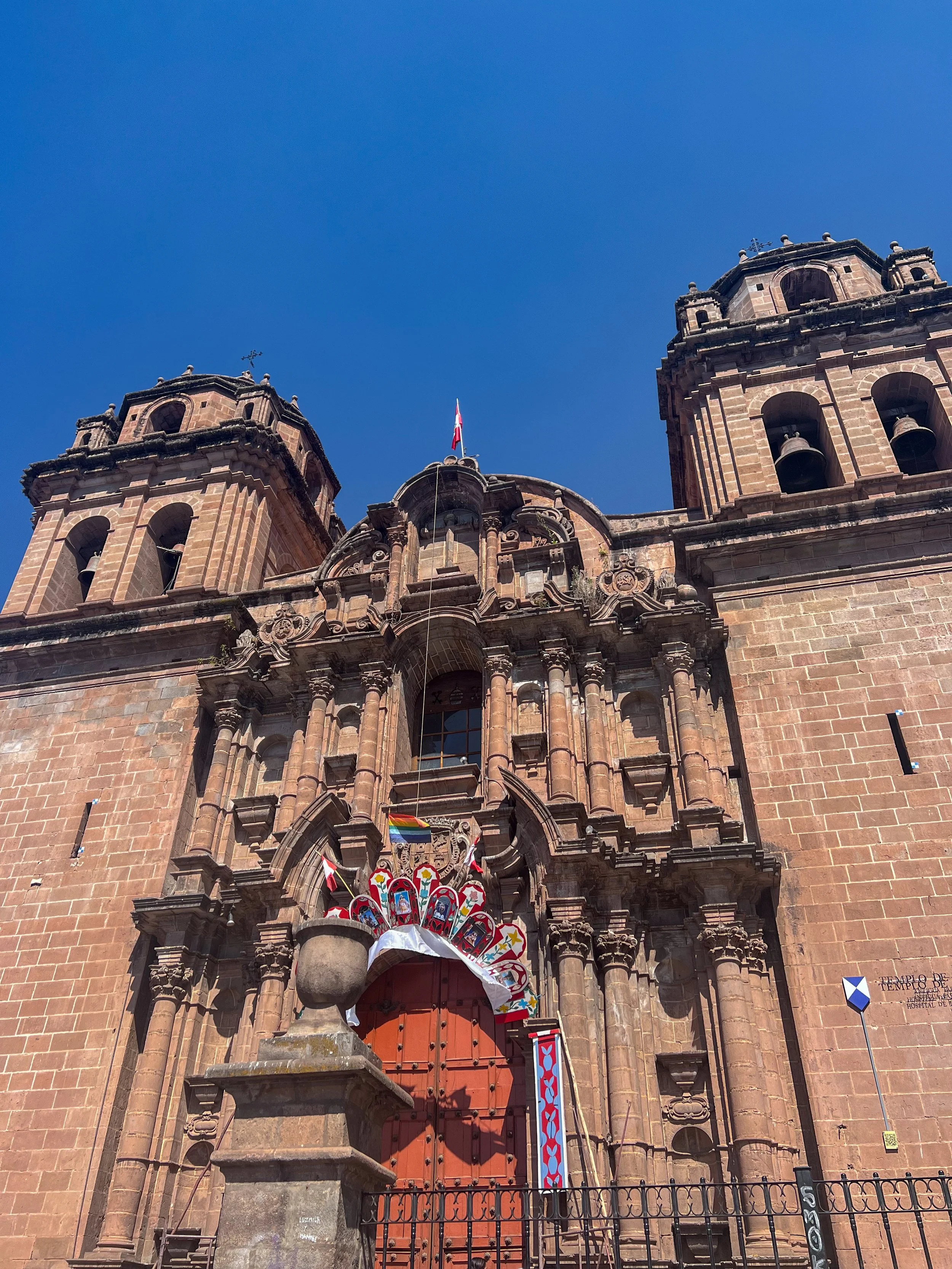
Just outside the market you can find St. Peter’s Church, also part of the UNESCO World Heritage Site for the city’s historic center. Built in a Latin cross layout, the church features two imposing yet modestly adorned bell towers that complement its Renaissance-style three-tiered façade with Corinthian columns.
Constructed on the site of the former Hospital of Naturales, its origins date back to 1572, though the current structure began construction in 1688 under the guidance of architect Juan Tomás Tuyro Túpac and the sponsorship of Bishop Manuel de Mollinedo. Damaged during the 1950 Cusco earthquake, the church required significant restoration, particularly for its towers and arches. Today, this Baroque-Andean masterpiece stands 68 meters long and 33 meters wide, with a design characterised by its elegant detailing, including a central doorway framed by Corinthian columns and crowned with a carved cross.
San Cristobal
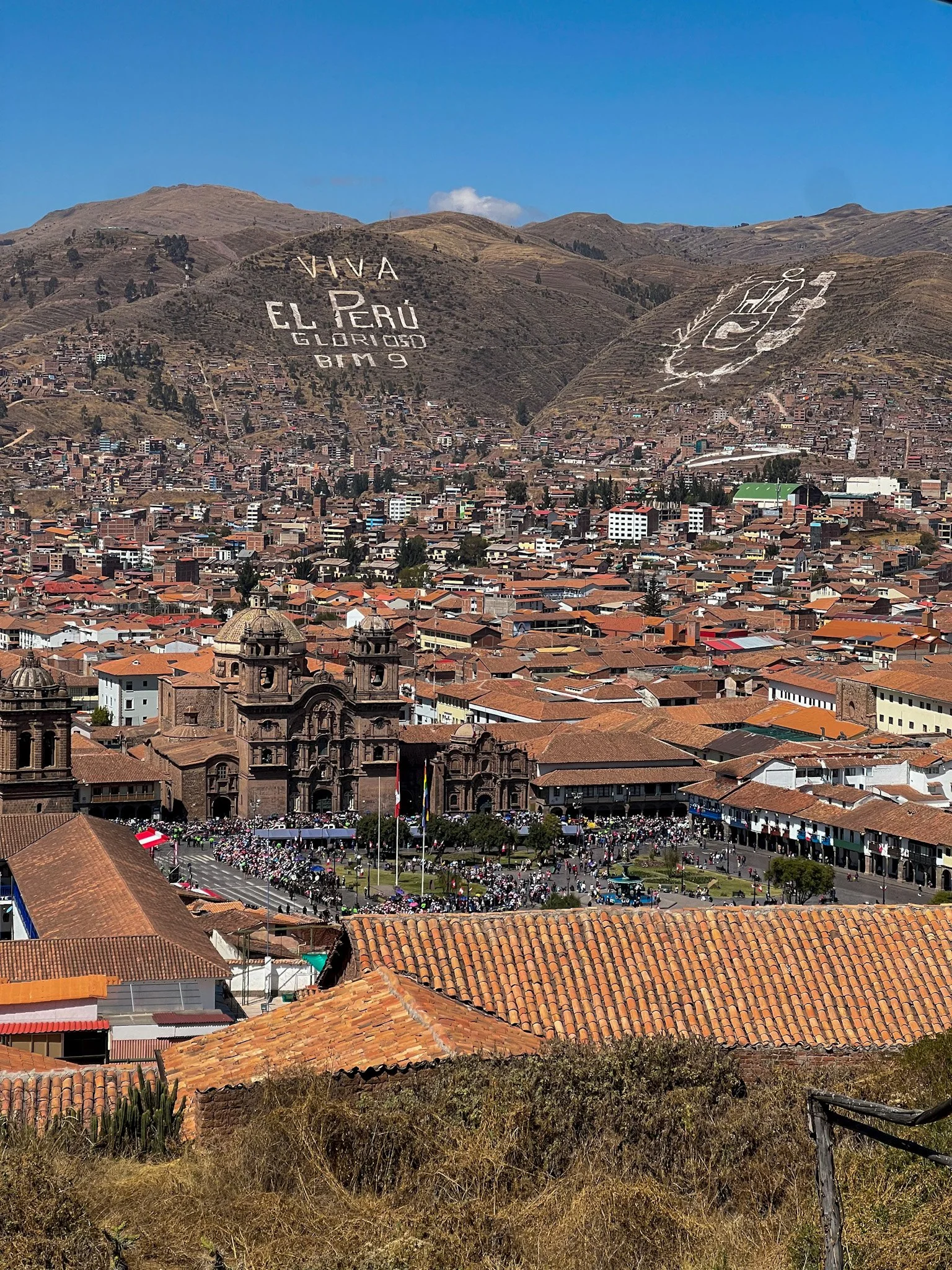
We next ascended to the San Cristobal viewpoint, offering breathtaking panoramic views of the city and the surrounding Andes mountains. Situated on a hill overlooking the historic center, this observation deck provides a stunning vantage point to admire landmarks like the Plaza de Armas and the charming colonial rooftops. The journey to the mirador is equally enchanting, as it takes visitors through vibrant neighborhoods filled with murals, artisan shops, and welcoming locals eager to share their stories.
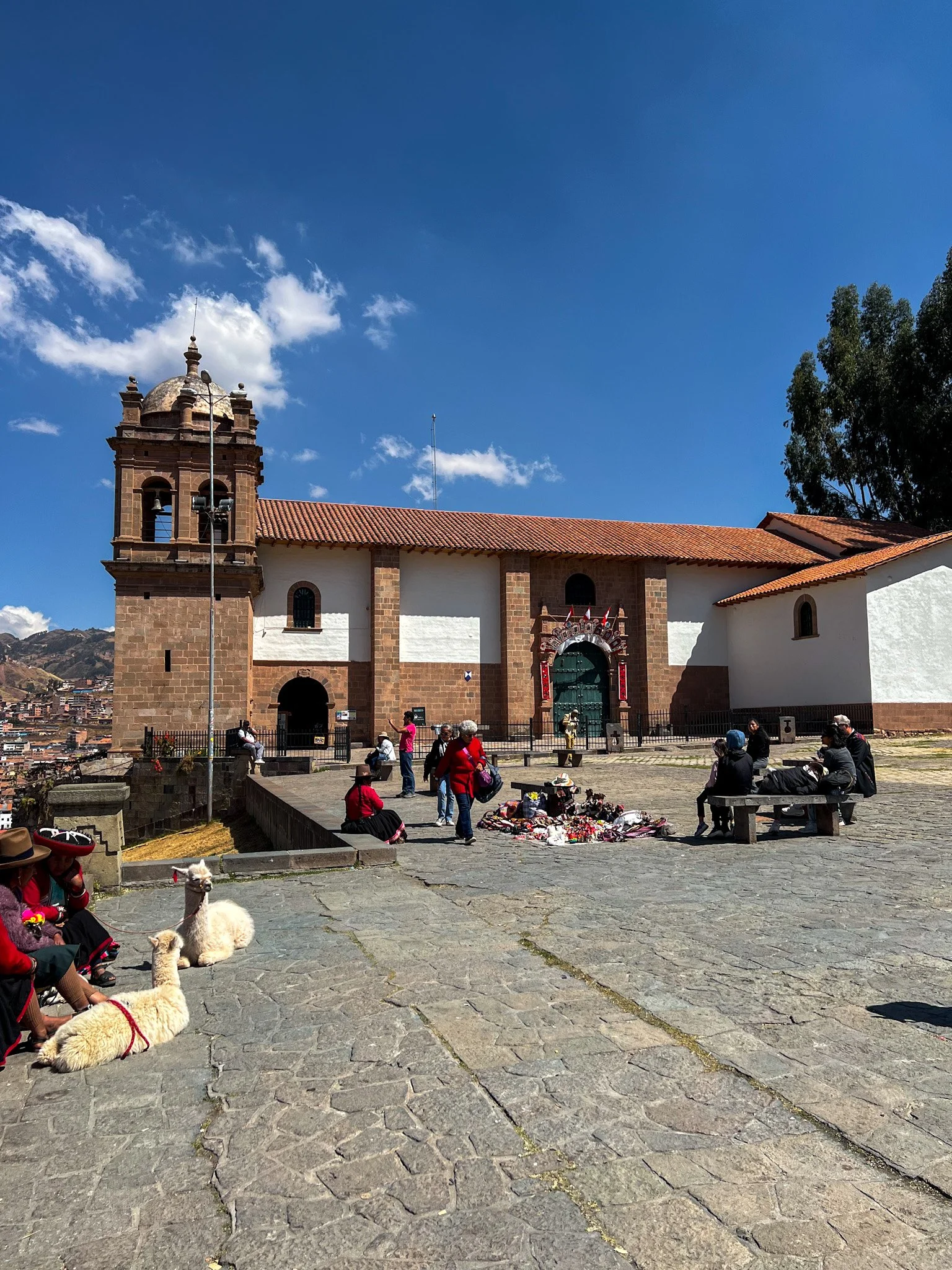
Its name comes from the nearby Church of San Cristóbal. Known as the highest-altitude church in Cusco, it was built in the 16th century by Cristóbal Paullu Inca, a brother of Huáscar, Atahualpa, and Manco Inca. The church stands on land granted to him by the Spanish conquistadors in recognition of his alliance. Initially a chapel, it became a parish for Indigenous people in 1560, and after the 1650 earthquake, it was rebuilt under the guidance of architect Marcos Uscamayta, incorporating stone for the tower and adobe for the main structure.
Resbalosa Street
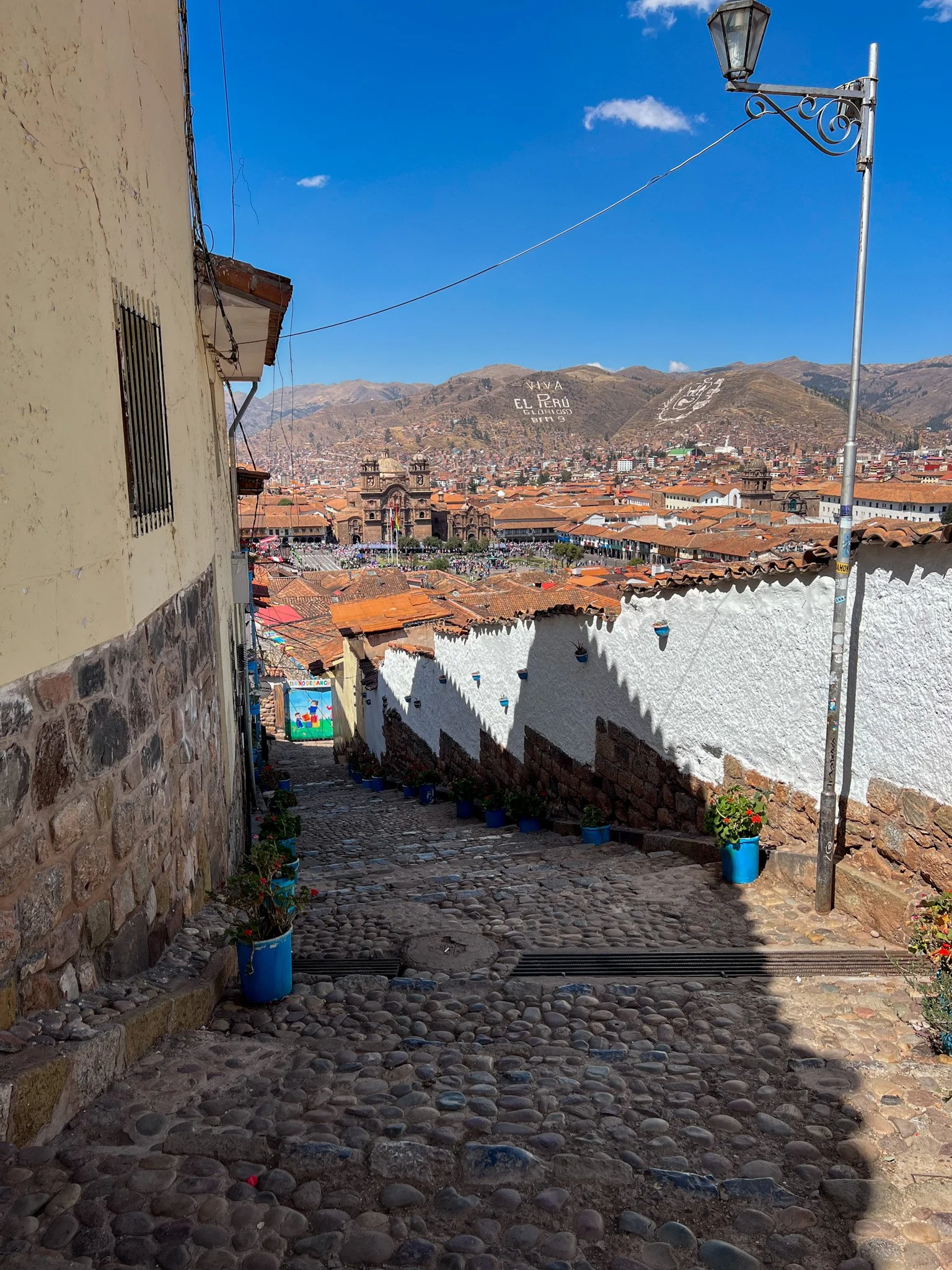
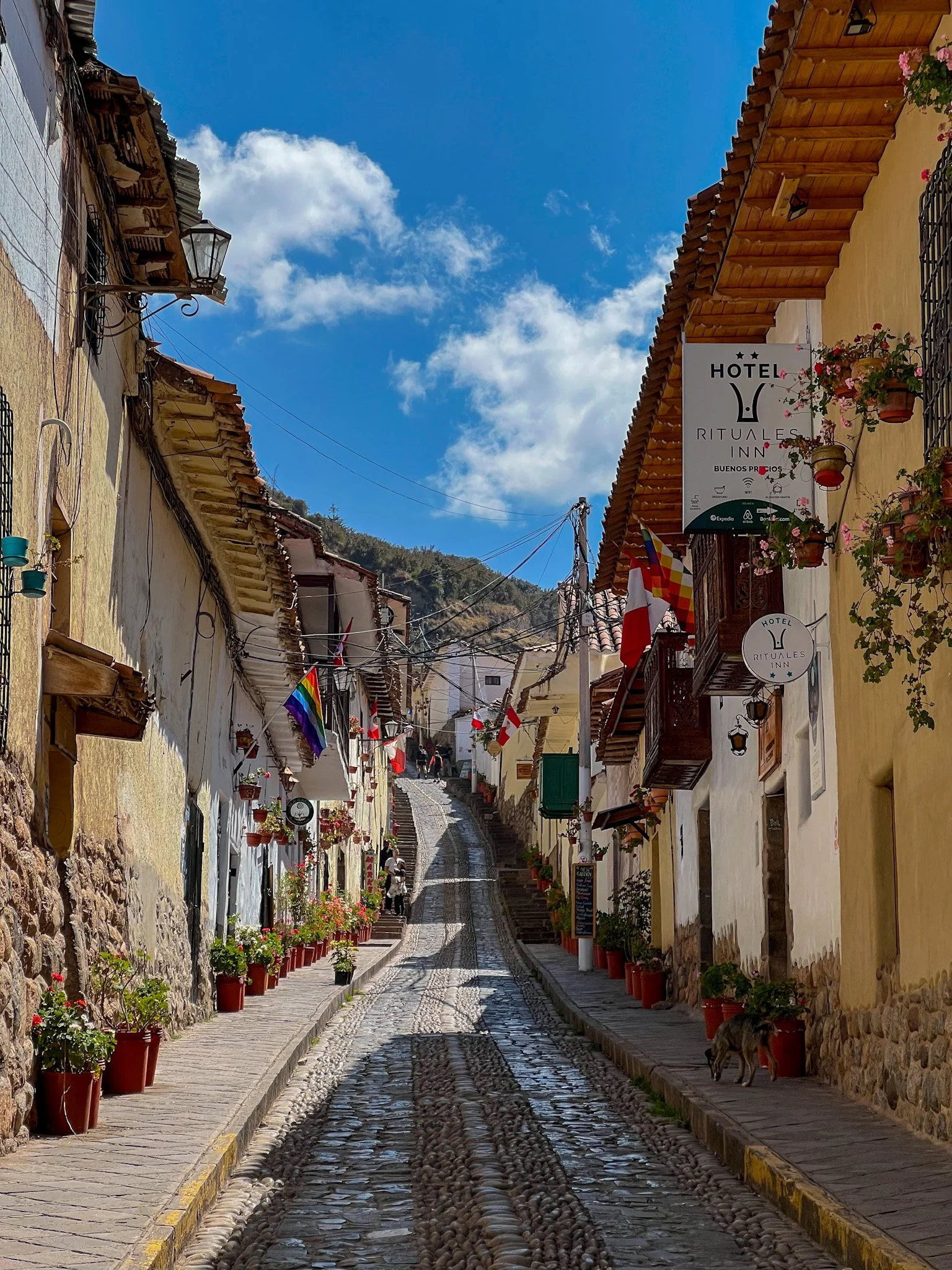
We started our descent back to the city centre passing by Resbalosa Street, which connects to San Cristobal Square. The street is famous for its steep incline and a name that humorously reflects its challenging terrain.
The street’s name, "Resbalosa" (slippery), originates from the frequent tumbles people take while navigating its cobblestone surface, whether climbing up or descending. In Quechua, it is called Sikitakana, meaning "bumping butt," further emphasising its tricky nature.
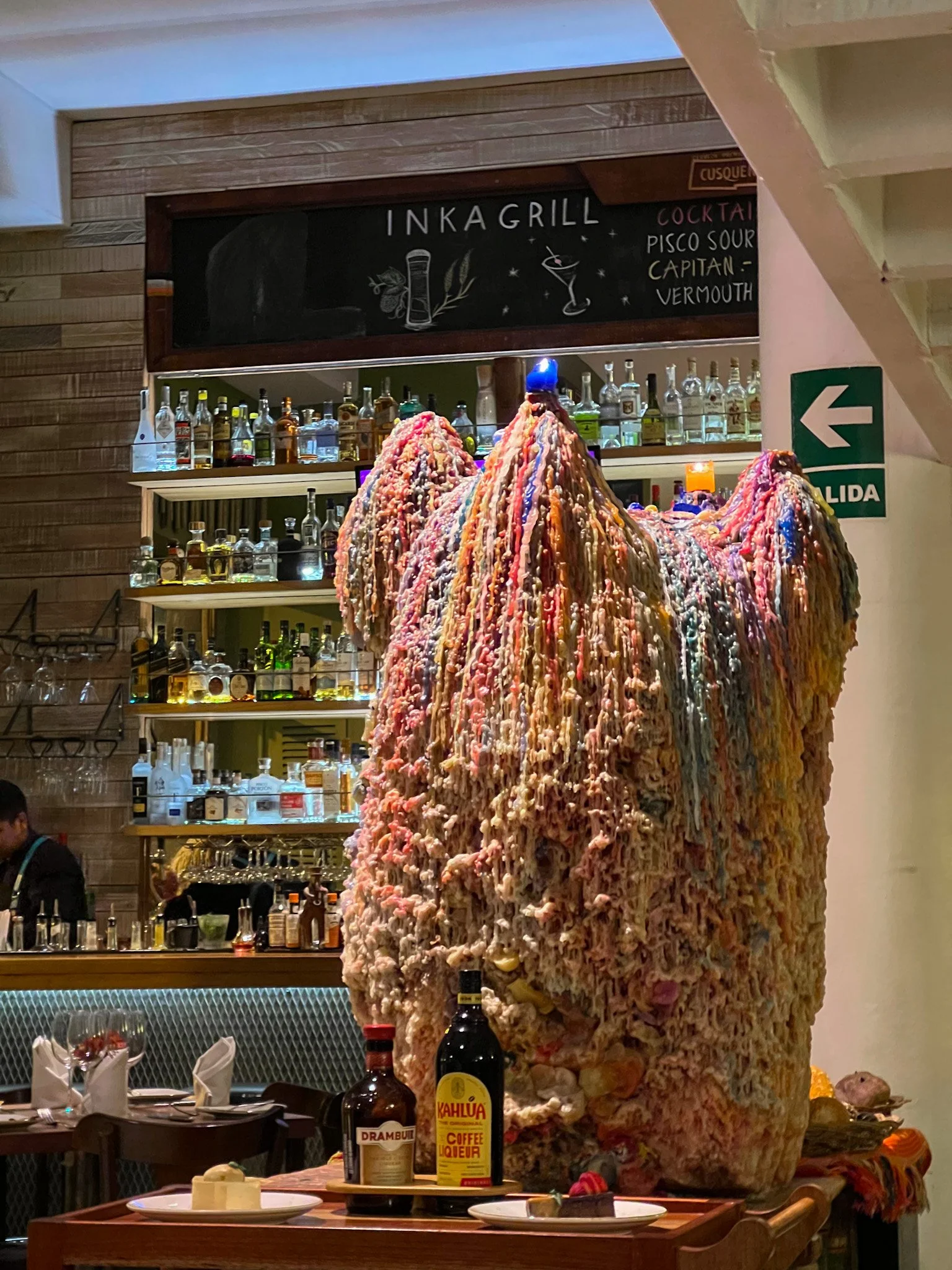
Before continuing our visit, we decided to stop at the Inkagrill Restaurant for lunch, a popular restaurant located on the western side of Plaza de Armas. As soon as we stepped inside, the warm and inviting atmosphere immediately drew us in. The restaurant’s décor pays homage to Cusco’s rich cultural heritage, with its high ceilings, intricate stone walls, and golden accents, creating a perfect blend of modern comfort and Incan charm.
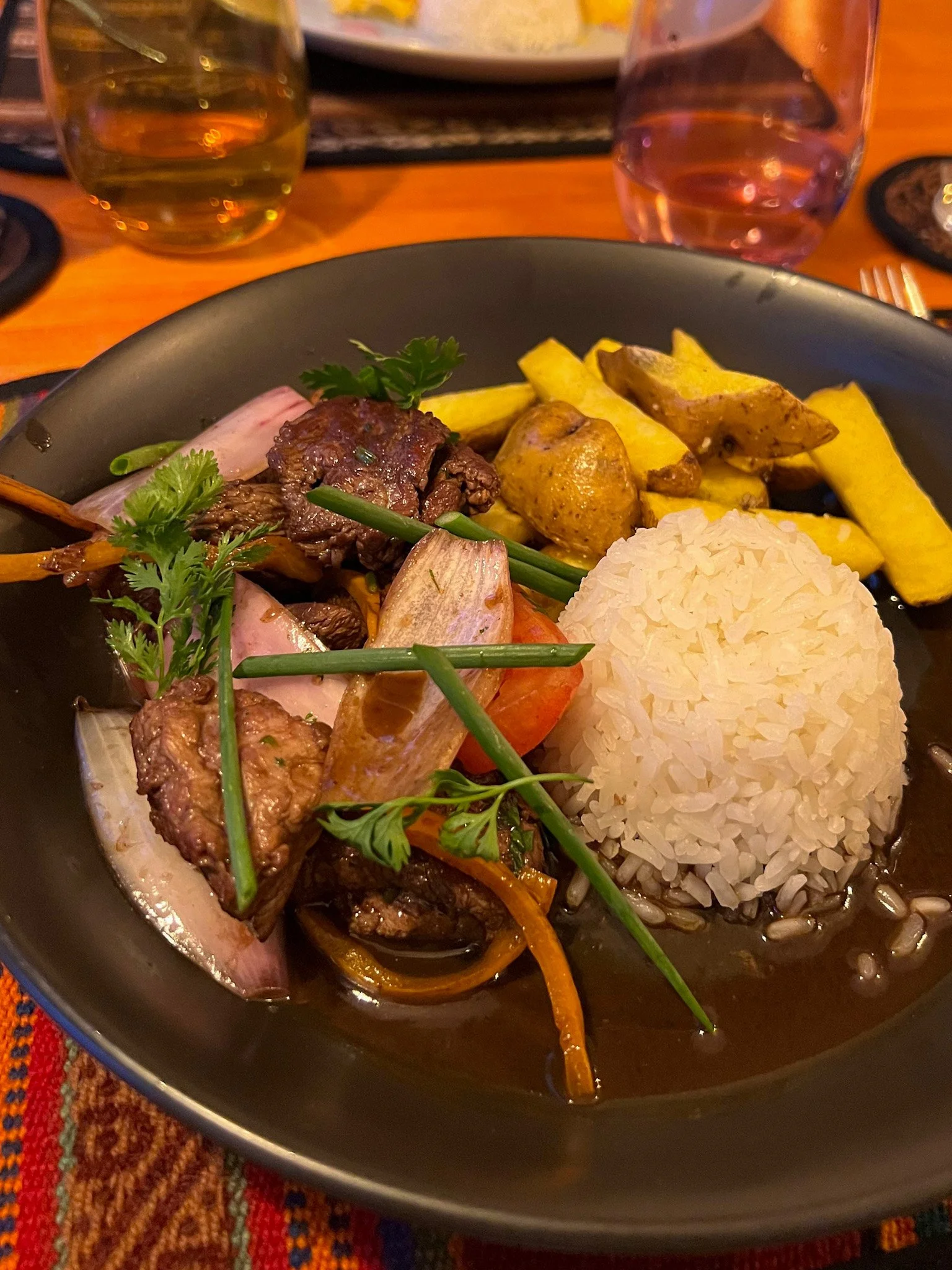
Inka Grill is a fantastic choice for anyone looking to experience authentic Peruvian cuisine with a contemporary twist. The menu features a mix of classic comfort dishes and innovative creations, like the flavourful alpaca roast beef sandwich or the hearty milanesa chicken with pesto gnocchi. Their fresh, locally sourced ingredients ensure that each dish bursts with flavour, making every bite unforgettable. The famous Peruvian lomo saltado is a must try.
With its central location, exceptional service, and mouthwatering dishes, Inka Grill truly delivers. It’s a must-visit spot to refuel and recharge during your exploration of Cusco.
Plazoleta de las Nazarenas & Pre-Columbian Art Museum
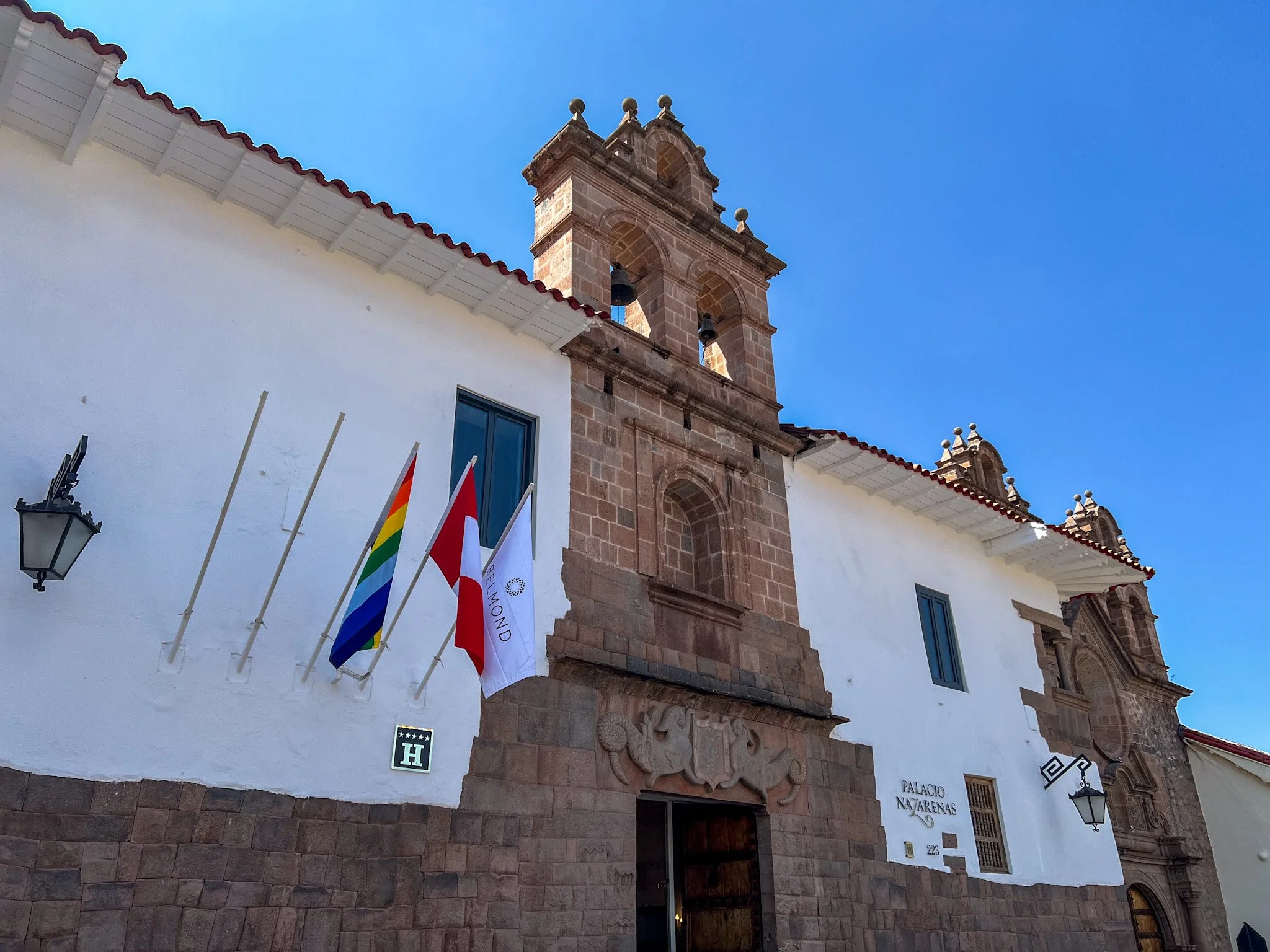
After lunch, we continued our walk to the Plazoleta de las Nazarenas, home of the luxurious five-star Belmond Palacio Nazarenas Hotel. Built on the historic 17th-century Casa de las Sierpes, which once housed the Monastery of the Nazarenas, the hotel blends Andean Baroque architecture with original Inca stonework.
Located on the same square you can’t miss a visit to the The Museum of Pre-Columbian Art of Cusco, a captivating journey through the artistic heritage of pre-Columbian civilisations showcasing around 450 objects from diverse regions of ancient Peru. The museum draws its collection from the renowned Larco Museum in Lima and is housed in a beautifully restored colonial mansion, which once served as an Inca ceremonial courthouse and later the residence of Viceroy Hernandez de Cabrera. Its ten galleries present a chronological and thematic exploration of ancient Peruvian cultures, spanning 1250 BC to AD 1532. Highlights include intricate ceramics, monumental Inca aribalos, and exquisite gold and silver artefacts, each offering a glimpse into the craftsmanship and cultural sophistication of these early societies.

San Blas
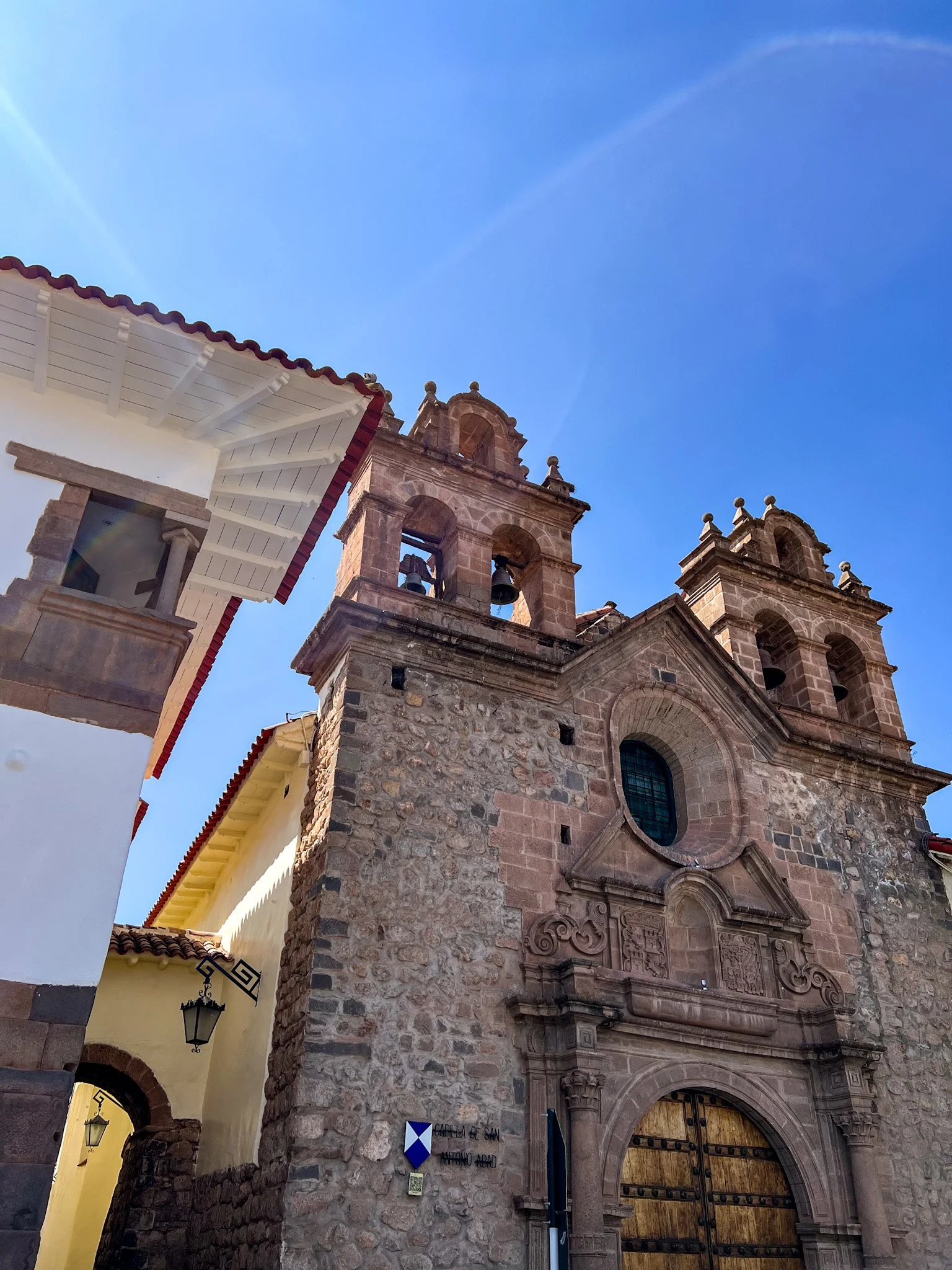
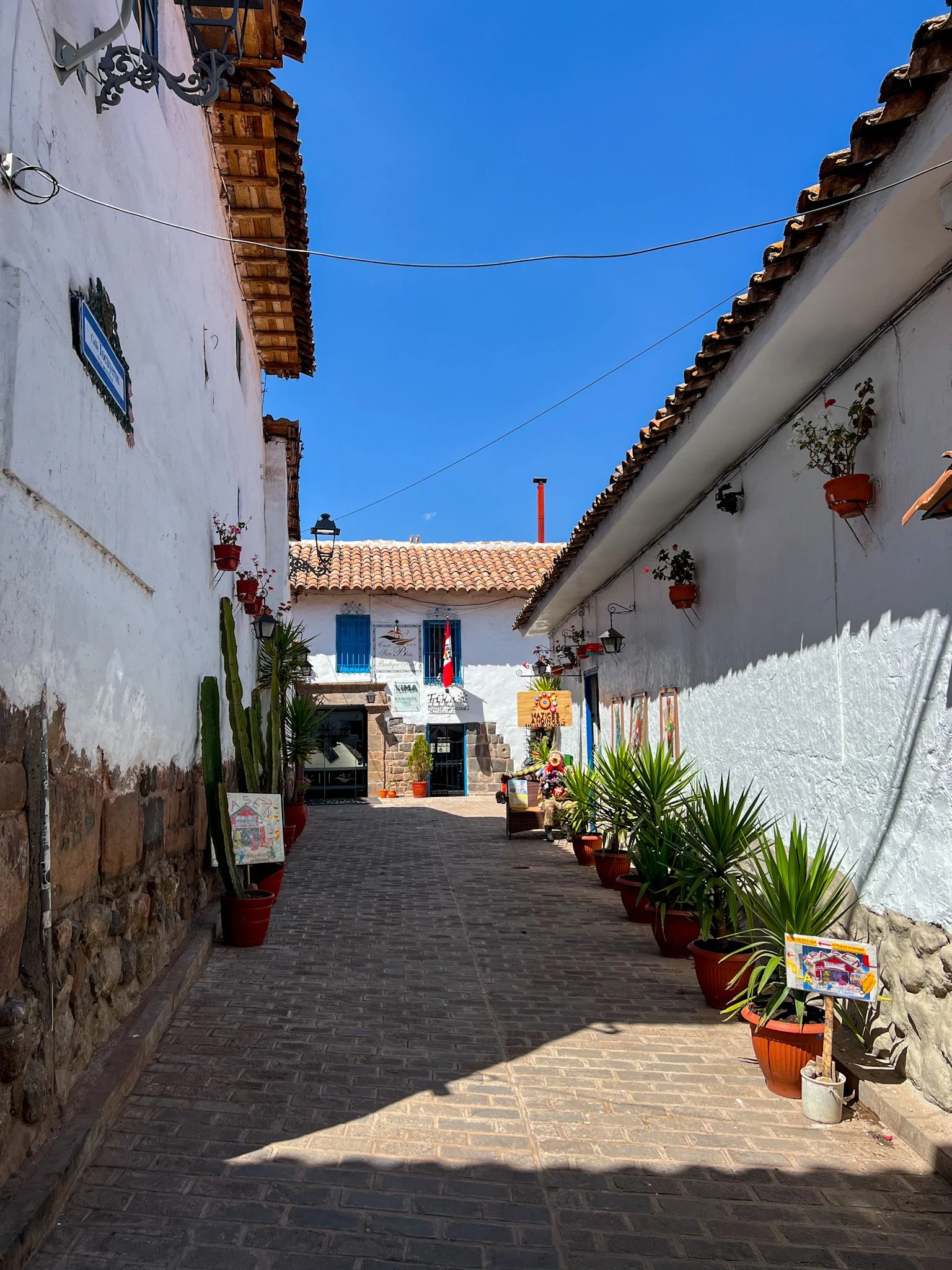
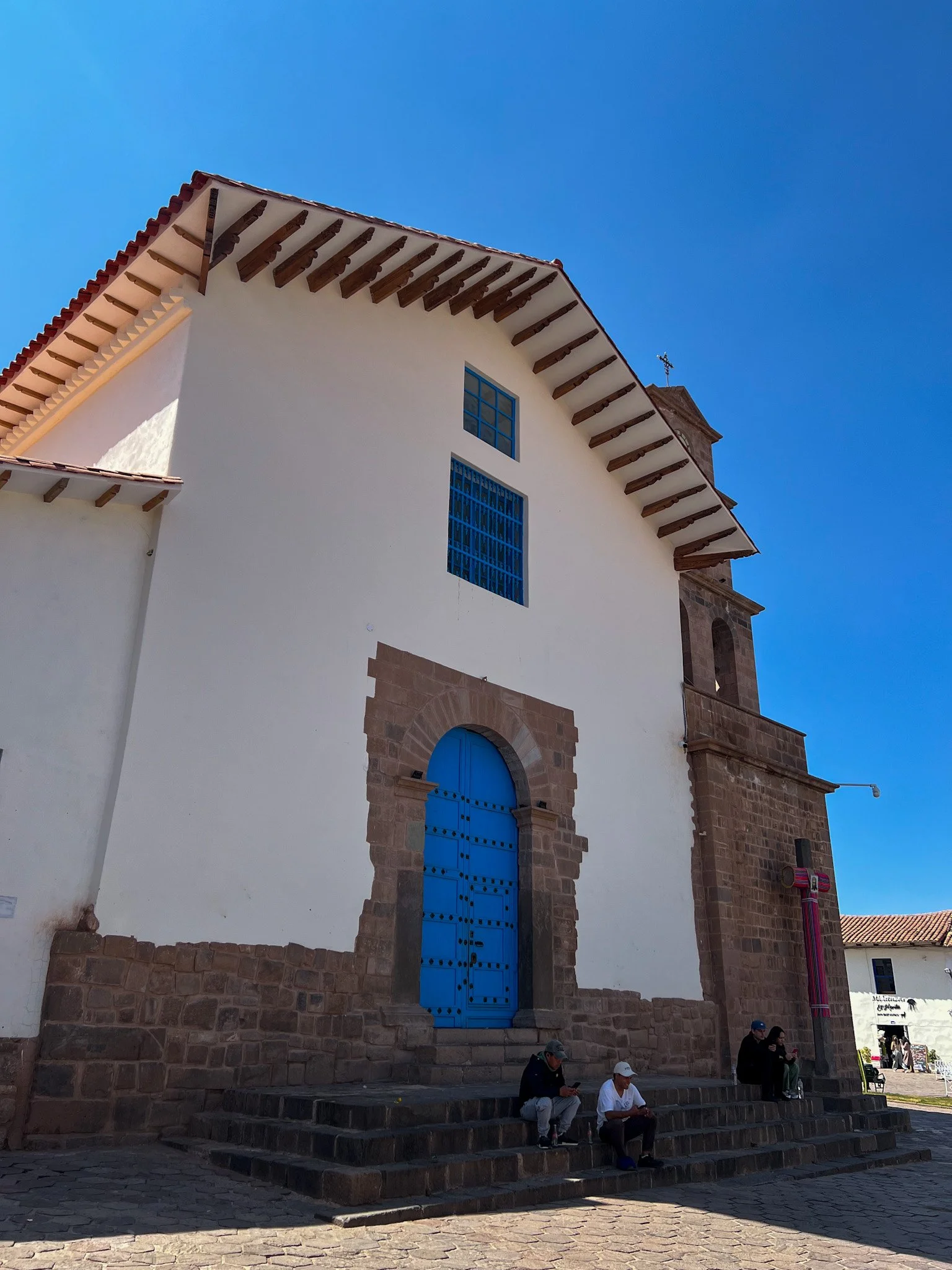
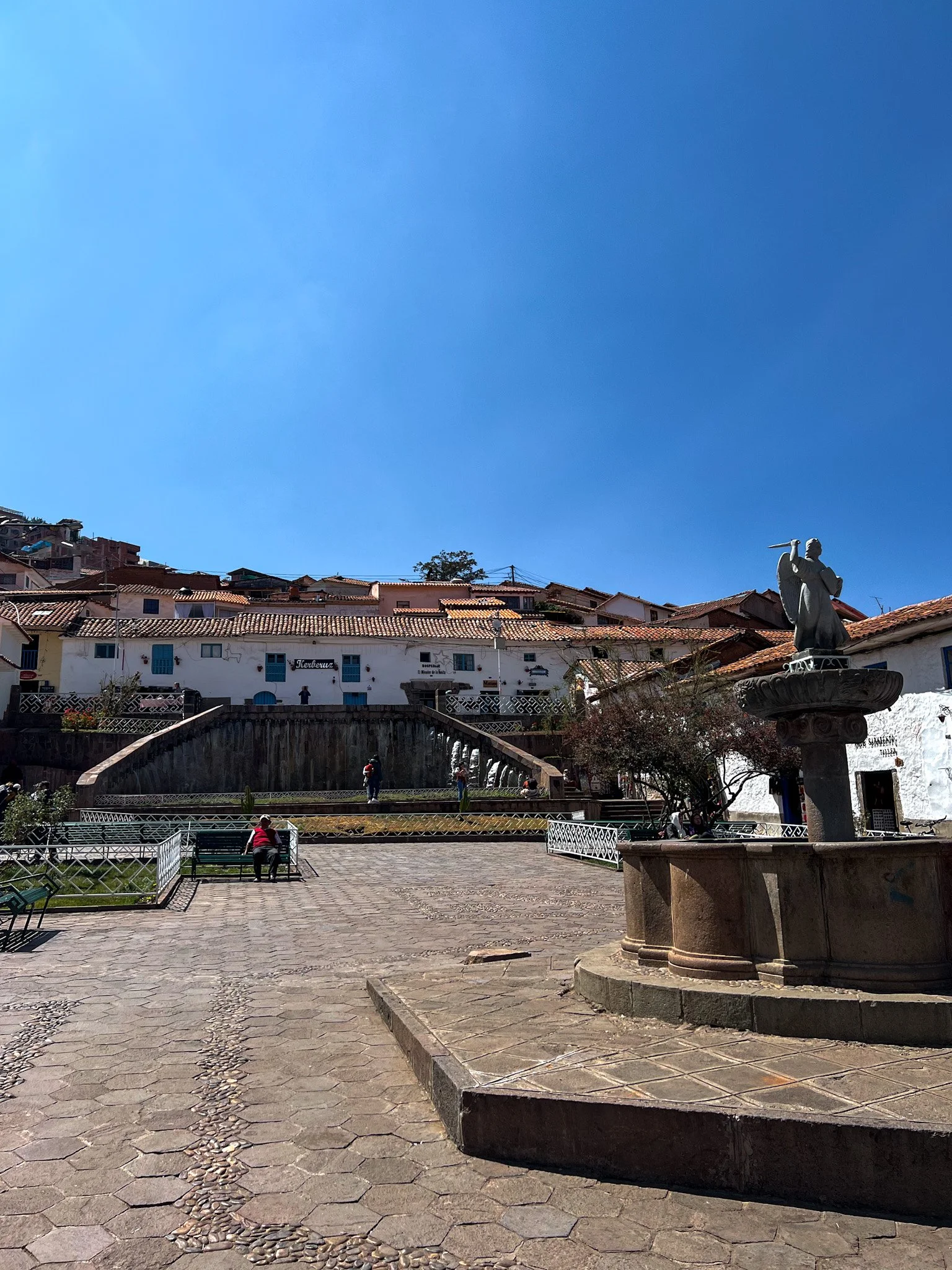
We spent the rest of the afternoon exploring San Blas, one of Cusco’s most picturesque and culturally rich neighbourhoods. Known for its steep, narrow streets and charming colonial houses built atop Inca foundations, San Blas is a haven for artisans, workshops, and craft shops.
Its vibrant artistic atmosphere attracts visitors seeking handmade crafts and a glimpse into Cusco's traditional craftsmanship. The neighbourhood’s central square is a lively meeting point, while its historic parish church, built in 1563, features a magnificent carved wooden pulpit, celebrated as a masterpiece of Colonial-era woodwork.
Dinner: Moray Restaurant
We couldn’t leave Cusco without enjoying some incredible Peruvian food one last time, so we decided to book a table at Moray Restaurant—and it turned out to be one of the best culinary experiences we had during our stay.
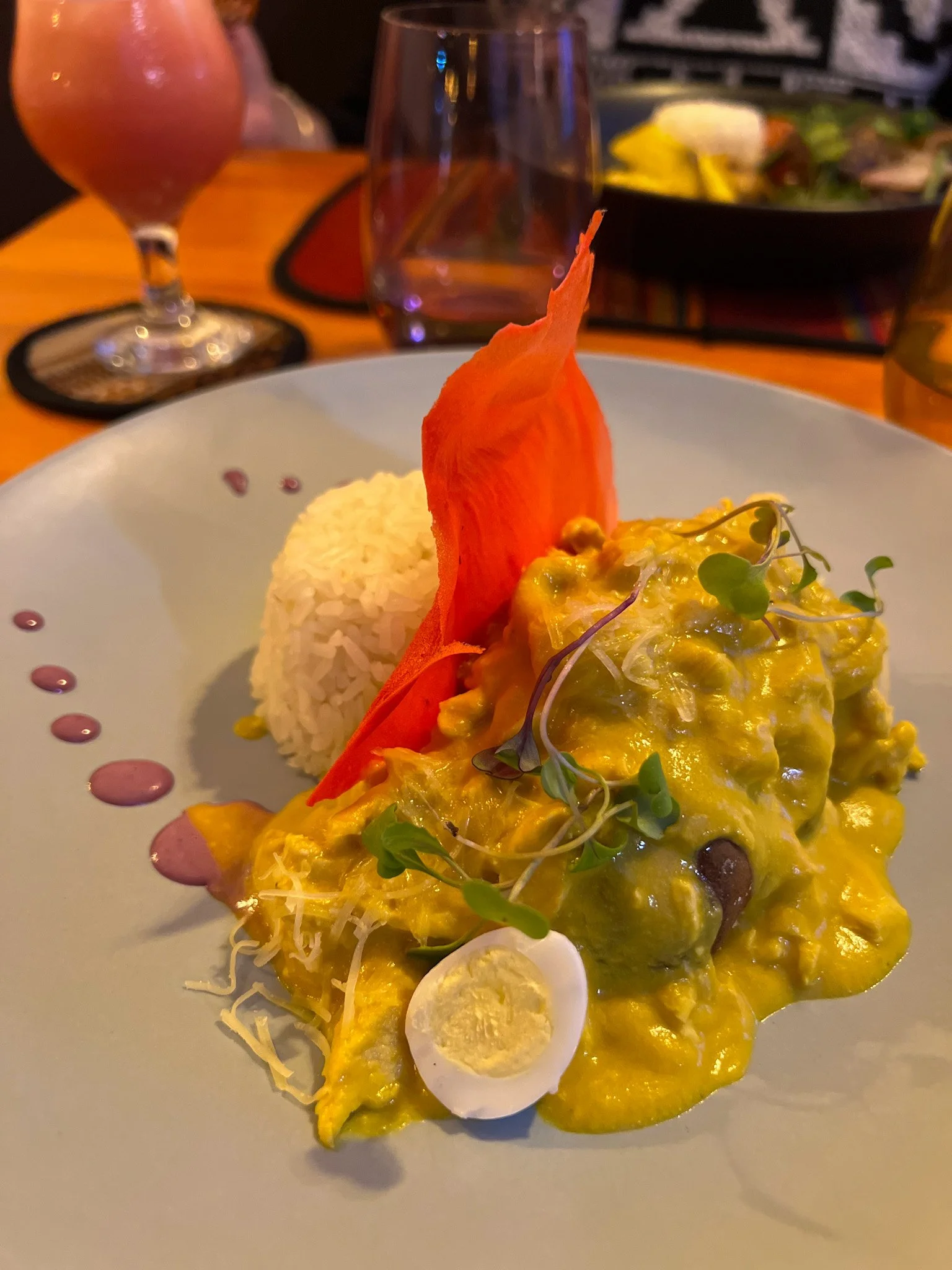
The food was of the highest quality, easily the best we tasted in Peru. Our server was exceptional, taking the time to explain every ingredient in our dishes, which really enhanced the experience. Their ceviche was the best we tried on our trip, and the ají de gallina was absolutely delicious. They also offer excellent cocktails, making it the perfect opportunity to try the famous Peruvian Pisco Sour.

Spending two to three days in Cusco is the perfect amount of time to explore the city’s main highlights while giving yourself a chance to acclimate to the altitude. From wandering through the historic streets of the Plaza de Armas to discovering the impressive ruins of Coricancha and Sacsayhuamán, Cusco offers a blend of culture, history, and stunning scenery that’s hard to match.
Beyond the city, Cusco serves as a gateway to some of Peru’s most iconic destinations. You can venture into the Sacred Valley of the Incas, with its picturesque villages and archaeological treasures, or take the unforgettable journey to Machu Picchu, one of the New Seven Wonders of the World. For those seeking even more adventure, a breathtaking day trip to the Rainbow Mountain is a must. Whether you’re here for a short stay or a longer journey, Cusco is the perfect base to experience the heart of the Andes and the magic of Incan heritage.
Some links in this post are affiliate links, which means that if you buy through them, we’ll receive a small commission. This will never cost you more and in many cases you will receive a special discount.
As always, all opinions are mine. We appreciate your support!
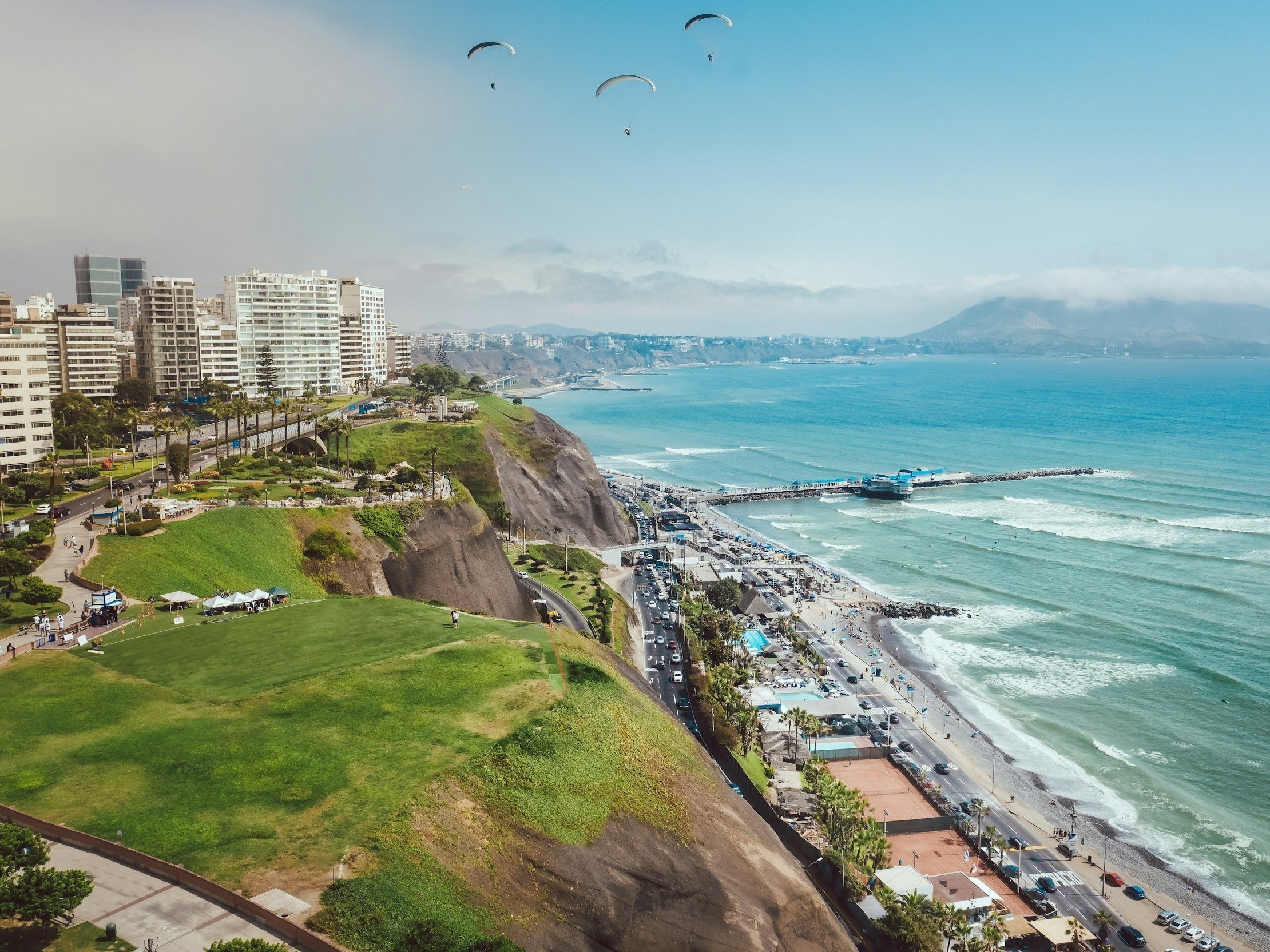


If you’re planning a trip to Peru, check out this 8-day itinerary that captures the best of Cusco, the Sacred Valley, and Machu Picchu, along with a taste of Lima’s vibrant culture.
Begin your adventure in Cusco, the historic capital of the Inca Empire, where you’ll explore ancient ruins, bustling markets, and charming neighbourhoods. Venture into the Sacred Valley, visiting picturesque villages, stunning salt mines, and fascinating Incan sites before embarking on the ultimate journey to Machu Picchu, one of the New Seven Wonders of the World.
After soaking in the magic of the Andes, fly to Lima, where you’ll experience the coastal capital’s rich history, culinary delights, and breathtaking ocean views.
This thoughtfully planned itinerary ensures you experience the highlights of Peru while leaving room to savor its unique culture and natural beauty!