
Machu Picchu: a comprehensive guide to visiting the Lost City of the Incas
Machu Picchu, the iconic "Lost City of the Incas," is a must-see destination for anyone seeking to experience the wonders of ancient civilisation and the breathtaking beauty of the Peruvian Andes. This UNESCO World Heritage site, perched high on a mountain ridge, has captivated travellers for centuries with its mysterious origins and stunning views.
In this comprehensive guide, we’ll cover everything you need to know to plan your visit to this legendary site, from ticketing and transportation to tips for avoiding the crowds and making the most of your time at Machu Picchu. If you’re ready to discover the magic of one of the Seven Wonders of the World, read on for essential advice to ensure your journey to Machu Picchu is as unforgettable as the site itself!
How to visit Machu Picchu from Cusco
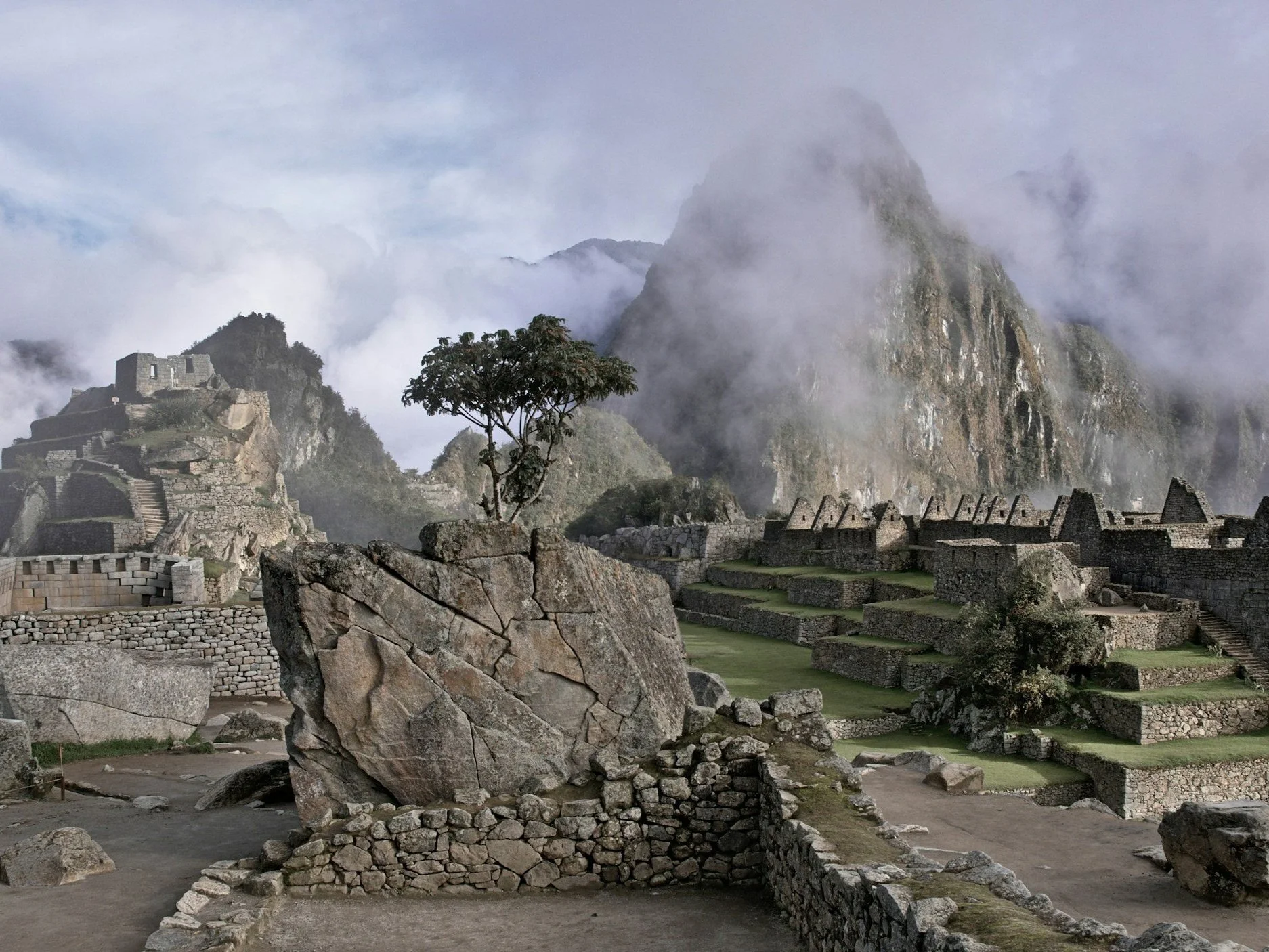
Visiting Machu Picchu from Cusco is an unforgettable adventure, and the most convenient way to reach this ancient Incan city is by taking the train. If you’d like to visit this wonder of the world on your own, there are two main train companies, PeruRail and Inca Rail, offering scenic routes from Cusco to the town of Aguas Calientes, which is located at the base of Machu Picchu.
The journey takes around 3.5 to 4 hours, with breathtaking views of the Sacred Valley, the Urubamba River, and the surrounding Andes mountains. Trains are available in several classes, from budget-friendly options to luxurious services that include gourmet meals and panoramic windows, allowing you to fully immerse yourself in the spectacular scenery along the way.
Once you arrive in Aguas Calientes, you’ll need to take a short bus ride up to the entrance of Machu Picchu. Buses leave regularly throughout the day and take about 20 minutes to ascend the winding mountain road. It’s recommended to arrive early, as the site gets busier as the day progresses, and you'll want to maximize your time exploring this awe-inspiring archaeological site. Keep in mind that you must have pre-booked your tickets for both the train and Machu Picchu entrance in advance, as both are in high demand.
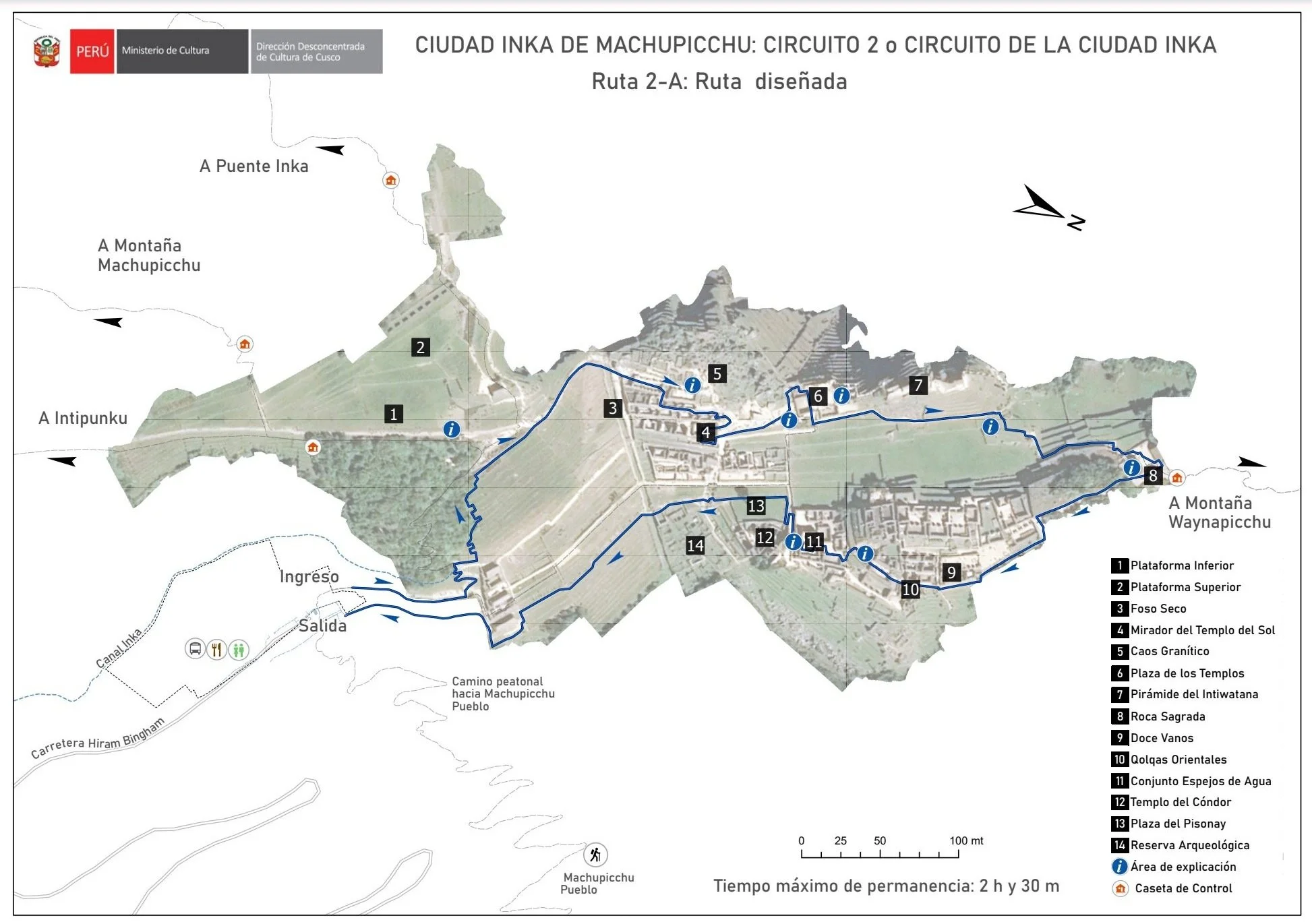
Be sure to purchase your Machu Picchu entrance tickets well in advance, as the number of visitors per day is limited. Tickets for Circuit 2, the most comprehensive route, are especially in high demand, so if you wait until the last minute, you may be restricted to one of the shorter tours that don't include access to the urban area, or the tickets may be sold out entirely.
Tickets can be purchased online through the official Machu Picchu website or through authorised travel agencies. To avoid disappointment, I recommend buying your entry tickets to Machu Picchu in advance with GetYourGuide.
To fully immerse yourself in the rich history and culture of Machu Picchu, I highly recommend booking a guided tour. While it's possible to visit on your own, a guided experience brings the ancient ruins to life, offering fascinating insights into their significance that you’d miss otherwise. A knowledgeable guide will provide context and stories that enrich your visit, ensuring you understand the importance of landmarks like the Temple of the Sun and the Intihuatana stone. Most guided tours also include transportation, making your journey from Cusco to Machu Picchu seamless and stress-free.
There are several options for guided tours to Machu Picchu, depending on your time and preferences:
If you're on a tight schedule, the full-day group tour of Machu Picchu from Cusco with GetYourGuide is a great choice. This option departs early in the morning and returns the same day, allowing you to experience the highlights of the site without an overnight stay.
For a more relaxed experience, consider a two-day Sacred Valley and Machu Picchu tour with GetYourGuide. This was our choice, and it turned out to be the best decision. After spending a full day exploring the Sacred Valley of the Incas, you’ll board the train to Aguas Calientes from Ollantaytambo, which offers a shorter and more scenic ride compared to departing from Cusco.
Which Machu Picchu route to book?
There are different routes available to visit Machu Picchu, each providing access to various areas and viewpoints of the city. Since 2024, new circuits have been introduced, allowing you to tailor your visit to match your fitness level, interests, and time constraints. Planning is essential, as visitors must book specific routes and times in advance. The areas you can access will depend entirely on the circuit you choose:
Circuit 1: Panoramic Circuit
The Panoramic Circuit is ideal for those seeking high vantage points and a taste of adventure. Circuit 1-A (see map) leads to the summit of Machu Picchu mountain, rewarding hikers with panoramic views of the ruins and surrounding peaks after a four-hour trek. For shorter, less demanding options, Circuits 1-B (see map), 1-C (see map), and 1-D (see map) offer captivating perspectives from the upper terraces, the Sun Gate, or the Inca Bridge, respectively. These routes are perfect for photographers or those preferring a scenic walk without venturing into the urban heart of Machu Picchu.
Circuit 2: Inca City Circuit
For a more immersive experience of the archaeological site, the Inca City Circuit is the go-to choice. Circuit 2-A (see map) follows the classic path, guiding visitors from the upper terraces through the urban area and past iconic landmarks like the Sacred Rock. This route is a favourite for its balance of panoramic views and close encounters with the site’s historical treasures. Alternatively, Circuit 2-B (see map) starts from the lower terraces, providing a slightly different angle on the ruins, but doesn’t give access to the urban area.
Circuit 3: Royalty Circuit
Adventurers looking for a challenge can opt for the Royalty Circuit, particularly Circuit 3-A (see map), which involves a climb up Wayna Picchu. The steep, narrow stairs are not for the faint-hearted, but the stunning views and unique perspective of Machu Picchu from this peak make it worthwhile. For those preferring less strenuous options, Circuits 3-B (see map), 3-C (see map), and 3-D (see map) offer access to the Temple of the Sun, the Great Cave, or the summit of Huchuy Picchu, each providing a mix of history, scenery, and manageable physical effort.
Circuit 2 is by far the most comprehensive option and the recommended choice for first-time visitors. For our visit, we decided to book both Circuit 2-A and 1-D, giving us double the time to explore Machu Picchu. We began with a guided tour following Circuit 2-A, exploring all the main highlights and the urban area with a knowledgeable local guide. Afterward, we explored the upper terraces on our own following Circuit 1-D, gaining a fresh perspective of the ruins from a different angle.
Bus from Aguas Calientes to Machu Picchu
To reach Machu Picchu from Aguas Calientes, you’ll need to take a bus that departs from the city centre. Tickets can be purchased in advance at the bus station, though most tour operators handle the ticket bookings if you book your Machu Picchu entry or a guided tour through them.
For those looking to avoid the crowds, taking an early bus is key. Most visits to the ancient Incan city begin at dawn to ensure a more peaceful and less crowded experience. We were in line for the bus by 5:30 AM for a 7:00 AM entry time. Since the buses start running around 5:30 AM, this gives you the chance to catch one of the first rides up the steep, winding mountain road that leads from Aguas Calientes to the site.
The journey takes about 25 minutes and offers stunning views of the surrounding mist-covered mountains. With each curve of the road, anticipation grows, knowing you're soon to stand before one of the most famous archaeological sites in the world.
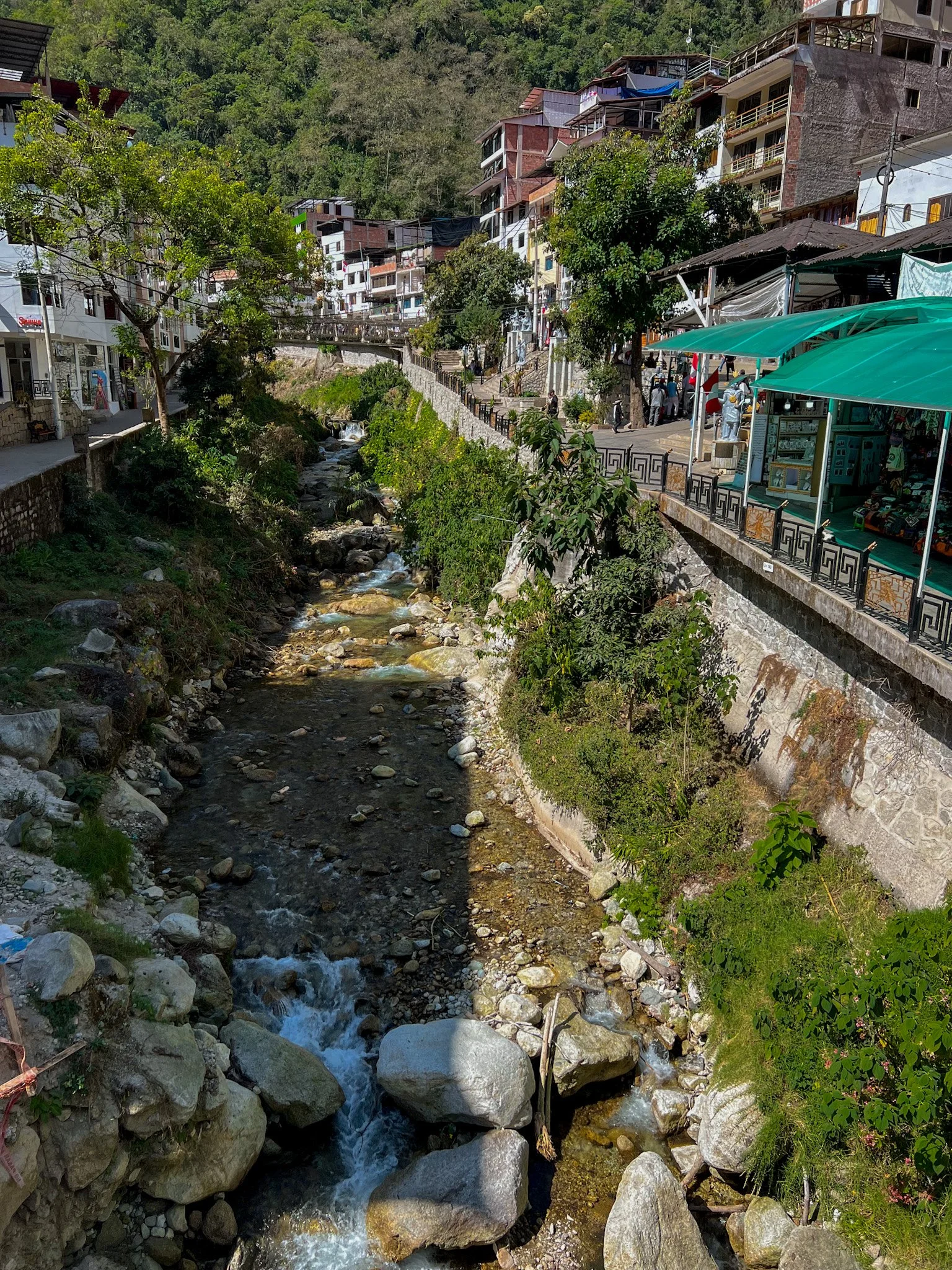
Aguas Calientes
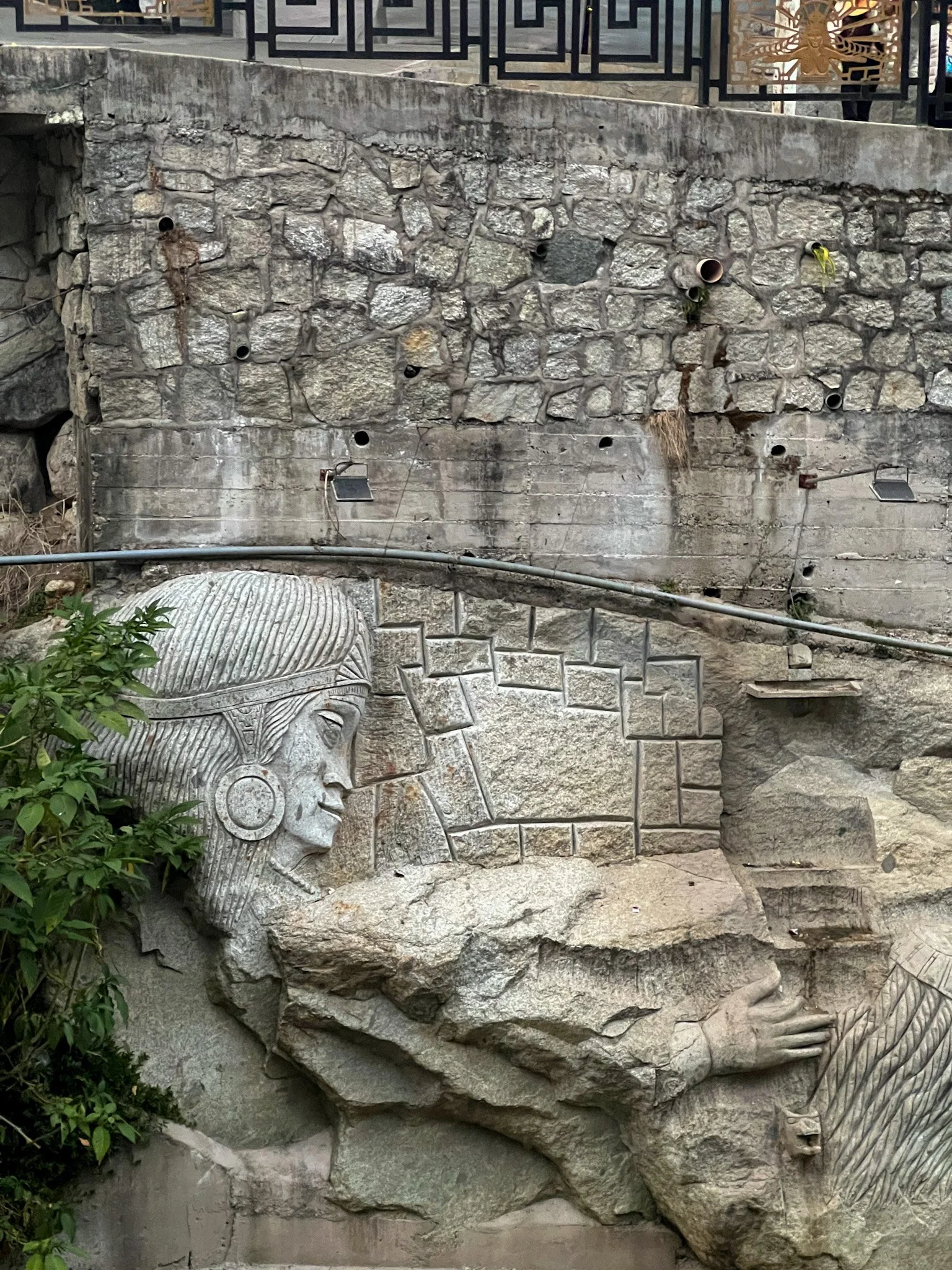
Stone Carving in Aguas Calientes
Machu Picchu
We reached the entrance for Circuit 2 before most of the crowds arrived, allowing us to enter Machu Picchu after just a few minutes of waiting. Arriving early offers visitors the chance to experience the site in a much more serene atmosphere, as it’s less crowded during the first few hours after opening. The morning light gently illuminates the ruins, creating a soft glow, and there’s a sense of quiet awe as you explore the ancient terraces, temples, and pathways before the larger crowds descend. Witnessing the sun slowly rise behind the majestic peak of Machu Picchu Mountain was truly an unforgettable experience—a perfect preview of the wonders that lay ahead.
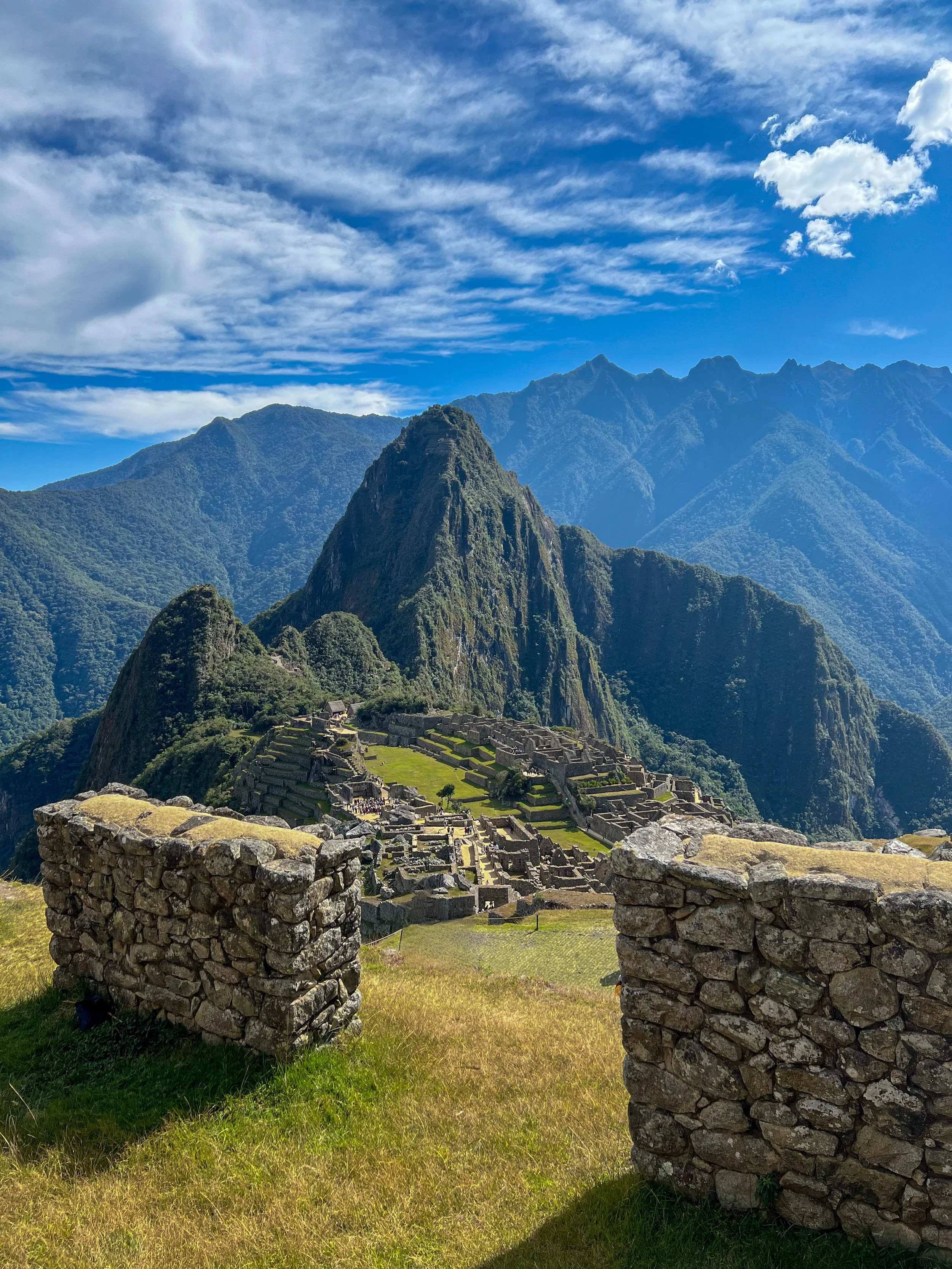
We entered Machu Picchu through the Sun Gate, or Inti Punku, the original and historic entrance to the ancient citadel. This iconic spot is not only a gateway into the heart of Machu Picchu but also offers one of the most stunning views of the entire site. Today, trekkers on the Inca Trail still experience this breathtaking panorama as they make their way to the citadel, completing their multi-day journey.
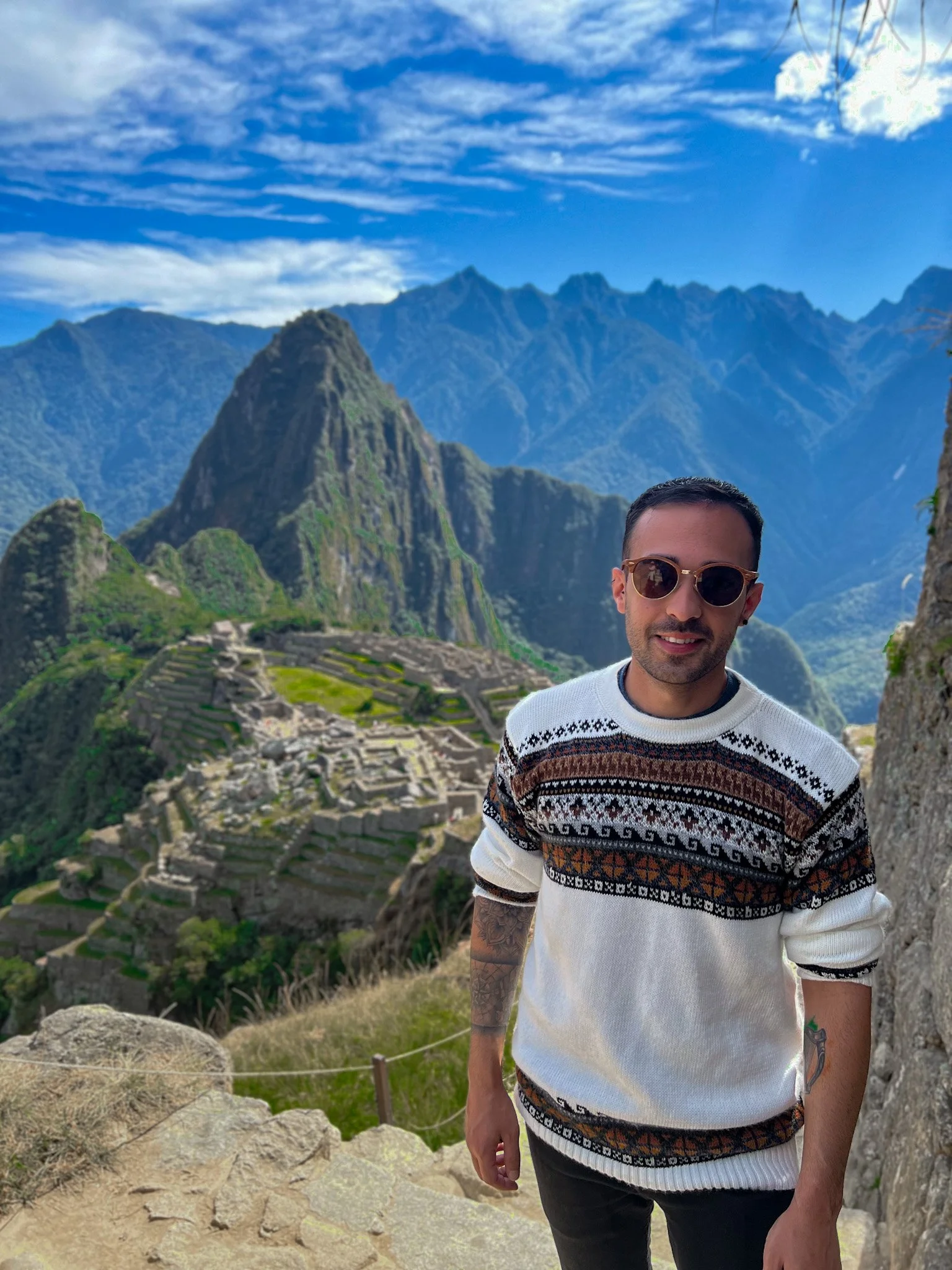
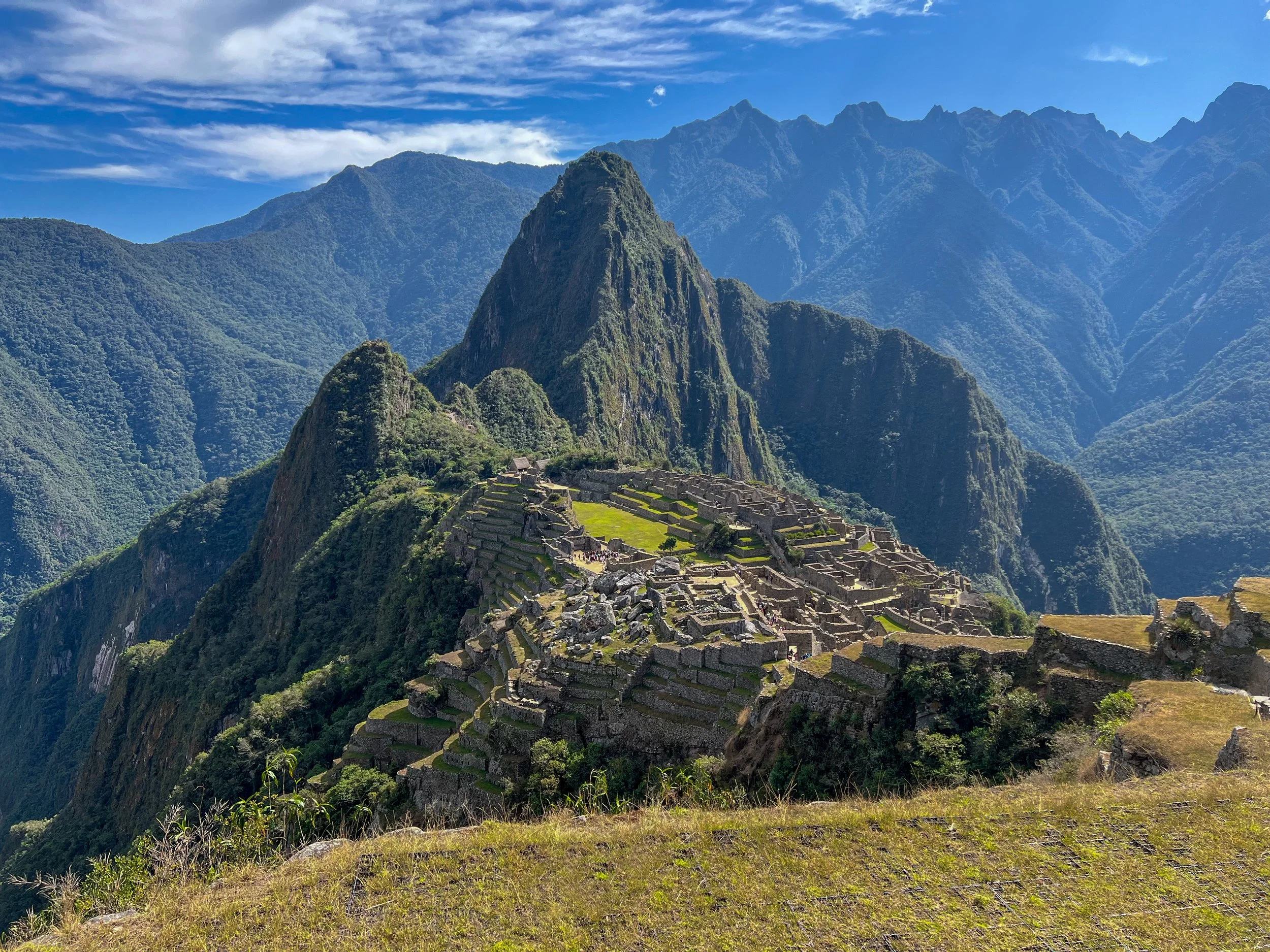
As we crossed the Sun Gate, the first glimpse of Machu Picchu unfolded before us—an awe-inspiring sight that instantly captivated the senses. The lush green mountains surrounding the citadel, the intricate stone structures, and the mist rising from the valleys below created an atmosphere that was almost otherworldly.
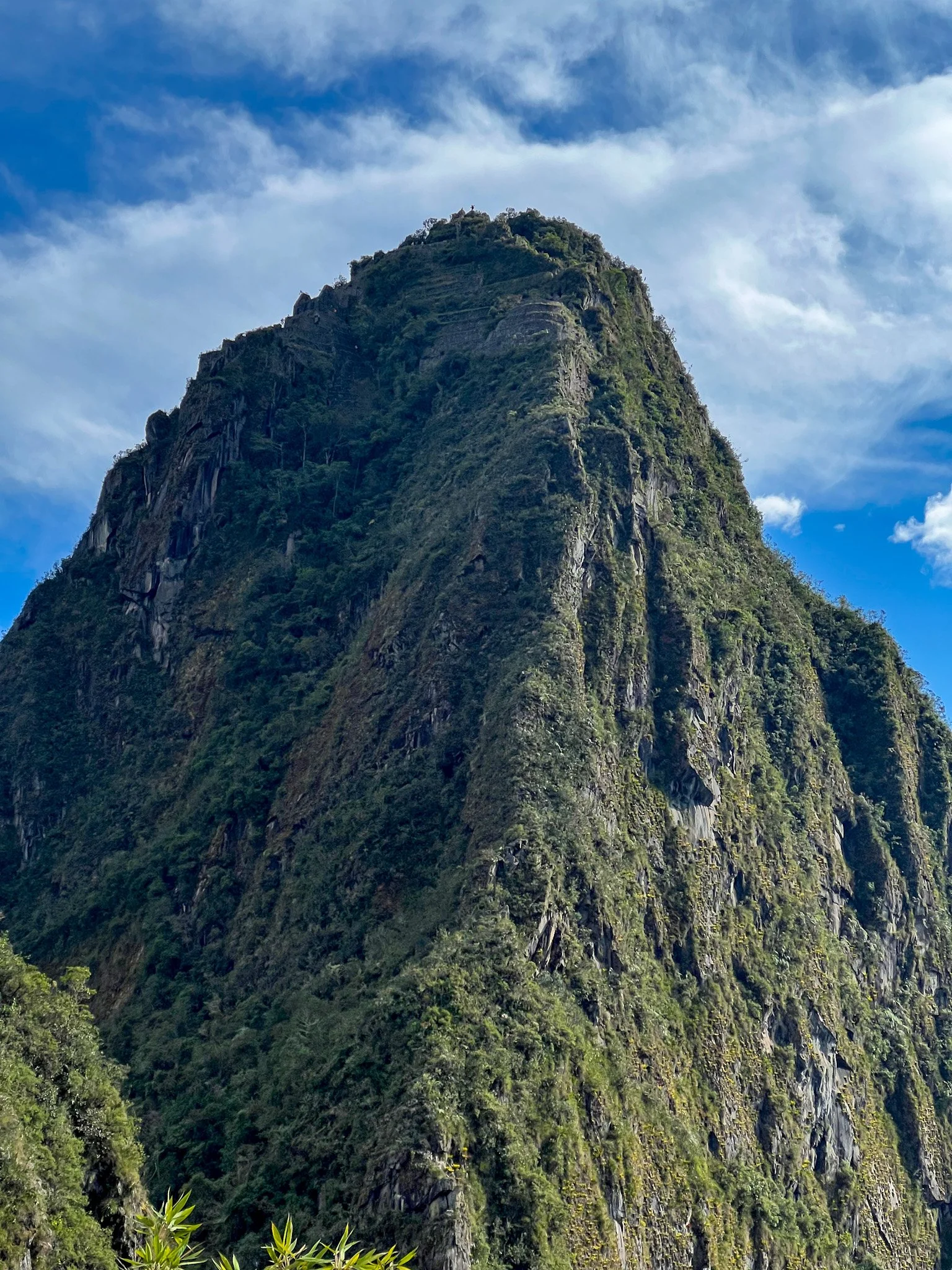
Huayna Picchu mountain
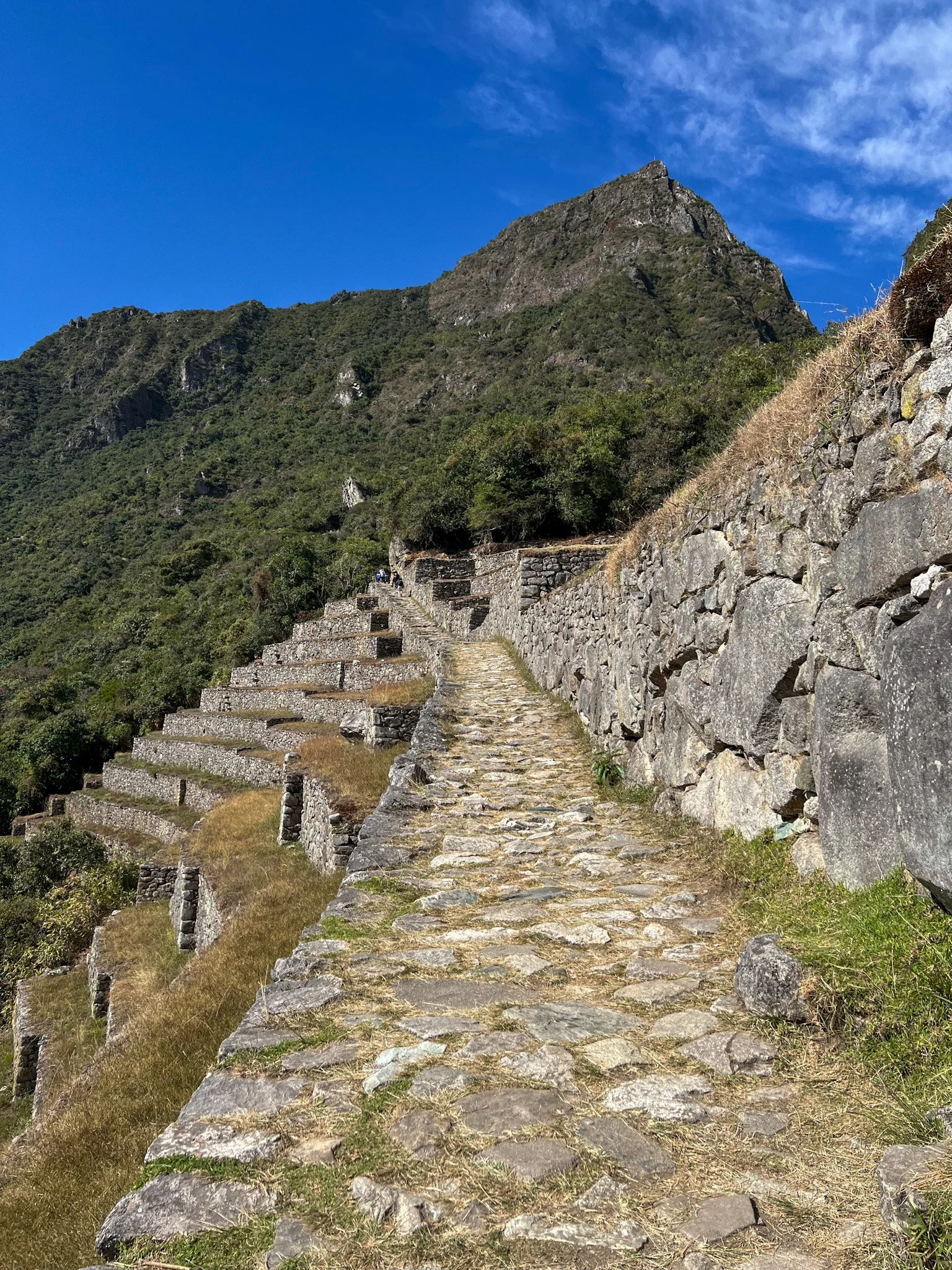
End of the Inca Trail
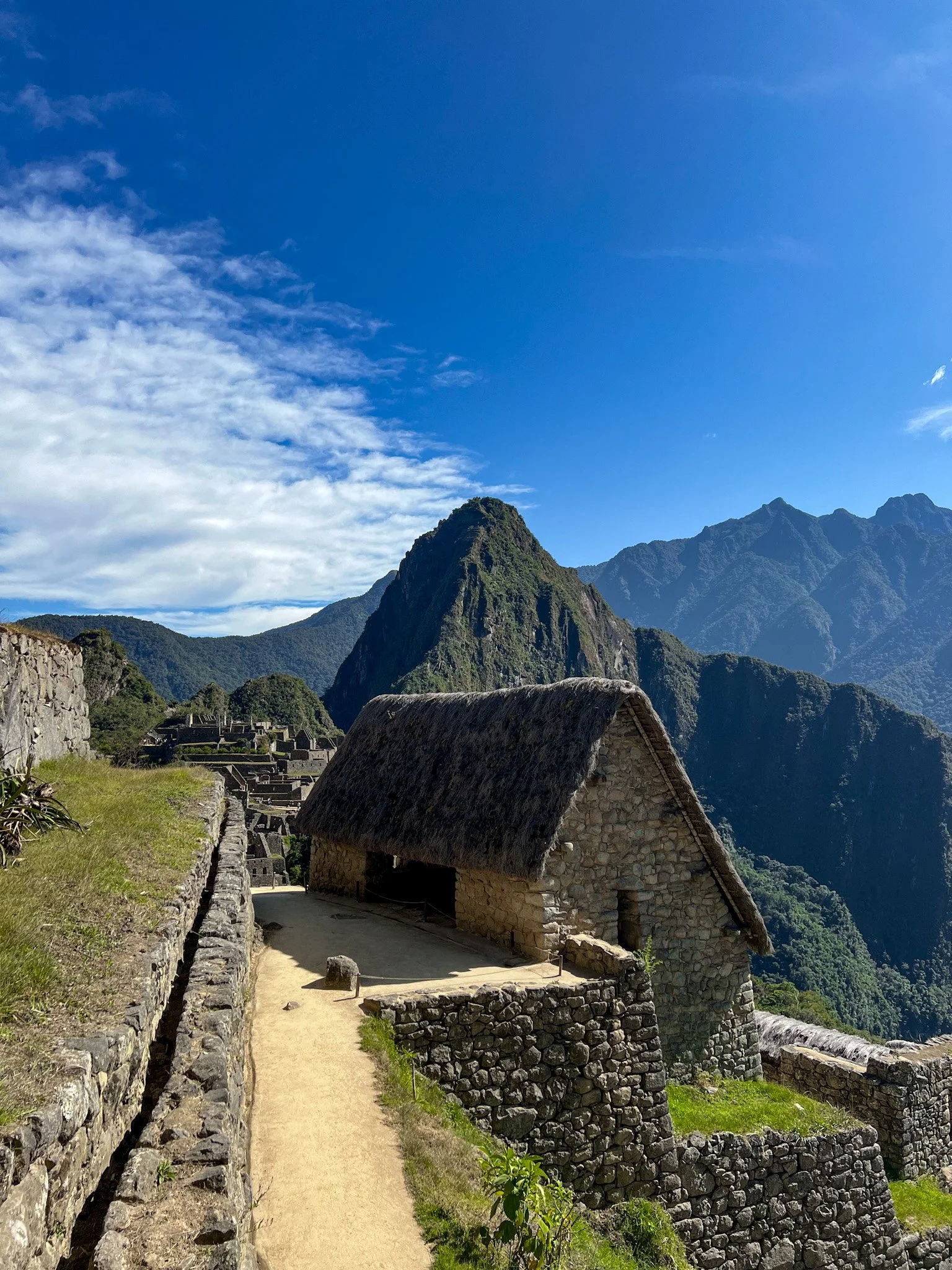
Entrance to the fortress
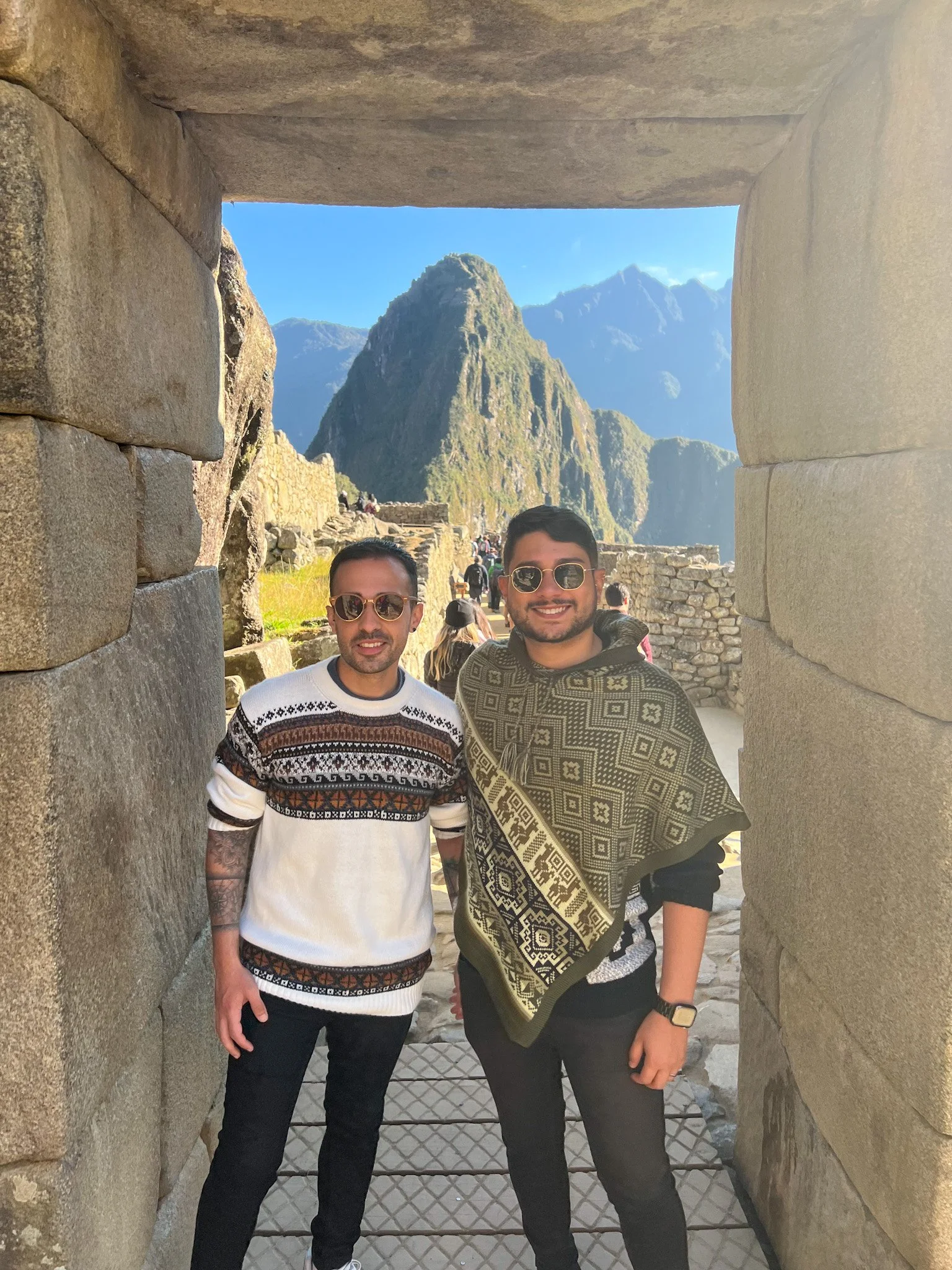
Sun Gate
Seeing Machu Picchu for the first time through this vantage point is truly an unforgettable experience. It’s a moment of connection between the ancient Inca civilisation and the present, with the grandiosity of the site leaving an indelible impression on every visitor.
Perched on a ridge at 2,430 meters above sea level, Machu Picchu is an iconic remnant of the Inca Empire. Often referred to as the "Lost City of the Incas," this ancient citadel is situated overlooking the Sacred Valley. Built in the 15th century, its structures showcase the classical Inca architectural style, including dry-stone walls and temples like the Temple of the Sun and the Temple of the Condor.
Though its original purpose remains speculative, it is widely believed to have served as a royal estate for Emperor Pachacuti. Another theory suggests that Machu Picchu was a secluded place designed to educate the sons of Incan nobility, where they studied astrology, agriculture, and other subjects, away from the eyes and influence of the lower classes and enemies of the empire.
The rediscovery of Machu Picchu in 1911 by Hiram Bingham marked a turning point in understanding Inca history, though local residents and earlier explorers had already visited the site. Bingham’s expeditions, sponsored by Yale University and National Geographic, cleared much of the vegetation, revealing the extensive ruins. The site had remained largely untouched since its abandonment in the 16th century.
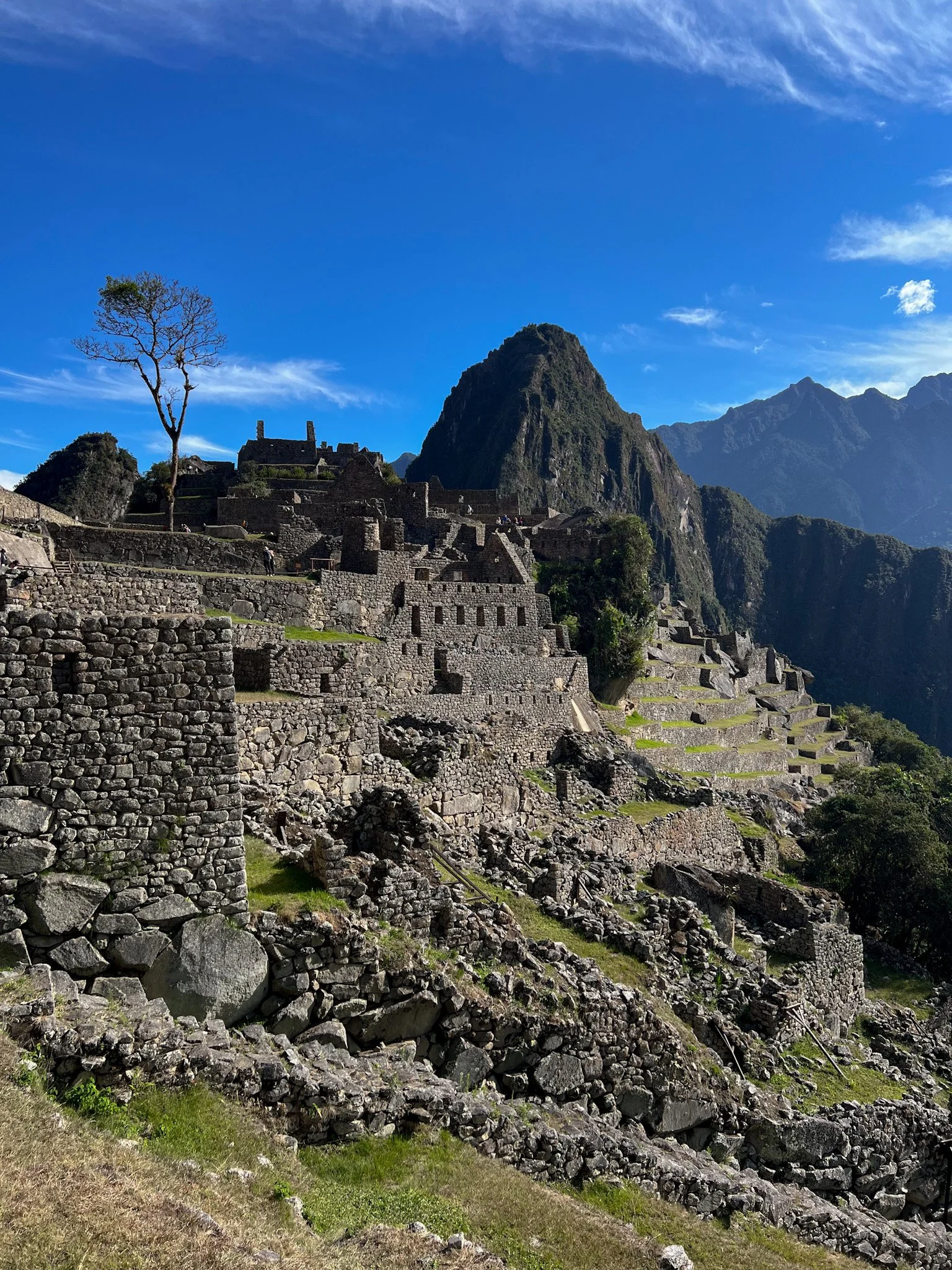
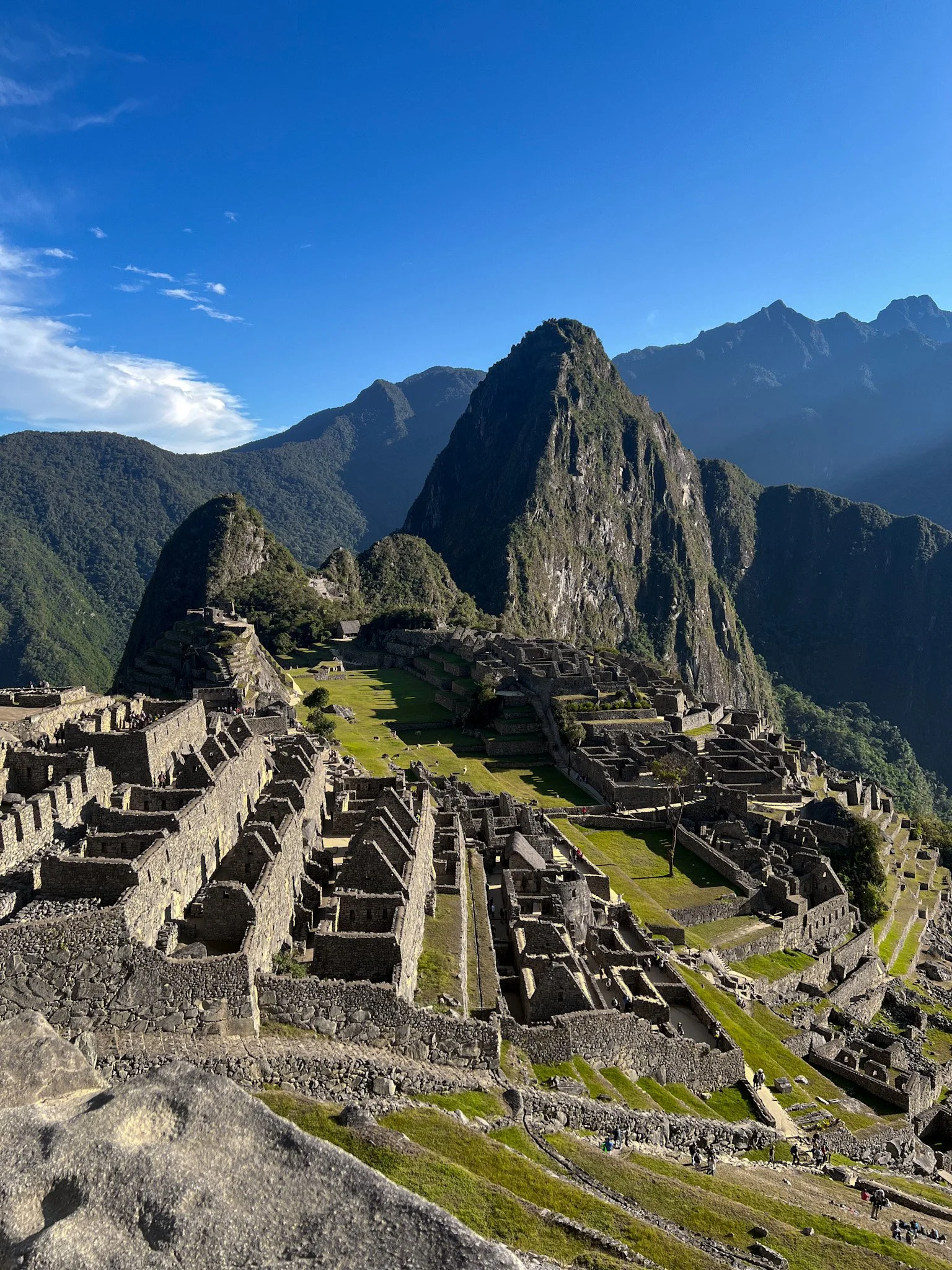
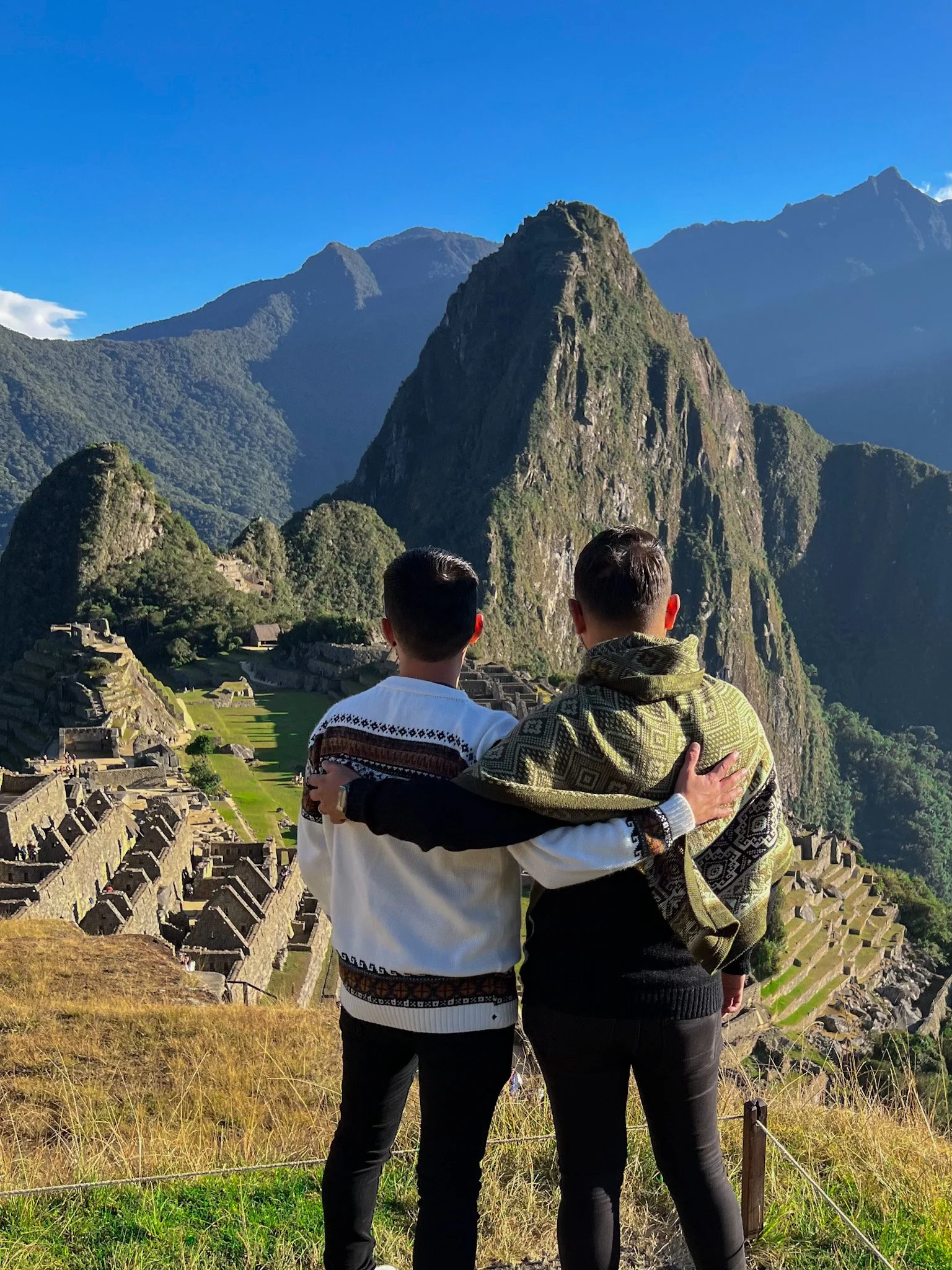
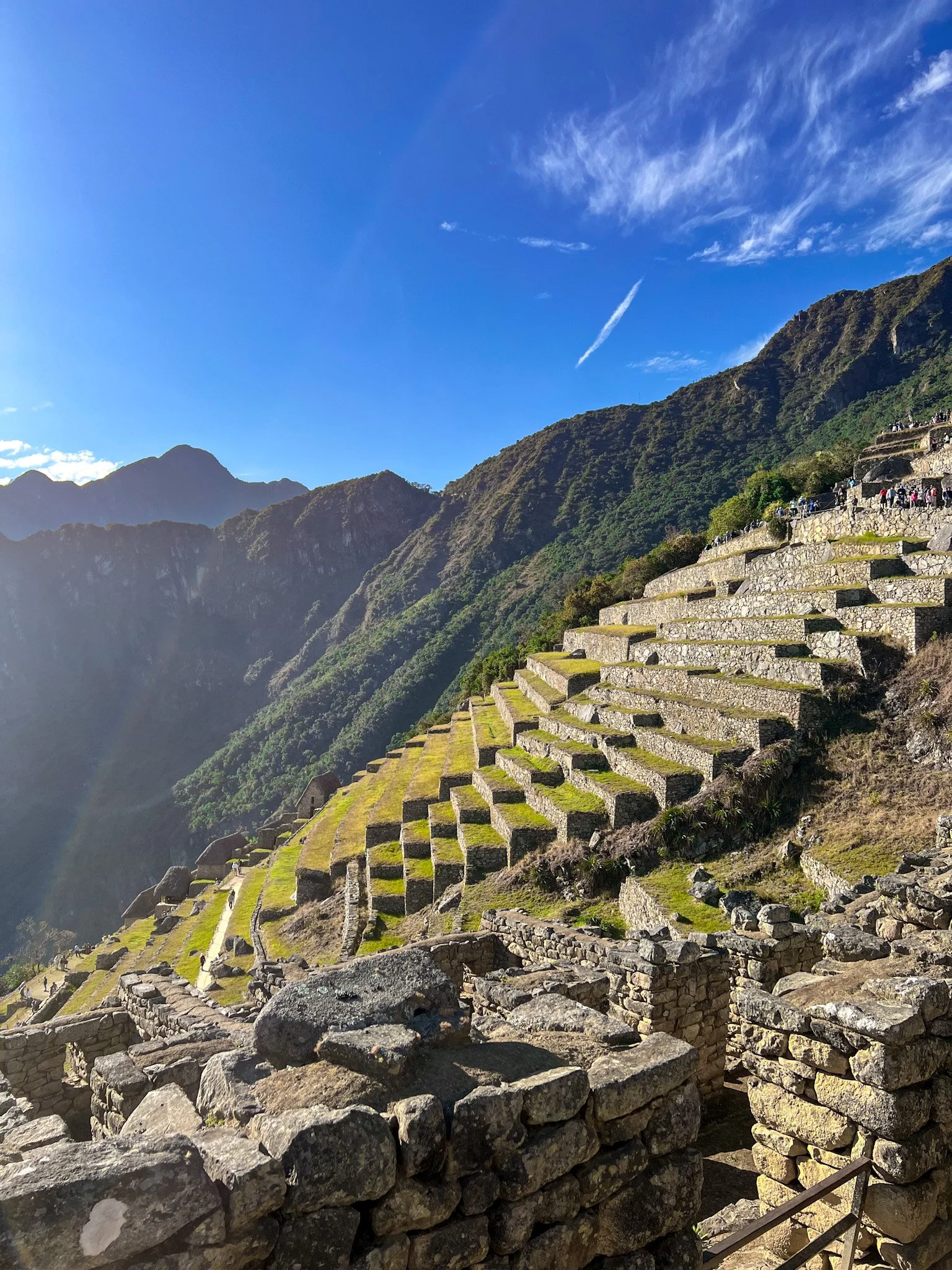
After taking in the incredible views from the viewpoint, we began our descent toward the Square of the Temples, where we took the opportunity to explore some of the most significant and impressive temples within the magnificent archaeological site of Machu Picchu.
The Temple of the Sun is easily identifiable due to its unique semicircular design. Built with precision ashlar stonework, the temple features key astronomical alignments, including the "Solstice Window" and "Qullqa Window," which were carefully designed to track significant celestial events such as the June solstice sunrise and the movements of Inca constellations. On the winter solstice, the southeast-facing window aligns perfectly with the rising sun, illuminating the sacred rock at the centre of the temple. Many scholars believe this alignment and the temple’s overall design were intended for high Inca priests to honour Inti, the sun god, marking it as a site of both spiritual and astronomical significance.
Another notable temple is the Wayrara Temple, located at the heart of the Sacred Plaza. Known for its three large rectangular walls, the Wayrara Temple is a symbol of Inca architectural prowess and spiritual devotion. It is believed to have been dedicated to Wiracocha, the creator god in Incan mythology, and the figure of the Chacana (a cross-like symbol) carved into one of the walls hints at its ceremonial importance. Despite some structural displacement caused by geological shifts and weathering, the temple remains a powerful representation of Incan belief, showcasing how they harmonised their temples with the natural environment.
The Temple of the Three Windows is perhaps the most significant temple in Machu Picchu. The temple's design is characterised by three trapezoidal windows, offering a spectacular view of the Sacred Plaza. These windows may hold symbolic meaning related to Inca cosmology, with theories suggesting that they represent the Hanan Pacha (world of the gods), Kay Pacha (the earthly realm), and Uck’u Pacha (the world of the dead). The finely crafted stonework and the temple's strategic location underscore the importance of this site as a centre for religious and ceremonial practices, connecting the people with both the natural world and the divine.
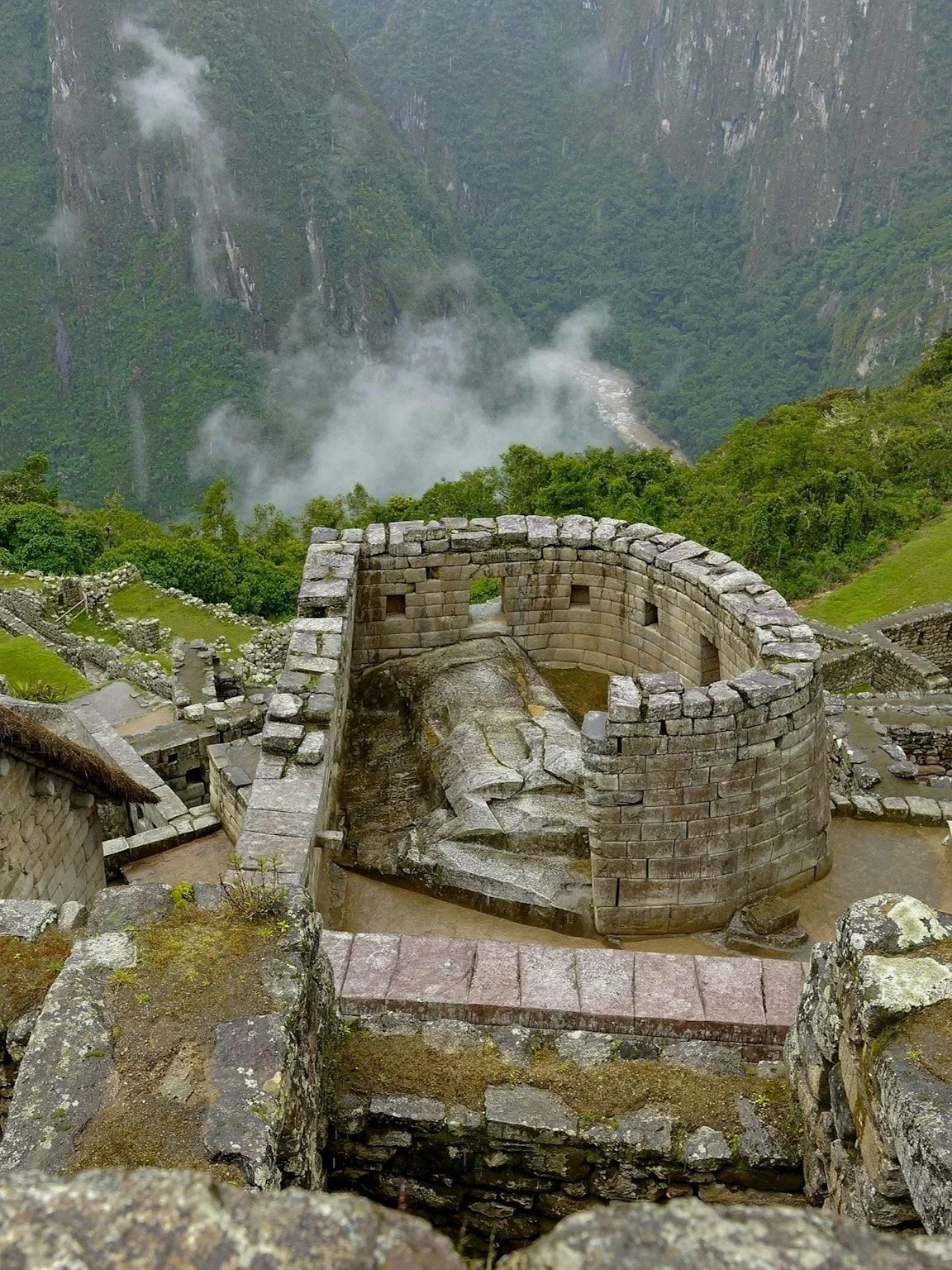
Temple of the Sun
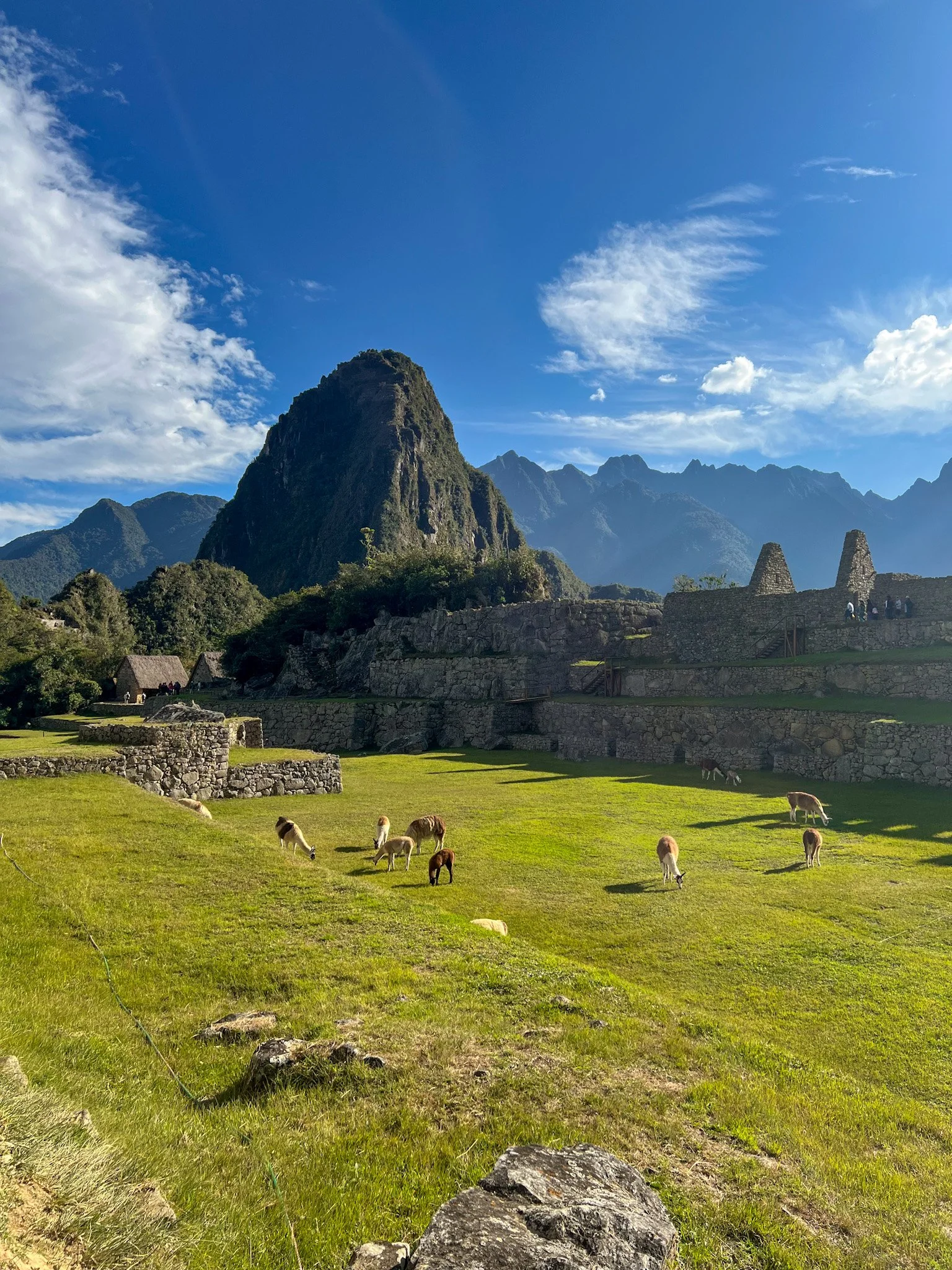
Alpacas in Machu Picchu
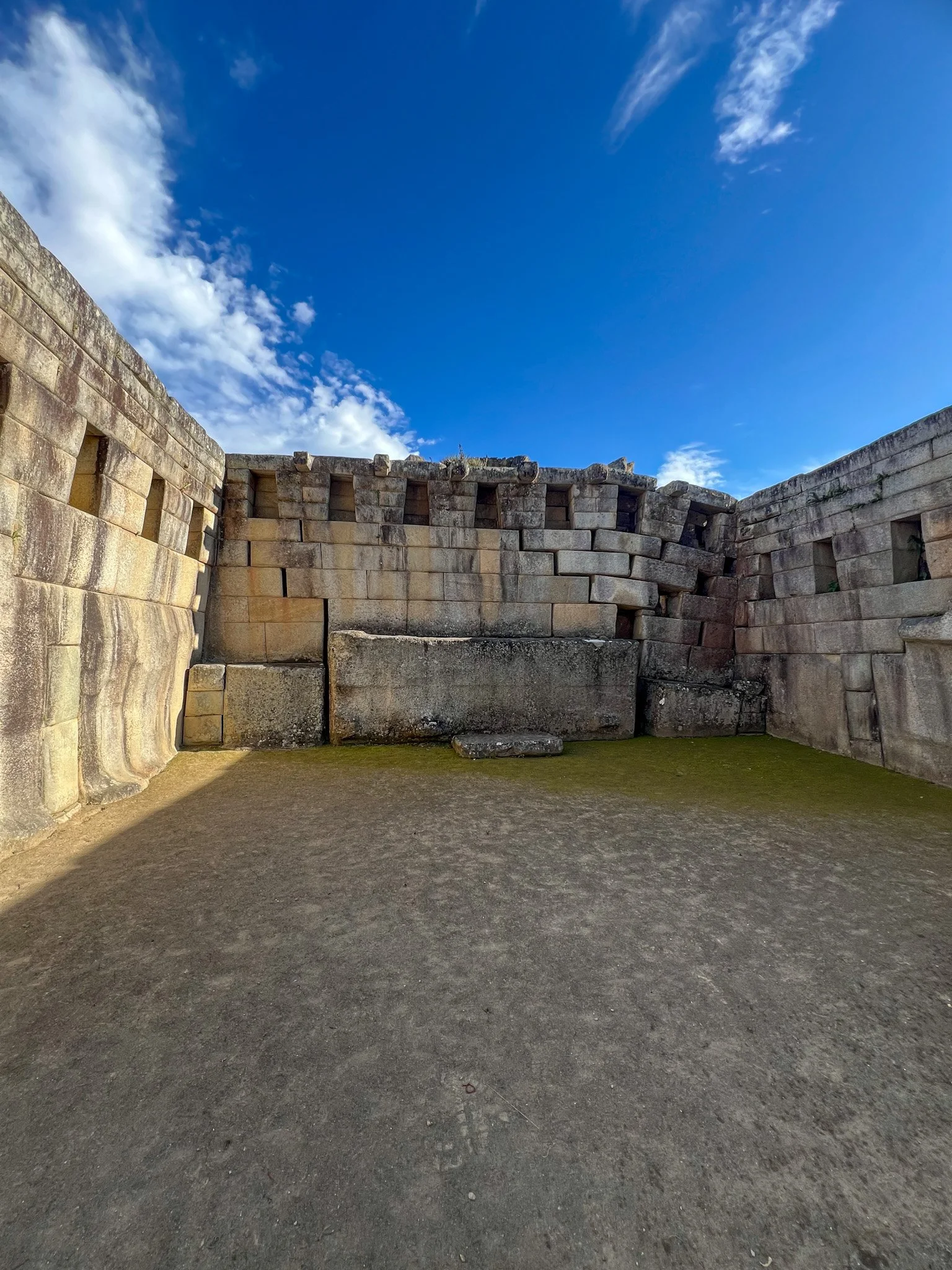
Wayrara Temple
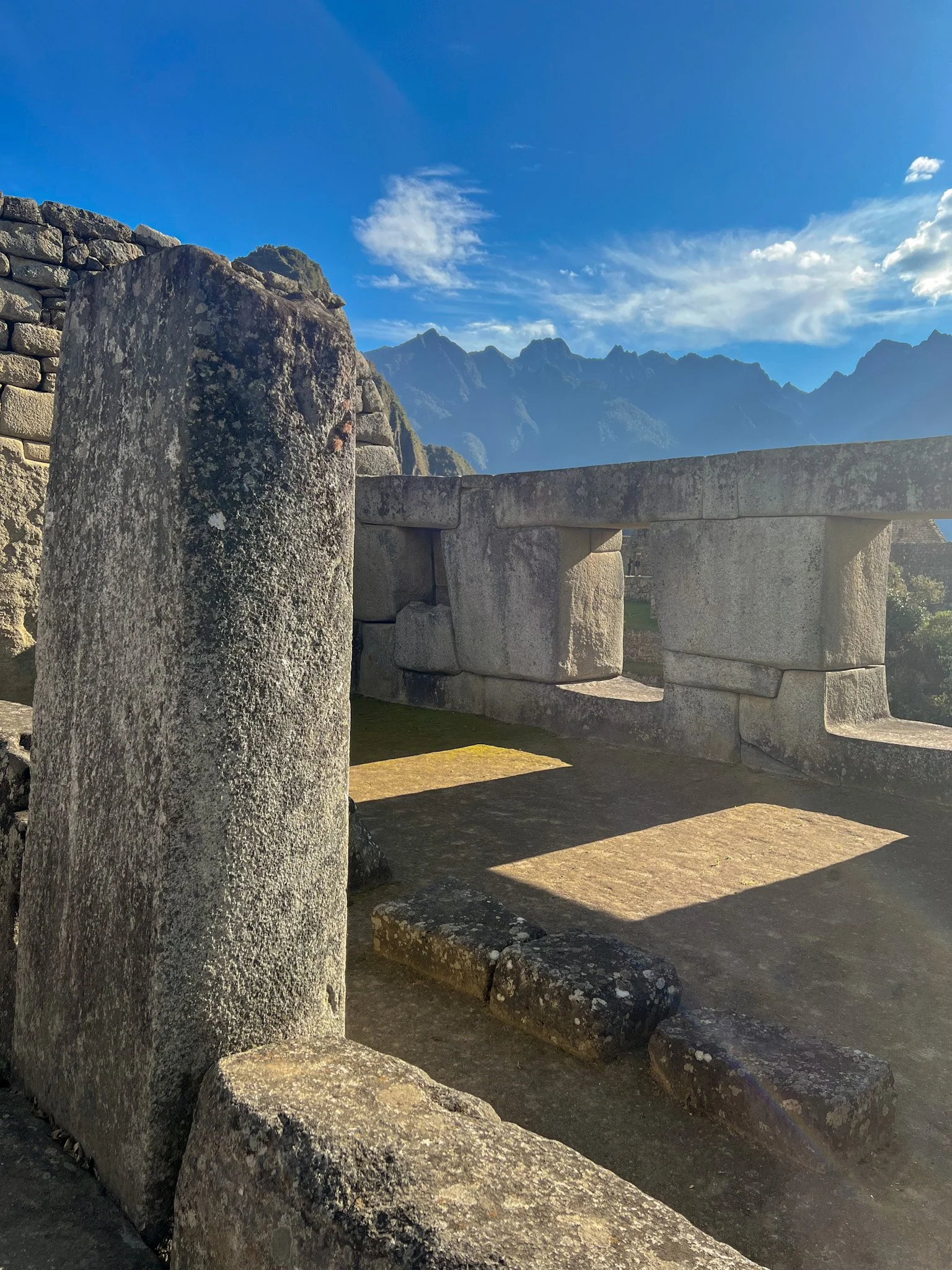
Temple of the Three Windows
In the heart of the urban area, you can’t miss the Sacred Rock of Machu Picchu, a monumental stone that stands 3 meters tall and 7 meters wide. Its feline-shaped profile is thought to represent the puma, a sacred animal in Inca culture, and it is positioned between two chambers called huayranas with only three walls. The rock likely served as an altar for religious ceremonies dedicated to Apu Yanantin, one of the Inca mountain gods, reflecting the Incas' deep connection to the cosmos and natural elements. Its unique location at the northern edge of the city also points to its symbolic role in marking sacred boundaries.
Scholars suggest that the Sacred Rock could represent Cerro Pumasillo, a nearby mountain, and was used for astronomical observations or sacred rituals. Its strategic placement, near the path leading to Huayna Picchu, further supports the idea that it acted as a geographical marker, guiding travellers between the sacred city and the mountain. This rock, like many other elements of Machu Picchu, symbolizes the Inca’s reverence for nature and the spiritual significance of the surrounding landscape.
Just behind the Sacred Rock, you’ll find another monumental stone, expertly carved to mirror the shape of the distant Huayna Picchu mountain, with its steep slopes and distinctive outline.

Sacred Rock
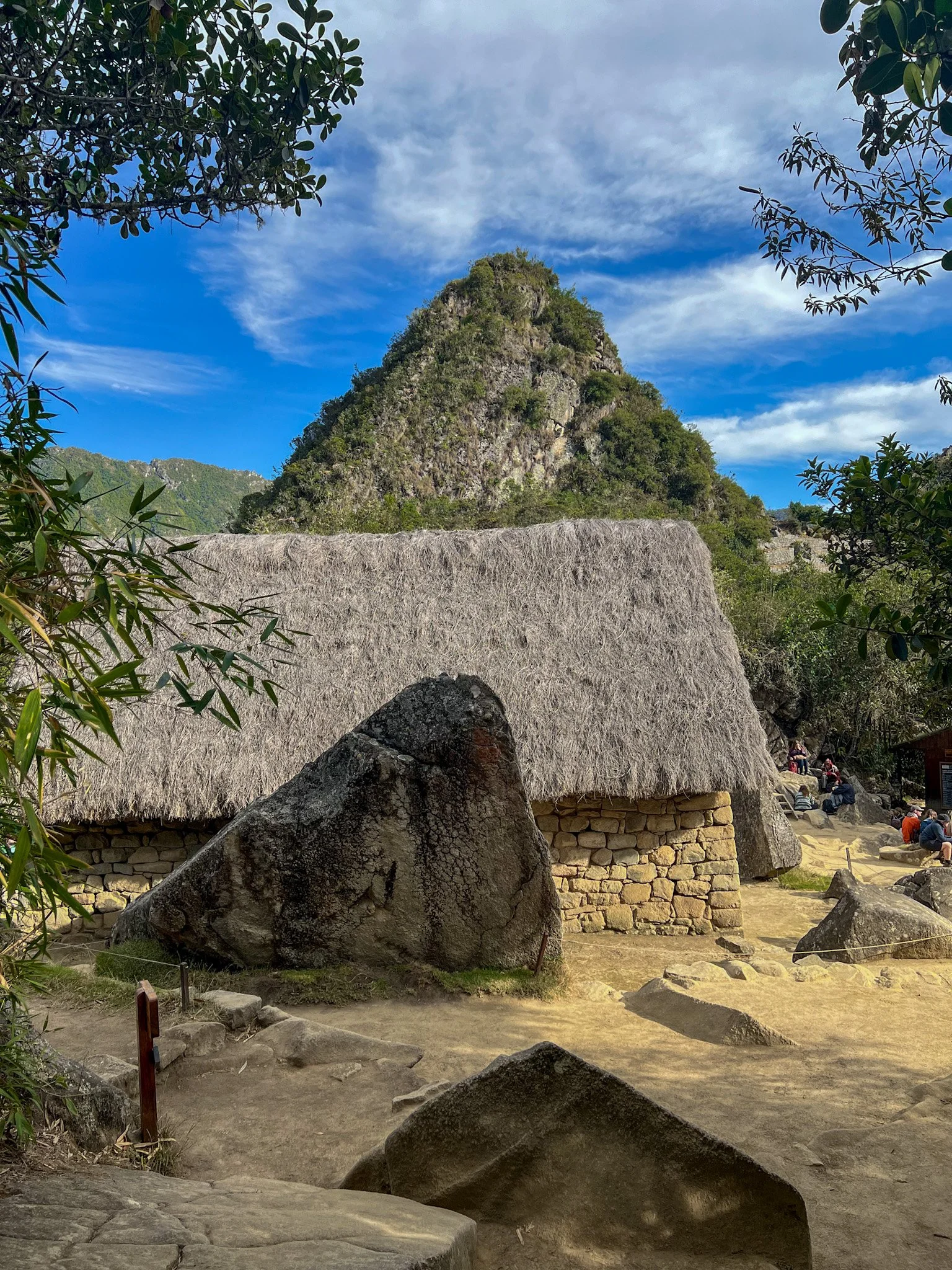
Rock with the shape of Huayna Picchu mountain
Also located in the urban area are the Water Mirrors, distinctive cylindrical stone structures on the ground believed to have been used by the Incas as astronomical observatories.
The mirrors were designed to reflect the sky, especially the moon, or goddess Killa, who was associated with fertility and women’s chastity. These mirrors were carved into a natural granite outcrop and were used to observe celestial events, especially the rise of the gods, such as the sun and moon. The reflective nature of the water would create a sacred connection between the Incas and their deities.
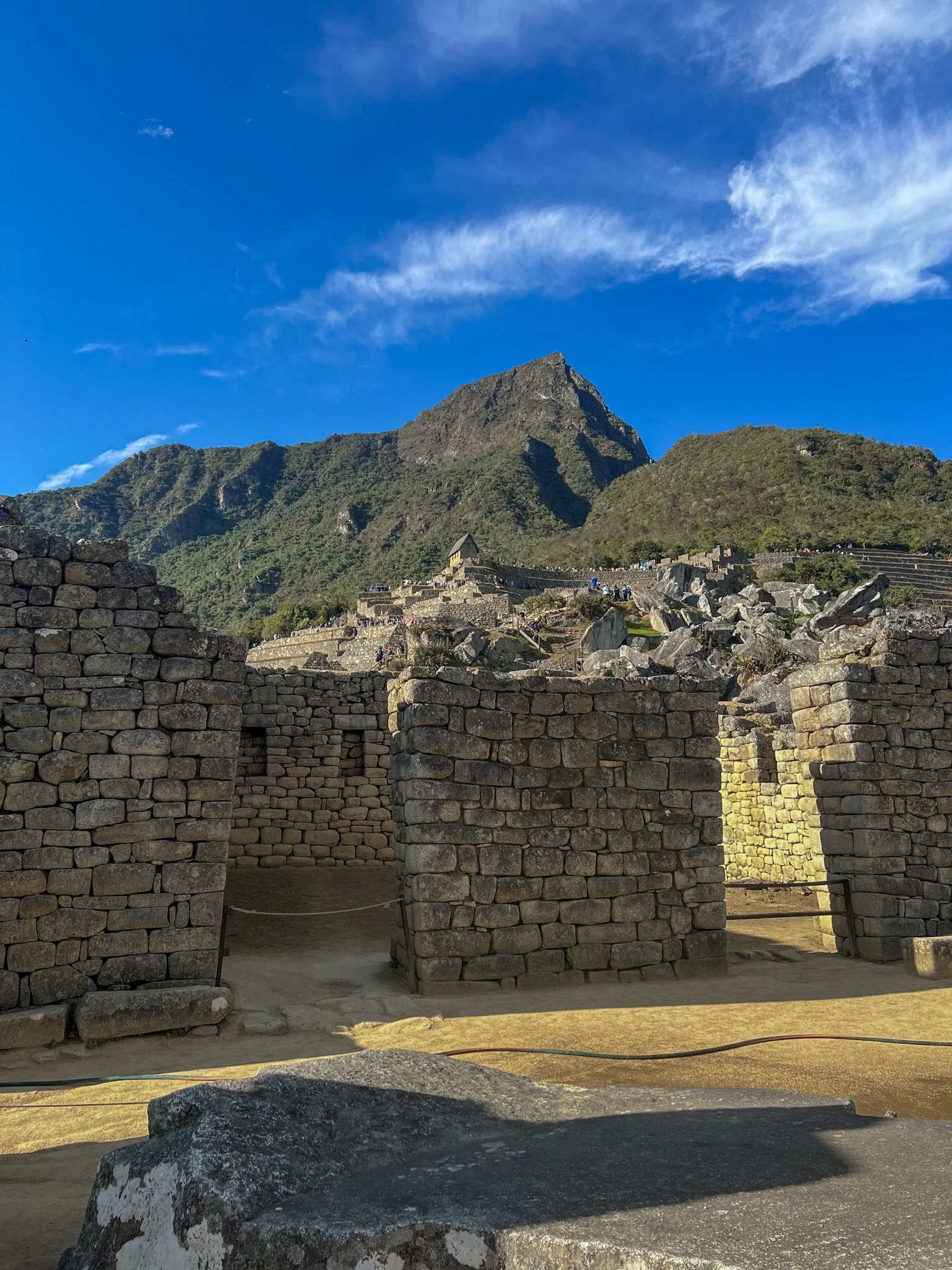
Astronomical observatory
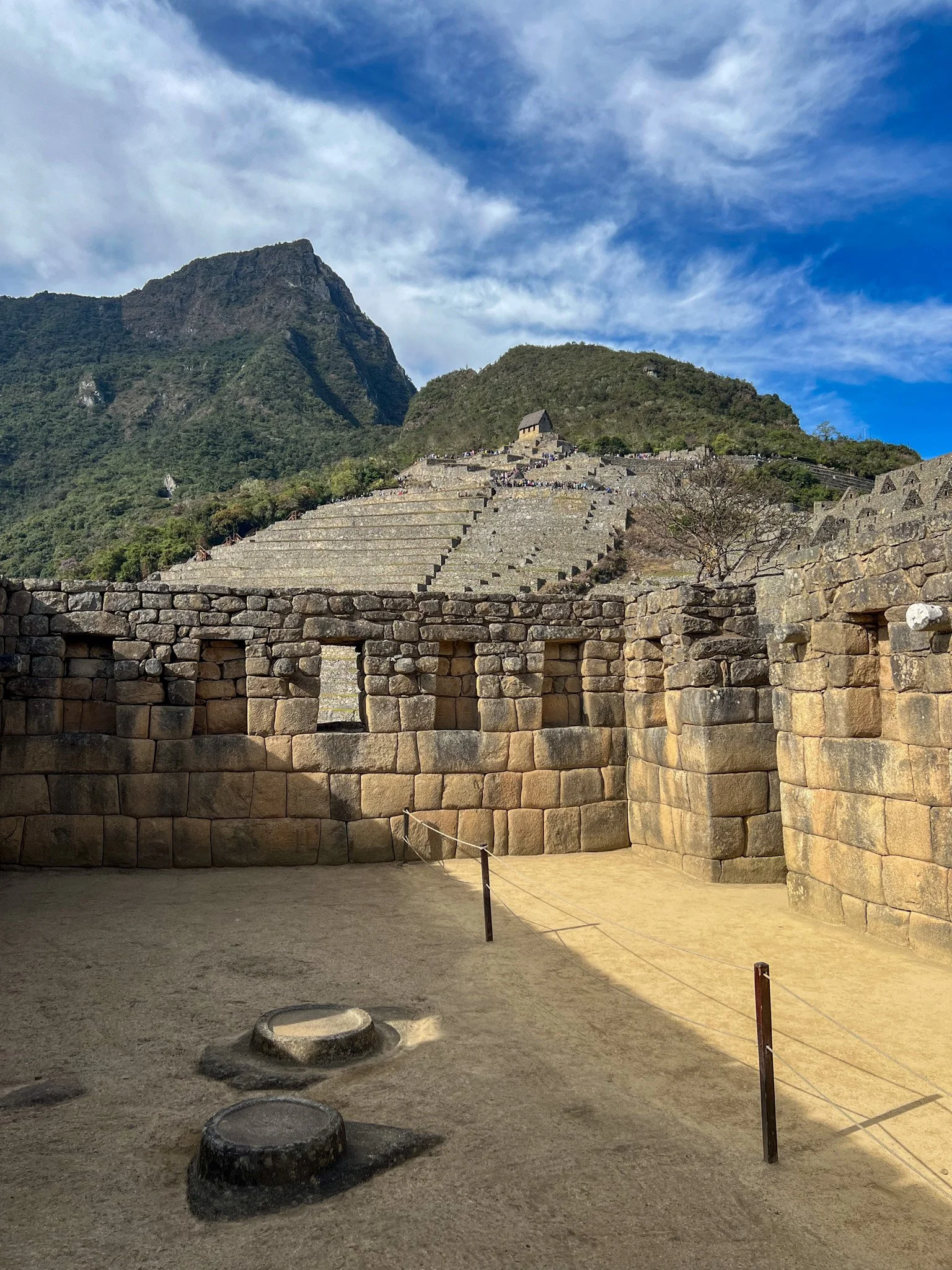
Water Mirrors
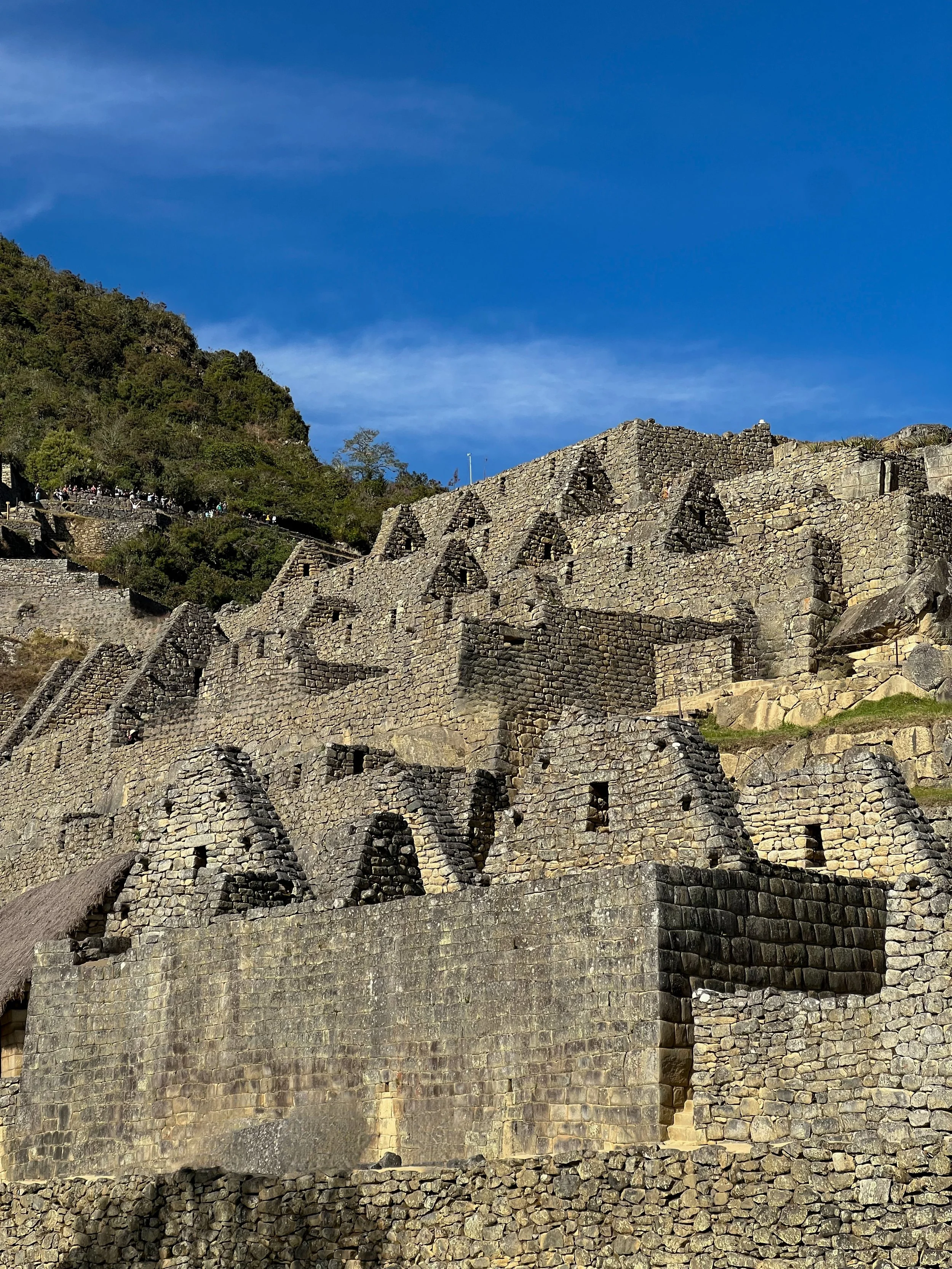
Constructions in the citadel

Street in the urban sector
One of the most unique structures is the Temple of the Condor, which combines natural rock formations with skilled Inca masonry. This temple utilises the living rock of the mountain to form the wings of a giant condor, with the bird’s head and neck carved into the ground beneath, possibly serving as an altar for sacrificial rites.
The Andean condor, one of the largest birds in South America, held divine status for the Incas and symbolised power, fertility, and the connection between the heavens and the earth. The temple’s design and placement demonstrate the Incas' reverence for this sacred bird, with the area also serving as a possible site for rituals involving prisoners.
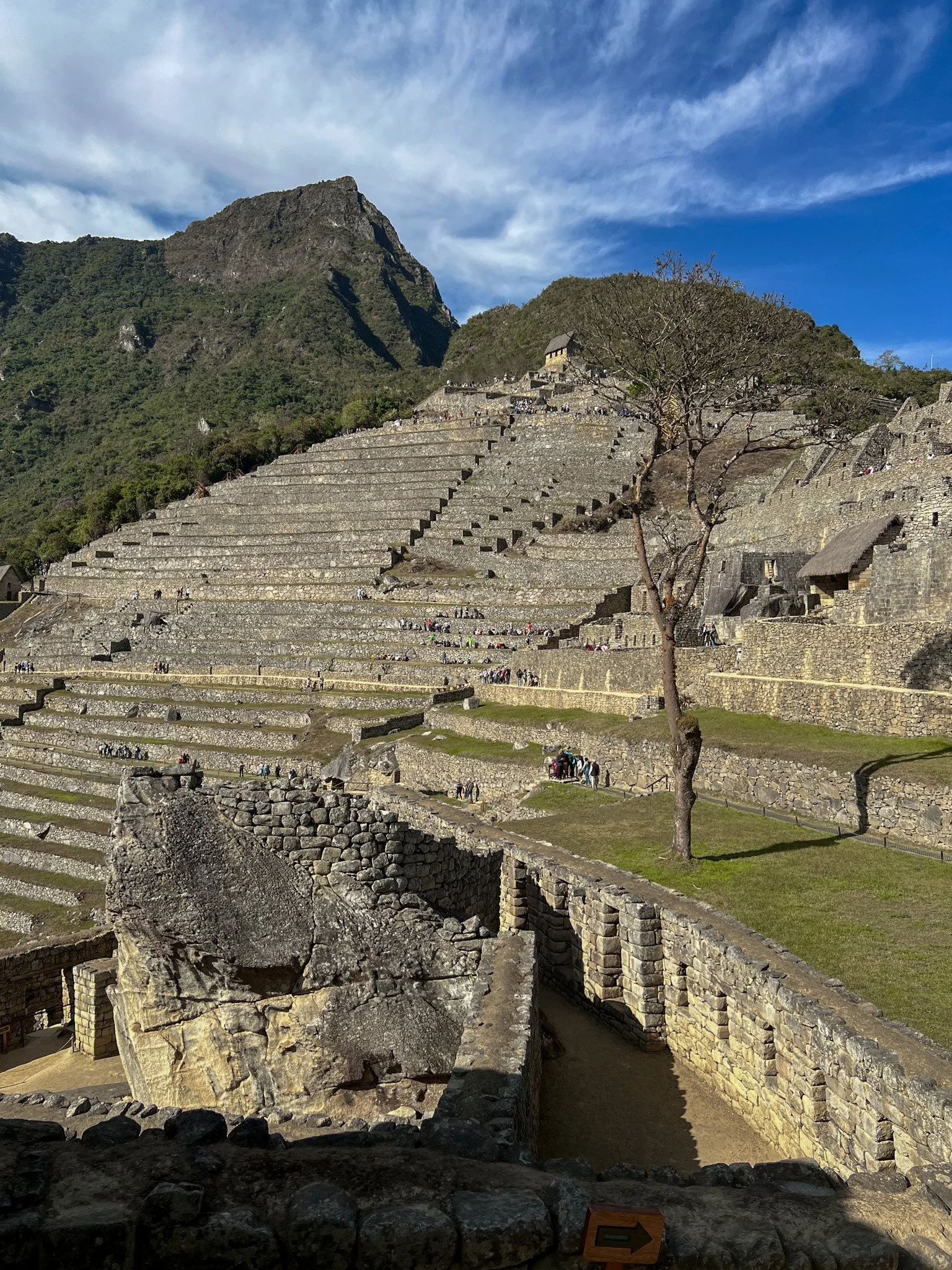
Temple of the Condor
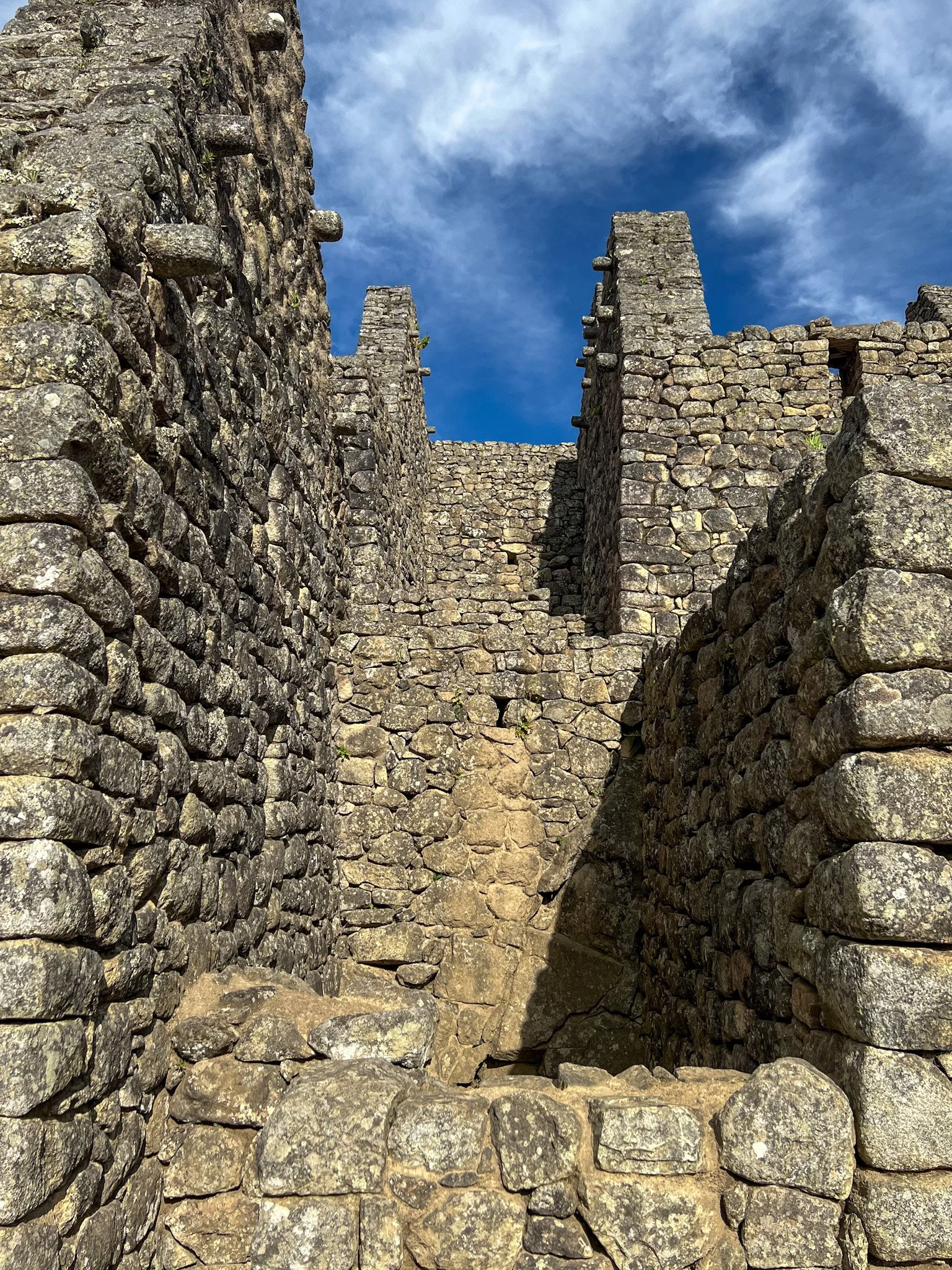
Incan constructions
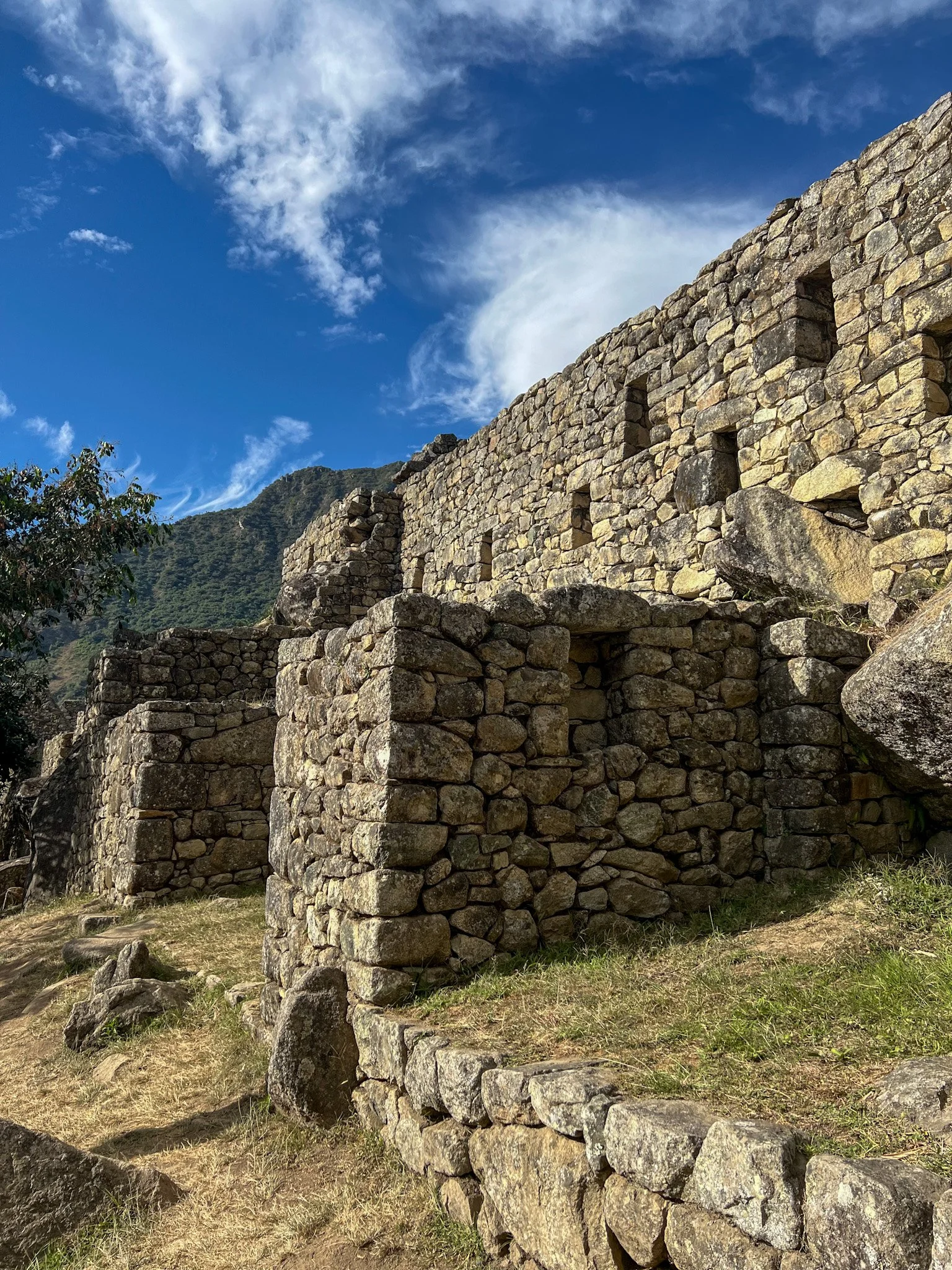
Incan constructions
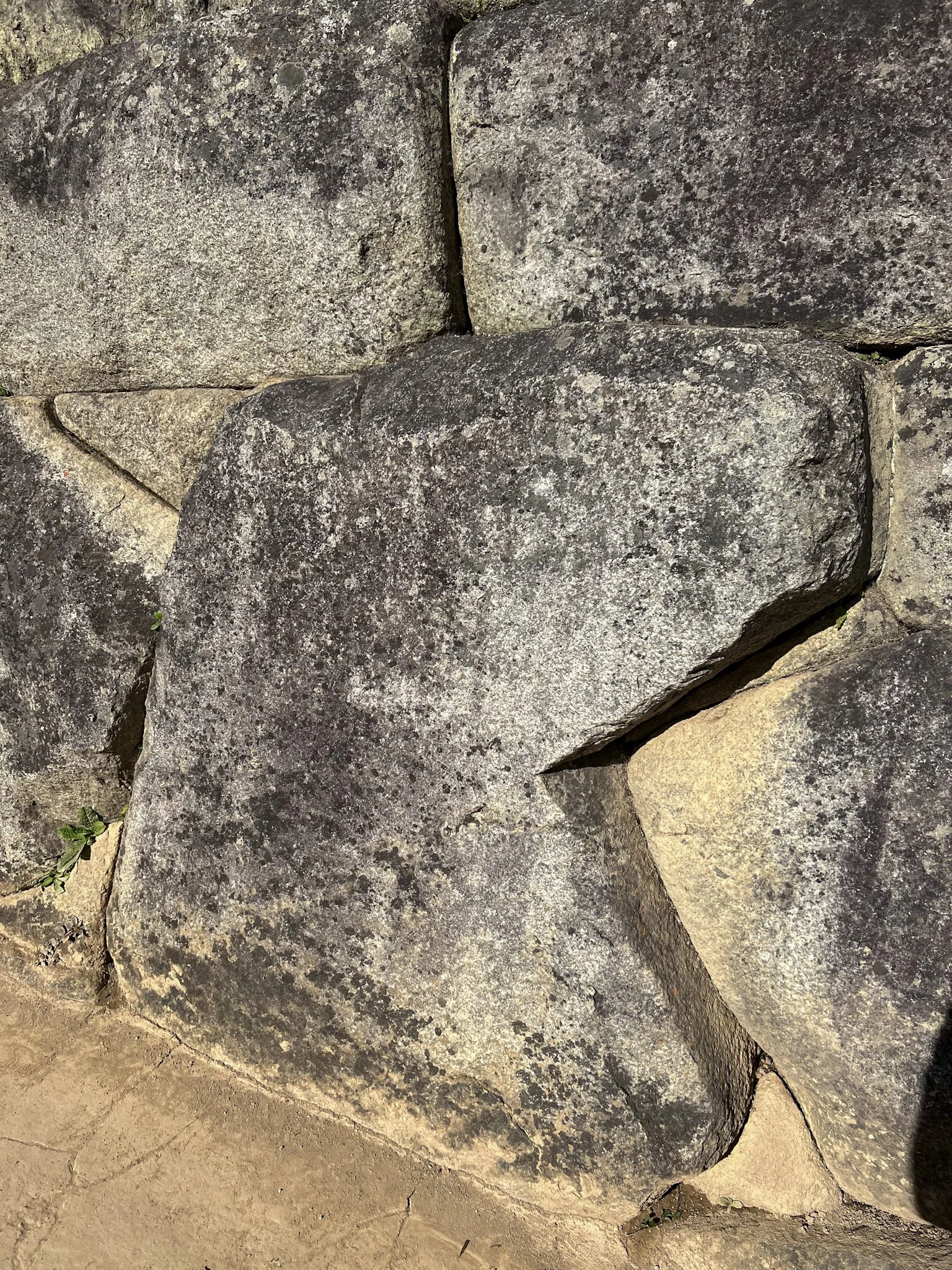
Pacman stone
After an enlightening two-hour walking tour with our guide, we had some free time to explore the fortress at our own pace. Afterward, we made our way out of the fortress to re-enter using our second ticket for Circuit 1-D, ready to continue our adventure.
Circuit 1-D grants access to the Lower Terrace viewpoint, where visitors can capture the panoramic photo of the citadel that’s famous around the world. The circuit also takes you through a series of captivating terraces, where you can admire the Inca agricultural practices, and explore impressive archaeological sites that reveal the complexity of this ancient civilisation.
If you're visiting during the high season, the tour also includes access to the Inca Bridge, a marvel of engineering that provides a glimpse into the incredible building techniques of the Incas.
After an unforgettable experience exploring Machu Picchu, we boarded the bus back to Aguas Calientes, where we would catch the train to Ollantaytambo, followed by another bus ride to Cusco.
Visiting Machu Picchu is a journey like no other, blending breathtaking natural beauty, rich history, and awe-inspiring architecture. Whether you're wandering through the ancient terraces, exploring the sacred urban area, or soaking in the panoramic views from the mountain peaks, every moment spent at this UNESCO World Heritage site offers a chance to connect with one of the world’s most remarkable civilizations.
If you have the opportunity to visit, don’t hesitate—Machu Picchu is truly a once-in-a-lifetime adventure that will leave you in awe of the incredible culture and ingenuity that once thrived in this ancient wonder.
Some links in this post are affiliate links, which means that if you buy through them, we’ll receive a small commission. This will never cost you more and in many cases you will receive a special discount.
As always, all opinions are mine. We appreciate your support!
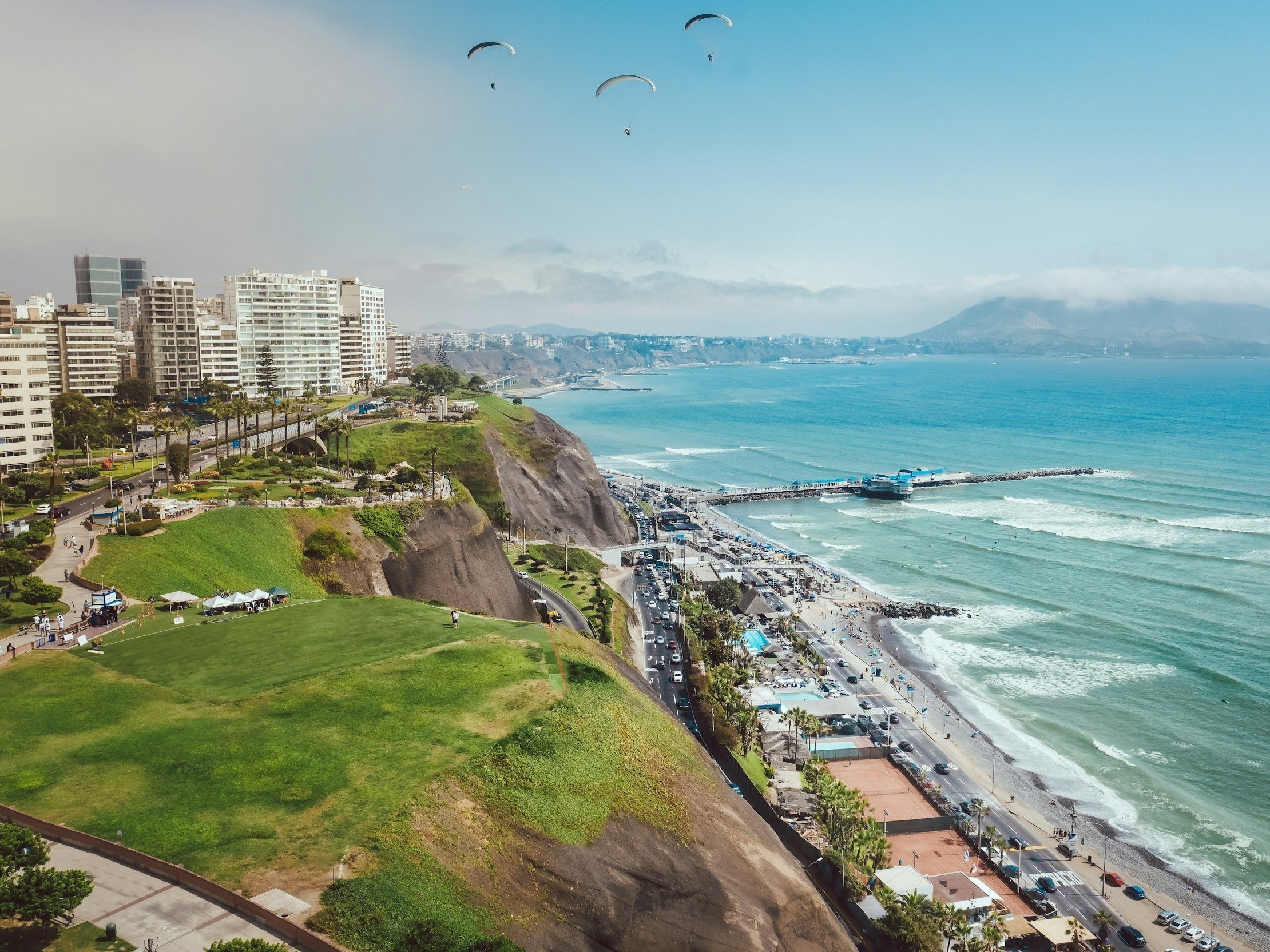


If you’re planning a trip to Peru, check out this 8-day itinerary that captures the best of Cusco, the Sacred Valley, and Machu Picchu, along with a taste of Lima’s vibrant culture.
Begin your adventure in Cusco, the historic capital of the Inca Empire, where you’ll explore ancient ruins, bustling markets, and charming neighbourhoods. Venture into the Sacred Valley, visiting picturesque villages, stunning salt mines, and fascinating Incan sites before embarking on the ultimate journey to Machu Picchu, one of the New Seven Wonders of the World.
After soaking in the magic of the Andes, fly to Lima, where you’ll experience the coastal capital’s rich history, culinary delights, and breathtaking ocean views.
This thoughtfully planned itinerary ensures you experience the highlights of Peru while leaving room to savor its unique culture and natural beauty!