
The Sacred Valley of the Incas: day trip to Chinchero, Moray, Salineras & Ollantaytambo from Cusco
The Sacred Valley of the Incas, a region steeped in history and natural beauty, lies just a short distance from Cusco and offers a fascinating journey into the heart of ancient Inca civilisation.
Surrounded by the stunning Andean mountains, this fertile valley was once the agricultural hub of the Inca Empire, and today, it’s home to some of the most remarkable archaeological sites in Peru. A day trip from Cusco to Chinchero, Moray, Salineras, and Ollantaytambo will immerse you in the valley's vibrant culture, intriguing history, and awe-inspiring landscapes.
If you're visiting Cusco, be sure to check out this guide to help you make the most of your trip to the Sacred Valley!
Day trip to the Sacred Valley of the Incas from Cusco
After spending three wonderful days exploring the vibrant city of Cusco, soaking in its rich history and stunning architecture, we were excited to venture further into the heart of the Sacred Valley of the Incas. To make the most of our time, we decided to take a full-day tour to the Sacred Valley of the Incas from Cusco with GetYourGuide.
The tour was the perfect way to experience some of the valley’s most iconic and breathtaking sights, including the ancient and historically significant ruins of Chinchero, the mysterious and intricately designed agricultural terraces of Moray, the fascinating and unique salt mines of Maras, and the impressive and monumental Inca site of Ollantaytambo. The thoughtfully organised tour and our knowledgeable and informative guide offered a perfect blend of rich culture, deep history, and stunning natural beauty—truly a day to remember!
Chinchero
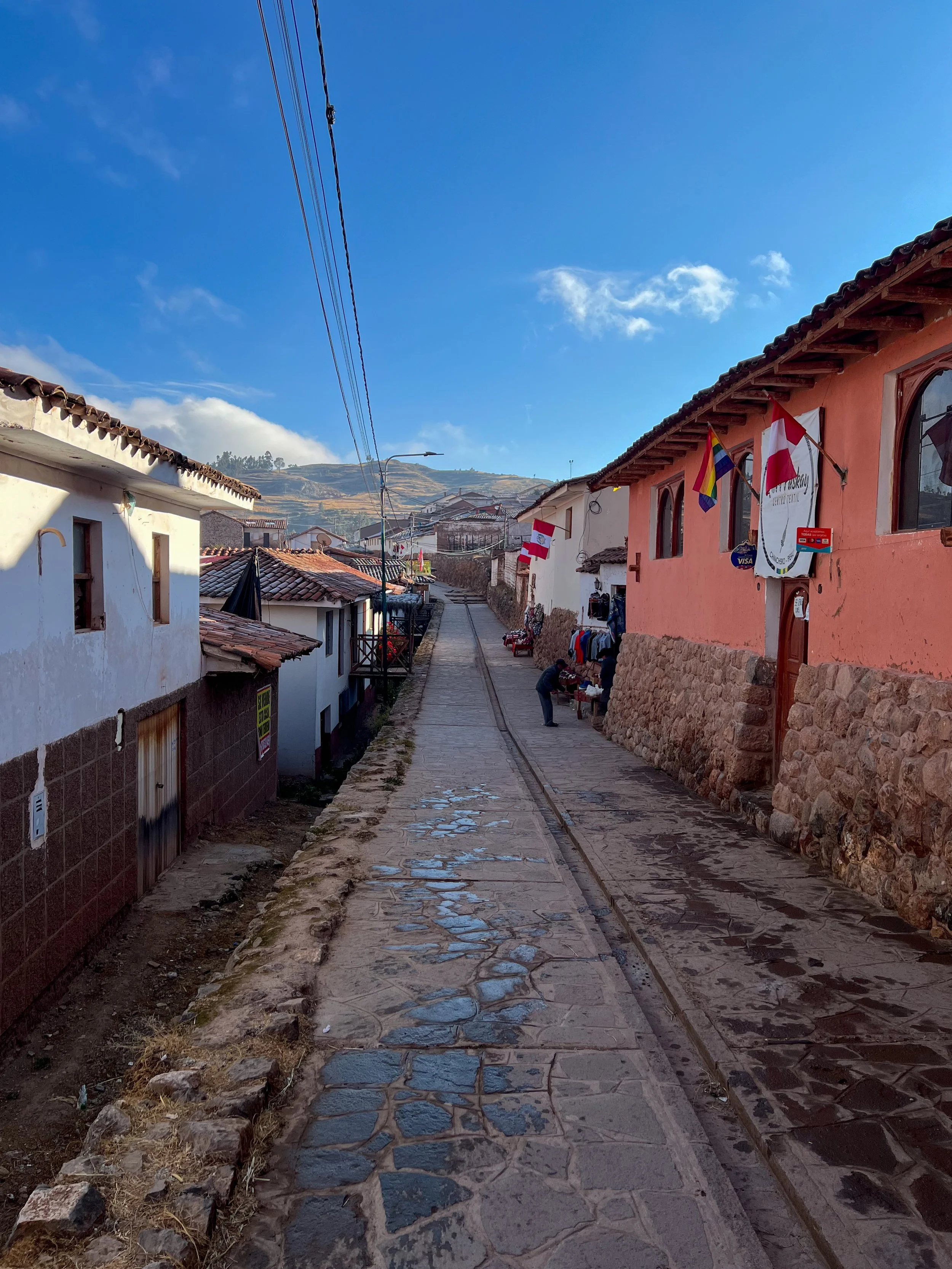
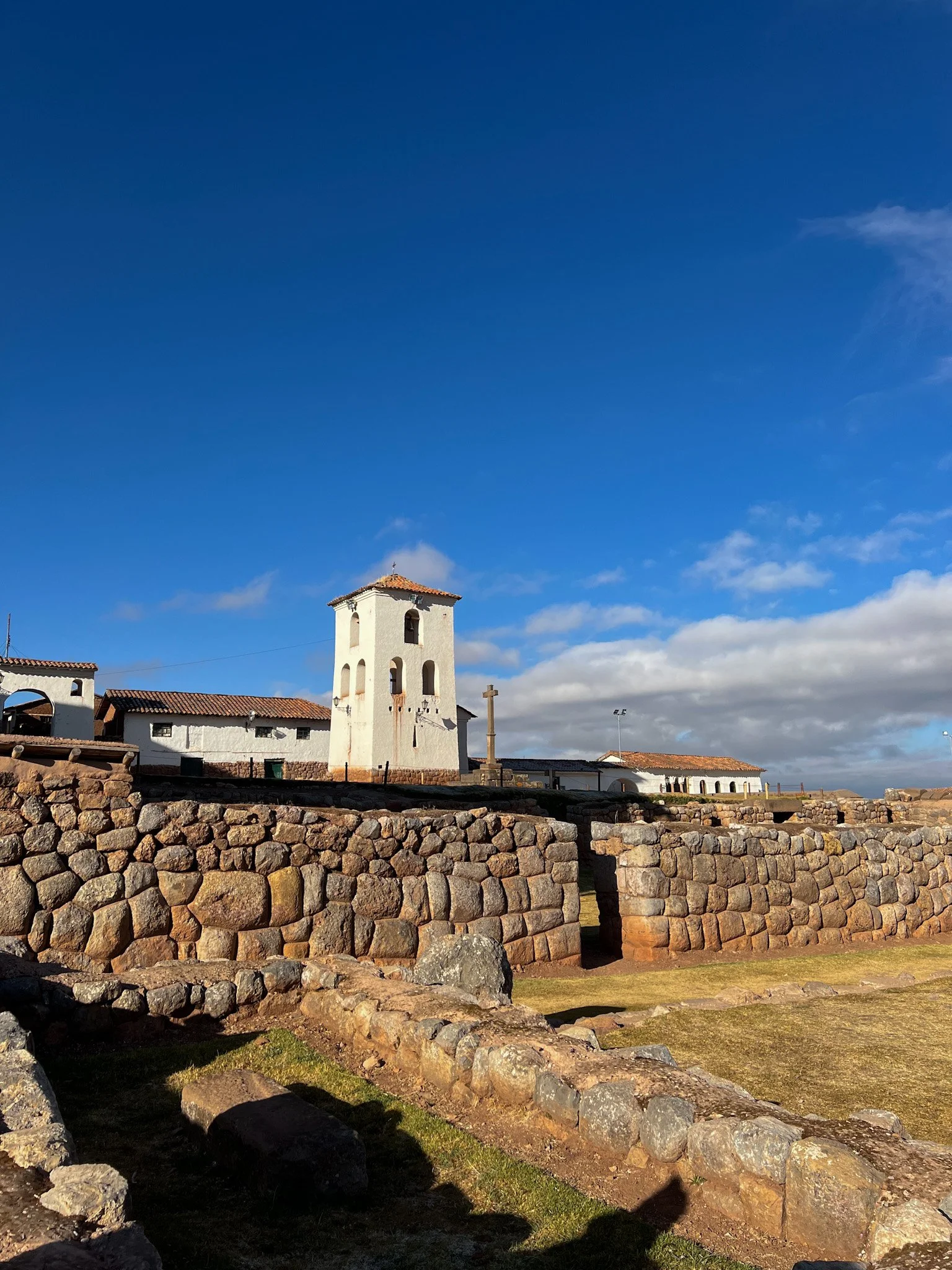
After meeting our guide in Cusco, we started our 28km drive to the first destination of our day tour, the town of Chinchero. This picturesque town is nestled at an altitude of 3,780 meters, surrounded by towering snow-capped peaks like Salkantay, Verónica, and Soray, along with two stunning lagoons, Piuray and Huaypo.
The town was once the royal estate of Topa Yupanqui, the tenth Inca king, who built the estate in the late 1400s. Though much of the original architecture has been lost or integrated into later structures, the Inca terraces remain in excellent condition and offer dramatic views over a ravine and the surrounding mountains. These terraces, which were part of the estate's agricultural infrastructure, stand as a testament to the engineering prowess of the Incas. Visitors can also explore several large rock shrines, or wak’as, which were carved into boulders in the area. Nearby, the Church of Chinchero, built in the late 16th century, stands as a testament to Cusco's religious art, with works by indigenous artists and an altar decorated in gold leaf.
Chinchero retains its cultural richness, with twelve Andean communities still following the ancient Inca organisational system known as "ayllu." The town thrives on agriculture, producing traditional crops like potatoes, ollucos, and barley, alongside livestock farming.



Chinchero Market
In addition to the ruins, Chinchero’s market offers a lively cultural experience. Held every Sunday, the market is a mix of local goods and souvenirs, with vendors selling fresh produce, bread, cheese, and traditional items. It’s a hub for both locals and tourists, and the vibrant traditional dress of the women adds to the authenticity of the experience.
The local textile centres are another highlight of Chinchero, where visitors can see women weaving and dyeing wool using natural methods that date back to Inca times. During our tour, we visited one of these textile centres, where the women explained the traditional process of dyeing textiles using herbs, stones, and even insects. As we sipped a warm drink, they sang traditional songs in Quechua, adding a special touch to the experience.


Moray
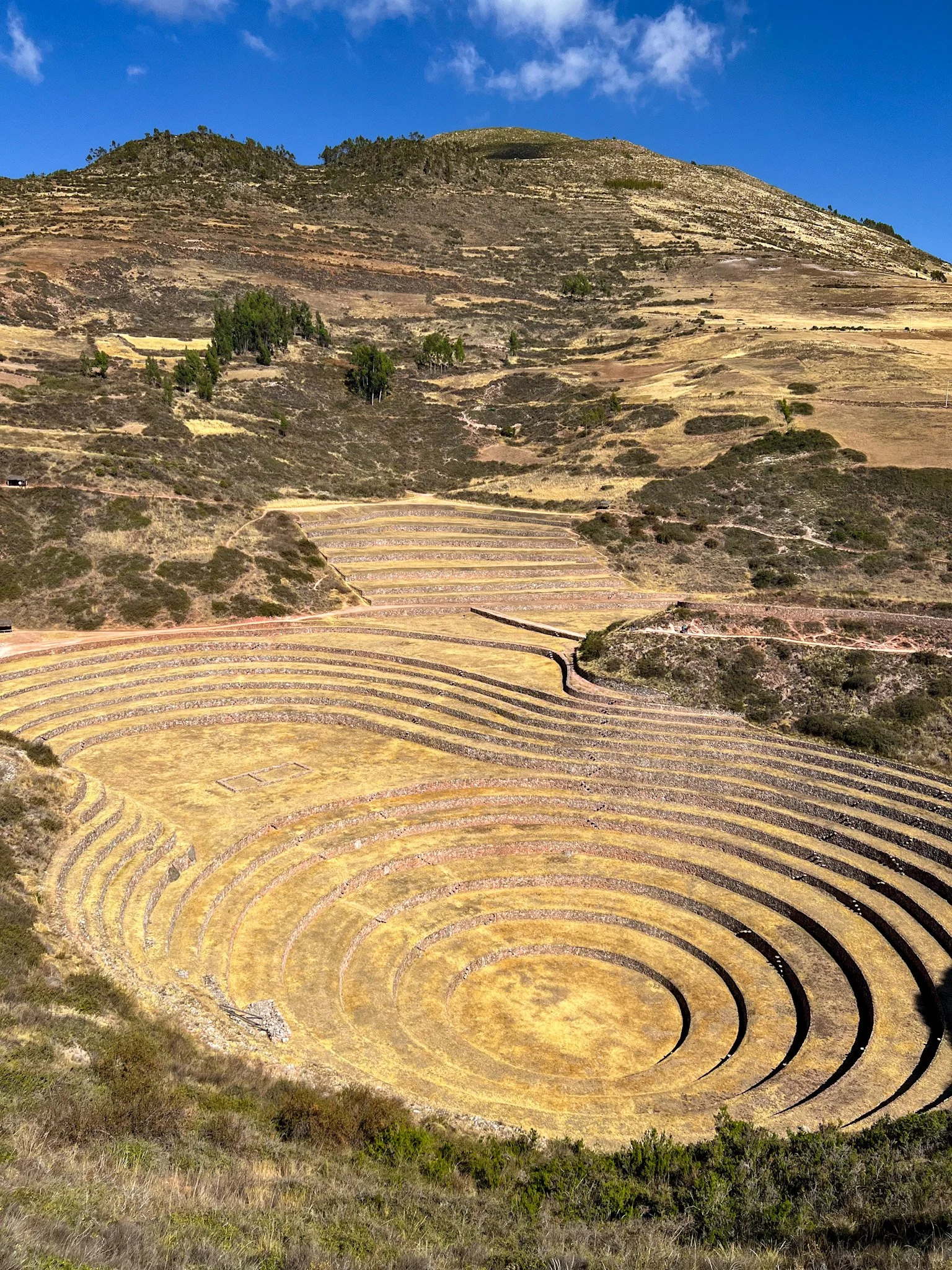
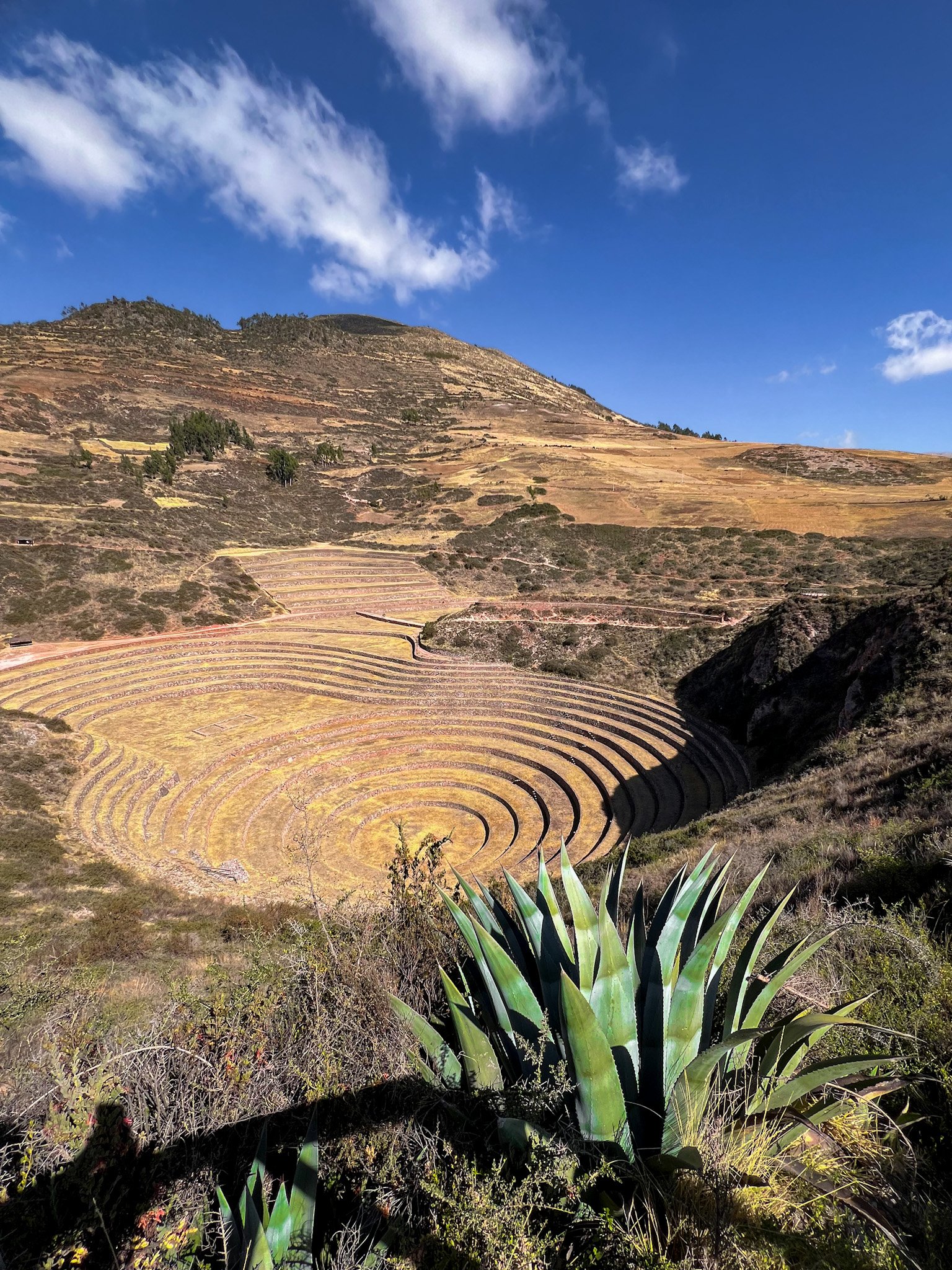
The nexst stop of our tour was the intriguin archeological site of Moray. Situated on a high plateau near the village of Maras at approximately 3,500 meters above sea level, Moray is famous for its series of circular terraced depressions, with the largest reaching a depth of around 30 meters.
These terraces are thought to have been part of an agricultural experiment by the Incas, where the varied temperatures at different levels of the terraces created microclimates. This allowed them to grow a variety of crops in an environment that mimicked greenhouse conditions. The exact purpose of Moray remains uncertain, but many experts believe it was used for agricultural research, with the use of soils from different regions to optimize crop production.
The site has faced significant challenges over the years, including damage from excessive rainfall during the 2009-2010 rainy season, which caused the collapse of part of the eastern circle. This erosion has raised concerns about the site's future preservation, as the complex construction of stone and compacted earth is vulnerable to the elements. Despite these challenges, Moray remains an important tourist destination near Cusco, offering insight into Inca agricultural techniques and farming practices.


Salt Mines of Maras
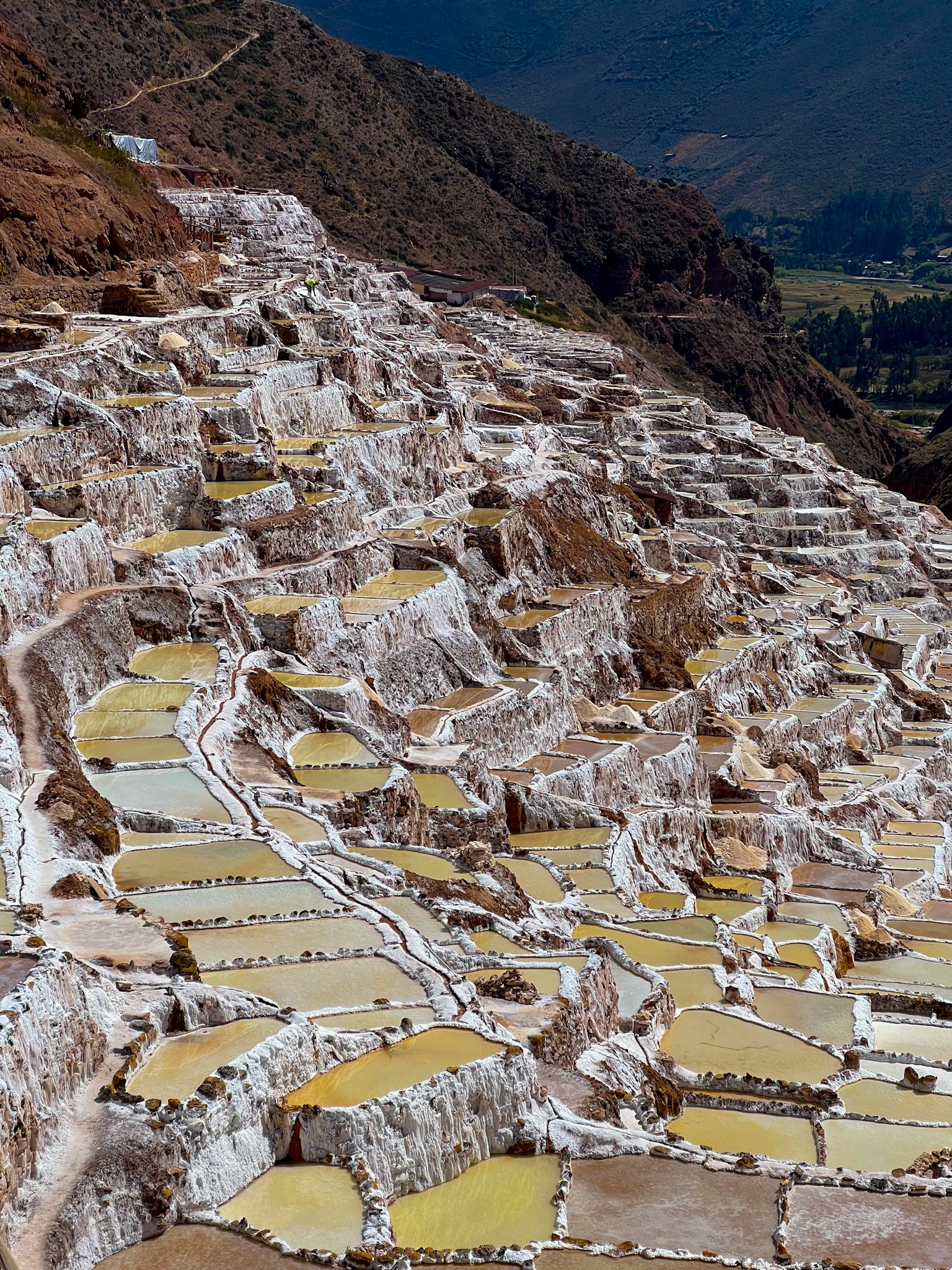
A short drive from Moray brought us to the Salt Mines of Maras, or "Salineras de Maras", famous for being one of the largest pre-Hispanic salt extraction centres.
Evidence of its use dates back to the Early Horizon period (900 to 200 BCE), continuing through various cultural phases, including the Inca era, colonial period, and beyond. Archaeological findings in the Pakallamoqo sector have uncovered ceramics from the Chanapata culture (700 BCE), along with other objects from the Killke and Inca periods. The Salt Mines of Maras have been a key resource throughout history, with the Inca nobility, such as Don Felipe Topa Yupangui and Don Alonso Titu Atauchi, recorded as early owners during the 16th century.
Throughout the centuries, control of the Salt Mines of Maras has changed hands. During the colonial period, ownership was documented through the Royal Decree of 1591, which assessed land distribution among various families and communities. The mines remained under the control of Inca descendants into the 17th century, but by the 19th century, private individuals began to take ownership, leading to disputes over access. Today, the management and commercialisation of the salt are overseen by around 400 local families who own and operate the salt wells, ensuring that this historic site continues to thrive as both a cultural and economic resource for the region.

Ollantaytambo
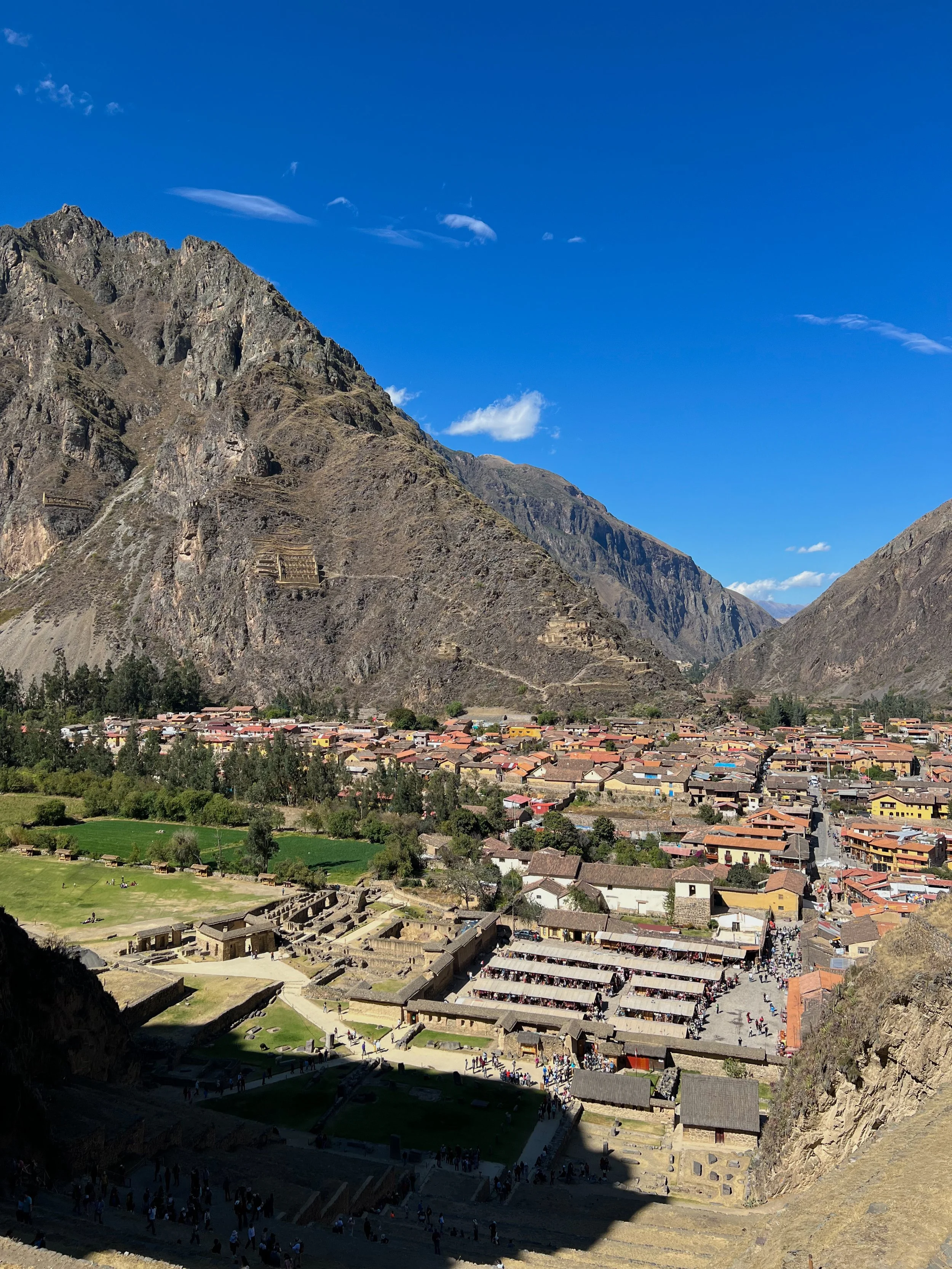
The final stop of our tour was the town and Inca archeological site of Ollantaytambo, located at an altitude of 2,792 meters above sea level. The town’s history dates back to the mid-15th century when it was part of the personal estate of the Inca emperor Pachacuti. After his conquest of the region, Pachacuti reconstructed the town and surrounding areas, including extensive terracing and irrigation works. These projects helped transform Ollantaytambo into a strategic and ceremonial centre, providing lodging for Inca nobility and agricultural terraces farmed by the emperor’s retainers.
Ollantaytambo is not only an important historical site but also a key location during the Spanish conquest of Peru. In the 1530s, Manco Inca Yupanqui, the leader of the native resistance, fortified Ollantaytambo to defend against Spanish forces. In 1536, Manco Inca achieved a temporary victory against a Spanish expedition at the Battle of Ollantaytambo, blocking the Spaniards’ path with high terraces and flooding the plains. Despite this, Manco Inca was unable to hold the position and withdrew to the remote site of Vilcabamba, where he established the Neo-Inca State.
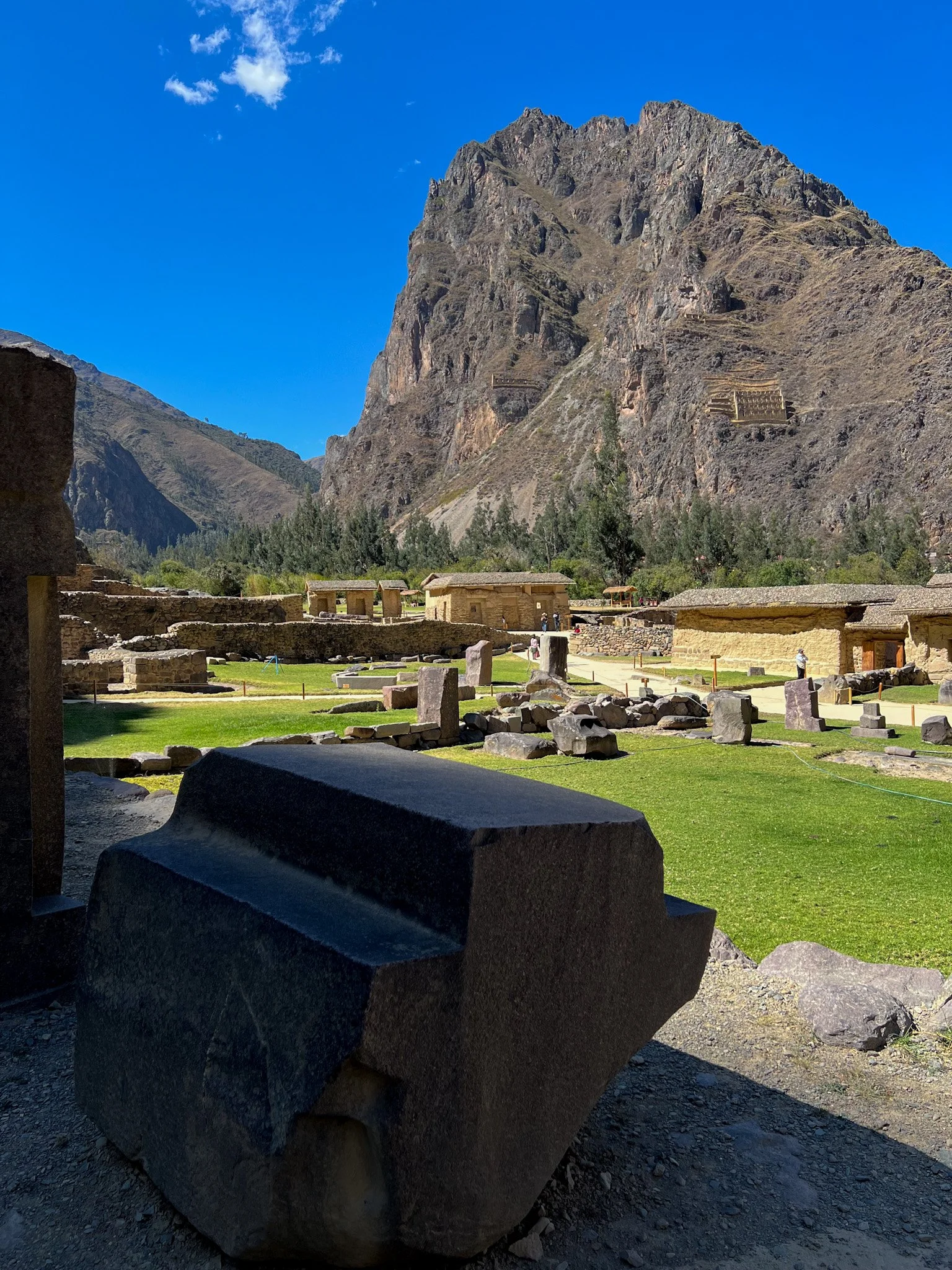
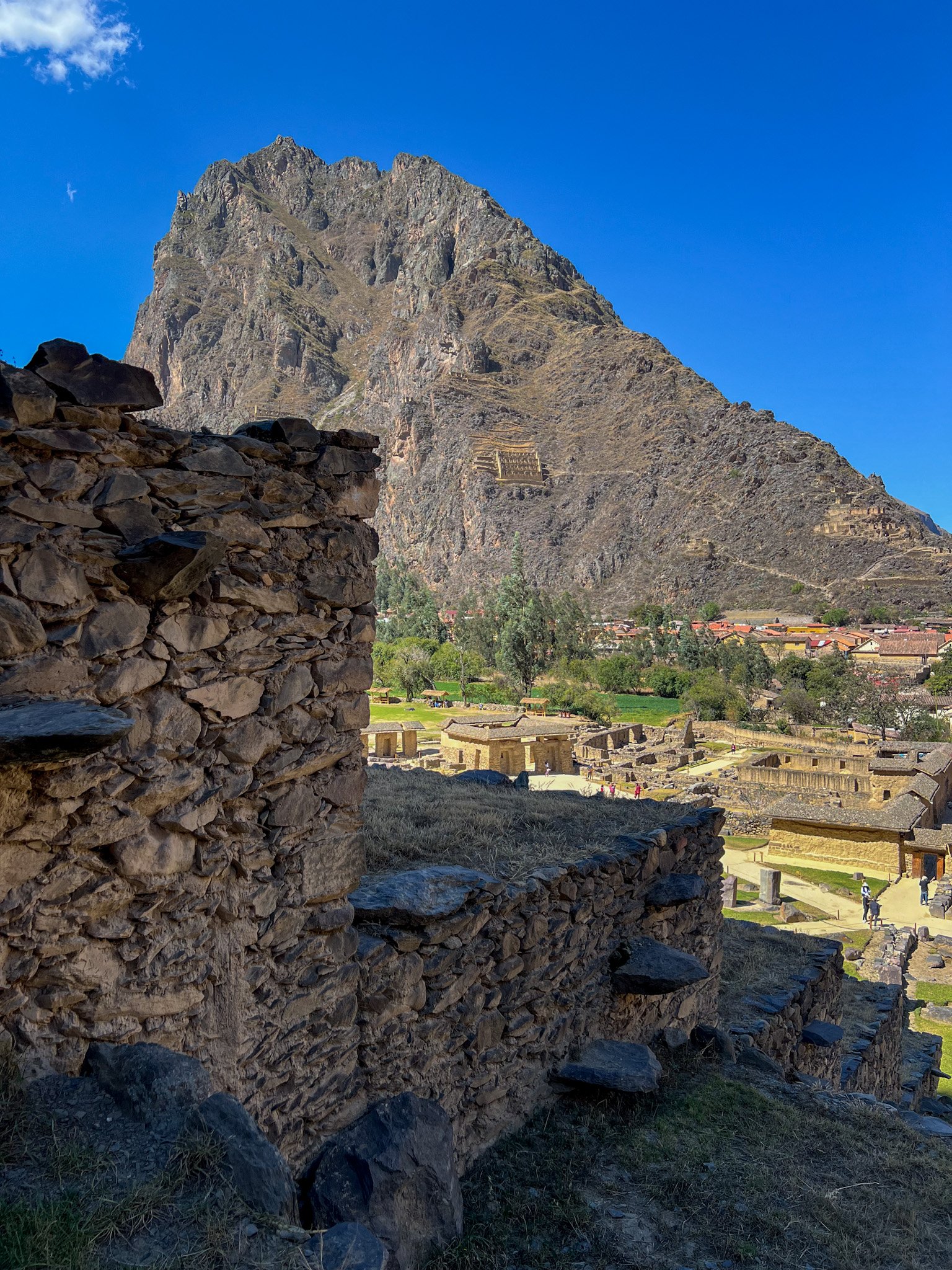
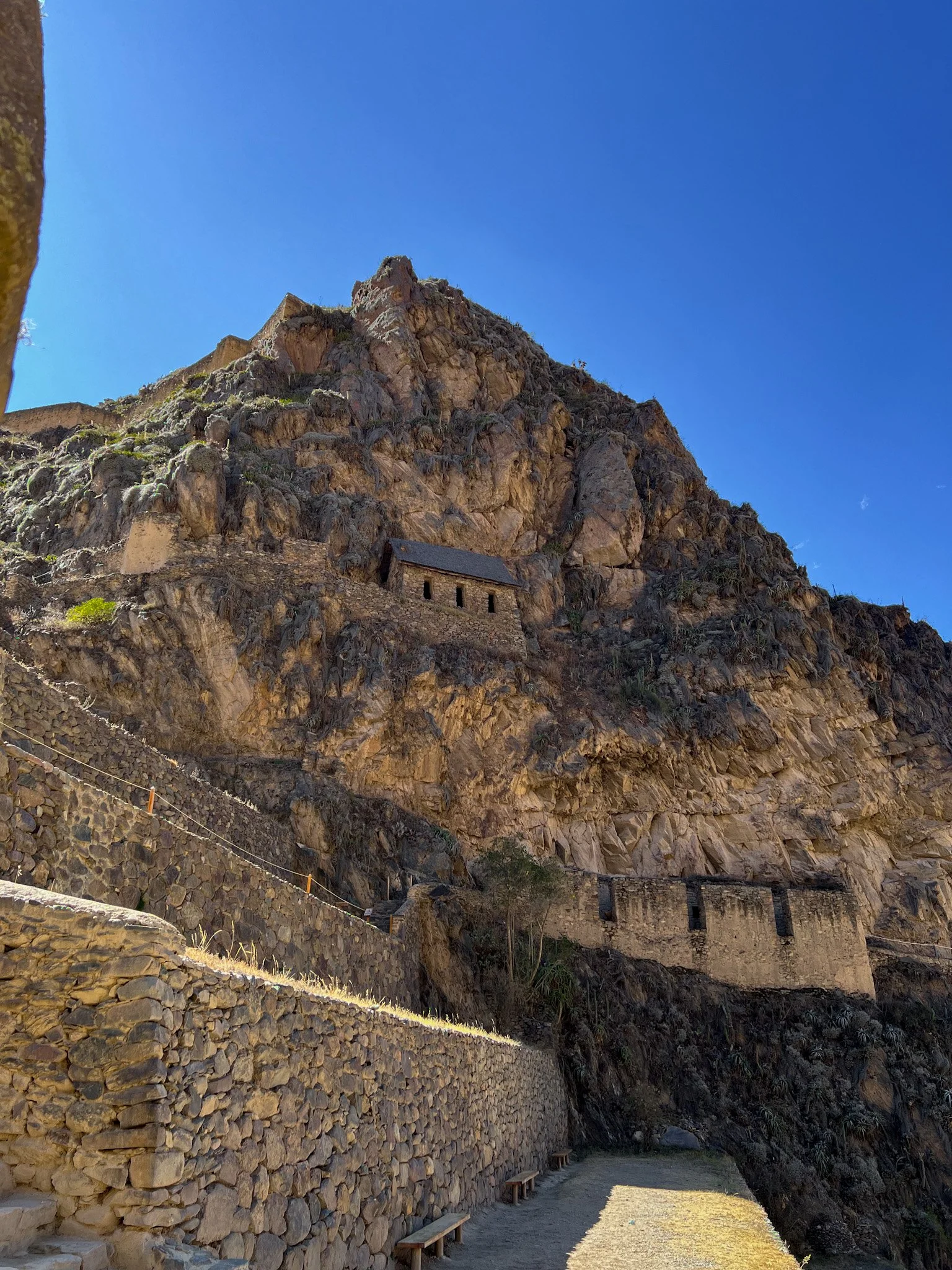
The archaeological site of Ollantaytambo is renowned for its impressive Inca ruins, which are spread across the valley and hills surrounding the town. The main Inca ceremonial center is located on a hill called Cerro Bandolista, where the site is divided into three main sectors: the Middle sector, Temple sector, and Funerary sector. The Temple sector is particularly notable for its unfinished Sun Temple, which features the Wall of the Six Monoliths. The other sectors contain various structures, including rectangular buildings and fountains, showcasing the sophisticated architectural techniques of the Incas.
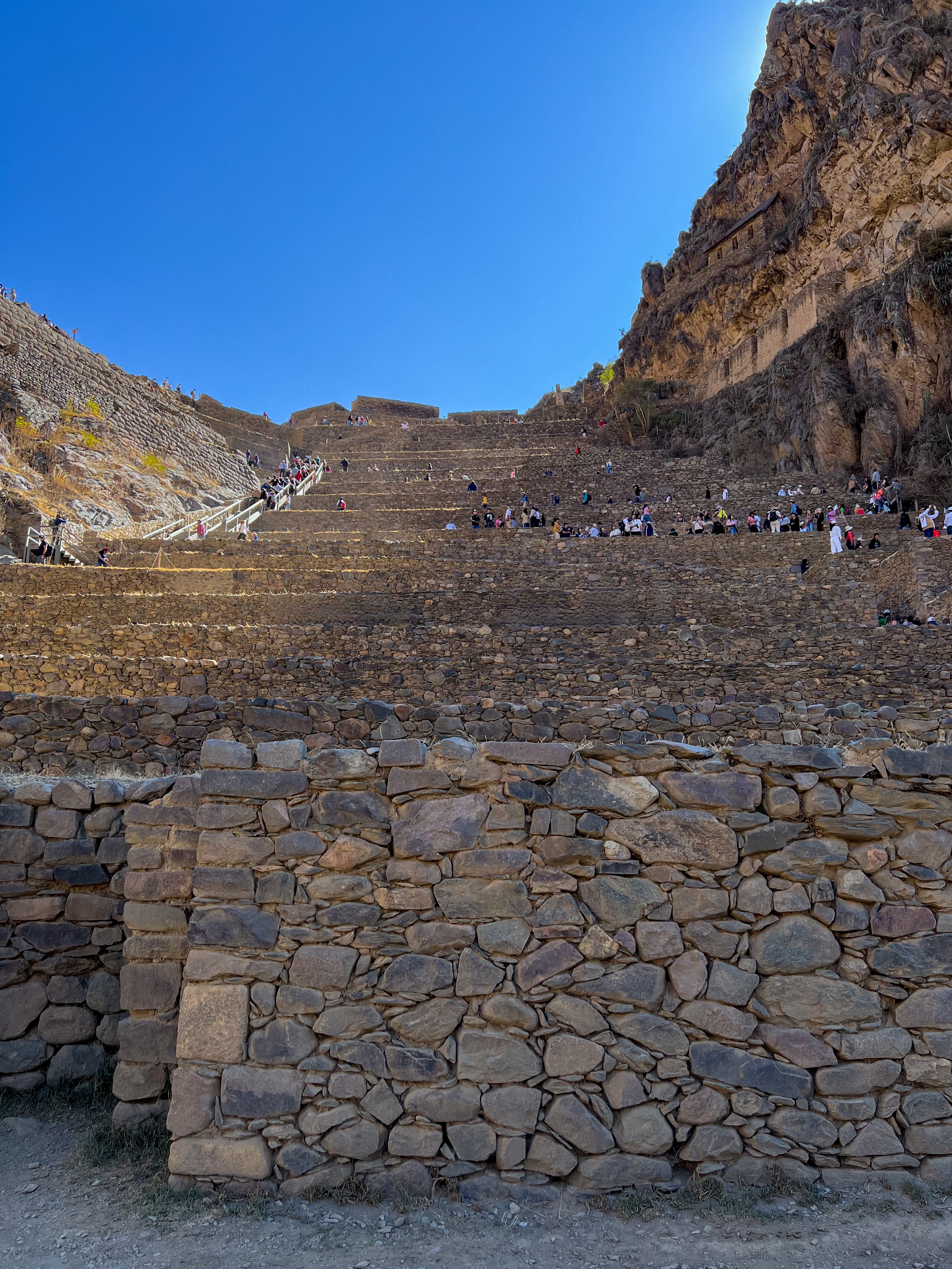


One of the most remarkable features of Ollantaytambo is its agricultural terraces, or andenes, which extend throughout the surrounding hills. These terraces allowed the Incas to transform otherwise unusable land into productive farmland across various ecological zones. What sets the terraces at Ollantaytambo apart is their intricate design: they feature taller walls constructed from finely cut stone rather than the rough fieldstone seen in more common Inca terraces. This level of craftsmanship reflects their high prestige, comparable to terraces found in other royal Inca estates like Pisac and Chinchero. Furthermore, the sunken terraces, referred to as Callejón, were specifically engineered to generate microclimates. This innovation enabled the cultivation of crops from lower altitudes that would not normally thrive at such high elevations.
In addition to the ceremonial centre and agricultural terraces, Ollantaytambo is home to several Inca storehouses, or qullqas, located on the hills surrounding the town. These storehouses, built from fieldstone and designed with ventilation systems, were used to store agricultural products such as grain. Their elevated locations and ventilation systems helped preserve the stored goods by protecting them from decay due to the cooler temperatures and strong winds. The storehouses are a testament to the Incas' advanced knowledge of architecture and their ability to adapt to the region's climate.
Ollantaytambo is also famous for its quarries, located across the Urubamba River at Kachiqhata. These quarries provided the rose rhyolite stone used in the construction of the Temple Hill and other important structures in the site. The quarries were connected to the main site by a network of roads, ramps, and slides, allowing for the efficient transport of stone. Today, the site continues to attract visitors due to its rich history, archaeological significance, and its role as a popular starting point for the Inca Trail to Machu Picchu.

Train from Ollantaytqambo to Aguas Calientes
After finishing our visit to the remarkable site of Ollantaytambo, we decided to take a different path than most day tours. Instead of continuing on to Pisac and returning to Cusco, we chose to head straight to the train station in Ollantaytambo. From there, we caught a late afternoon train to Aguas Calientes, the gateway town to Machu Picchu, which we planned to visit the following day.
Reaching Aguas Calientes from Ollantaytambo is straightforward, as this small town serves as one of the main gateways to Machu Picchu. Travellers can take one of several trains that operate between the two points, offering a scenic journey through the Sacred Valley. For our trip, we opted to travel with the Tren Turístico Voyager by IncaRail, a comfortable and affordable option that doesn’t compromise on experience.
It’s important to note that the trains to Aguas Calientes tend to sell out quickly, especially during peak seasons. To ensure a smooth and stress-free journey, I recommend booking your round-trip train tickets from Ollantaytambo to Aguas Calientes in advance with GetYourGuide.
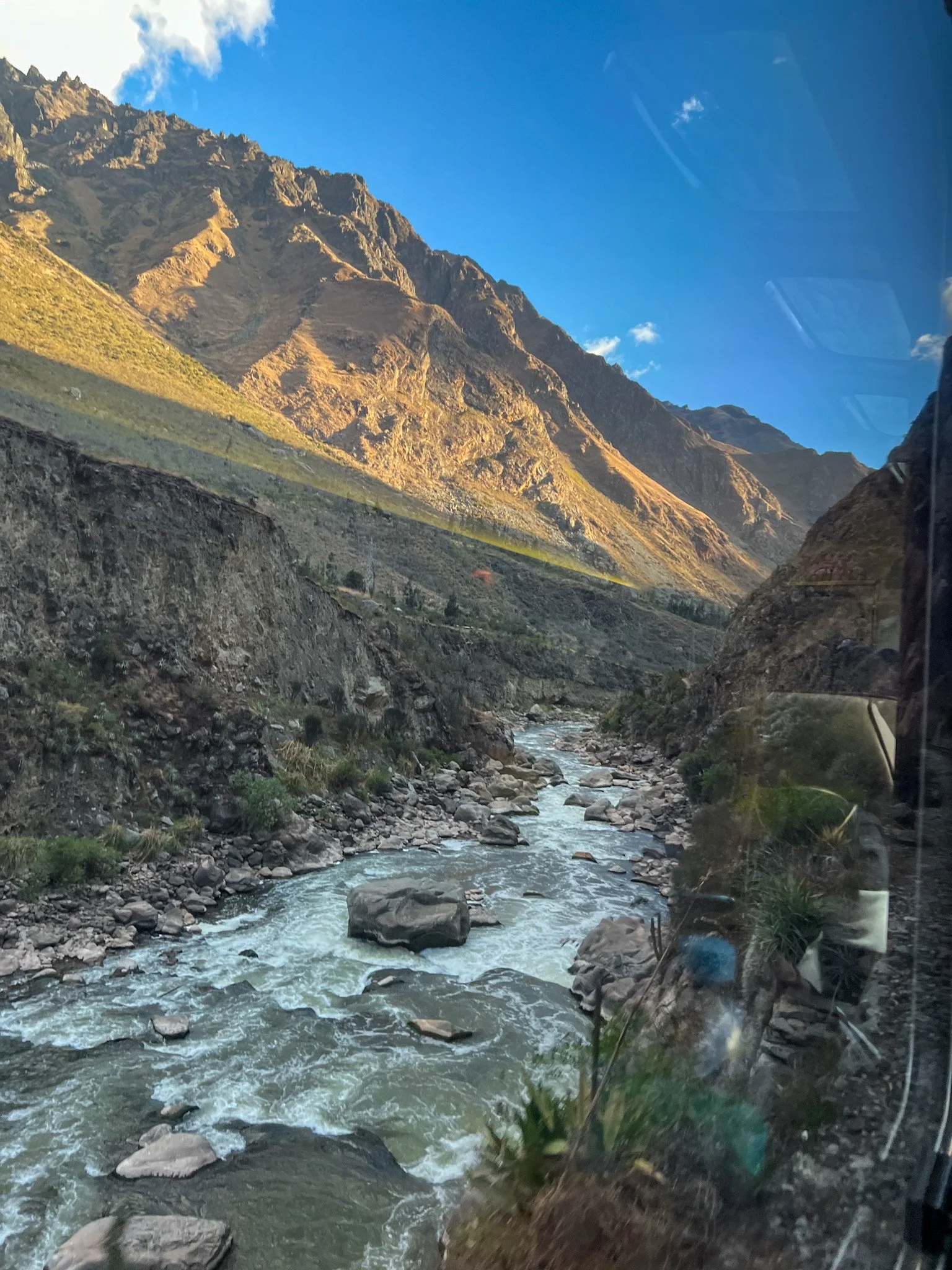
The Voyager train was a wonderful choice, providing cozy seats, large panoramic windows, and excellent service throughout the journey. As the train glided along the tracks, we were treated to spectacular views of the Urubamba River winding through lush green valleys and rugged Andean peaks. The changing scenery—ranging from dramatic cliffs to vibrant cloud forests—kept us glued to the windows for the entire trip. It felt like a preview of the magic awaiting us at Machu Picchu, the lost city of the Incas.

Some links in this post are affiliate links, which means that if you buy through them, we’ll receive a small commission. This will never cost you more and in many cases you will receive a special discount.
As always, all opinions are mine. We appreciate your support!


If you’re planning a trip to Peru, check out this 8-day itinerary that captures the best of Cusco, the Sacred Valley, and Machu Picchu, along with a taste of Lima’s vibrant culture.
Begin your adventure in Cusco, the historic capital of the Inca Empire, where you’ll explore ancient ruins, bustling markets, and charming neighbourhoods. Venture into the Sacred Valley, visiting picturesque villages, stunning salt mines, and fascinating Incan sites before embarking on the ultimate journey to Machu Picchu, one of the New Seven Wonders of the World.
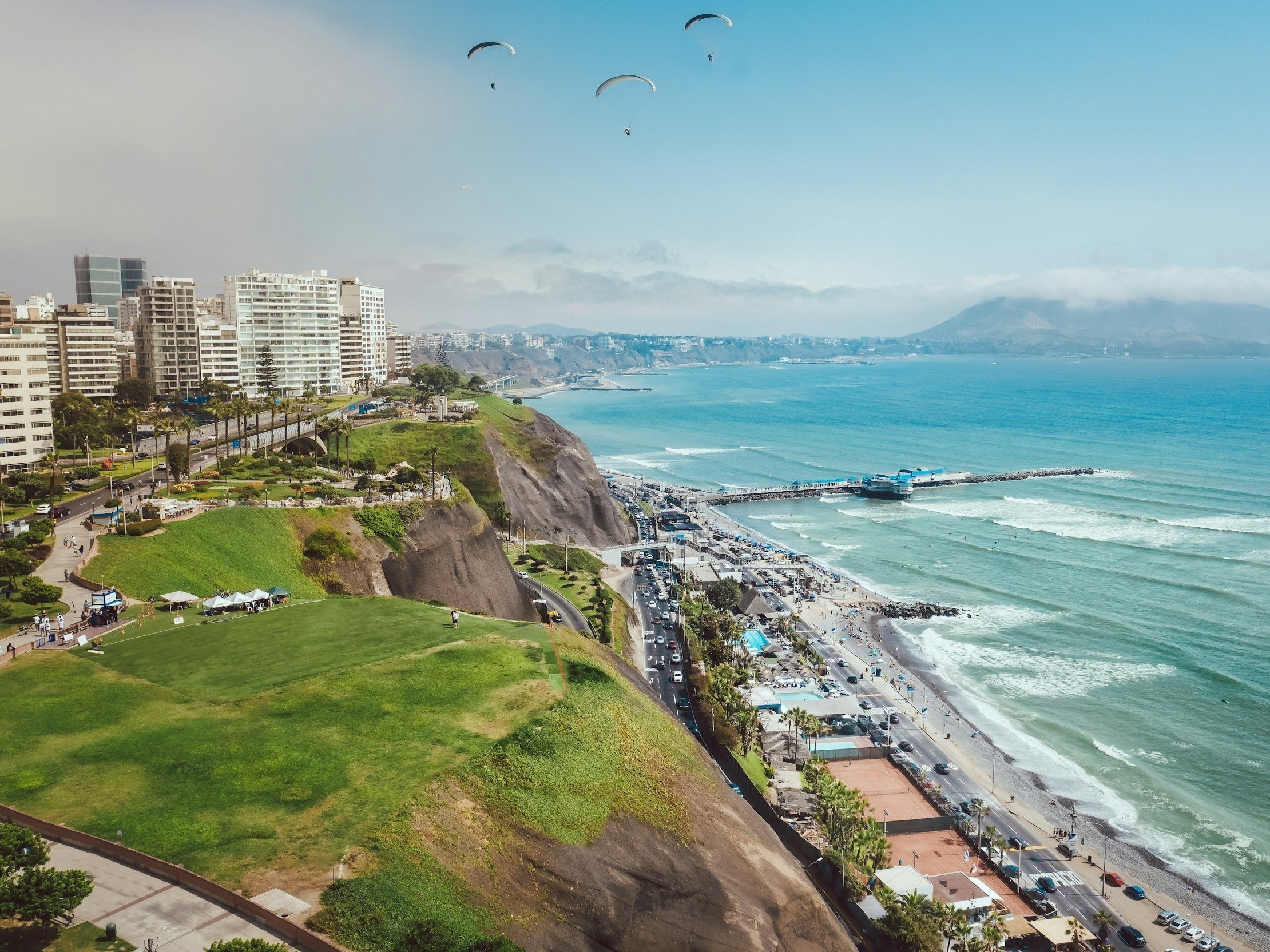
After soaking in the magic of the Andes, fly to Lima, where you’ll experience the coastal capital’s rich history, culinary delights, and breathtaking ocean views.
This thoughtfully planned itinerary ensures you experience the highlights of Peru while leaving room to savor its unique culture and natural beauty!