
Lima: a journey through the historic capital of Peru
Lima, the dynamic capital of Peru, is a city where history, modernity, and coastal beauty intertwine. Overlooking the Pacific Ocean, this bustling metropolis serves as a gateway to Peru’s rich culture and diverse landscapes. Renowned for its world-class culinary scene, Lima also boasts a wealth of historic landmarks, colonial architecture, and pre-Columbian ruins that unveil layers of the nation’s captivating past.
In just two days, you can uncover Lima’s vibrant charm, from the elegant plazas of the historic centre to the scenic cliffs of Miraflores. This 2-day guide will ensure you experience the best of Lima before continuing your Peruvian adventure.
What to see in Lima: 2 day itinerary
Most travellers visiting Peru to see the iconic Machu Picchu or explore the breathtaking Sacred Valley of the Incas will find themselves passing through Lima, as it serves as the primary hub for international flights. While these renowned destinations are undoubtedly worth the journey, Lima itself offers a vibrant blend of history, gastronomy, and coastal charm that warrants dedicating at least two days to exploration.
As Peru's capital and largest city, Lima is a cultural and culinary powerhouse. From its historic colonial center to its trendy, seaside neighborhoods, the city has something for every traveler. Here’s a two-day itinerary to help you make the most of your time in Lima before or after your Andean adventures:
History of Lima
Lima, Peru's capital, was founded in 1535 by Spanish conquistador Francisco Pizarro under the name Ciudad de los Reyes (City of Kings), in honor of the Epiphany. Situated along the Rímac, Chillón, and Lurín Rivers, Lima rapidly grew to become the political and economic heart of Spanish colonial Peru. The site was chosen for its strategic location, benefiting from a favorable coast for trade and a climate conducive to agriculture. Following the conquest of the Inca Empire, Lima flourished as the capital of the Viceroyalty of Peru and later became the seat of the Royal Audience. It was during this colonial period that Lima saw the construction of significant buildings such as the Plaza Mayor, the Government Palace, and the Cathedral of Lima, with much of the city’s early infrastructure centered around religious and administrative functions.
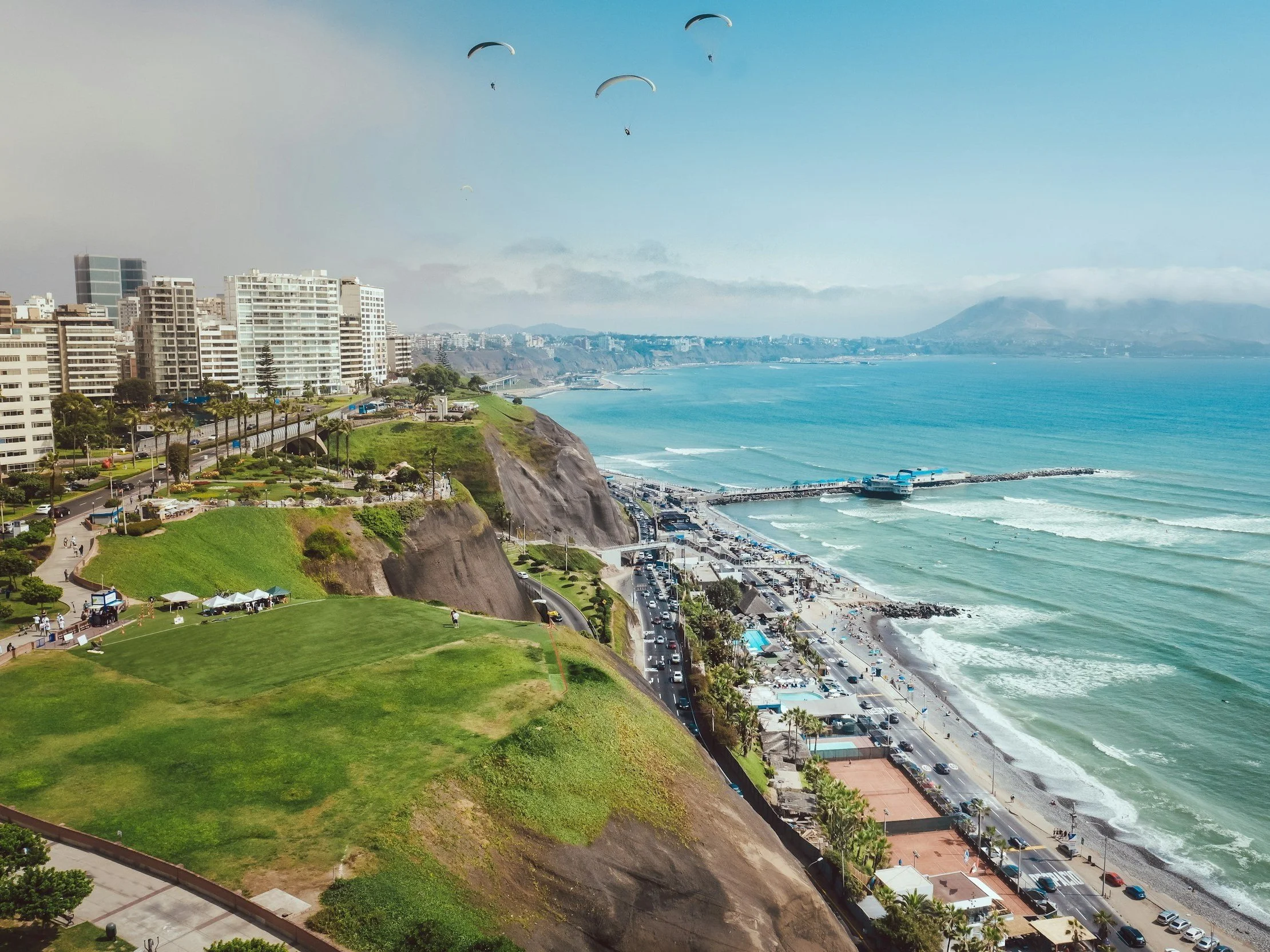
In the 17th and 18th centuries, Lima endured both natural disasters, such as the devastating earthquakes of 1687 and 1746, and threats from pirates and foreign invaders, leading to the construction of defensive walls around the city. Despite these challenges, Lima continued to thrive as a trade hub, connecting the Americas to Europe and East Asia. The Bourbon reforms in the 18th century saw economic shifts, but the city’s elite remained closely tied to the Spanish Crown. These centuries were marked by the construction of various public buildings and infrastructure, including aqueducts, hospitals, and the famous Walls of Lima, which were later demolished to make way for urban expansion in the 19th century.
After Peru's War of Independence, Lima became the capital of the newly established Republic of Peru in 1821. The early years of the republic were marked by political instability, with Lima changing hands during the war and suffering economic hardship. However, in the mid-19th century, the city began to experience rapid growth, fuelled by the export of guano. This period of prosperity led to the construction of modern infrastructure, including railways and bridges. Despite continued social inequality, the city expanded both economically and geographically. In the 20th century, Lima's growth continued with new avenues, government buildings, and a burgeoning industrial sector, although it also faced challenges, such as the War of the Pacific and subsequent periods of political turmoil and military rule. By the 21st century, Lima had solidified its position as the largest city in Peru and one of the most significant cultural and economic centres in Latin America.
Day 1
Malecón de Miraflores
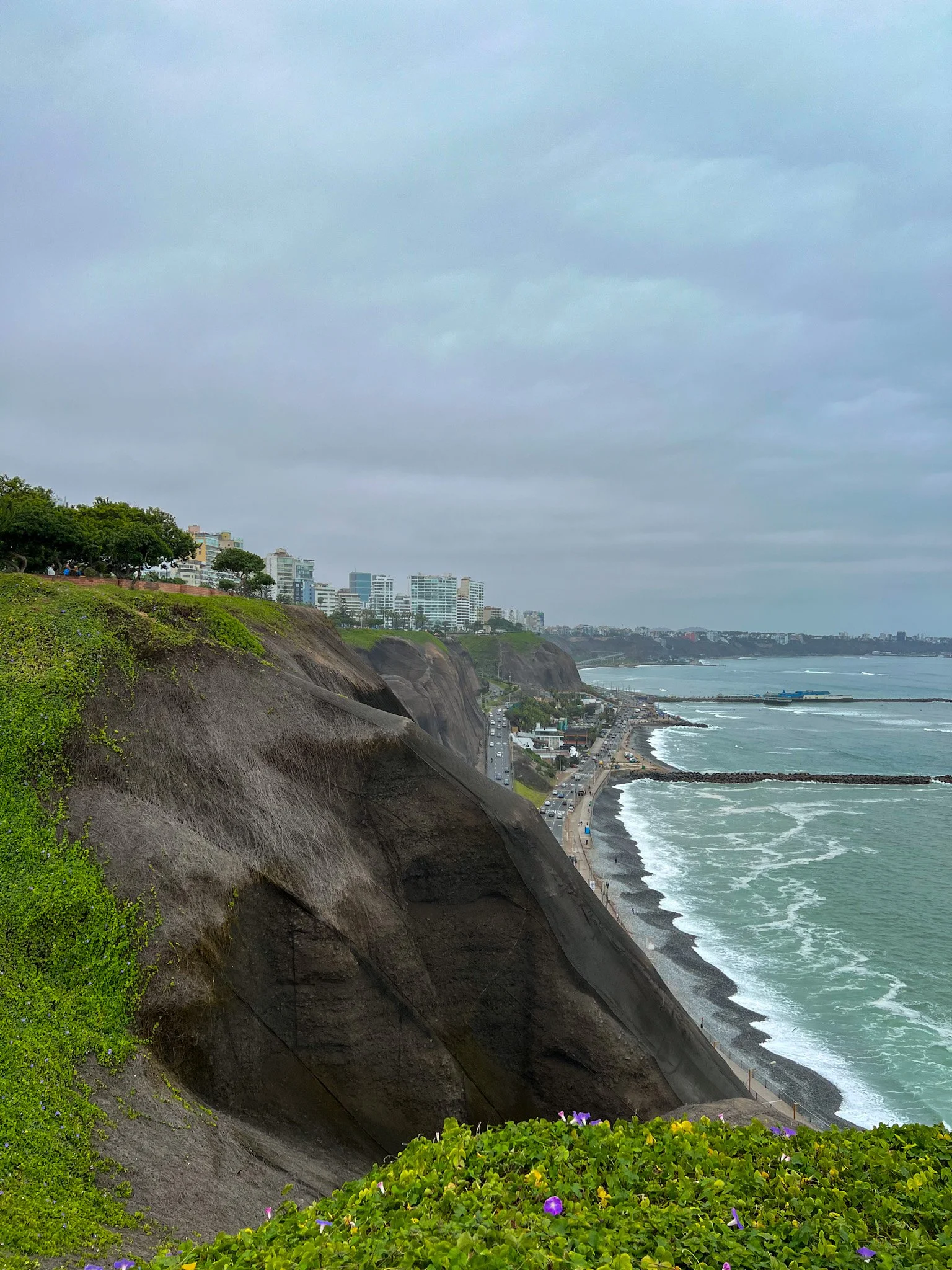
We arrived in Lima early in the morning after an exciting five-day adventure exploring Cusco, the Sacred Valley of the Incas, and the iconic Machu Picchu. With two full days to discover the city, we spent our first day heading straight to the Malecón, a scenic cliffside promenade offering stunning views of the Pacific Ocean and a perfect spot to relax and enjoy the coastal breeze.
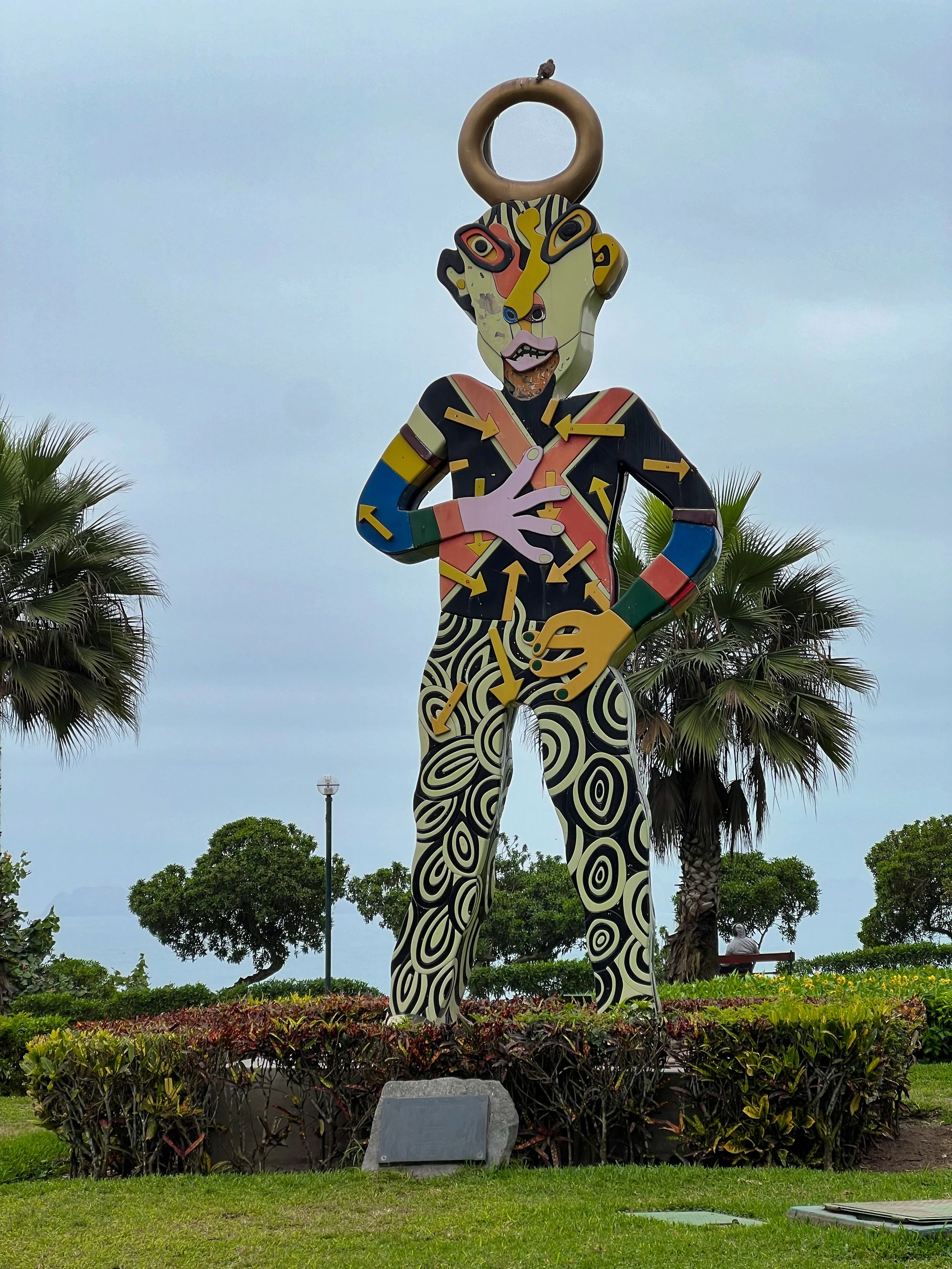
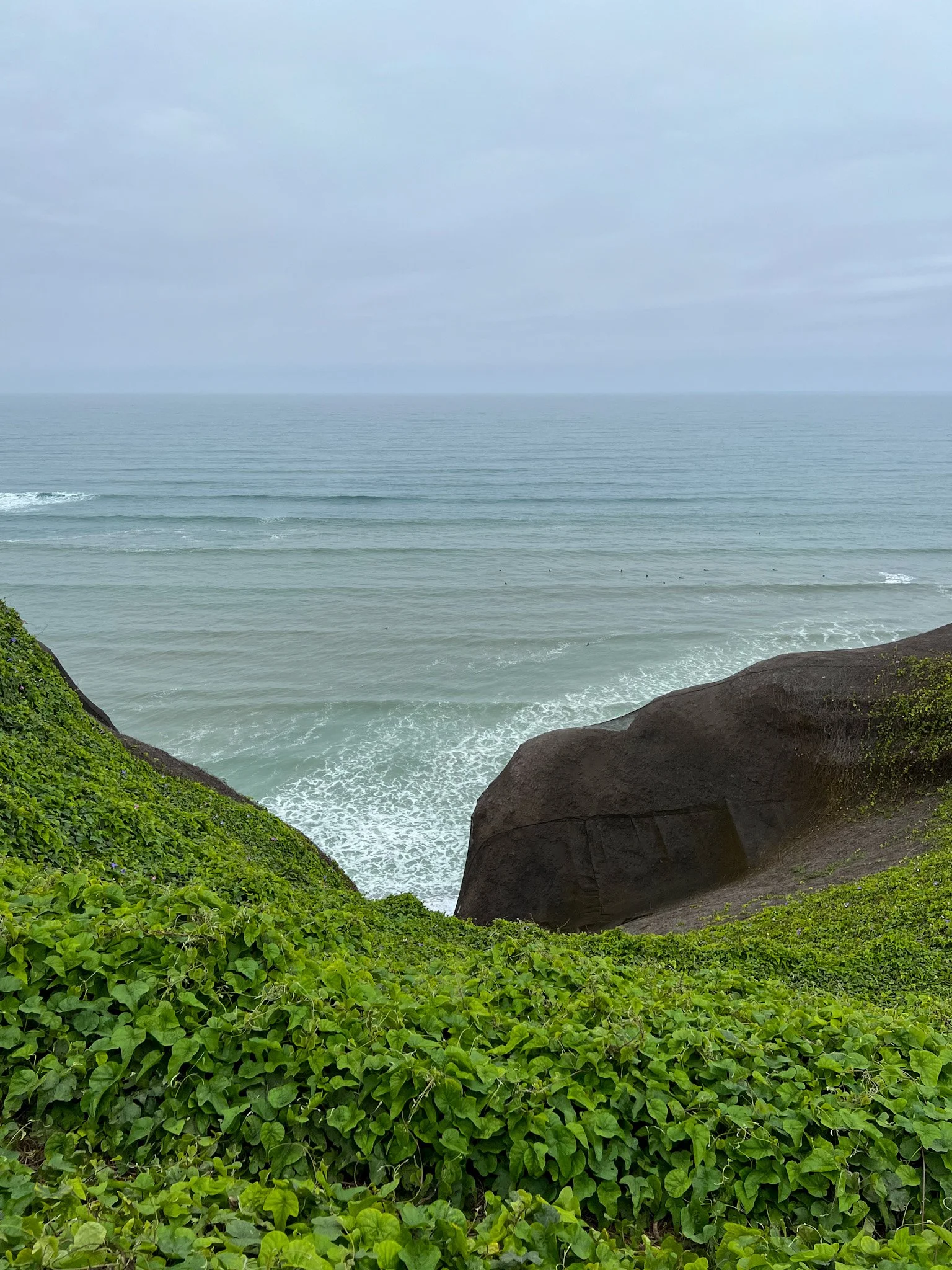
The Malecón de Miraflores is a breathtaking coastal walkway in Lima, stretching along the cliffside of the Costa Verde in the upscale district of Miraflores. Divided into three interconnected sections—Malecón de la Marina, Malecón Cisneros, and Malecón de la Reserva—it spans nearly six miles, offering unparalleled views of the Pacific Ocean. Along the way, you’ll find lush green parks, vibrant flower gardens, exercise stations, and monuments, all meticulously maintained.
Itzhak Rabin Park
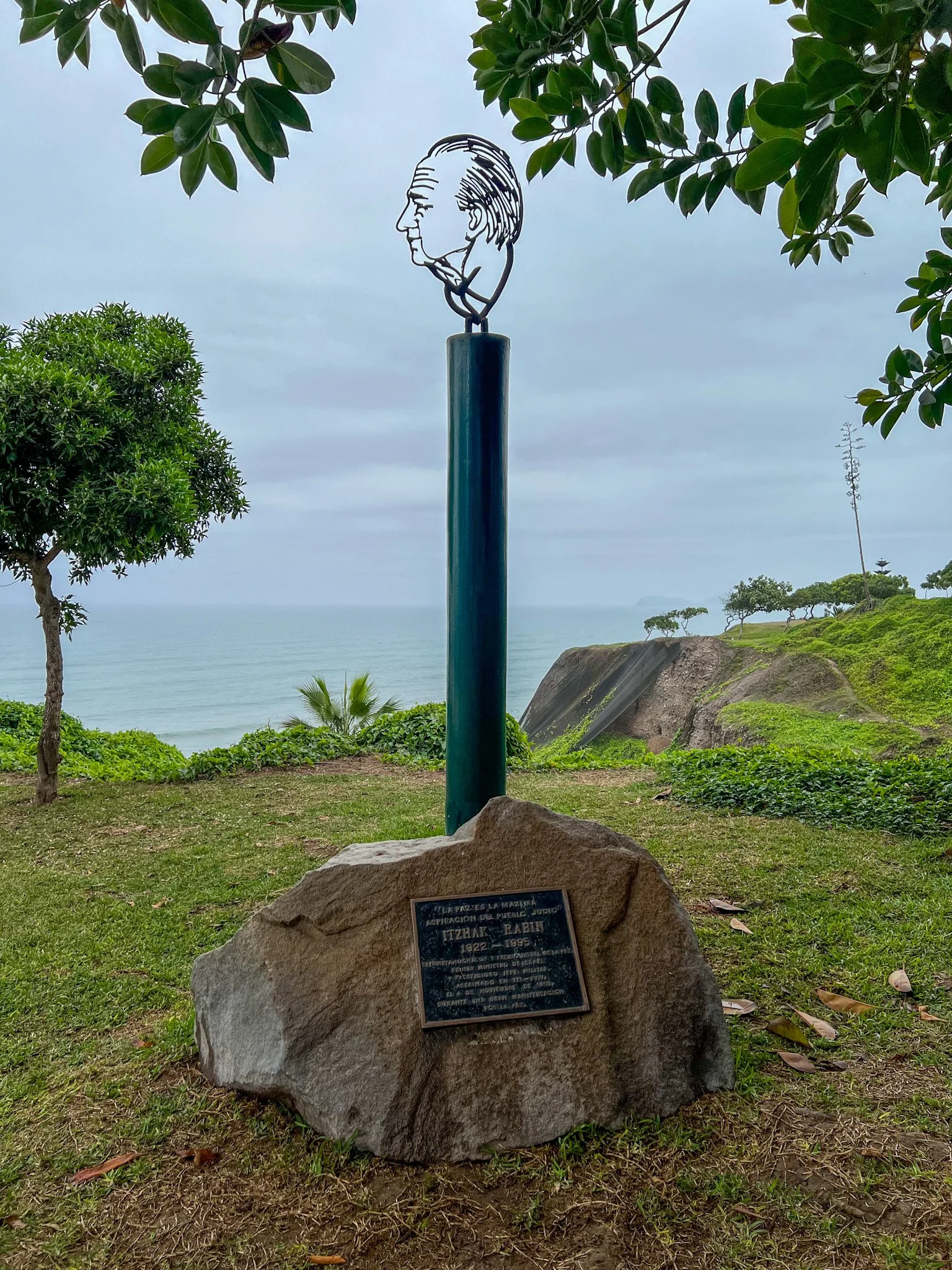
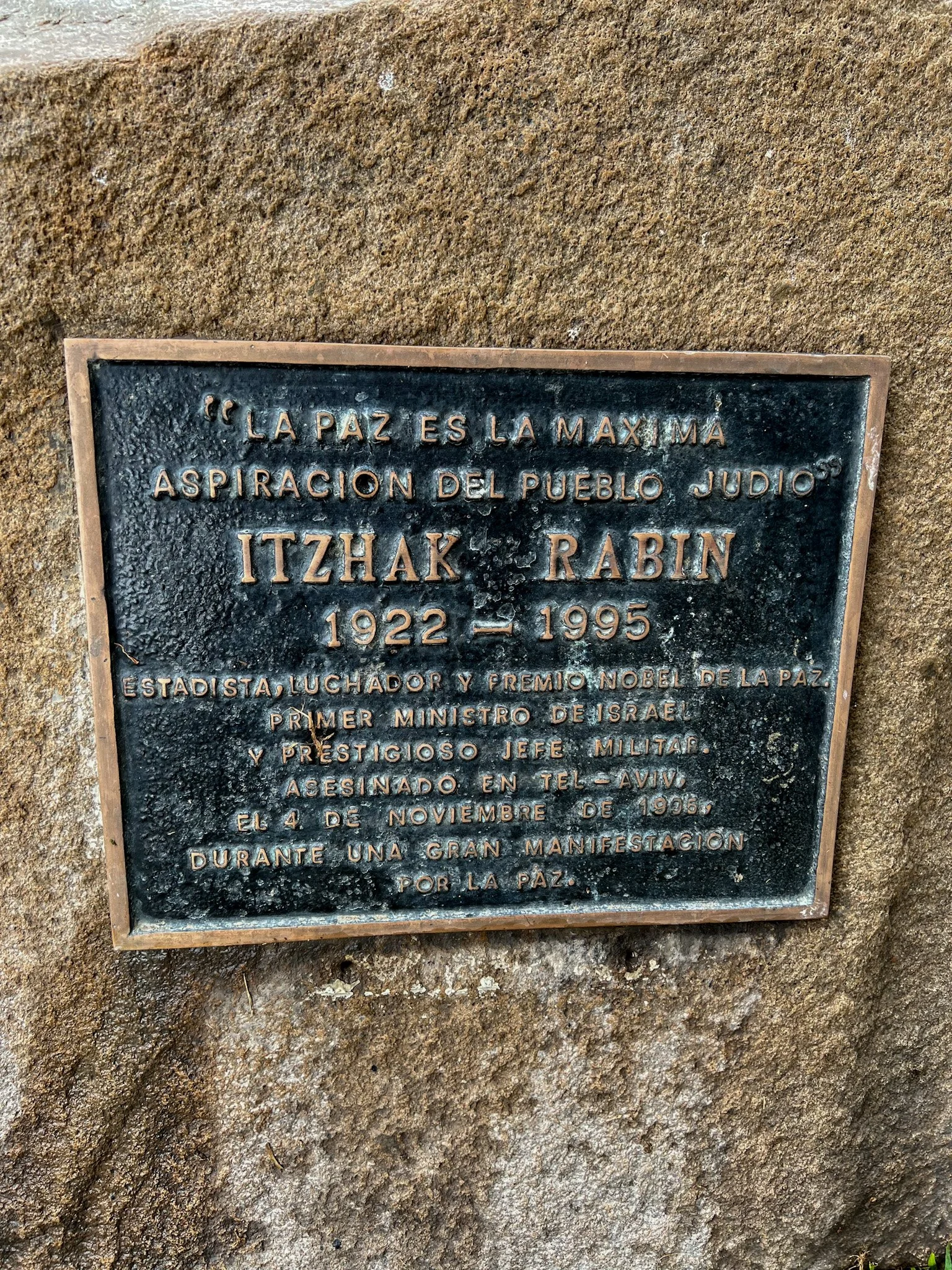
We started our walk along the Malecón on the north side at Itzhak Rabin Park. Inaugurated in 1998, the park stands as a tribute to the late Israeli leader and 1994 Nobel Peace Prize laureate.
Itzhak Rabin was a key Israeli politician and prime minister who played a significant role in the Oslo Accords, aiming for peace with the Palestinians. He served as prime minister from 1974–1977 and 1992–1995 before being assassinated in 1995 by a far-right extremist.
The park features a monument bearing Rabin's likeness and a plaque detailing his biography. The plaque prominently displays the words, "Peace is the highest aspiration of the Jewish People," reflecting Rabin's lifelong dedication to the pursuit of peace.
Chinese Park
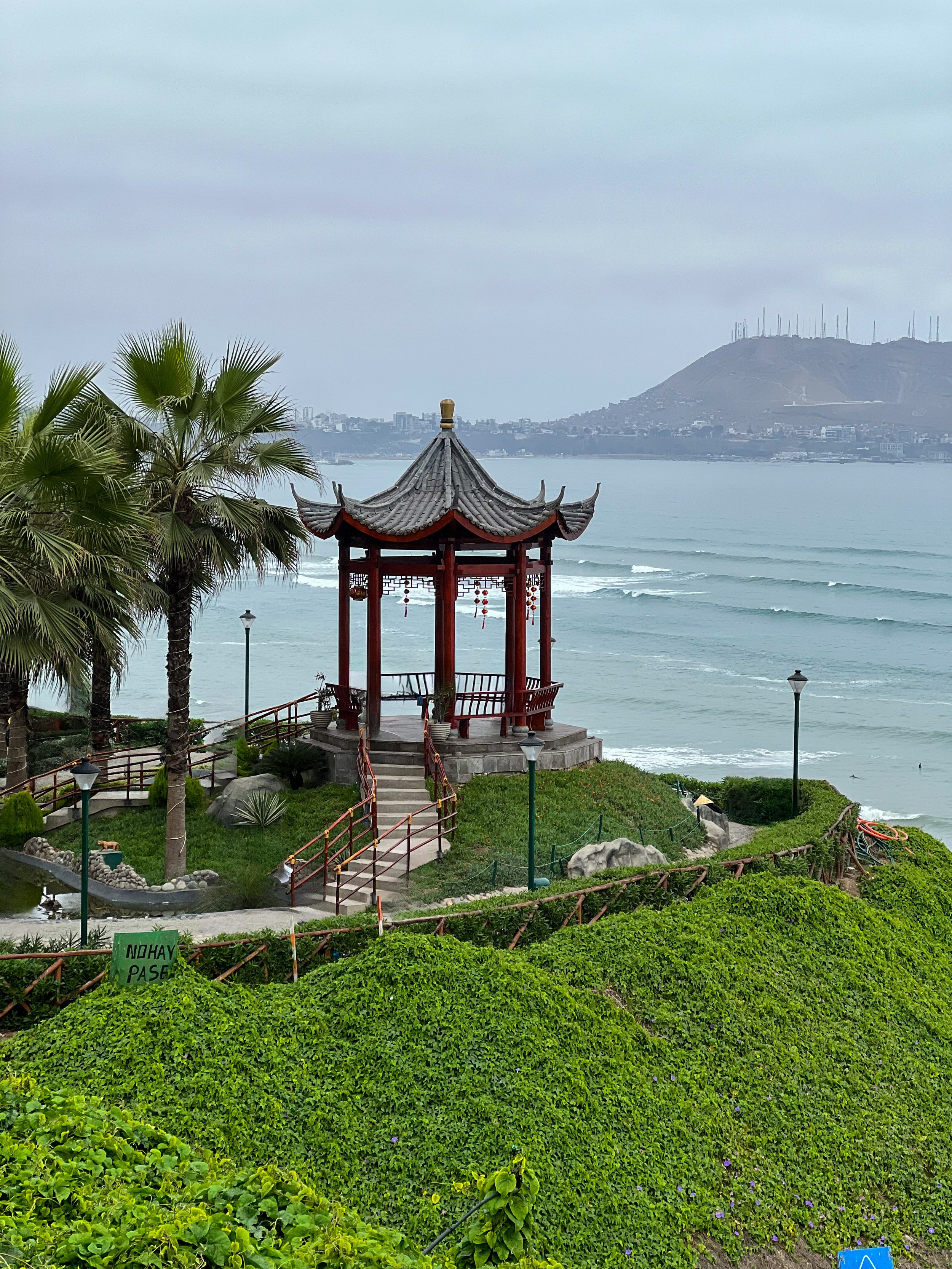
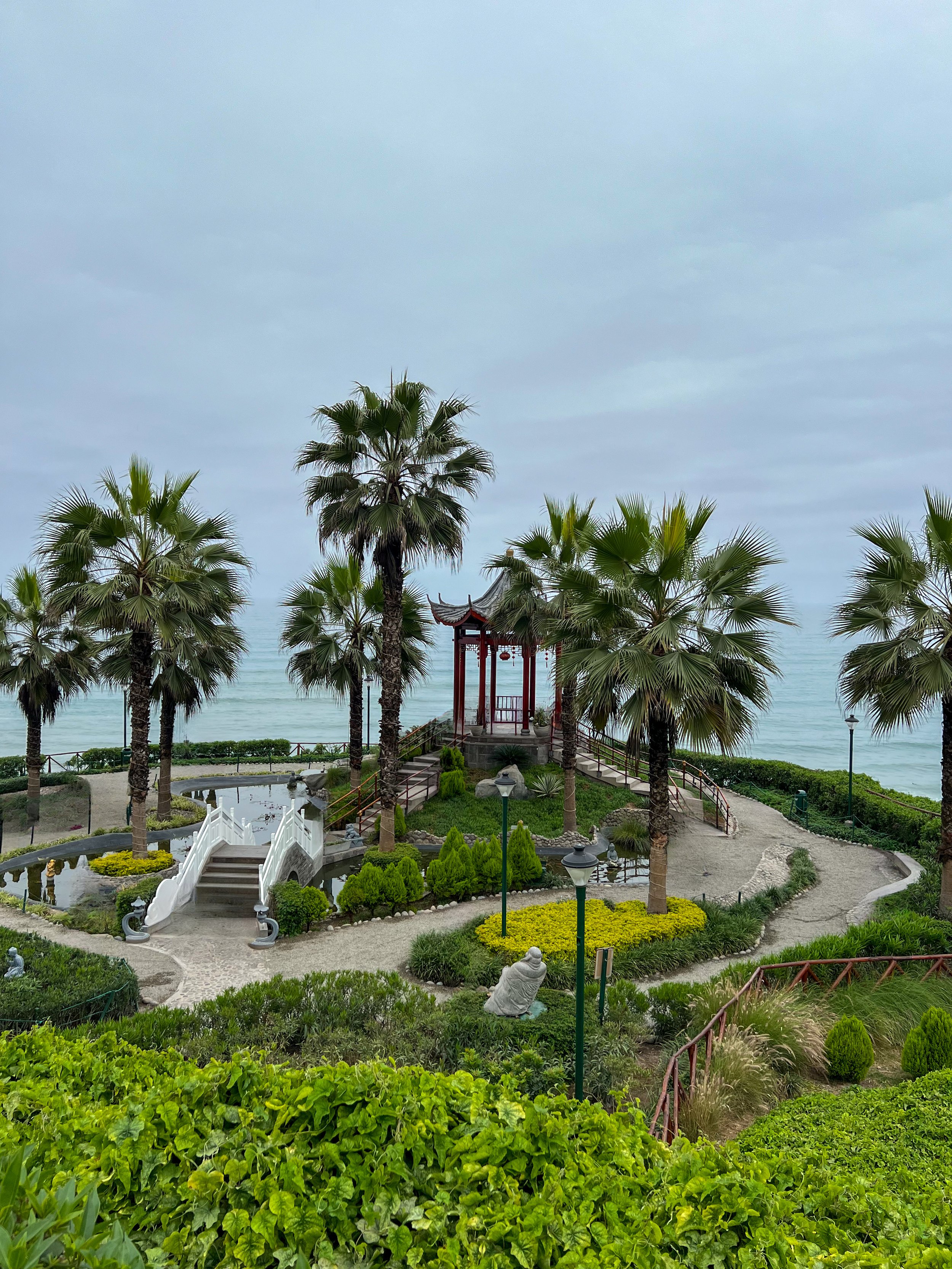
A few minutes' walk ahead, you’ll find the famous Chinese Park, known locally as Parque Chino. This park was created to commemorate three significant milestones: the Bicentennial of Peru’s Independence, 172 years of Chinese immigration to Peru, and 50 years of diplomatic relations between Peru and China.
The park spans 1,500 square meters and features elements inspired by traditional Chinese architecture, including a picturesque gazebo with wooden finishes, glazed roof tiles, flagstone-clad stairs, a bridge, and water fountains. The iconic granite guardian lions, specially brought from China, stand proudly as symbols of protection and culture, while the gardens and artistic design make it a tranquil and visually stunning attraction.
Faro de la Marina
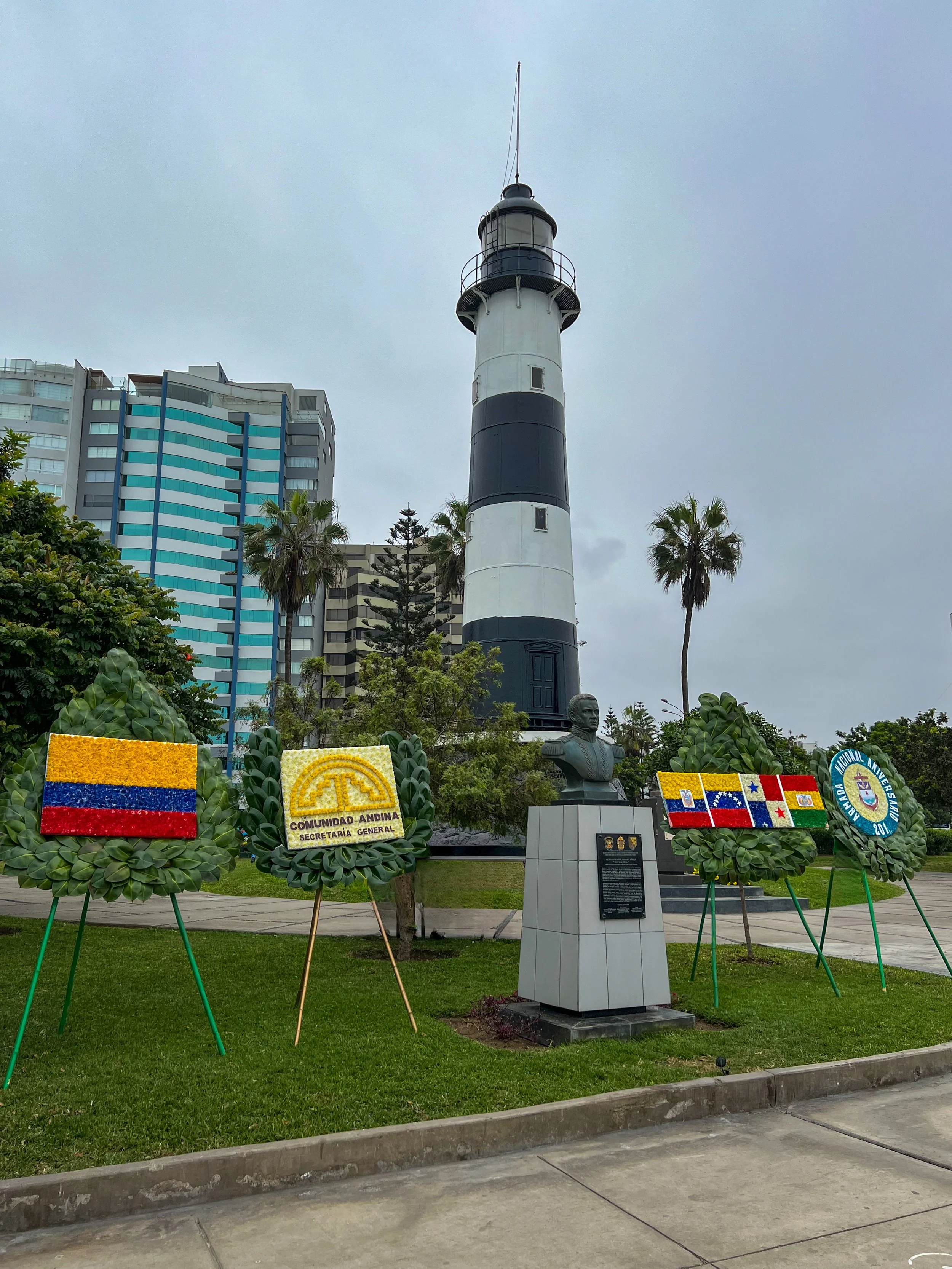
One of the most recognisable landmarks of Miraflores is the Faro de la Marina, an iconic lighthouse overlooking the Pacific Ocean. It was officially inaugurated on February 24, 1921, though it was originally constructed in Punta Coles, Moquegua, in 1900 by the Swedish company Chance Bros. In 1973, the lighthouse was dismantled and relocated to its current location in Miraflores by the Directorate of Hydrography and Navigation of the Peruvian Navy. Situated in El Faro Park, a park commemorating a century of Peruvian navigation, the lighthouse stands at 22 meters tall with a light visible up to 33 km offshore, making it one of the most significant lighthouses in the country.
In addition to its maritime function, the Faro de la Marina is surrounded by various urban legends, one of the most popular being that it was designed by the firm of Gustave Eiffel, famous for the Eiffel Tower in Paris. However, this belief is unfounded, as no documents support such a claim. While Eiffel was renowned for his designs of bridges and metal structures, such as the Garabit Viaduct, there is no connection between him and the construction of this lighthouse. With its cast iron structure, painted in navy blue with two white bands, and a focal height of 108 meters above sea level, the lighthouse continues to serve as an important landmark for both sailors and visitors exploring Lima's coastline.
Love Park
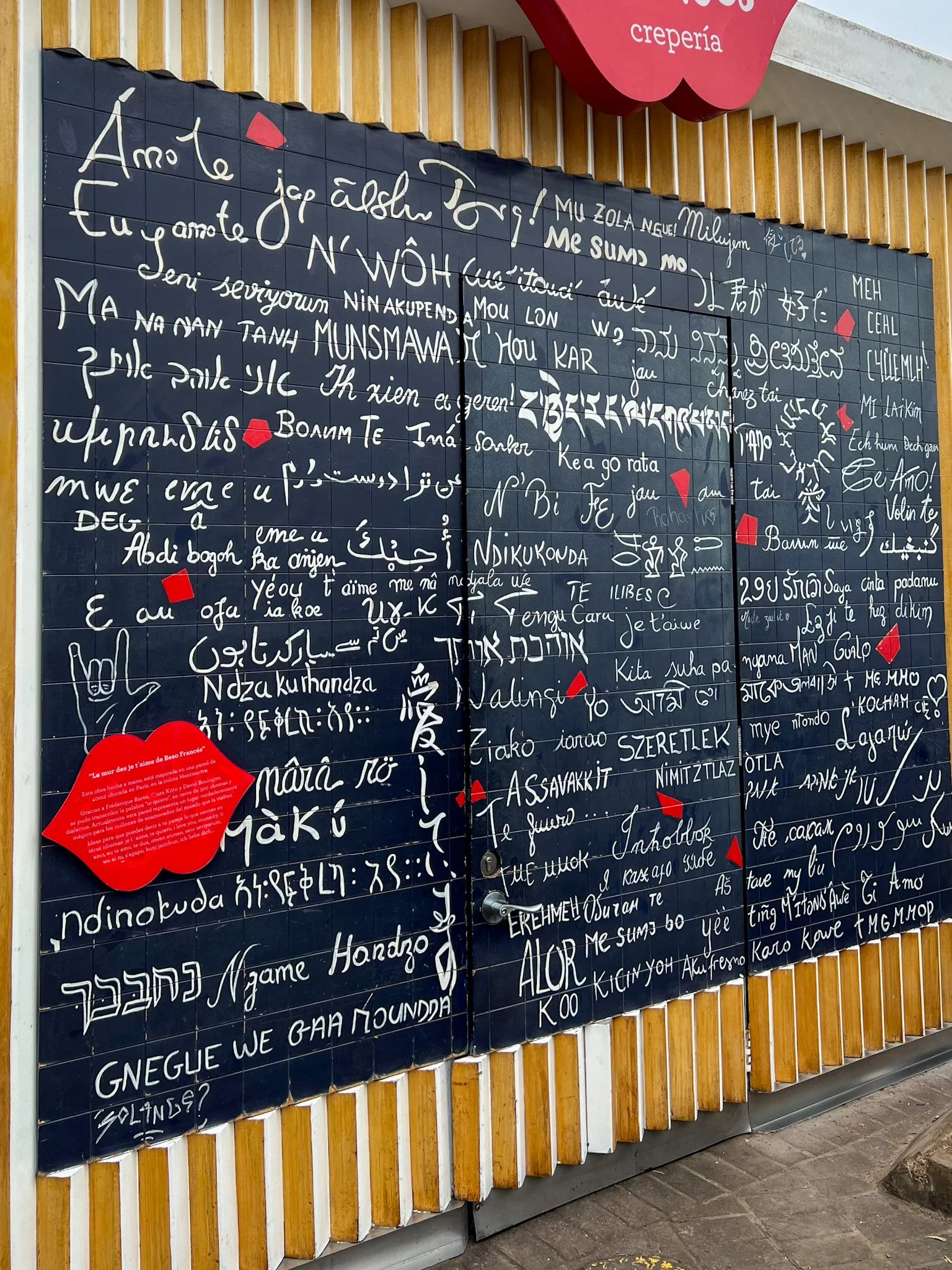
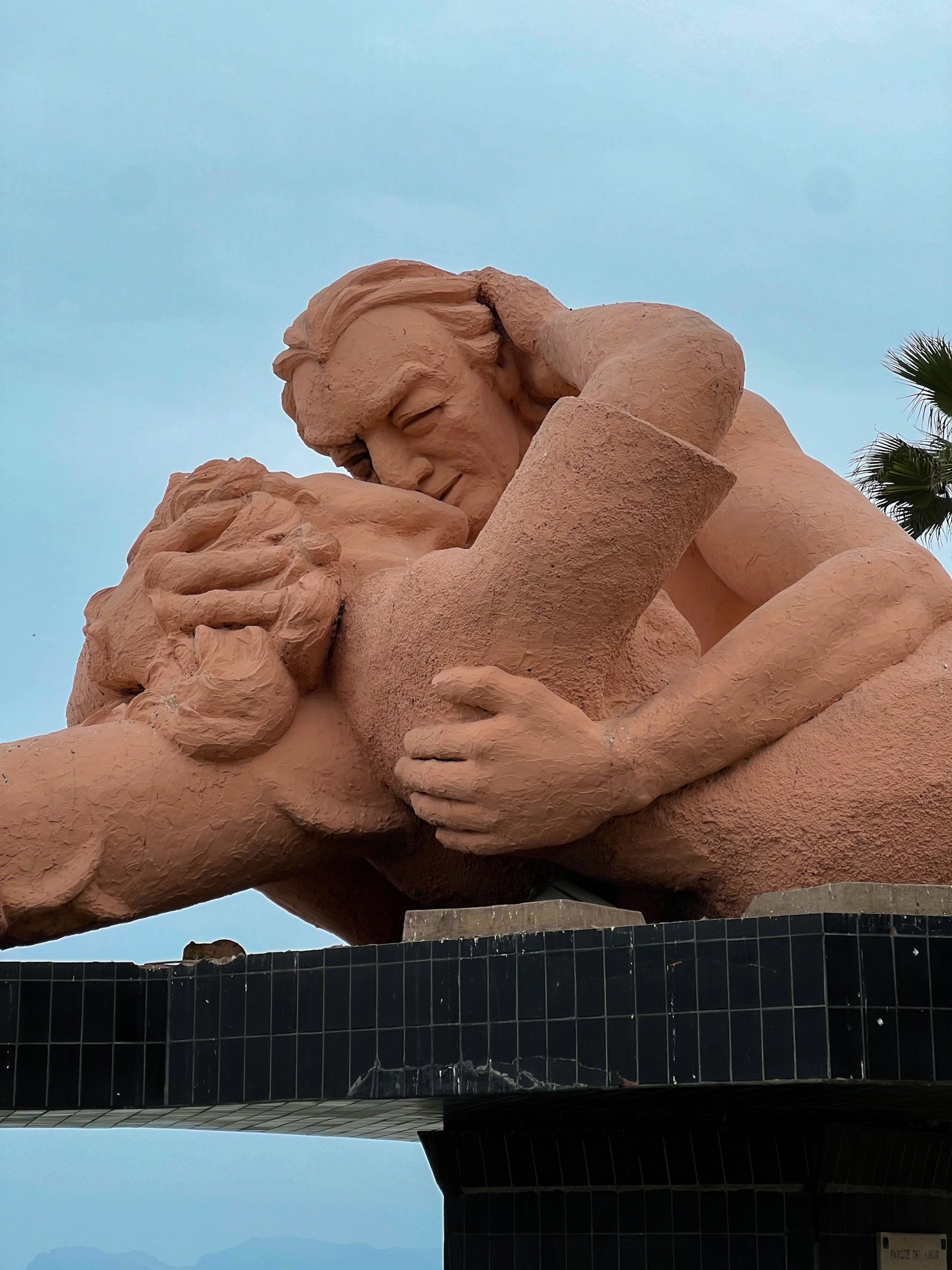
On the southern end of the Malecón you can’t miss the Love Park, or Parque del Amor, an iconic destination renowned for its celebration of love and romance. Inaugurated on February 14, 1993, as a tribute to Valentine's Day, the park was designed to embody the spirit of affection in all its forms.
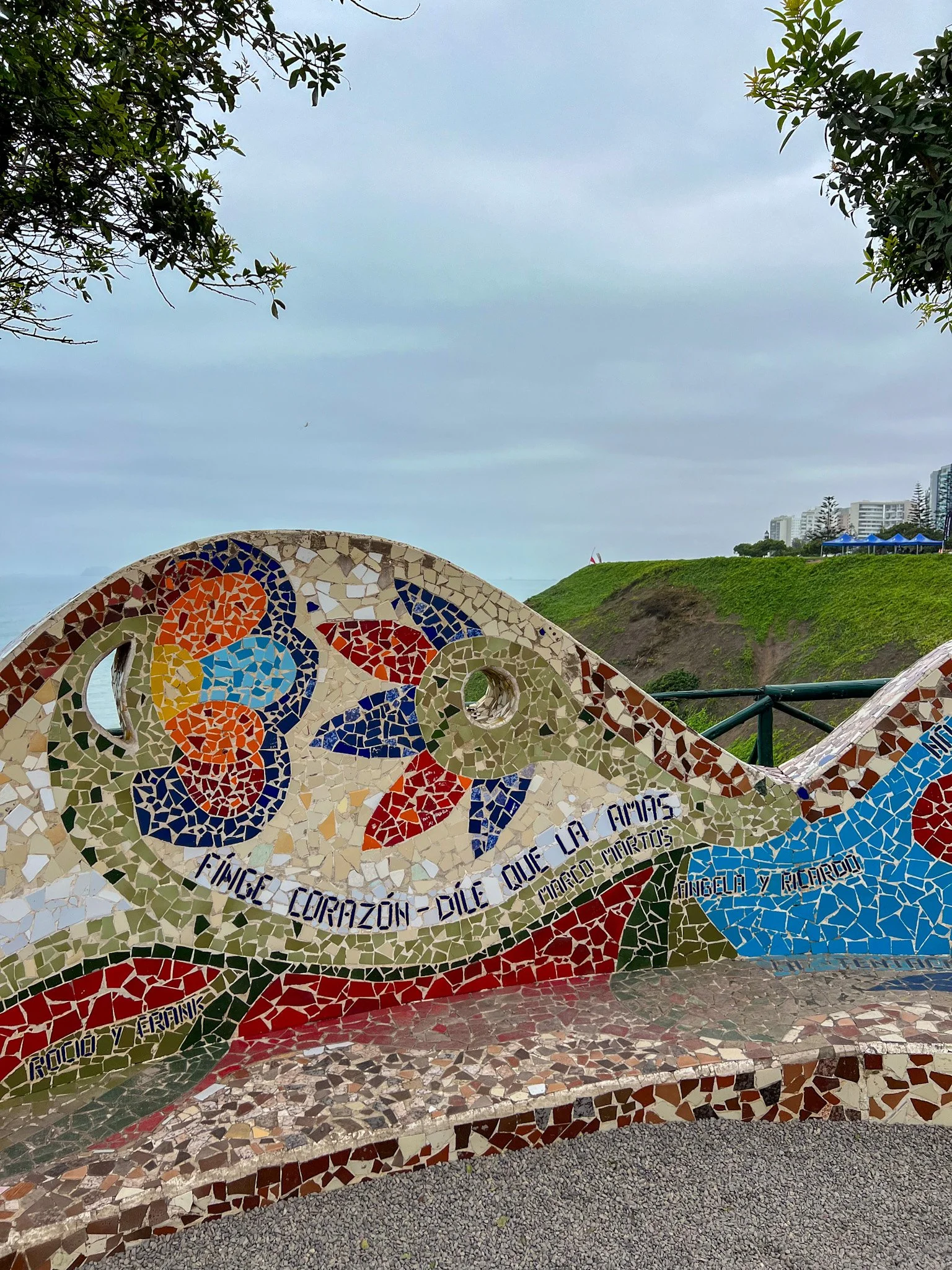
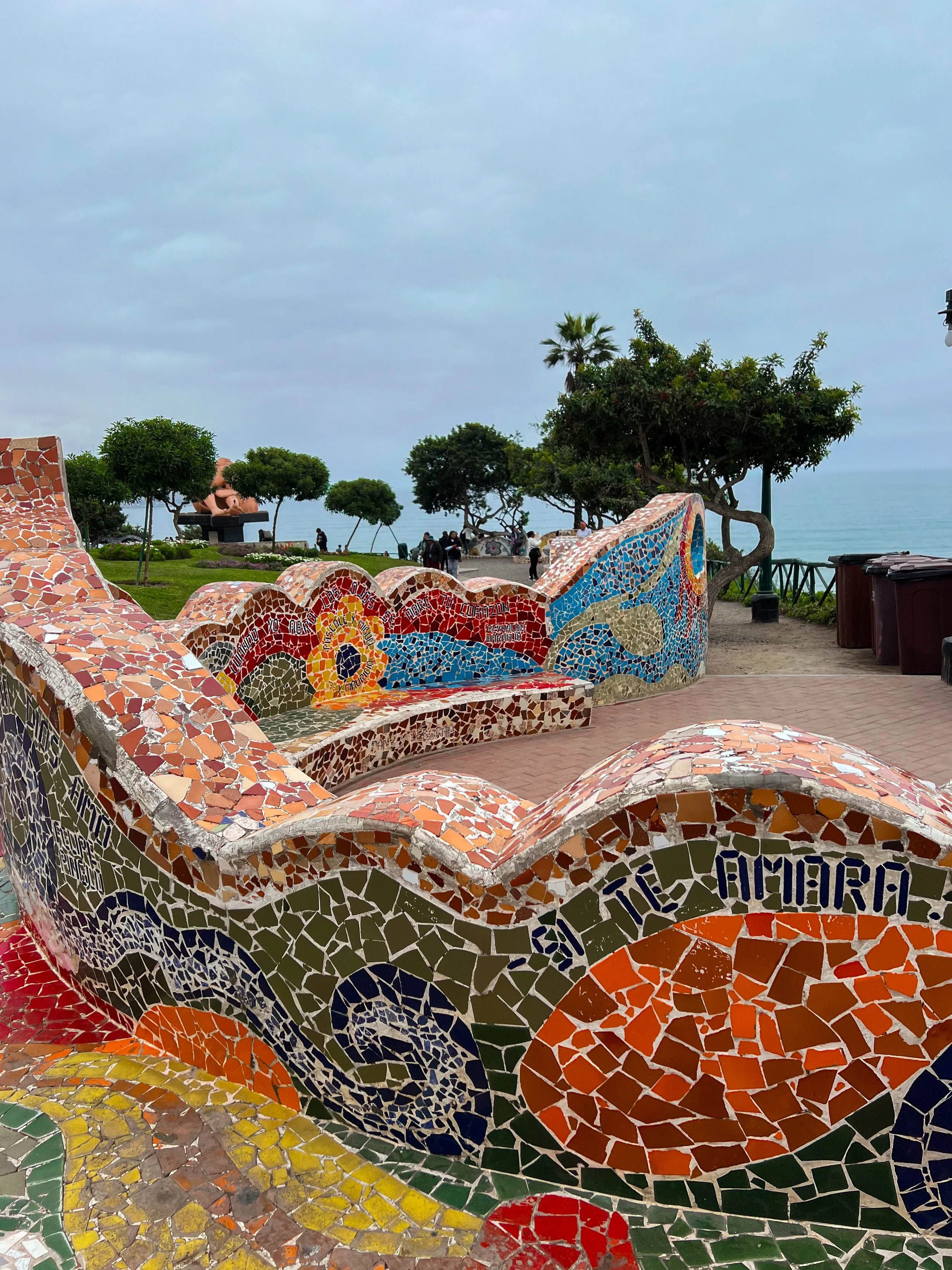
Its centrepiece is the sculpture "El Beso" (The Kiss) by Peruvian artist Víctor Delfín, depicting a couple locked in a passionate embrace. Surrounded by colourful mosaics inscribed with romantic phrases and poems in Spanish and Quechua, the park takes inspiration from Antoni Gaudí’s trencadís style seen in Barcelona's Park Güell. With breathtaking views of the Pacific Ocean and the iconic Villena Bridge, the park has been recognised by National Geographic as one of the most romantic places in the world.
Beyond its aesthetic appeal, the park has become a cultural symbol and a favourite destination for locals and tourists alike. It offers beautifully landscaped gardens, heart-shaped flower beds, and picturesque benches, making it a perfect spot to relax and enjoy Lima’s coastal beauty.
Huaca Pucllana
We spent most of our morning taking a leisurely stroll along the Malecón, enjoying the views and the many points of interest along the way, before taking a taxi to our next destination in Lima: the ruins of Huaca Pucllana.
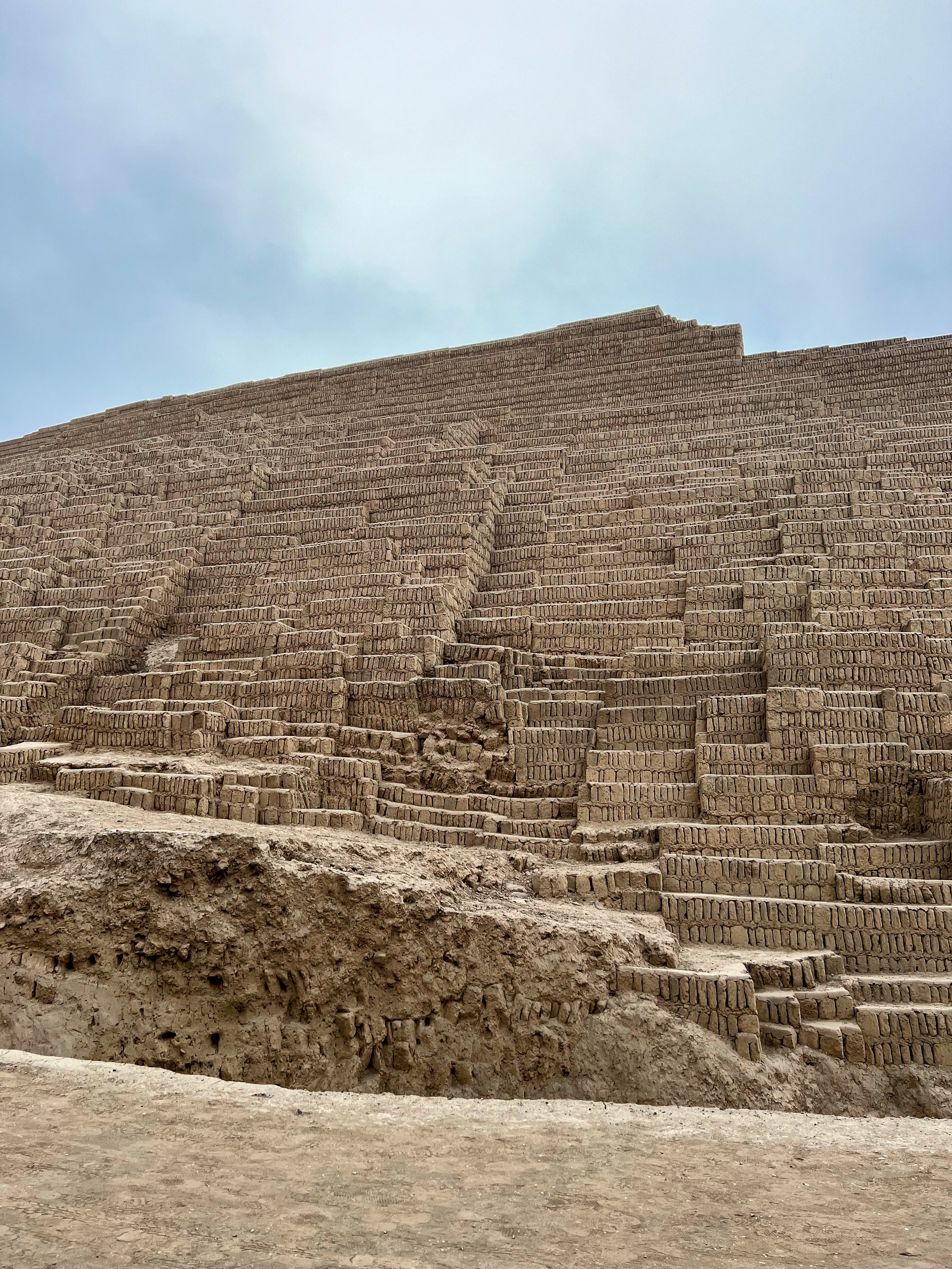
Huaca Pucllana is an archaeological site also located in the district of Miraflores belonging to the Lima culture of the Regional Development period (200-700 CE). For many years, the site was abandoned, used as a landfill, and even as a motocross track. Over the past 40 years, since 1981, it has been studied, conserved, and restored, becoming one of Lima’s main tourist attractions and the most studied archaeological site in the city.
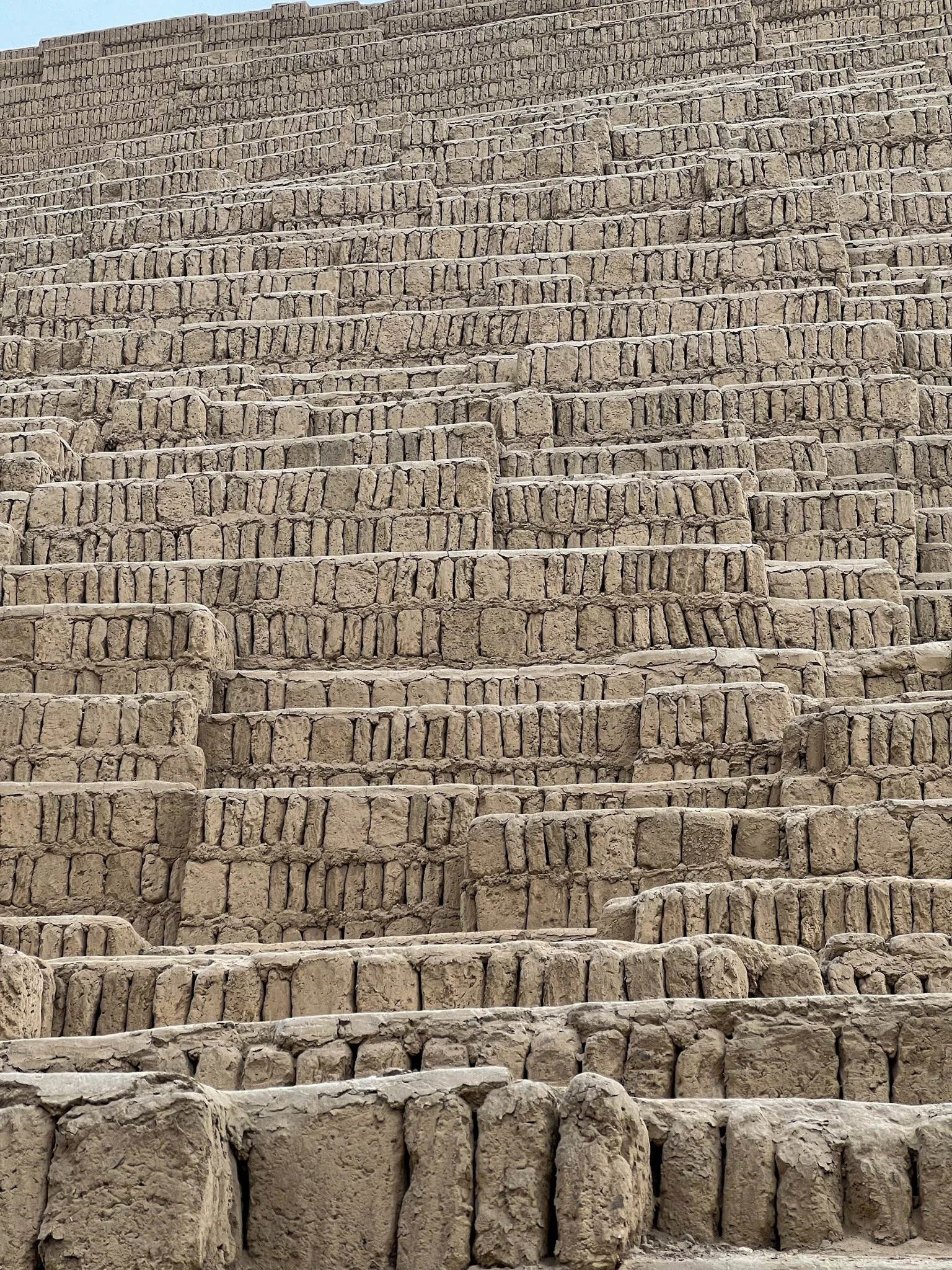
Constructed almost entirely from adobe bricks and filled with river pebbles and sand, it includes a 25-meter-tall pyramid, a series of courtyards, plazas, and chambers. The site also features an exhibition hall, visitor circuits, and other attractions. Originally covering 18 hectares, the site now spans just six due to urban development in the mid-20th century, which led to the destruction of smaller pyramids and valuable archaeological evidence for the construction of homes, avenues, and parks.
The grand pyramid is the centerpiece of Huaca Pucllana, an elongated, stepped structure with zigzag ramps and yellow-painted courtyards. It was built using an anti-seismic technique called "librero," where adobe bricks were placed vertically with small gaps between them, providing stability against earthquakes. Over time, renovations often included rituals like human sacrifices and the breaking of ceremonial vessels, infusing the site with sacred significance.
Hello, World!
Day 2
Historic Centre
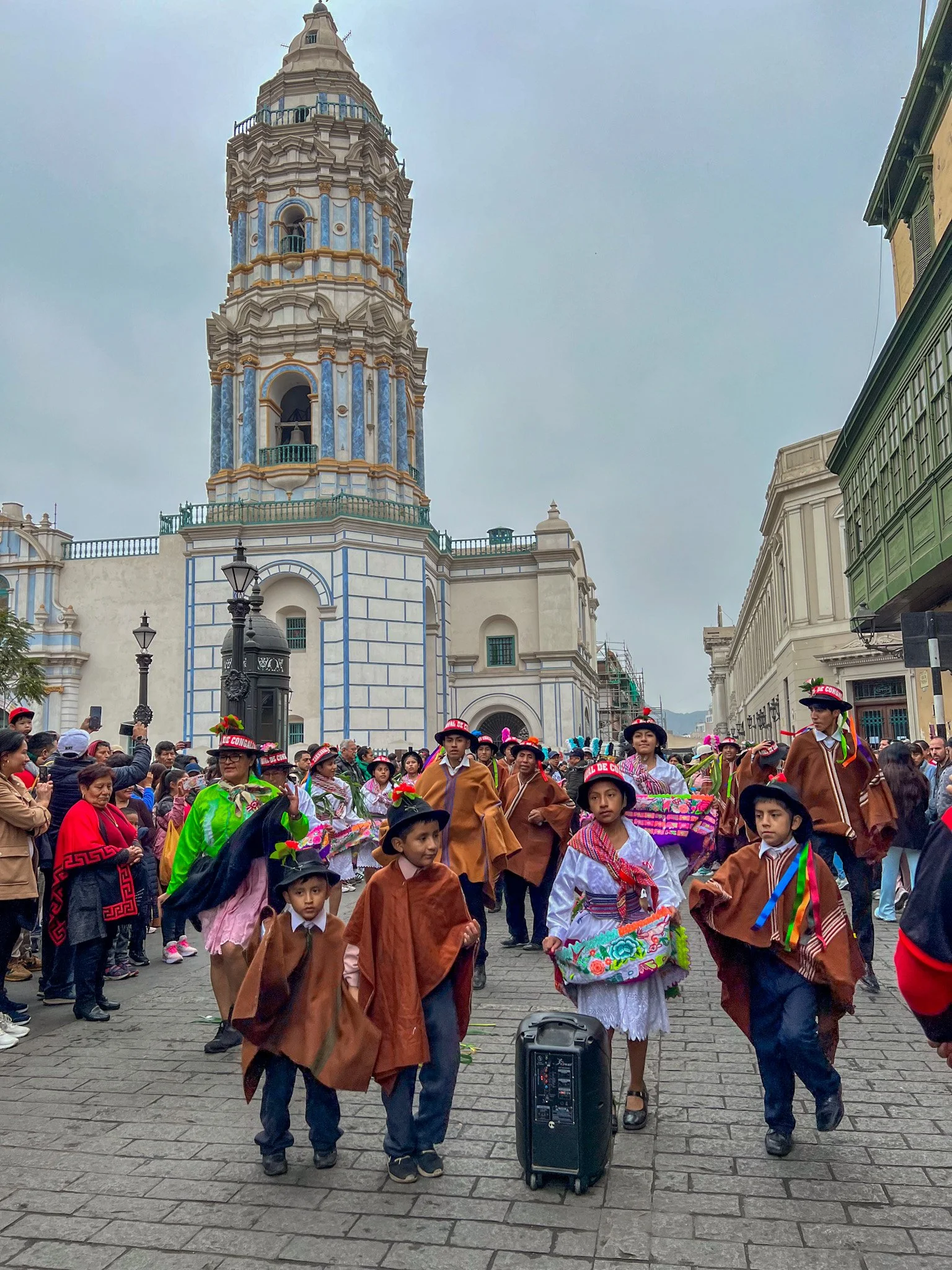
We reserved our second day in Lima to explore the Historic Centre before catching a late evening flight home. Our timing turned out to be both a blessing and a curse, as we were there during Peru's Independence Day. On one hand, we were treated to vibrant parades featuring lively local music and stunning traditional costumes. On the other hand, much of the city centre was closed off due to the parades and protests against the government, which significantly impacted our ability to explore some of the key sights. Despite the challenges, the energy and cultural displays made it a memorable experience.
For the best experience, I highly recommend taking a guided walking tour of Lima with GetYourGuide. The tour offers an immersive exploration of the city, starting with a local bus ride to downtown, followed by a stroll along Jirón de la Unión, a key pedestrian avenue. You'll visit iconic landmarks such as Plaza de Armas, the Government Palace, and the Cathedral, as well as the colorful Central Market, where you’ll learn about Peru’s rich culinary traditions. The tour also includes a visit to the historic Basilica of San Pedro, a UNESCO World Heritage site, and finishes with a refreshing Pisco Sour, giving you an authentic taste of Lima’s culture.
Plaza San Martín
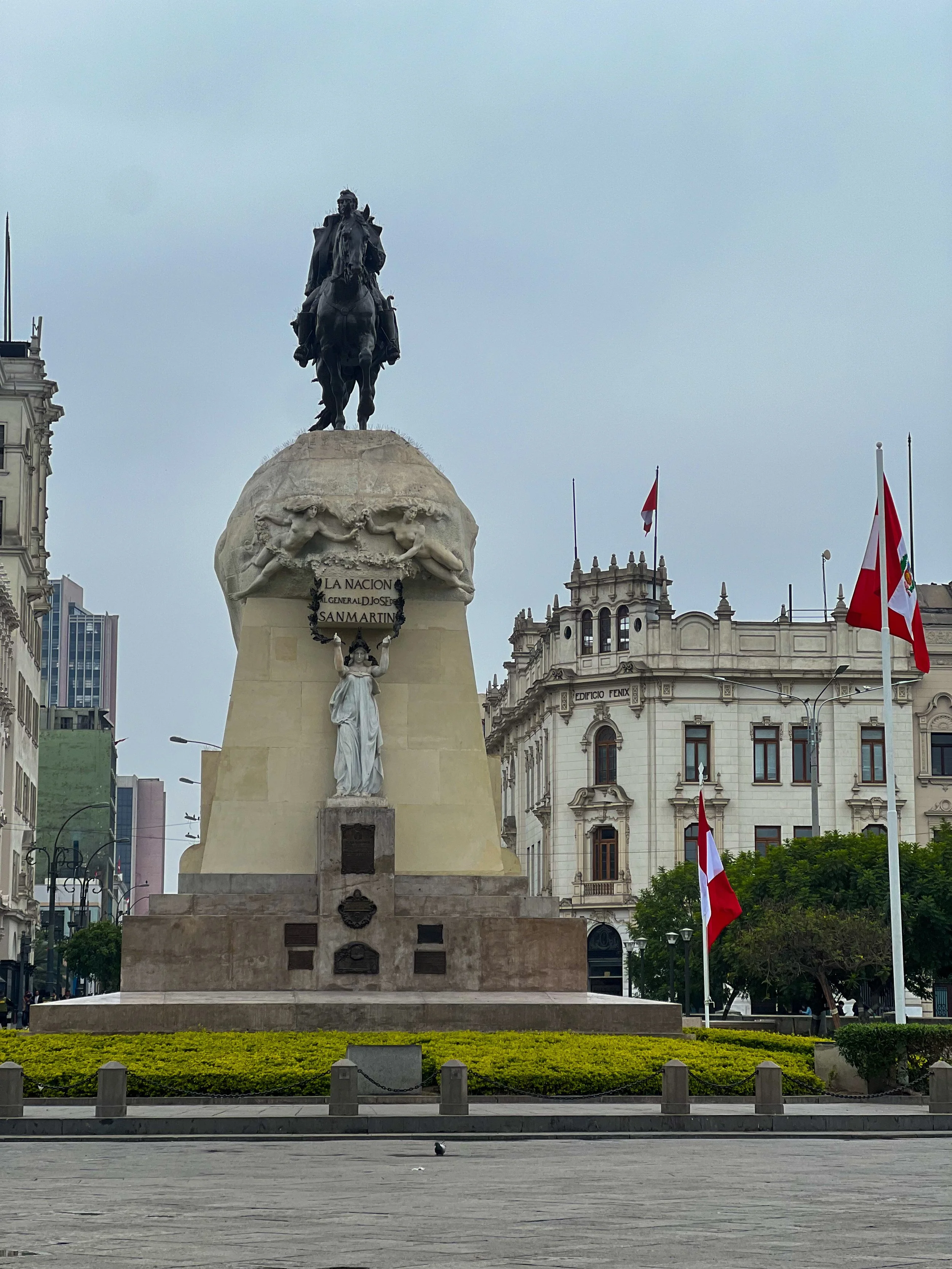
We grabbed a taxi from our hotel to start exploring the Historic Centre from Plaza San Martín. Declared a UNESCO World Heritage site in 1988, it is considered one of the most representative public spaces in the city. The plaza is connected to the Plaza Mayor de Lima by Jirón de la Unión, and its central monument honors José de San Martín, the liberator of Peru.
Historically, the area now occupied by Plaza San Martín was home to the smaller Plazas de la Micheo and Zela, and the San Juan de Dios church and hospital. Between 1850 and 1860, the area was transformed with the construction of two railway stations, which were later demolished in the early 20th century. The idea to create the plaza was approved by the Municipality of Lima in 1917, and the construction was carried out under the direction of Spanish urban planner Manuel Piqueras Cotolí. Notably, this space was the site of key historical events, such as the assassination of revolutionary Bernardo de Monteagudo in 1825 and Colonel Silvestre Gutiérrez in 1872.
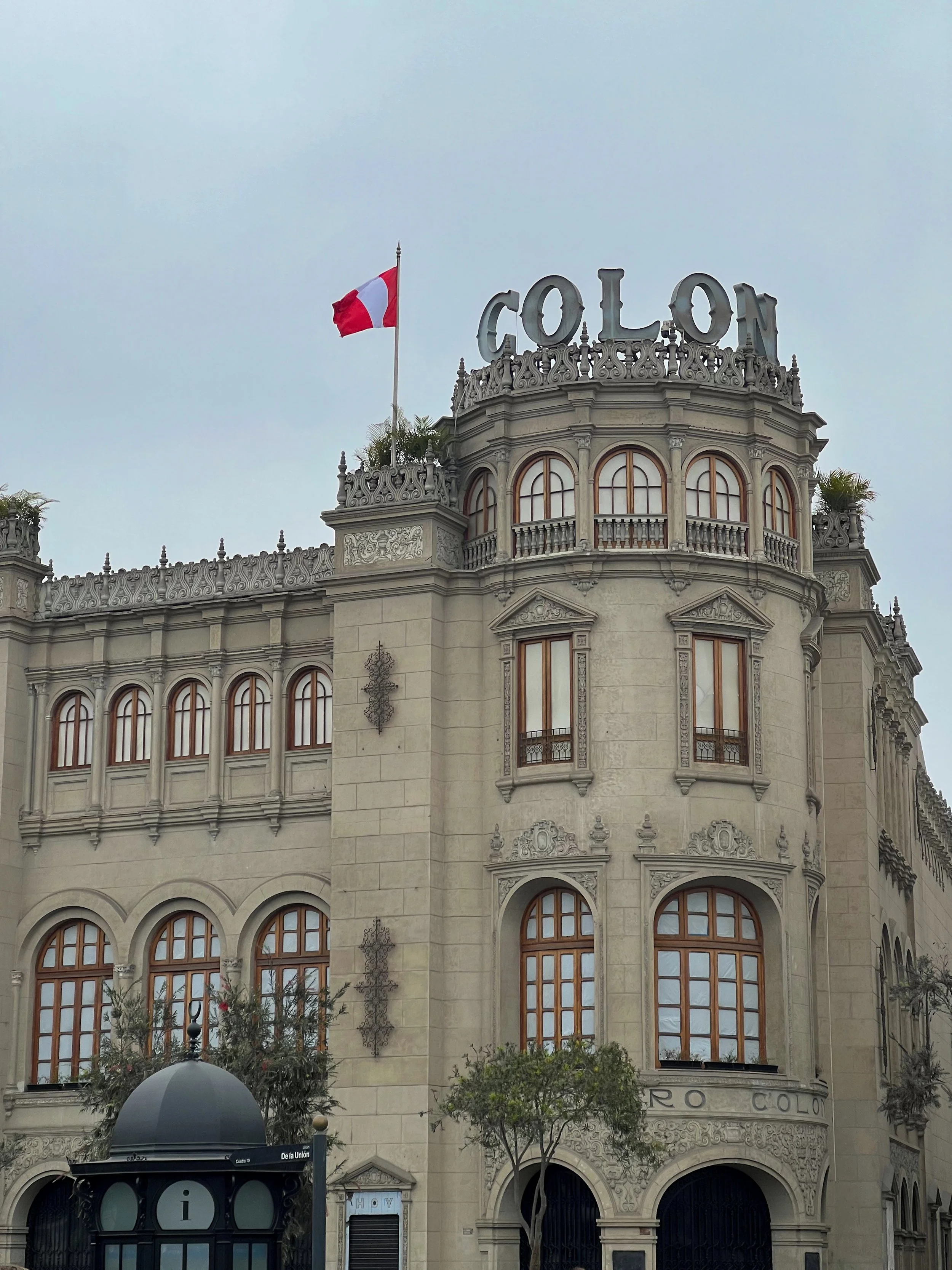
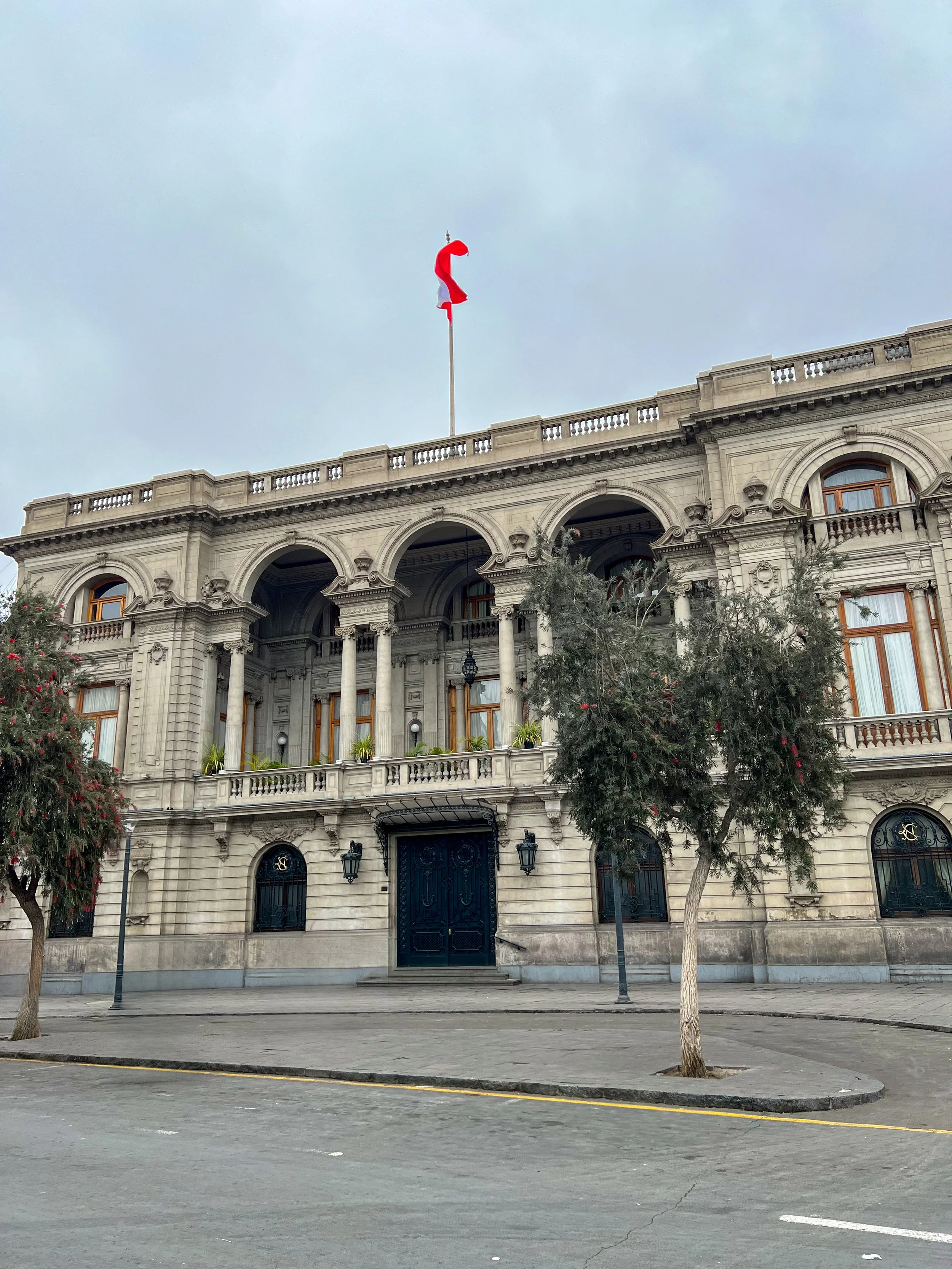
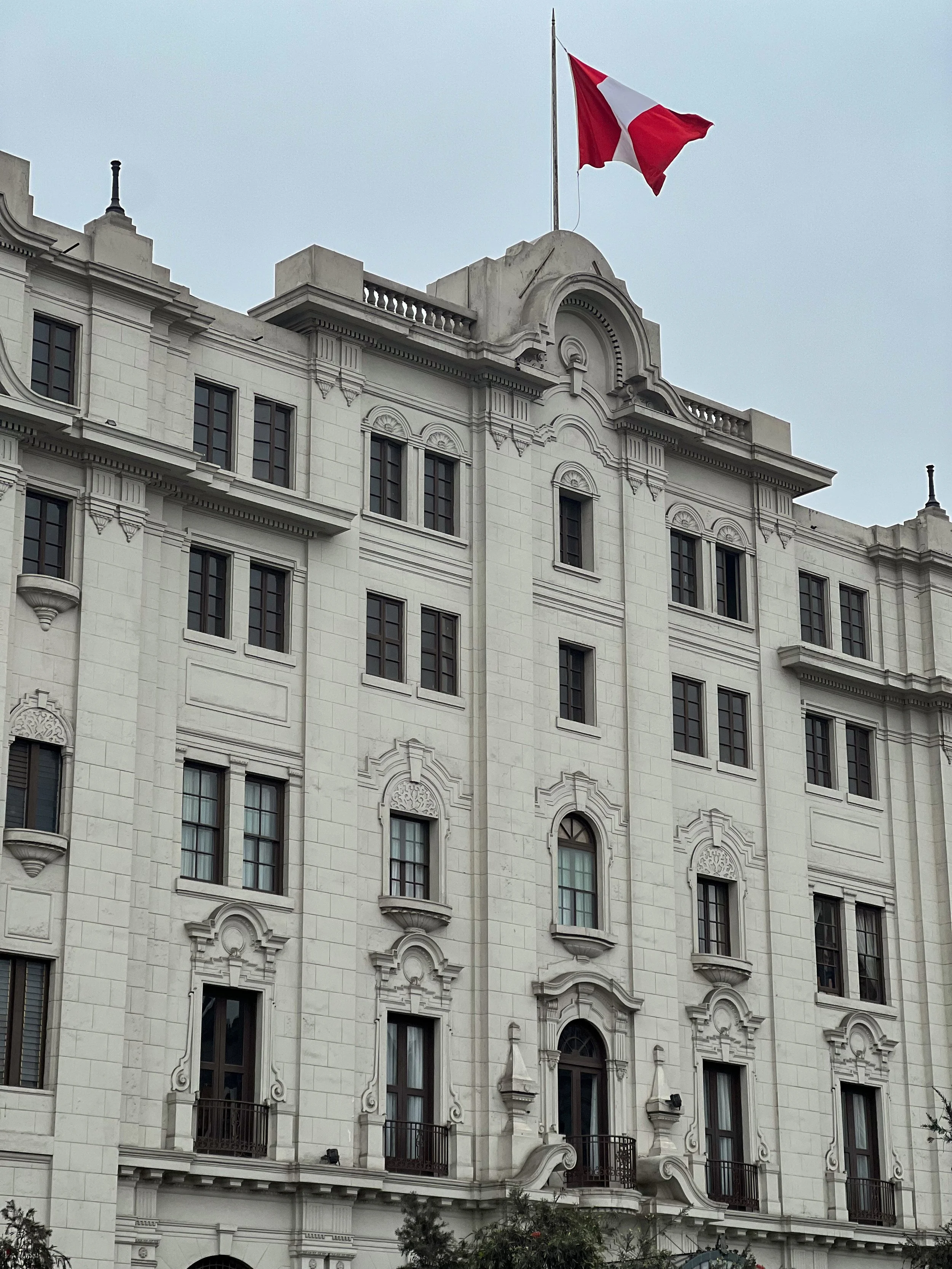
Inaugurated on July 27, 1921, during the centenary of Peru's independence, Plaza San Martín was designed with a blend of neobarroco architecture and neoclassical influences. Its layout includes marble benches, granite floors, water fountains, and beautiful gardens, all contributing to its grandeur. The square’s most iconic feature is the bronze monument to General San Martín, designed by Spanish sculptor Mariano Benlliure. The surrounding architecture, featuring buildings such as the Gran Hotel Bolívar and the Teatro Colón, gives the plaza a cohesive neohispanic style.
Jirón de la Unión
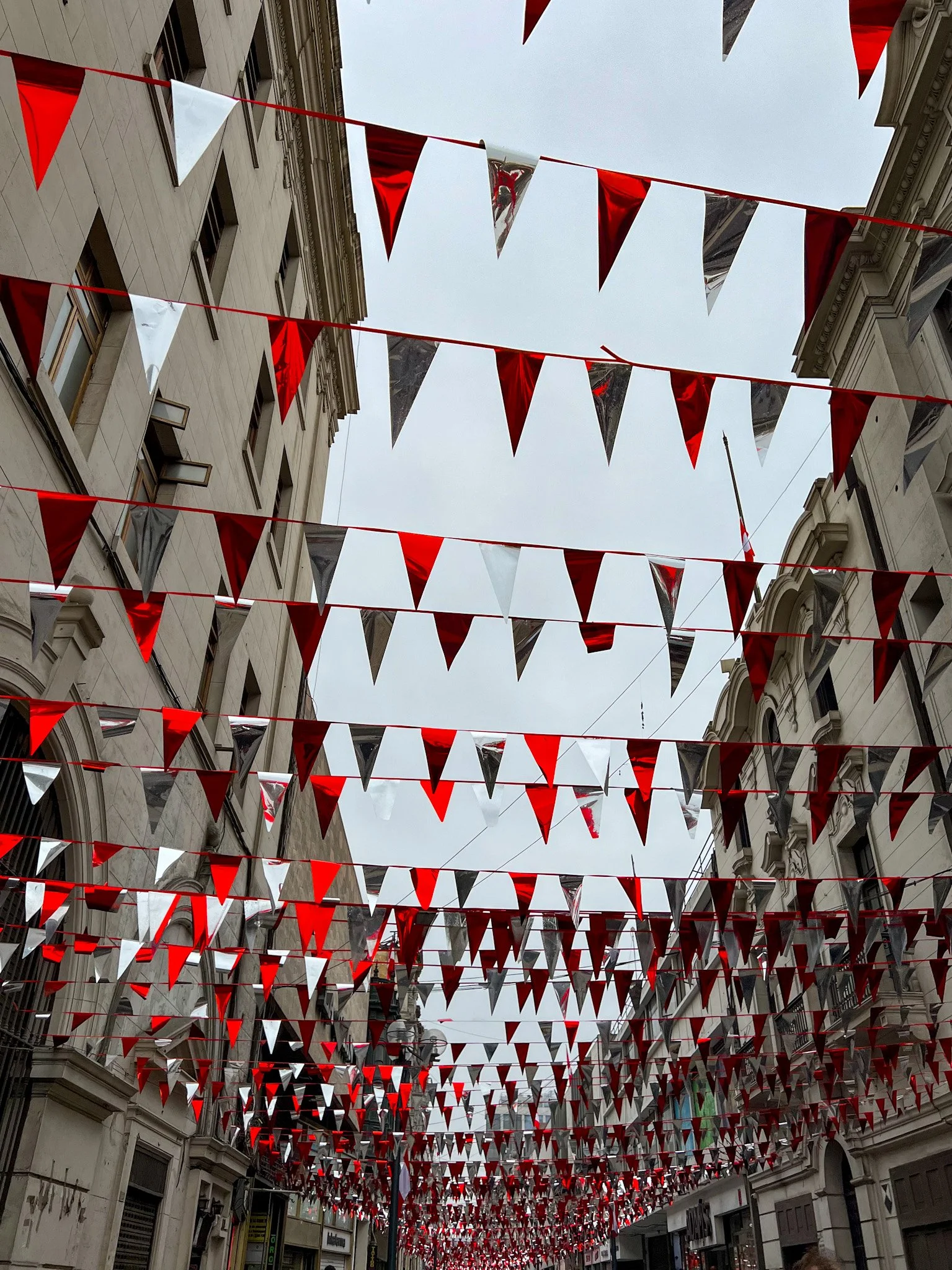
Starting in the north-western corner of Plaza San Martín, we next walked along Jirón de la Unión, one of the most prominent streets in the historic centre of Lima.
For many years, it was the city's most important and aristocratic avenue, where the elite and most influential figures of Lima would gather. As the city's historic center deteriorated over time, the Jirón lost its aristocratic aura, transforming into a bustling commercial hub. Since 2005, with the city's efforts to revitalise its historic centre, Jirón de la Unión has regained its role as one of Lima's main commercial streets, earning recognition as the sixth most expensive street in Latin America in 2013.
Originally established by Spanish conquistador Francisco Pizarro in 1535, the Jirón de la Unión became a key street in the city's layout. In the 19th century, it was named and became central to Lima’s urban development. By the early years of the Republic, it was home to cafés, restaurants, and high-end shops, attracting the upper class and becoming a social and cultural hub. Over time, especially in the 1980s, the street underwent a transformation, with part of it becoming pedestrian-only. However, due to economic decline and increased crime, the area became less frequented, leading to a period of decay. The area later saw a revival in the late 1990s, thanks to urban renewal efforts, and today, the Jirón de la Unión remains a bustling commercial street, although its aristocratic past is now a distant memory.
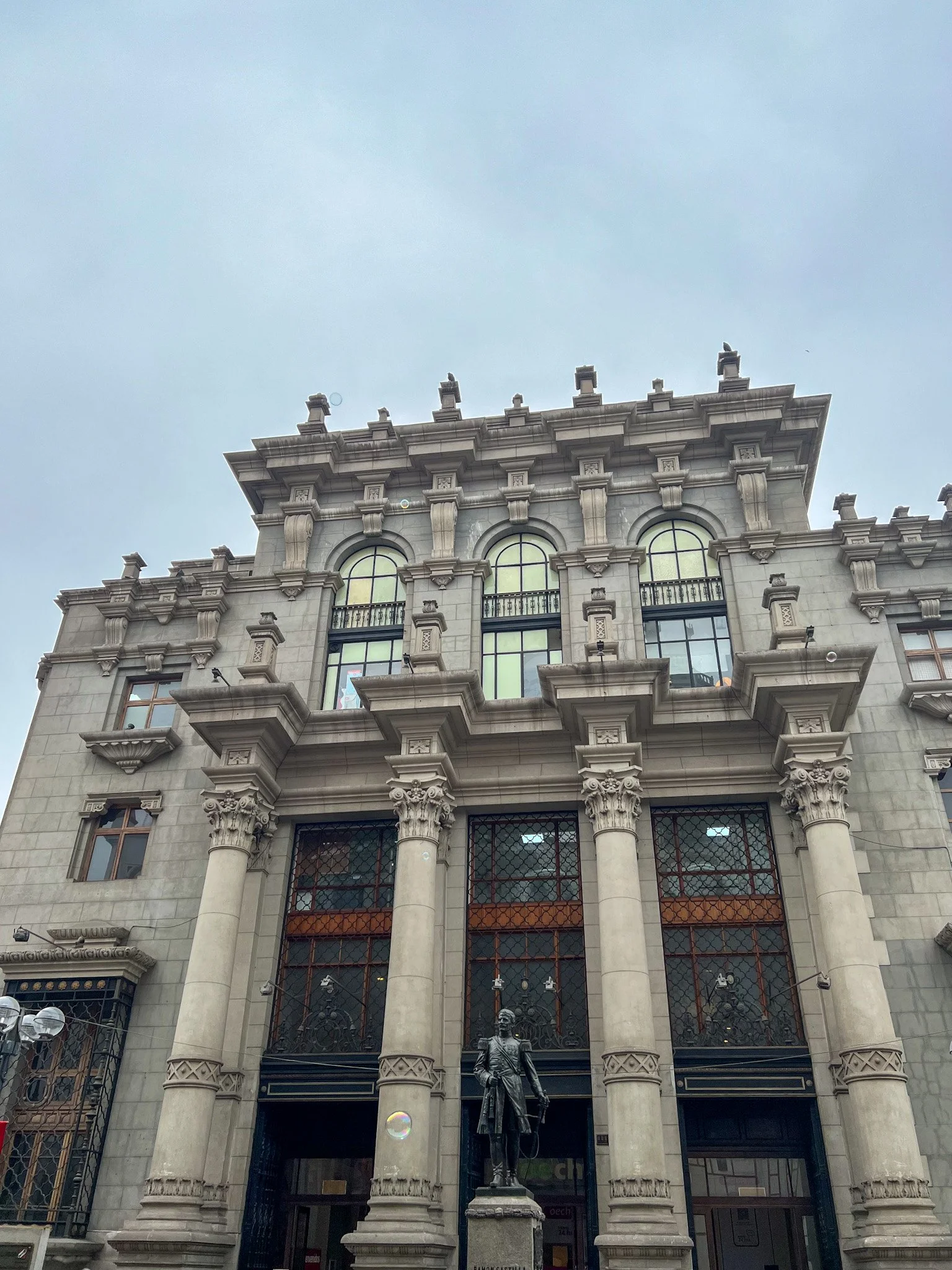
Basilica of Nuestra Señora de la Merced
On the right-hand side of Jirón de la Unión, you can find the Basilica and Priory of Nuestra Señora de la Merced, renowned for its Baroque Churrigueresque architectural style.
Built under the guidance of Friar Miguel de Orenes in 1535, it was initially established by the Mercedarians, a religious order that came to Peru to evangelise and educate the indigenous population. The church is dedicated to the Blessed Virgin Mary of Mercy, who is also the patroness of the Peruvian Armed Forces. Over the centuries, the church has undergone numerous reconstructions and modifications, including the addition of a tower in 1589, the rebuilding of the central nave in 1608, and extensive reconstructions after devastating earthquakes in the 17th and 18th centuries. Today, it stands as a symbol of Lima's colonial history, having been declared a national monument due to its cultural and historical significance.
The Basilica and Priory of Nuestra Señora de la Merced occupies a prominent position at the intersection of Jirón de la Unión and Jirón Antonio Miró Quesada. The church's interior boasts elaborate altarpieces, including the central image of the Virgin of Mercy, revered as the "heavenly protector of Lima." The convent is also home to several cloisters and a library containing colonial religious texts. Notably, the church houses relics of Friar Pedro Urraca, a Spanish missionary known for his penance and later beatification.
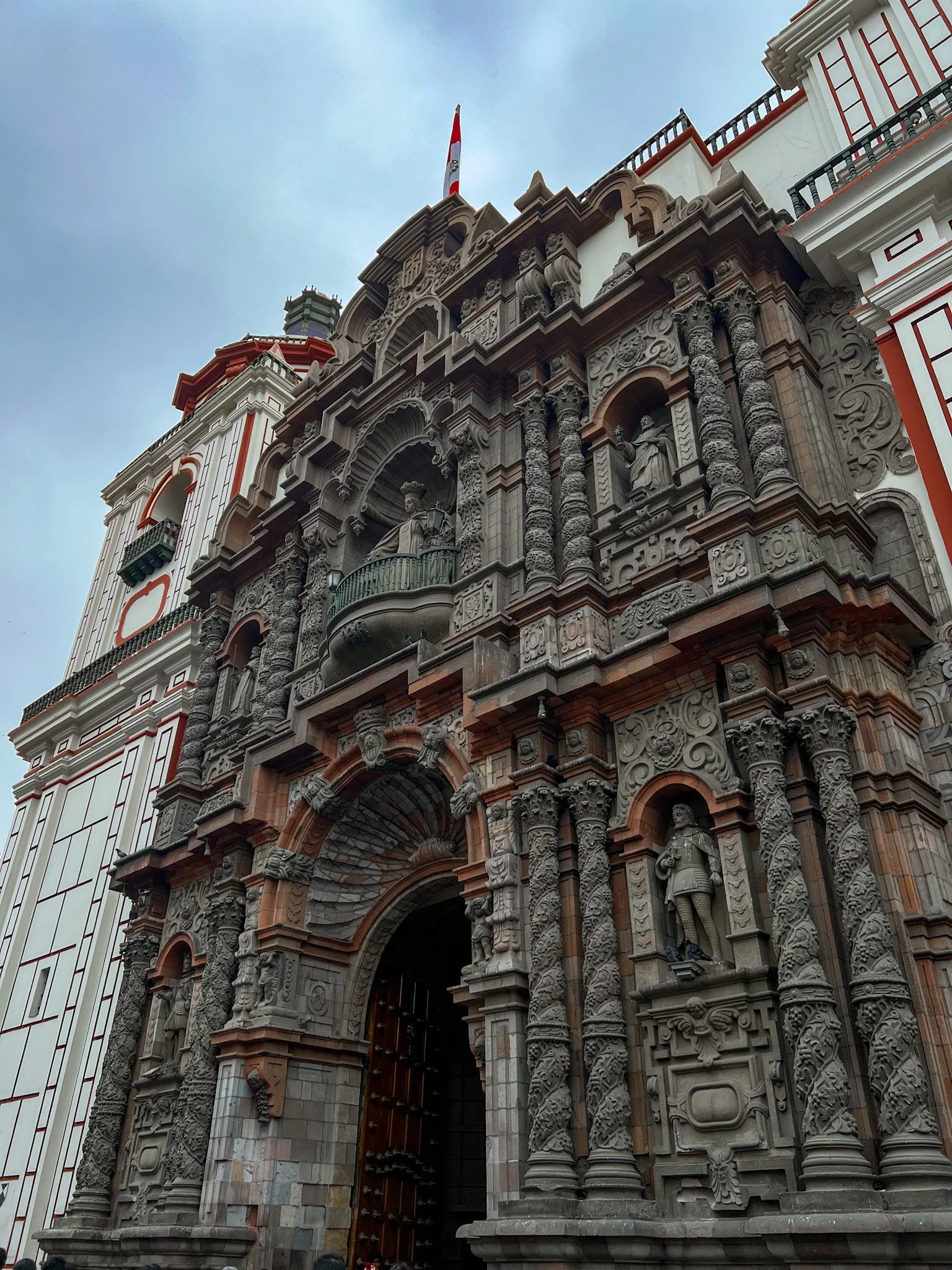

Plaza Mayor
At the end of Jirón de la Unión opens up the Plaza Mayor de Lima, also known as the Plaza de Armas. The square is surrounded by key landmarks such as the Government Palace, the Lima Metropolitan Cathedral, the Archbishop's Palace of Lima, the Municipal Palace, and the Palacio de la Unión.
The plaza holds great historical significance as it is considered one of the city's birthplaces, established during the foundation of Lima by the conquistador Francisco Pizarro on January 18, 1535. The layout of the city was planned according to a grid system, with the Plaza Mayor as the central point, reflecting Spanish colonial urban design. Over the centuries, the plaza has witnessed numerous important events, from the execution of heretics during the Inquisition to the proclamation of Peru's independence by José de San Martín in 1821.
Throughout its history, the Plaza Mayor has undergone several transformations. Initially, it served various functions, including as a market, bullfighting ring, and location for public executions. In the colonial era, a water fountain was built at its centre, replaced in 1651 by the current fountain, which still serves as the plaza's centrepiece.
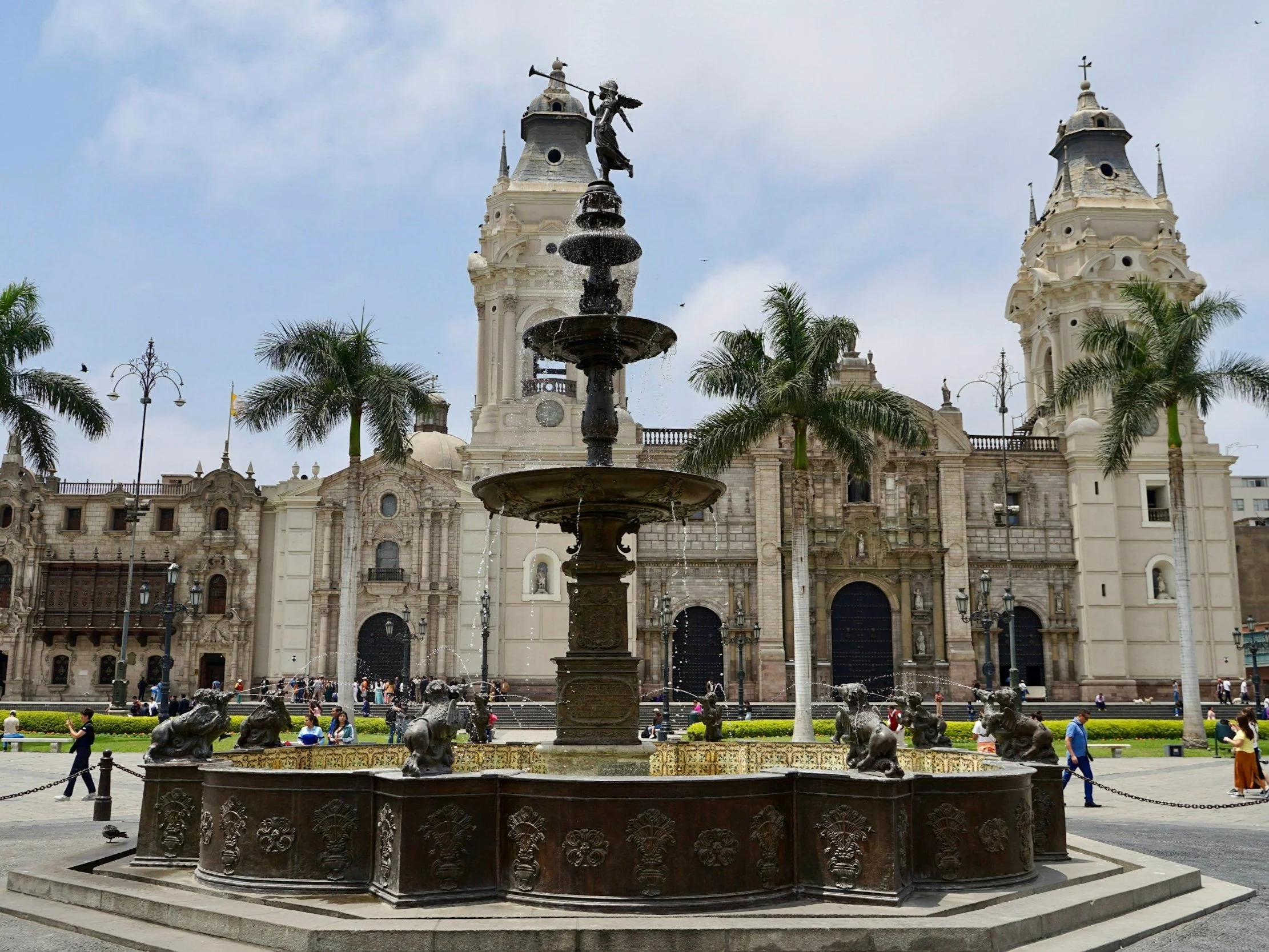
Metropolitan Cathedral & Government Palace
Surrounding the square is the Basilica Metropolitan Cathedral of Lima, a Roman Catholic cathedral dedicated to St. John Apostle and Evangelist. The third and current cathedral was constructed between 1602 and 1797, replacing earlier churches that were built on the site of the Inca shrine of Puma Inti. Francisco Pizarro laid the first stone in 1535, and the initial church was completed in 1538. After the creation of the Diocese of Lima in 1541, a new cathedral was commissioned, with significant contributions from Francisca Pizarro Yupanqui, daughter of the founder. The cathedral, which was inaugurated in 1552, underwent several changes over the years and became a prominent religious and historical symbol in Lima.
On the northern side of the square you can also find the Government Palace, serving as the official residence of the president and the seat of the executive branch of the Peruvian government. Built initially by Francisco Pizarro in 1535, the palace has undergone several renovations and expansions, particularly during the 20th century under the direction of architects Claude Antoine Sahut Laurent and Ricardo de Jaxa Malachowski. The palace's architecture blends Neo-Plateresque and Neo-Baroque styles. Historically, the building has evolved from Pizarro’s residence to the Viceregal Palace and, after Peru's independence in 1821, the official government centre. It has been the site of numerous important events, including General José de San Martín's declaration of Peru's independence.

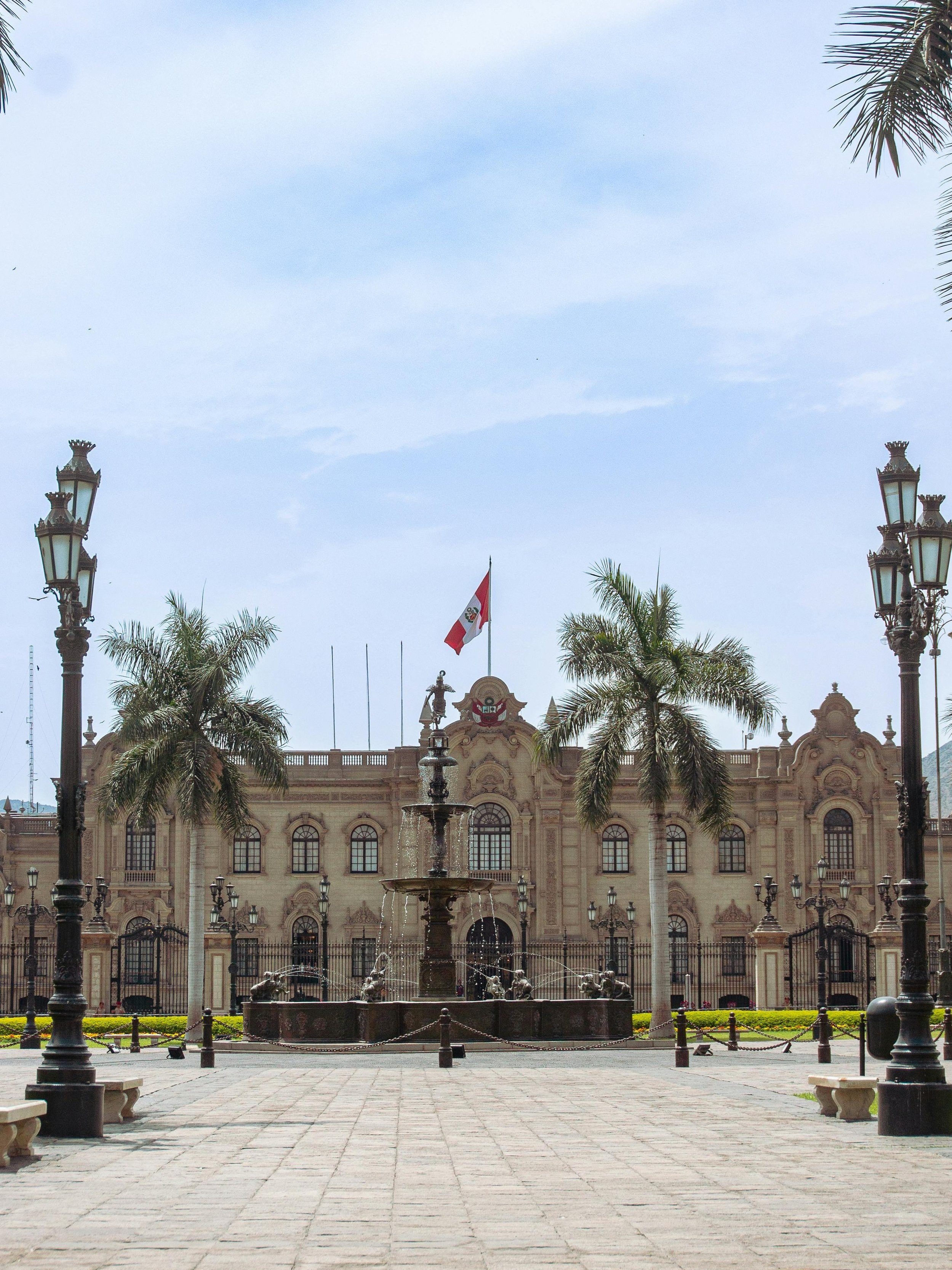
Basilica and Convent of San Francisco
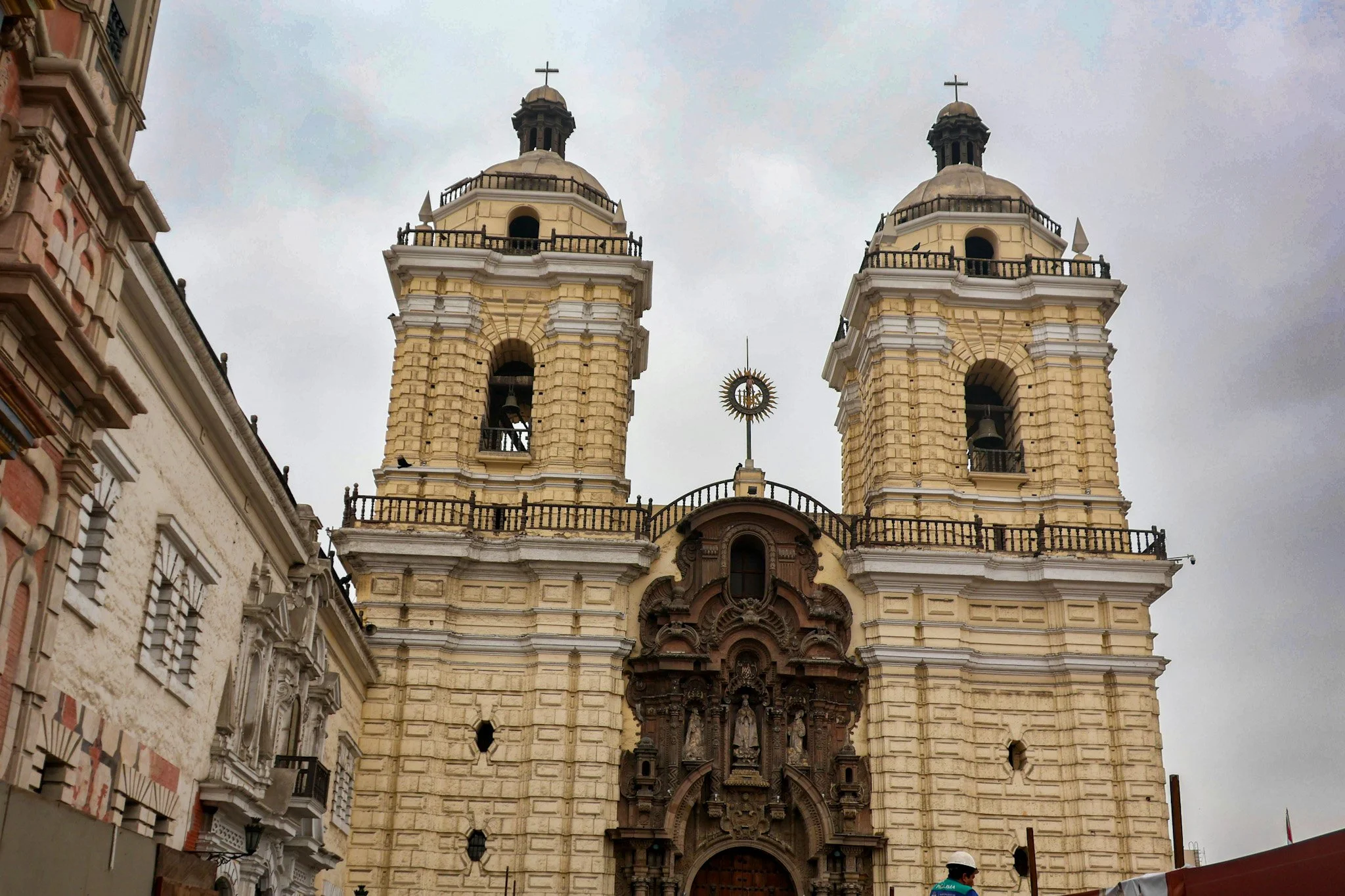
Leaving the square behind and heading north, we reached the Basilica and Convent of San Francisco. It is a significant part of Lima's colonial heritage and holds the distinction of being one of the most important architectural monuments of the Spanish colonial era.
The complex, which includes the church, convent, and catacombs, reflects the grandeur of 17th-century architecture and artistry. Its majestic Baroque façade, adorned with rhythmic bossage and a wooden balustrade, is a testament to the craftsmanship of the time. Inside, the convent houses numerous treasures, including intricate Sevillian tiles, beautiful altarpieces, and works from the Lima and Cusco schools. Notably, the basilica's catacombs were once Lima's main burial site, further enriching the building’s historical significance.
Located at the intersection of Jirón Ancash and Jirón Lampa, the Church of San Francisco de Jesús is not just an architectural gem but also a site steeped in history. It was initially founded in the 16th century by the Franciscan Order and has undergone numerous reconstructions, notably after an earthquake in 1655 that devastated the original structure. Over the centuries, the church and convent expanded, with the Viceroy of Peru commissioning renovations that transformed the space into a center of art and religion. The site became a cultural hub and is recognized as a UNESCO World Heritage site since 1991.
Convent of Santo Domingo
Another convent worth visiting in the Historic Centre is the Convent of Santo Domingo, also known as the Basilica and Maximus Convent of Nuestra Señora del Rosario. Founded in the 1530s under the patronage of Our Lady of the Rosary, it holds great historical and cultural importance as it was the birthplace of the University of San Marcos, the first university in Peru and the Americas.
The convent has undergone several reconstructions due to devastating earthquakes, with significant rebuilding efforts after the 1678, 1687, and 1746 earthquakes. Its baroque and rococo architectural features, especially the bell tower completed in 1766, have made it a distinct symbol of the city. The basilica, which was elevated to Minor Basilica status in 1930, houses the relics of the beloved saints St. Rose of Lima, St. Martin de Porres, and St. John Macias, with St. Rose’s tomb being one of the most visited and revered spots in the convent.
Inside, the convent is filled with historical and religious treasures. The church’s interior features three naves adorned with altarpieces dedicated to various saints, including the notable altarpiece dedicated to the Peruvian saints in the right transept. The convent also boasts an impressive library with over 25,000 books, including rare incunabula, and cloisters decorated with Sevillian tiles and oak-carved ceilings. The Chapel of St. Martin de Porres and the tomb of St. Rose of Lima are key spiritual points of interest, alongside the second cloister and the marble sculpture of Christ of the Column.

After an unforgettable stay in Lima, it was time to head to the airport and catch our flight back home. Spending two days in the city had offered the perfect opportunity to experience the essence of Peru’s vibrant capital. From strolling along the picturesque Malecón in Miraflores to marvelling at the historical treasures in the heart of the city, Lima effortlessly blends its coastal charm with a rich cultural and historical tapestry.
While Lima often serves as a prelude or final stop to iconic destinations like Machu Picchu and the Sacred Valley, its unique combination of modern vibrance and historical depth ensures it’s much more than just a stopover. Immerse yourself in the sights, flavours, and stories of Lima—it’s a journey that sets the stage for unforgettable Peruvian adventures.
Some links in this post are affiliate links, which means that if you buy through them, we’ll receive a small commission. This will never cost you more and in many cases you will receive a special discount.
As always, all opinions are mine. We appreciate your support!


If you’re planning a trip to Peru, check out this 8-day itinerary that captures the best of Cusco, the Sacred Valley, and Machu Picchu, along with a taste of Lima’s vibrant culture.
Begin your adventure in Cusco, the historic capital of the Inca Empire, where you’ll explore ancient ruins, bustling markets, and charming neighbourhoods. Venture into the Sacred Valley, visiting picturesque villages, stunning salt mines, and fascinating Incan sites before embarking on the ultimate journey to Machu Picchu, one of the New Seven Wonders of the World.
After soaking in the magic of the Andes, fly to Lima, where you’ll experience the coastal capital’s rich history, culinary delights, and breathtaking ocean views.
This thoughtfully planned itinerary ensures you experience the highlights of Peru while leaving room to savor its unique culture and natural beauty!