
Discovering Salamanca: must see highlights of Spain's Golden City
Nestled in the heart of Spain, Salamanca is a city full of history, culture, and stunning architecture. As one of Spain’s most beautiful cities and a UNESCO World Heritage Site, Salamanca is famous for its golden sandstone buildings, lively plazas, and rich heritage.
From the majestic Plaza Mayor, hailed as one of the most breathtaking squares in Europe, to the iconic University of Salamanca, where scholars have gathered for nearly 800 years, every corner of this city tells a story.
This comprehensive guide will take you through all the highlights and must-see attractions, including the intricate beauty of the Casa de las Conchas, the grandeur of the New and Old Cathedral, and the millennia-old arches of the Roman Bridge.
How to arrive in Salamanca
Salamanca is well-connected and easily accessible from various cities in the country, making it a perfect destination for travellers seeking a blend of history, culture, and charm. Whether you're coming from Madrid, Lisbon, or other major cities, here's how to get to Salamanca by bus or train:
By train: Salamanca has a central train station, Estación de Salamanca, which connects the city to several regions in Spain. The high-speed AVE trains from Madrid to Salamanca typically take around 1.5 to 2 hours, providing a quick and comfortable journey. From Madrid’s Chamartín or Atocha stations, you can hop on a direct train. If you're traveling from other cities, you may need to change trains at a major hub like Madrid or Valladolid, but the train routes are reliable and scenic. You can buy train tickets at renfe.com.
By bus: For a more budget-friendly option, buses are an excellent choice. ALSA, Spain’s largest bus company, operates frequent routes connecting Salamanca to major cities across Spain, including Seville, and Barcelona. Monobus also has direct buses departing from Madrid Estación Sur Méndez Álvaro, Moncloa or Barajas Airport, taking approximately 2.5 to 3 hours. The bus station in Salamanca is centrally located, just a short walk from the city centre, making it a convenient option for travelers.

If you're looking for an immersive way to explore Salamanca and the nearby gems of Spain without worrying about public transport, consider booking the guided tour to Ávila and Salamanca with GetYourGuide. This option offers a seamless and enriching experience, covering two stunning UNESCO World Heritage Sites in a single day.
The tour begins in Salamanca to explore its impressive Baroque Plaza Mayor and its majestic cathedral. Next, you'll visit Ávila, where you'll marvel at the well-preserved Medieval Walls, San Vicente's Shrine, and the Cathedral of Ávila.
If you’re already in Salamanca, the Salamanca sightseeing walking tour with GetYourGuide is another great way to delve into the city’s rich history and stunning architecture.
Starting at Plaza Mayor in front of the Tourist Office, this guided tour takes you through Salamanca’s most iconic landmarks, including the House of Shells, the Pontifical University, and the breathtaking Clergy. You’ll also explore the University of Salamanca, with access to its remarkable 16th-century classroom, the famous library, and the enchanting "Sky of Salamanca." The tour concludes with visits to the Old and New Cathedrals, offering an intimate look at these architectural masterpieces.
History of Salamanca
Salamanca is one of the Spain’s most historic and culturally significant cities. Its origins date back to pre-Roman times, with evidence of early settlements by the Vaccaei, an ancient Celtic tribe. However, Salamanca truly rose to prominence during the Roman era, becoming an important hub due to its strategic location on the Via de la Plata, a key trade route connecting northern and southern Spain. The Roman Bridge, still standing today, is a testament to this period and a symbol of the city's enduring legacy.
During the early medieval period, Salamanca faced a series of invasions and transformations, including Visigothic and later Moorish rule. By the 11th century, the city was reclaimed by Christian forces during the Reconquista, marking the start of a golden age. Under King Alfonso IX in 1218, the University of Salamanca was established, making it one of the oldest universities in Europe. The university became a beacon of intellectual and cultural advancement, drawing scholars and students from across the continent and significantly influencing European thought during the Renaissance.
The 15th and 16th centuries marked Salamanca's peak of prosperity, as its university thrived, and the city’s architectural identity took shape. This era saw the construction of many of its most iconic buildings, including the New Cathedral, and the Casa de las Conchas with its unique shell-adorned façade.
The city’s use of Villamayor stone, which gives Salamanca its golden glow, became a defining characteristic of its architecture. Salamanca’s role in Spain’s Golden Age also extended to literature, with figures like Miguel de Cervantes drawing inspiration from the city.
Despite its historical prominence, Salamanca experienced decline during the 17th and 18th centuries due to political and economic changes. However, its heritage remained intact, and in 1988, UNESCO designated its historic center a World Heritage Site, recognizing its unparalleled blend of history, culture, and architectural splendor. Today, Salamanca continues to celebrate its rich past while welcoming visitors and students from around the world, preserving its legacy as a city of learning, beauty, and resilience.
What to see in Salamanca
Plaza Mayor
All tourist attractions in Salamanca’s Old Town are located within walking distance, so I recommend starting your visit at the Plaza Mayor, one of the highlights of the city.
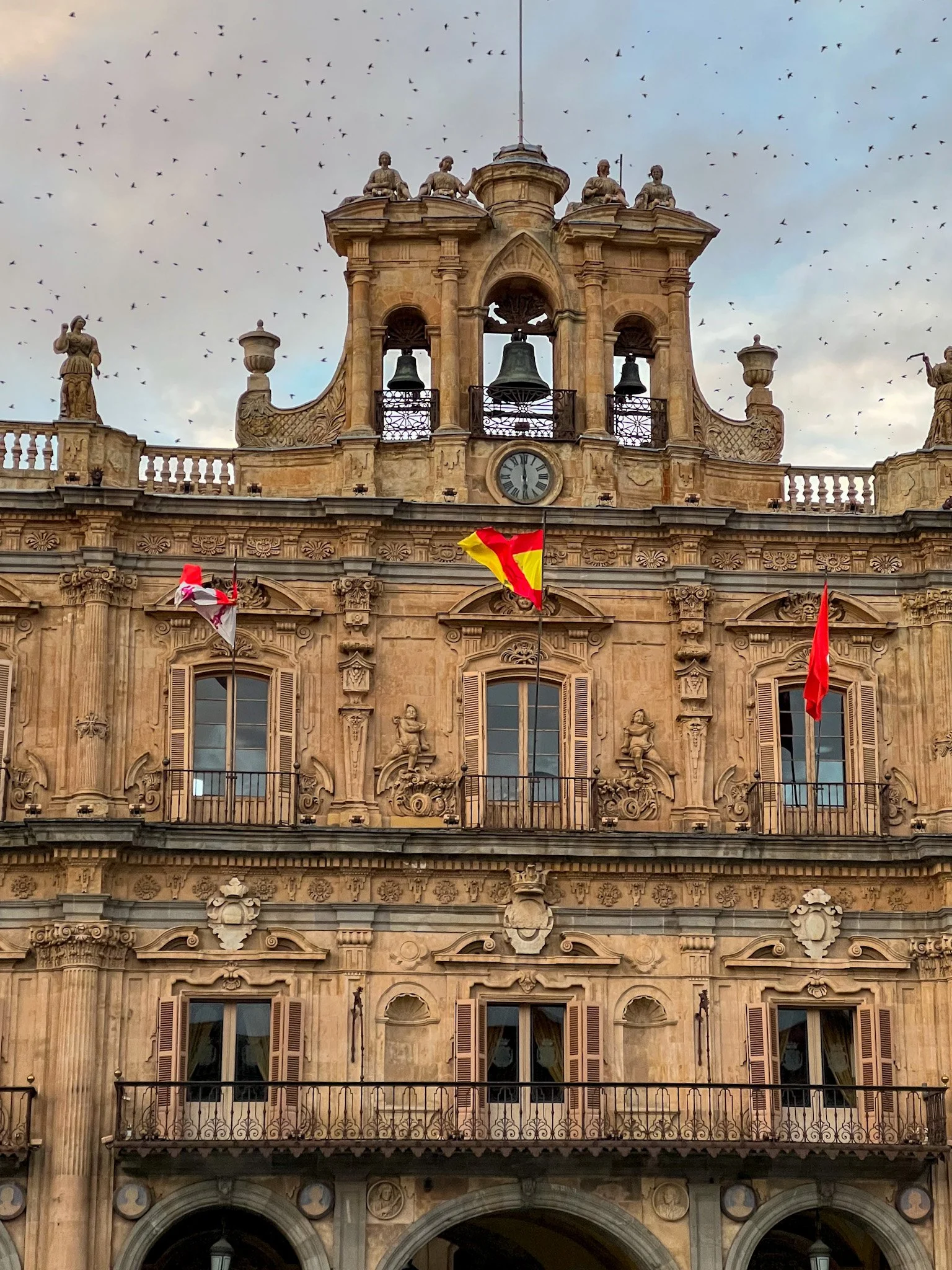
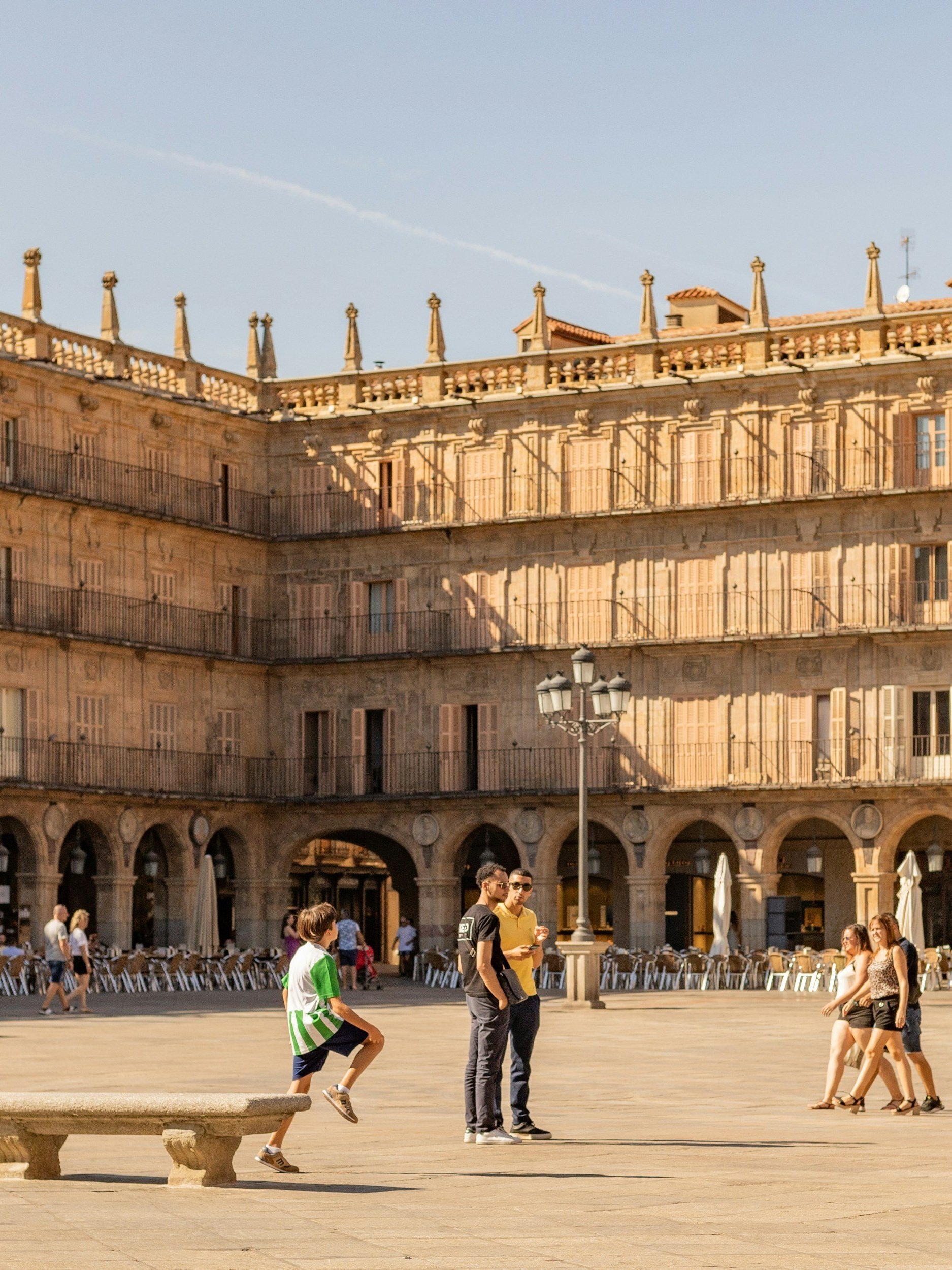
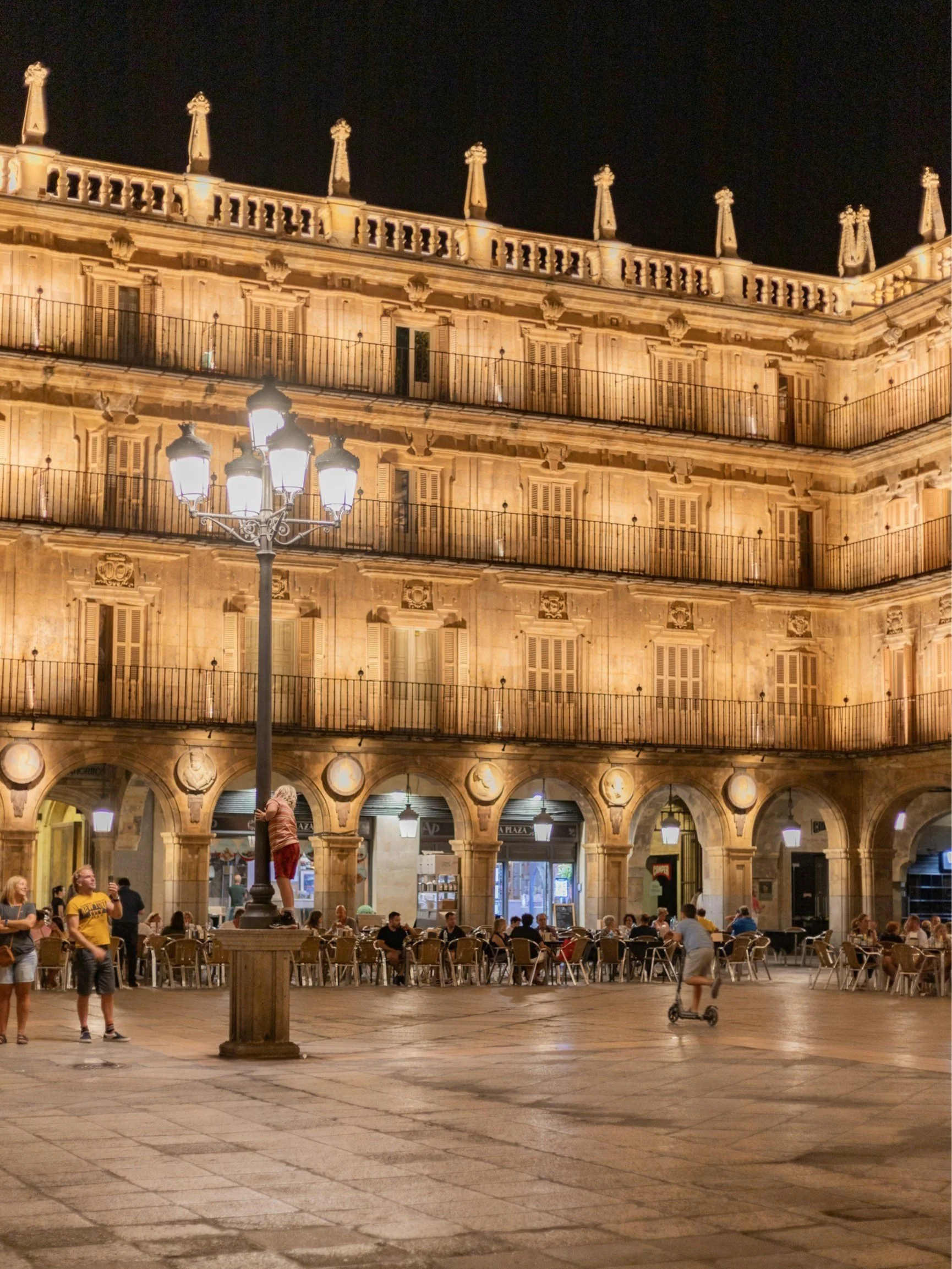
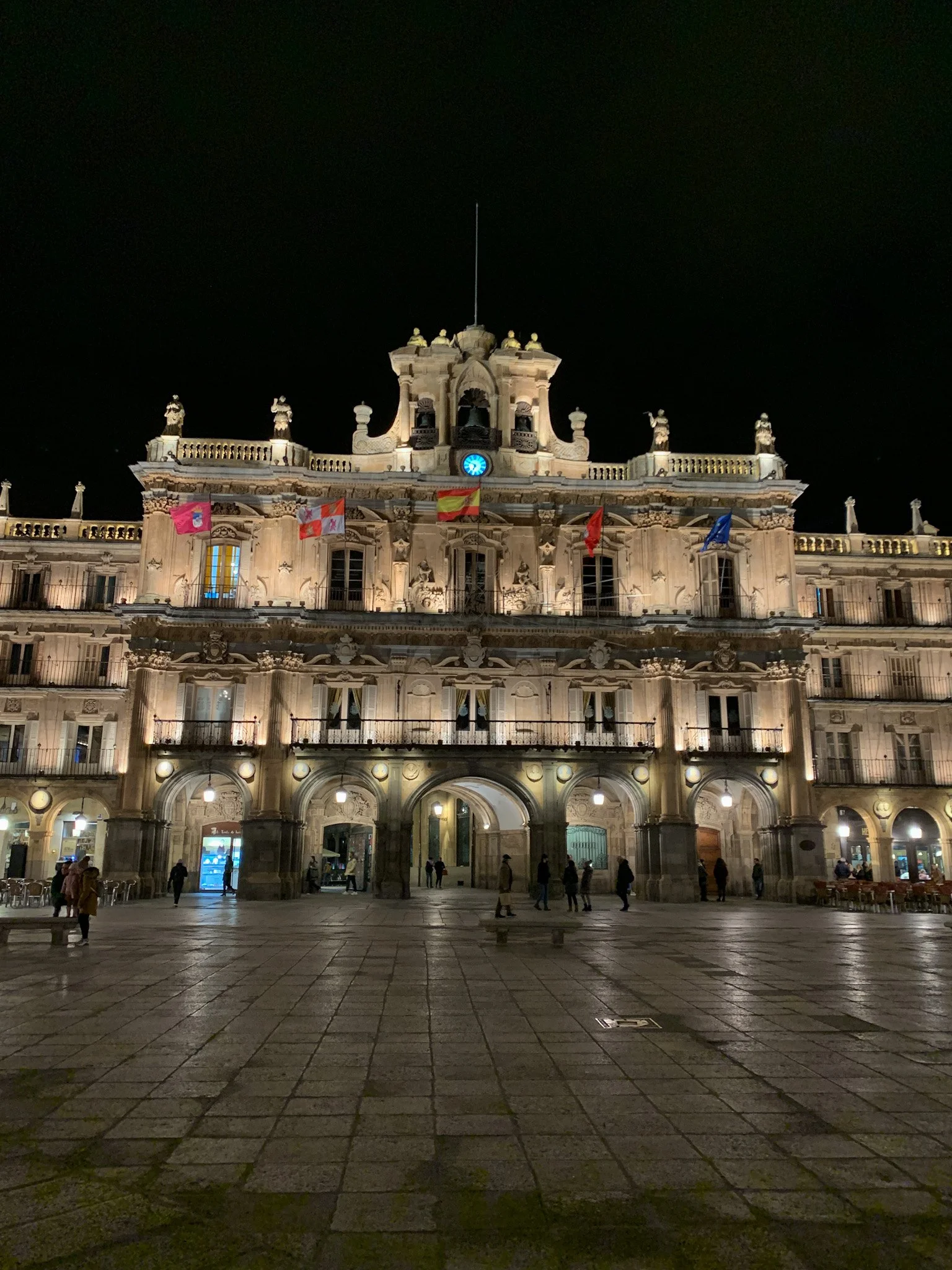
Built between 1729 and 1756 in Baroque style, the square is the heart of the city's social life. Designed by architect Alberto Churriguera, it was inspired by Madrid’s Plaza Mayor but boasts more harmonious proportions and the use of golden Villamayor stone. The plaza is a perfect example of a grand urban square, originally a much larger space known as Plaza de San Martín from the 15th century.
The construction was completed in three phases, with the first two pavilions—the Pabellón Real and Pabellón de San Martín—built between 1729 and 1735. The final phase, including the Casa Consistorial, was finished in 1755, although the towers of the Consistorial remain unfinished.
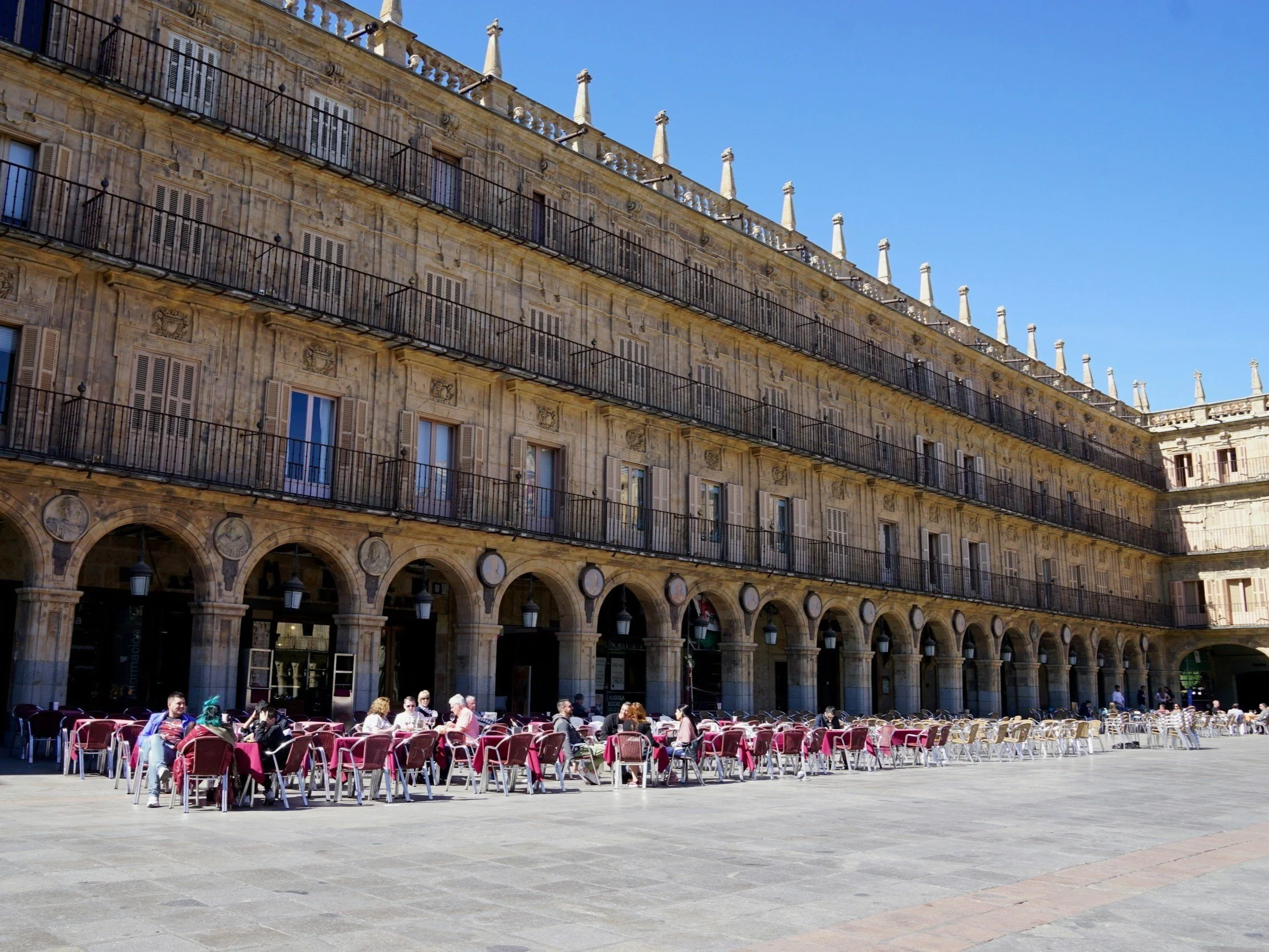
A National Monument since 1935, the Plaza's iconic design features 88 arches with medallions depicting notable figures, creating an awe-inspiring visual effect. Over time, the plaza lost its gardens and kiosk, becoming the open space it is today.
Today, the Plaza Mayor is filled with lively terraces, cafes, and cultural events, making it a vibrant gathering place. Miguel de Unamuno famously described it as "an irregular quadrilateral, but astonishingly harmonious," capturing its unique charm.
Palacio de Monterrey
After exploring the Plaza Mayor, exit through the south-western arches and walk down Calle del Prior until you reach Palacio de Monterrey, a striking example of Plateresque architecture in the heart of Salamanca.
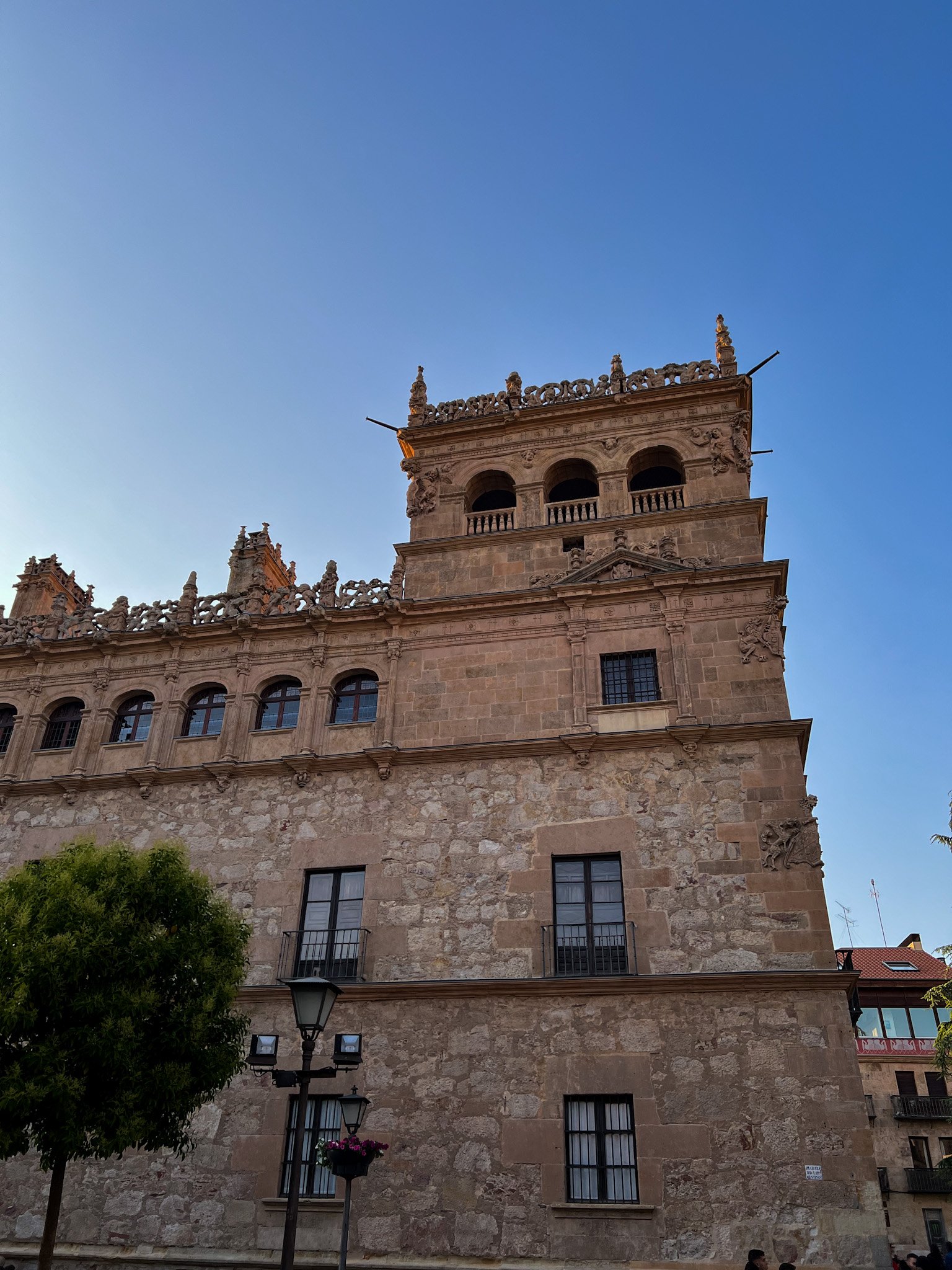
Built in 1539 by Don Alonso de Zúñiga, the III Count of Monterrey, the palace was designed by Rodrigo Gil de Hontañón and Fray Martín de Santiago. Though it was intended to be a grand square structure with towers and a central courtyard, only the southern wing was completed, leaving an unfinished yet magnificent legacy.
Its ornate façade is adorned with sculptural details, including mythical creatures and heraldic shields representing the Zúñiga family. The Plateresque style, known for its intricate decoration, is evident throughout, especially in the windows and balconies.
Declared a National Historic Monument in 1929, the palace houses an impressive collection of art, including works by José de Ribera and Salvator Rosa. Since 2018, it has been open to the public as a museum, offering visitors a glimpse into the opulence of Spanish nobility and the architectural beauty of the Renaissance period. You can purchase a visit to the Monterrey Palace, including an audio-guided tour, through GetYourGuide.
Calle de la Compañía
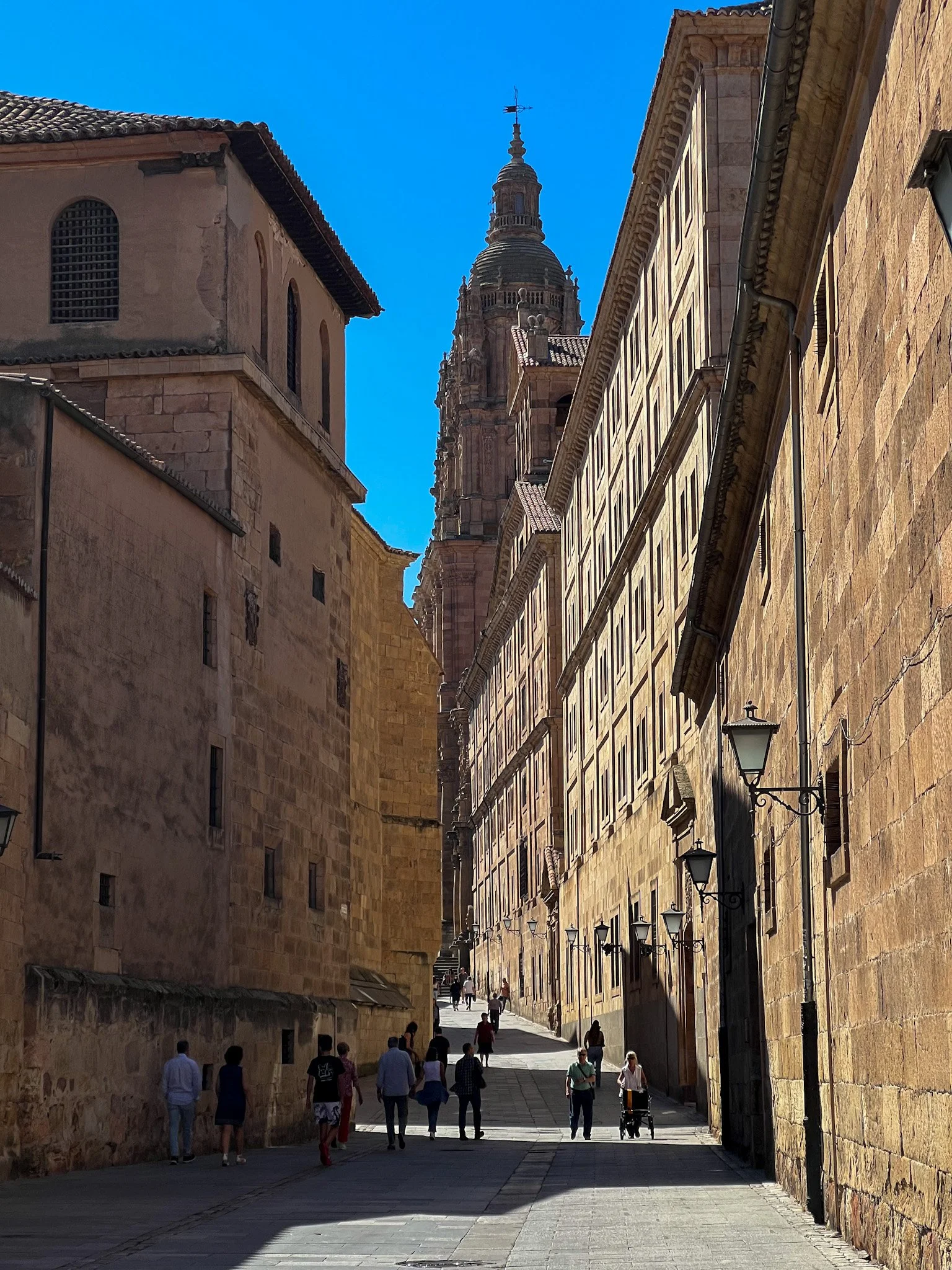
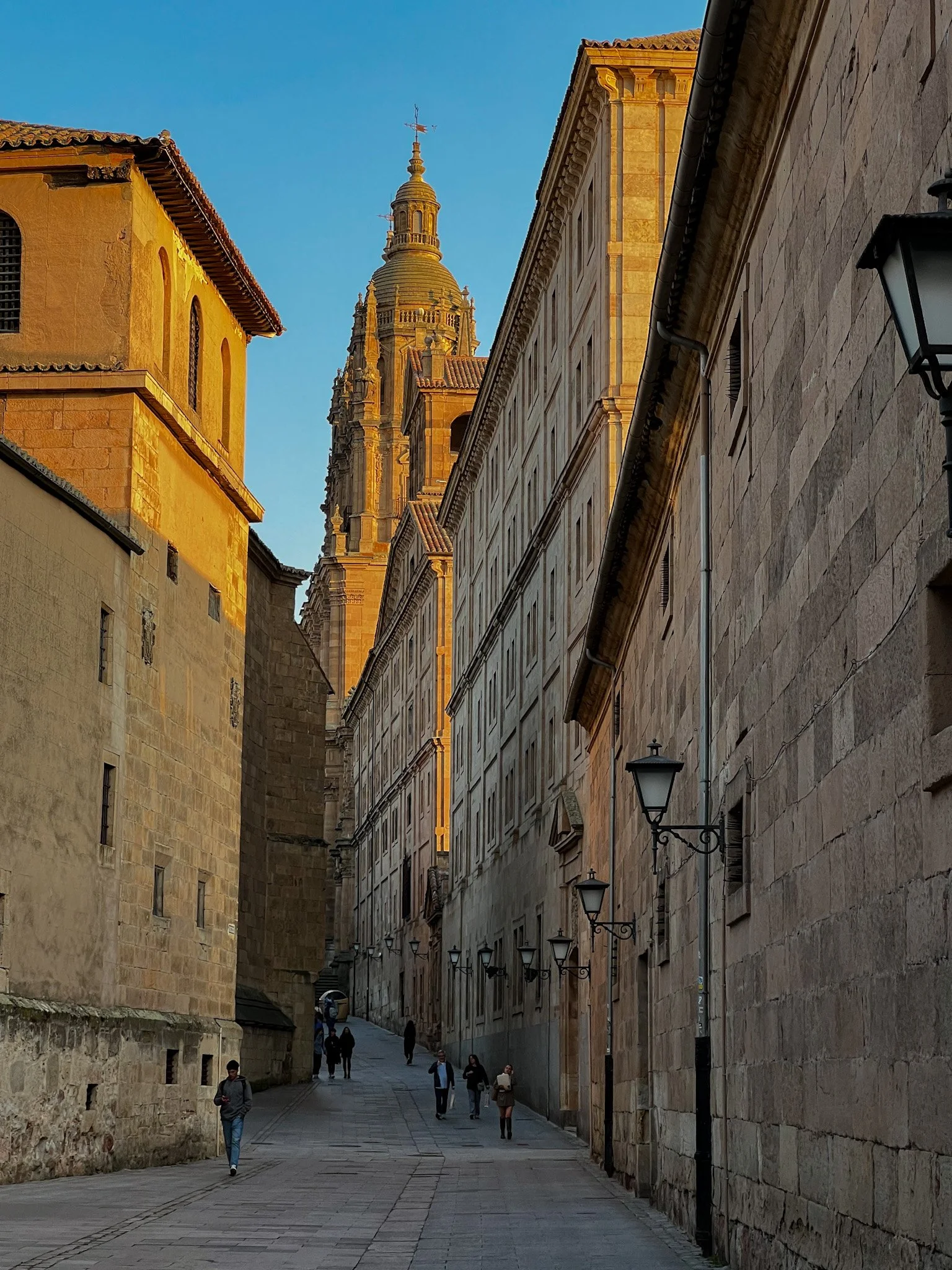
It’s now time to walk along Salamanca’s most beautiful street: Calle de la Compañía. This pedestrian street is renowned for its architectural heritage, housing significant landmarks such as the Casa de las Conchas, the Clerecía (former Jesuit college, now the headquarters of the Pontifical University of Salamanca), Iglesia de San Benito, the Convento de la Madre de Dios, and the Convento de las Agustinas.
The atmosphere on Calle de la Compañía is vibrant and full of life, frequented by both locals and visitors, especially students from the nearby university. It’s a lively area that attracts tourists year-round, but it’s particularly busy during Holy Week when processions wind through this historic route.
Casa de las Conchas
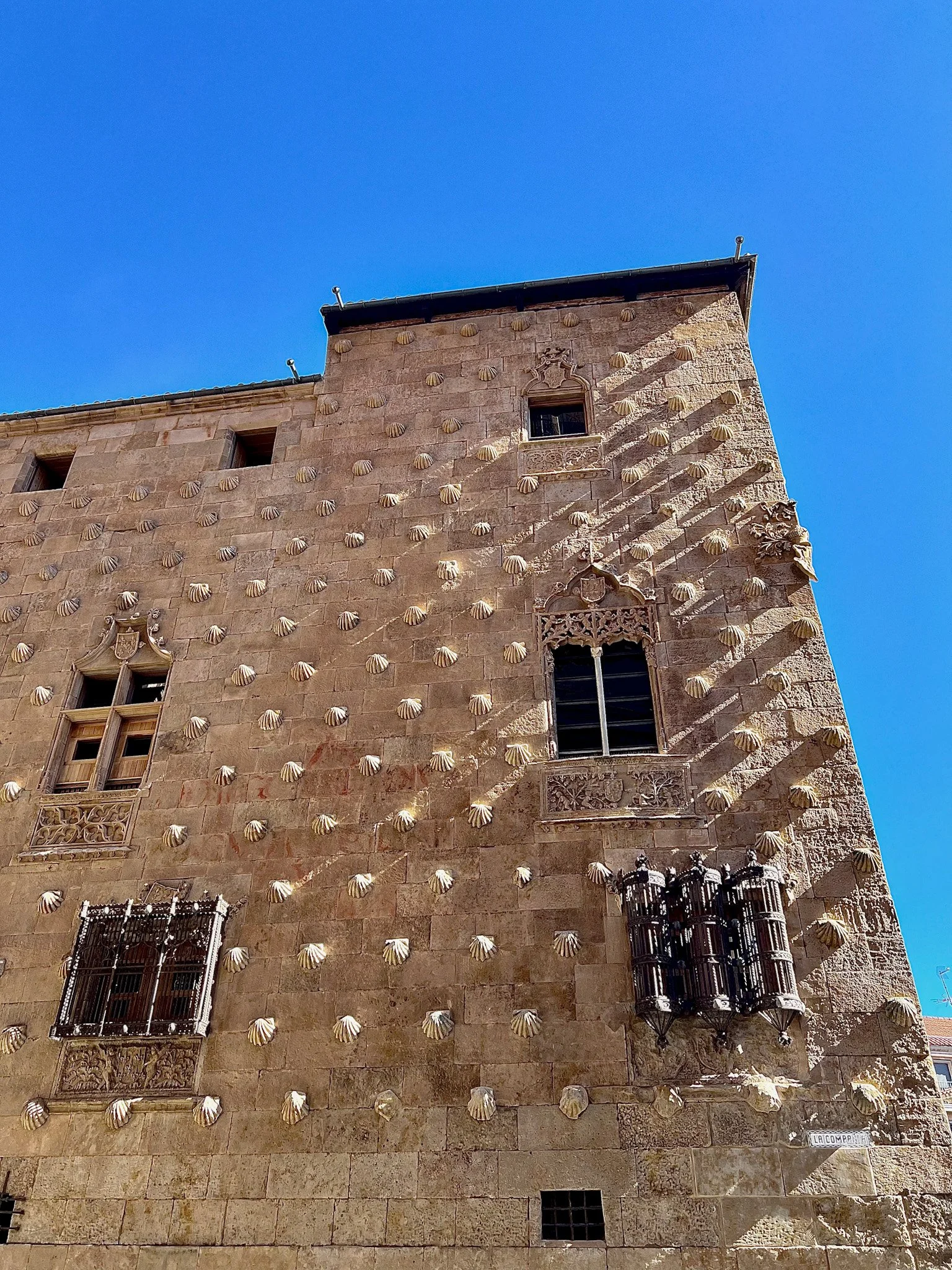
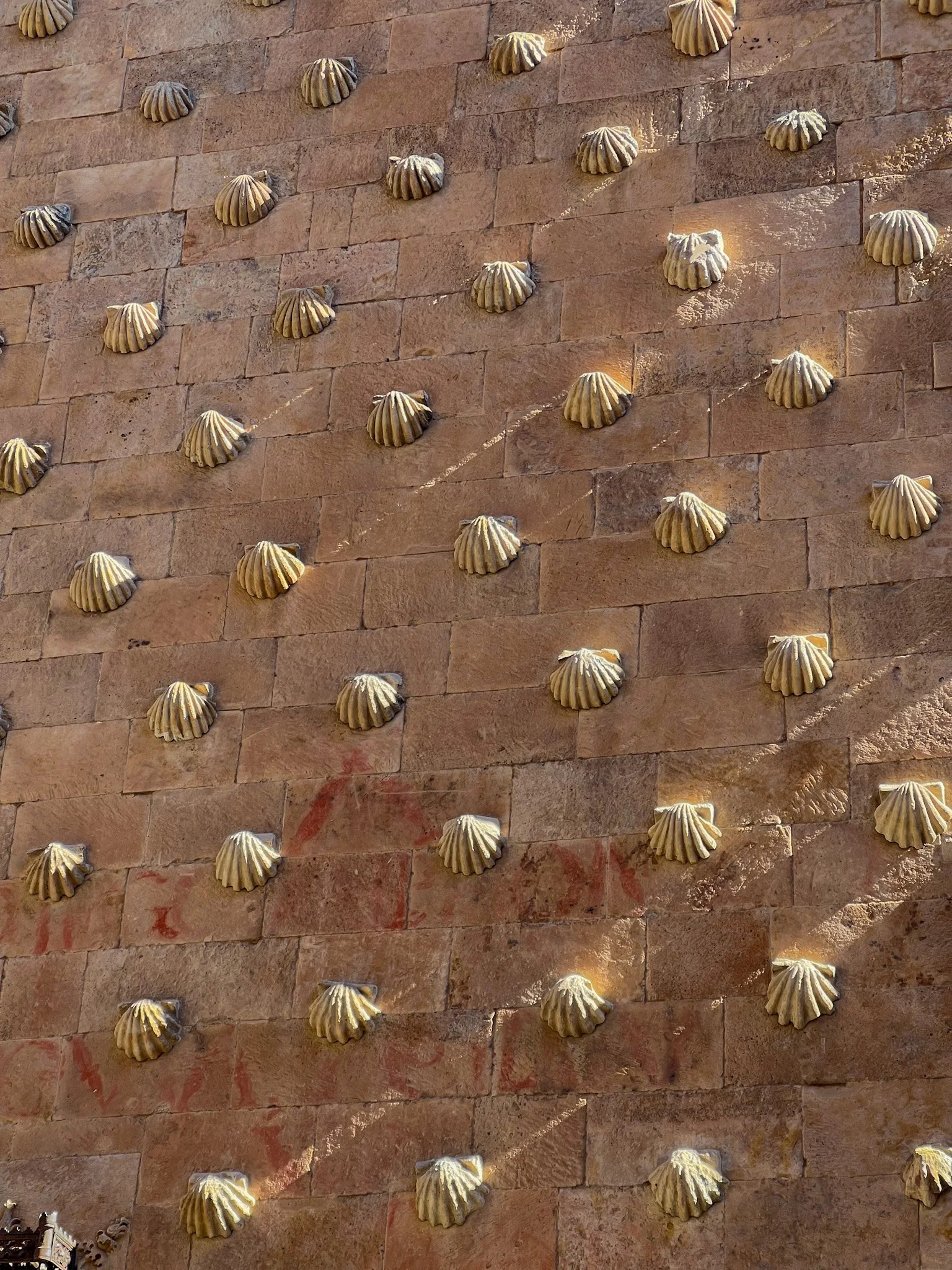
At the end of Calle de la Compañía you’ll come across the Casa de las Conchas (House of the Shells), an iconic urban palace famous for its façade, adorned with over 300 shell motifs and multiple coats of arms, which serve as a symbol of nobility.
Construction began in 1493 and completed in 1517, with later renovations around 1701. The Casa de las Conchas blends Gothic, Renaissance, and Mudejar elements. The most striking feature is its façade, adorned with over 300 shells and various blazons and coats of arms. The shells are believed to symbolize the Pimentel family, although some argue they reference the Order of Santiago. The shells are arranged in a diamond pattern, a nod to the Mudejar tradition of geometric decoration.
This palace was built by Rodrigo Maldonado de Talavera, a knight of the Order of Santiago, law professor, and former rector of the University of Salamanca. His patronage also funded the construction of the Talavera Chapel in the Old Cathedral. After Rodrigo's death, the construction was completed by his son, Rodrigo Arias Maldonado, who also married Juana de Pimentel, a niece of the Duke of Benavente. This marriage and the family's noble background deeply influenced the design of the palace, particularly the shell motifs, which are a symbol of the Pimentel family.
The house later became a prison for university students and, in 1929, was declared a National Monument, becoming a Public Library from 1993.
The house is also steeped in local legends. Some say that beneath one of the shells is hidden a gold coin or even treasure, a common practice during construction to attract good fortune. Another popular legend suggests that the Maldonado family hid their jewels beneath one of the shells, and those seeking to find the treasure must first pay a deposit. If successful, they would retrieve the treasure and their deposit, but if not, they lose their money.
Pontifical University of Salamanca & La Clerecía
In front of Casa de las Conchas you’ll find the Pontifical University of Salamanca. This private, Catholic university was founded in 1940 with campuses in Salamanca and Madrid. It was established with the goal of restoring the faculties of Theology and Canon Law, which had been excluded from the University of Salamanca during the 19th century. Its creation was promoted by Pope Pius XII at the request of the Spanish episcopate, and the papal decree was signed on September 25, 1940. The university provides comprehensive education based on Christian and human values.
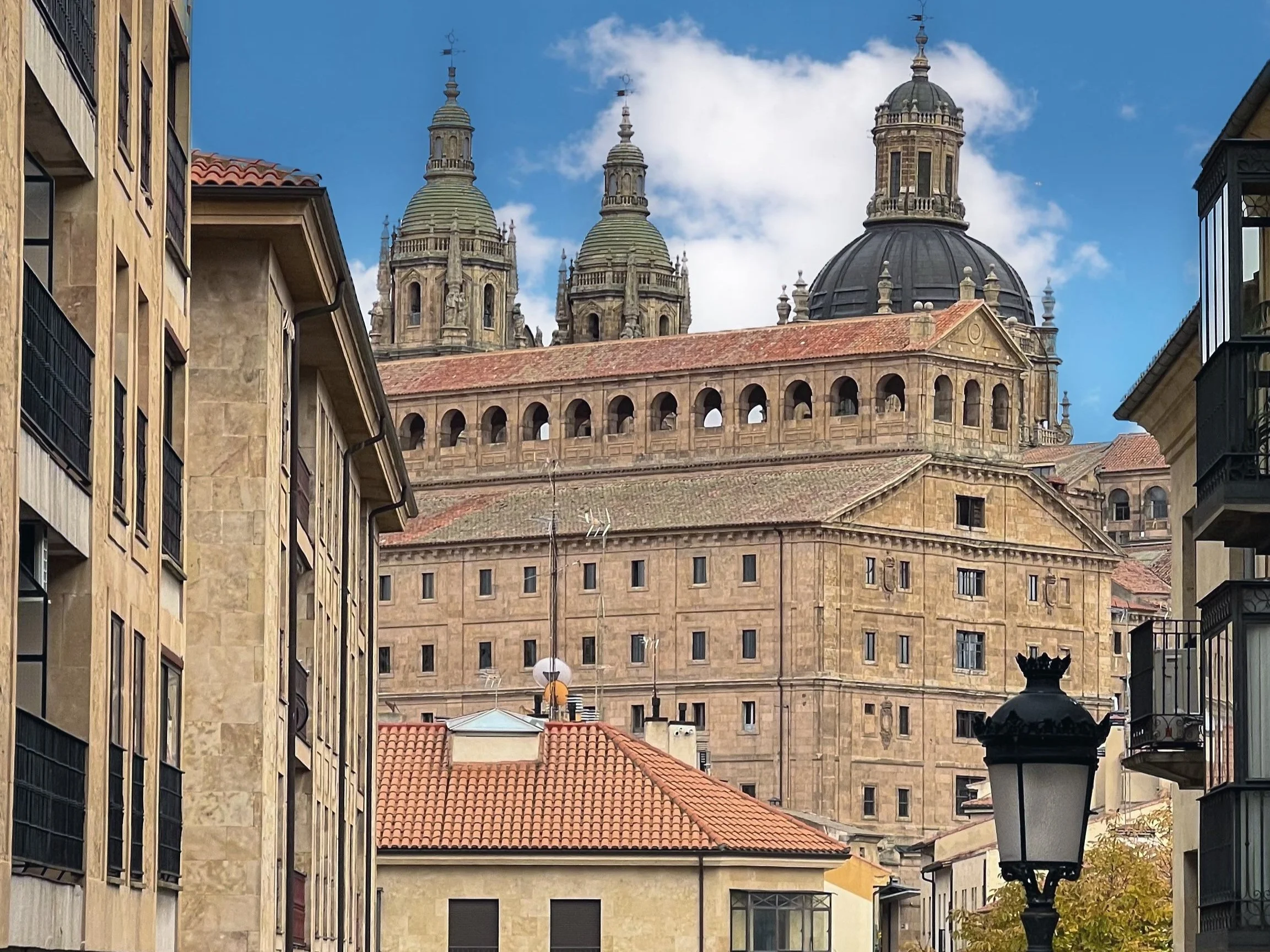
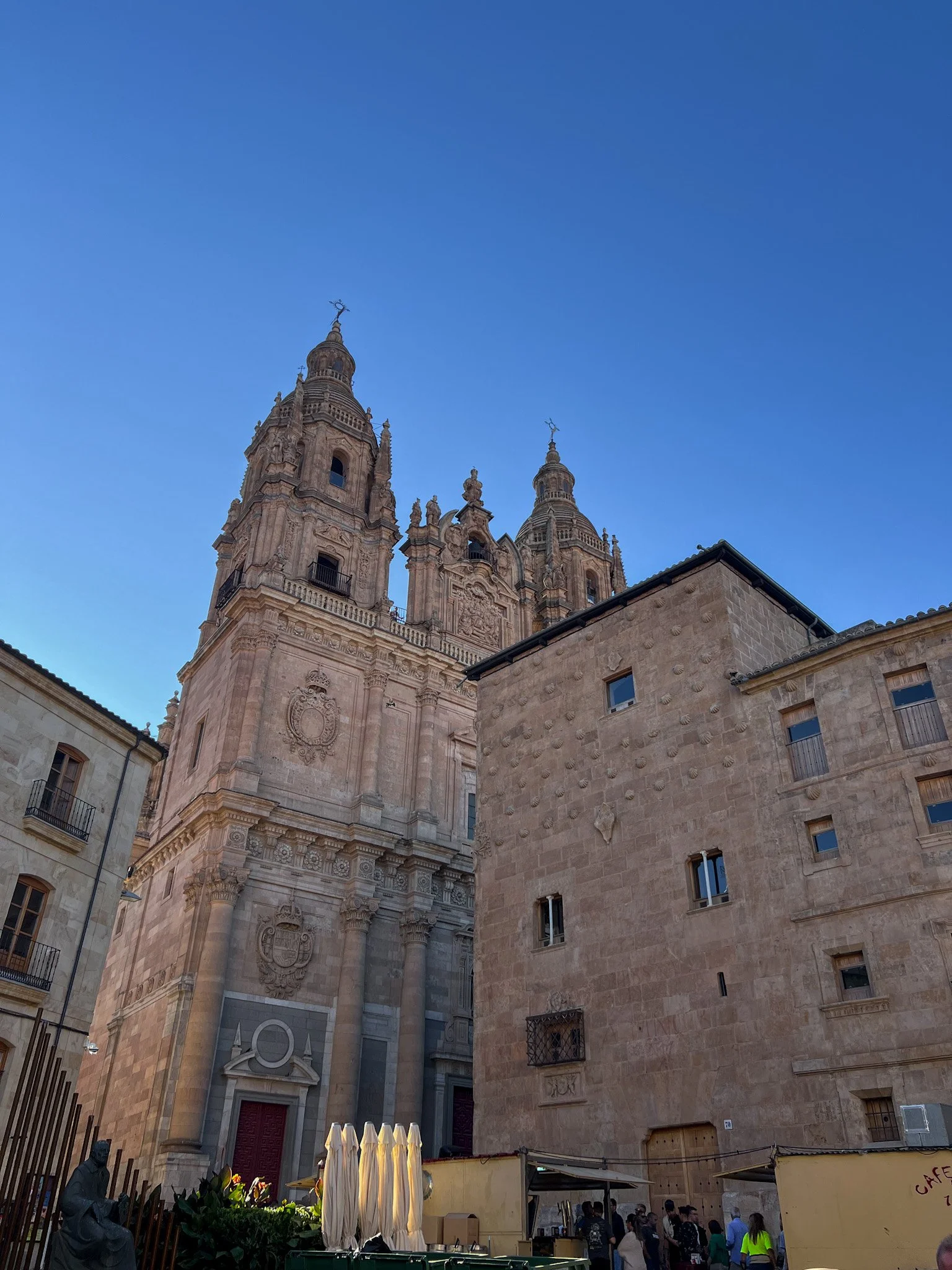
Also part of the Pontificial University is the imposing Clerecía, a church founded by the Society of Jesus in the 17th century. Construction began in 1617, under the patronage of Margaret of Austria, and was completed in 1754. The building combines a college and an impressive church with a striking facade. After the Jesuits were expelled from Spain in 1767, the building was handed over to the Royal Clergy of San Marcos and later became the headquarters for the Pontifical University of Salamanca in 1940.
Architecturally, the church features a monumental facade with three sections and a dome designed by Father Mato, inspired by the Roman Church of Il Gesù. Inside, the church boasts a central nave, with chapels adorned with paintings and a grand main altarpiece created by Juan Fernández in 1673. The sacristy is particularly notable for its intricate altarpiece and the Courtyard of the Studios, designed by Andrés García de Quiñones, which resembles a royal palace courtyard rather than a cloister. The building now serves as a major tourist attraction, showcasing religious art, history, and architecture, while also hosting events for the Pontifical University’s alumni.

Scala Coeli
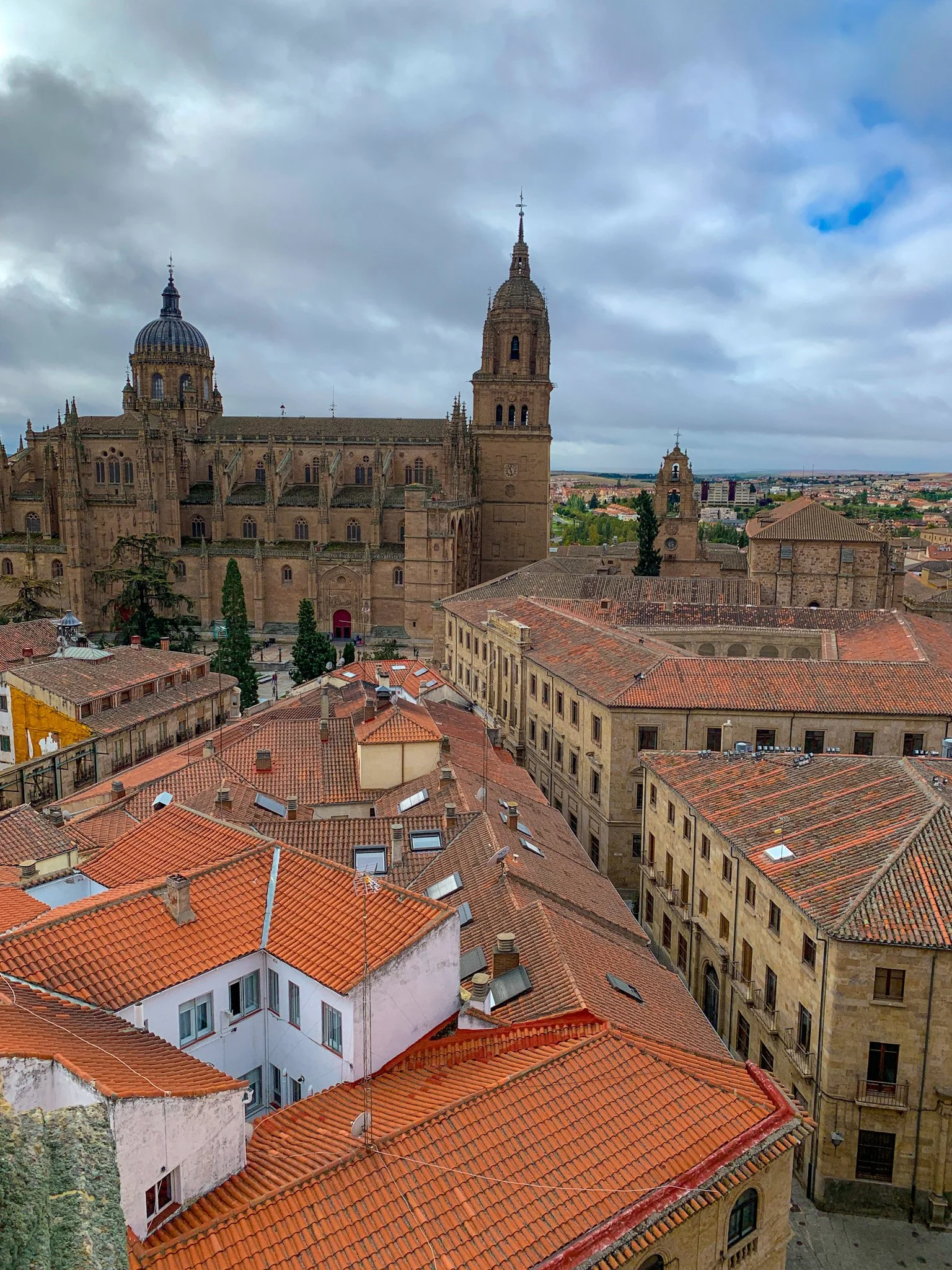
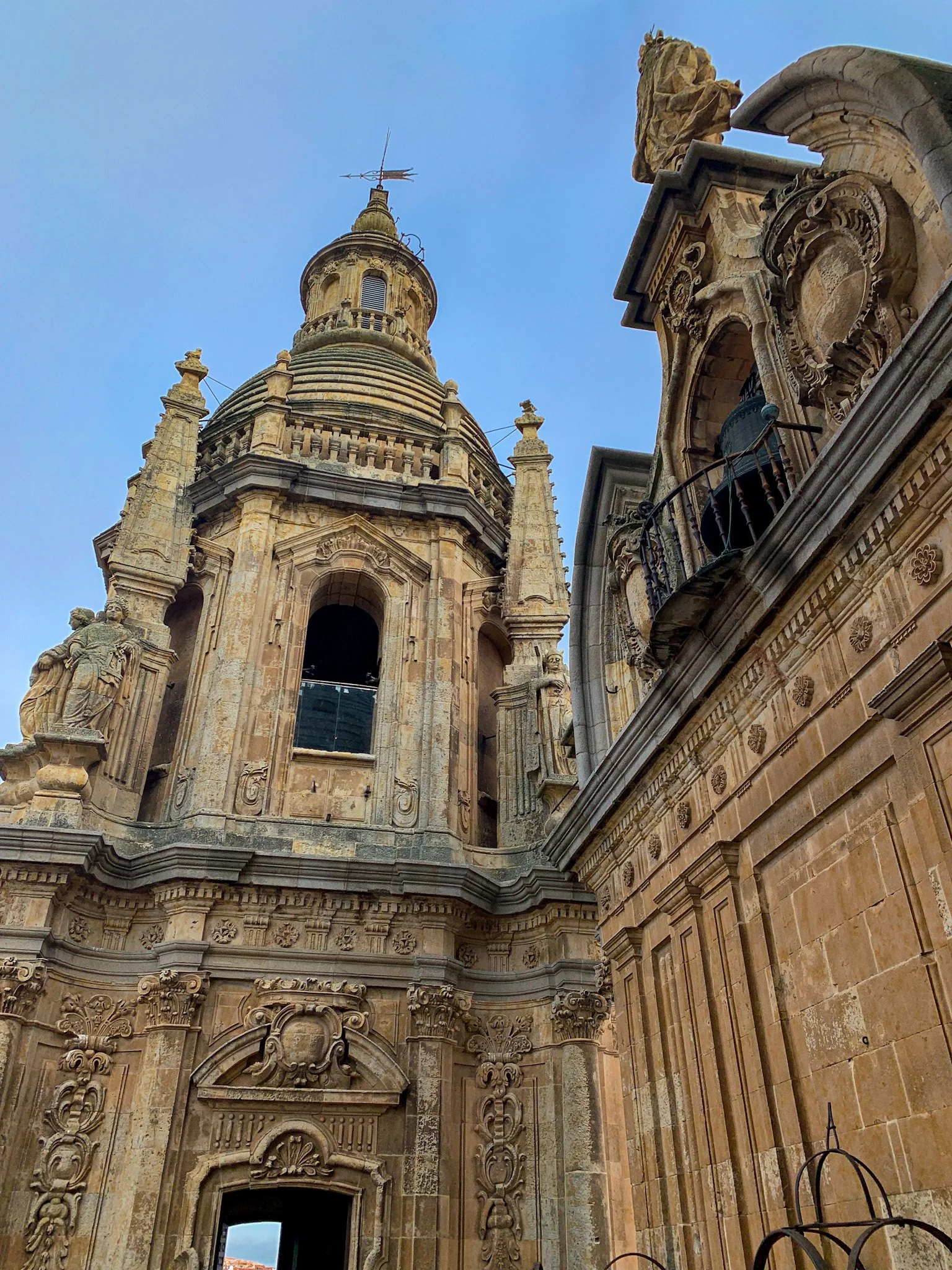
The church itself is usually closed for the public, but the Scala Coeli experience offers visitors a unique opportunity to climb the Clerecía Towers, designed to bring believers closer to heaven while providing breathtaking panoramic views of the city.
This climb, often described as a "Stairway to Heaven," allows visitors to enjoy the splendid views of Salamanca's historic center, often referred to by Unamuno as a "copse of towers." The tour includes access to the Colegio Real de la Compañía de Jesús, a Baroque masterpiece that dates back to 1617, and is now home to the Pontifical University of Salamanca.
Visitors can explore the building’s rich history through exhibits, including portraits of Margarita of Austria and Felipe III, as well as insights into its construction. The tour also takes visitors to the Escalera Noble (noble staircase) and Patio Barroco (Baroque Courtyard), followed by a climb to the church’s two towers. The restored bell-ringer staircase offers a sensory experience enhanced by light and sound, culminating in a spectacular, unique view of the city from above.
Tickets have a cost of €6 per person and can be purchased at the entrance during visiting hours: 10am-6pm during the winter months, and 10am to 8pm during spring and summer.
Rúa Mayor
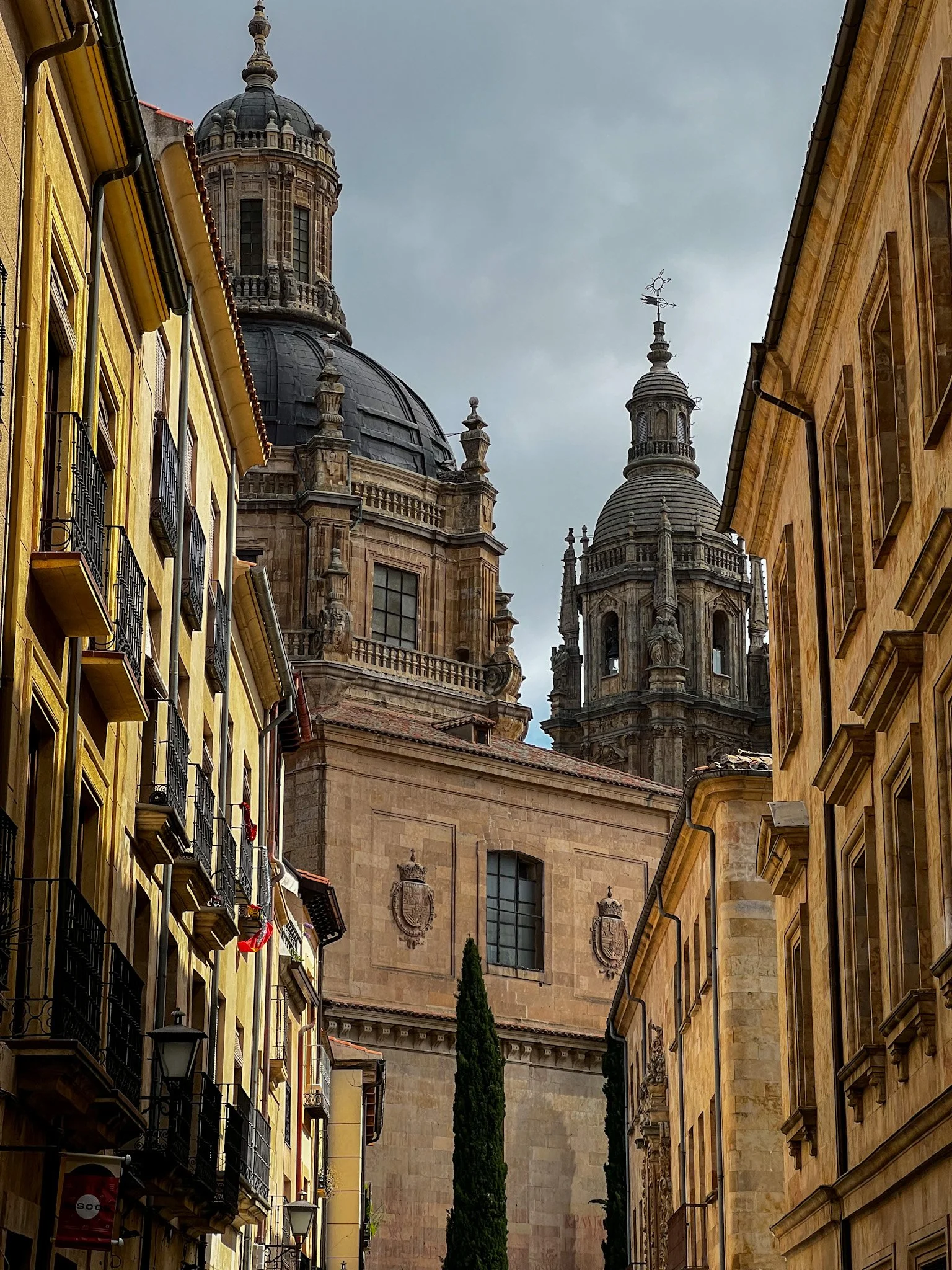
From La Clerecía, walk along the Rúa Mayor to visit one of Salamanca’s most famous and lively streets. Originally a key route connecting the medieval city wall to the Church of San Martín, this street has long been a central hub of commerce and social life. The name "rúa" comes from the Latin "ruga," meaning road, and reflects the street's importance during medieval times.
Today, Rúa Mayor is a pedestrian-friendly avenue lined with charming cafes, restaurants, and shops, making it a perfect place to experience the city's vibrant atmosphere.
Anaya Palace
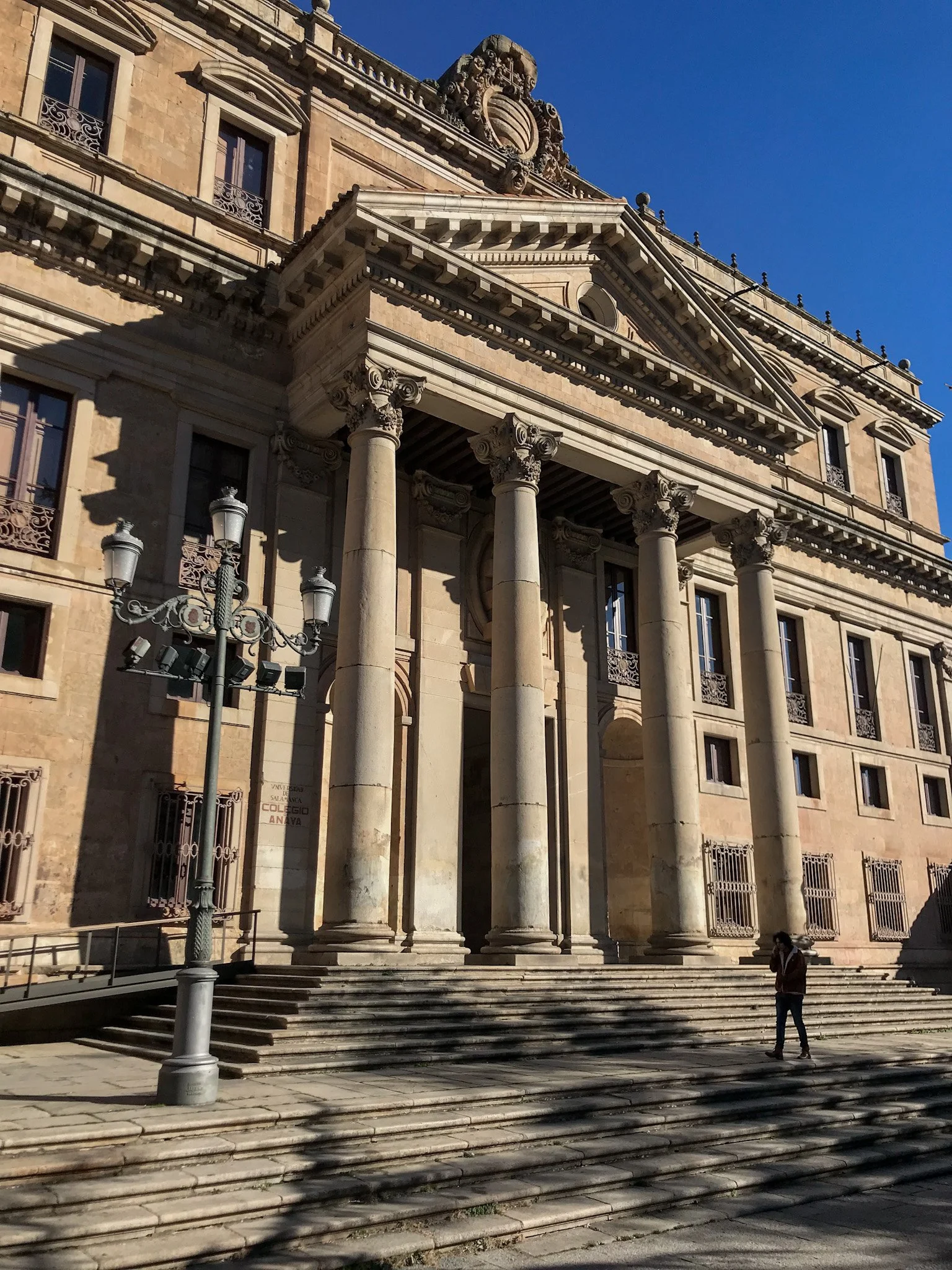
At the end of Rua Mayor you’ll reach the unique Anaya Square with its impressive views of the Cathedral. The name comes from the Anaya Palace located on the western side, an striking example of neoclassical architecture.
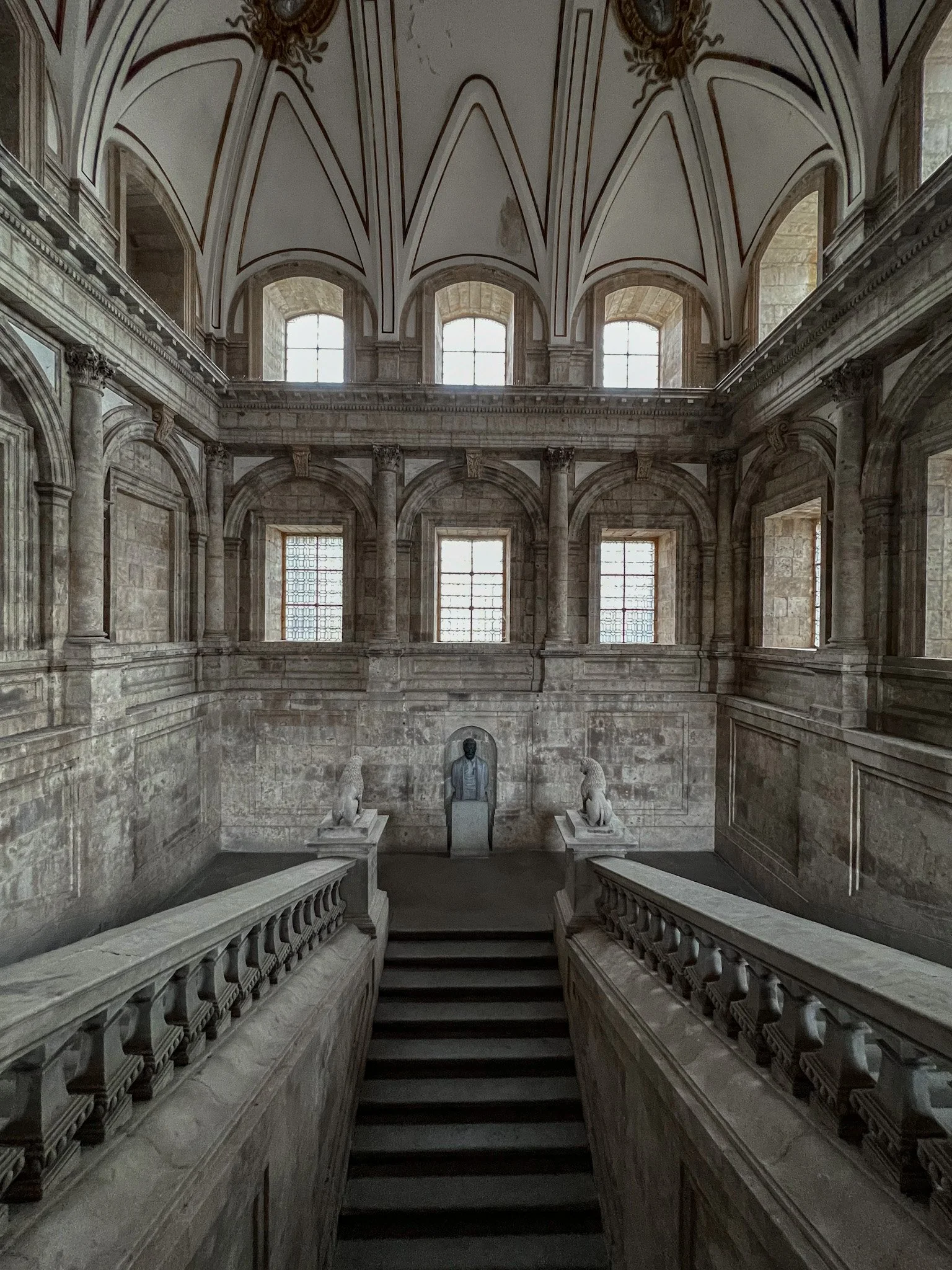
The palace was built between 1760 and 1770 to replace the original College of San Bartolomé, which was damaged by the 1755 Lisbon earthquake. Named after Diego de Anaya Maldonado, the founder of the college in 1401, the palace was designed by José de Hermosilla and Juan de Sagarvinaga. Its most impressive features include the grand façade with a portico supported by four columns, and an imperial staircase inside, along with a bust of Miguel de Unamuno by Victorio Macho, created in 1930. The building, once serving various purposes such as the Civil Government's headquarters, is now home to the Faculty of Philology at the University of Salamanca.
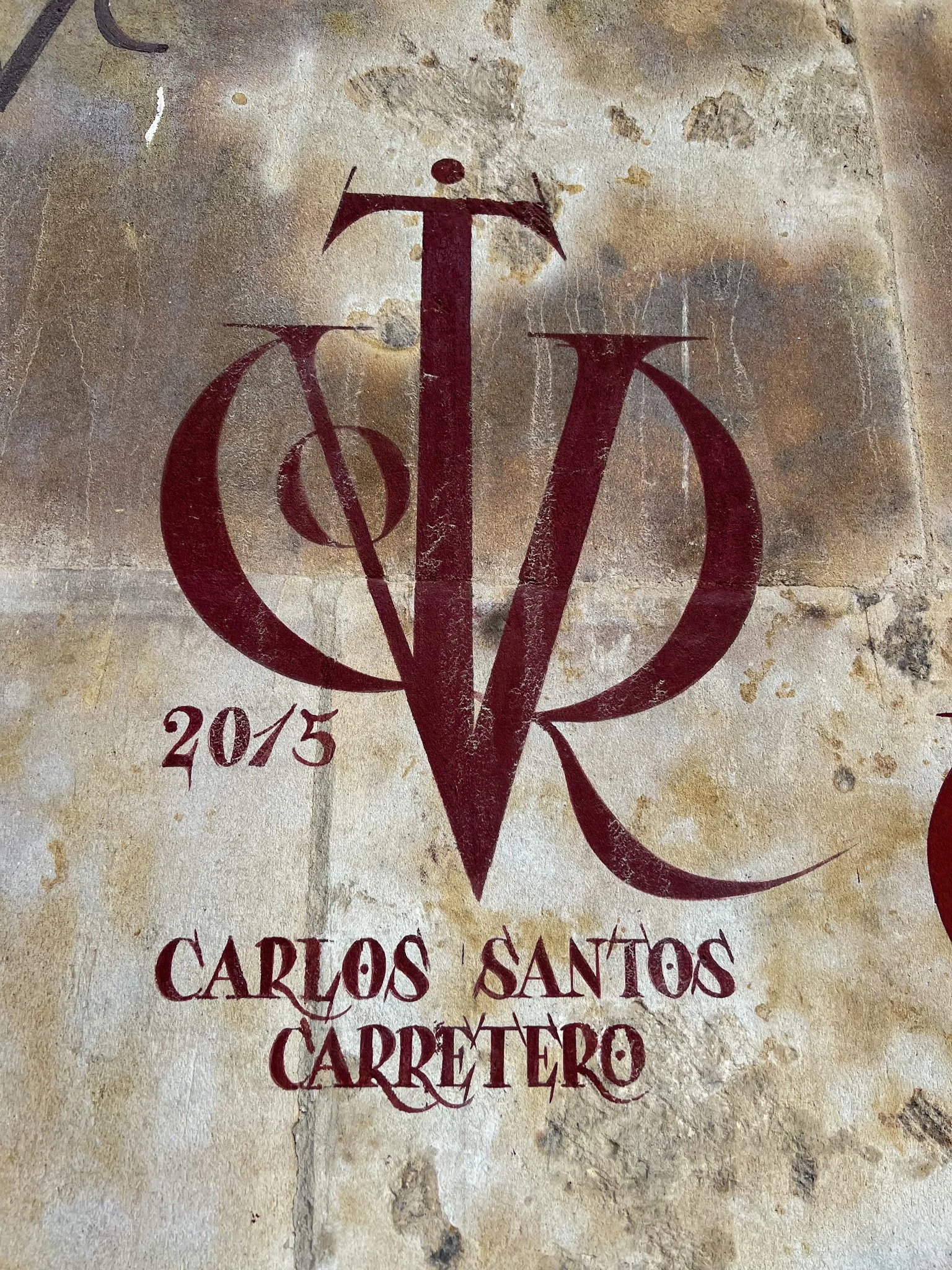
All over the walls, you can also spot the historic "victor" symbols, painted to commemorate students who earned their doctorates, a tradition dating back to the 14th century at Spanish universities.
Adjacent to the palace is the Hospedería, designed by Joaquín Churriguera in 1715, originally a residence for students who paid for their studies by serving wealthier students. Today, it houses classrooms and offices, with the former stables now home to the faculty cafeteria.
Salamanca Cathedral
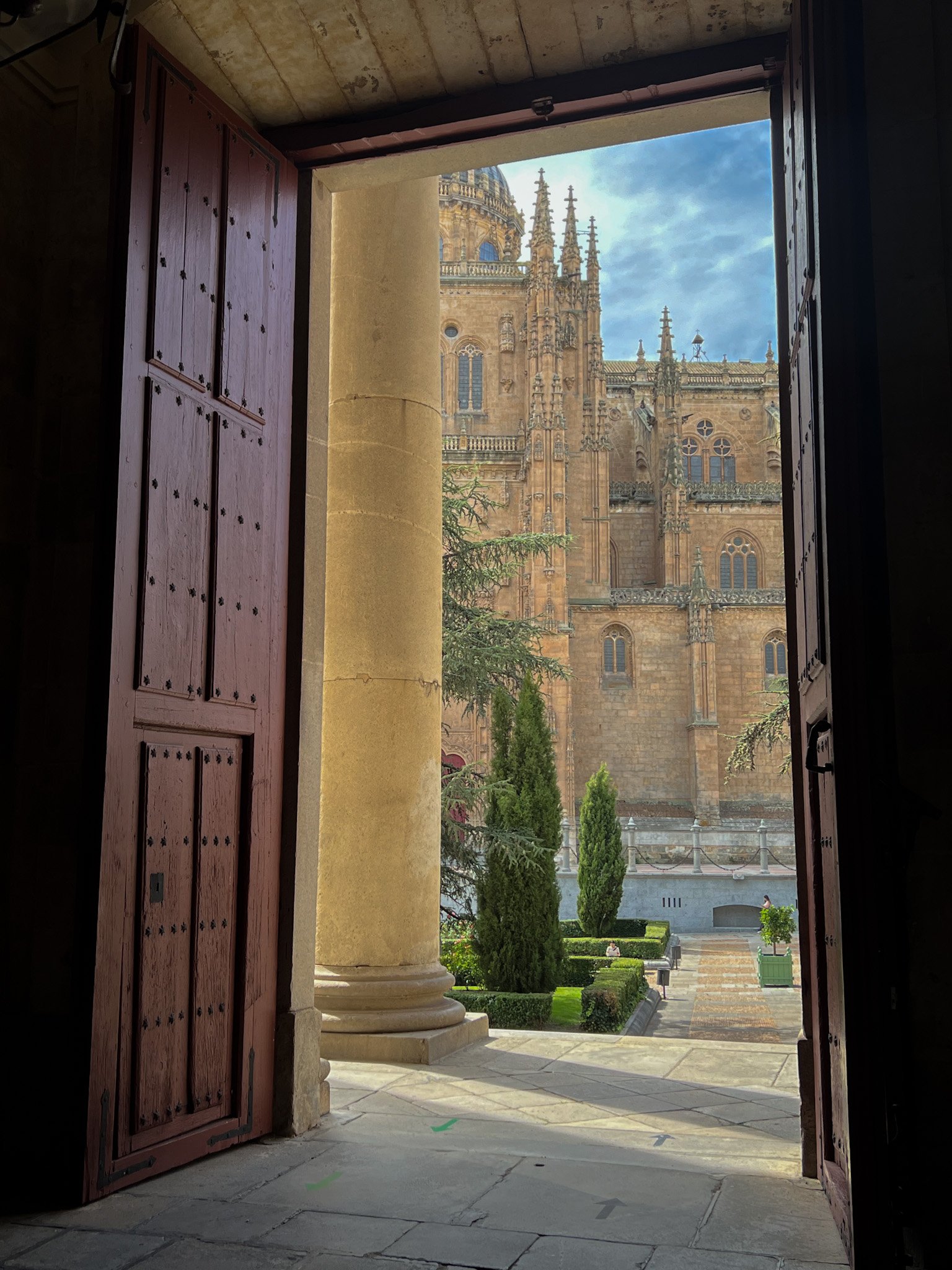
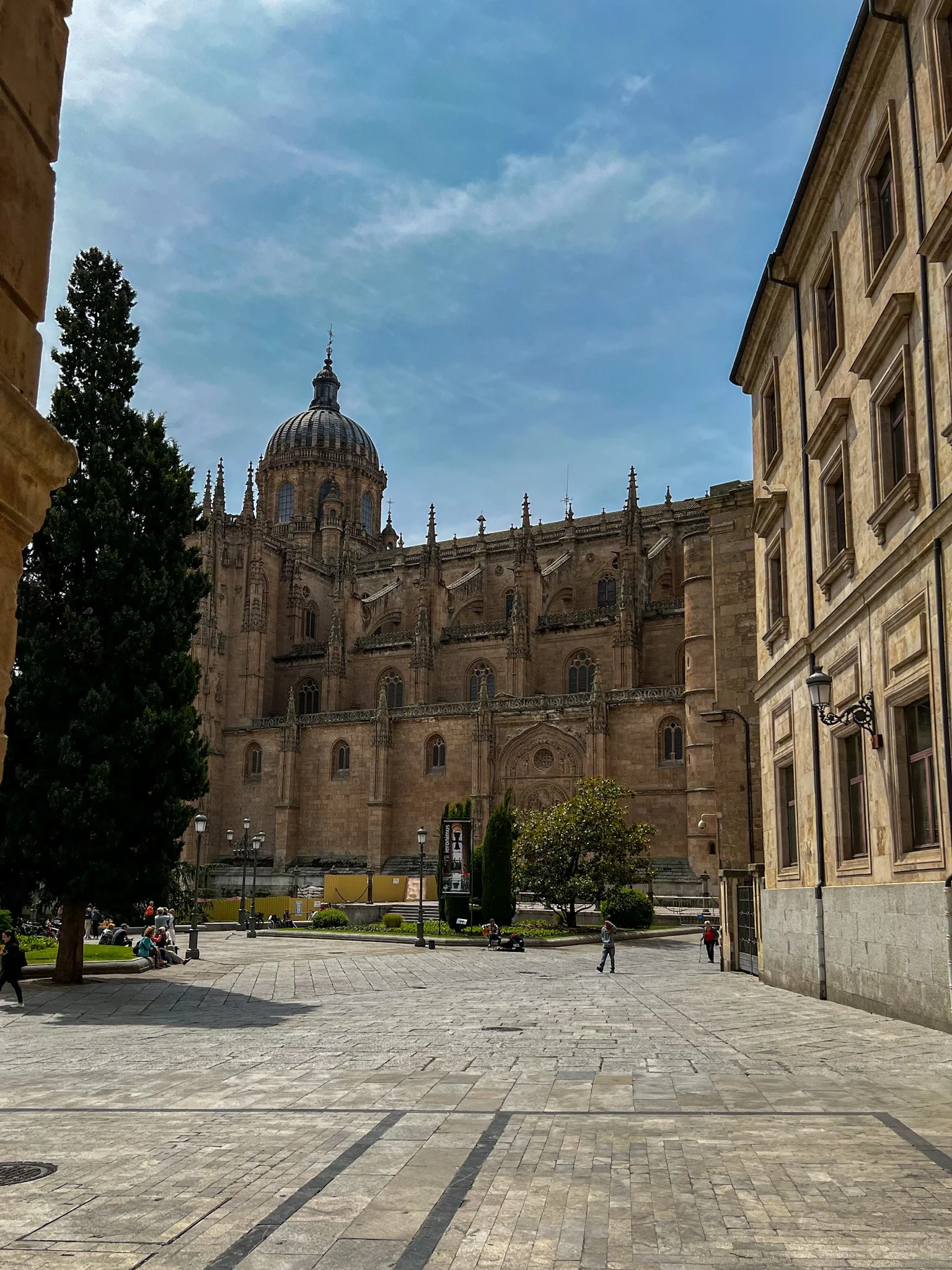
Crowning the city and visible from most places in the Old Town, Salamanca is home to not one but two stunning cathedrals: the Catedral Vieja (Old Cathedral) and the Catedral Nueva (New Cathedral). You can purchase your entry tickets to Salamanca Cathedral in advance with GetYourGuide. The visit includes access to both the New and Old Cathedral, as well as an audio-guide with commentary available in multiple languages.
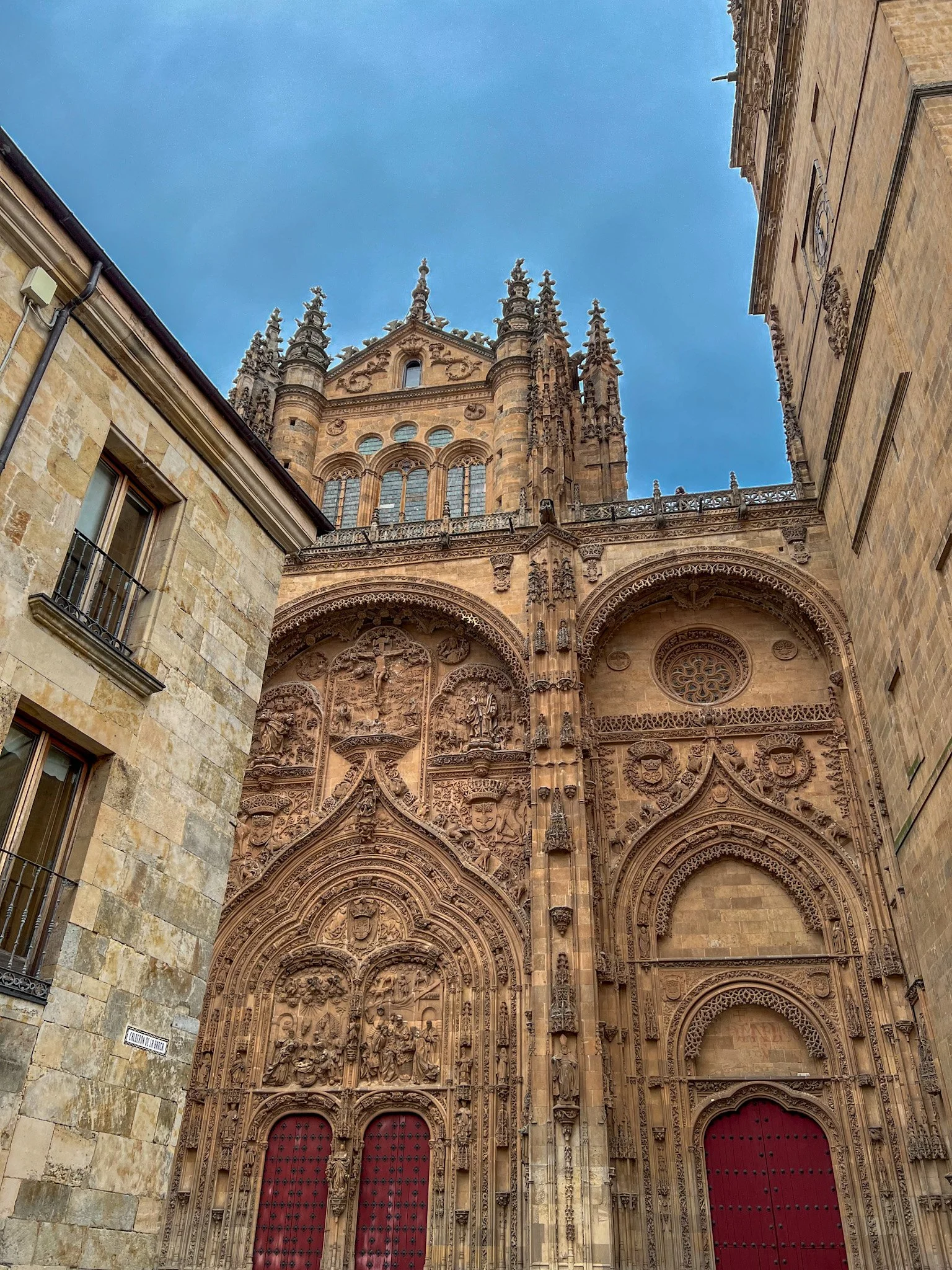
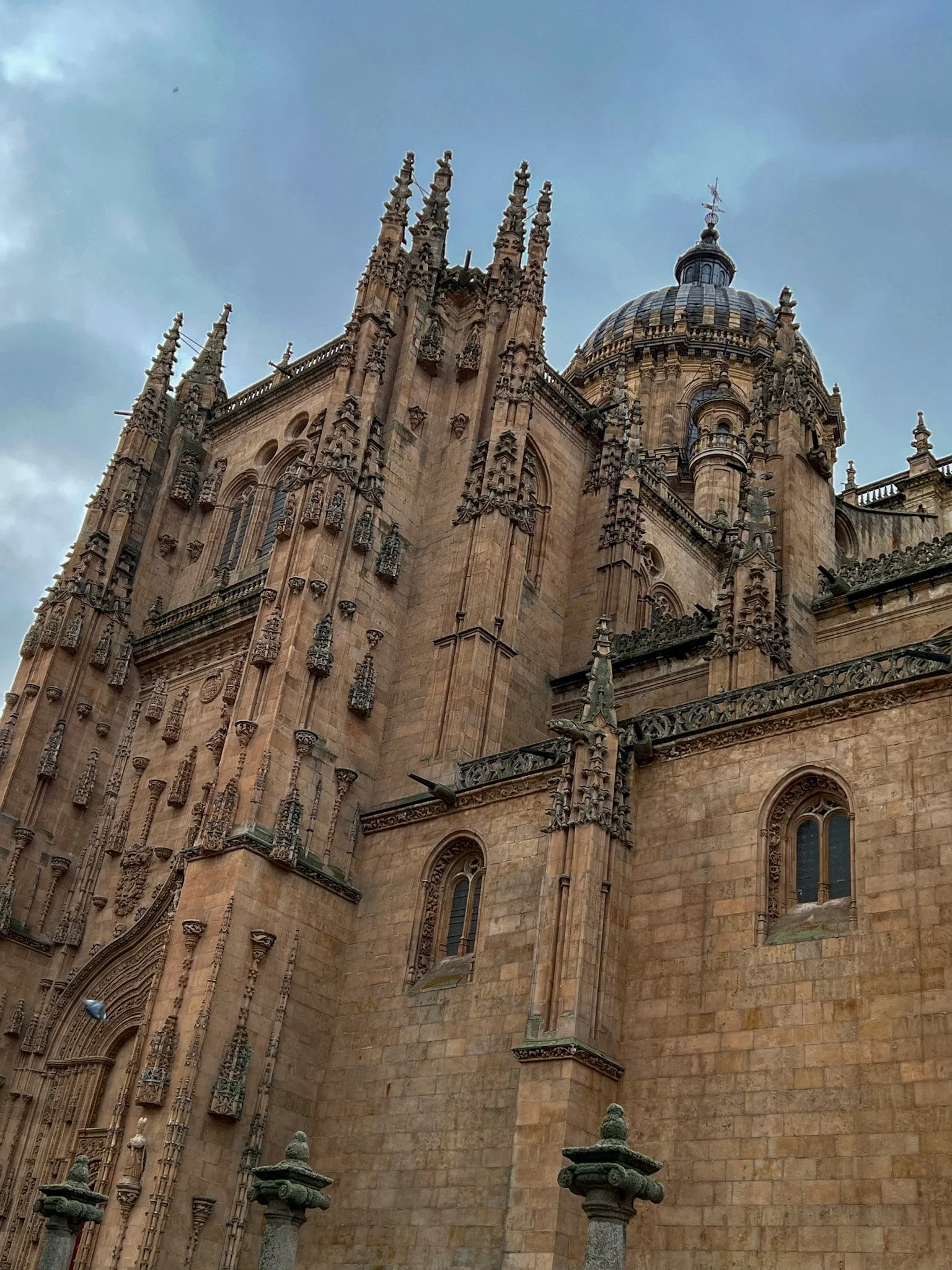
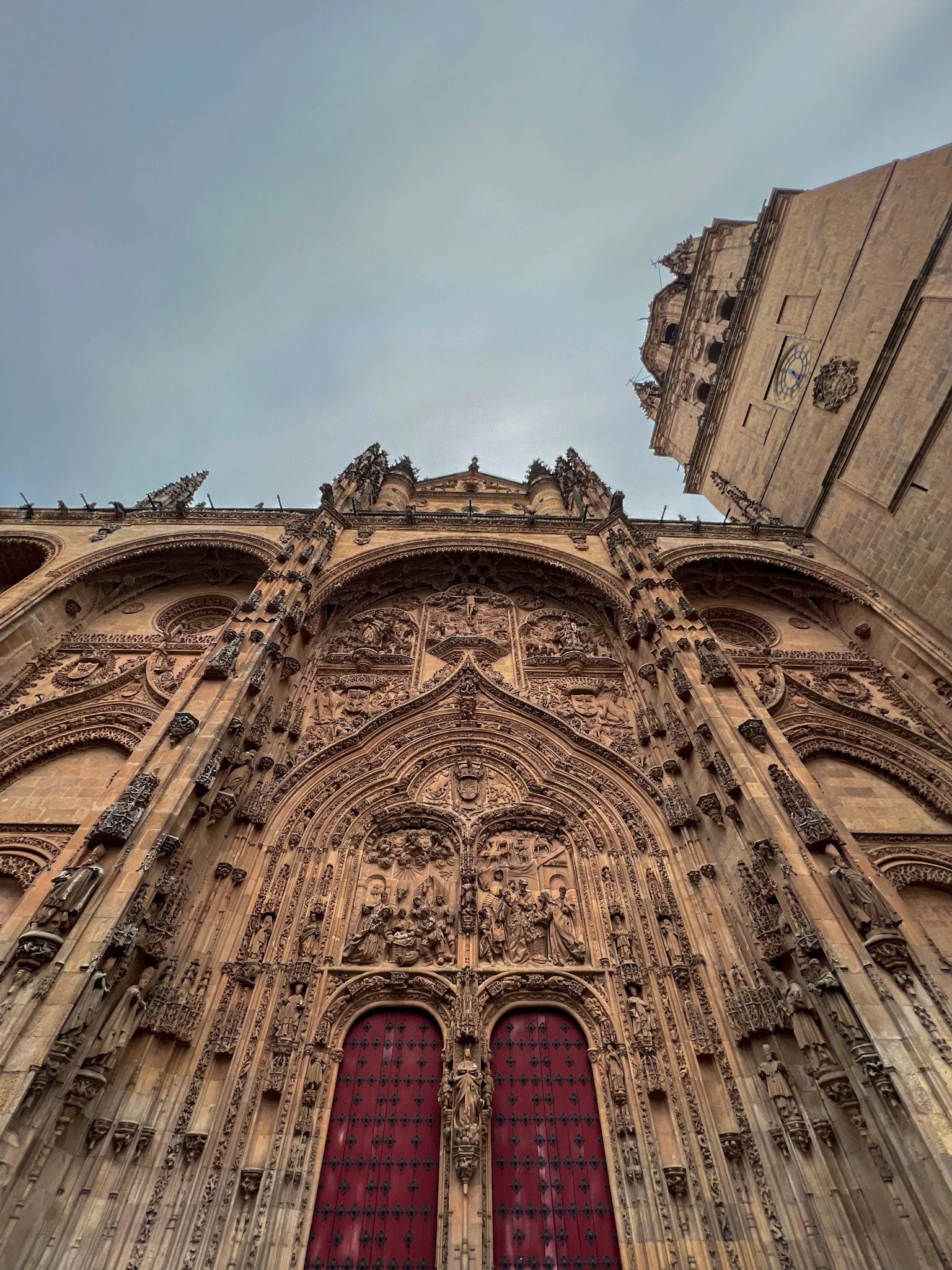
Most of the structure that we see today belongs to the New Cathedral, constructed between the 16th and 18th centuries. It blends Gothic, Renaissance, and Baroque styles and at 110 meters, it is the tallest cathedral in Spain.
The construction of the New Cathedral began in 1513 and was completed in 1733, while the Old Cathedral remained in use. Initially, there were plans to demolish the old cathedral, but it was decided to keep it open for worship while the new cathedral was being built. The southern wall of the new cathedral is supported by the northern wall of the old one, which had to be reinforced. The tower of the new cathedral was built atop the bell tower of the Old Cathedral.
The need for a new cathedral arose in the 15th century due to Salamanca's growing population, largely driven by the University. The old cathedral was considered too small, dark, and low. King Ferdinand the Catholic supported the project, instructing architects Antón Egas and Alonso Rodríguez, who had worked in Toledo and Seville, to design the new cathedral. The cathedral was initially planned with a Gothic-style head and polygonal apses, but the final design was changed to a rectangular chancel with a hall-like floor plan.
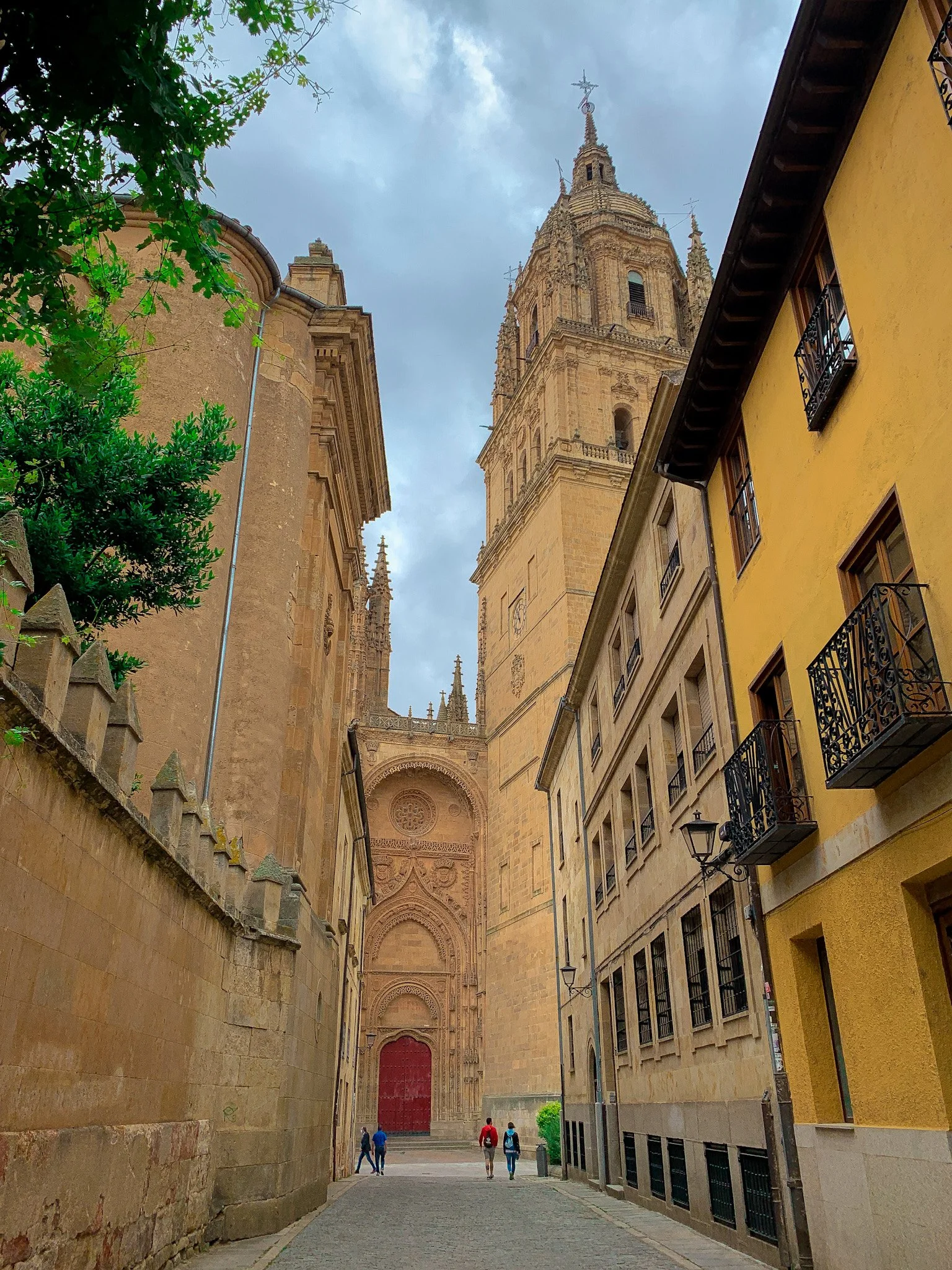
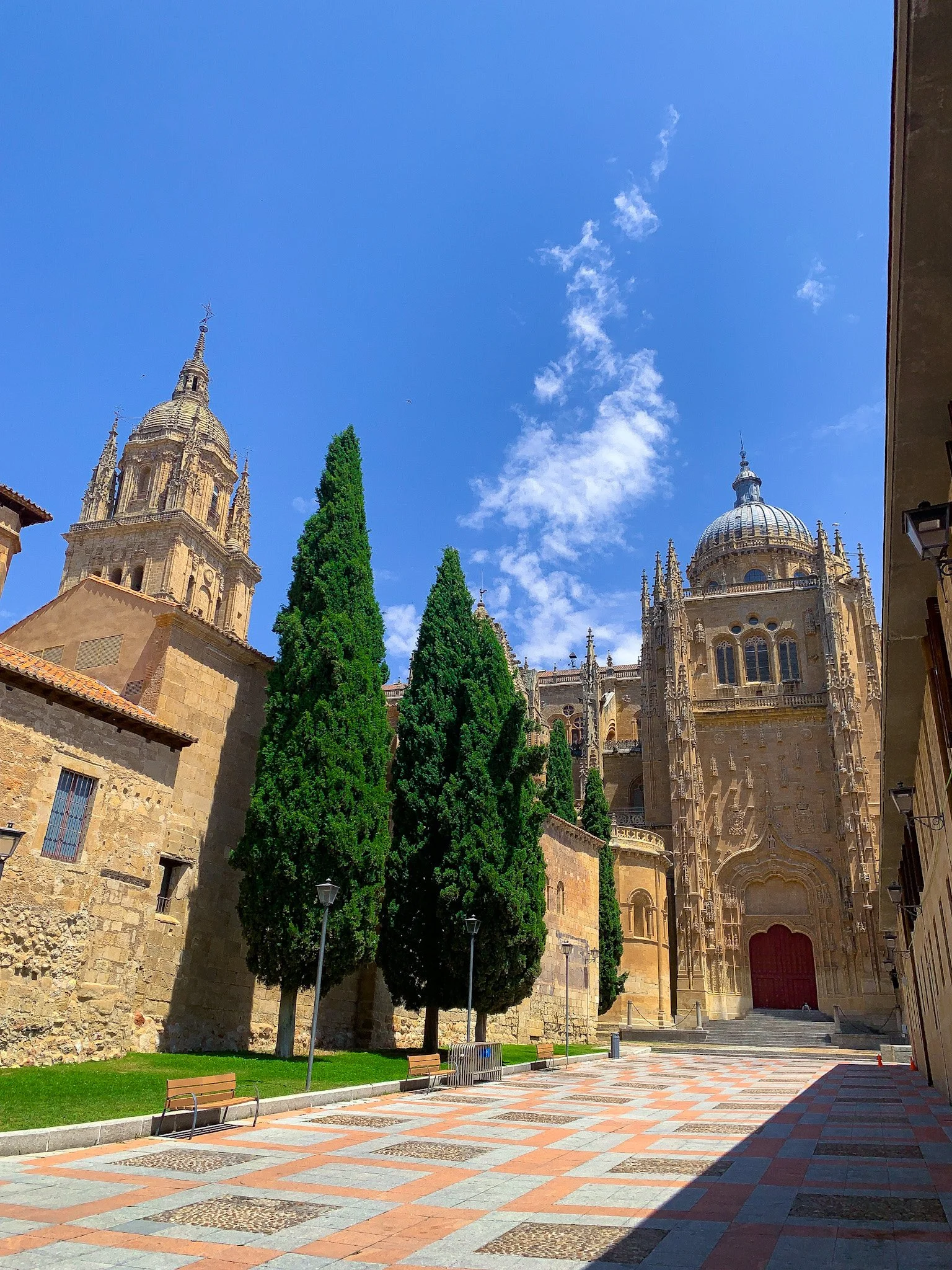
The construction paused for much of the 17th century but resumed in the 18th century, concluding in 1733. The cathedral was damaged by the 1755 Lisbon earthquake, which caused visible cracks and broken stained glass. After the earthquake, the dome was rebuilt by Juan de Sagarvinaga, and the bell tower was reinforced. The tower had been severely damaged, leaning toward one side, which can still be appreciated today.
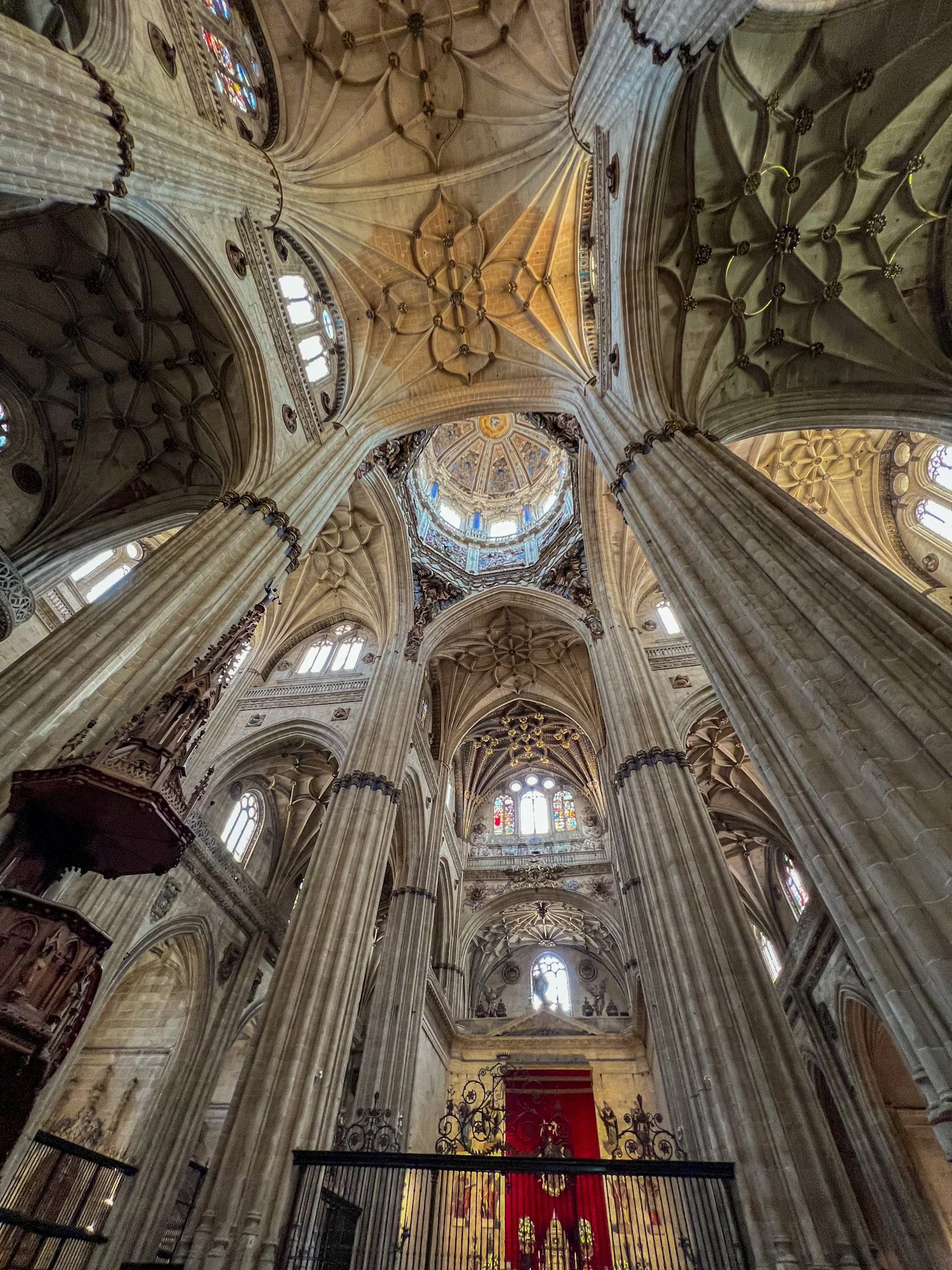
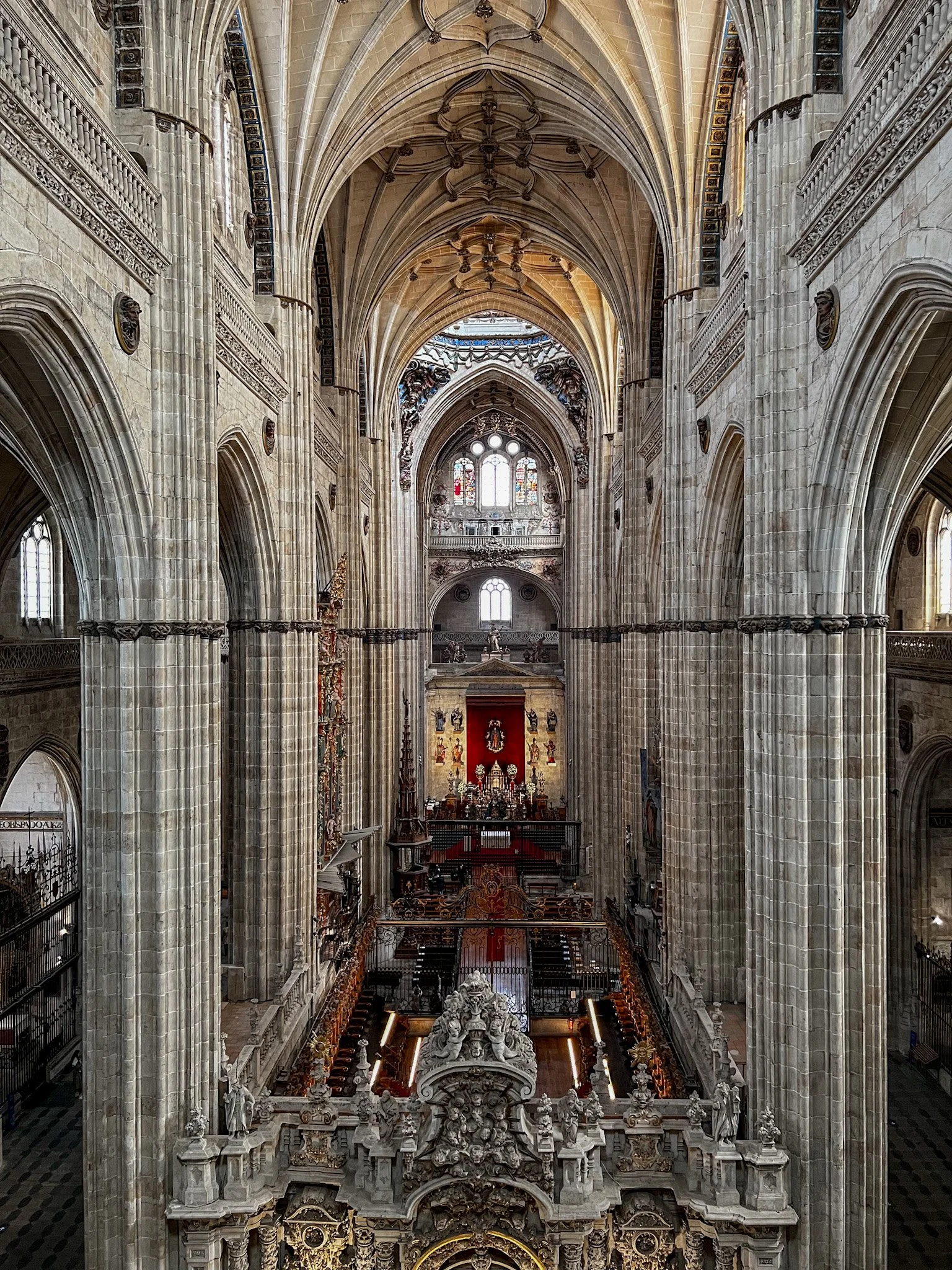
The Catedral Nueva is one of the last Gothic cathedrals built in Spain, with its design combining late Gothic elements and Baroque additions, such as a Baroque dome and the upper levels of the tower. The interior has three main naves with two additional side chapels, typical of Gothic design. The nave is high and wide, with a clerestory and triforium galleries to add to the spacious feel. The complex vaulting and ribs in the ceiling create an elaborate visual effect.
The cathedral is also known for an anachronistic astronaut sculpture added to its north door during restoration in 1993, a nod to the modern era amid the ancient structure.

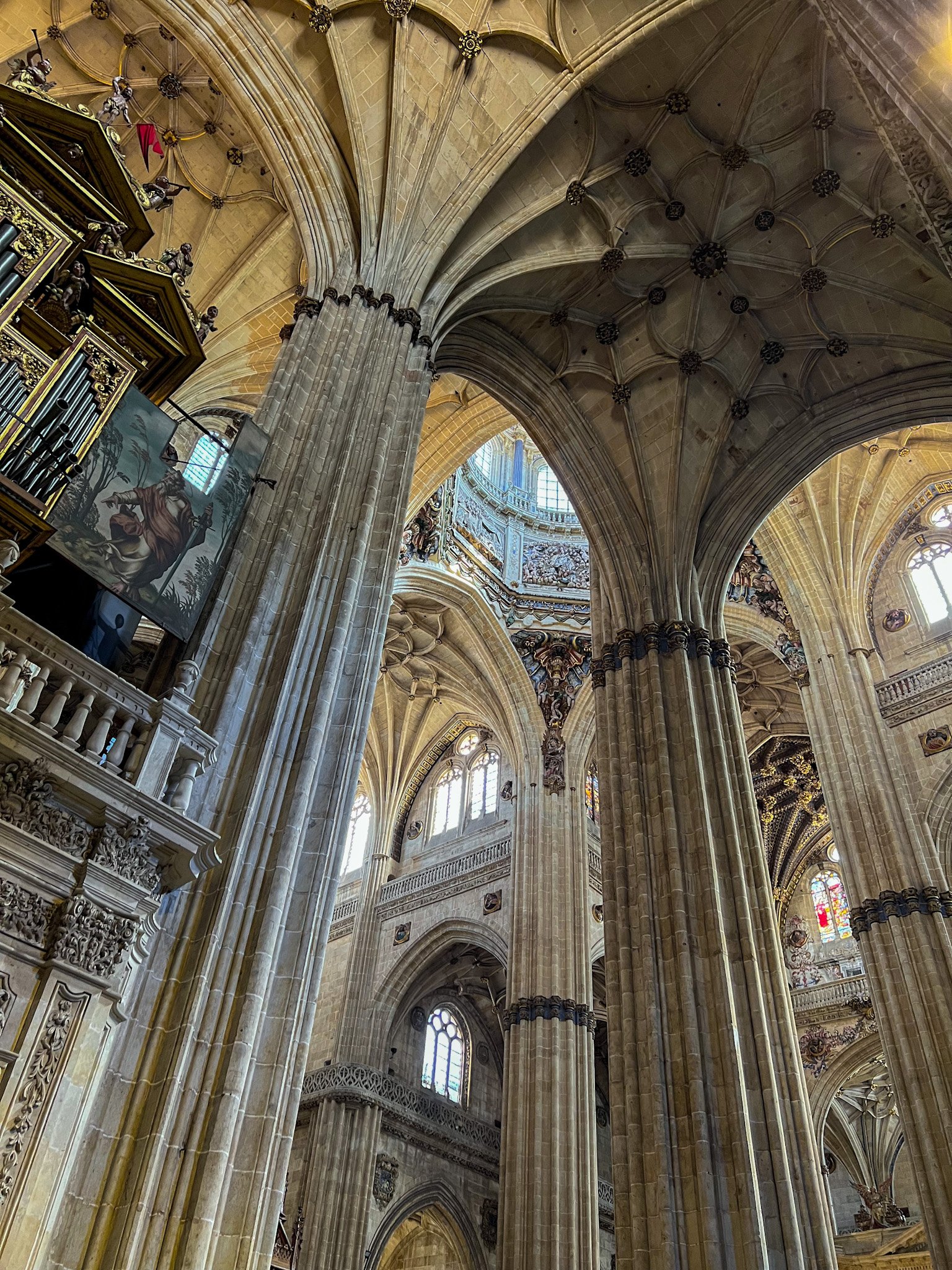
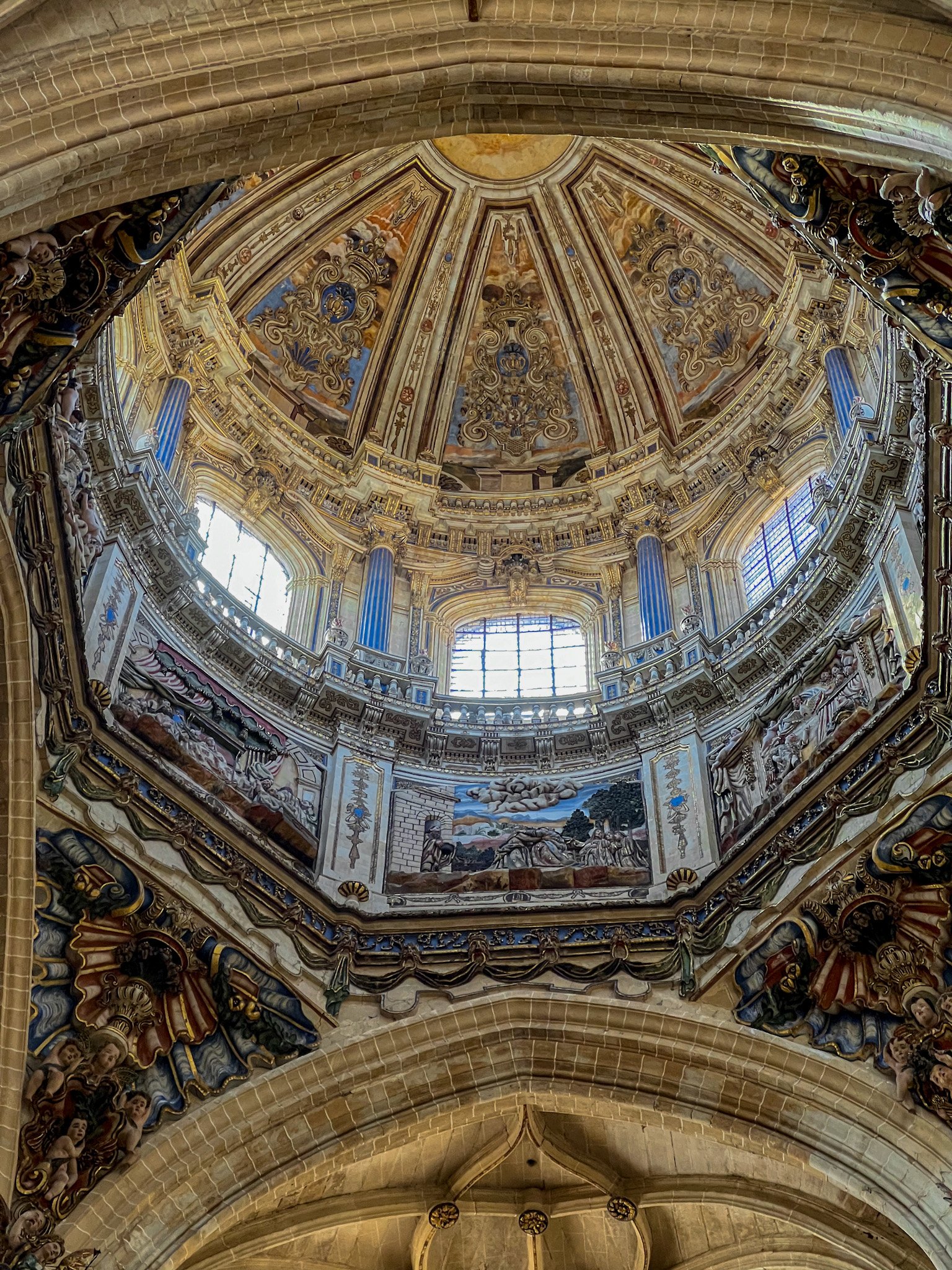
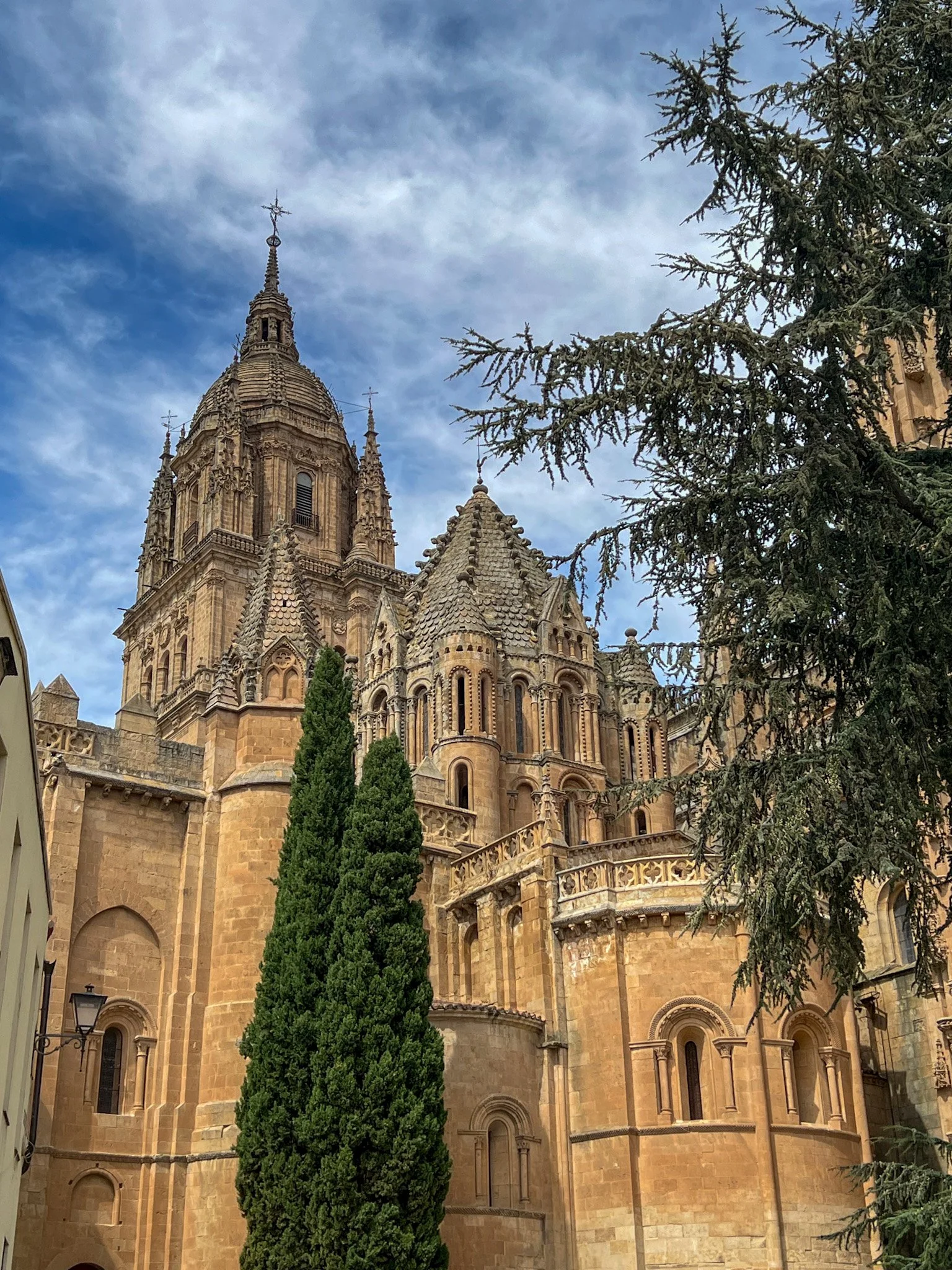
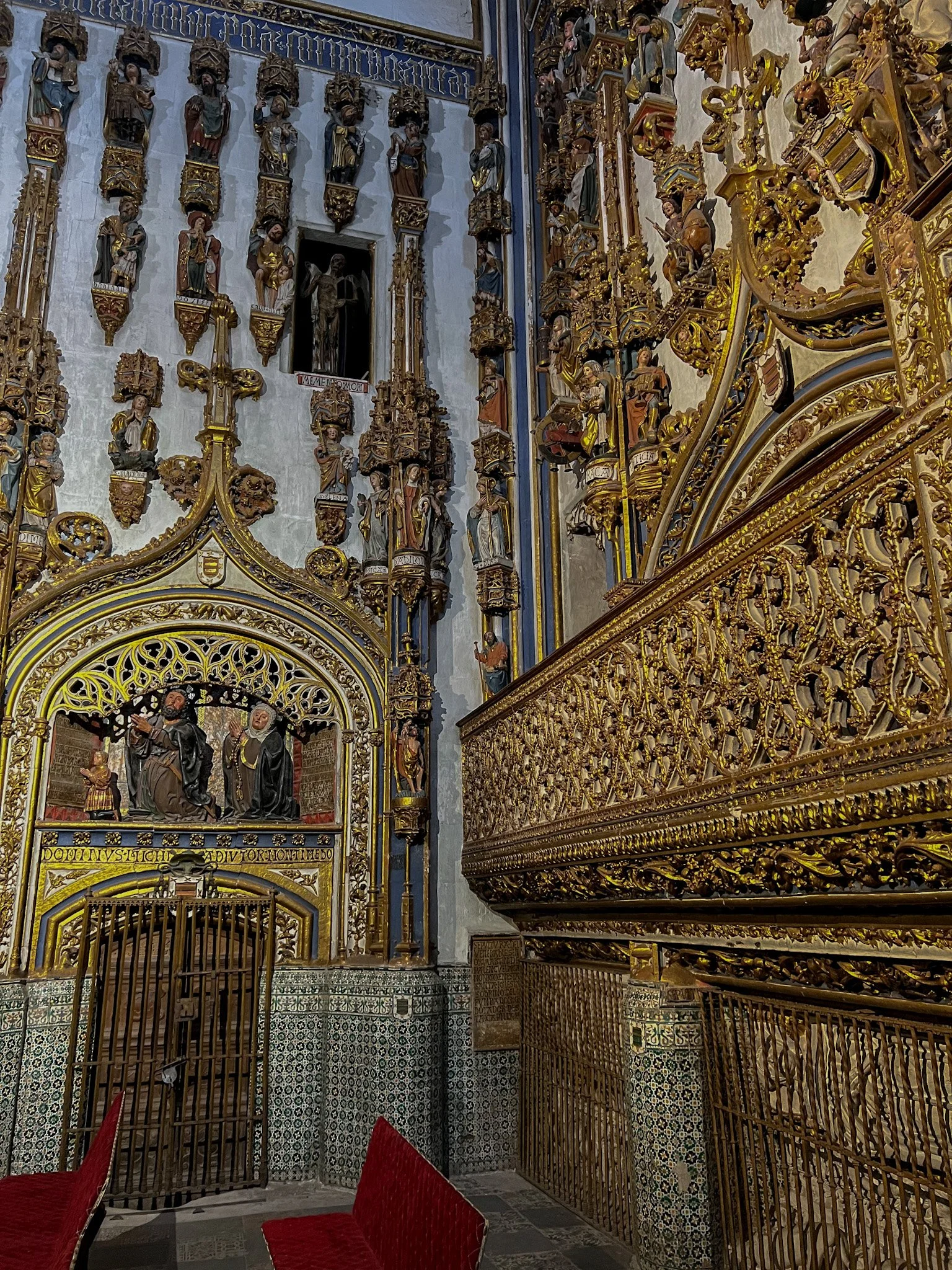
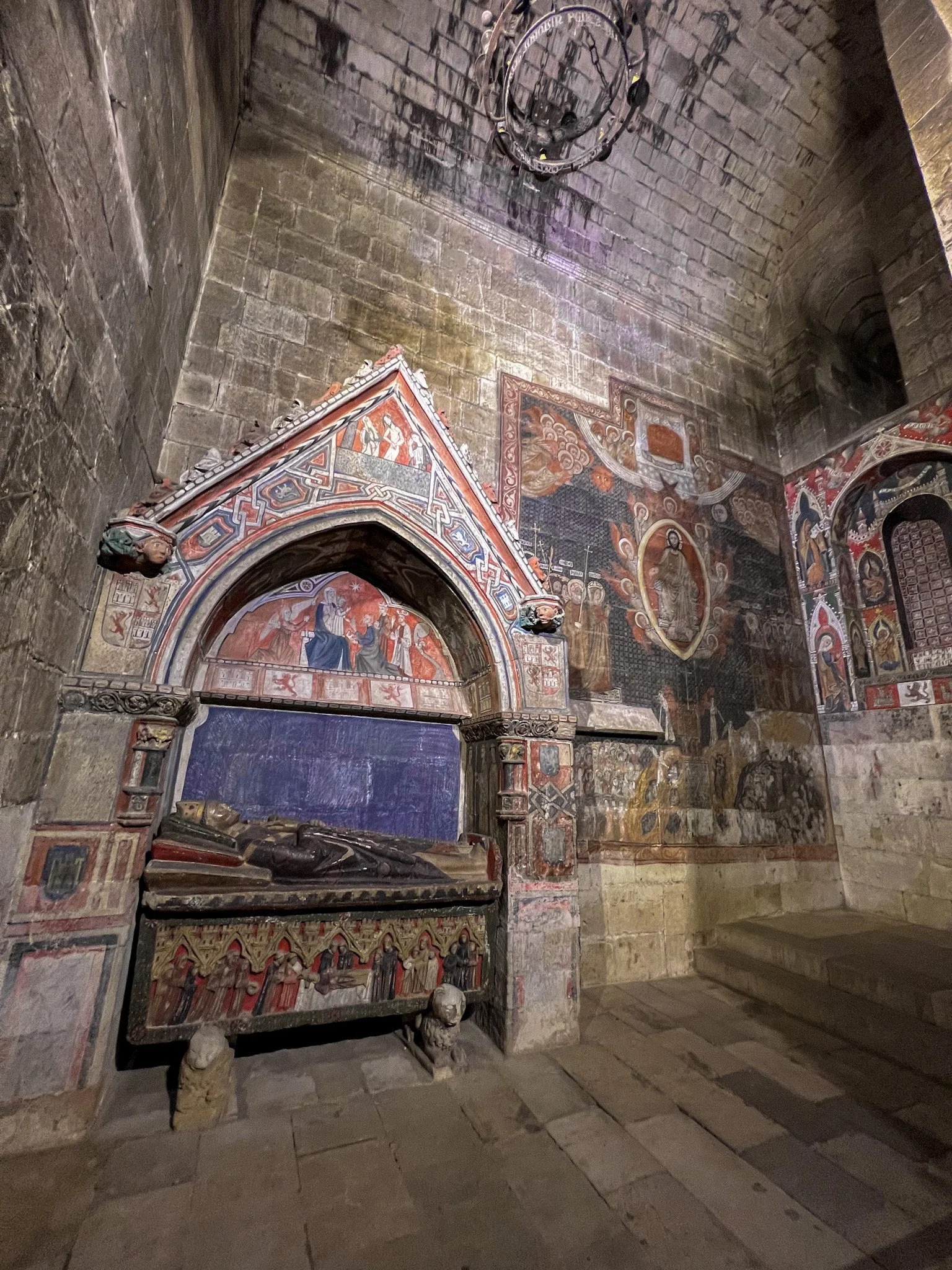
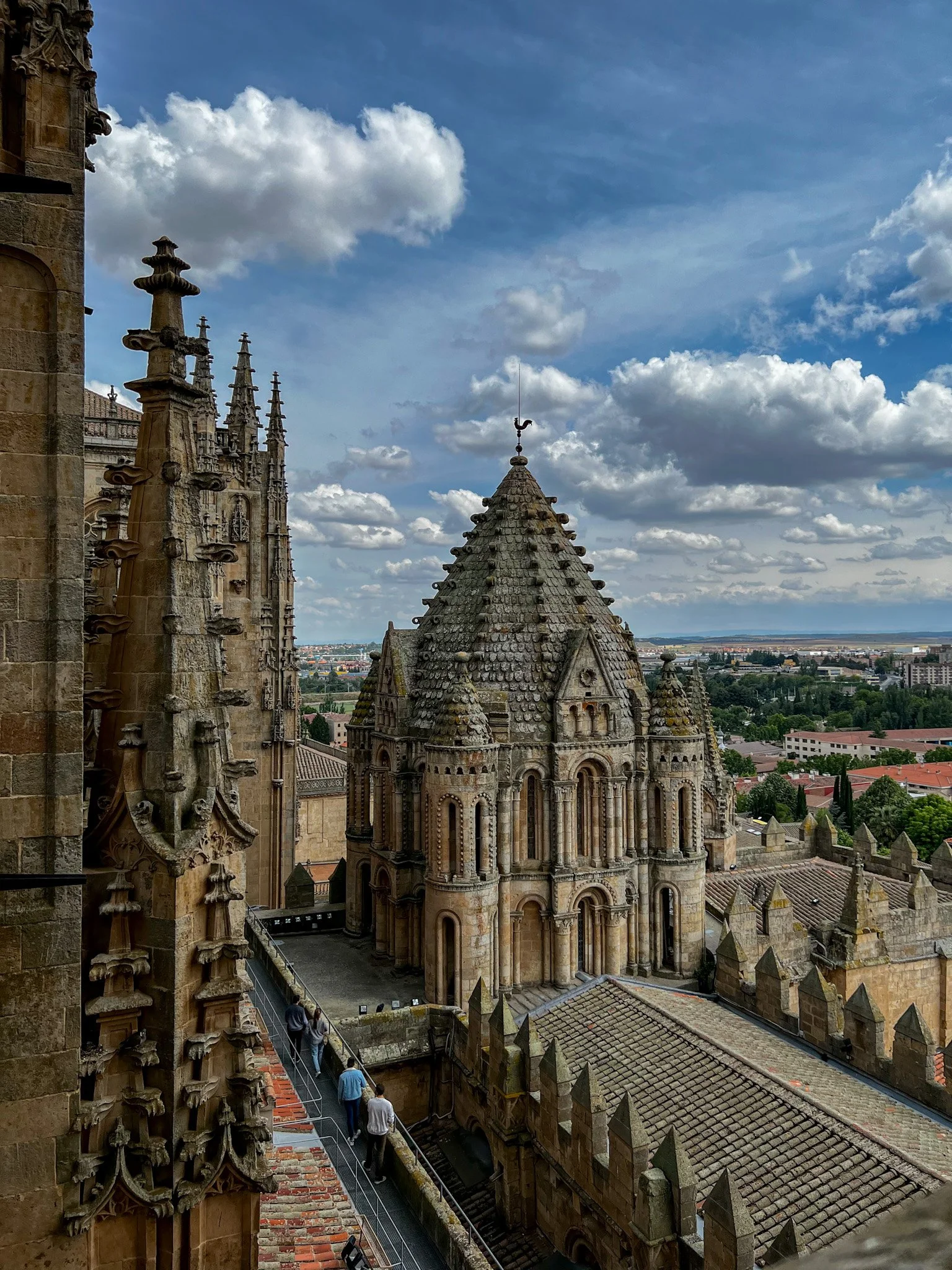
After exploring the New Cathedral, you’ll cross the thick walls that connect it to the Old Cathedral, founded by Bishop Jerónimo de Perigord in the 12th century. Construction began around 1100 and was fully completed in the 14th century, blending Romanesque and Gothic styles.
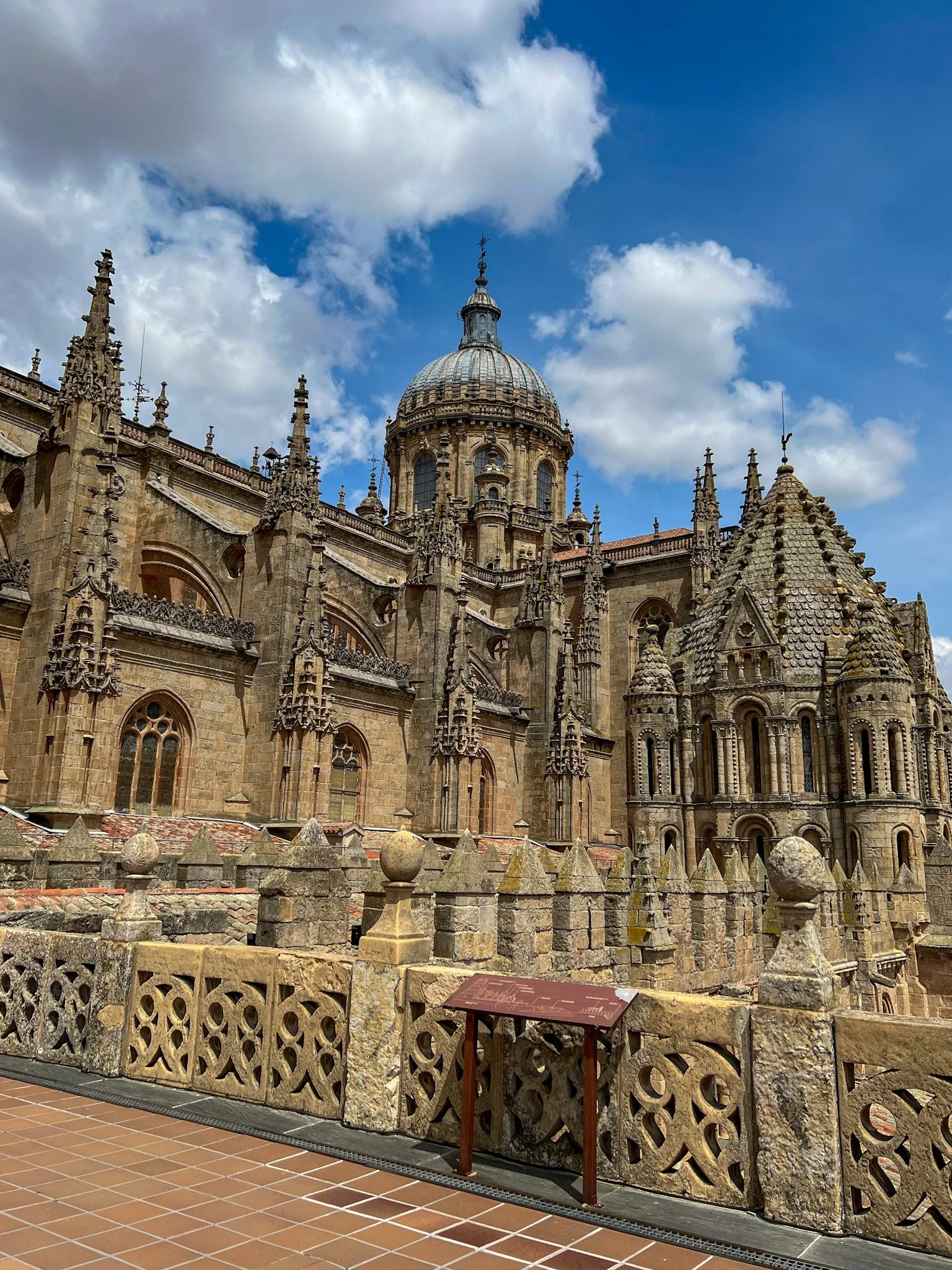
The cathedral's architecture features a basilica layout with a Latin cross, three naves, and a transept. Its semicircular apses are adorned with windows with semi-circular arches. Its tower, known as the "Torre del Gallo," is a prominent feature, crowned by a rooster weathervane, and dates back to the mid-12th century.
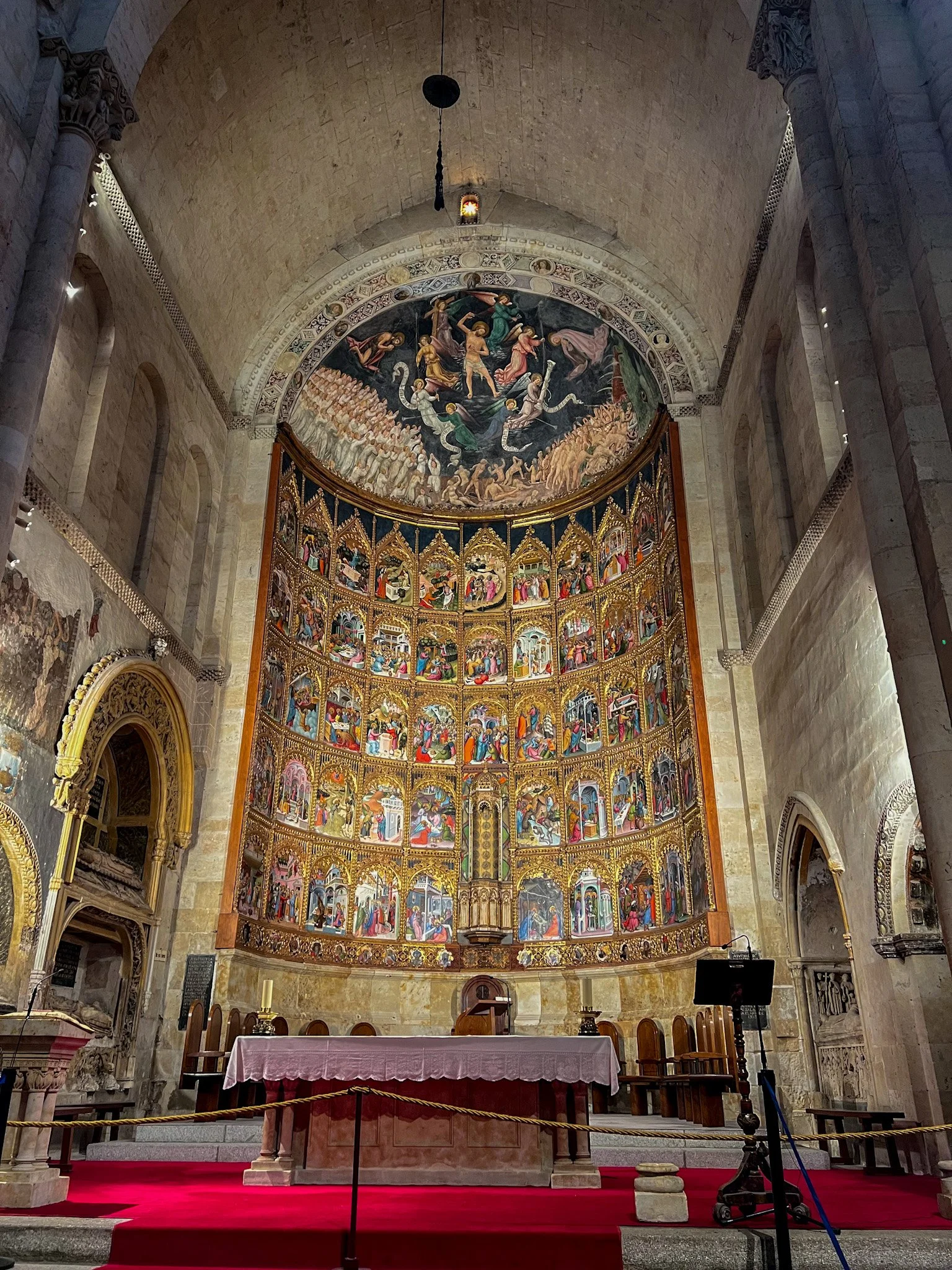
The interior houses significant works of art, including the 15th-century altarpiece by Nicolás Florentino, which illustrates the life of the Virgin Mary and Jesus. Notable elements include the Capilla de San Martín, the frescoes in the cloister, and the historical chapels, such as the Capilla de Santa Catalina, now part of the Cathedral Museum.
Ieronimus
Another incredible experience you can’t miss in Salamanca is Ieronimus, offering visitors the chance to explore the Cathedral of Salamanca from a higher perspective. Located within the cathedral complex, Ieronimus is an audiovisual visit that allows visitors to ascend to the roof and bell tower, revealing the cathedral’s rich history, stunning architecture, and artistic treasures from a breathtaking vantage point.
The name Ieronimus comes from St. Jerome (San Jerónimo), the patron saint of the cathedral. Highlights include accessing the rooftops, climbing to the bell tower, and enjoying spectacular panoramic views of Salamanca and its surroundings.
Ieronimus also incorporates advanced multimedia technology, such as projections and sound, to bring the history of the cathedral to life. The visit takes guests through the main nave, cloisters, and even the hidden passageways of the cathedral, providing a deeper understanding of the building's artistic and religious importance.

University of Salamanca
A few minutes walk from the Cathedral you’ll reach another highlight of Salamanca, the renown University of Salamanca. Founded in 1218 by King Alfonso IX, it is the oldest university in the Hispanic world and one of the oldest continuously operating institutions of higher learning globally. It serves over 30,000 students from around 50 different countries, continuing its legacy as a major centre of education.
Historically, the University of Salamanca began as a cathedral school in the 12th century before being officially recognized as a university in 1218. In the 13th century, King Alfonso X provided an official royal charter, giving the university recognition and further development. Its early academic influence spread across Europe, and during the Spanish Inquisition, the university became known for training legal and bureaucratic professionals who played significant roles in the Spanish Empire.
One of the university’s most famous episodes involved Christopher Columbus, who sought support for his westward voyage to the Americas at the university. Although initially skeptical, scholars at Salamanca defended the theory of unknown lands across the ocean, indirectly supporting Columbus' journey.
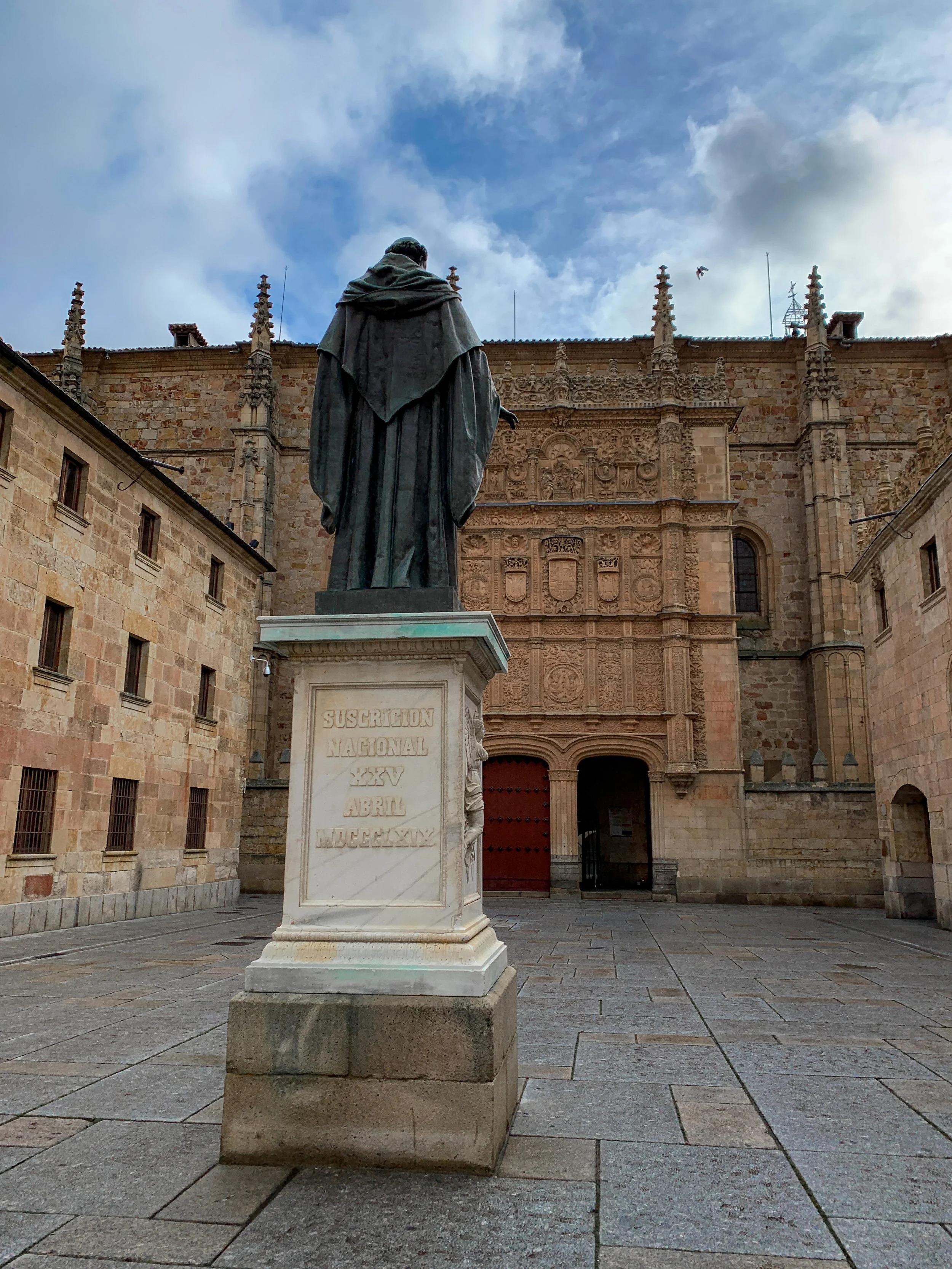
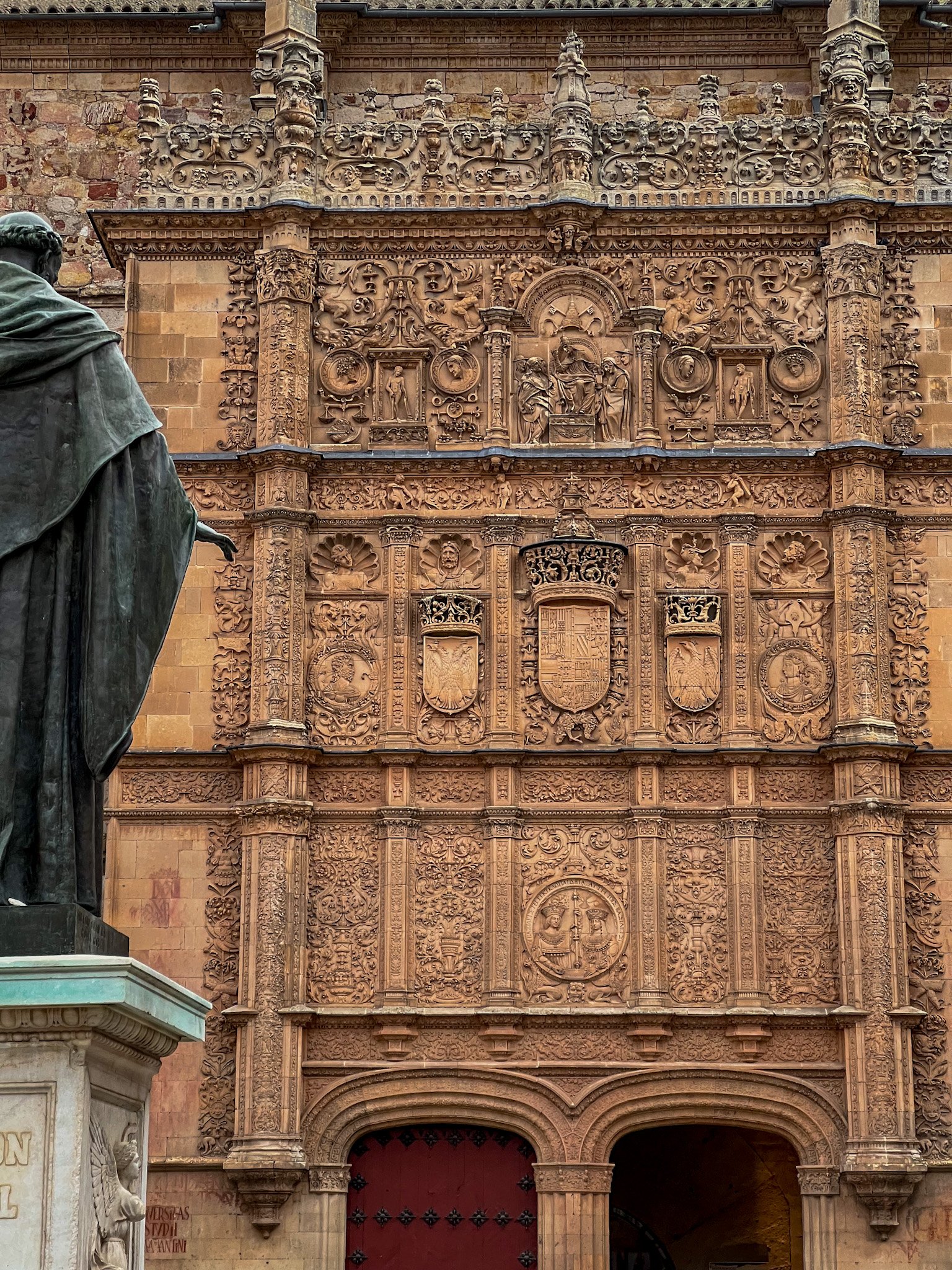
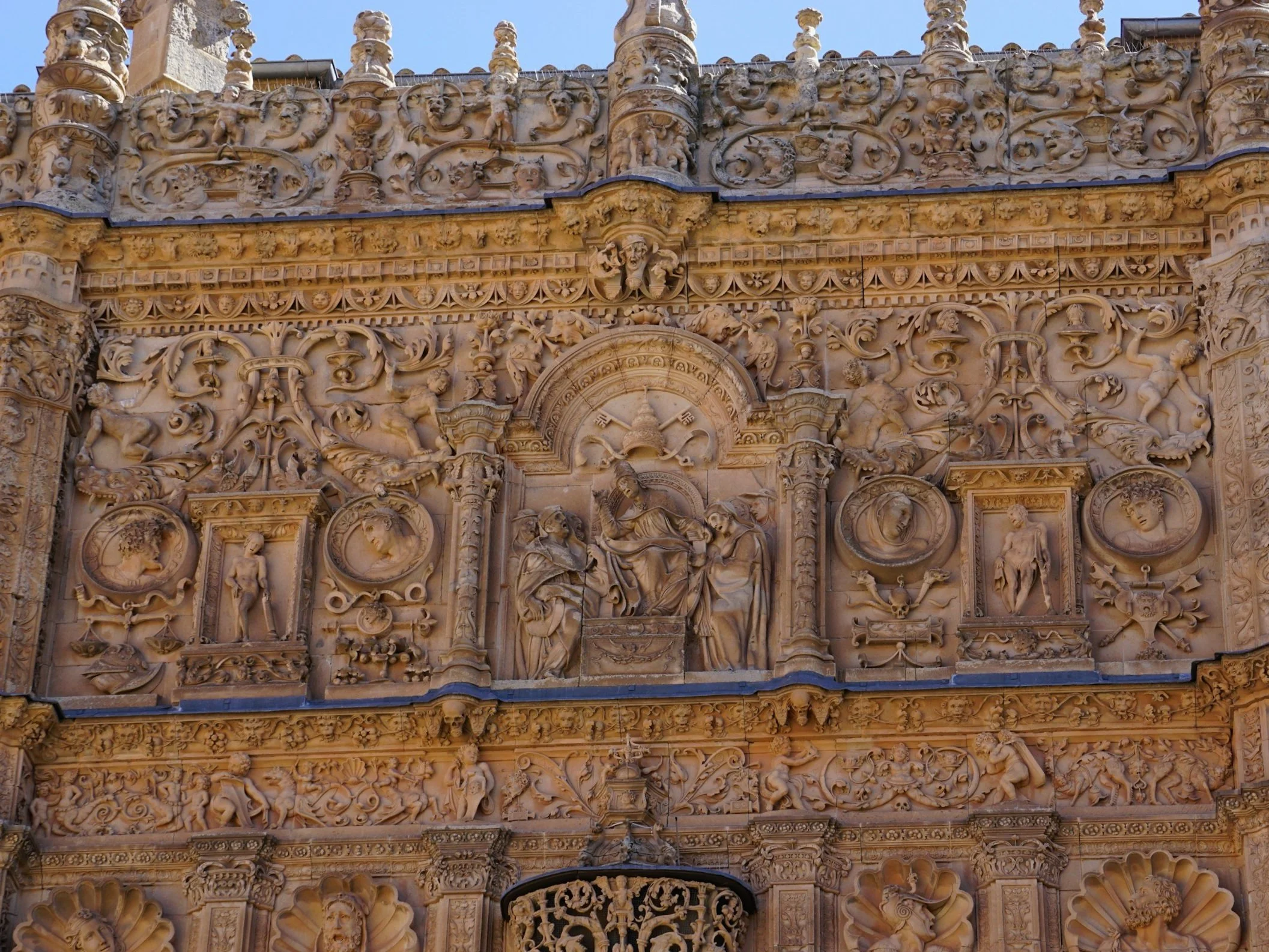
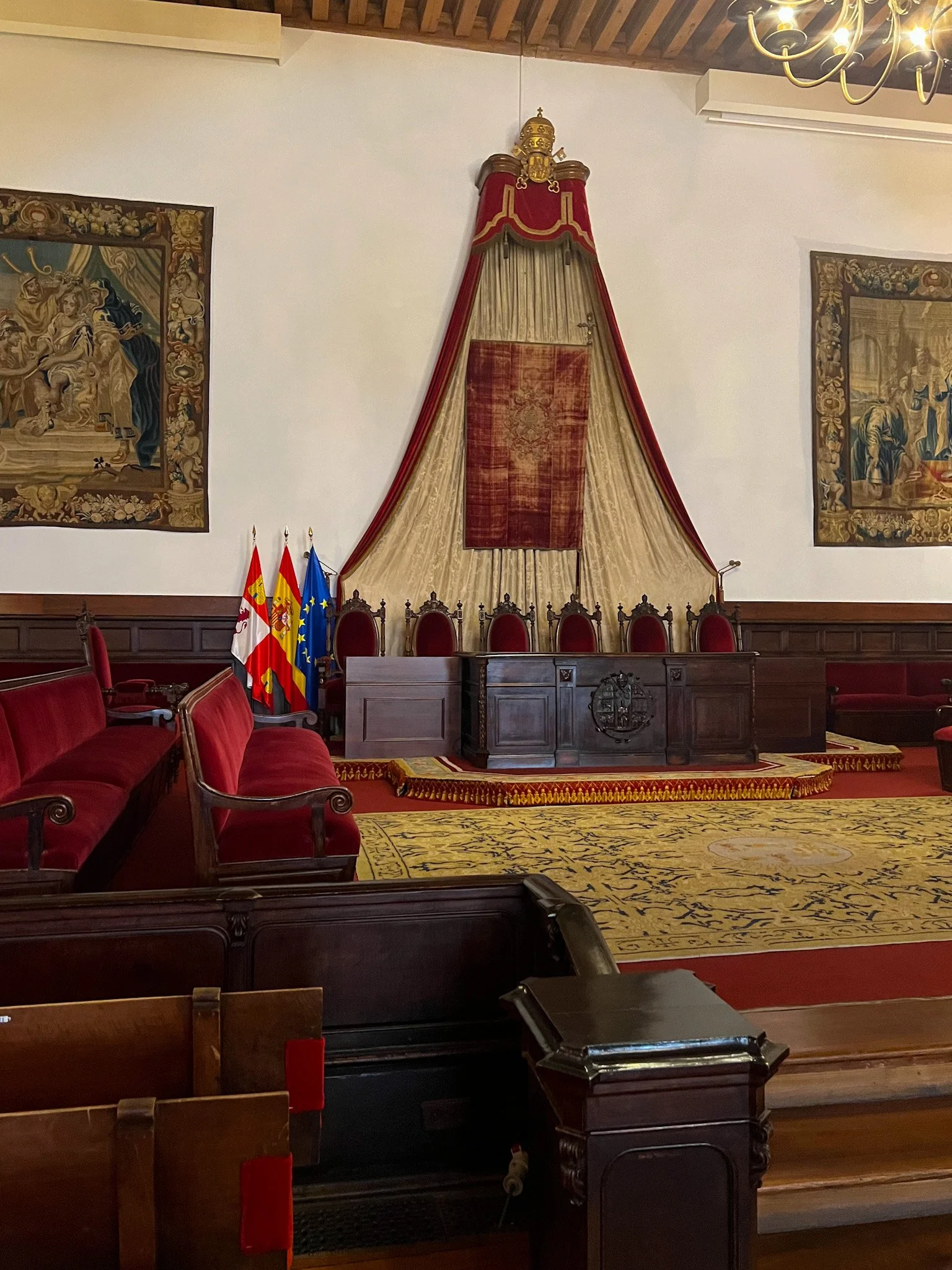
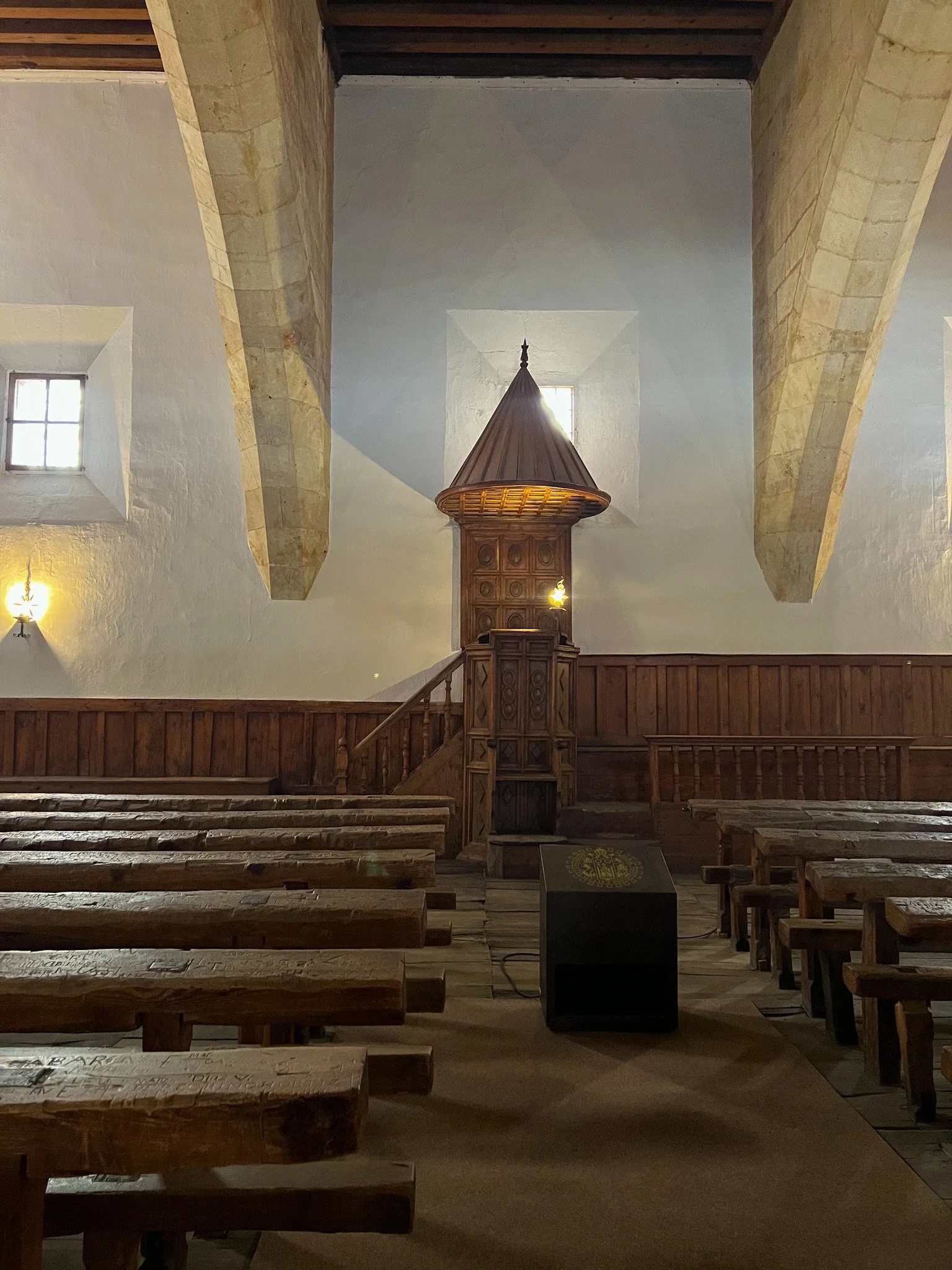
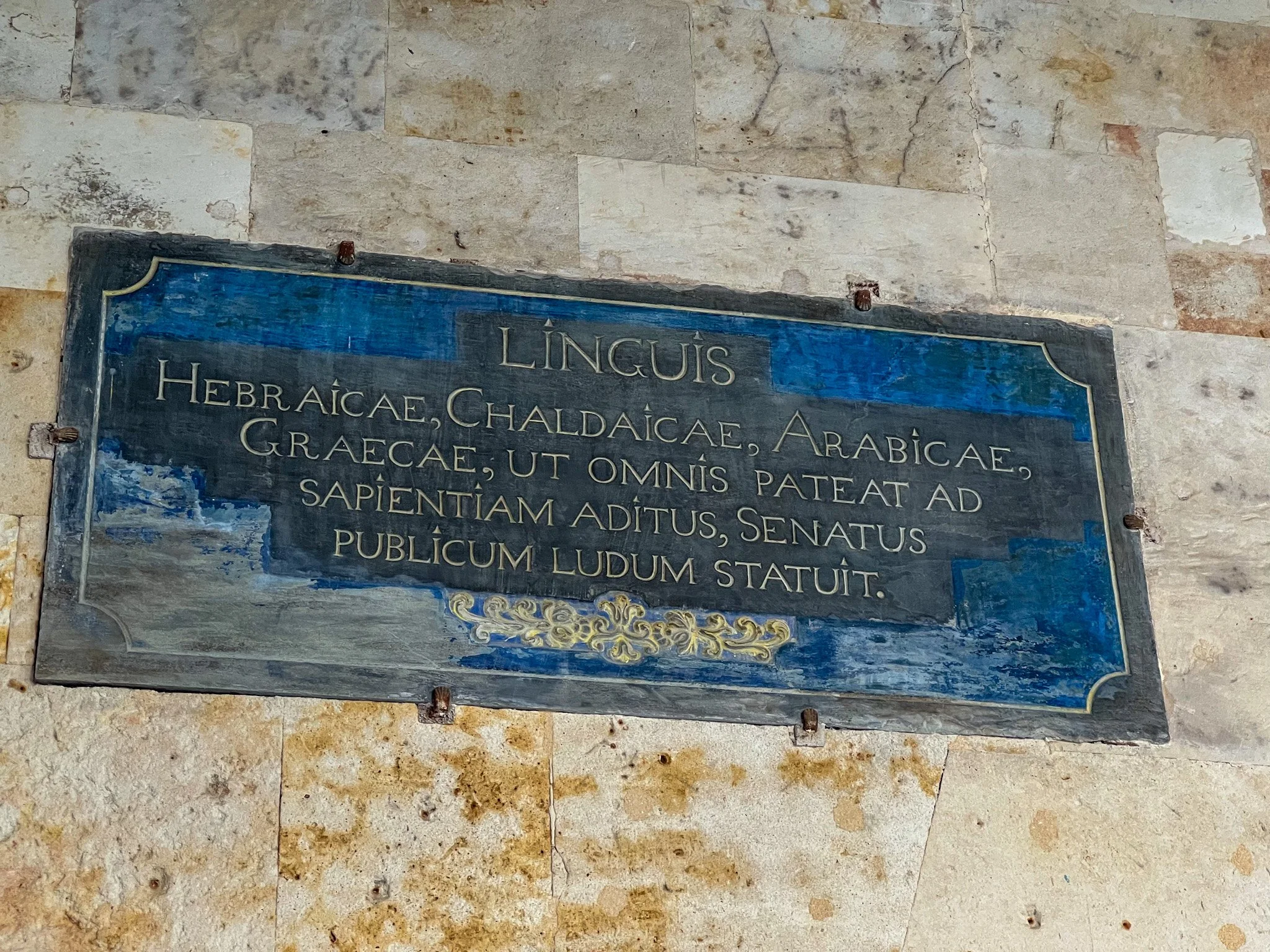
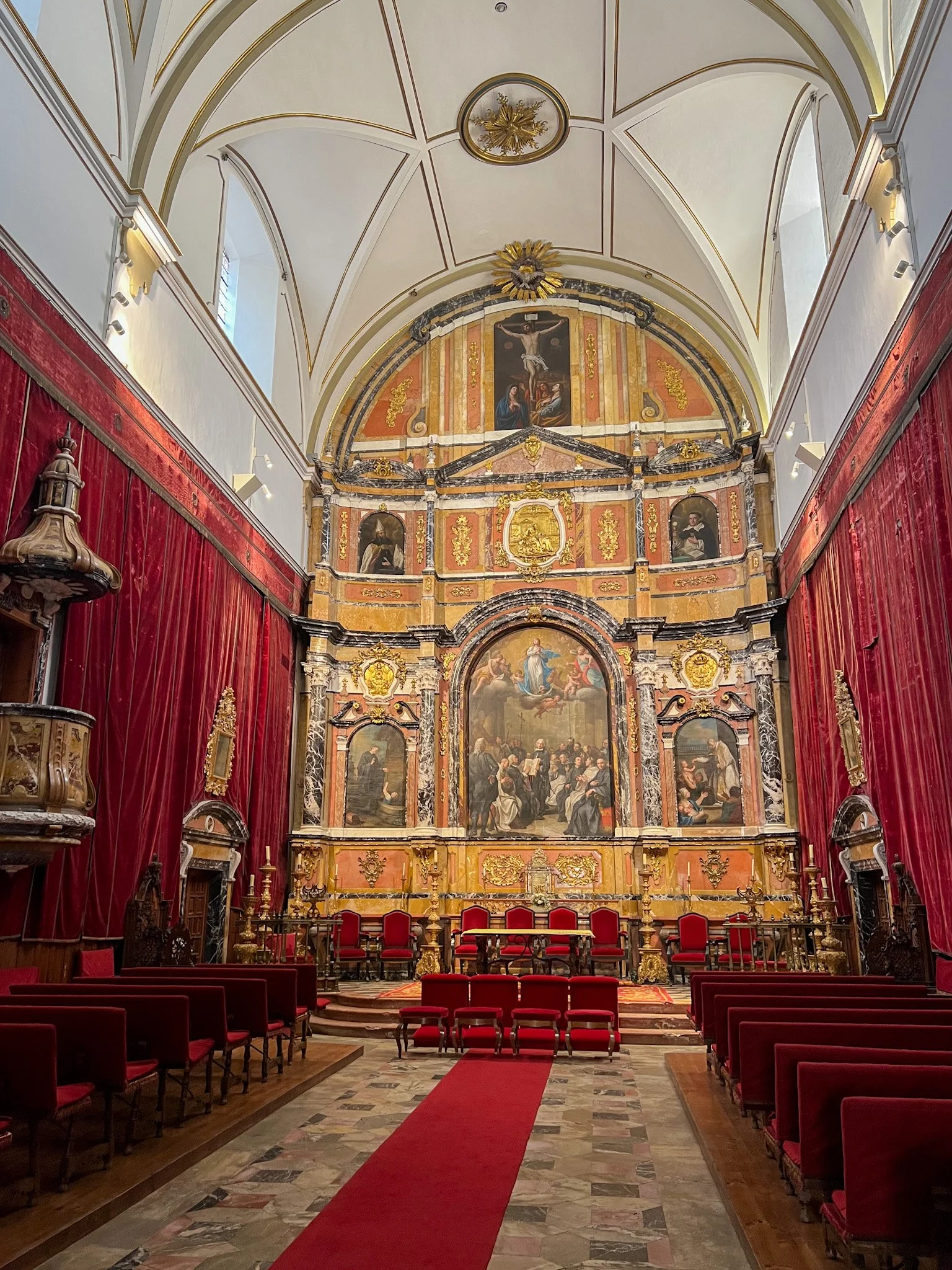
Its most known building is the Escuelas Mayores, the main structure of the University of Salamanca. Construction began in 1411 under the order of Pope Luna and was completed in 1533. The building is organized around a central courtyard with galleries and houses several important areas, including the Paraninfo (main hall), the Library, and a notable Chapel dedicated to Saint Jerome.
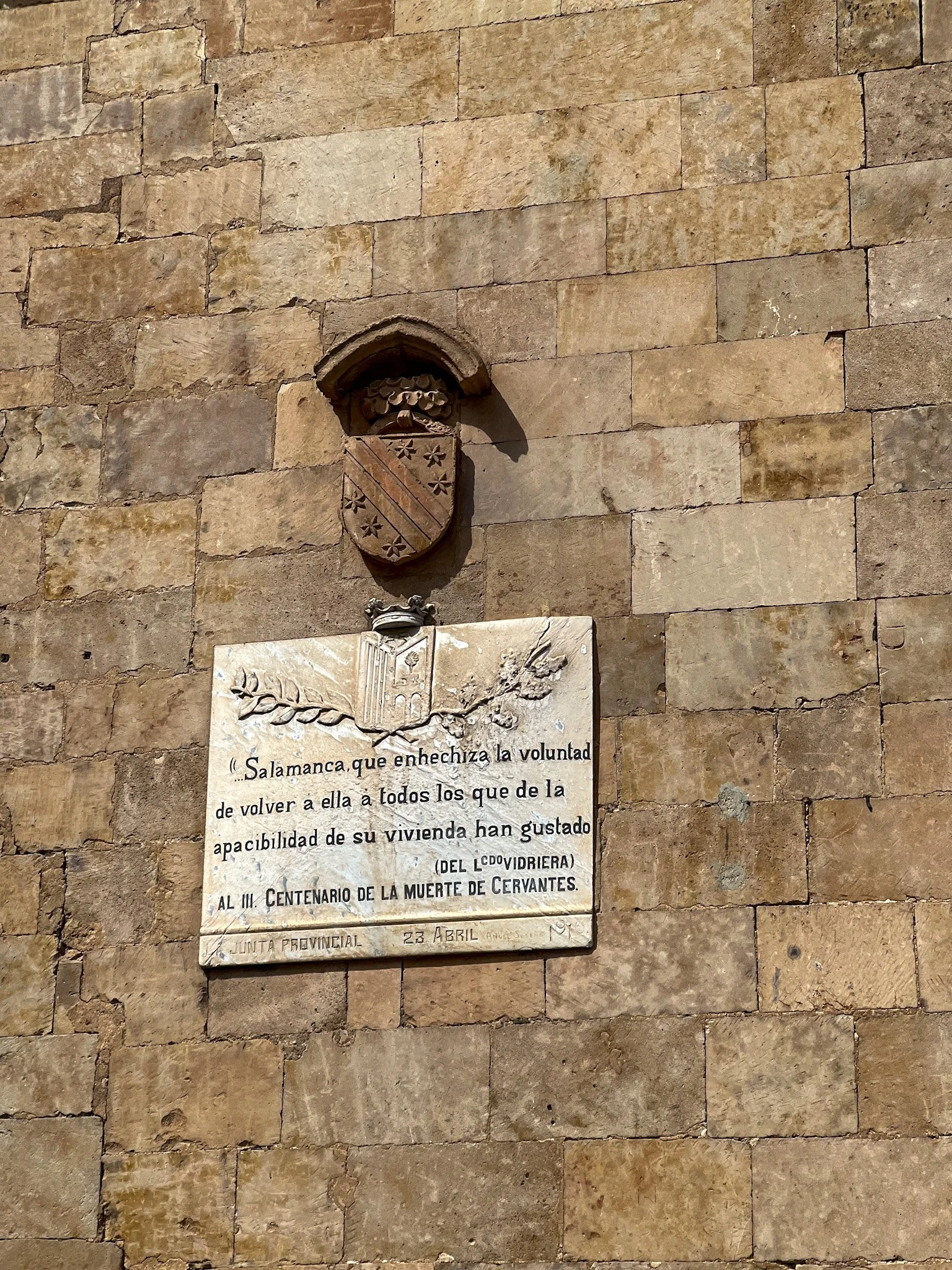
The Plateresque façade is one of the most iconic features of the building. Divided into three sections, each rich with detailed carvings, it includes depictions of the Catholic Monarchs Ferdinand and Isabella, the imperial eagle of Emperor Charles I, and several representations of gods and emperors. A famous feature of the façade is the small frog sculpture, which has become a symbol of the university. According to tradition, finding the frog on the façade brings good luck and success in studies.
Minor Schools
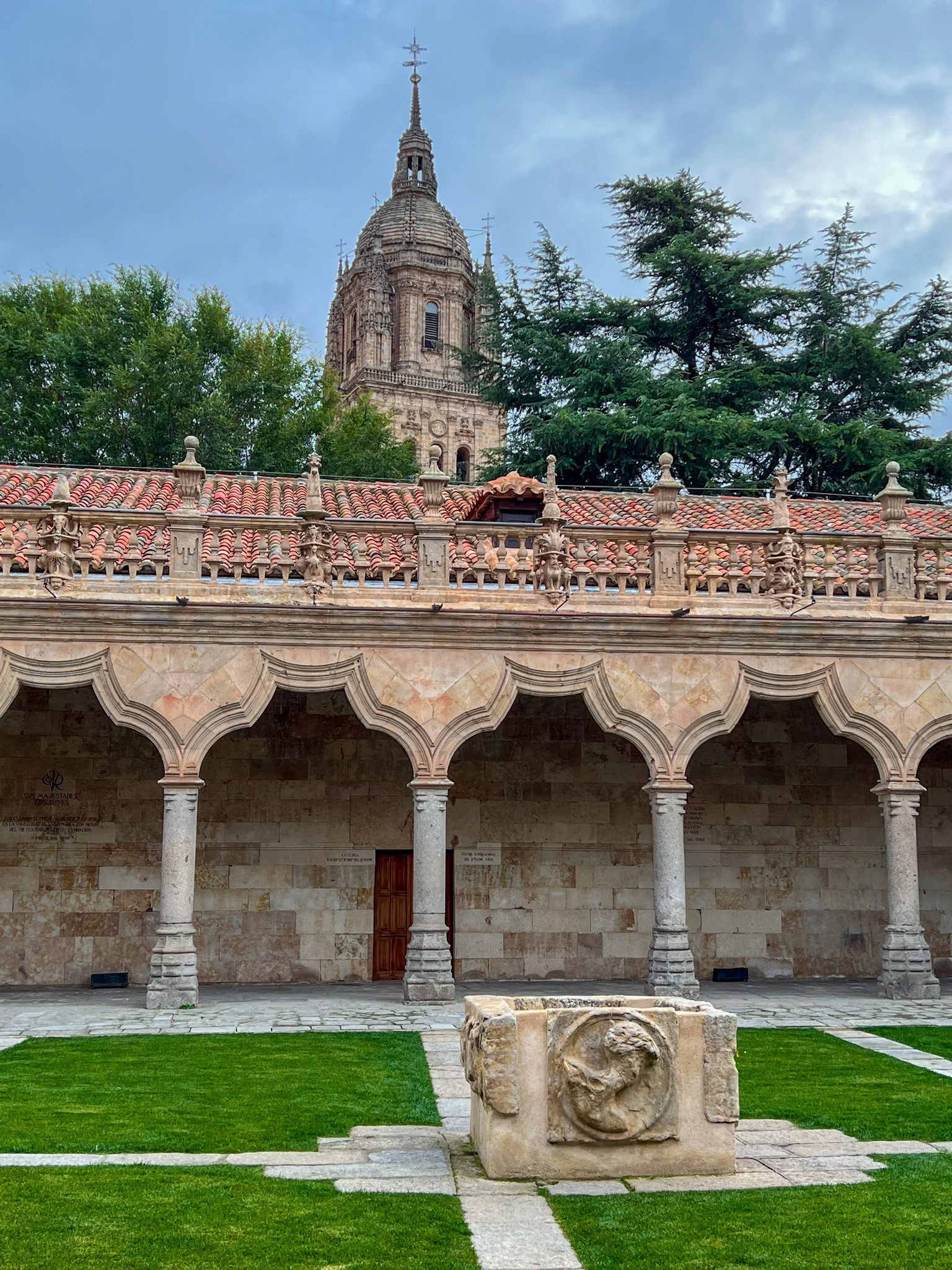
Also part of tue University are the Escuelas Menores (Minor Schools). Founded in the 15th century, they were designed to provide preparatory education for students aspiring to enter the University's higher studies. The building's architecture reflects the transition from the medieval to the Renaissance period, showcasing the era's academic and social transformations.
The construction of the Escuelas Menores began around 1428 and was completed in the 16th century, funded by important patrons like the bishop of Salamanca. The building was originally used for teaching basic subjects to students from lower-income backgrounds, helping them gain access to advanced studies in the University's Escuelas Mayores.
Today, the Escuelas Menores continue to serve an educational and cultural role, hosting events, exhibitions, and activities. One of its most notable features is the Sky of Salamanca, a 15th-century fresco by Fernando Gallego, depicting zodiac signs, constellations, and planetary figures like the Sun and Mercury.
Inspired by the newly established chair of astrology at the university, it was originally located in the upper part of the library until the vault was partially destroyed during 18th-century renovations, which led to the painting being hidden in a chamber for centuries. It was rediscovered in 1901 by Professor García Boiza and later moved to the University Museum in the Minor Schools in the 1950s. The mural’s iconography follows the Poeticon Astronomicon and represents a unique intersection of late medieval thought and the emerging Renaissance interest in astrology and science. Although only a third of the original vault remains, the Sky of Salamanca is considered one of the most important surviving examples of early Renaissance astronomical art in Spain.

Casa Lis
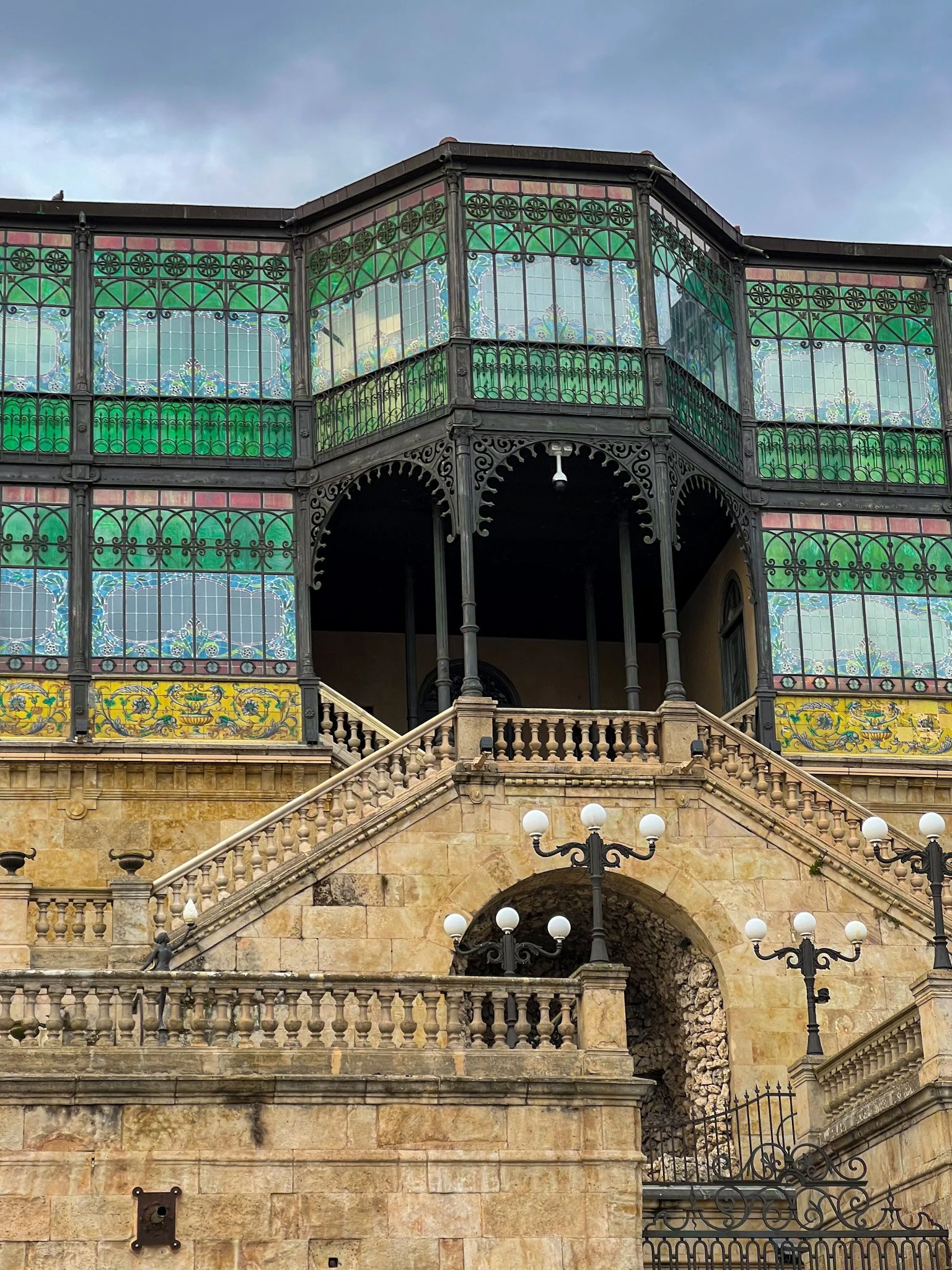
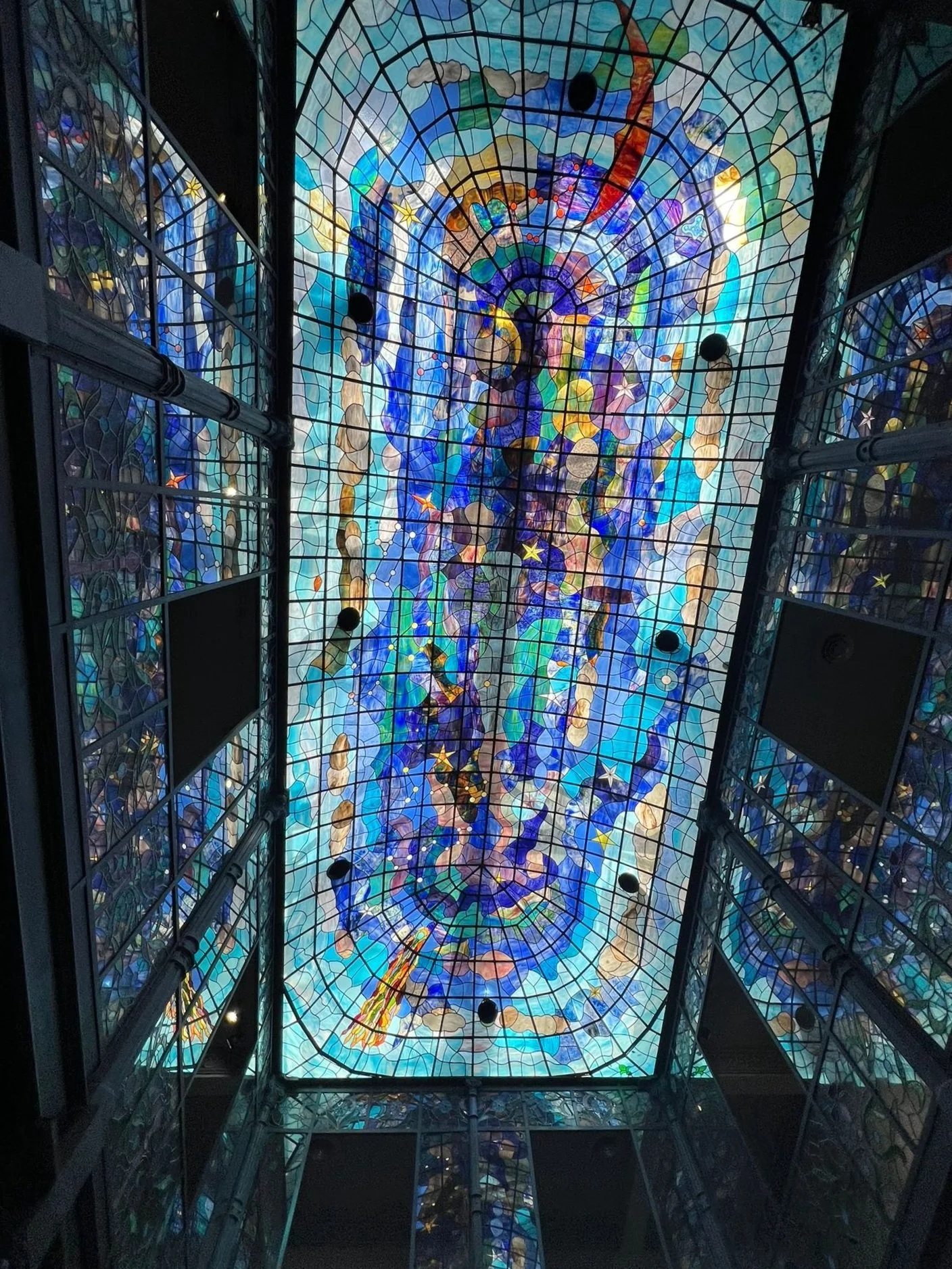
It’s now time to visit Salamanca’s most famous museum: the Casa Lis. Dedicated to Art Nouveau and Art Déco, the museum showcases decorative arts from the late 19th century to World War II.
Originally built as a mansion for Miguel de Lis, a prosperous tannery owner, the building was designed by architect Joaquín de Vargas y Aguirre in a modernist style. The Casa Lis holds a rich collection, offering a glimpse into the luxurious decorative art styles of the turn of the century.
Its stunning stained glass windows, elegant design, and fascinating exhibits make it a must-visit for art lovers. The museum is a unique cultural experience that showcases the beauty of the 20th century.
Roman Bridge
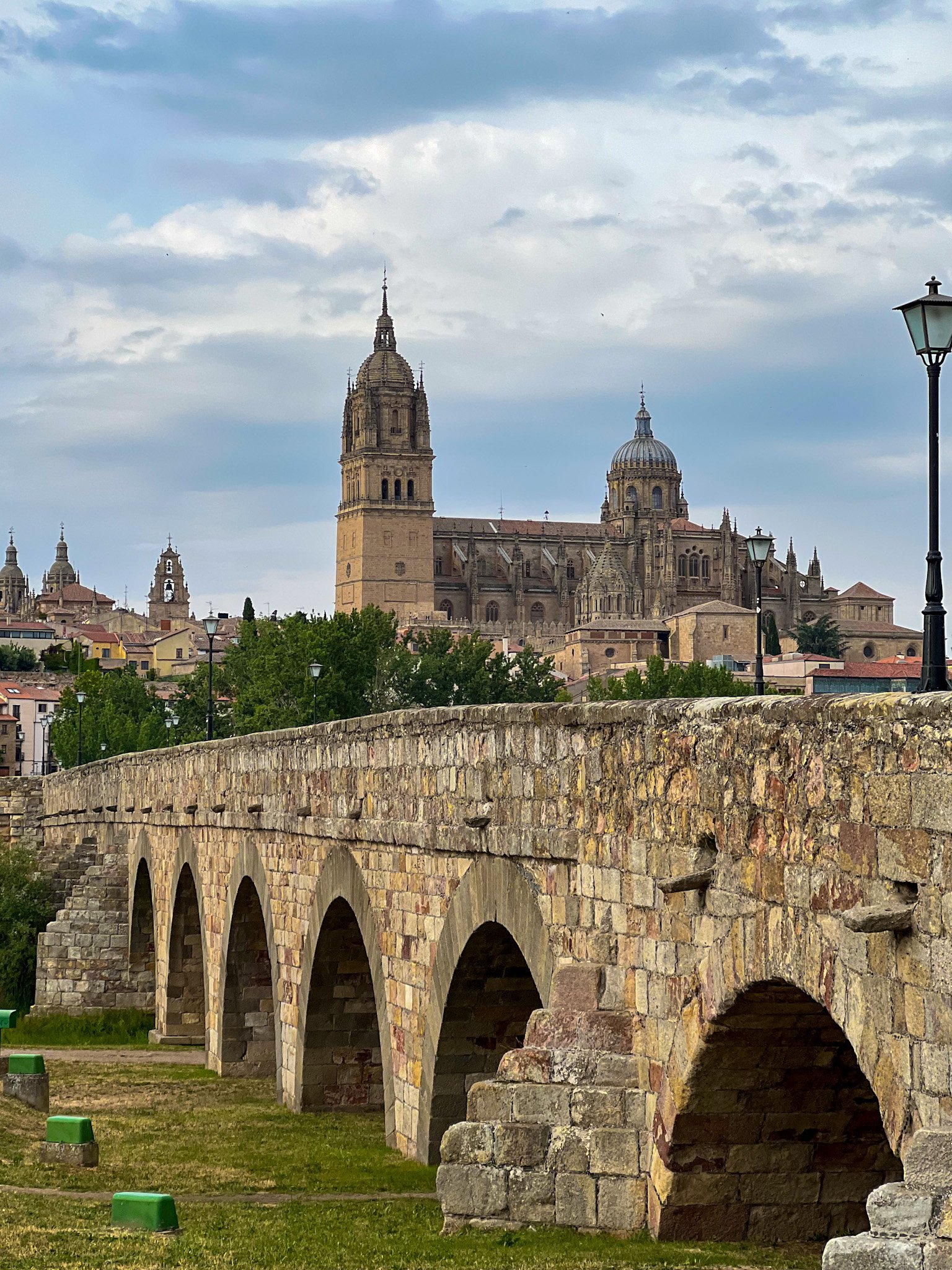
Finish your tour with a walk across the Roman bridge spanning the Tormes River. Originally built during the Roman era, it was part of the Vía de la Plata, connecting Mérida to Astorga.
Although the bridge's exact construction date is uncertain, it is believed to have been built around the 1st century AD, during the reigns of emperors Nero, Trajan, or Hadrian. The bridge features 26 arches, with the first 15 dating back to Roman times, while the rest were added during later restorations. The structure has survived numerous floods, including a major one in 1626, and several attempts at demolition.
Over the centuries, the bridge has undergone numerous modifications, and in the 20th century, it was converted into a pedestrian-only bridge. Today, it is one of the main tourist attractions of Salamanca, offering incredible views of the Cathedral and Salamanca’s walls from across the river.

Convento de San Esteban
As you walk from the Tormes River back to the Old Town, you can’t leave Salamanca before visiting the Convento de San Esteban.
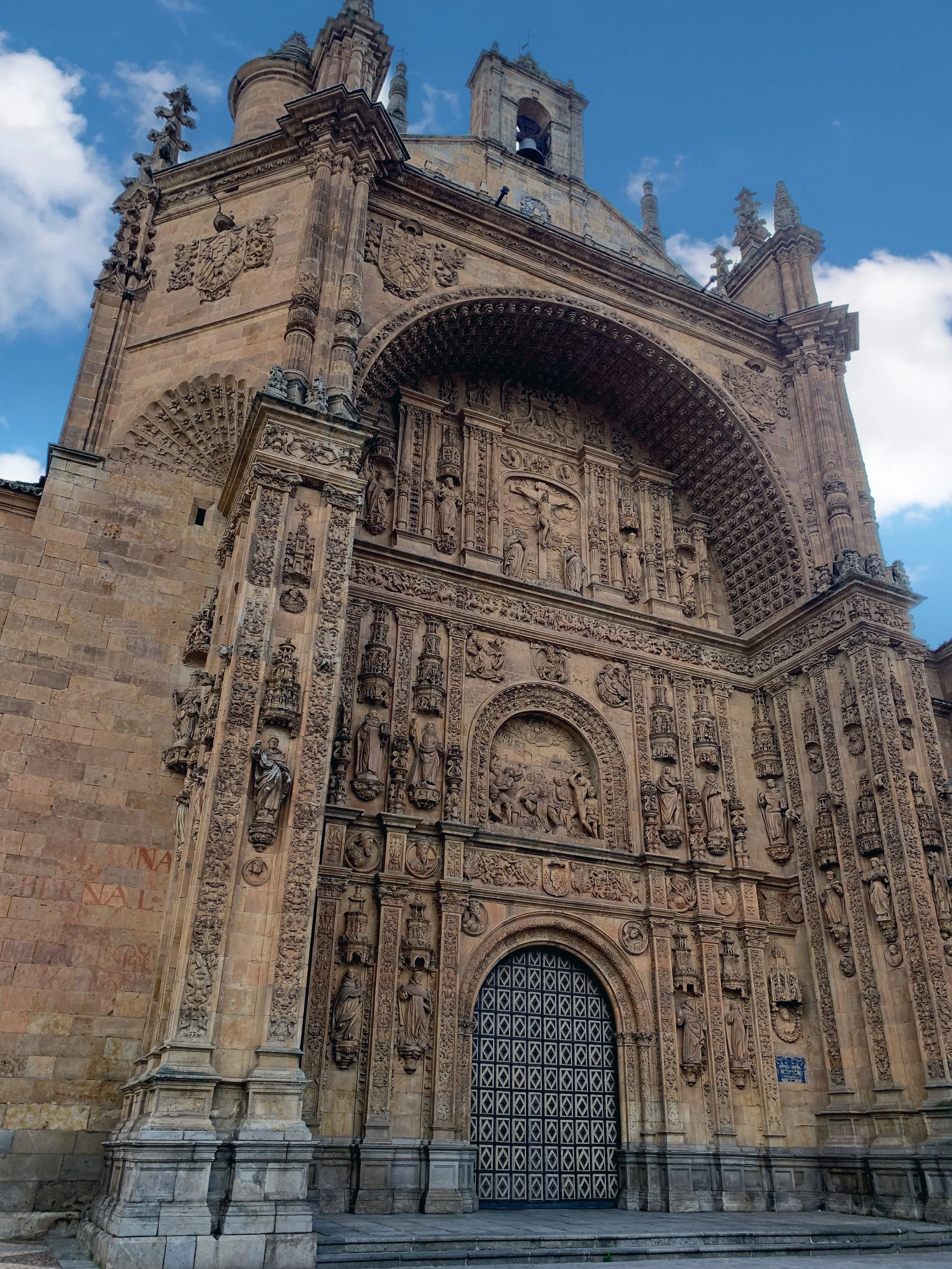
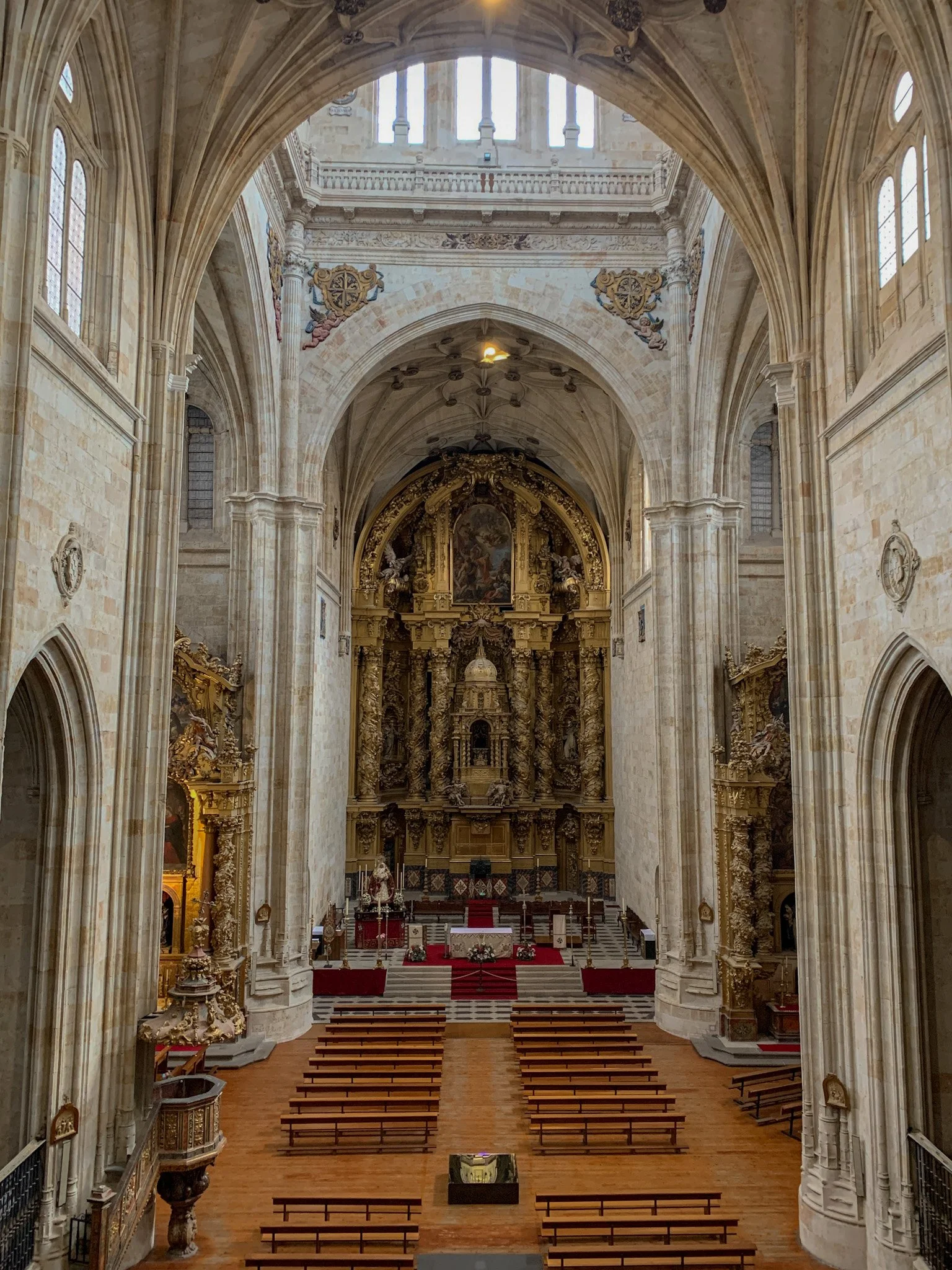
Situated in the Plaza del Concilio de Trento, this stunning Dominican monastery was originally founded in the 13th century, with the current structure being built in the 16th century. Construction took over 80 years, and the building reflects a mixture of architectural styles, including late Gothic, Renaissance, and even early Baroque elements. The convent’s most famous feature is its façade, a magnificent example of Plateresque design, with intricate reliefs that depict the martyrdom of Saint Stephen and a Calvary scene.
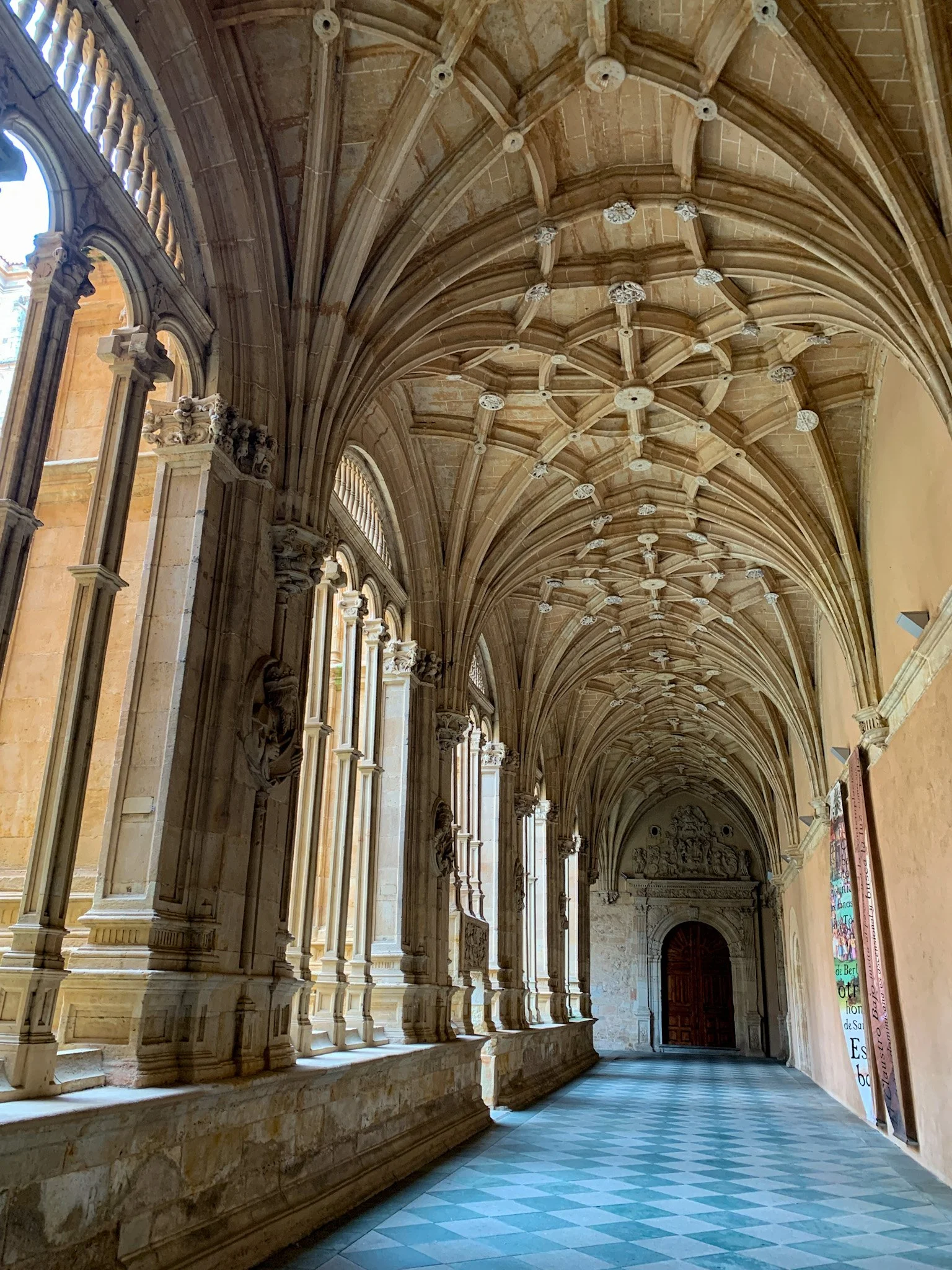
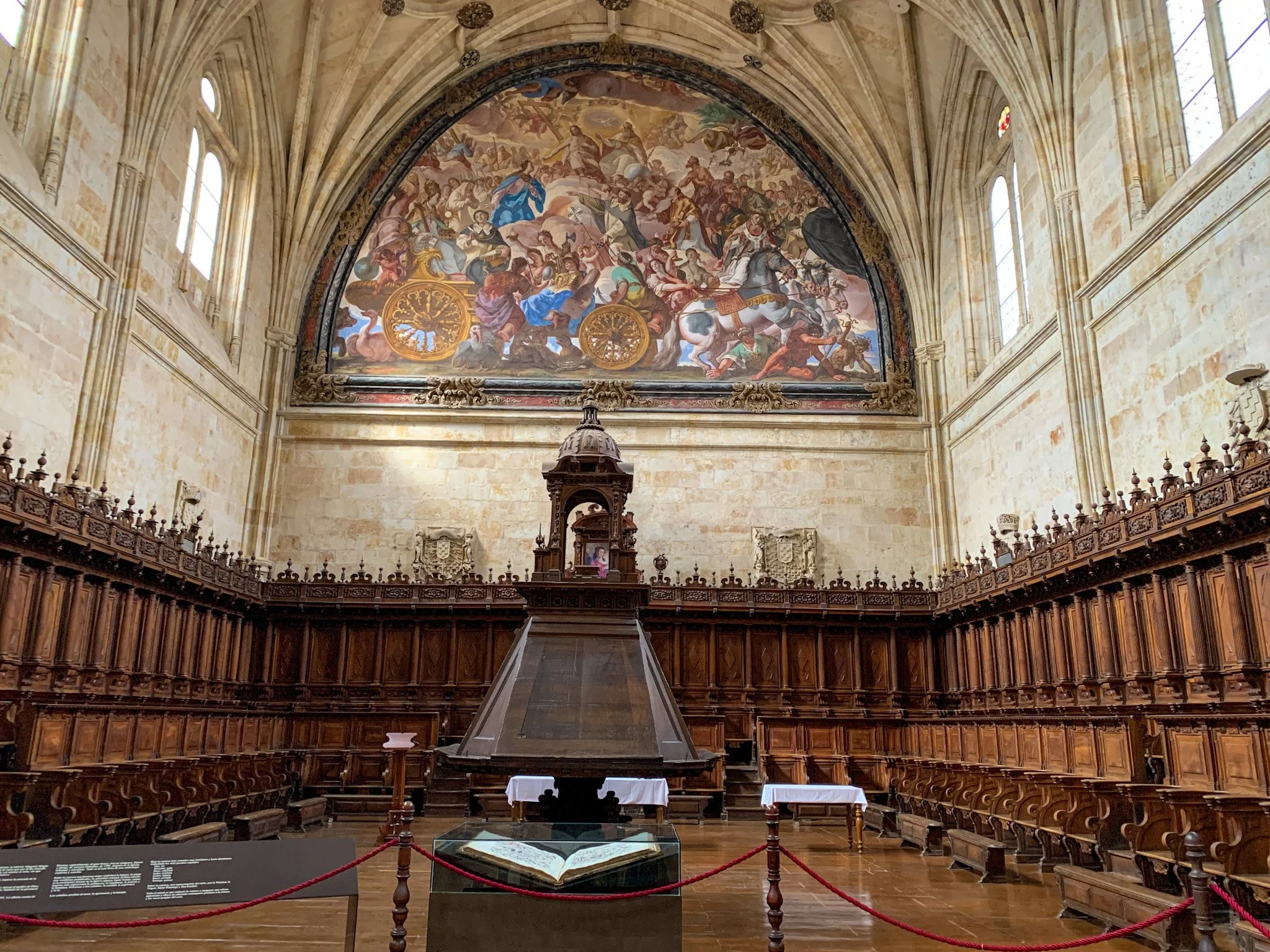
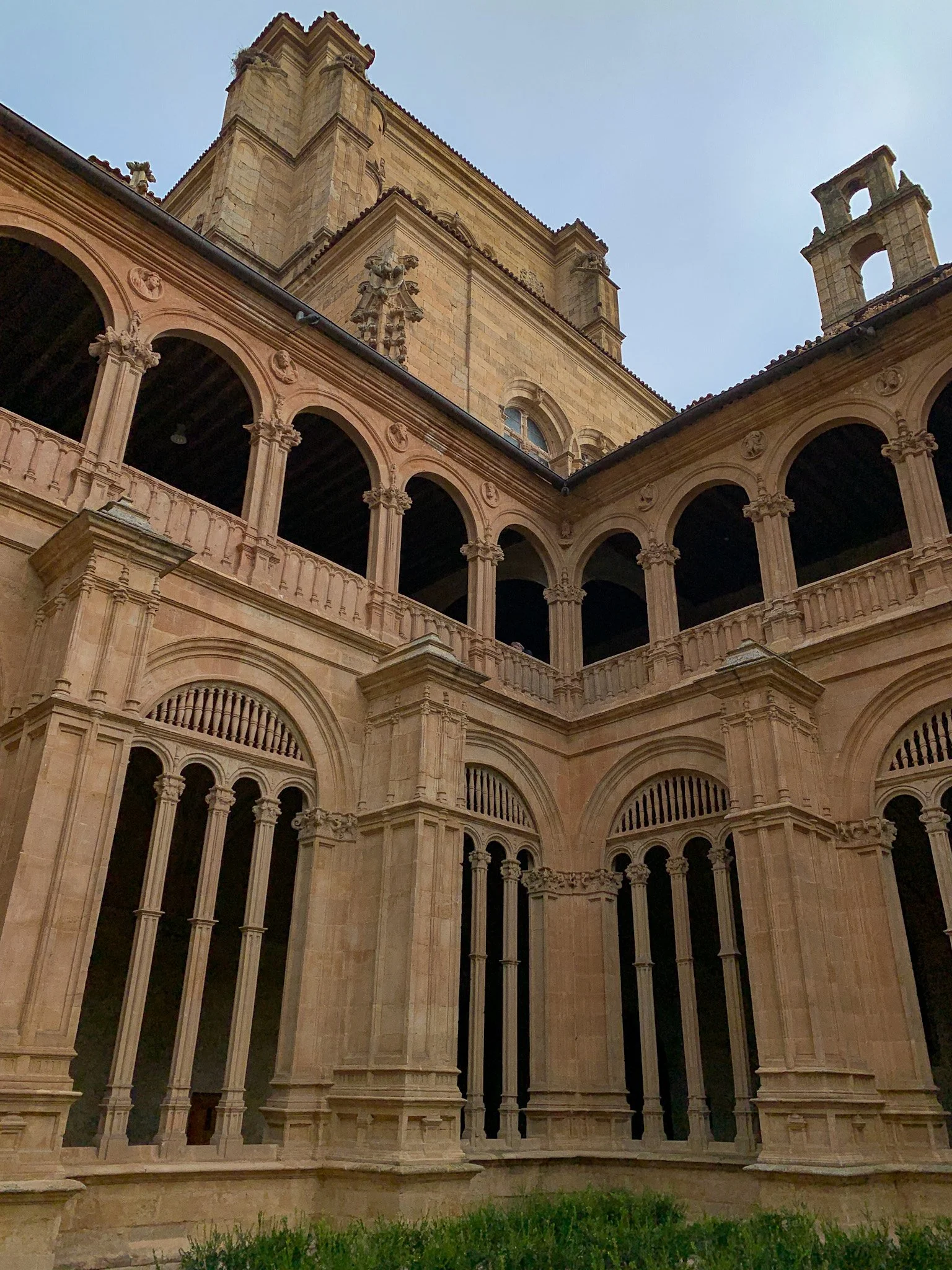
Inside, the convent boasts a Latin-cross plan and a single nave, with beautiful chapels and a remarkable main altarpiece created by José Benito de Churriguera. The Sacristy, built in the 17th century, is a highlight, decorated with Corinthian pilasters and featuring a beautiful polychrome effigy of its founder. Visitors can also explore the Cloister of the Kings, an elegant combination of Gothic and Renaissance styles, and the Chapters where prominent figures like Francisco de Vitoria were buried.
A fascinating aspect of the convent's history is its connection to Christopher Columbus, who is said to have stayed there when he visited Salamanca to present his plans to reach the Indies to the University’s scholars. The convent was also an important center during the Counter-Reformation, where Dominican fathers, including Francisco de Vitoria, shaped the development of Spanish theology and philosophy.
Salina Palace
Across from the Convento de San Esteban, take a peek at the beautiful Salina Palace. Built in 1538, the palace is a stunning example of Plateresque architecture with Italian influences.
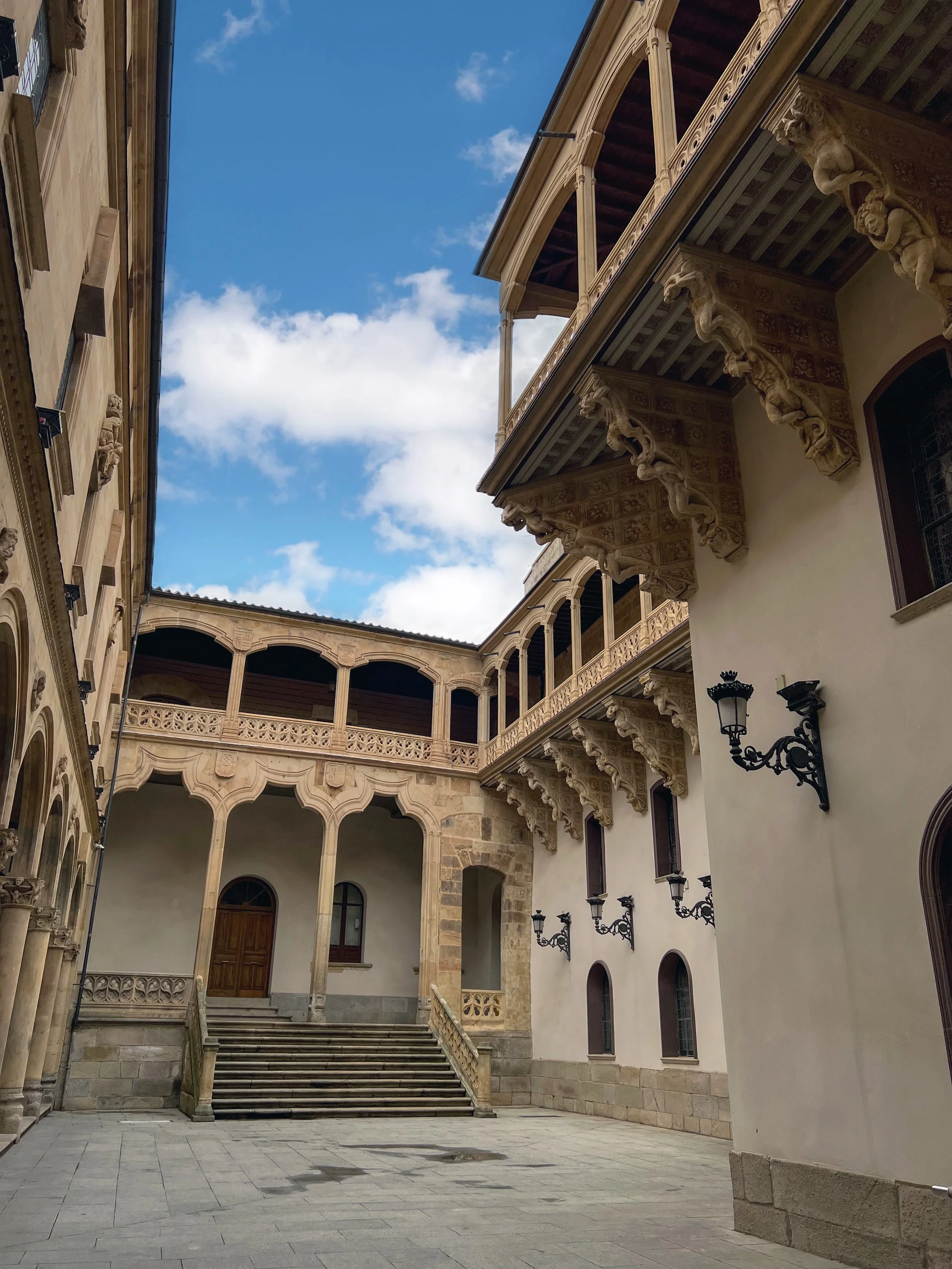
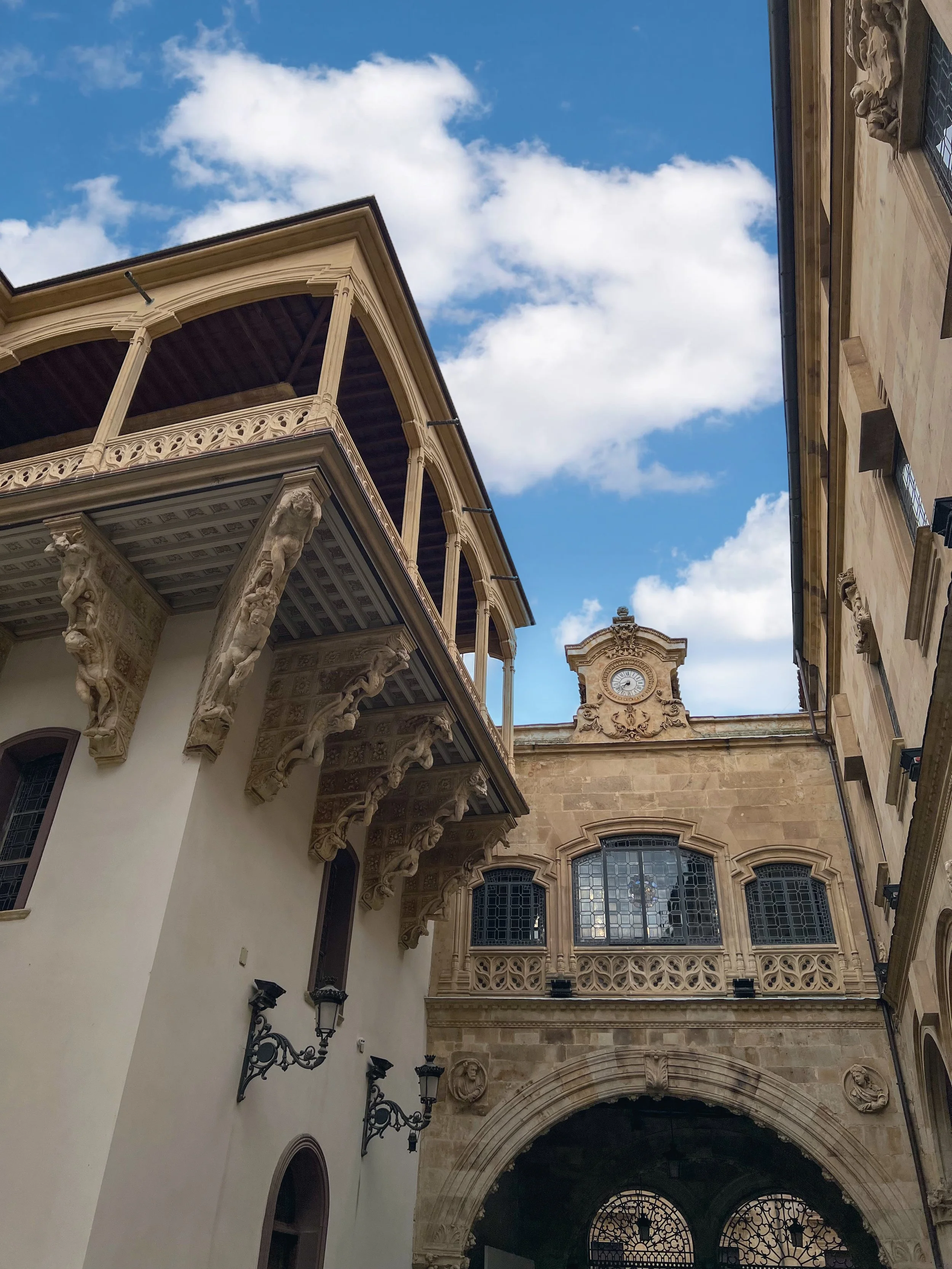
Designed by Rodrigo Gil de Hontañón, the palace is celebrated for its elegant façade and an intricately adorned courtyard featuring arches, capitals, and brackets that captivate visitors. Initially commissioned by Rodrigo de Messía Carrillo and later passed to his family, the palace bears the Fonseca coat of arms, leading to its alternate name, Palacio de Fonseca.
Its name, "La Salina," stems from its historical role as the headquarters of the city’s salt monopoly until 1870. Unlike many palatial structures of its time, it was built to serve a public function, not as a residence. Since 1884, it has housed the Diputación Provincial, the regional government.
Adding a layer of intrigue, a local legend ties the palace to Archbishop Alonso de Fonseca and his alleged feud with noble families. While the story embellishes the building's lore, historical records reveal no connection to the Archbishop, making the Palacio de la Salina a site where fact and myth blend seamlessly, adding to its allure for visitors.
Some links in this post are affiliate links, which means that if you buy through them, we’ll receive a small commission. This will never cost you more and in many cases you will receive a special discount.
As always, all opinions are mine. We appreciate your support!


From all-inclusive resorts to extensive golden-sand beaches and a rugged, mountainous interior, Gran Canaria is one of the most diverse destinations in Europe no matter what you’re after for your holidays.
During my last visit to the Canary Islands, I travelled around Gran Canaria for 4 days to discover all the natural wonders and tourist attractions of the island. Check out my 4-day itinerary around Gran Canaria in this post!