
Lanzarote, Canary Islands: the best things to see and do in the volcanic island
With its outstanding geological formations made by lava fields and the unique designs of the local artist César Manrique, who combined nature and design as never seen before, Lanzarote is an island that has much to offer beyond its white sand beaches and endless amenities.
If you’re planning to visit the Canary Islands, here are the best things to see and do in Lanzarote!
How to visit Lanzarote
I spent 4 full days in Lanzarote, which I found enough to do some sightseeing in the morning and enjoy the beaches for the rest of the day. I only had 9 days to travel and also wanted to spend some time in the nearby island of Las Palmas, but you can certainly spend more than 4 days and still have new things to do.
I tried to divide my trip equally between visiting tourist sites and spending time at the beach, so I came up with the following 4-day itinerary of Lanzarote:
Puerto del Carmen
Puerto del Carmen is the main tourist town in Lanzarote, so it is the perfect place to use as camp base to explore the island. The city, with a population of only 11,000, receives over 1 million visitors every year to enjoy its beautiful beaches and lively nightlife.
The town, with its characteristic white houses, is filled with restaurants, cafes and shops packed with tourists the entire year. The amenity options are endless, attracting families from all over Europe, mainly from Ireland, the UK and Germany.
Puerto del Carmen also offers countless options of accommodation for all type of budgets, from boutique hotels to all-inclusive resorts or apartments. I decided to book an apartment for our stay, located less than 5 minutes away from the beachfront.
Puerto del Carmen
Traditional white buildings
Sunset from my apartment
Playa Grande, Puerto del Carmen
The main attraction of Puerto del Carmen is the sandy beaches, extending for over 6km. There are actually multiple beaches in Puerto del Carmen, but all of them are joined together along the promenade.
The most popular beach is Playa Grande, extending for 1.2km and covering most of the coast in Puerto del Carmen. Here is where I spent my first day in Lanzarote, getting to know the town and enjoying a relaxed day under the sun.
Its calm and crystal-clear waters are just perfect no matter whether you want to swim or just rest lying on the sand.

Jameos del Agua
As you start driving along the north coast of Lanzarote, Jameos del Agua should be your first stop. Designed by the local artist César Manrique on the big opening of a lava tube formed thousands of years ago when a nearby volcano erupted, the artist tried to create a feeling of harmony for this masterpiece by combining nature and art.
It has an entrance fee of €10 for adults, however, you can purchase vouchers that combine multiple sites and are more economical. I bought the voucher for 4 centres that cost €29 and included Los Verdes Cave, Mountains of Fire and Río Viewpoint.
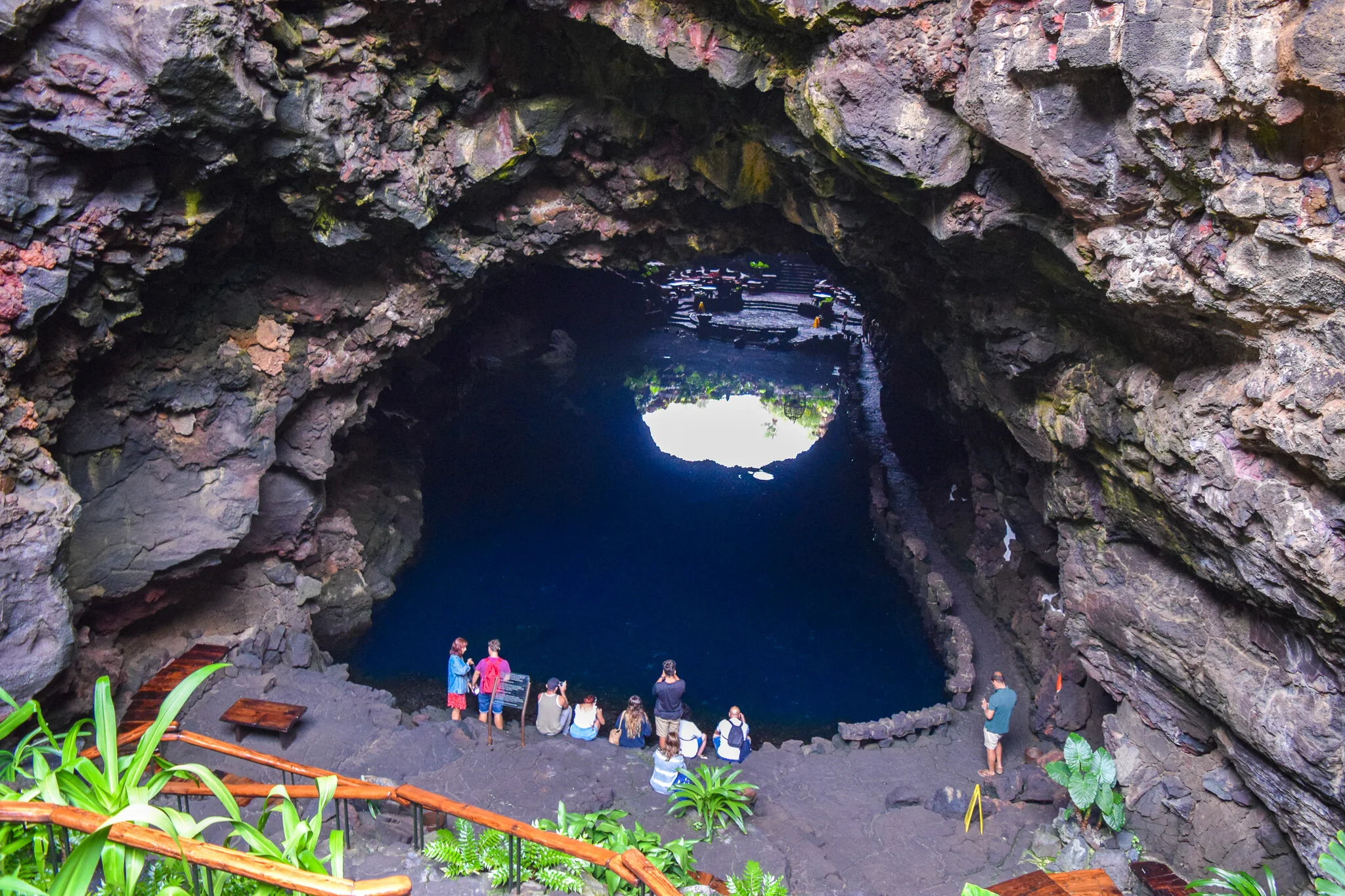
Jameos del Agua is one of the most striking and harmonic constructions that I’ve ever seen, where modern designs intertwined perfectly with the natural landscape. A set of steps bring you to an extraordinary underground restaurant, located right next to the opening of a cave with a subterranean salt lake. This lake is home to a unique species of blind lobster that can only be found here and are the animal symbol of the island of Lanzarote.
Upon crossing and exiting the cave, you’ll reach an open space with a strikingly blue pool surrounded by local plants, the big highlight of Jameos del Agua. The impressive constructions also include an auditorium that seems to be carved in the rock and multiple expositions that can be visited separately and are included with your ticket. An absolute must for any trip to Lanzarote!
Entrance & restaurant
Cave and subterranean salt lake
Cave in Jameos del Agua
Jameos del Agua
Me at Jameos del Agua
Combination of nature and art
View of the artificial pool
Jameos del Agua
Cueva de los Verdes
Only 800m away from Jameos del Agua you can find Los Verdes Cave. This is another lava tube created similarly to the one in Jameos del Agua, however, the views are drastically different.
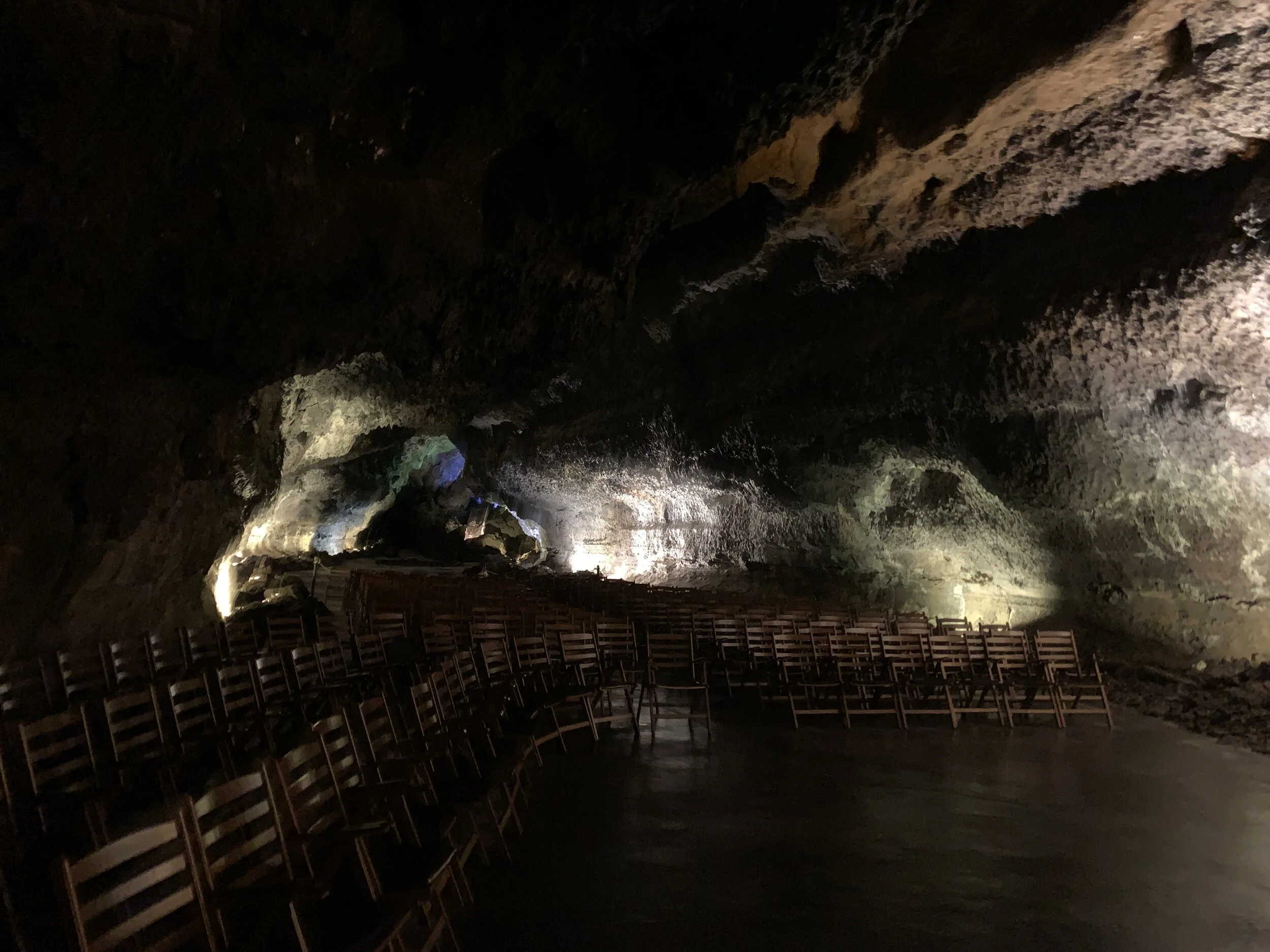
This cave was created by lava flows over 3000 years ago after a volcano eruption, forming a 6km cave out of which 2km can be accessed by visitors. Inside the cave, you can find a concert hall where every year classic music is performed.
The cave can only be visited as part of a group, so you may need to wait for the next visit to start, which won’t take you more than a few minutes. The guide will explain the story of this place and its formation, and how its name ‘verde’ (green) actually comes from the surname of the family that discovered the cave, it has nothing to do with the colour of the cave.
One of the most impressive parts of the cave it's its lagoon, where the clear waters reflect the ceiling giving the impression that the water was actually a cliff until our guide threw a stone and revealed the secret.
It has an entrance fee of €9.50 for adults or €29 if you buy the voucher for 4 sites including Jameos del Agua, Mountains of Fire and Río Viewpoint. Definitely, a very interesting visit to get a better understanding of the volcanic formations of Lanzarote!
Entrance to the cave
Cueva de los Verdes
View from the upper part
Concert hall
Caleta del Mojón Blanco
Lanzarote is filled with incredible beaches, but if you’re looking for a more off-the-beaten-track experience, you should stop at Caleta Del Mojón Blanco if you’re driving along the north coast.
Contrary to the southern side of the island, where most resorts are located, you will find this incredible white sand beach pretty much empty. The beach tends to be quite windy, so locals have created stone shelters to protect yourself from the wind and sand, if needed. The sea is pretty intense here, which is perfect for surfing, but you'll want to keep near the shallow part if you're going for a swim.
Me at the caleta
Caleta del Mojón Blanco
View of the beach
Teguise
Not many people know Lanzarote for its towns and little villages, but the truth is that the island has some of the most picturesque towns in Spain. An example of this is the beautiful village of Teguise, located on the central part of the island.
With a population of only 1,700 inhabitants, Teguise is famous for its Sunday flea market. If you’d prefer to avoid the herds of tourists, head to Teguise at any other time to enjoy the calmness a rural life far from the tourist resorts.
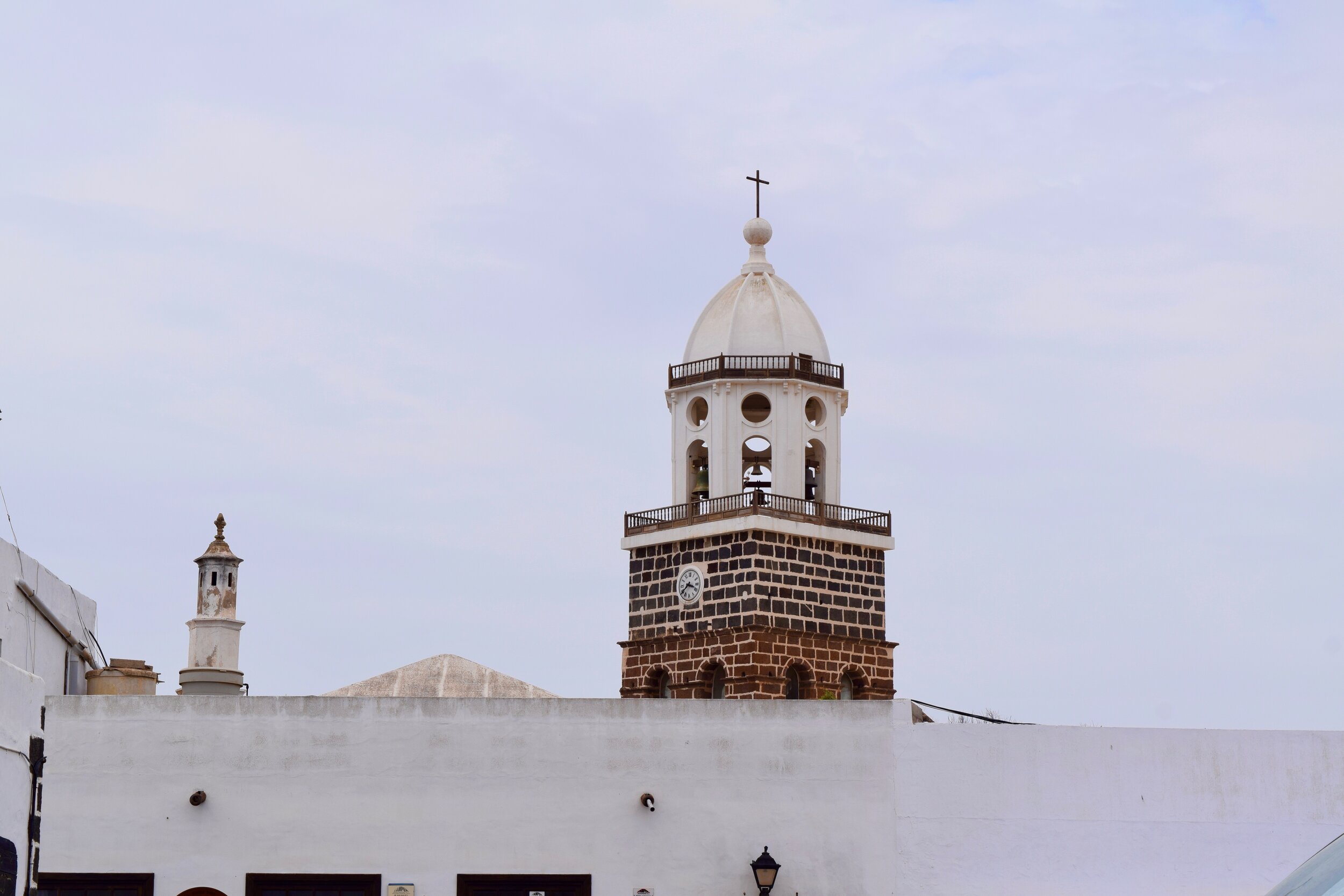
The heart of the village is the square, where you will find the Church of Nuestra Señora de Guadalupe built at the beginning of the 15th century.
Church tower
Main square

Church of Nuestra Señora de Guadalupe
Teguise is one of those places where you’ll want to get lost and discover its beautiful alleys and passages, or rest at one of its many tapa bars.
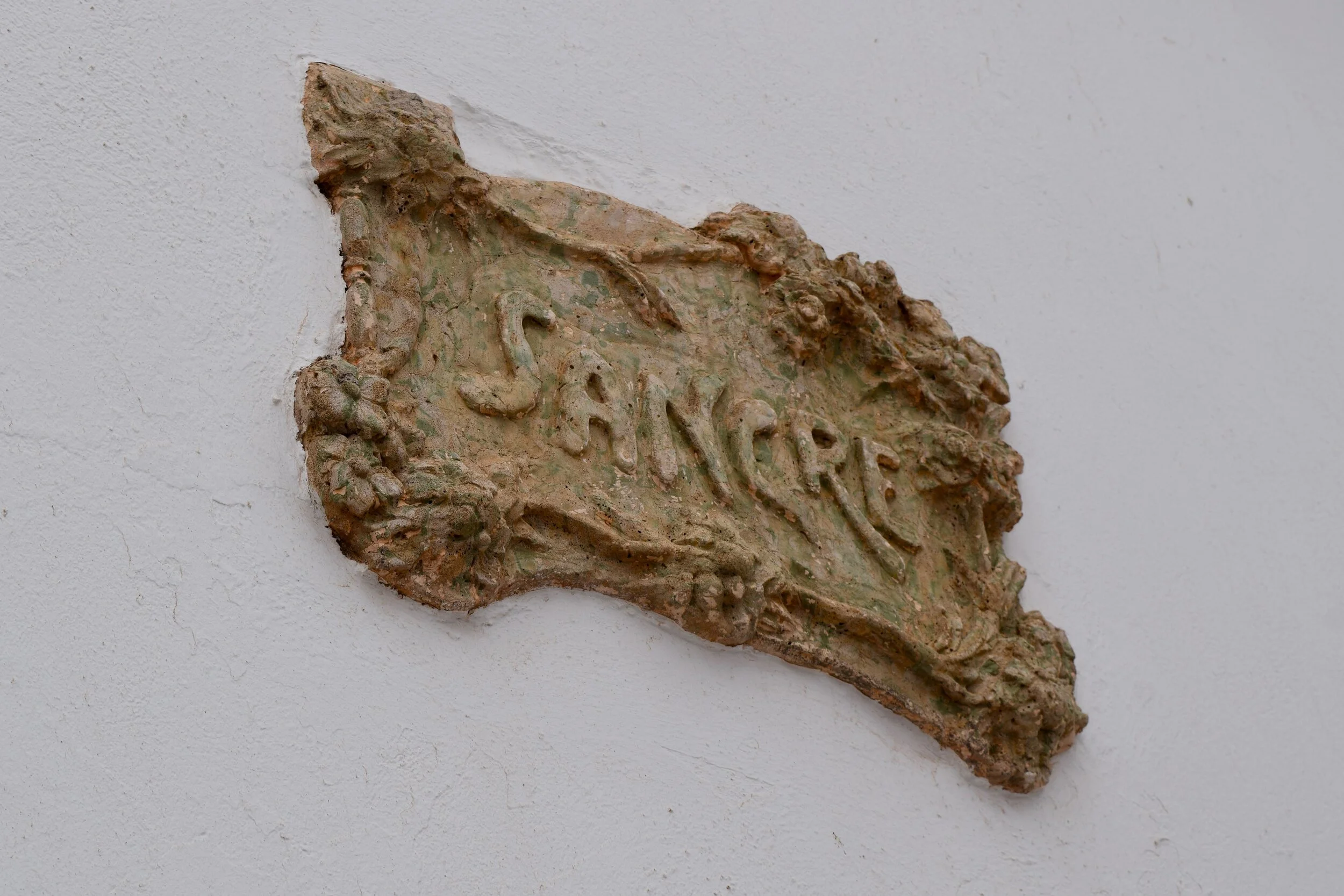
While exploring the village, don’t forget to stop at the Blood Alley. The alley is located between Nuestra Señora de Guadalupe church and the Marquis de Herrera Palace. It was given its bloody name due to the slaughter of local residents perpetrated by Calafat, a Berber pirate in 1569.
It is said that blood trickled down the alley when Don Agustin de Herrera, marquis of Lanzarote and his men defeated and annihilated 170 pirates in the same place. A different colour brick was placed on a wall in name of this tragic event.
Main square
Blood Alley sign
Blood Alley
Statue of ‘Elegua’
Also worth a visit is the Convent of San Francisco, founded in 1590. The Franciscan monks who at the beginning of the 15th century settled in Famara, an area highly vulnerable to pirate attacks, moved to Teguise to custody the convent until 1835.
Today, it houses the Sacro Museum, an amazing collection of paintings, sculptures and jewellery that reflects an artistic past that incorporates current Andalusian trends and influences of the New Continent.
Convent of San Francisco
Bellring of the church
Santa Bárbara Castle
Caleta de Famara
Although most beaches can be found on the south of the island, protected from the strong winds, Caleta de Famara is located on the complete opposite side, on the northern side of the island.
This beach of sand and volcanic pebbles stretches for over 2km and is flanked on one side by striking cliffs that make the beach even more beautiful. Its orientation towards the Atlantic Ocean makes it perfect for surfing, however, the currents may be too strong if you want to swim.
I originally planned to spend the rest of the afternoon there, but the wind was so strong that it was blowing sand all over my face and I only stayed a short time to enjoy the views and take some photos. The incredible panorama is still worth the small stop!
Mirador del Río
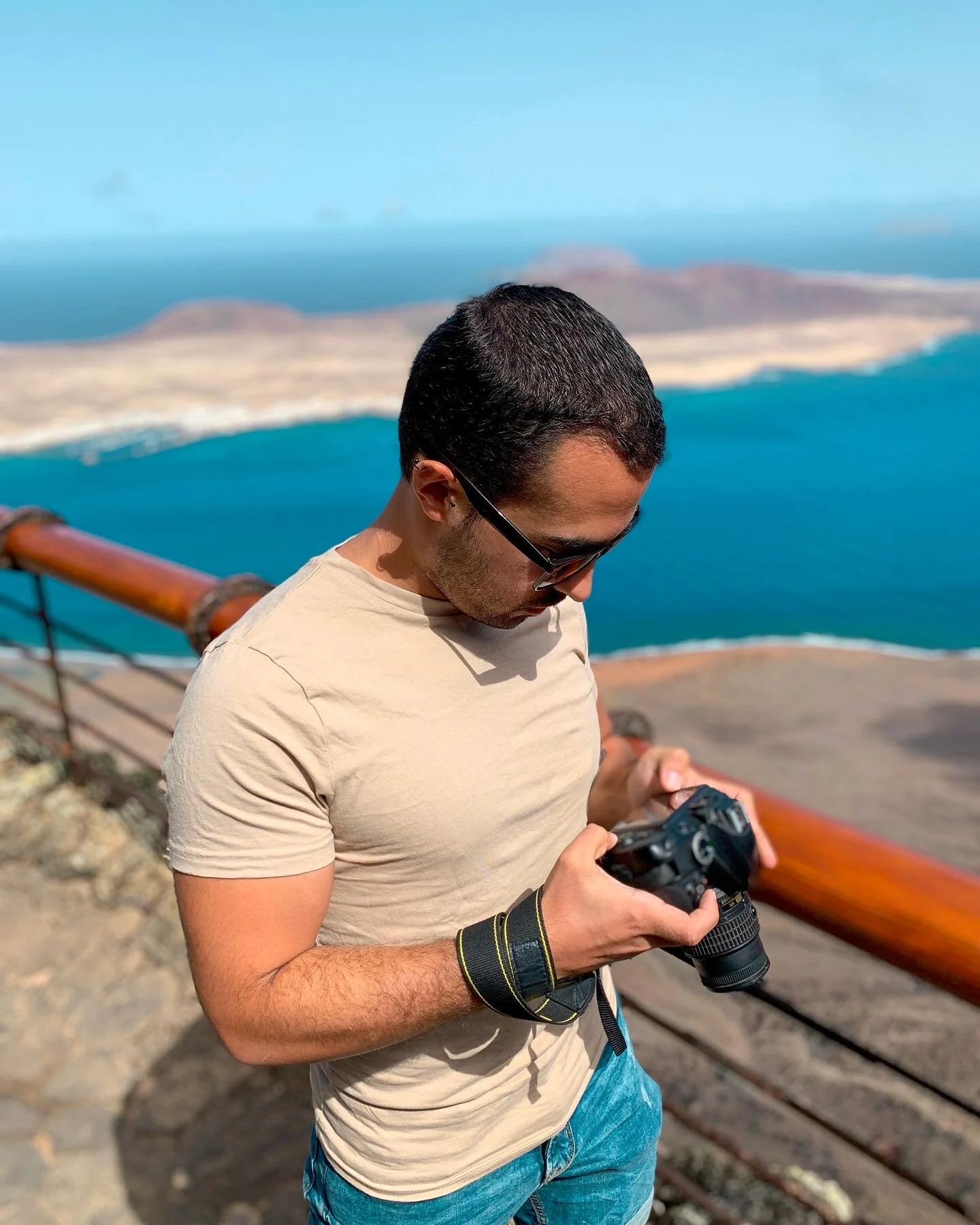
By far my favourite place on the island, you can’t miss Mirador del Rio. Another creation by the famous local artist César Manrique, this viewpoint is located on a 475m high mountain offers some incredible views of Lanzarote and nearby island La Graciosa.
It has an entrance fee of €4.75 for adults or €29 if you buy the voucher for 4 sites including Jameos del Agua, Cueva Los Verdes and Mountains of Fire.
As you access the building through a corridor, you'll reach a cafe with two rooms with large glass windows that gives some incredible panoramic views. You can also walk on the part outside to fully enjoy the views.
Make sure that you visit on a sunny day. Our original plan was to drive to Mirador del Rio on the first day with the rest of the sites in the north coast, but the afternoon was so cloudy that we gave up and returned the last day after visiting the capital, Arrecife.
Timanfaya National Park
Lanzarote is an island with a volcanic origin, formed from volcanic eruptions millions of years ago. This has left in Lanzarote a unique landscape formed by solidified lava streams that can be best appreciated in the Mountains of Fire at the Timanfaya National Park.
The current landscape was formed after multiple eruptions took place in 1720, 1735 and 1824. When you visit, you will find an arid terrain with incredible silhouettes and shapes formed by the solidified lava.
Located in the southwestern part of the island, the park still has one active volcano, the Timanfaya, which gives the national park its name. To access the park, you have the option to go on a very touristy camel ride. Camels were brought from Africa to the Island hundreds of years ago and were used until recently for farming and transport. The cost is €12 for 2 people.
I don’t particularly enjoy these type of activities with animals, so we drove straight to the Mountains of Fire. I recommend going early, as the line of cars can be endless. It took us almost two hours to reach the car park at the very top.
As it took us quite a bit of time to get there, we went straight to the queue of the main attraction in Timanfaya: the Volcano Route. Walking through the park is strictly forbidden, so you'll need to join one of the buses the drive for about 1h through the most impressive volcanos and scenarios.
The ride includes a commentary in English, Spanish and German, telling how the island was formed and how the latest eruptions created this incredible landscape. You will hear the diary records of Father Curbelo, who witnessed the eruptions from his parish in the nearby town of Yaiza.
After the eruptions, all the lands that villagers had successfully farmed were lost, and the nearby population had to flee their houses and even the island, as some of the nearby villages were swallowed by rivers of lava. One of the most fertile lands of the island was turned into an arid, rocky landscape. Surprisingly, everyone was able to flee and nobody died.
I loved the history and the panorama in Timanfaya National Park but didn’t particularly enjoy the bus tour. Since you’re not allowed to get off the bus, you will see everything through a tainted window, and as some of the views are on the other side, taking a peek or good photographs wasn’t that easy.
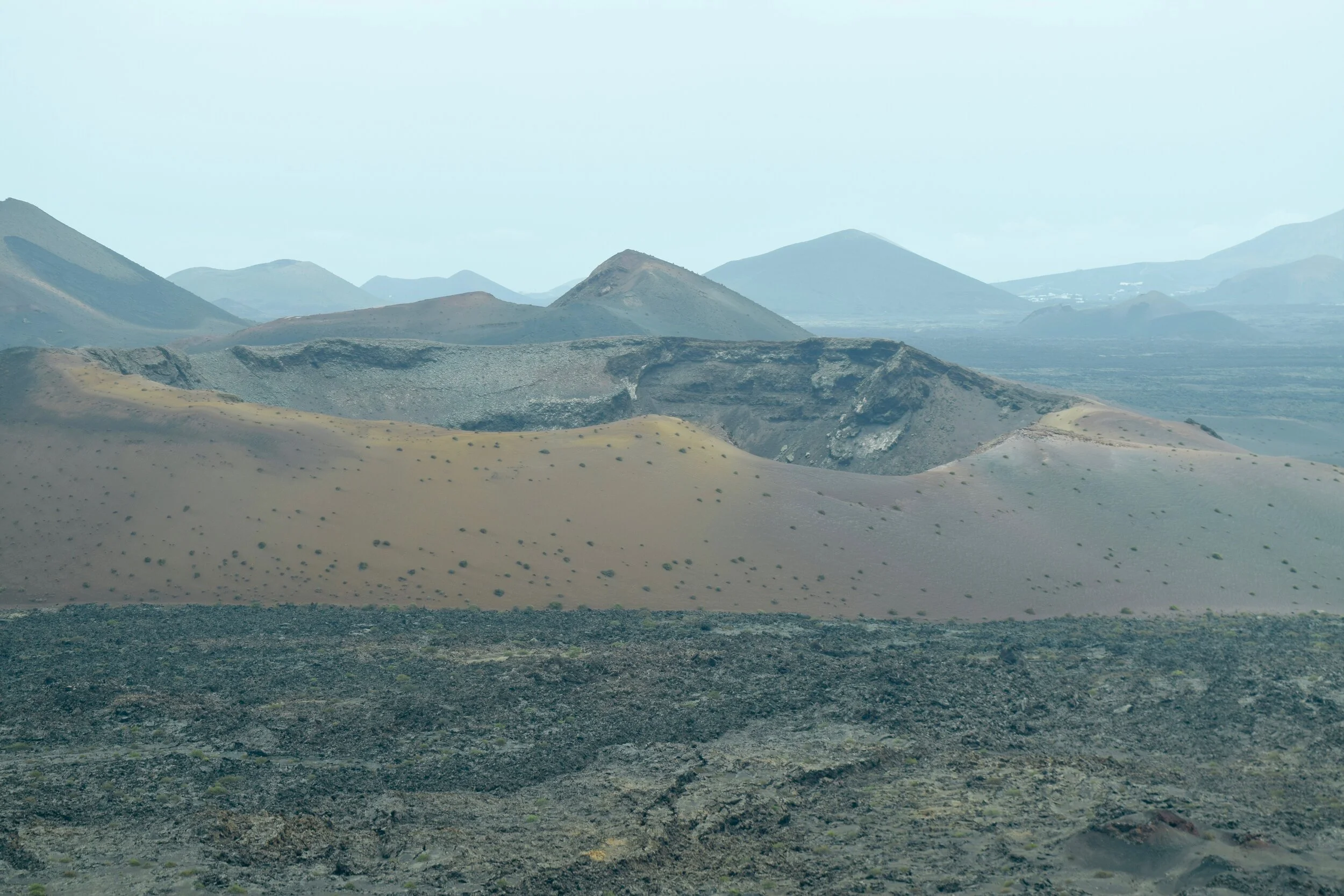
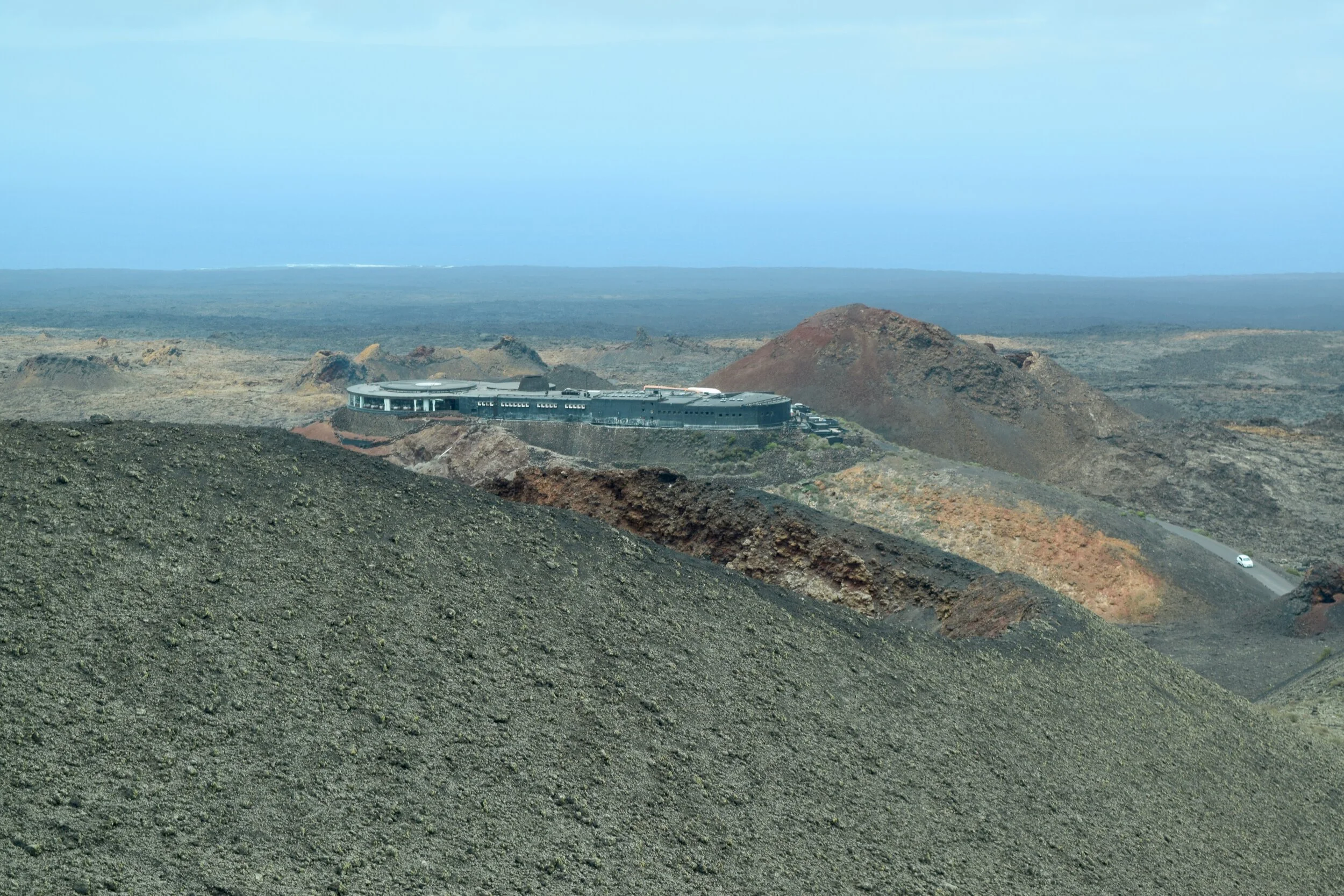
We went back to the car park and explored some of the other points of interest in Timanfaya. The most outstanding construction is the Restaurant El Diablo on top of Islote de Hilario, of course, built by the famous local artist César Manrique. The restaurant offers incredible panoramic views of the volcanos and is famous for cooking the food using the volcanic terrain of the park at over 450 degrees Celsius.
Only a few meters underneath the area where the restaurant is located, the ground can reach incredibly high temperatures, which can be appreciated at the frequent demonstrations just outside the restaurant where staff pours water into holes in the ground only for it to burst back up again the form of steam, or by throwing some hay on the wholes to see how they get on fire due to the high temperature of the ground.
Volcanic mountain
‘El Diablo’ restaurant
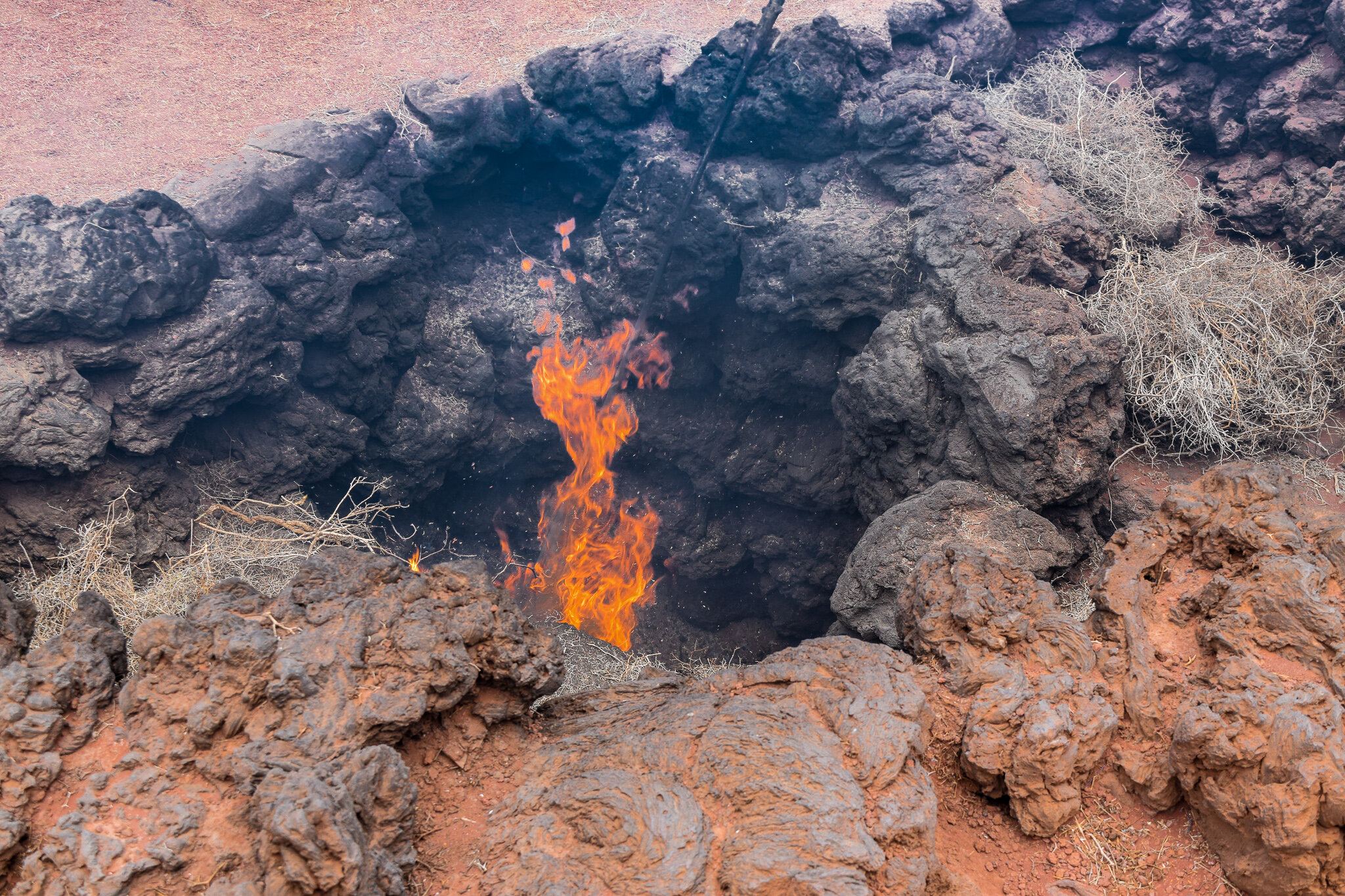
Hay burning due to the hot ground
Me at the Timanfaya National Park
Timanfaya National Park
Los Hervideros
To complete your day with another fantastic natural beauty, after Timanfaya drive south-west to Los Hervideros, a beautiful stretch of cliffs and underwater caves formed by the solidifications of lava and erosion. When the waves force the water into the caves, it looks like the sea is boiling and bubbling, hence the name (‘the hot springs’ in English).
As you approach or leave Los Hervideros, don’t forget to stop for some great views of the Salinas de Janubio, salt flats formed after a volcano eruption that created the walls of a natural lagoon. The water from the natural lagoon is evaporated to obtain the salt.
Los Hervideros
View of the cliffs
Salinas de Janubio
Playa Blanca
If you just want to relax on a beautiful, sunny beach, you have to stop at Playa Blanca. This beach located on the southernmost town of the island was by far my favourite in Lanzarote.
Playa Blanca is a calm part of the island with incredibly calm and blue waters. The boardwalk is filled with restaurants, bars and shops that make it the perfect spot to spend a relaxing afternoon while enjoying the wonderful Spanish weather.
I spent the afternoon in Playa Blanca after visiting Timanfaya, but I liked it so much that I ended up returning on my last day on the island after spending some time in Papagayo Beach!
Playa Blanca
Vegetation near the beach
Playa Blanca
Me at Playa Blanca
Arrecife
Although Arrecife may not the most impressive city when it comes to Spanish province capitals, it does offer some historical sights that are worth a visit. You will most likely drive pass Arrecife at some point, so I’d recommend stopping by for at least a couple of hours.
Your first stop should be the extensive promenade, where you will find the San Gabriel Castle. First erected in 1576, today it houses the Archaeological and Ethnographic Museum. The castle is linked with the promenade by a stone bridge built in the 18th century, known as the Balls Bridge due to the two balls that top the structure.
Arrecife
Promenade
Balls Bridge
Me at Arrecife
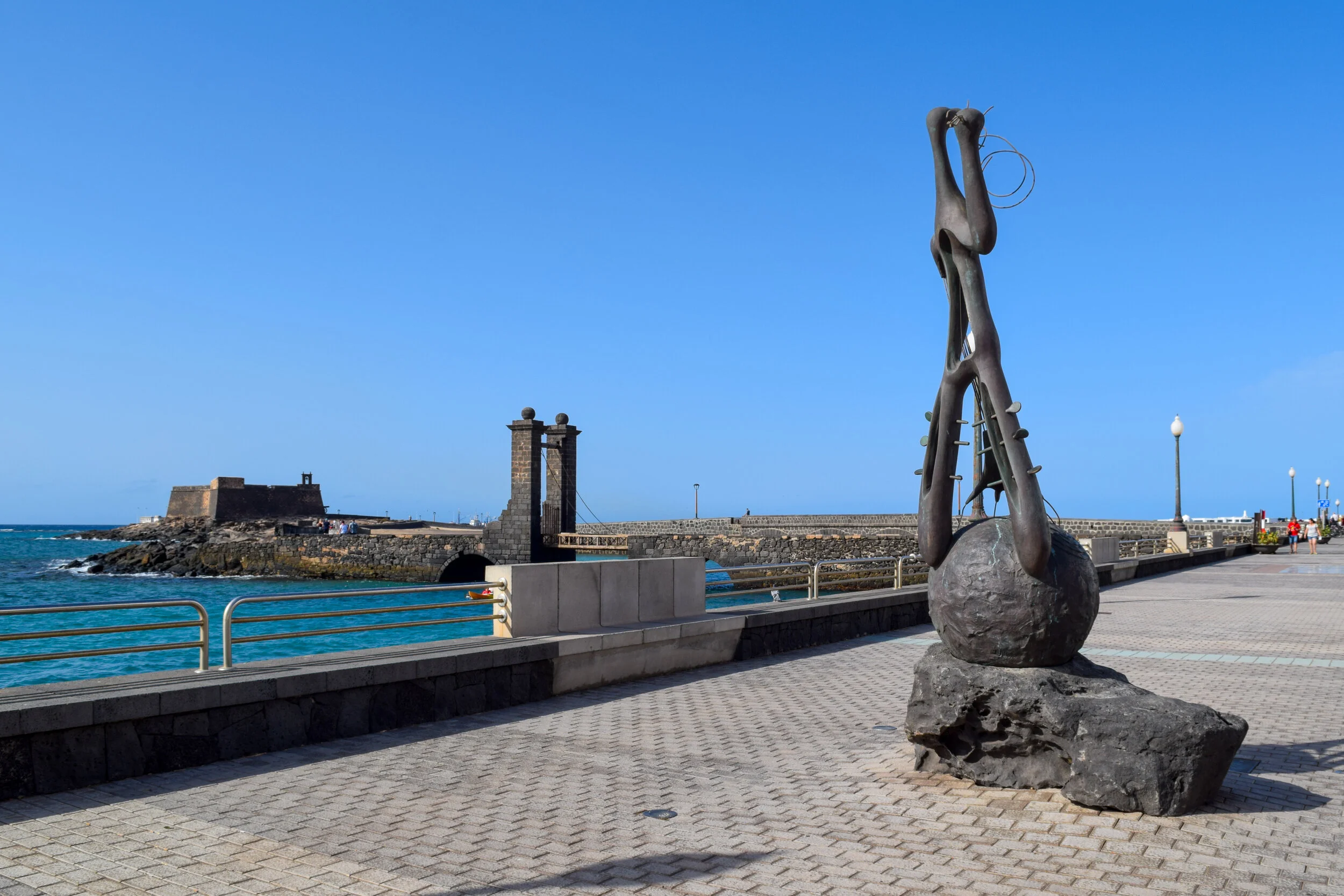
San Gabriel Castle & Balls Bridge
A couple of streets away from the promenade you will also spot the bell tower of San Ginés Church. The first small church was founded in Arrecife in 1574, where they housed an image of St. Peter and a painting of San Gines, Arrecife's patron saint.
After flooding, it was rebuilt in 1665 and the work was finished two years later, with further expansions int he 18th and 19th centuries.
I’d also recommend exploring the historical area around the church, where you will find some beautiful constructions that were later used as inspiration for many colonial cities in America.

Bellring
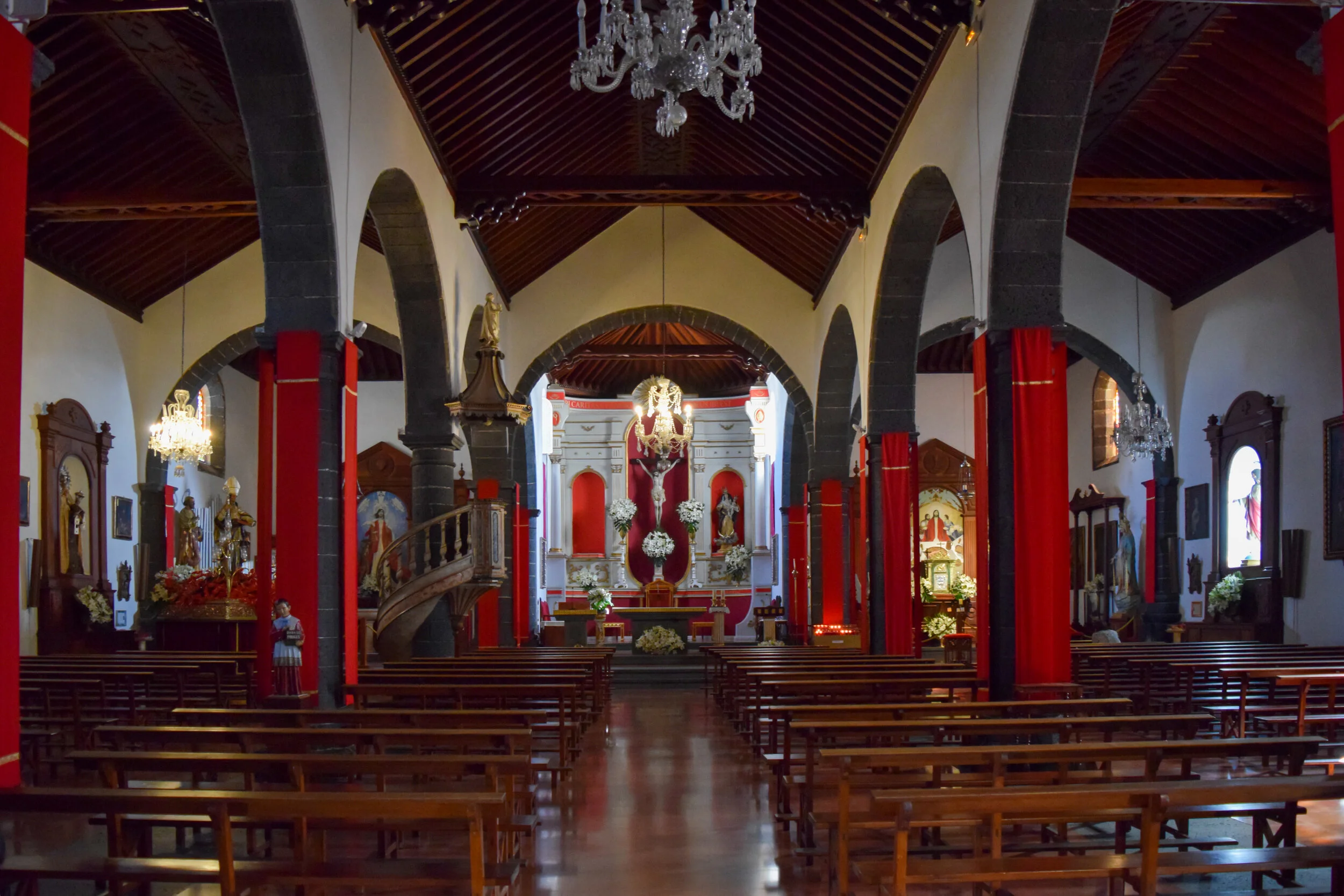
Interior
San Ginés Church
Town Hall
Traditional architecture
Papagayo Beach
Not too far from Playa Blanca, head to Los Ajaches Natural Park to enjoy some of the most beautiful beaches in Lanzarote. Located in a hollow, you can find three different beaches inside the park: Cera Beach, Mujeres Beach and Papagayo Beach.
Since the beaches are part of a National Park, you'll need to cross a 5km long dirt road and pay an entrance fee of €3 per car to reach them. You can also get there by bus from Playa Blanca, but expect to walk for at least 20 minutes. The same applies once you reach the car park.
Their clear waters are just perfect to do some snorkelling or relax by the beach. Compared to Playa Blanca, amenities are quite scarce, but the beaches are also much less crowded and virgin!
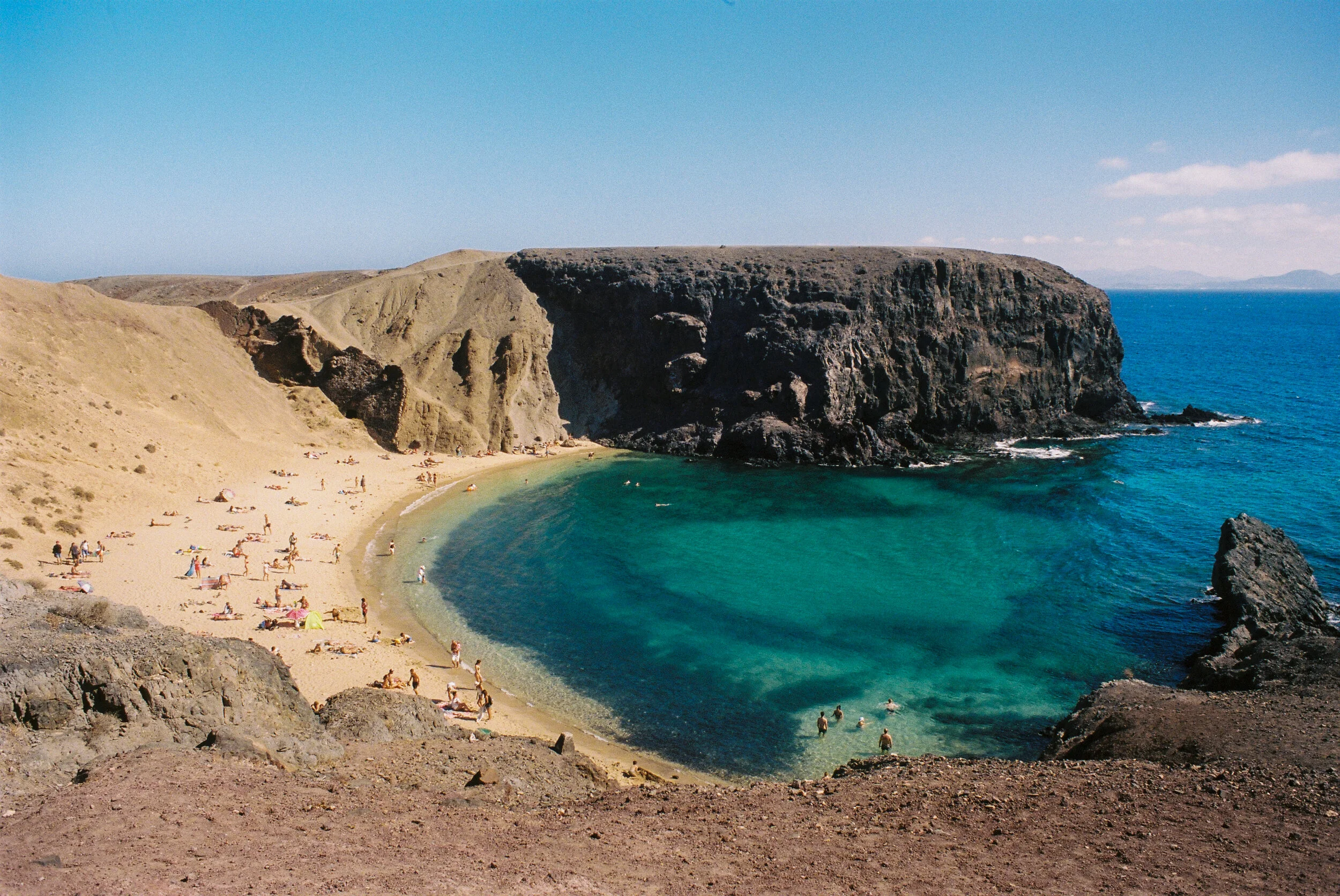
Papagayo beach
Although Lanzarote is a quieter island that seems to cater mainly families on long holidays, its incredible landscapes, tourist attractions and of course extensive beaches still make it a very good choice for all kind of visitors.
Since local flights between the islands are so cheap, you can also combine your trip with a different Canary Island. In my case, I headed to Gran Canaria to spend 5 additional days in this lively island!
Some links in this post are affiliate links, which means that if you buy through them, we’ll receive a small commission. This will never cost you more and in many cases you will receive a special discount.
As always, all opinions are mine. We appreciate your support!

This article is now available as a mobile app. Go to GPSmyCity to download the app for GPS-assisted travel directions to the attractions featured in this article.


From all-inclusive resorts to extensive golden-sand beaches and a rugged, mountainous interior, Gran Canaria is one of the most diverse destinations in Europe no matter what you’re after for your holidays.
During my last visit to the Canary Islands, I travelled around Gran Canaria for 4 days to discover all the natural wonders and tourist attractions of the island. Check out my 4-day itinerary around Gran Canaria in this post!