
2 days in Vilnius: a journey through Lithuanian history, culture & Jewish heritage
In the heart of the Baltic region lies a city with a rich history and vibrant culture waiting to be discovered: Vilnius, the capital of Lithuania. With just 2 days to spare, you can immerse yourself in the UNESCO World Heritage-listed Old Town, savour traditional Lithuanian cuisine, and uncover the hidden gems that make Vilnius a must-visit destination in Europe.
Join me on a journey through this enchanting city as we navigate its cobbled streets, quaint alleyways, historic landmarks and Jewish heritage, all within a two-day itinerary crafted to make the most of your time in Vilnius!
Vilnius: 2 day itinerary
Day 1
Vilnius Old Town walking tour
To embark on my Vilnius adventure, I decided to join a Vilnius Old Town walking tour with GetYourGuide, operated by Vilnius with Locals. During approximately 2.5 hours, we traversed the charming cobblestone streets of Vilnius Old Town, a UNESCO World Heritage site teeming with architectural marvels and historical landmarks.
What struck me most about the tour was its authentic approach to exploring Vilnius. Beyond the typical tourist attractions, we ventured into the former Jewish quarter, meandered through hidden alleys, and stumbled upon charming corners I would have surely missed on my own. But what truly made the experience unforgettable was the personal touch my guides brought to the tour. With a blend of humour, anecdotes, and genuine warmth, she painted a vivid picture of life in Vilnius, from its tumultuous past to its vibrant present.
In hindsight, joining a Vilnius walking Tour was one of the best decisions I made during my visit. Not only did it provide valuable insights into the city's history and culture, but it also left me with a deeper appreciation for Vilnius and its people. So, if you're looking for an authentic way to kick-start your exploration of Vilnius, I wholeheartedly recommend joining a walking tour.
Town Hall
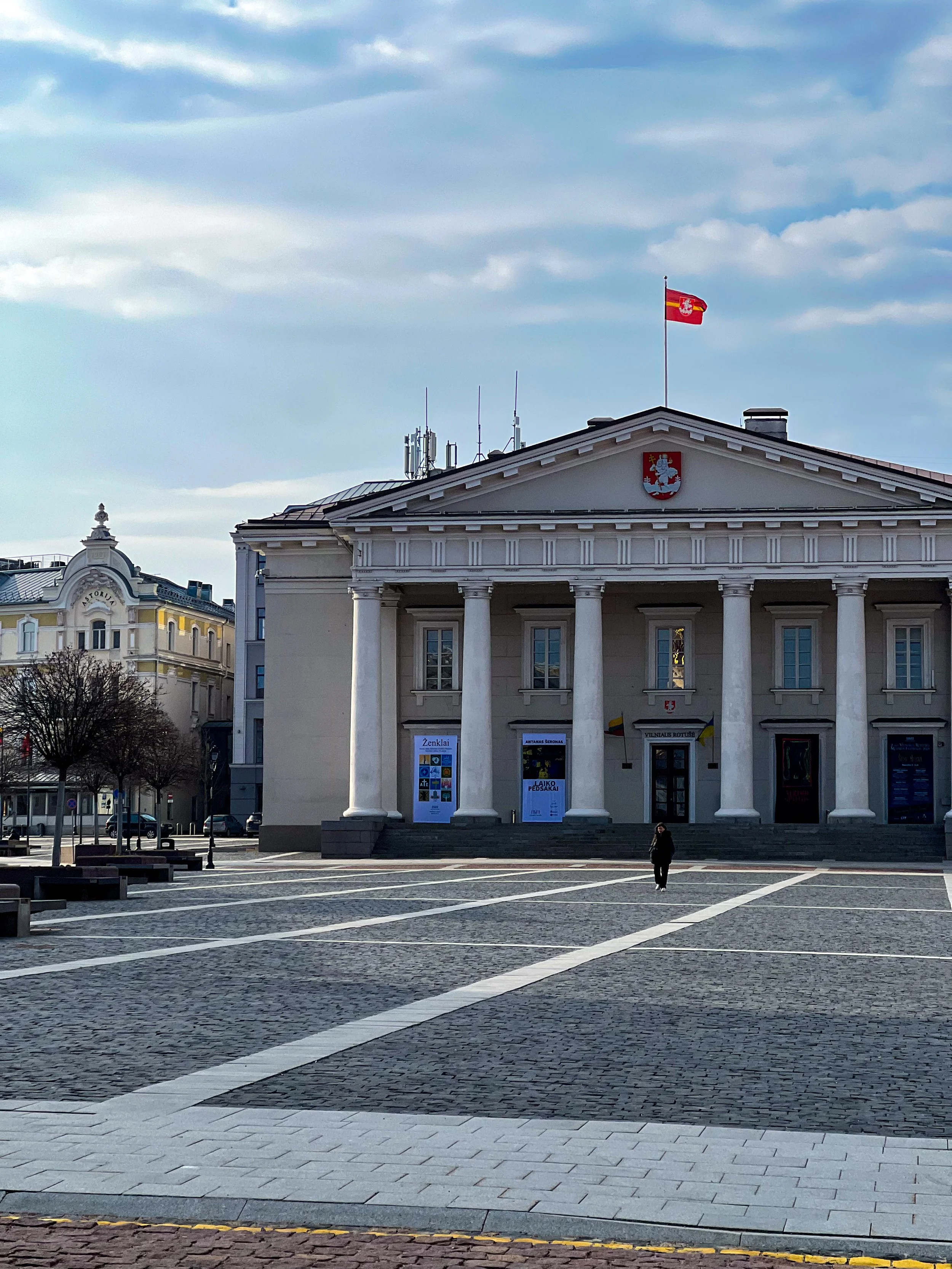
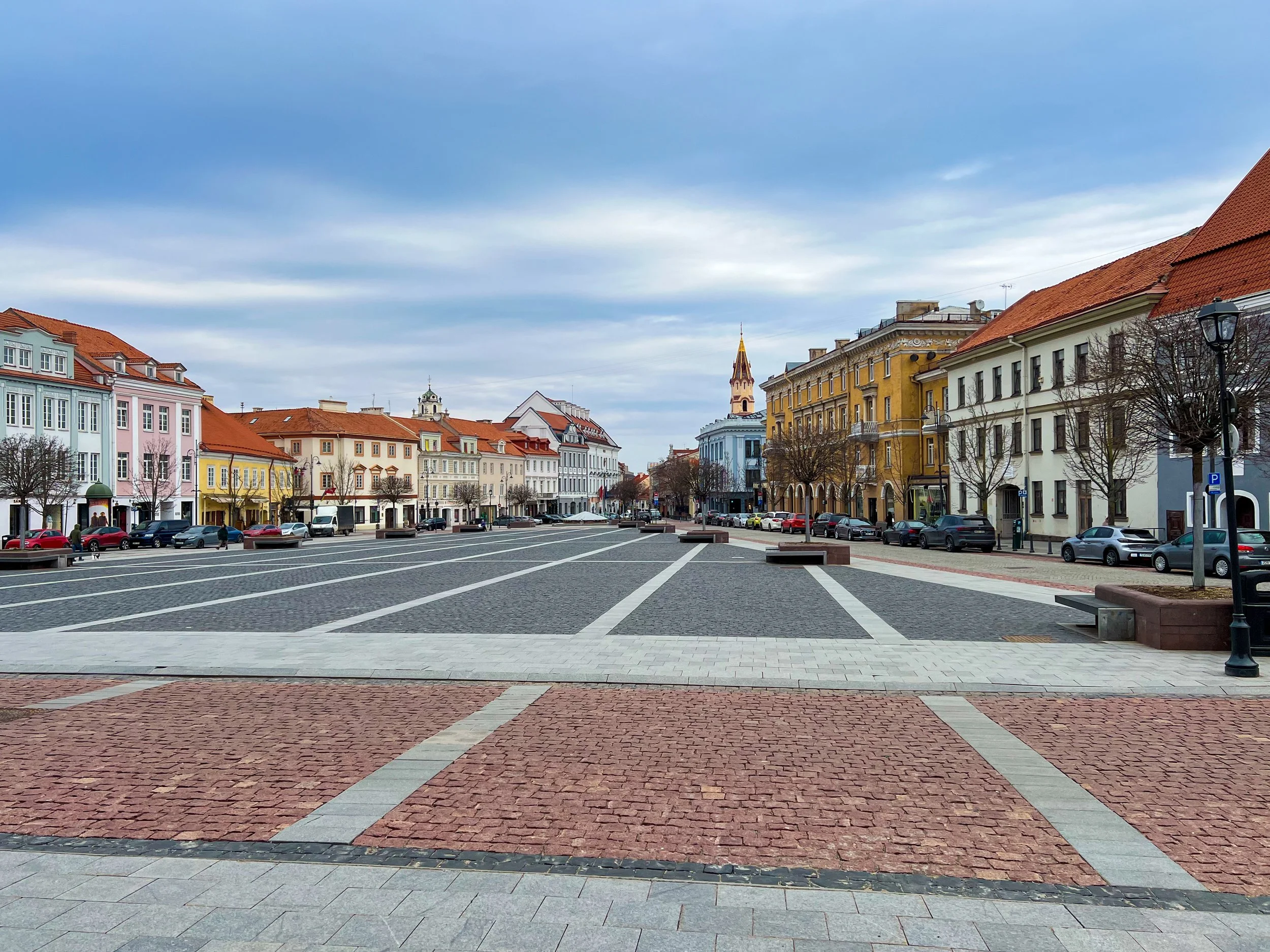
Our exploration began at the stairs of Vilnius Town Hall, where our friendly local guide waited for our group. Vilnius City Hall and its adjacent square stand as iconic landmarks at the heart of Vilnius Old Town, serving as both historical sites and vibrant centres of civic life. The City Hall Square, known locally as Rotušės aikštė, is a bustling hub where locals and visitors alike gather to soak in the city's atmosphere and partake in various events and festivities.
The Vilnius City Hall itself is a magnificent Gothic-style building that dates back to the late 18th century, although its history traces back even further. Originally constructed in the early 15th century, the building underwent several reconstructions and expansions over the centuries, each adding to its grandeur and architectural significance. Its striking facade, adorned with ornate details and a towering clock tower, is a testament to Vilnius' rich historical legacy.
Jewish Street
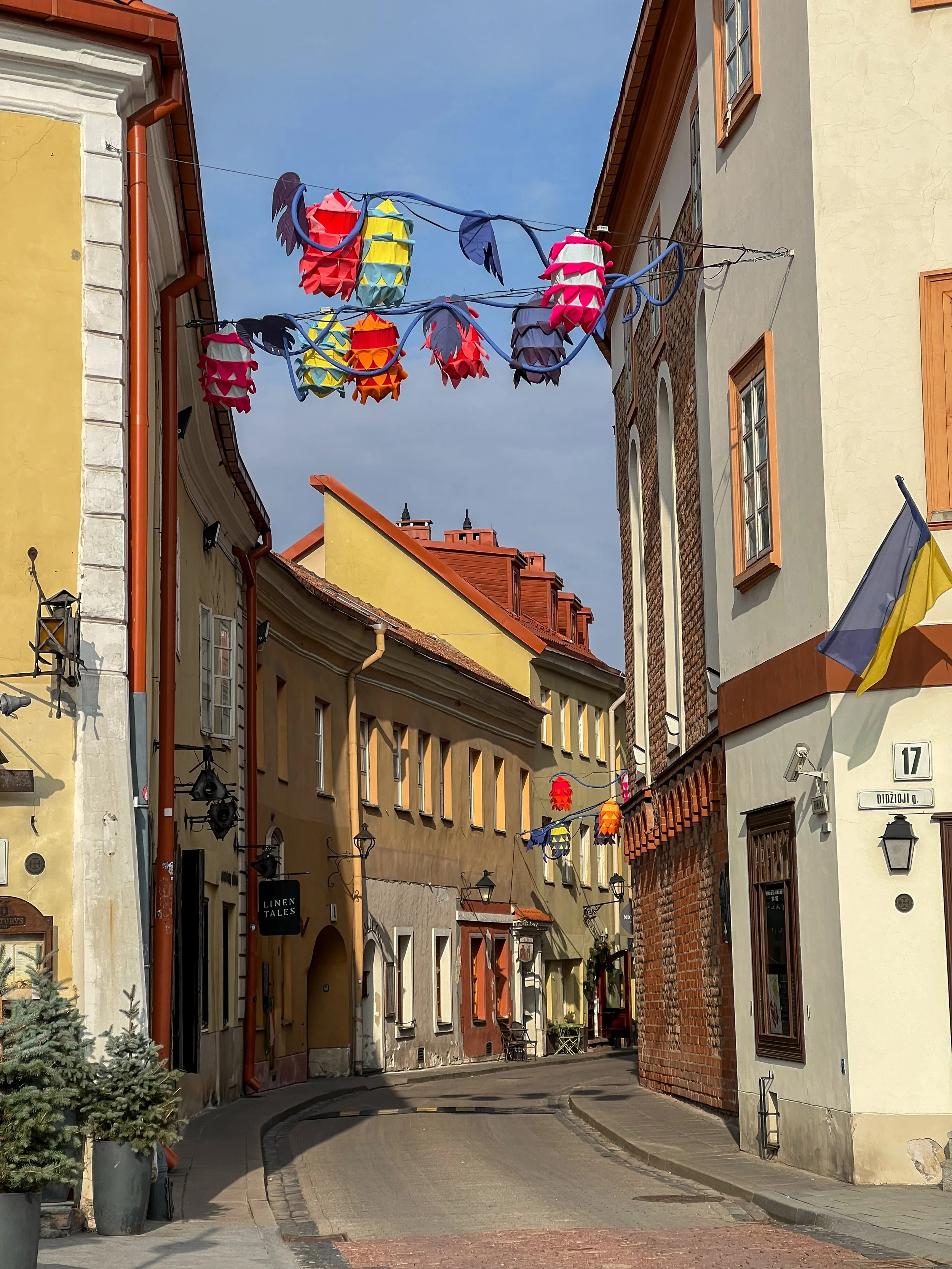
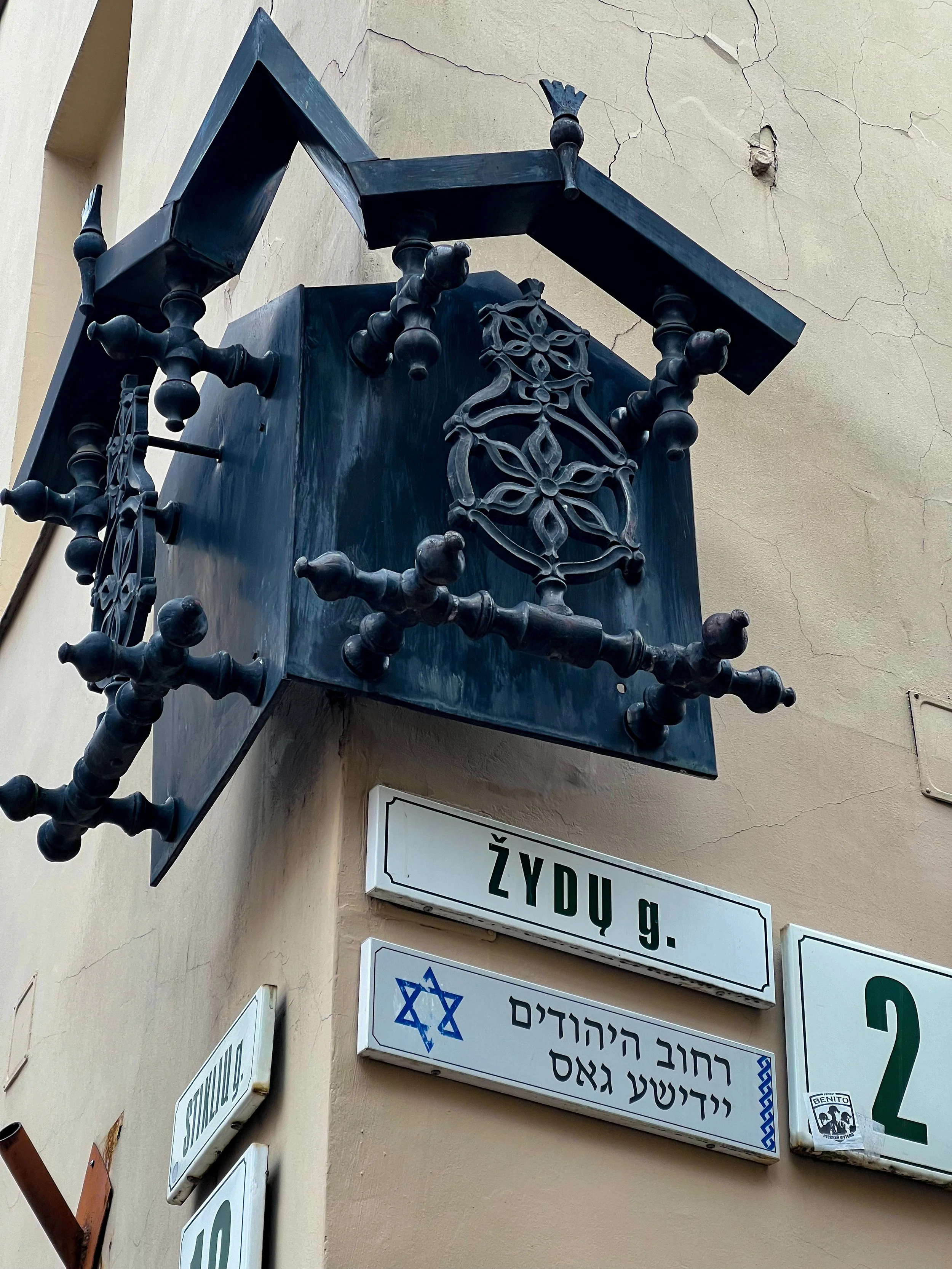
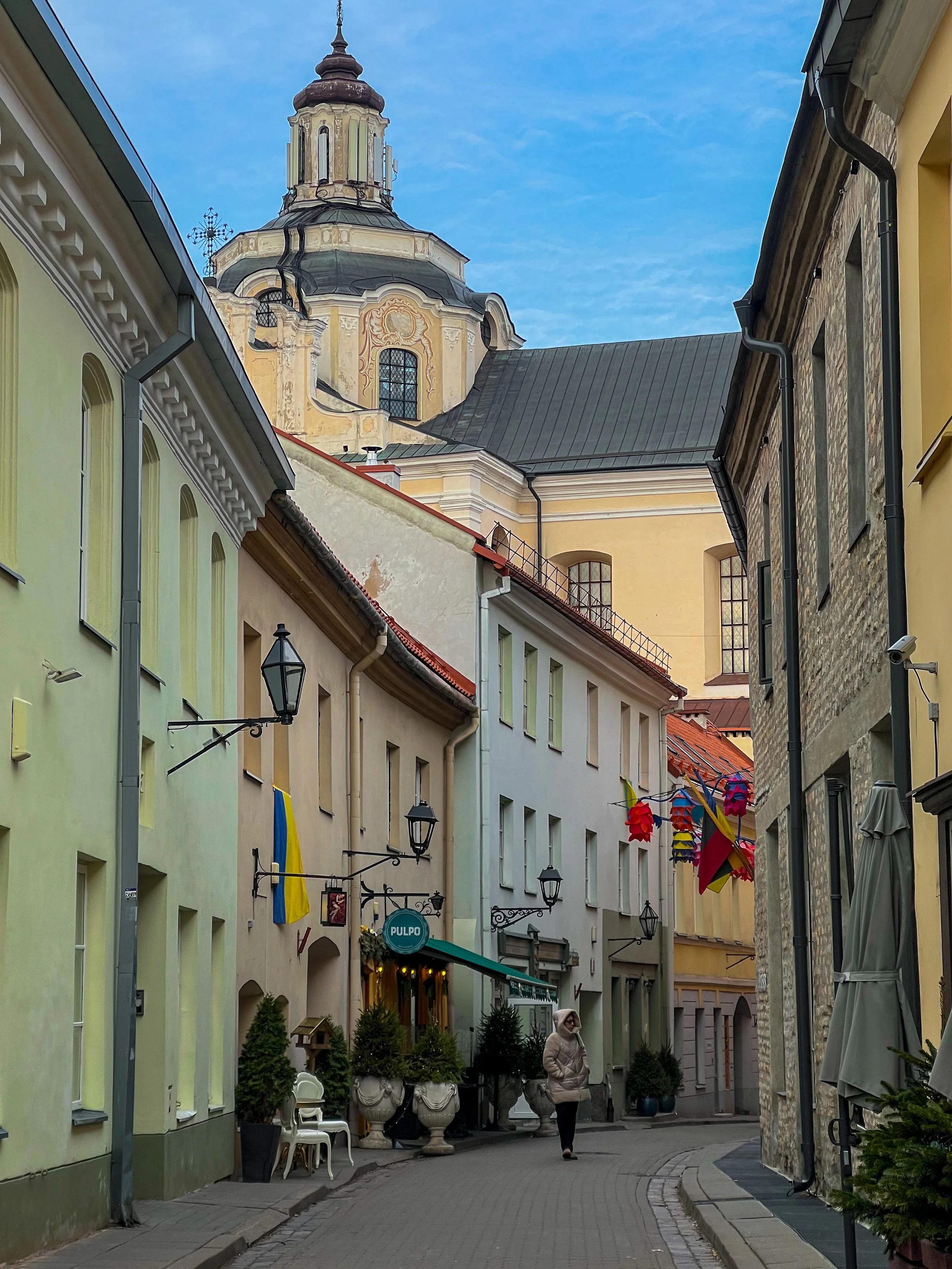
Turning left from the City Hall, we soon reached Žydų Street, or Jewish Street. It holds profound historical significance as a testament to the rich cultural heritage and vibrant Jewish community that once flourished in the city. Located in the heart of Vilnius Old Town, Žydų Street was historically the bustling epicenter of Jewish life, commerce, and culture, serving as a vibrant hub for Vilnius' Jewish population for centuries.
Throughout much of its history, Vilnius boasted one of the largest and most dynamic Jewish communities in Eastern Europe, earning it the moniker "Jerusalem of Lithuania." Žydų Street emerged as a bustling thoroughfare lined with synagogues, Jewish-owned businesses, workshops, and communal institutions, reflecting the diverse tapestry of Jewish life and identity in Vilnius.
One of the most notable landmarks on Žydų Street is the remains of the Great Synagogue of Vilna, which once stood as the spiritual and architectural centerpiece of Vilnius' Jewish quarter. Built in the 17th century, the Great Synagogue was a symbol of the thriving Jewish community and a testament to its rich cultural heritage. Tragically, the synagogue was destroyed during World War II, and only fragments of its walls remain as a haunting reminder of its former grandeur.
Vilnius Ghetto
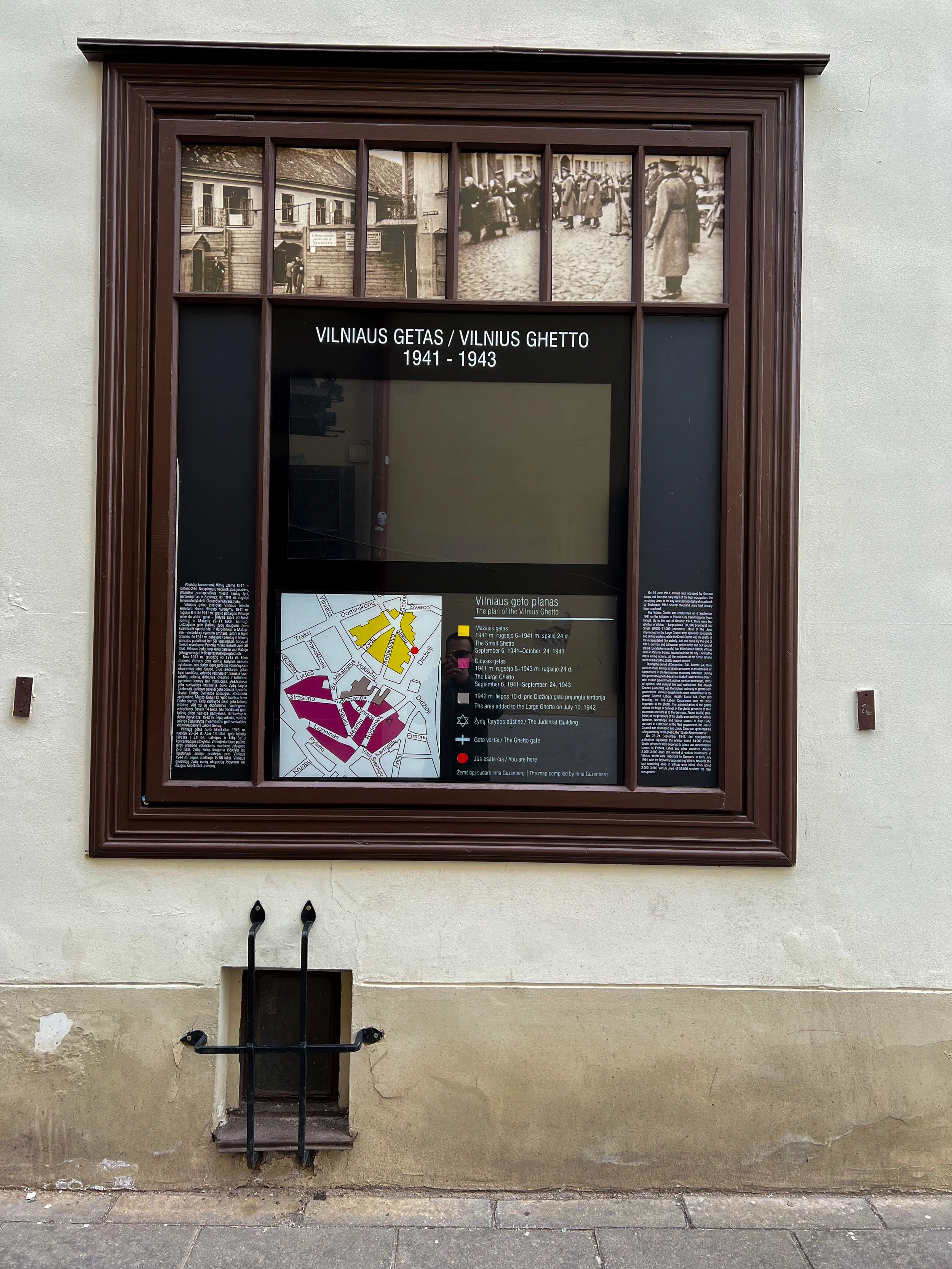
Žydų Street is located in what would later become the Vilnius Jewish Ghetto. Also known as the Vilna Ghetto, this area was a tragic chapter in the city's history during World War II, marking a period of profound suffering and loss for Vilnius' Jewish community. Established by the occupying Nazi forces in 1941, the ghetto was one of many such enclaves created across Europe as part of the Holocaust.
Situated in the heart of Vilnius Old Town, the ghetto encompassed several streets and alleys, effectively segregating the city's Jewish population from the rest of society. Conditions within the ghetto were dire, with overcrowded living quarters, scarce food and resources, and constant fear of persecution looming over its residents.
Despite the harsh realities they faced, the inhabitants of the Vilnius Ghetto demonstrated remarkable resilience and solidarity in the face of adversity. Cultural and intellectual life persisted within the confines of the ghetto, with clandestine schools, religious services, and cultural events providing a semblance of normalcy amidst the chaos of war.
Tragically, the existence of the Vilnius Ghetto was short-lived, as its inhabitants were systematically deported to concentration camps or killed in mass executions as part of the Nazi regime's genocidal policies. Today, the site of the former ghetto serves as a poignant reminder of the atrocities committed during the Holocaust and the resilience of Vilnius' Jewish community.

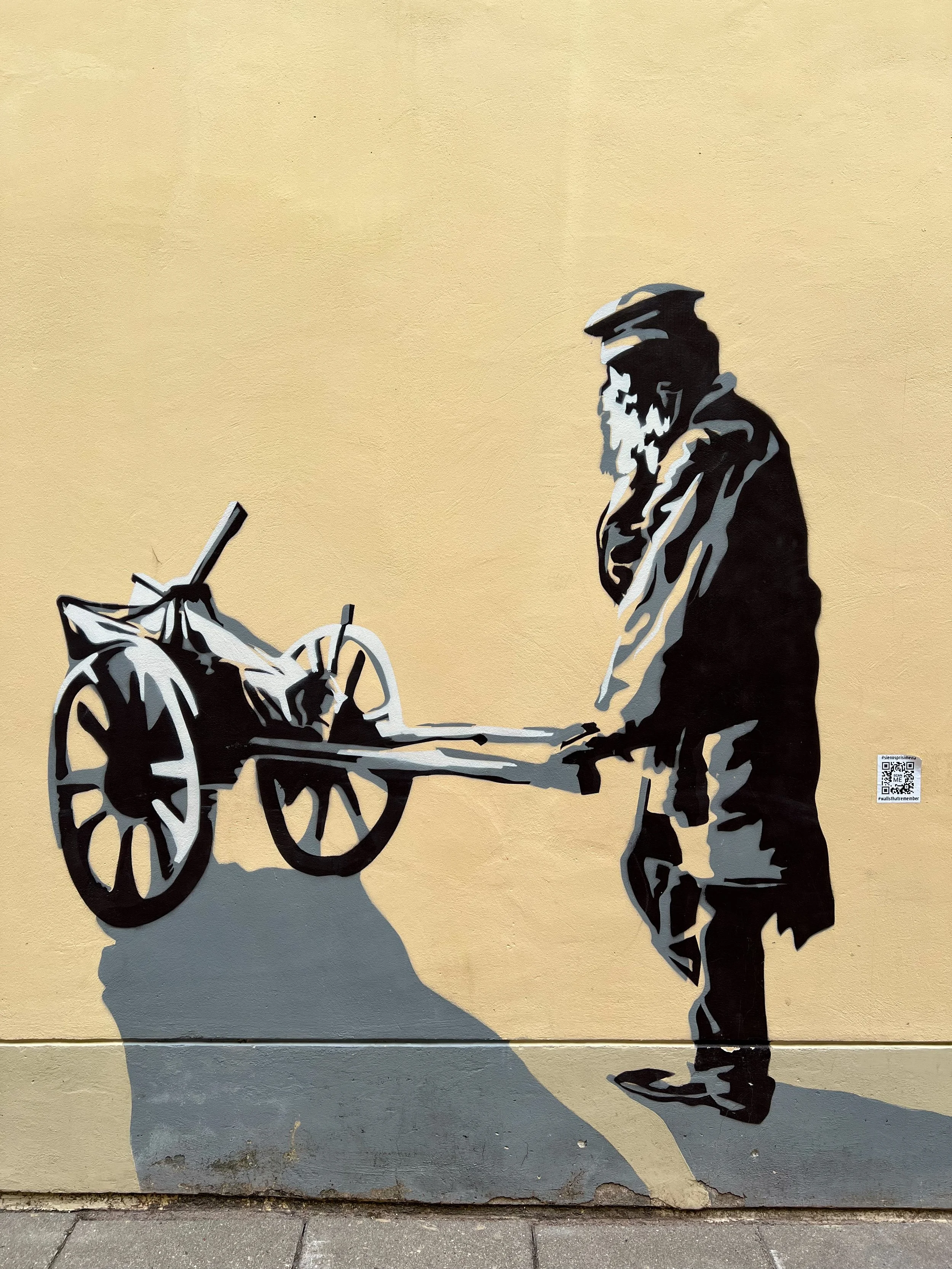
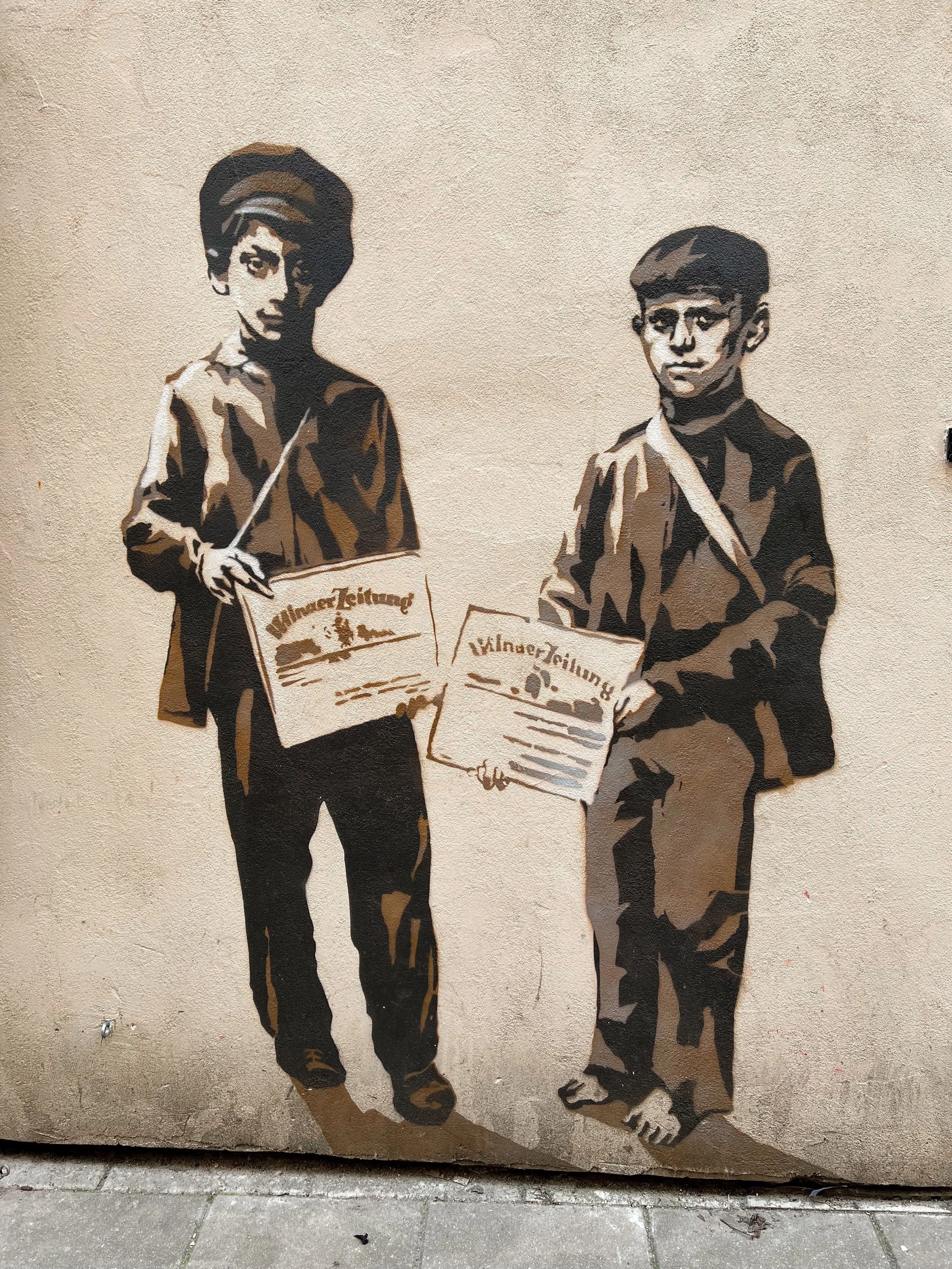
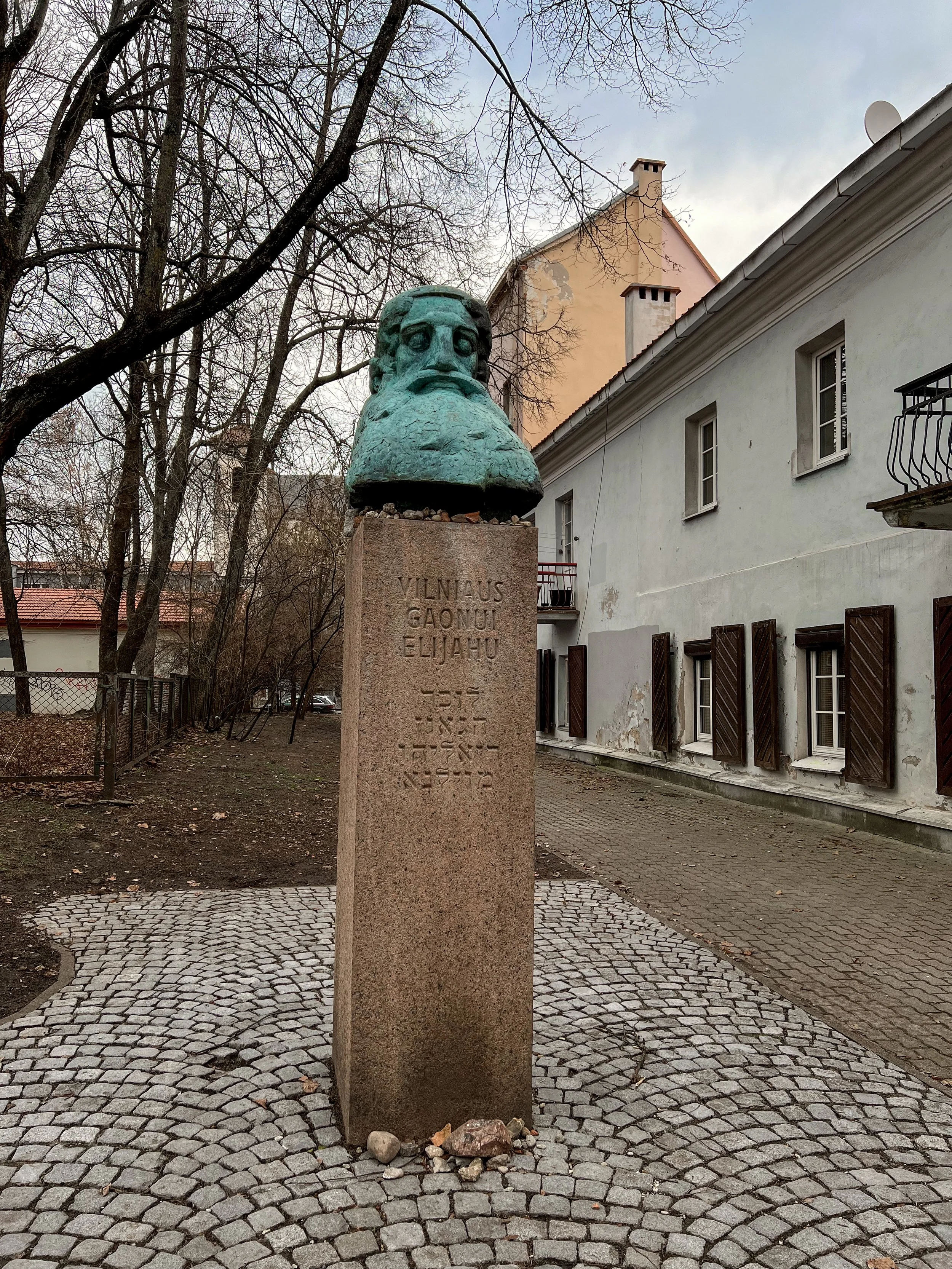
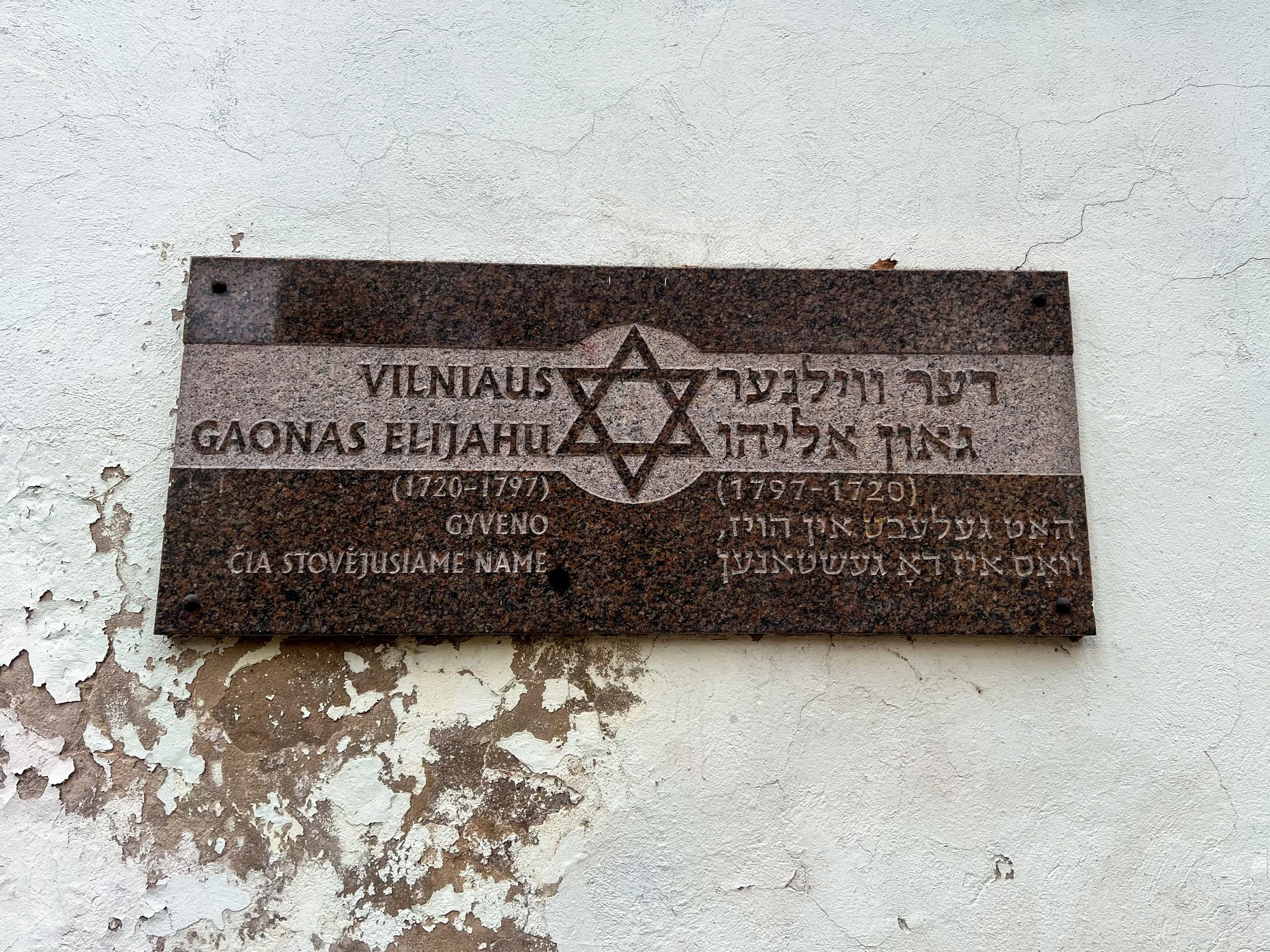
Gaon of Vilnius statue
Within the former Ghetto, the statue of the Gaon of Vilnius stands as a testament to the enduring legacy of Rabbi Elijah ben Solomon Zalman, a revered figure in Jewish learning and scholarship. His teachings and influence resonated throughout the Jewish community, shaping the intellectual and cultural landscape of Vilnius for generations.
Born in Vilnius (known as Vilna in Yiddish), Lithuania, in 1720, the Vilna Gaon made significant contributions to Jewish scholarship, particularly in the fields of Talmudic studies, Jewish law, and Kabbalah. From a young age, the Vilna Gaon displayed exceptional intellectual prowess and a prodigious aptitude for Torah study. He devoted countless hours to mastering the intricacies of Jewish texts, earning renown as a brilliant Talmudist and halakhic authority.
One of the Vilna Gaon's most enduring legacies lies in his efforts to meticulously edit and annotate the Babylonian Talmud, a monumental task that earned him widespread acclaim and established him as a preeminent figure in Jewish scholarship. His annotations, known as "Vilna Gaon's commentary" or "Gra's commentary," are still revered by scholars and students of Jewish law today for their depth of insight and meticulous attention to detail.
Despite his towering intellect and profound impact on Jewish learning, the Vilna Gaon lived a humble and ascetic life, eschewing material wealth and worldly pursuits in favor of spiritual growth and devotion to God. His teachings emphasized the importance of moral integrity, ethical conduct, and the pursuit of truth in all aspects of life. Today, he is revered as one of the greatest Torah scholars in Jewish history, with countless institutions and communities honoring his memory and teachings.
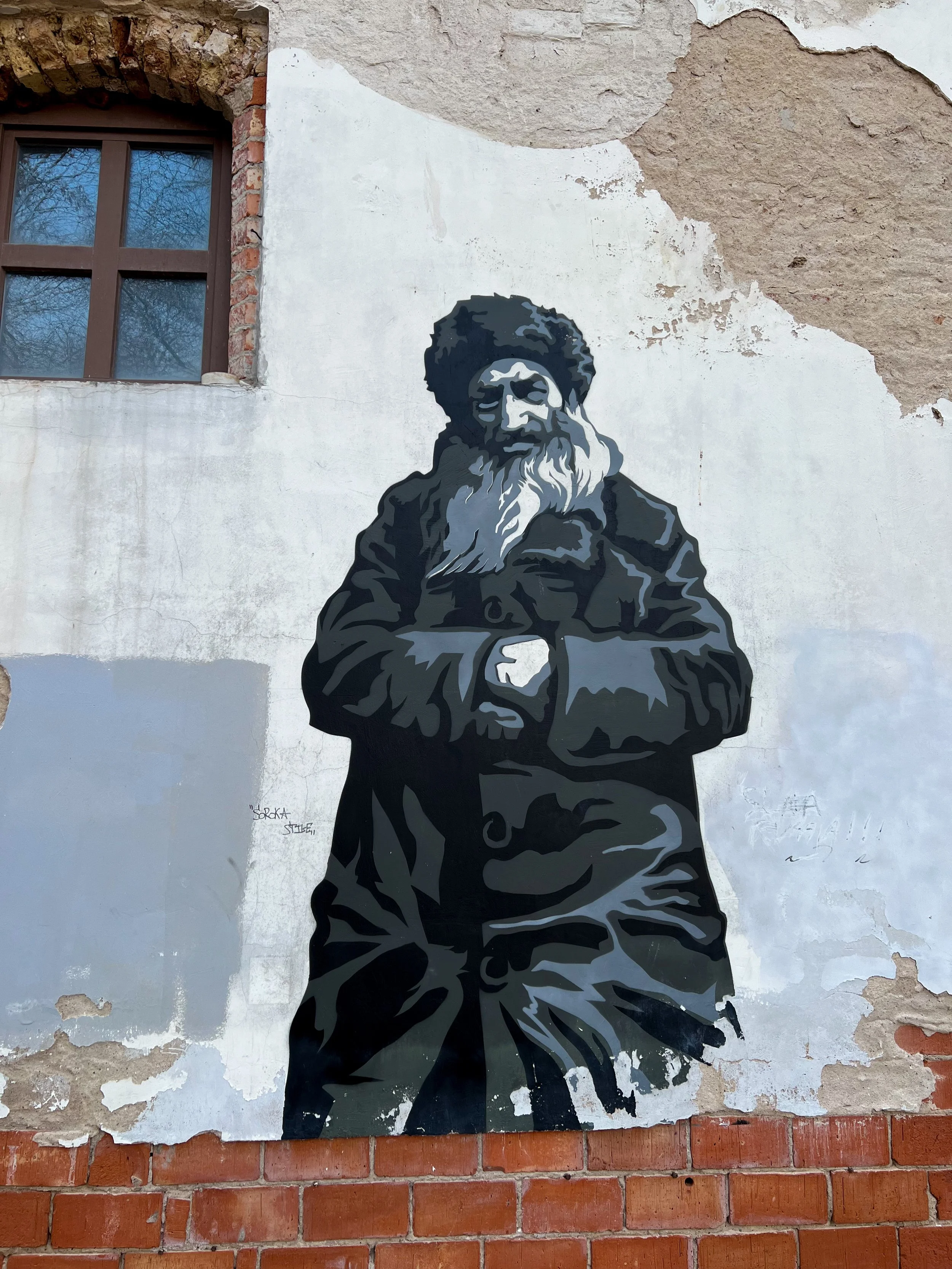
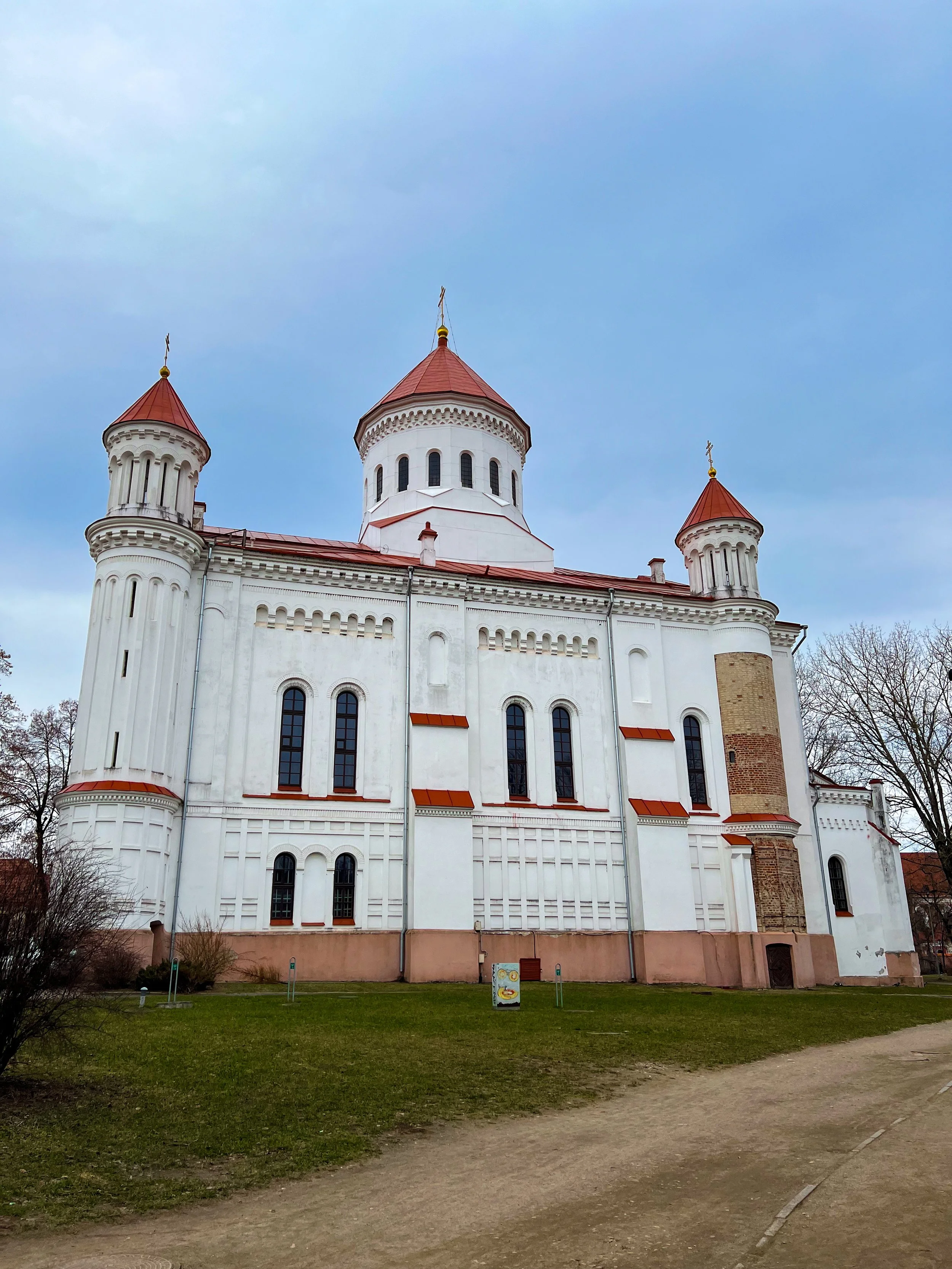
Orthodox Cathedral of the Theotokos
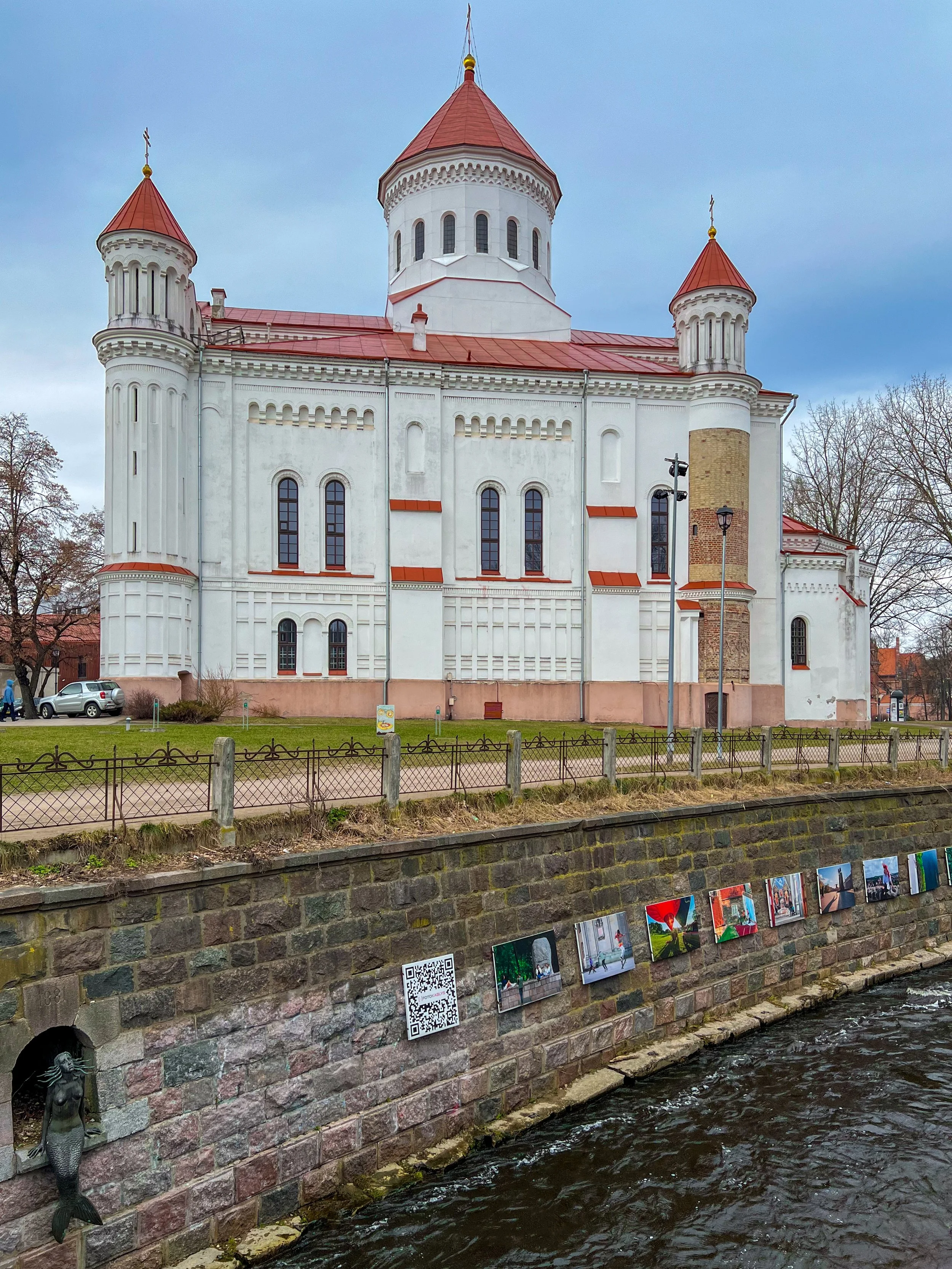
Our journey led us to the Orthodox Cathedral of the Theotokos, a stunning example of Byzantine architecture. Built in the 14th century during the reign of the Grand Duke of Lithuania Algirdas, who commissioned its construction for his Orthodox second wife, Uliana of Tver, in 1346. Blessed by Saint Alexius, Metropolitan of Kiev and all Rus', the cathedral was completed by Kievan architects in 1348, making it one of the oldest churches in Vilnius.
Throughout the medieval period, the Cathedral of the Theotokos served as a spiritual centre for the burgeoning Christian population of the Grand Duchy of Lithuania. It witnessed significant events, including the marriage of Grand Duke Aleksandras of Lithuania and Helena of Moscow in 1495, underscoring its importance as a site of royal and religious significance. Despite the subsequent conversion of Lithuania to Roman Catholicism, the cathedral remained a beacon of Orthodox worship, protected by princes Konstanty Ostrogski and Konstanty Wasyl Ostrogski.
Over the centuries, the cathedral endured numerous trials and tribulations, including fires, reconstructions, and changes in ownership. It was rebuilt in the Baroque style in 1785 after a major fire and underwent thorough modernization in 1822 under the ownership of Vilnius University. However, during the Russification campaign of the 19th century, the cathedral was confiscated and transferred to the Russian Orthodox Church, undergoing a reconstruction in the style of medieval Georgian architecture from 1865 to 1868 under the direction of architect Nikolai Chagin.
Throughout the tumultuous events of the 20th century, including the Second World War and Soviet occupation, the Cathedral of the Theotokos persevered, undergoing restoration efforts in 1948 and 1998 to preserve its historic and cultural significance. Today, it remains a cherished symbol of Vilnius' Orthodox heritage, hosting services attended primarily by ethnic Russian and Belarusian residents of the city.
Uzupis Republic
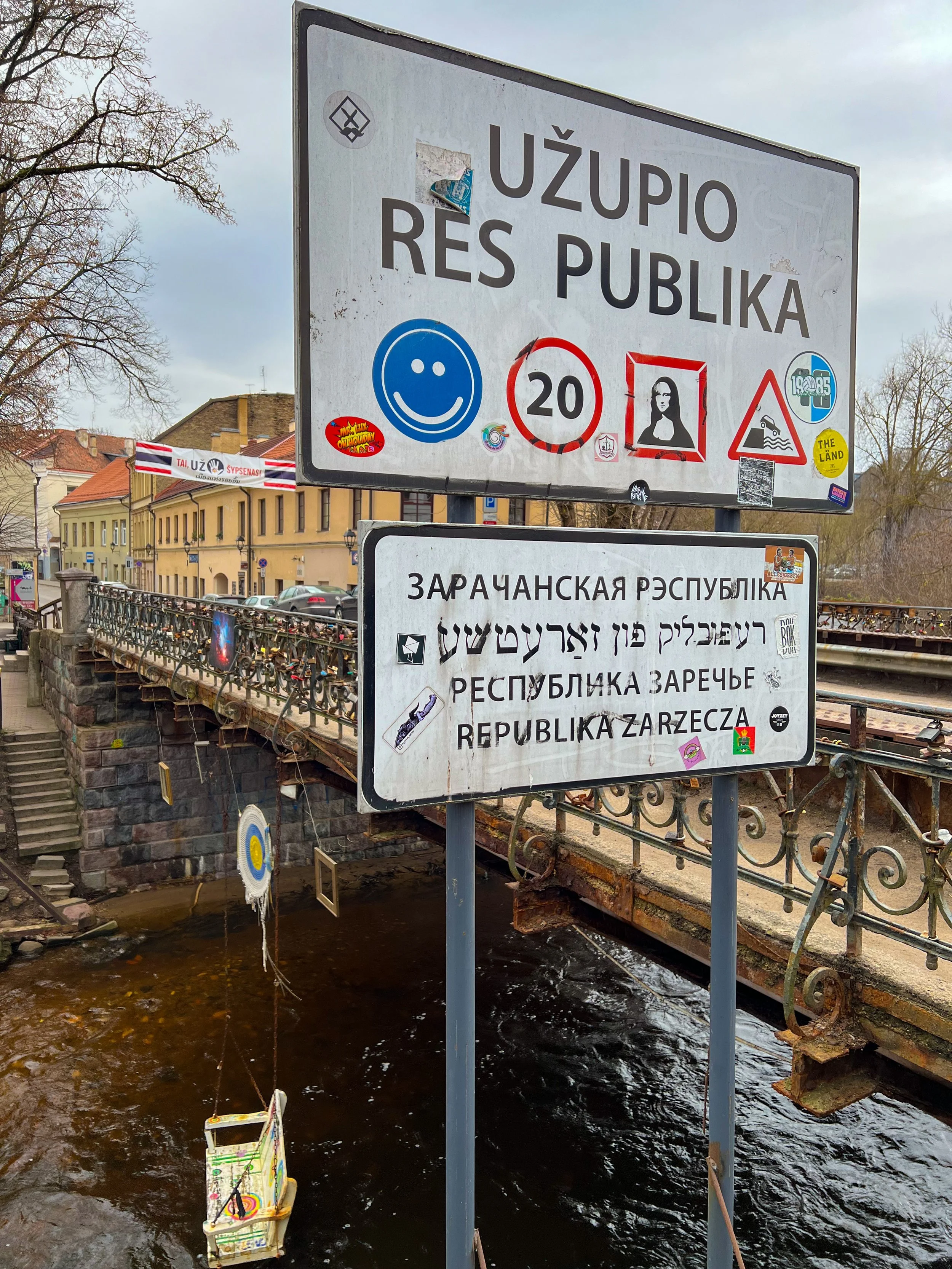
Right in front of the Orthodox Cathedral of the Theotokos you will find the whimsical enclave of Užupis Republic. This self-proclaimed "republic" is a unique and eclectic community known for its independent spirit, artistic expression, and commitment to freedom and creativity.
Founded in 1997 by a group of local artists, writers, and intellectuals, Užupis Republic was established as a tongue-in-cheek declaration of independence from the rest of Vilnius. Inspired by similar artistic enclaves around the world, such as Christiania in Copenhagen and Freetown Christiania in Denmark, Užupis sought to create a haven for artistic freedom and cultural experimentation.
One of the defining features of Užupis is its quirky and irreverent constitution, which was adopted on April 1st, known as Užupis Day, in a nod to its whimsical nature. The constitution, written in multiple languages and displayed prominently in the district, includes such provisions as the right to be happy, the right to be unhappy, and the right to declare oneself a genius or a fool.
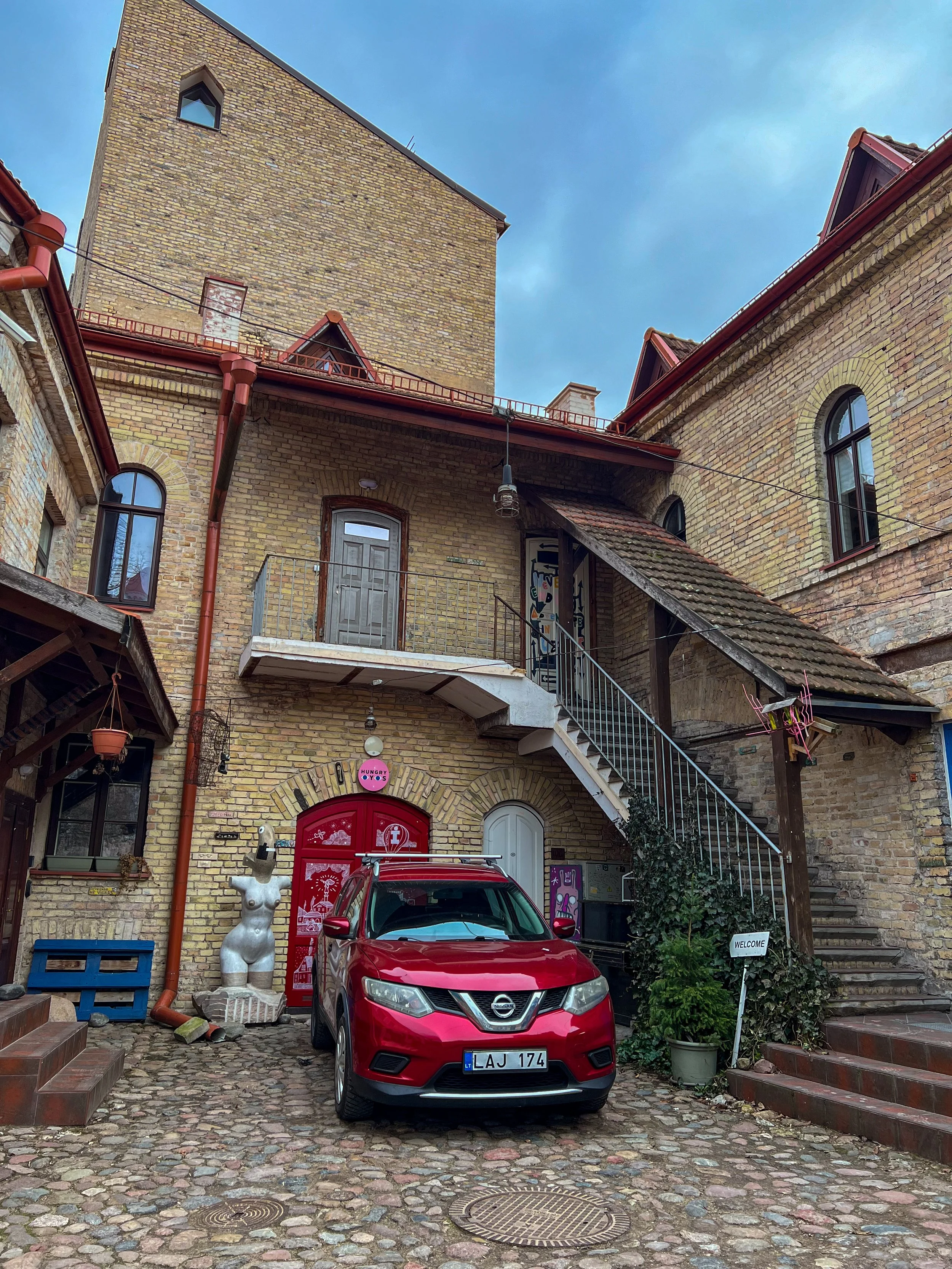

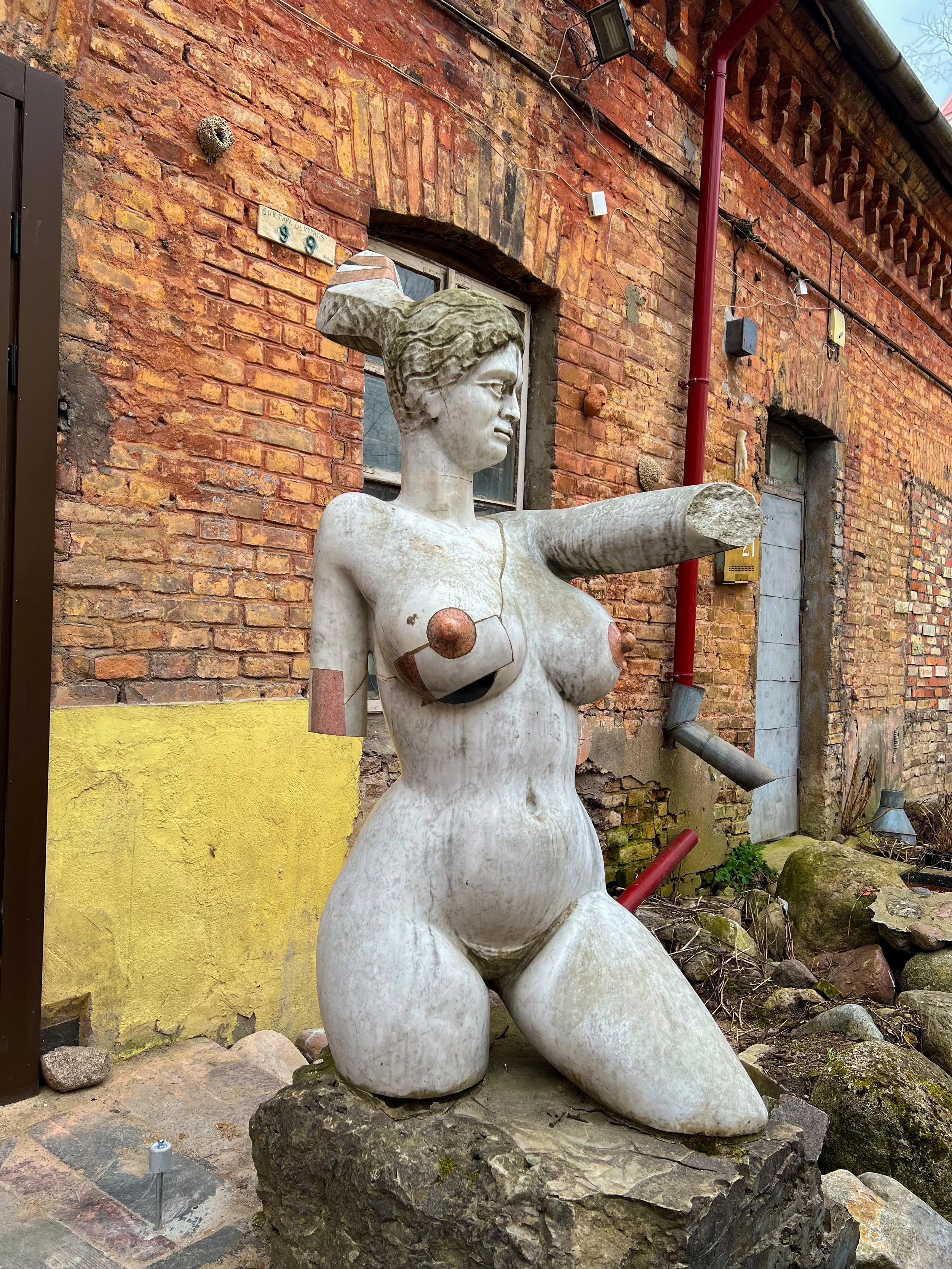
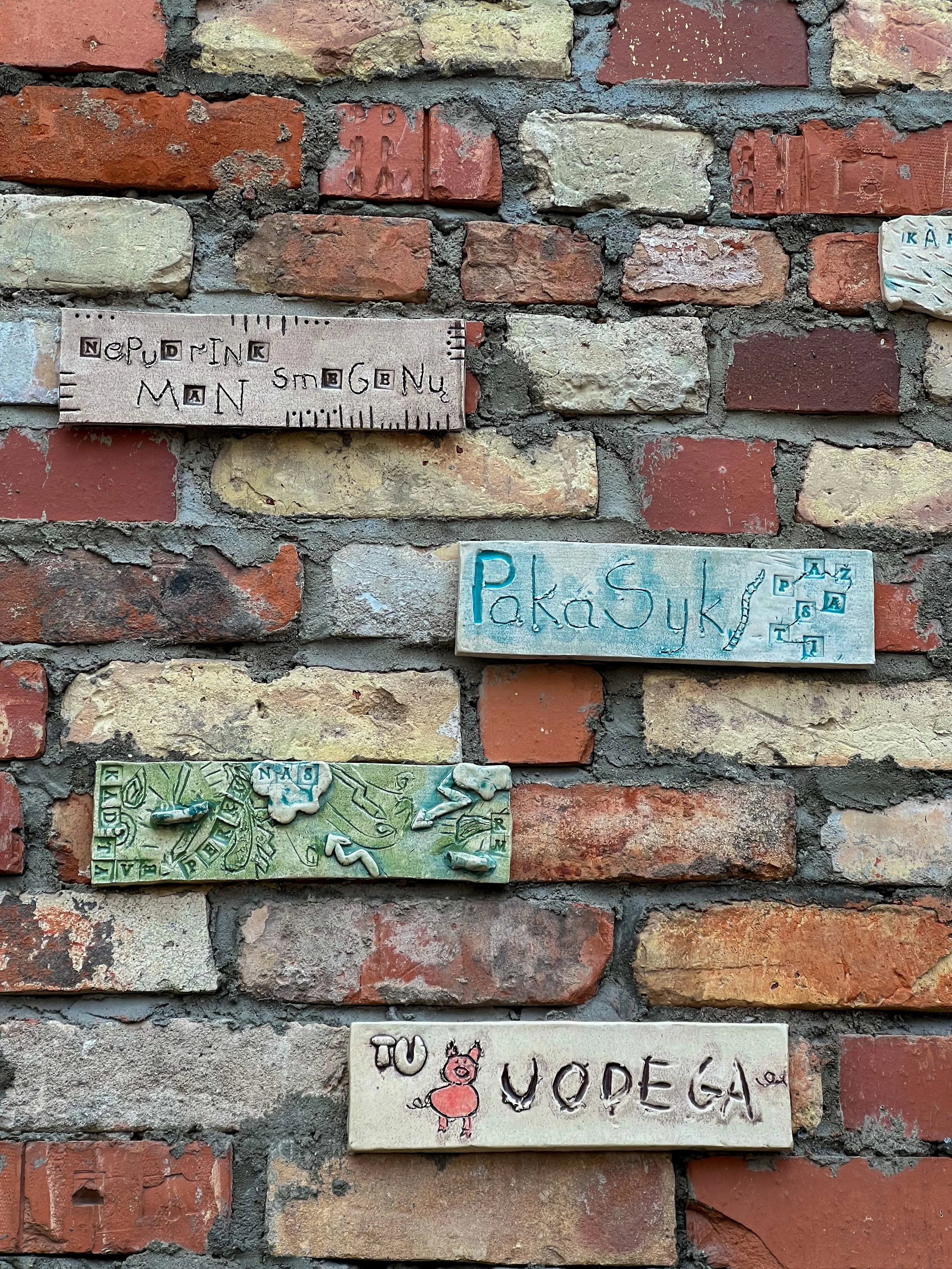
Užupis is also known for its vibrant arts scene, with numerous galleries, studios, and street art installations dotting its narrow cobblestone streets. Visitors can explore the district's many art galleries, attend live music performances and poetry readings, or simply wander through its charming alleyways adorned with colorful murals and graffiti.
As you wander through the streets of Užupis, you'll encounter a community united by a shared love of art, culture, and freedom of expression. Whether you're admiring the latest street art installation, chatting with local artists in a cozy cafe, or simply soaking in the bohemian ambiance, a visit to Užupis Republic promises to be a one-of-a-kind experience that celebrates the boundless creativity of the human spirit.
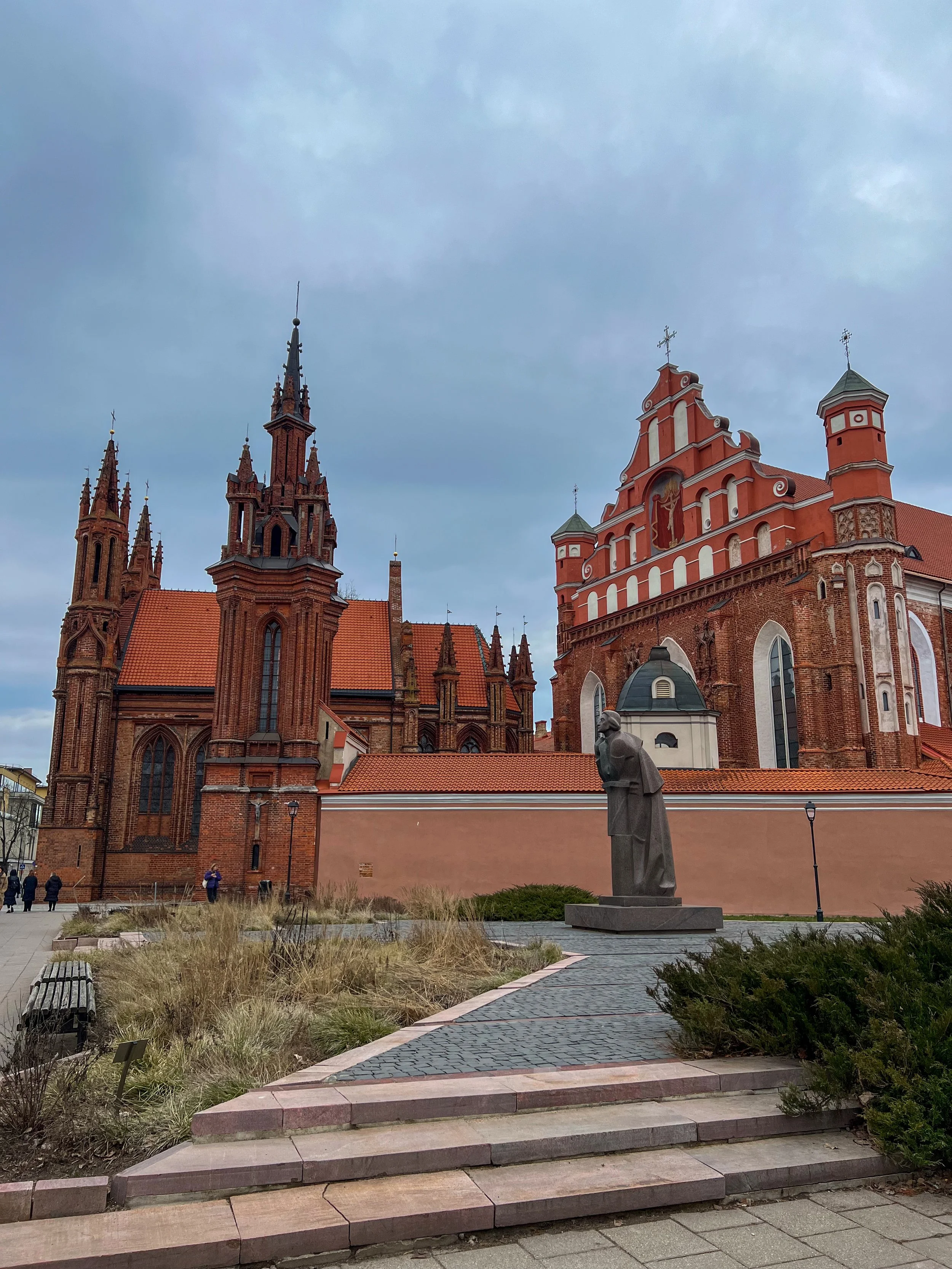
St. Anne's Church
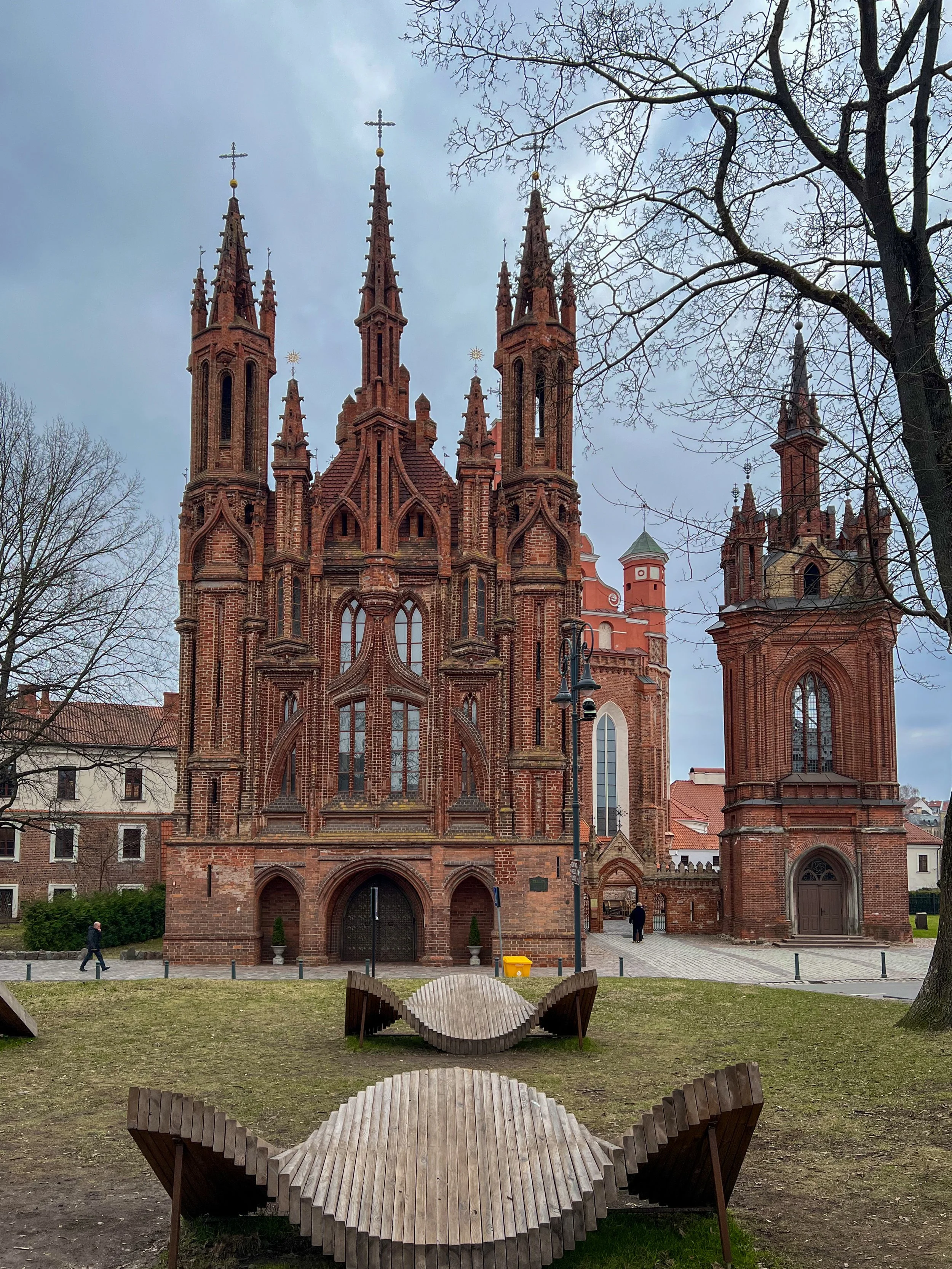
Continuing our exploration, we found ourselves standing in awe before the breathtaking facade of St. Anne's Church, a Gothic masterpiece renowned for its intricate brickwork and soaring spires. The facade is a masterpiece of architectural design, blending elements of Flamboyant Gothic and Renaissance styles, and is considered one of the finest examples of Gothic architecture in Eastern Europe.
The origins of St. Anne's Church date back to the late 15th century when it was commissioned by Vytautas the Great, Grand Duke of Lithuania, and his wife, Anna, after whom the church is named. Construction began in 1495, and the church was completed in just seven years, a testament to the skill and craftsmanship of its builders.
Throughout its storied past, St. Anne's Church has undergone several renovations and reconstructions to maintain its structural integrity and historical significance. Notably, a reconstruction funded by Mikołaj "the Black" Radziwiłł and Jerzy Radziwiłł was undertaken following severe fire damage in 1582. Despite facing numerous challenges over the centuries, including repair work supervised by Johann Christoph Glaubitz in 1747 and alterations during the Soviet Era, the church has retained its iconic facade and enduring allure.
The history of St. Anne's Church in Vilnius is not only marked by its architectural splendour but also by significant events and legends that have contributed to its enduring allure. One such legend involves Emperor Napoleon, who, according to popular lore, was so enamoured by the church's beauty during the Franco-Russian War in 1812 that he expressed a desire to transport it to Paris 'in the palm of his hand'. While the veracity of this legend may be debated, it speaks to the profound impression that St. Anne's Church has left on visitors throughout the ages.
Cathedral Square
Our journey through Vilnius Old Town culminated at the Cathedral Square, surrounded by many of Vilniu’s most famous tourist attractions that I could explore at my own leasure.
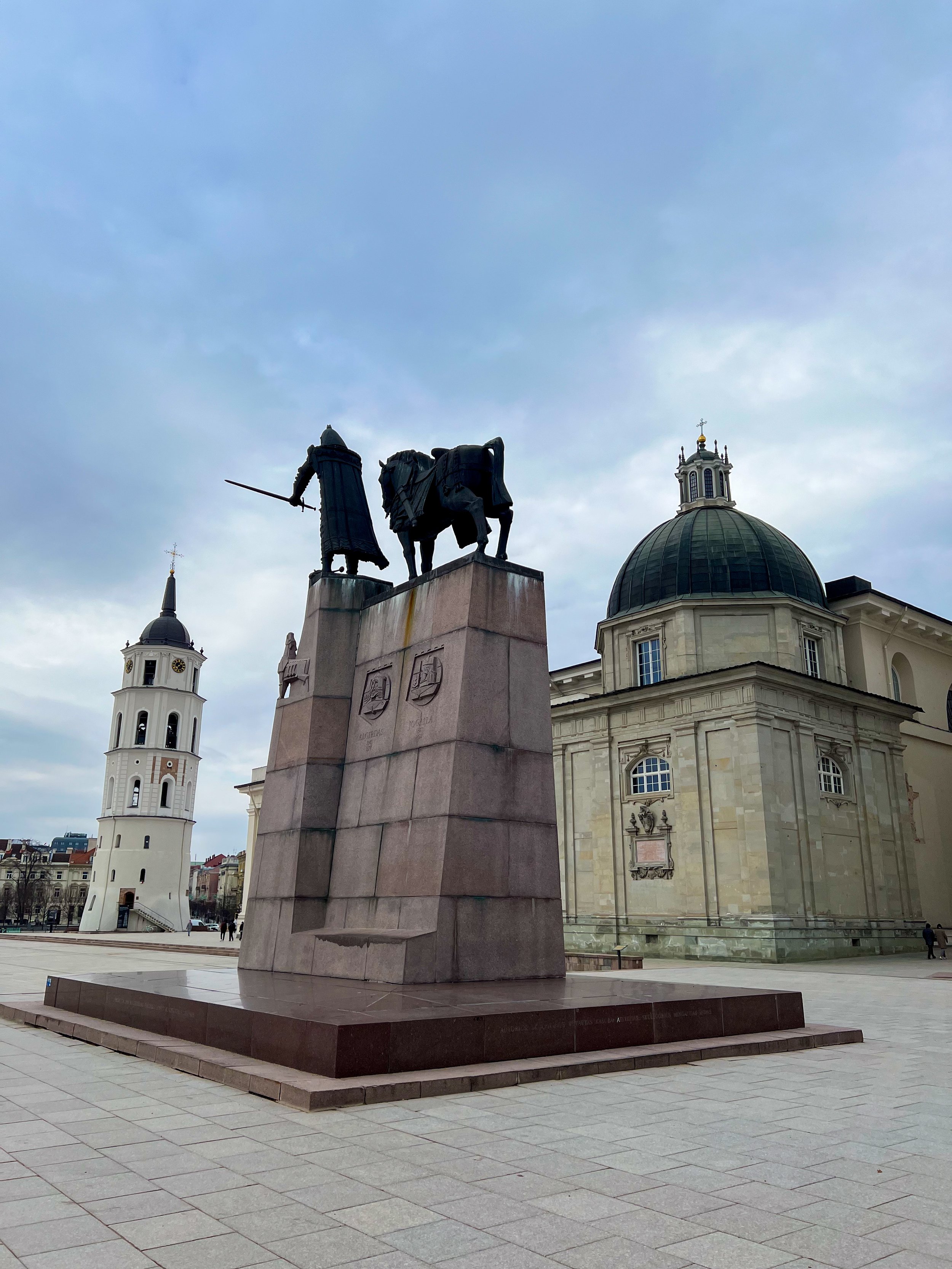
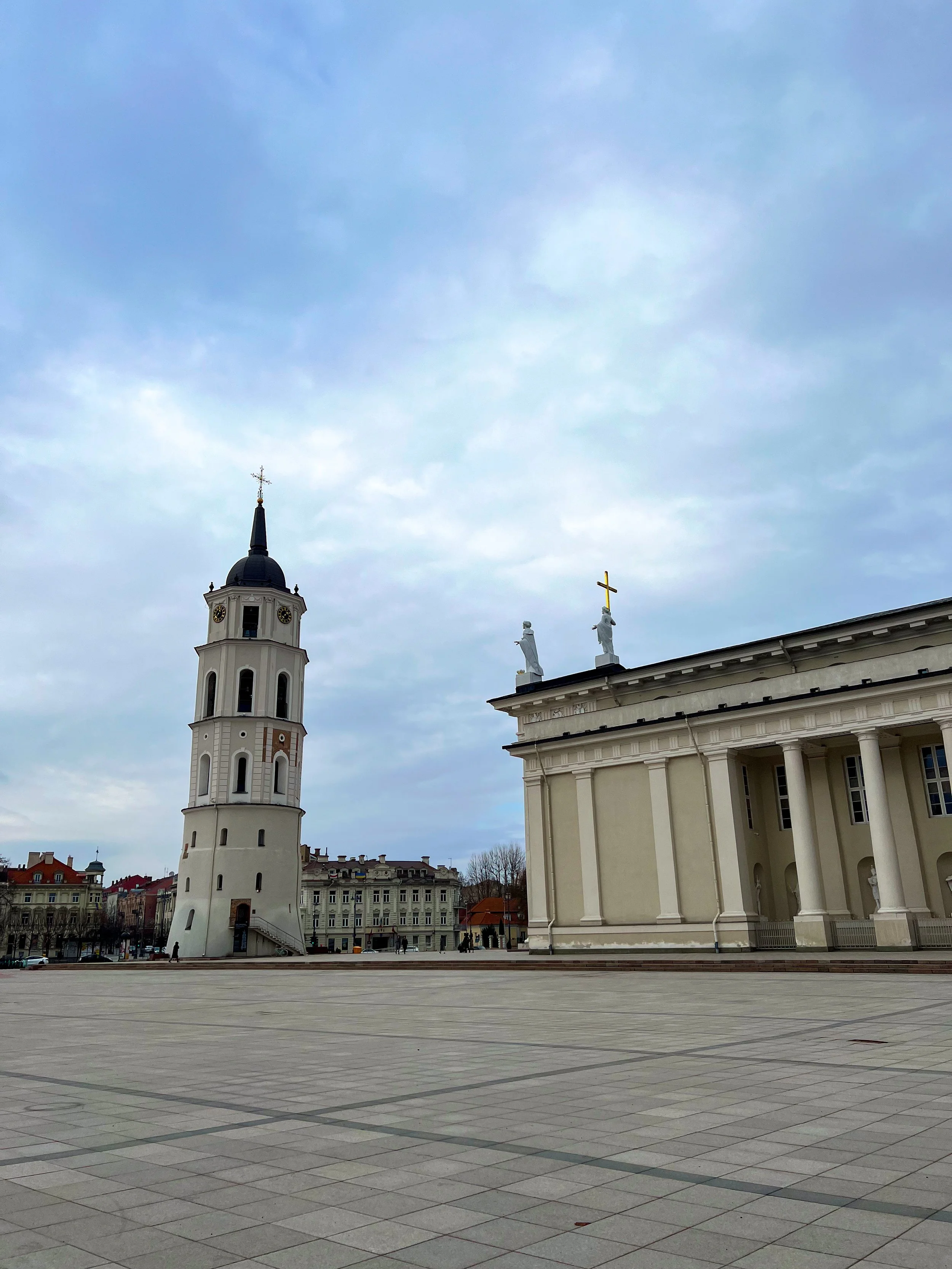
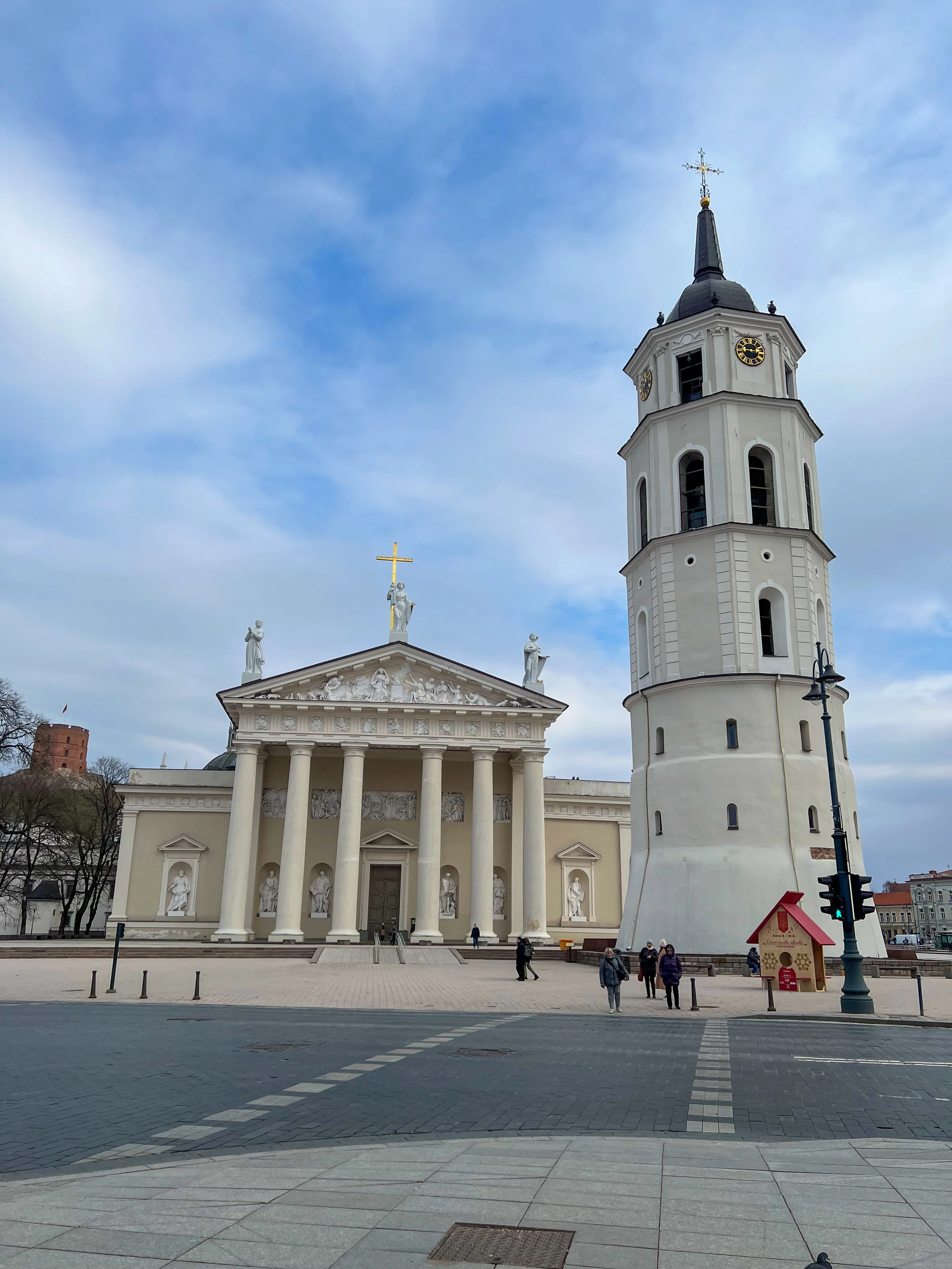
Vilnius Cathedral Square stands as the vibrant centerpiece of Vilnius Old Town, commanding attention with its picturesque setting and historical significance. Situated directly in front of the neo-classical Vilnius Cathedral, the square serves as a bustling hub of activity and a focal point for the city's public life.
As the main square of Vilnius Old Town, Cathedral Square holds a central position at the intersection of the city's main streets, making it a natural gathering place for locals and visitors alike. Its strategic location reflects the diverse character of Vilnius, where cultures, traditions, and communities converge in a harmonious blend.
Vilnius Cathedral
The central piece of the Cathedral Square is of course Vilnius Cathedral, officially known as the Cathedral Basilica of St. Stanislaus and St. Ladislaus. This majestic cathedral is dedicated to the Christian saints Stanislaus and Ladislaus and serves as the heart of Catholic spiritual life in Lithuania. Throughout its long and storied history, Vilnius Cathedral has played a central role in the country's religious and cultural identity.
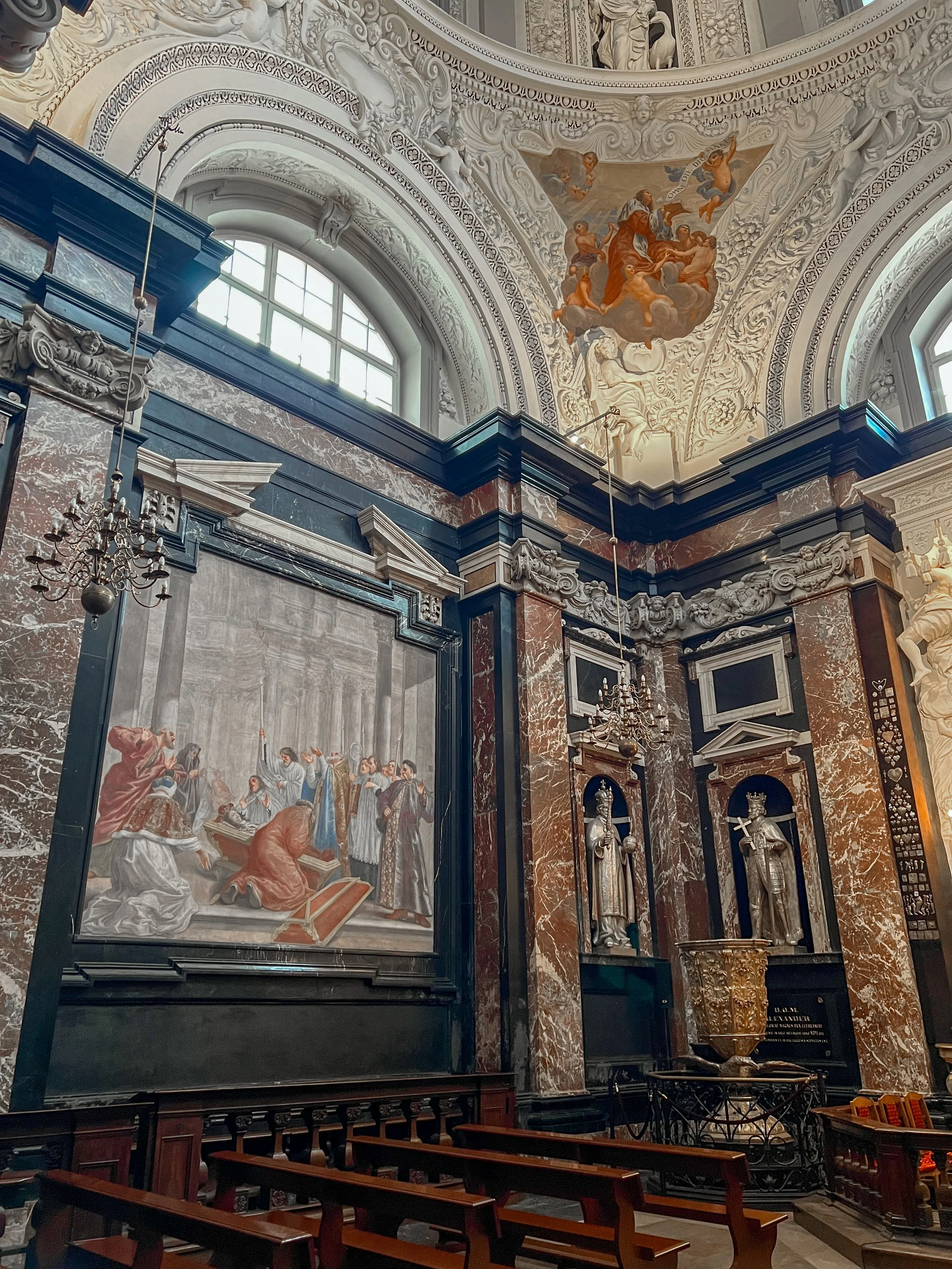
The cathedral's significance extends beyond its religious importance, as it has been the site of numerous historic events and ceremonies. Notably, the coronations of the Grand Dukes of Lithuania took place within its sacred confines. Today, the crypts and catacombs beneath the cathedral house the remains of many famous figures from Lithuanian and Polish history, including Grand Duke Vytautas, Saint Casimir, and King Alexander Jagiellon. These illustrious burials underscore the cathedral's status as a national treasure and a symbol of Lithuania's proud heritage.
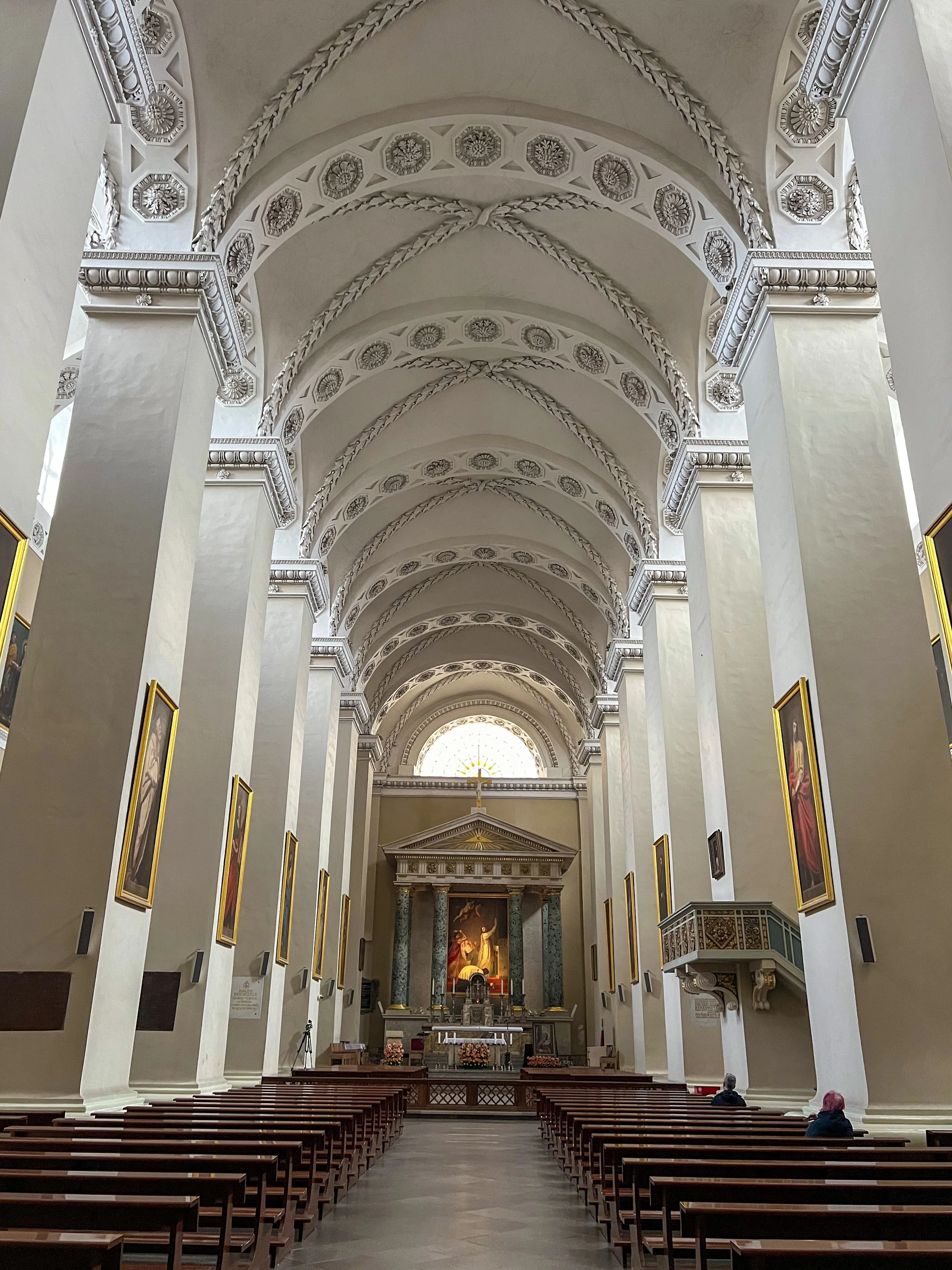
Inside Vilnius Cathedral, you’ll be treated to a treasure trove of artistic and architectural marvels spanning centuries. The cathedral boasts over forty works of art dating from the 16th to the 19th centuries, including frescoes, paintings, and sculptures. Of particular note is the Baroque-style Saint Casimir chapel, built between 1623 and 1636, which symbolizes the glory of the Polish-Lithuanian union. Additionally, the cathedral's interior underwent extensive reconstruction in the late 18th century, resulting in its present Neoclassical appearance, adorned with sculptures and decorations by renowned artists.

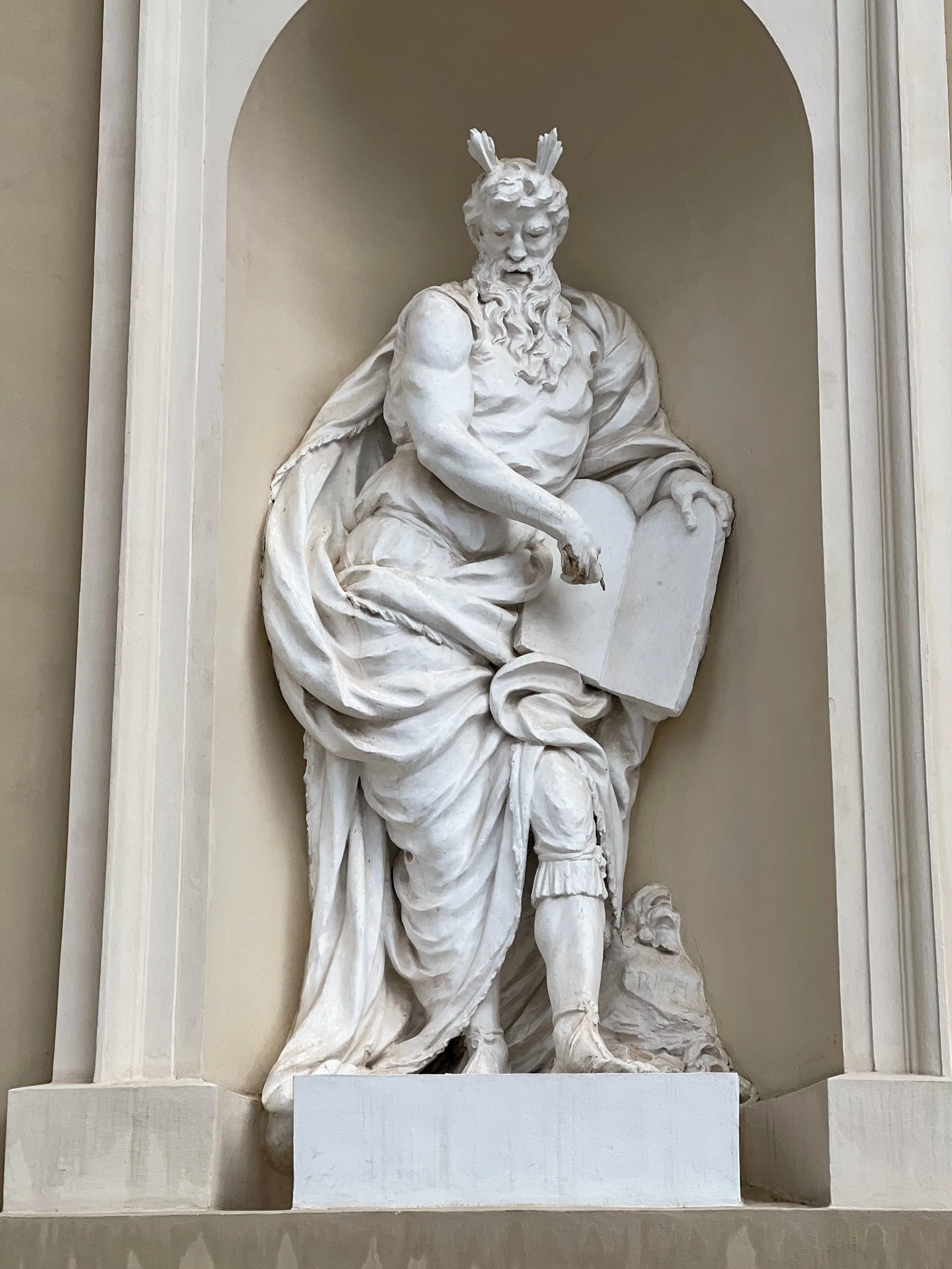
Palace of the Grand Dukes of Lithuania
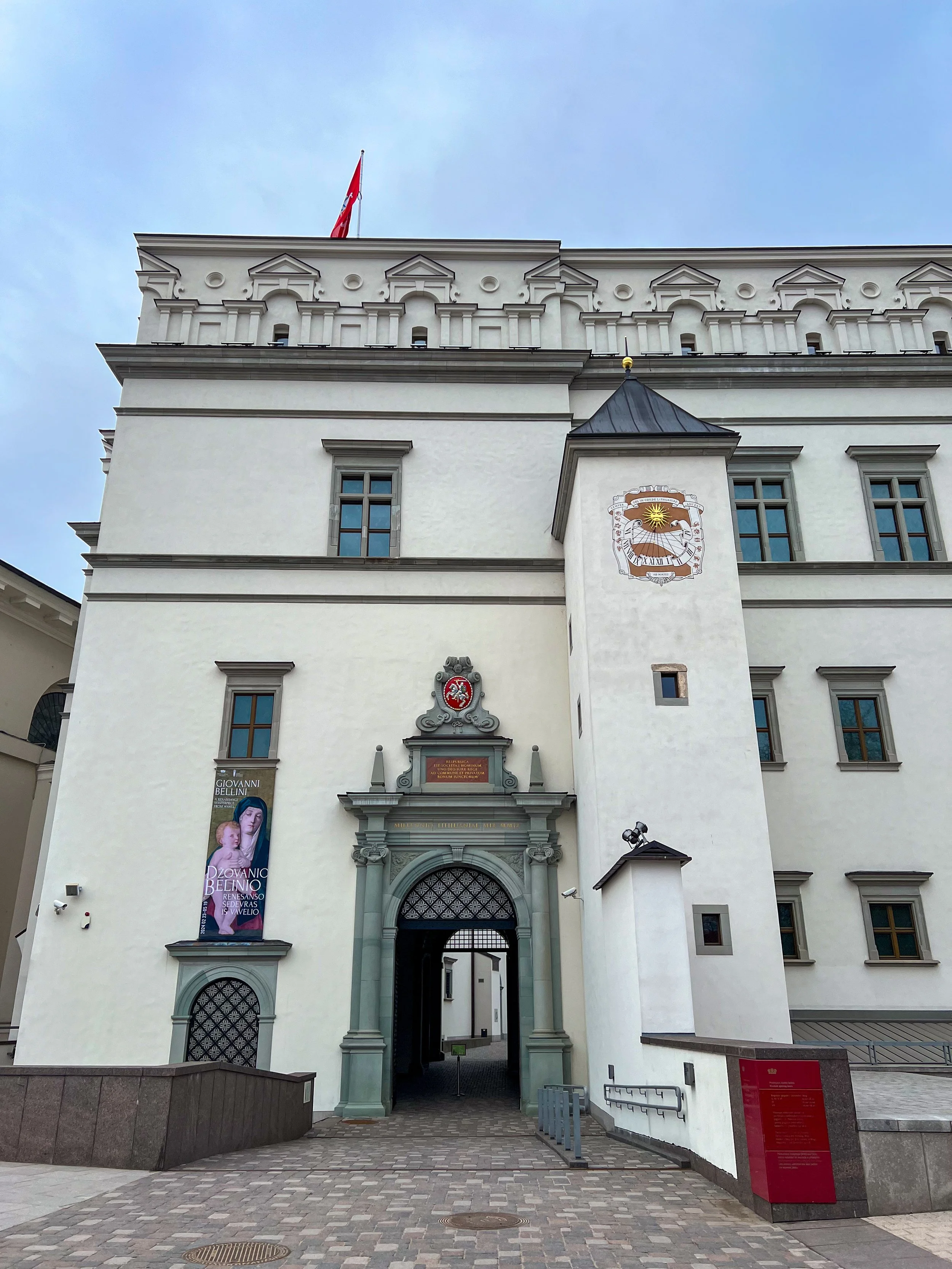
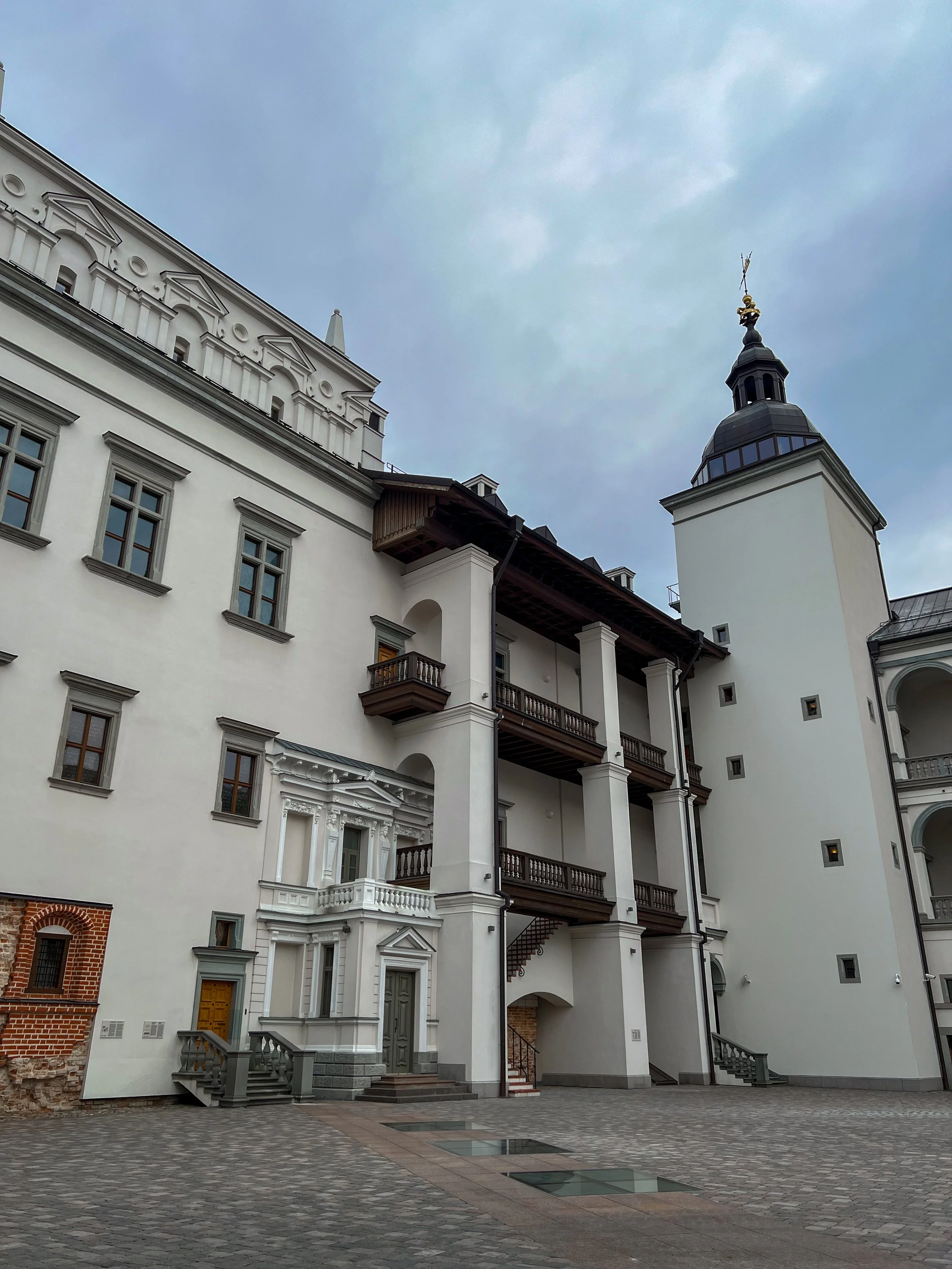
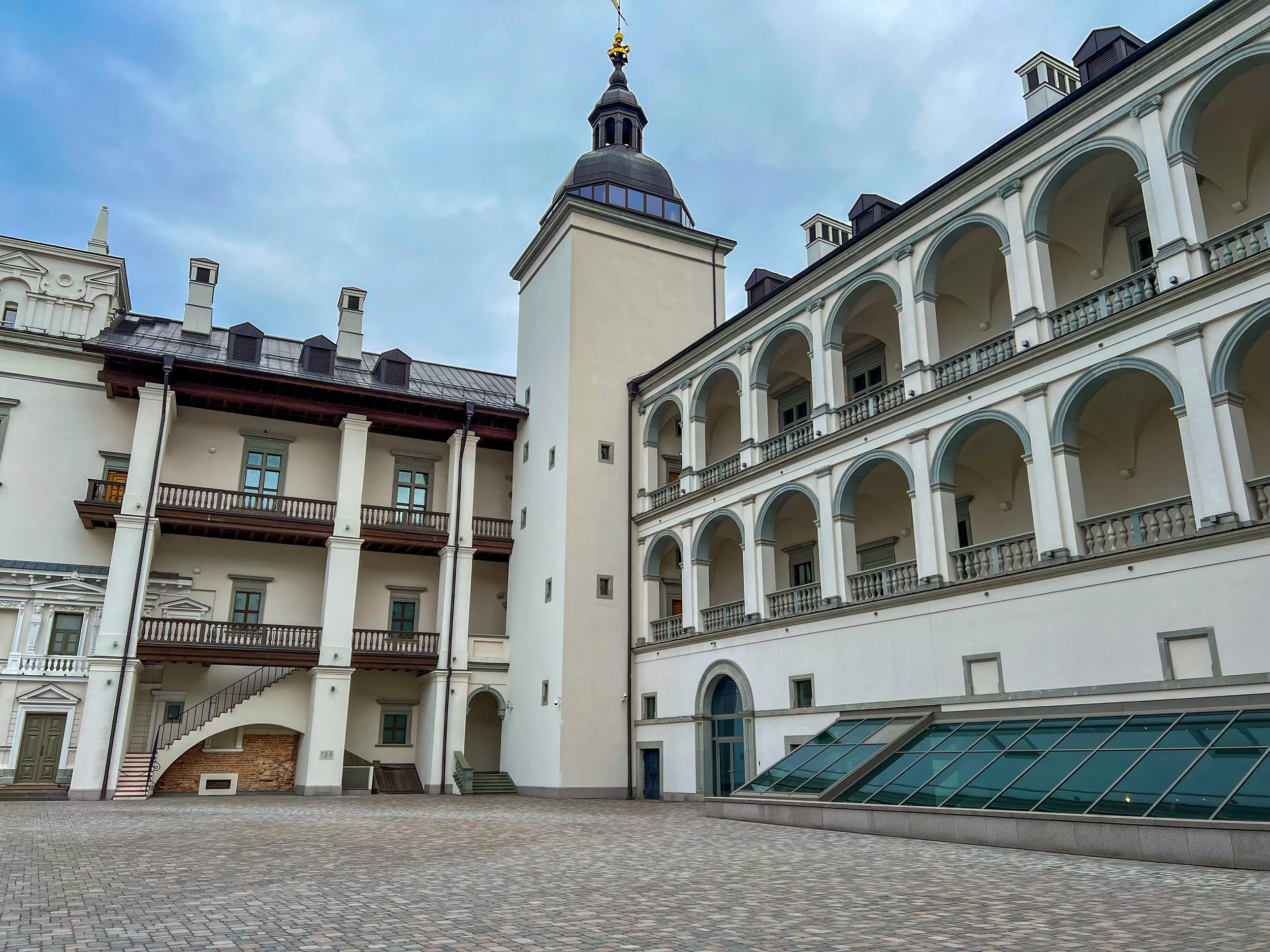
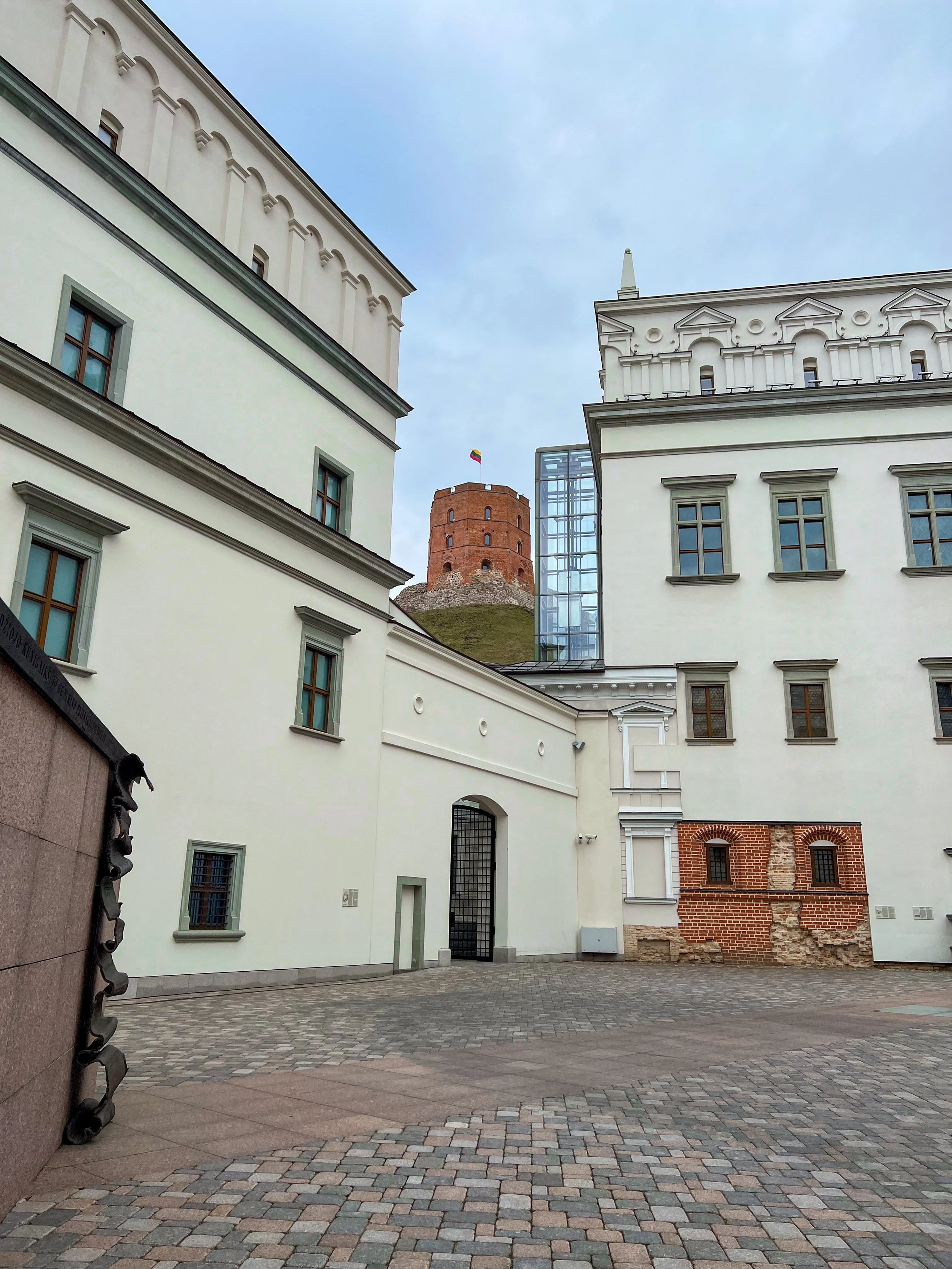
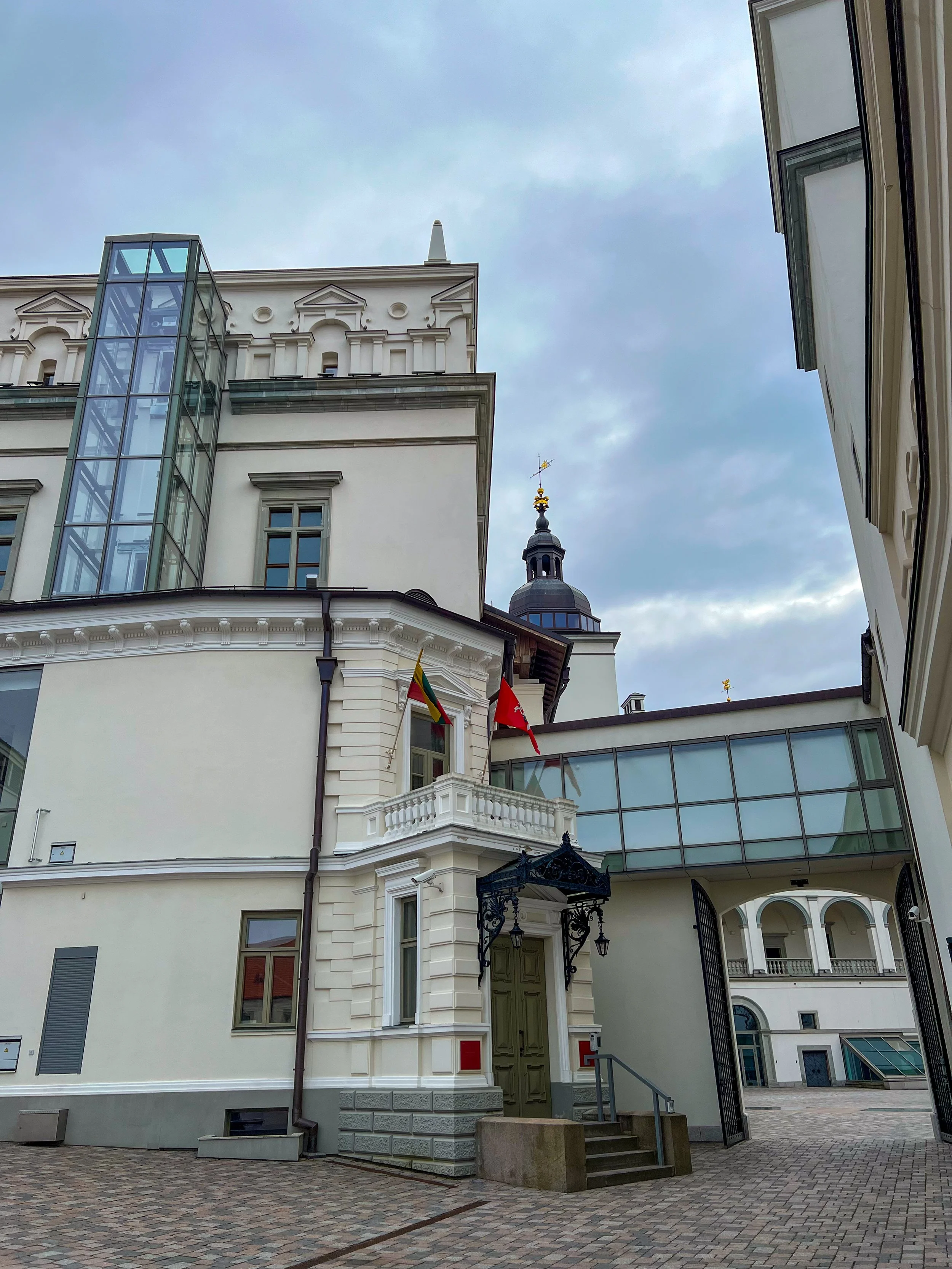
After a leisurely lunch at a quaint cafe nestled in the heart of Old Town, we set out to explore the architectural wonders and historic landmarks that punctuate Vilnius' skyline. Our first stop was the Palace of the Grand Dukes of Lithuania, a majestic ensemble of palatial buildings that once served as the seat of power for the Grand Duchy of Lithuania. Within its opulent chambers and sprawling courtyards, we gained insight into the grandeur and intrigue of Lithuania's medieval rulers.
Gediminas Castle Tower
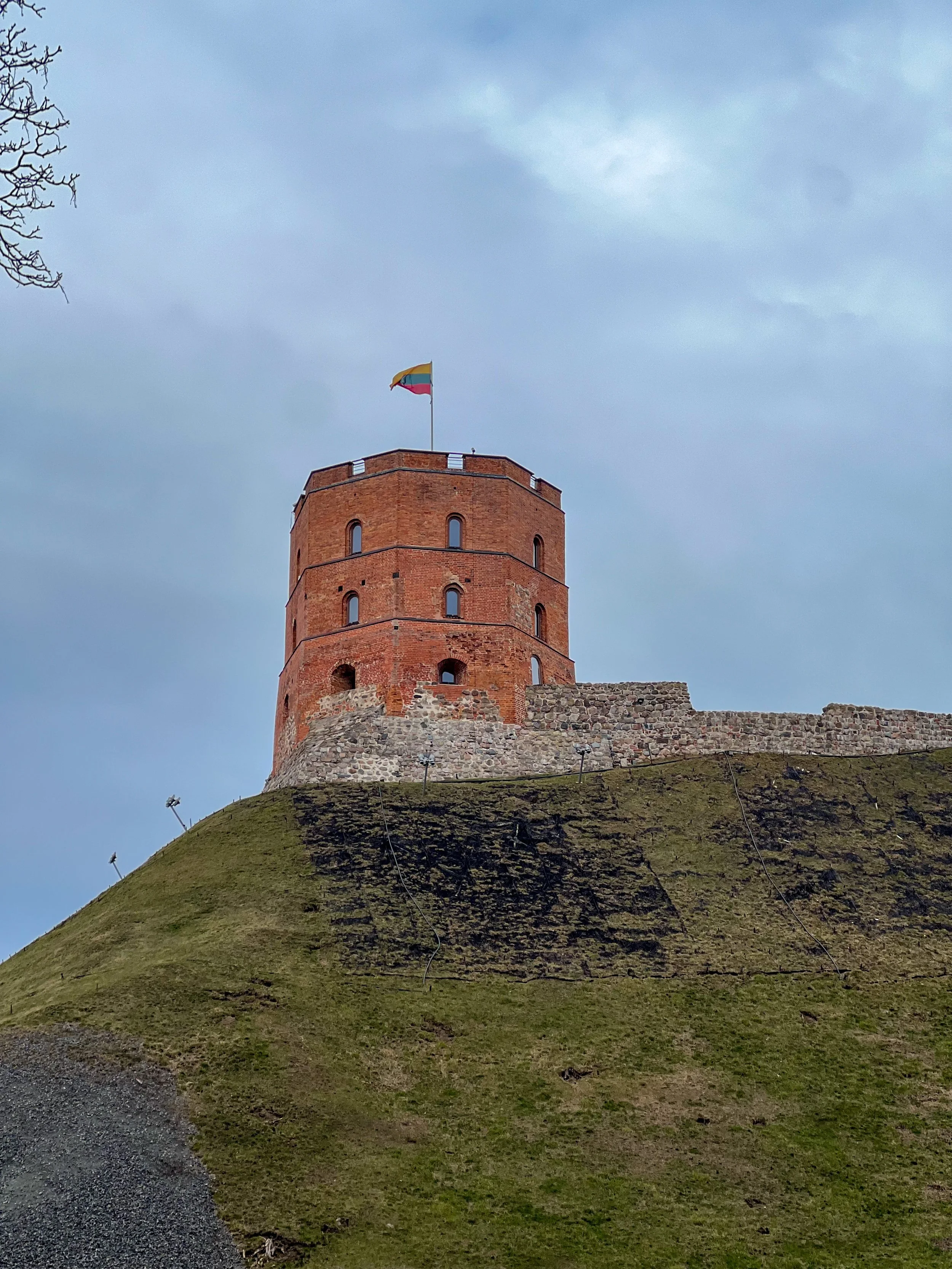
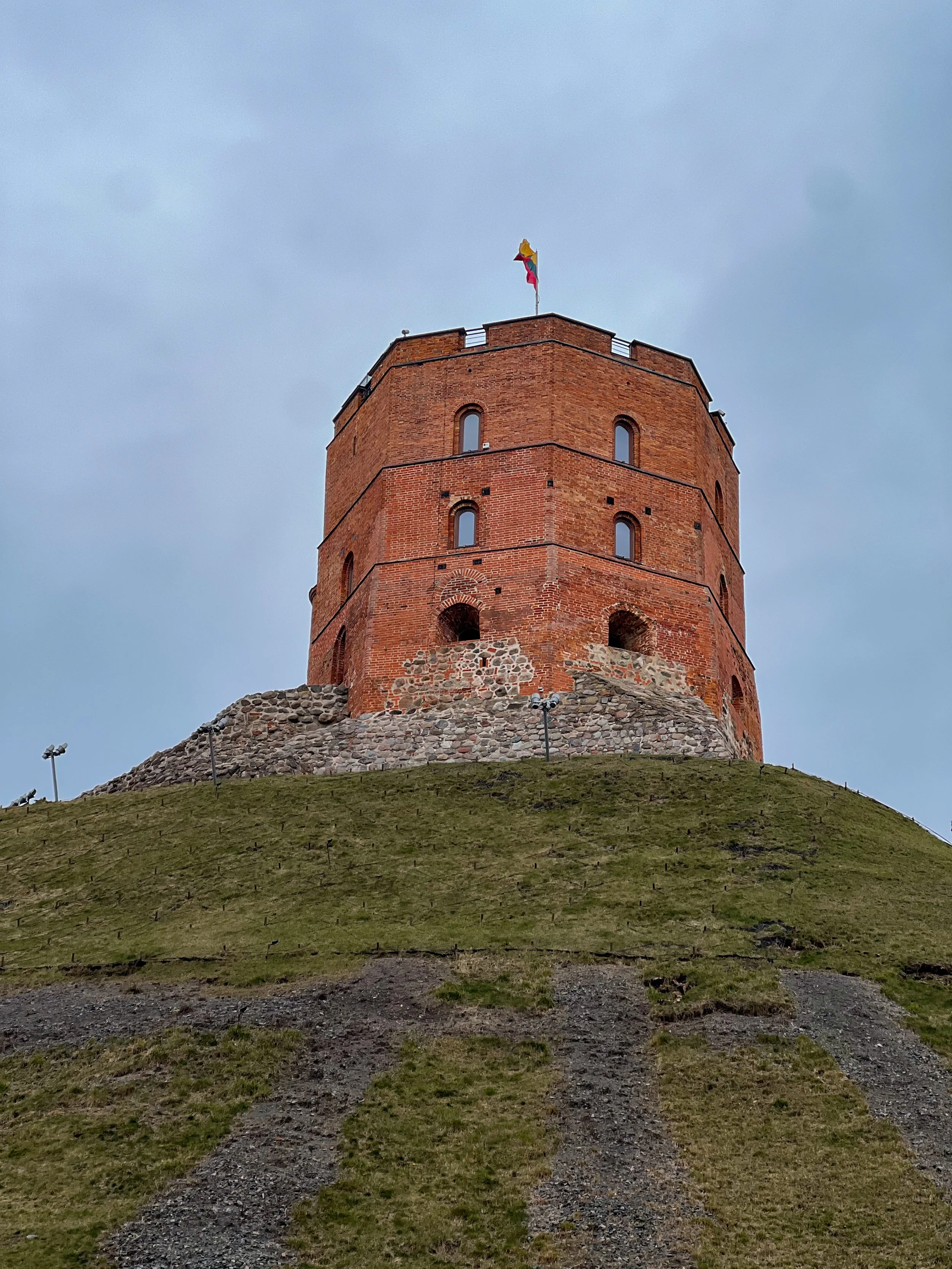
Perched atop Gediminas Hill, the Gediminas Castle Tower offers visitors panoramic views of Vilnius Old Town and the bustling Central Business District below. If you dare to climb the hill, you can enjoy the patchwork of red-tiled rooftops and spires that define Vilnius' skyline, a testament to its enduring legacy as the "Athens of the North."
Originally constructed as part of the Upper Castle by Grand Duke Gediminas in the 14th century, it was rebuilt in 1933 by Polish architect Jan Borowski. Today, the three-story tower has become an iconic symbol of Vilnius.
Steeped in legend and lore, Gediminas' Tower holds a special place in the hearts of Lithuanians as a symbol of national identity and resilience. According to legend, Grand Duke Gediminas received a prophetic dream while hunting in Šventaragis Valley, where he envisioned a great iron wolf howling atop the hill where he stood. Interpreted as a divine sign, Gediminas heeded the call to establish a city in that very spot, thus laying the foundation for what would later become Vilnius, the capital of Lithuania.
Vilnius University
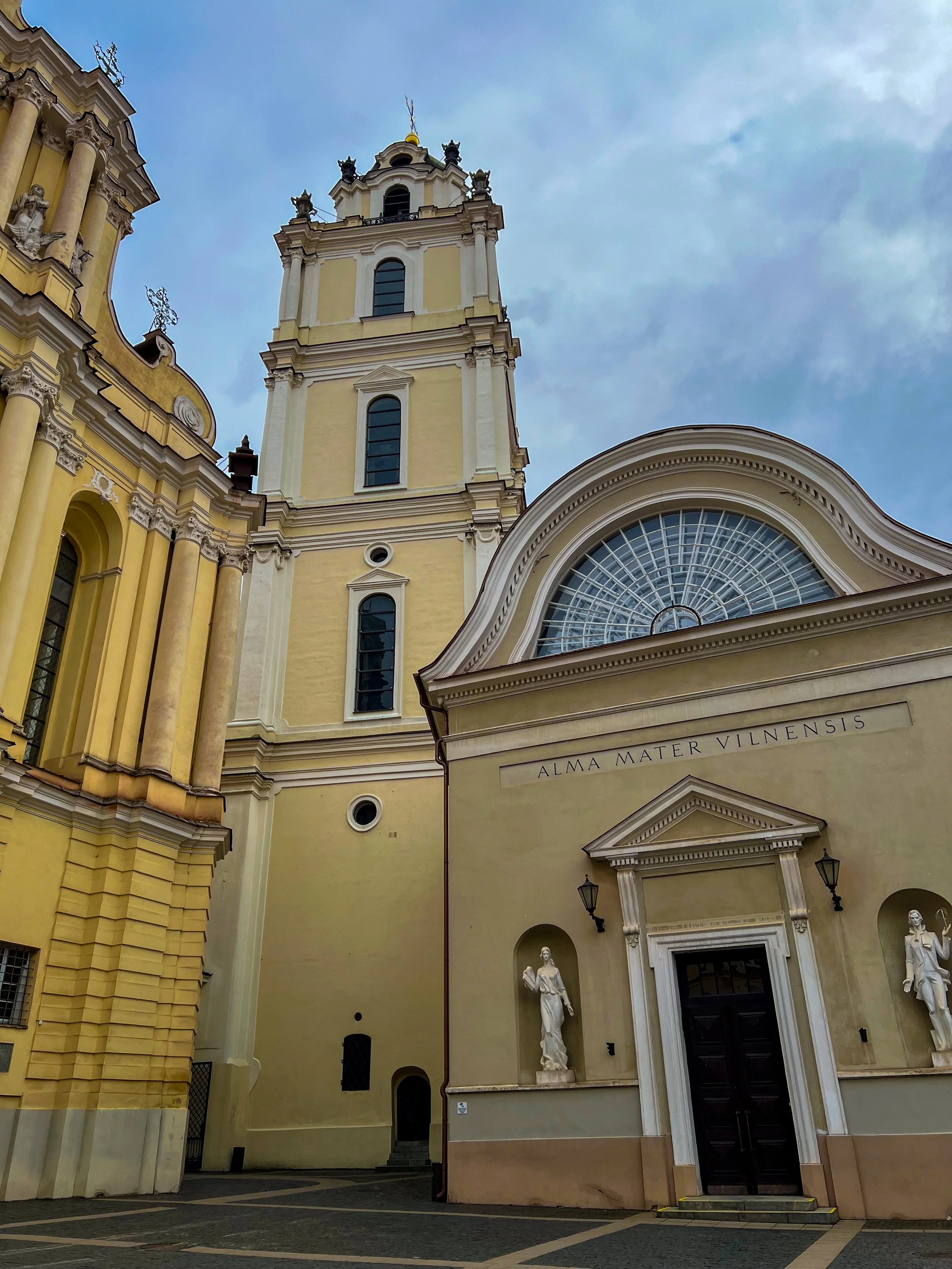
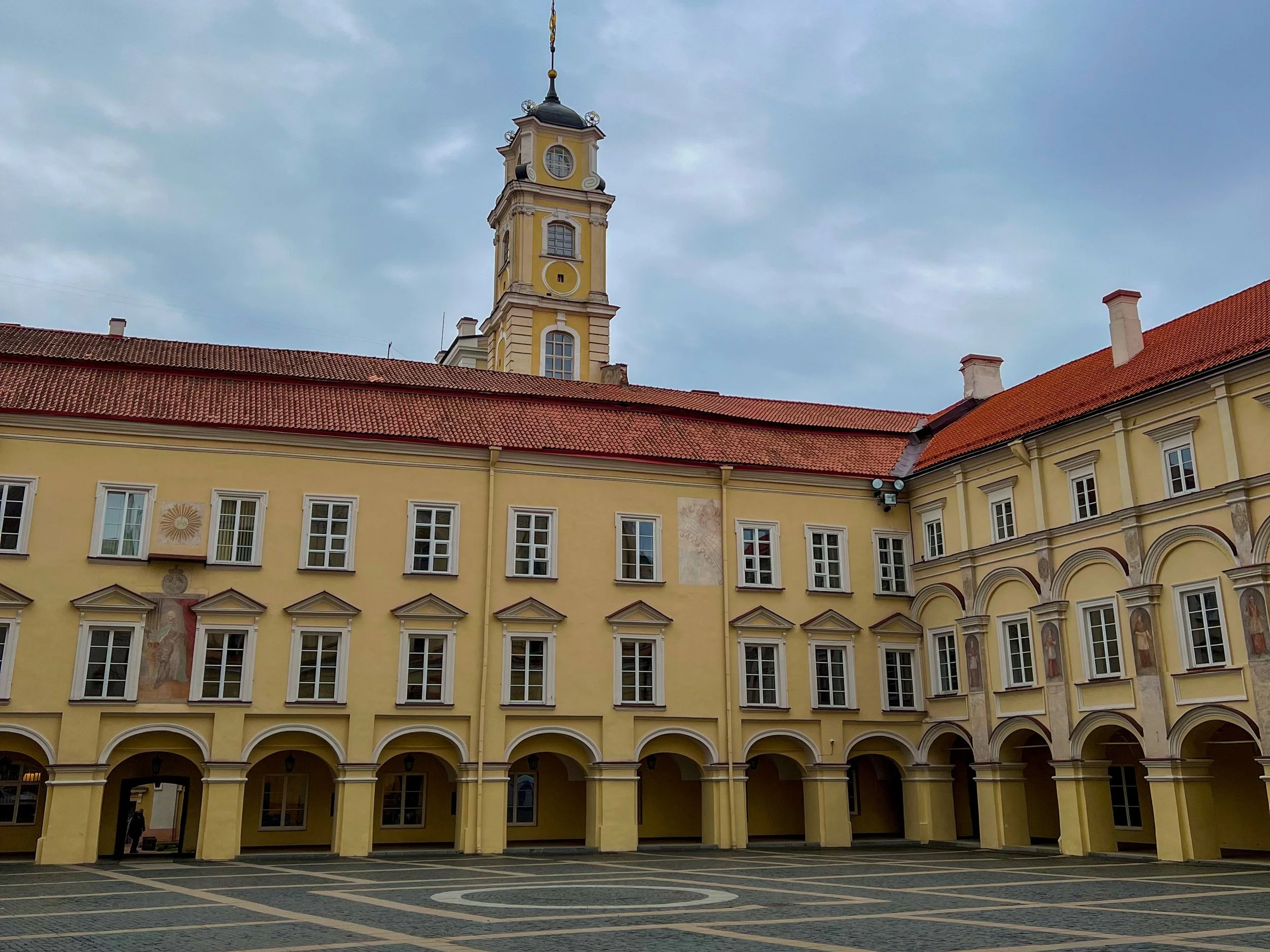
As I was walking back through Vilnius Old Town, my final stop for the day was the renowned Vilnius University, a beacon of academic excellence and innovation in Lithuania and beyond.
Established in 1579 as the Jesuit Academy of Vilnius by Stephen Báthory, it holds the distinction of being the first and largest university in Lithuania, as well as one of the oldest and most prestigious institutions of higher learning in Central and Eastern Europe. Following Lithuania's independence in 1990, Vilnius University regained its status as a leading centre of education and research in the region.
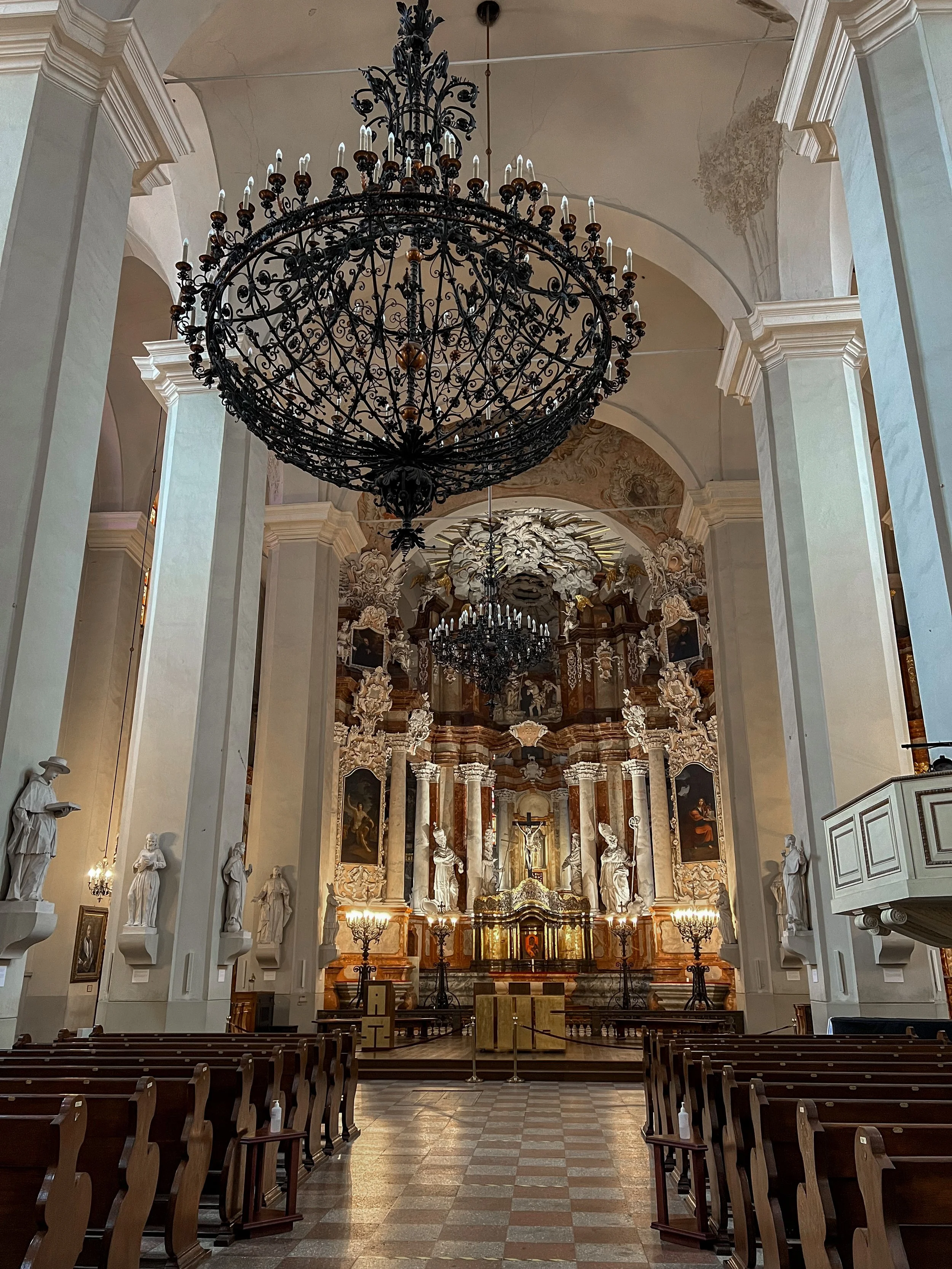
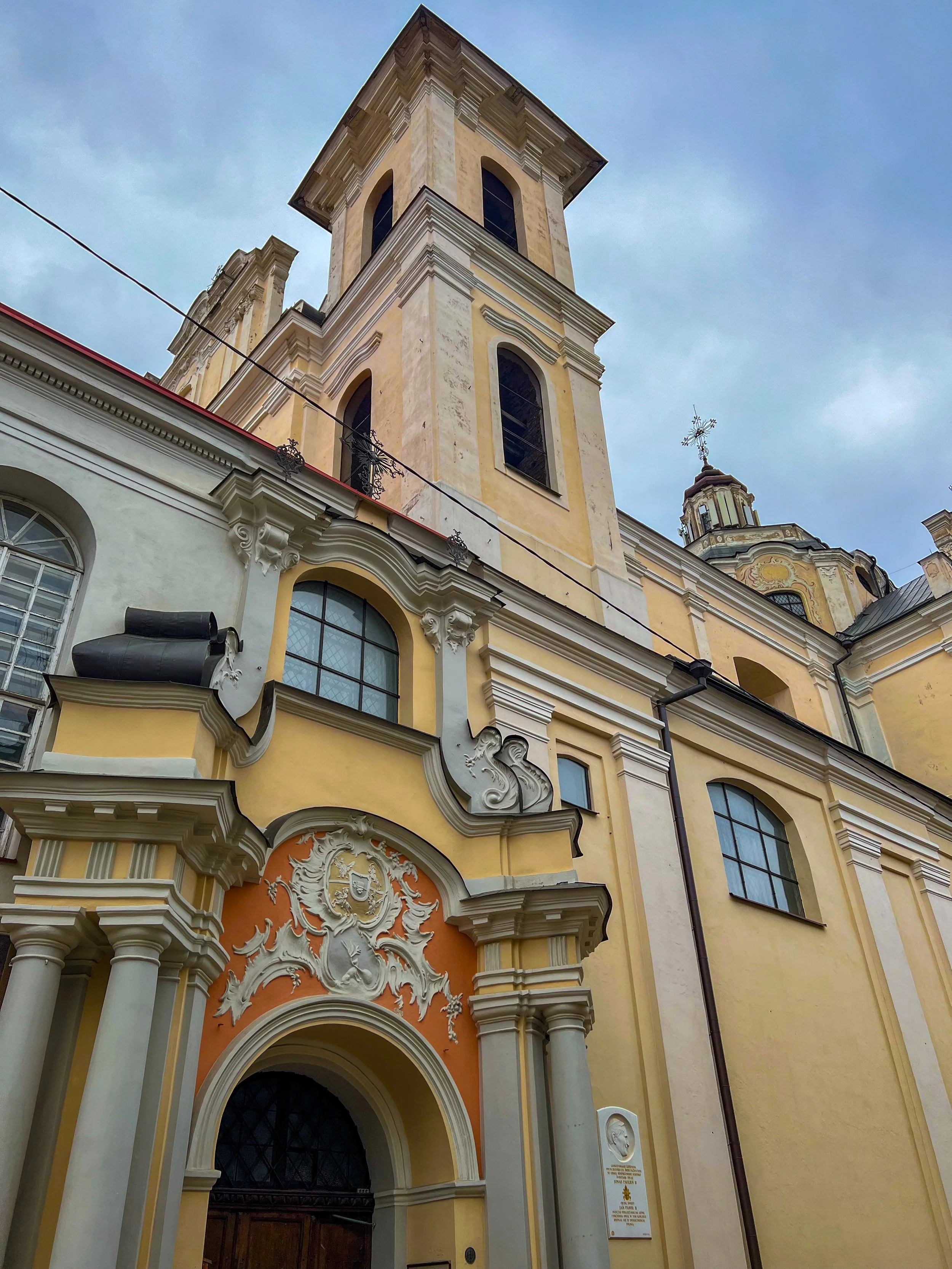
In the main courtyard of the University, you can’t miss the Church of St. John the Baptist and St. John the Evangelist. This church is a part of the Vilnius University ensemble. Built immediately after the conversion of Lithuania to Christianity in 1397, the Gotic church was entrusted to the Jesuits in 1571. after the fire of 1748, Johan Christoph Glaubitz rebuilt the church in Baroque style, and in the 19th century, its interior acquired Classical features. The late Baroque style predominates the architecture of the church, which is more commonly referred to as the Church of Sts. Johns. The interior boasts a majestic composition of ten altars, colourful stained-glass windows and masterful vault paintings. The church houses the largest organ in Lithuania.

Day 2
Jewish Heritage of Vilnius
On the second day of my Vilnius adventure, I set out to explore the city's Jewish past, a journey steeped in poignant remembrance and reverence for a community whose contributions resonate through the ages. While this city boasts a rich tapestry of cultures and influences, its Jewish heritage stands as a testament to a community that once thrived amidst its bustling streets.
Understanding the Jewish heritage of Vilnius is not merely an exercise in historical exploration; it is a solemn acknowledgement of the significant contributions and enduring legacy of Lithuanian Jews. For centuries, Vilnius served as a vibrant centre of Jewish life in Eastern Europe, earning it the moniker "Jerusalem of the North." The Jewish community of Vilnius, with its rich cultural, religious, and intellectual traditions, played an integral role in shaping the city's identity and character.
Learning about Vilnius's Jewish heritage is essential for gaining a deeper understanding of the city's complex history and the broader Jewish experience in Eastern Europe. From the flourishing of Jewish religious scholarship in the famed Vilna Gaon to the vibrant cultural life of the Vilnius Ghetto during World War II, each chapter of Vilnius's Jewish history offers invaluable insights into the resilience and strength of the human spirit in the face of adversity.
To fully appreciate the depth and significance of Vilnius's Jewish heritage, I highly recommend joining a Vilnius Jewish tour. These tours offer a comprehensive exploration of key sites related to Jewish life and history in the city, including synagogues, memorials, and cultural institutions. By delving into the stories, traditions, and legacies of Vilnius's Jewish community, visitors gain a broader understanding of the city's past and present, fostering greater empathy, compassion, and appreciation for diversity.
Samuel Bak Museum
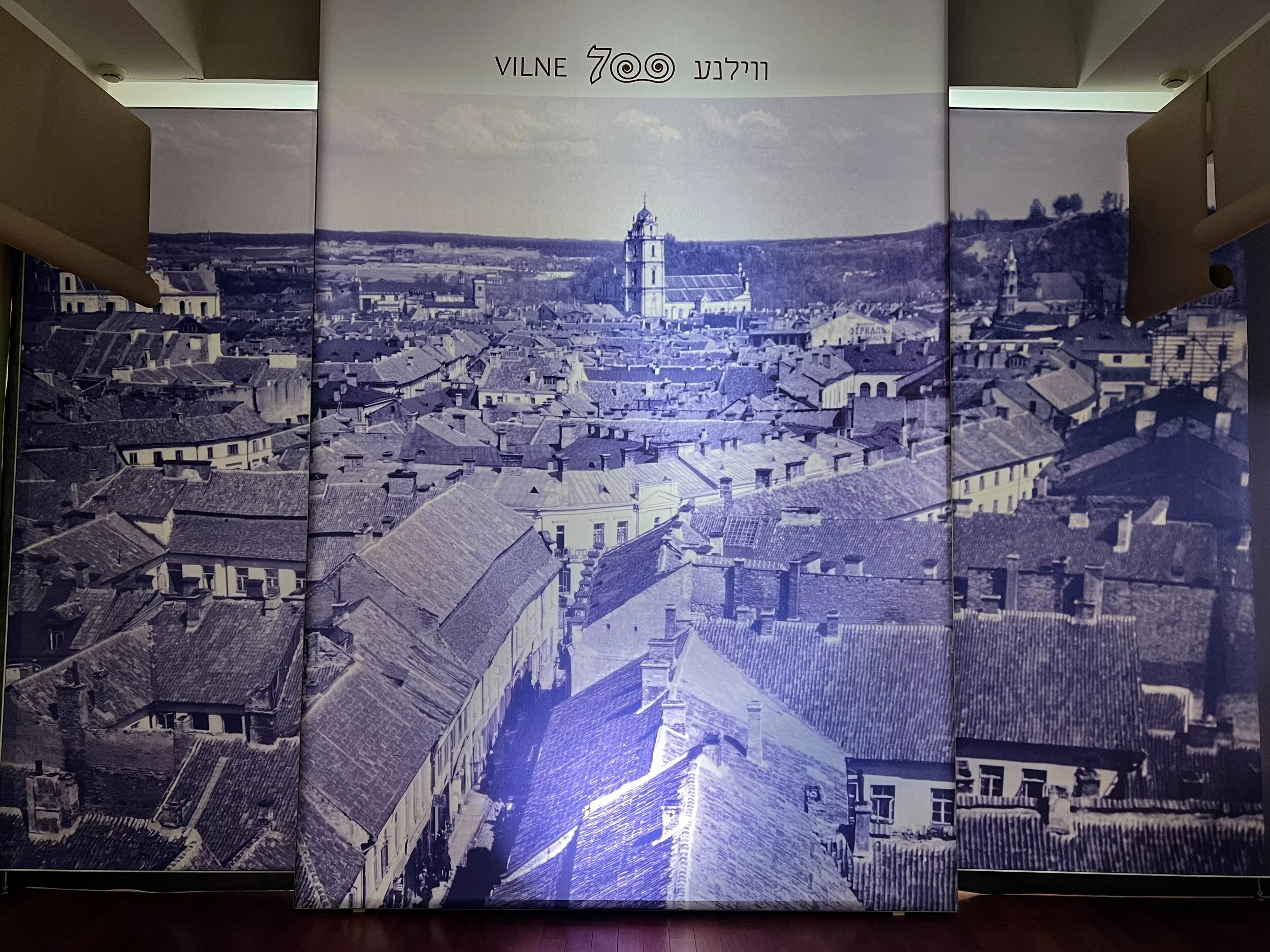
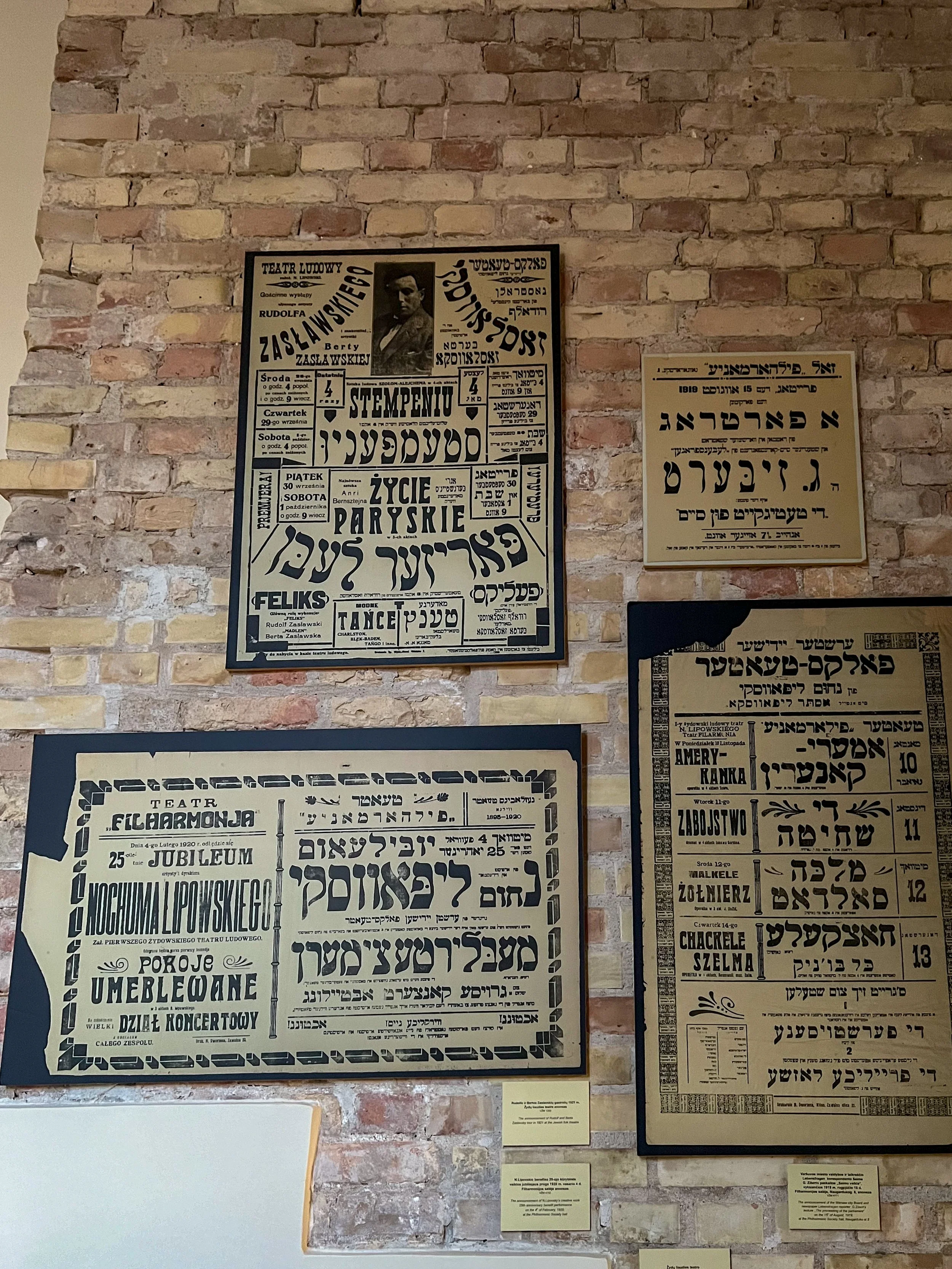
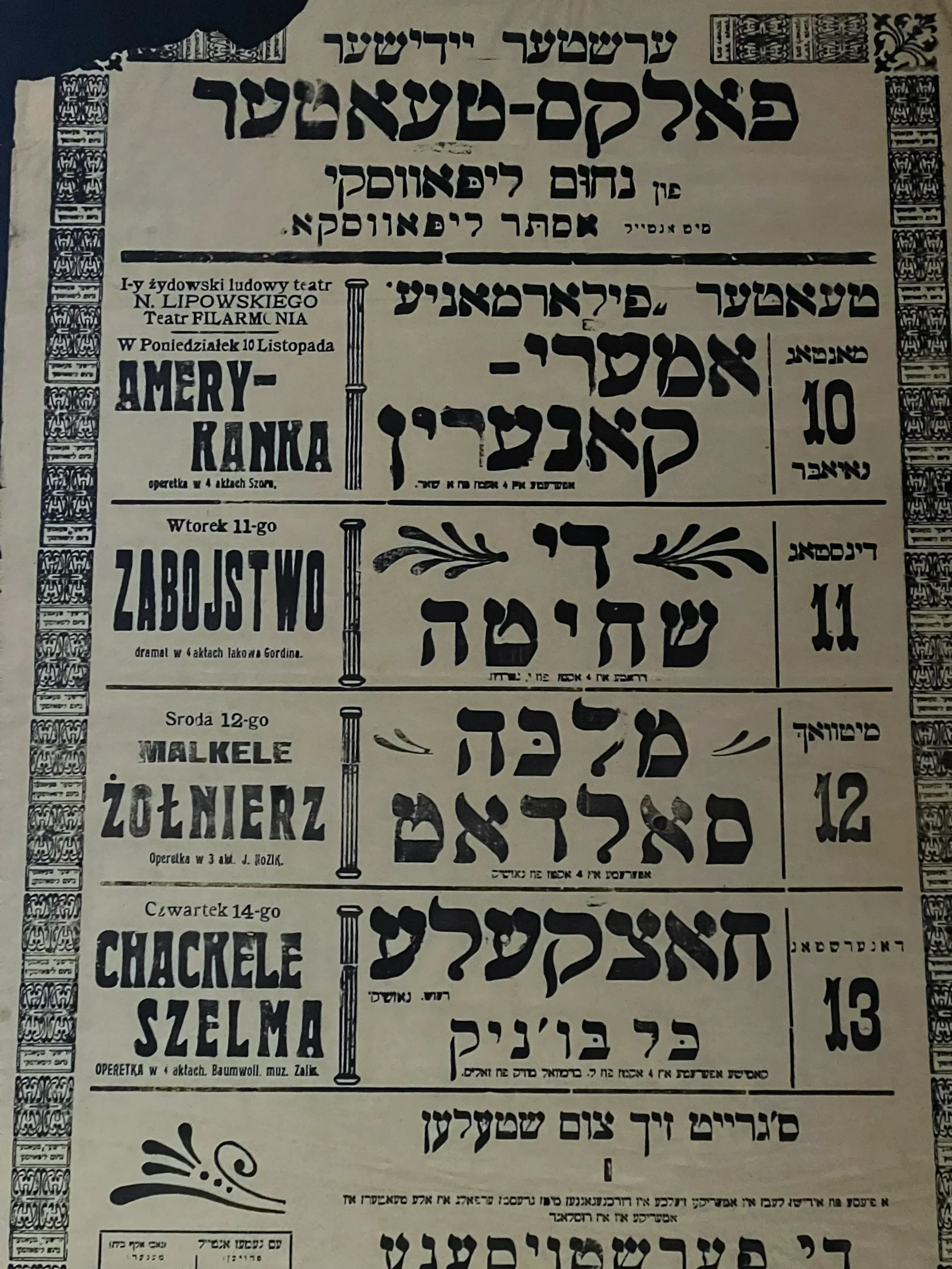
I had already visited most of the Vilna Ghetto during my first day, so I dedicated this second day to enjoying many of the incredible exhibitions that are part of the Vilna Gaon Museum of Jewish History. The museums consist of several branches spread across the city, each dedicated to preserving and promoting different aspects of Jewish heritage and history.
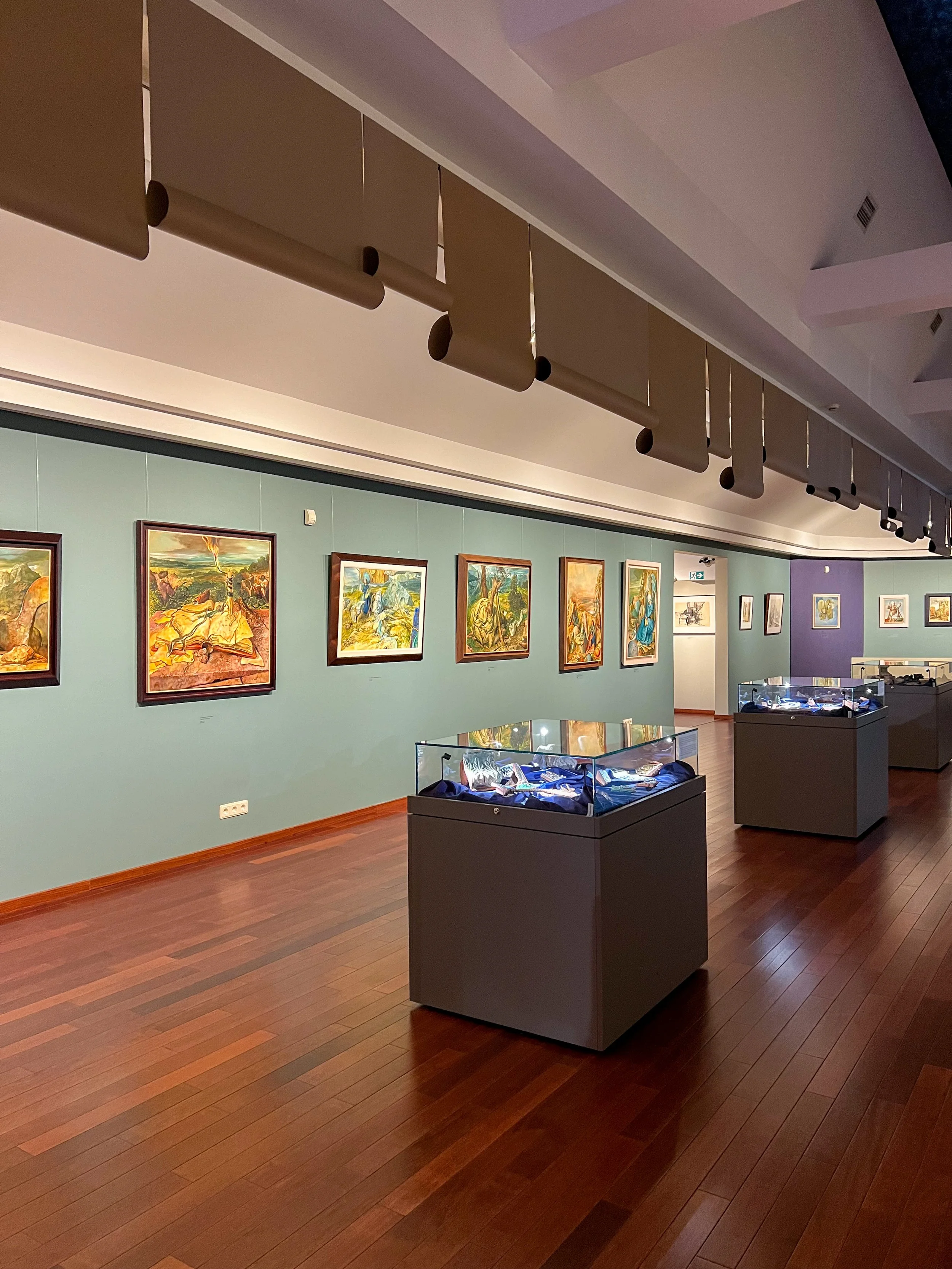
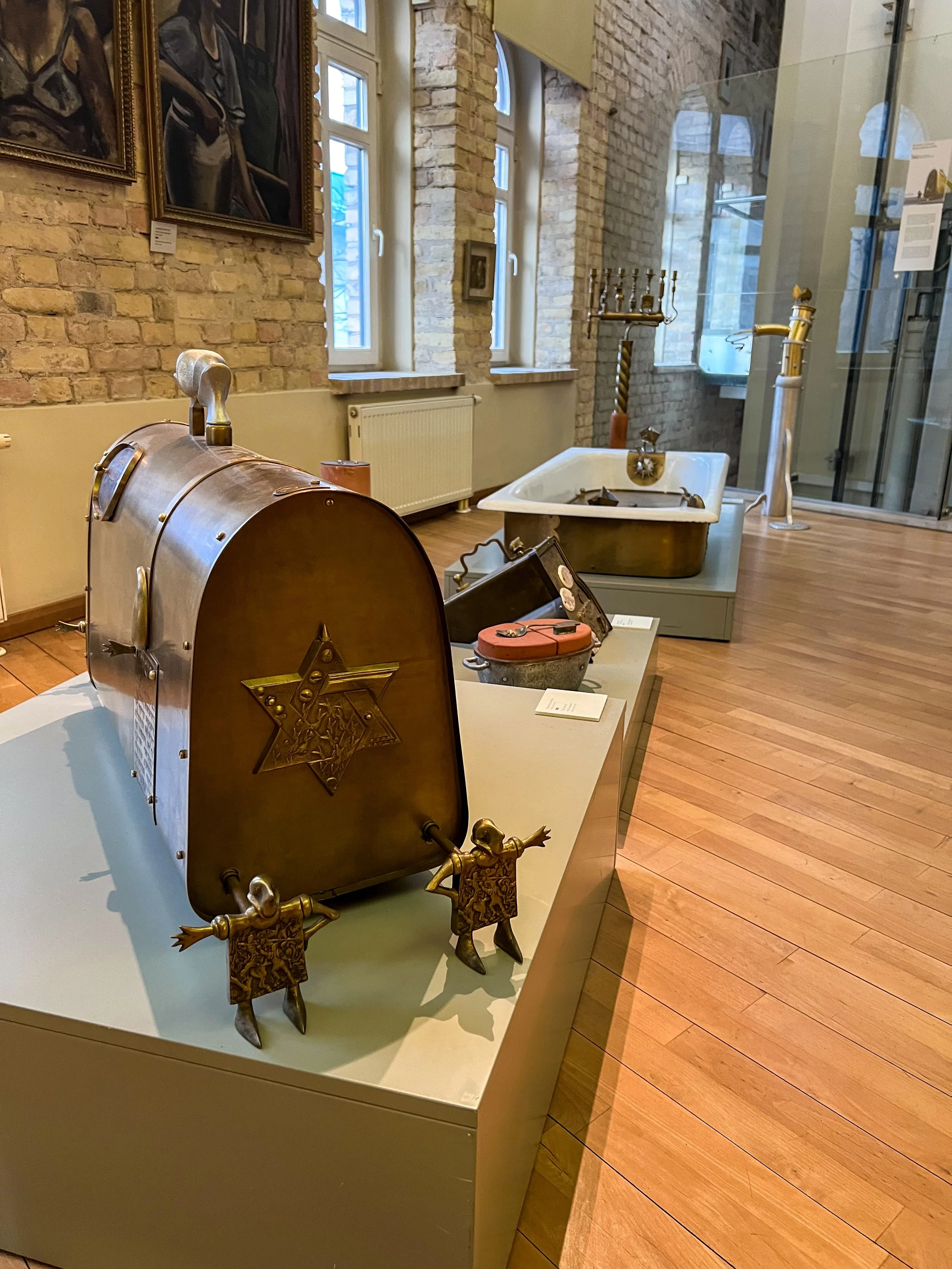
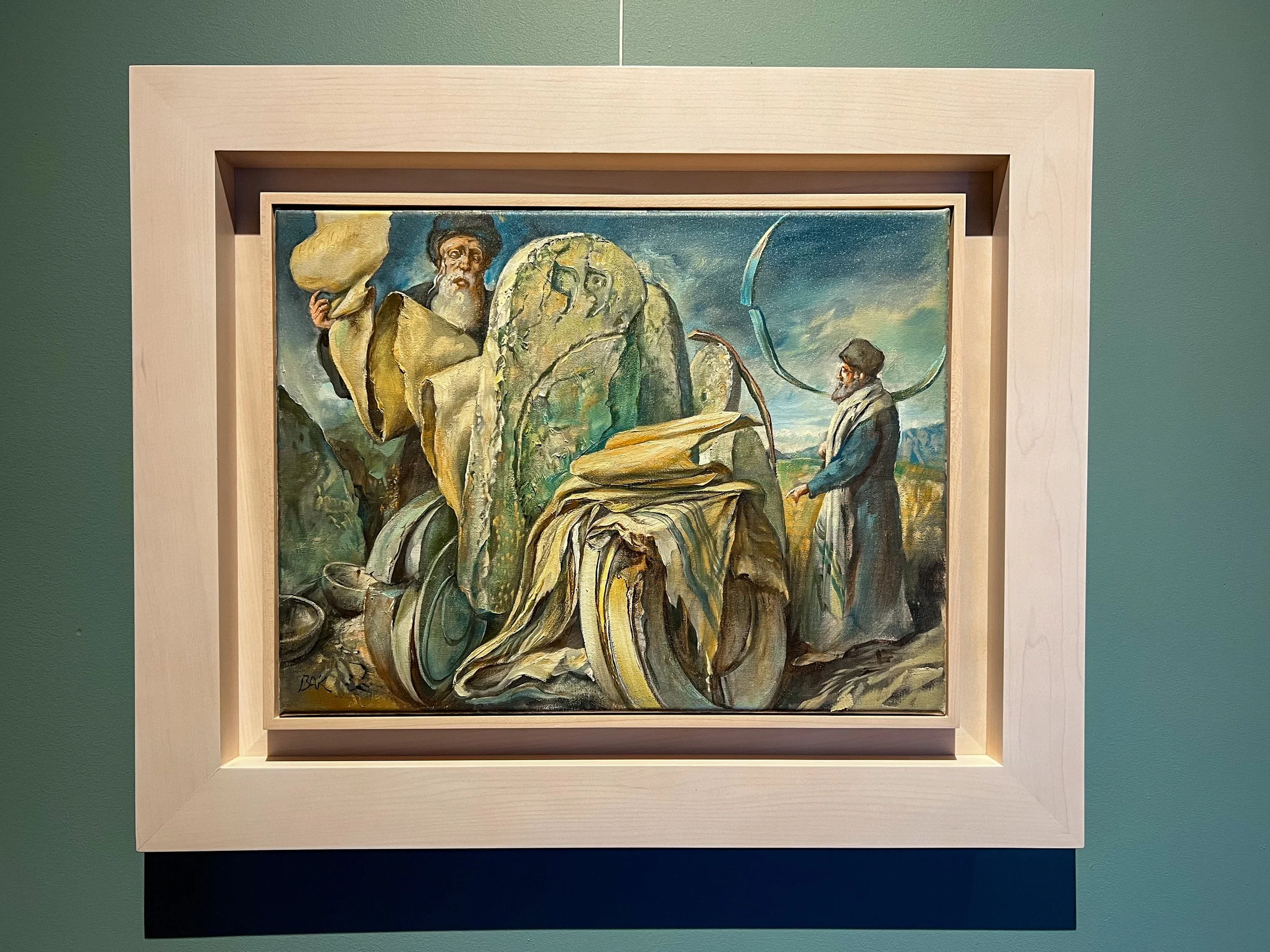
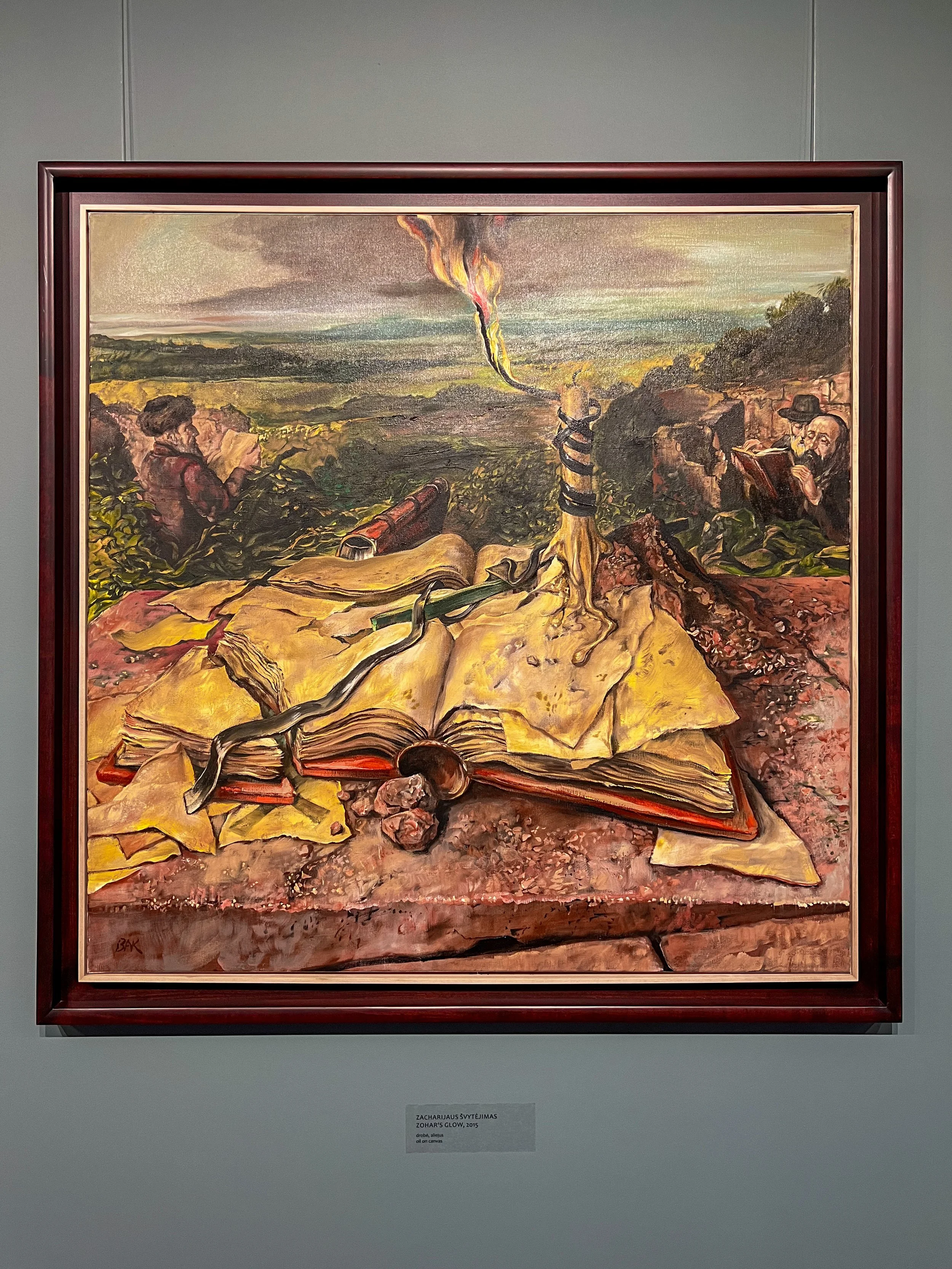
One of the main branches of the Vilna Gaon Museum of Jewish History is the Samuel Bak Museum, which honours the life and work of the renowned Jewish artist Samuel Bak. Born in Vilna (now Vilnius) in 1933, Bak survived the Holocaust and went on to become one of the most prominent painters of the 20th century, known for his poignant and evocative depictions of the Holocaust experience.
The museum, inaugurated in 2017, is dedicated to preserving Bak's legacy and showcasing his powerful artwork, which serves as a testament to the human spirit's resilience in the face of unimaginable tragedy. Housed in a historic building in Vilnius, the museum offers visitors a comprehensive overview of Bak's artistic journey, from his early works produced during his childhood in the Vilna Ghetto to his later creations exploring themes of memory, trauma, and hope.
Through a diverse collection of paintings, drawings, and mixed-media works, the Samuel Bak Museum provides a profound and deeply personal insight into the Holocaust experience and its enduring impact on both individuals and societies.
Choral Synagogue
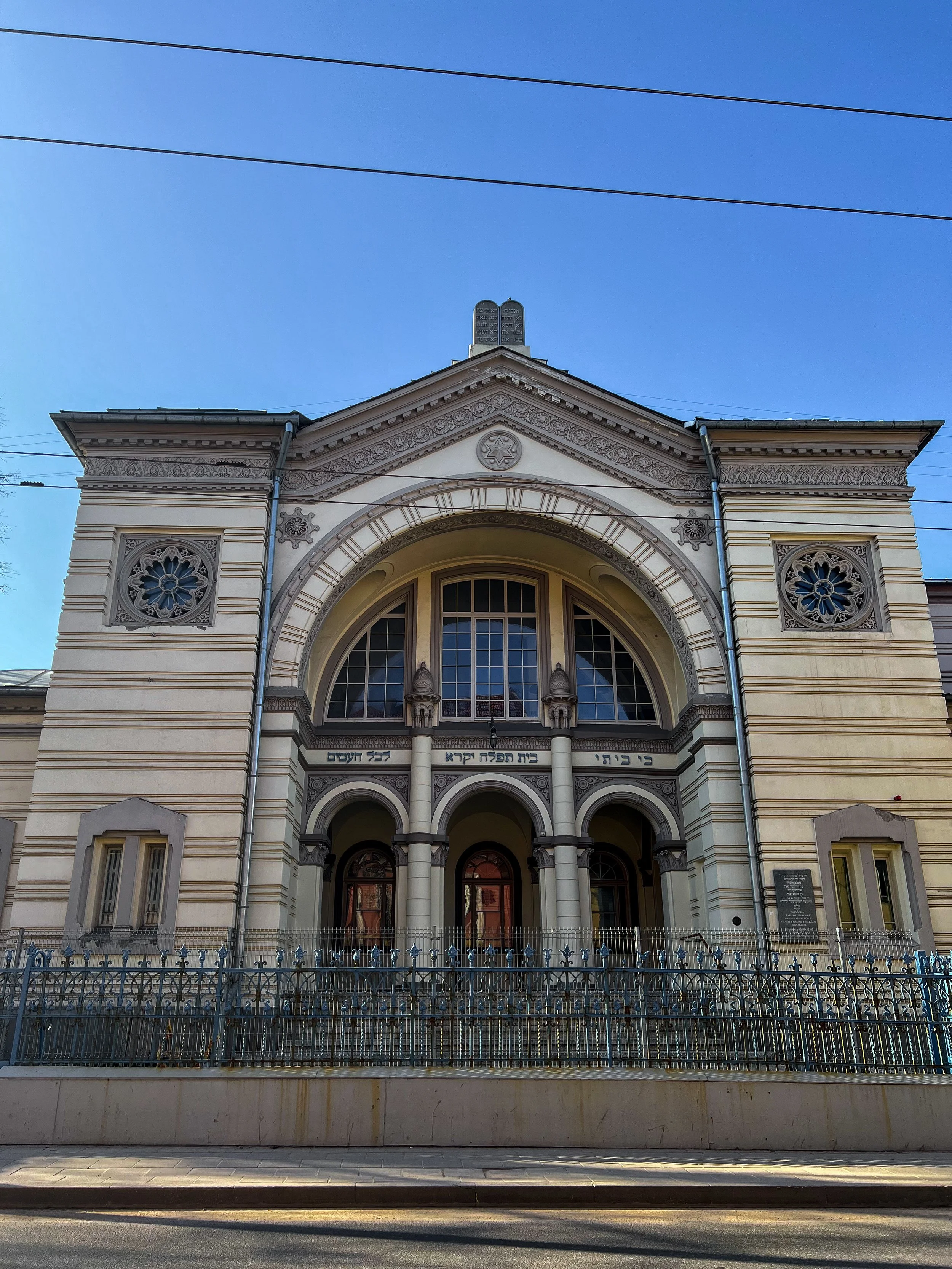
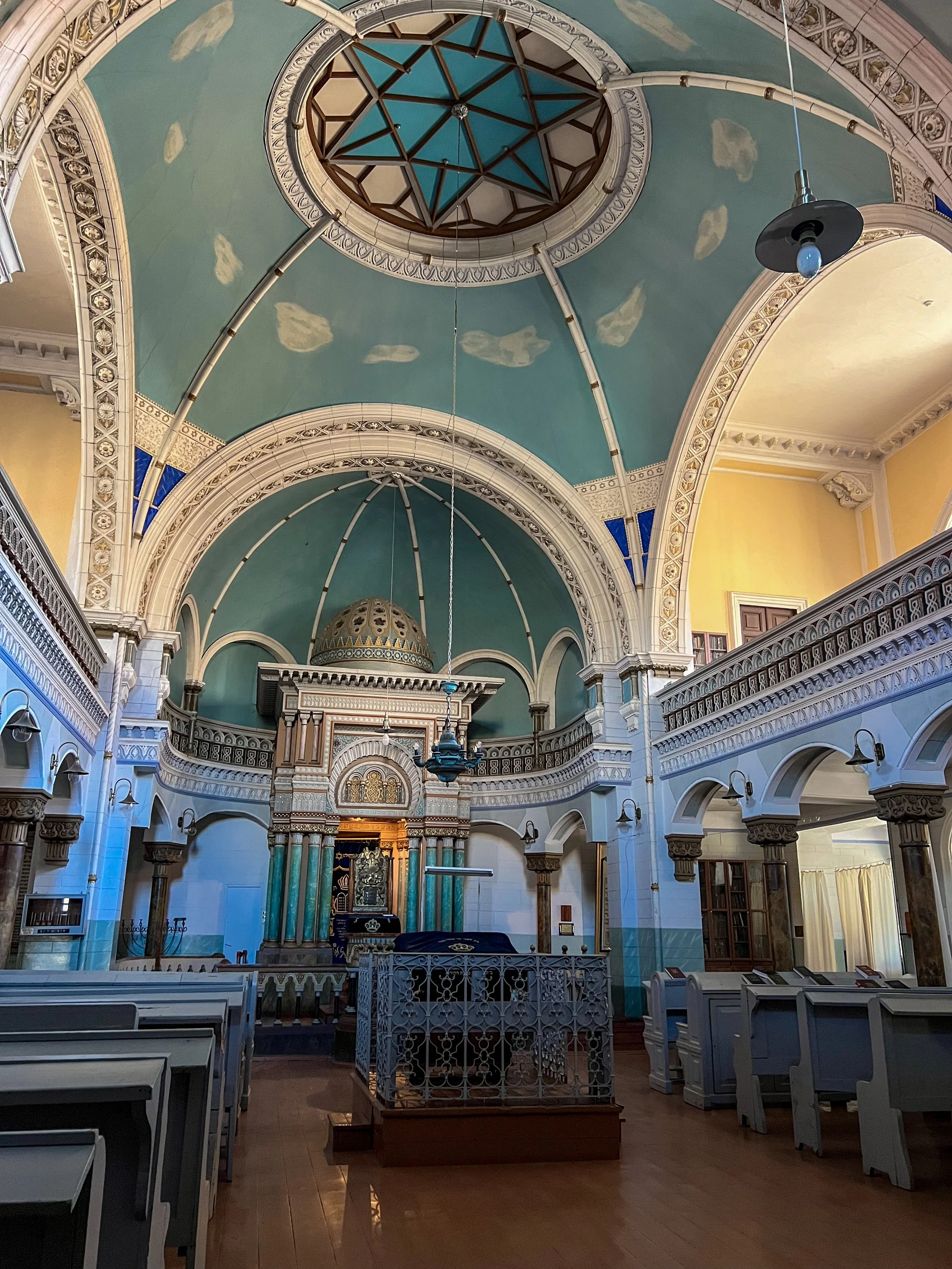
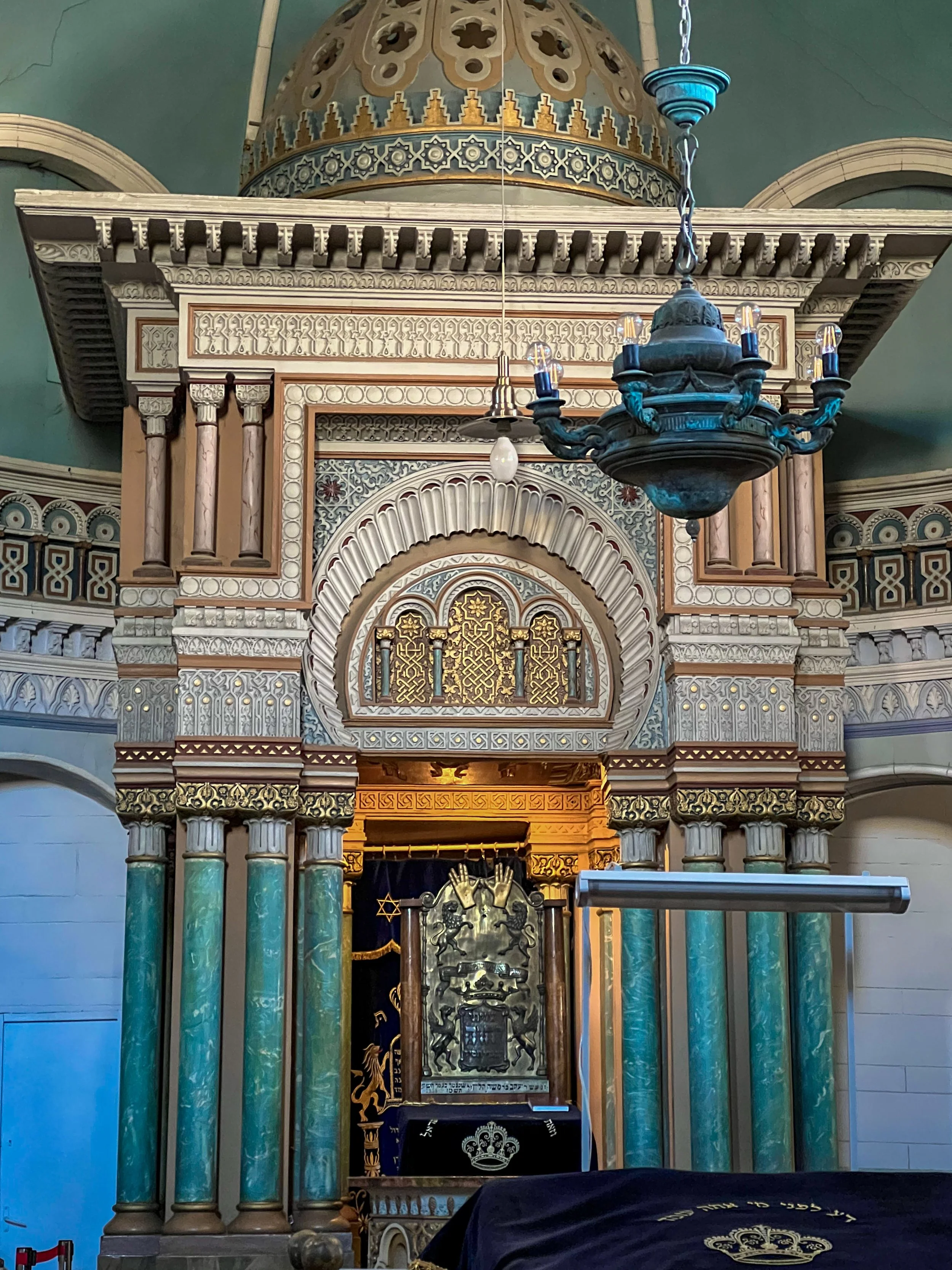
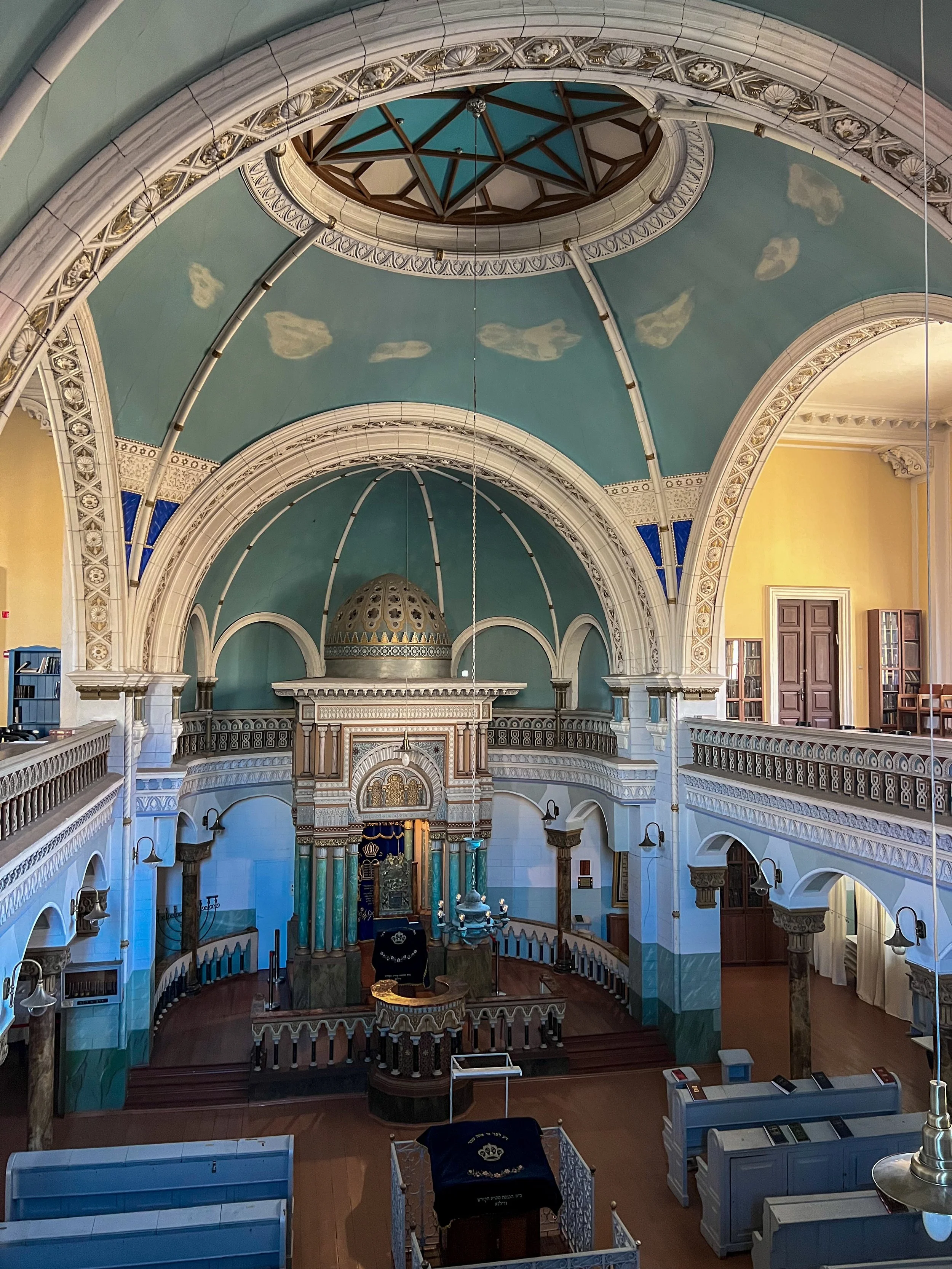
Not too far from the Samuel Bak Museum, you can also visit the Choral Synagogue of Vilnius. Constructed in 1903, it stands as one of the few surviving pre-World War II synagogues in Vilnius, once dubbed the "Jerusalem of Lithuania" for its vibrant Jewish community. Designed in a distinctive Romanesque-Moorish style, the synagogue's architectural elegance serves as a poignant reminder of the rich cultural legacy it represents.
Throughout its storied past, the Choral Synagogue has weathered numerous challenges, including being repurposed as a metal factory during the Soviet occupation—a period marked by extensive damage to the building. However, through international support and the resilience of the local Jewish community, the synagogue was painstakingly restored in 2010, reclaiming its sacred status as a place of worship and community gathering.
Museum of Culture and Identity of Lithuanian Jews
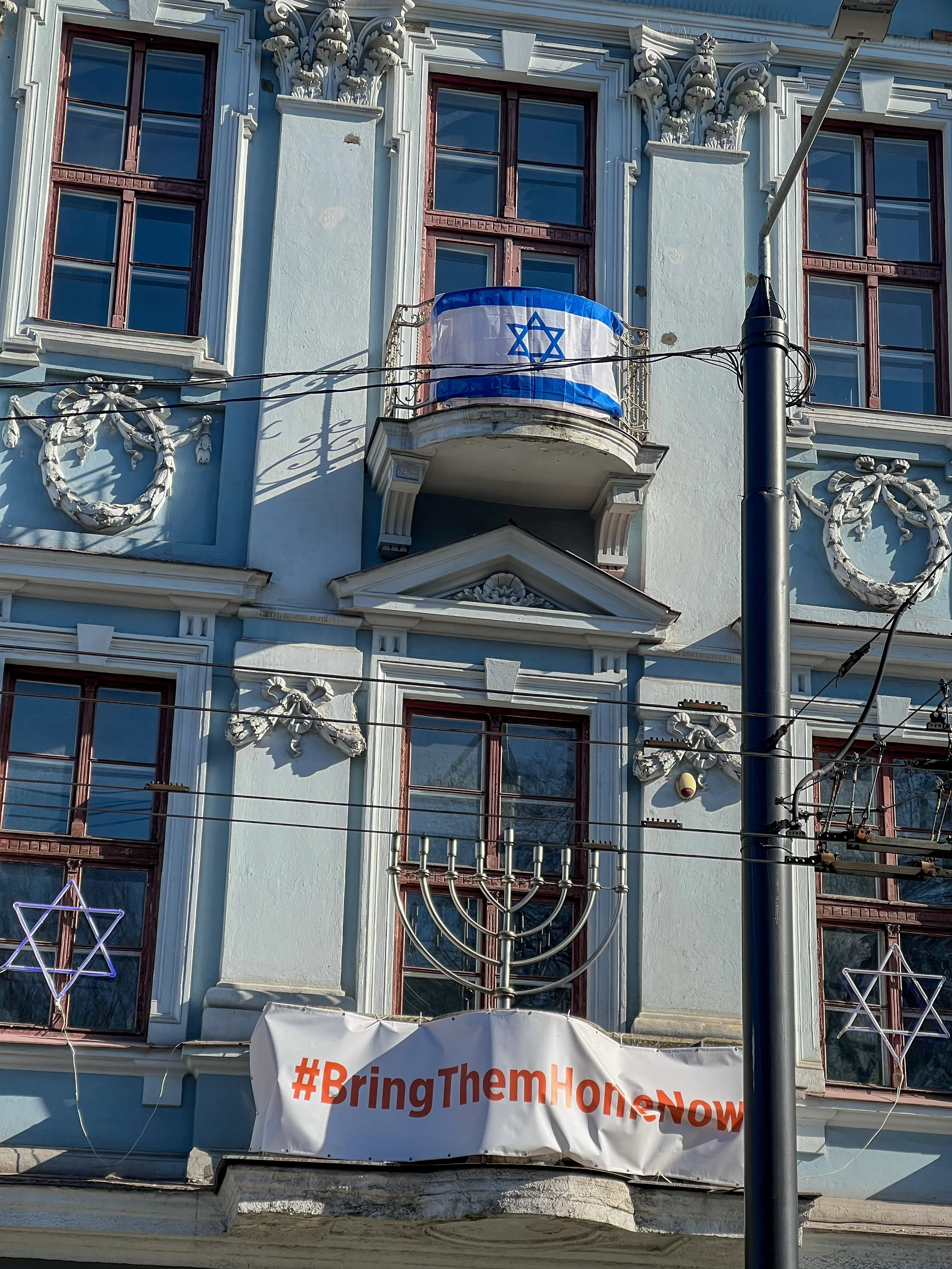
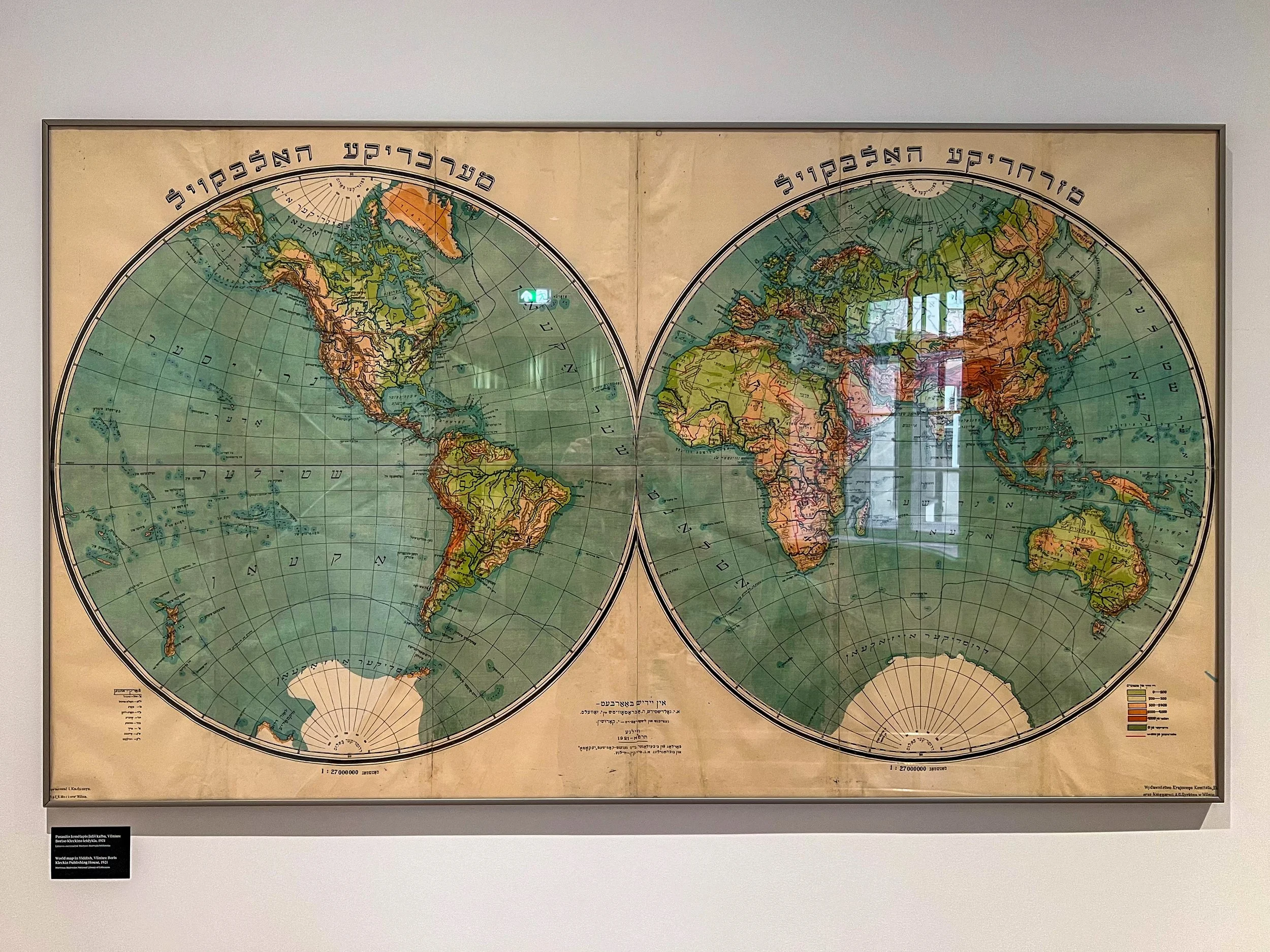
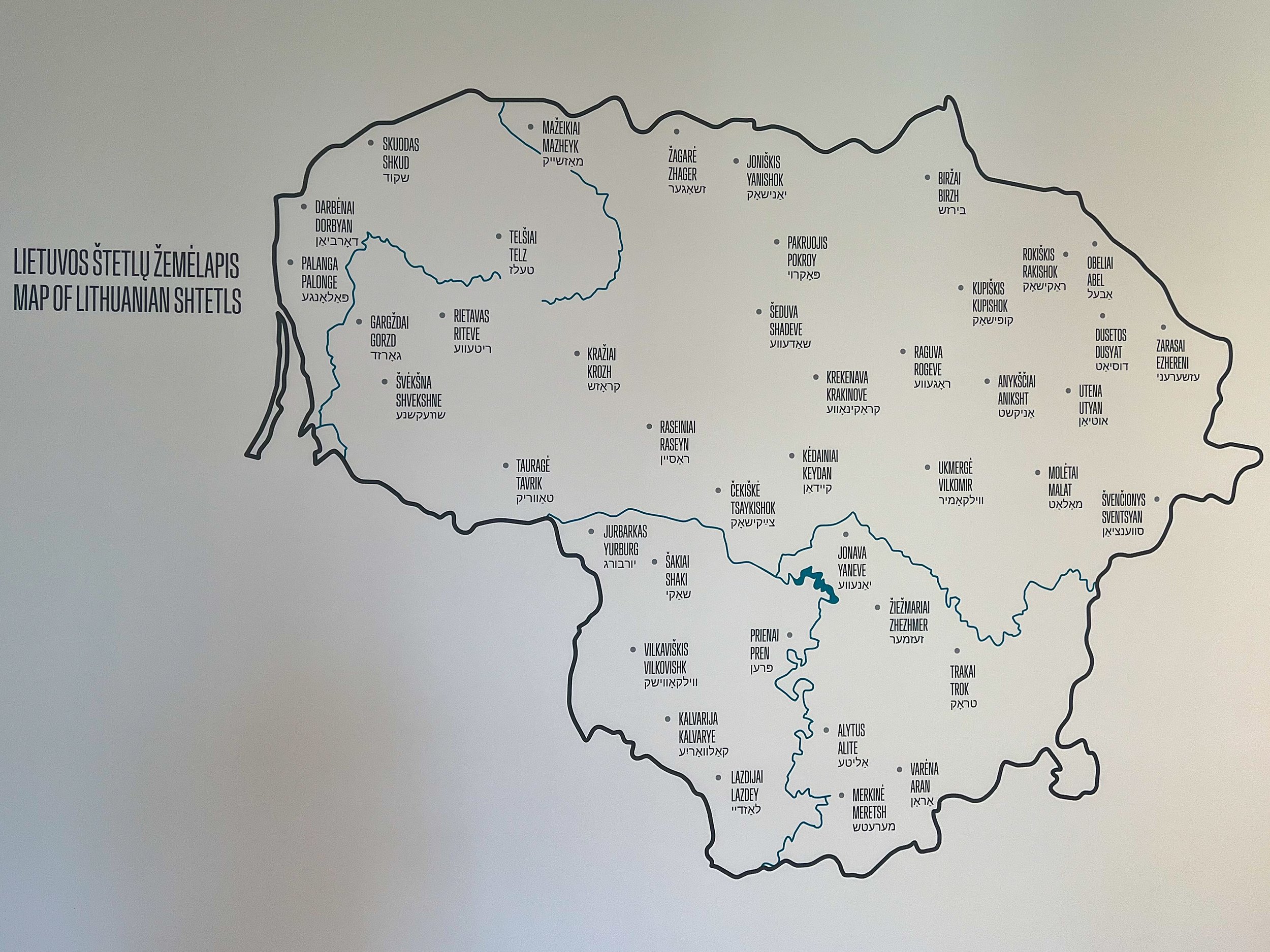
Continuing our journey, we explored The Museum of Culture and Identity of Lithuanian Jews, a testament to the vibrant tapestry of Jewish life and culture that once flourished in Vilnius. From ancient artifacts to poignant testimonials, the museum offered a glimpse into the rich mosaic of traditions and customs that defined Jewish identity in Lithuania for centuries.
If your time in Vilnius is limited and you can’t visit all the branches of the Vilna Gaon Museum of Jewish History, I would highly recommend choosing the Museum of Culture and Identity of Lithuanian Jews. Recently inagurated, it stands as a monumental tribute to the rich and diverse heritage of Lithuanian Jews, housed within the esteemed former Jewish Gymnasium Tarbut building at Pylimo Str. 4A.
As the flagship branch of the Vilna Gaon Museum of Jewish History, this institution marks a significant milestone as the first of its kind in Lithuania, meticulously chronicling the profound history, culture, and everyday life of Lithuanian Jews in a comprehensive and immersive manner.
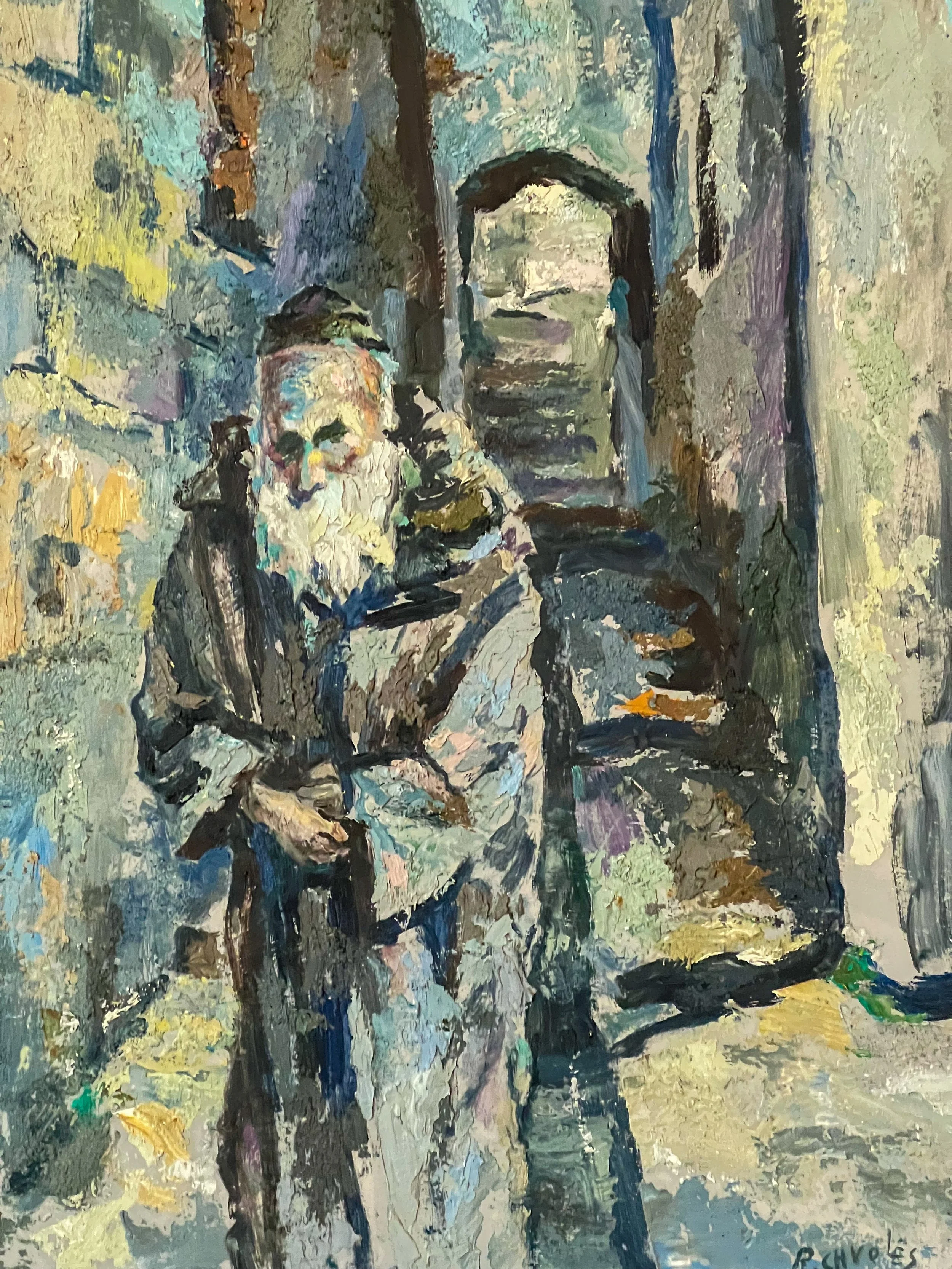
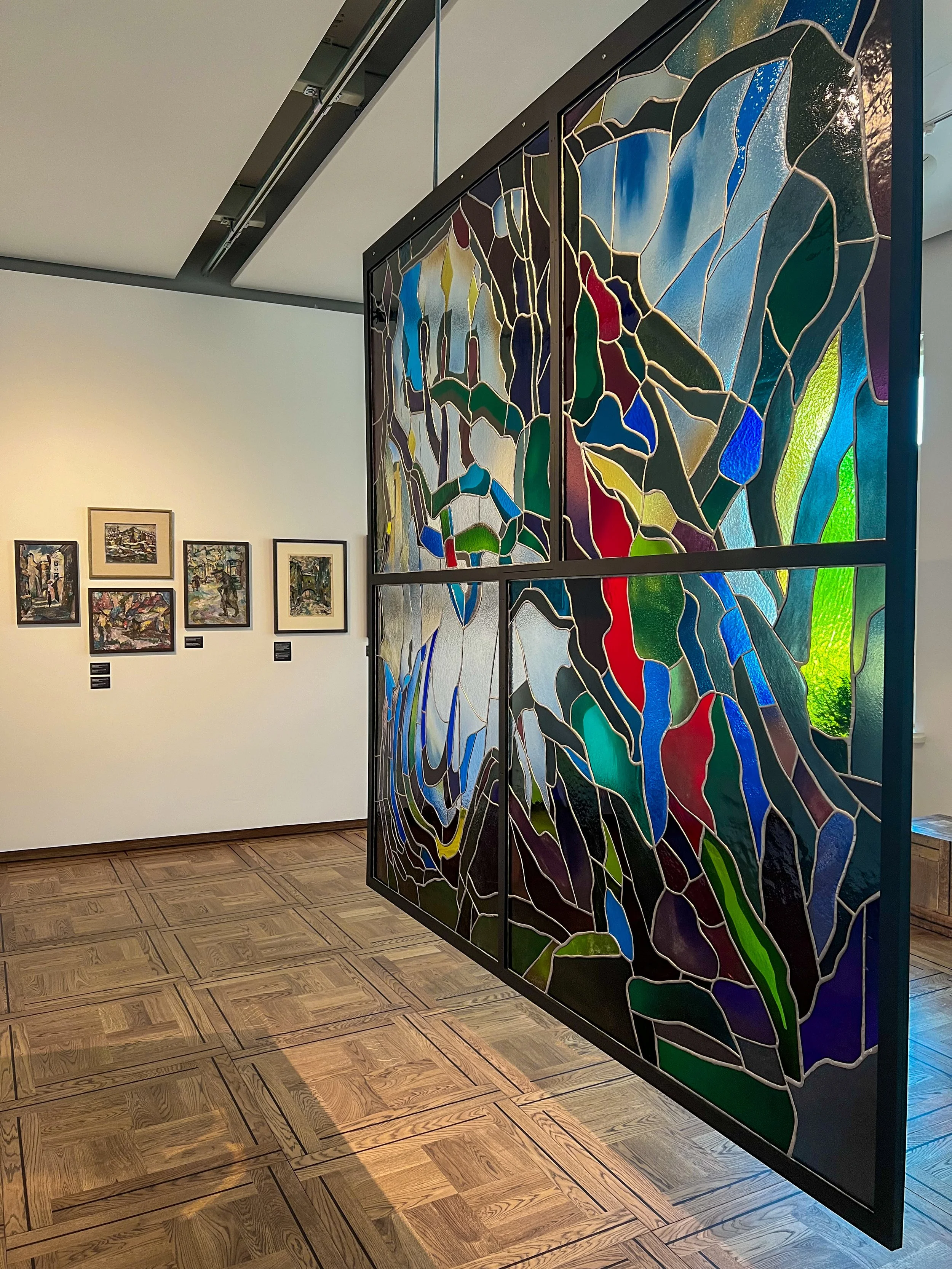
Spanning four floors, the museum showcases 17 modern design exhibitions meticulously crafted. From the ground floor, dedicated to warmly welcoming and serving visitors while also offering space for educational activities, to the upper floors brimming with captivating exhibits, the museum invites guests on an interactive and transformative journey through the vibrant tapestry of Lithuanian Jewish life. The museum's top floor features the renowned museum of Rafael Chwoles, honouring one of the most illustrious Lithuanian Jewish artists of the 20th century.

Holocaust Exhibition
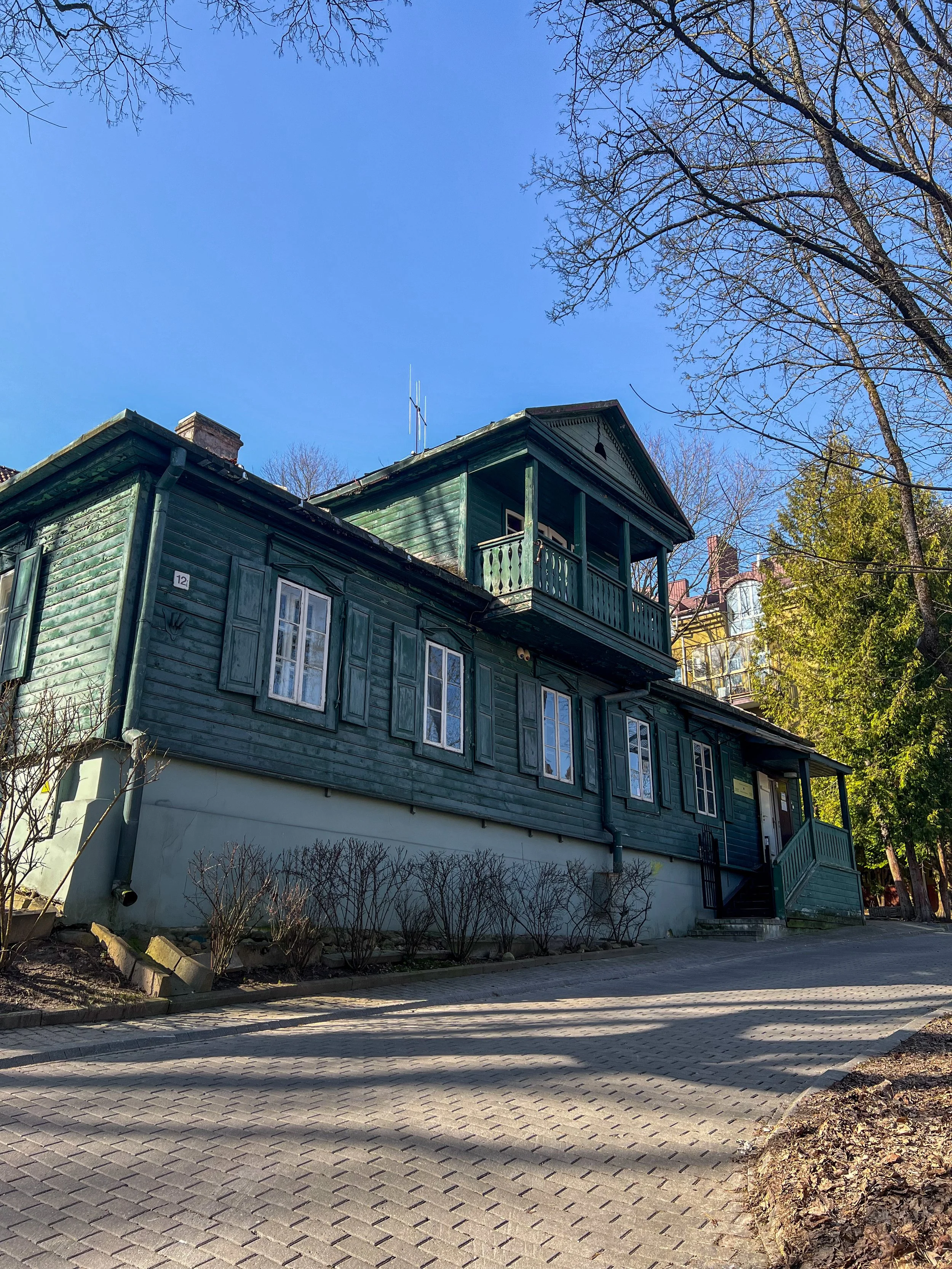
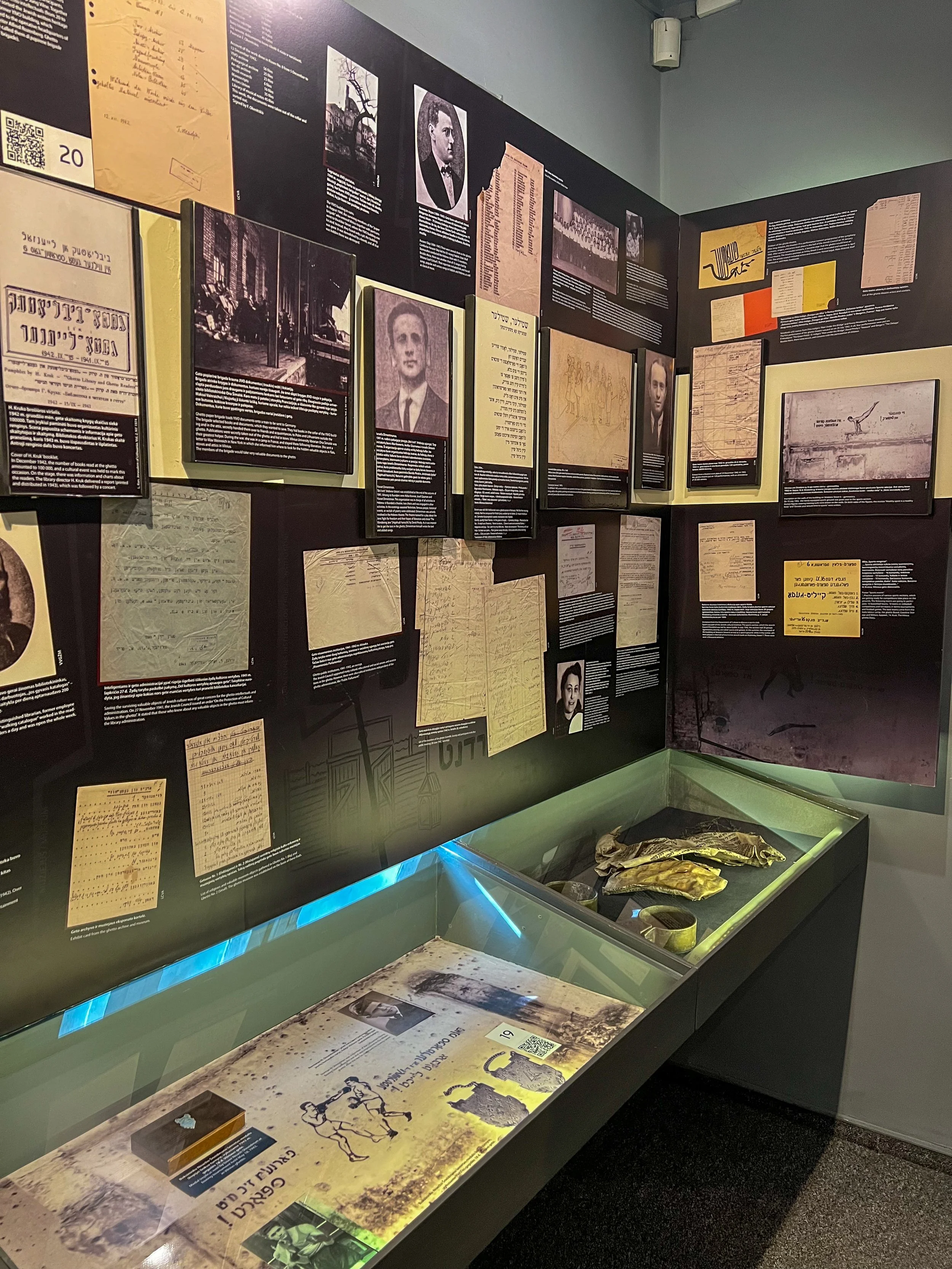
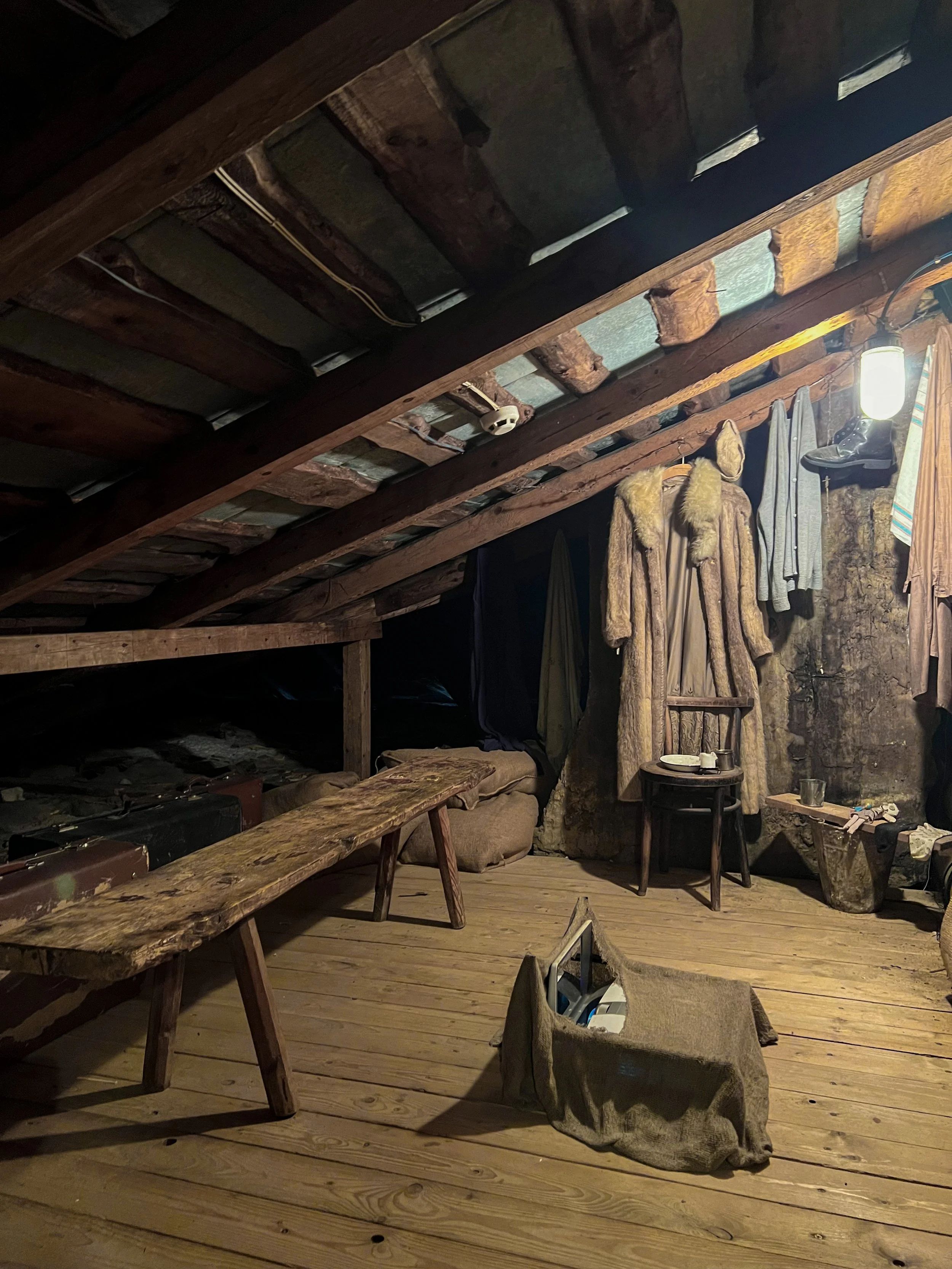
The final branch of the Vilna Gaon Museum of Jewish History is the Holocaust Exhibition, located on Pamėnkalnio str. 12. Housed within the Green House, a former Gestapo headquarters during World War II, the exhibition offers visitors a sobering and deeply moving experience as they confront the horrors of the Holocaust and its impact on Lithuanian Jews.
The museum recounts the journey of the once-vibrant Lithuanian Jewish community from the early days in the Grand Duchy of Lithuania to the tragic events of the 20th century. It sheds light on the profound impact of the "Litvak civilization," a world now lost but once thriving in almost every corner of Lithuania. During the Holocaust, the community faced an unimaginable fate, with approximately 94% of its members perishing during World War II, alongside countless Lithuanian citizens.
The exhibition provides a sobering account of the Holocaust's devastating toll on Lithuania's Jewish population. As Nazi German forces invaded Lithuanian territory in June 1941, hundreds of thousands of Jews found themselves facing persecution and extermination. The horrors unfolded in stages, beginning with mass murders in the countryside, followed by the establishment of ghettos in cities like Vilnius, Kaunas, and Šiauliai, where Jews endured exploitation and gradual extermination. Ultimately, the majority of Lithuania's Jews met their end in Nazi concentration camps across Europe, leaving behind a harrowing legacy of suffering and loss.
Through poignant displays and narratives, the exhibition aims to engage younger generations of Lithuanians, fostering dialogue, empathy, and a deeper understanding of the Holocaust's enduring significance.

Orthodox Church of St. Nicholas
In the afternoon, I returned to the Old Town and the vicinity of the former Vilna Ghetto to explore the myriad of beautiful churches scattered throughout the city.
One of the primary reasons behind the abundance of churches in Lithuania dates back to its status as one of the last European countries to transition from paganism to Christianity in the late 14th century. While the process commenced with the baptism of Grand Duke Mindaugas around 1251, Lithuania continued to adhere to pagan beliefs alongside Christianity for several decades.
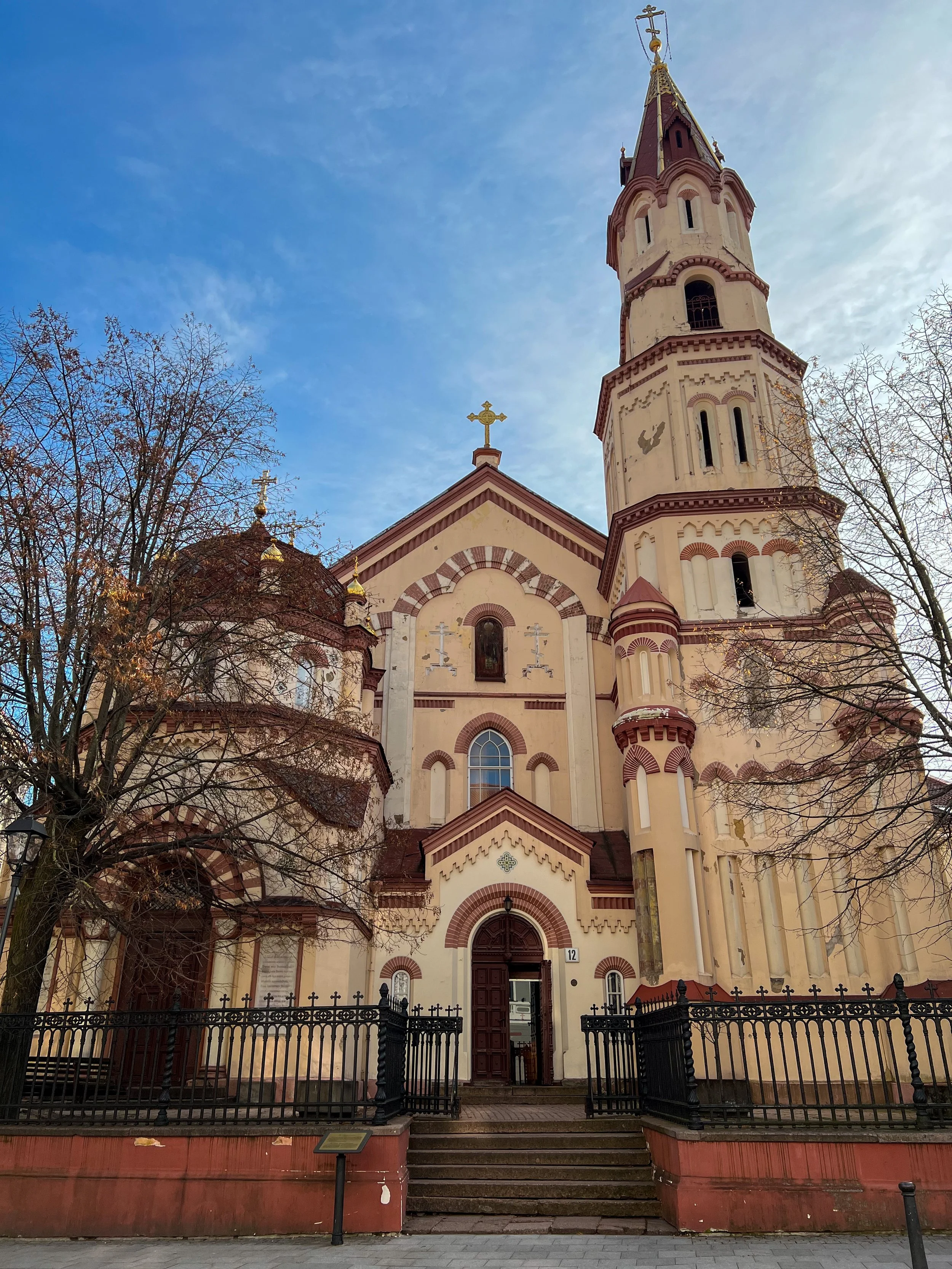
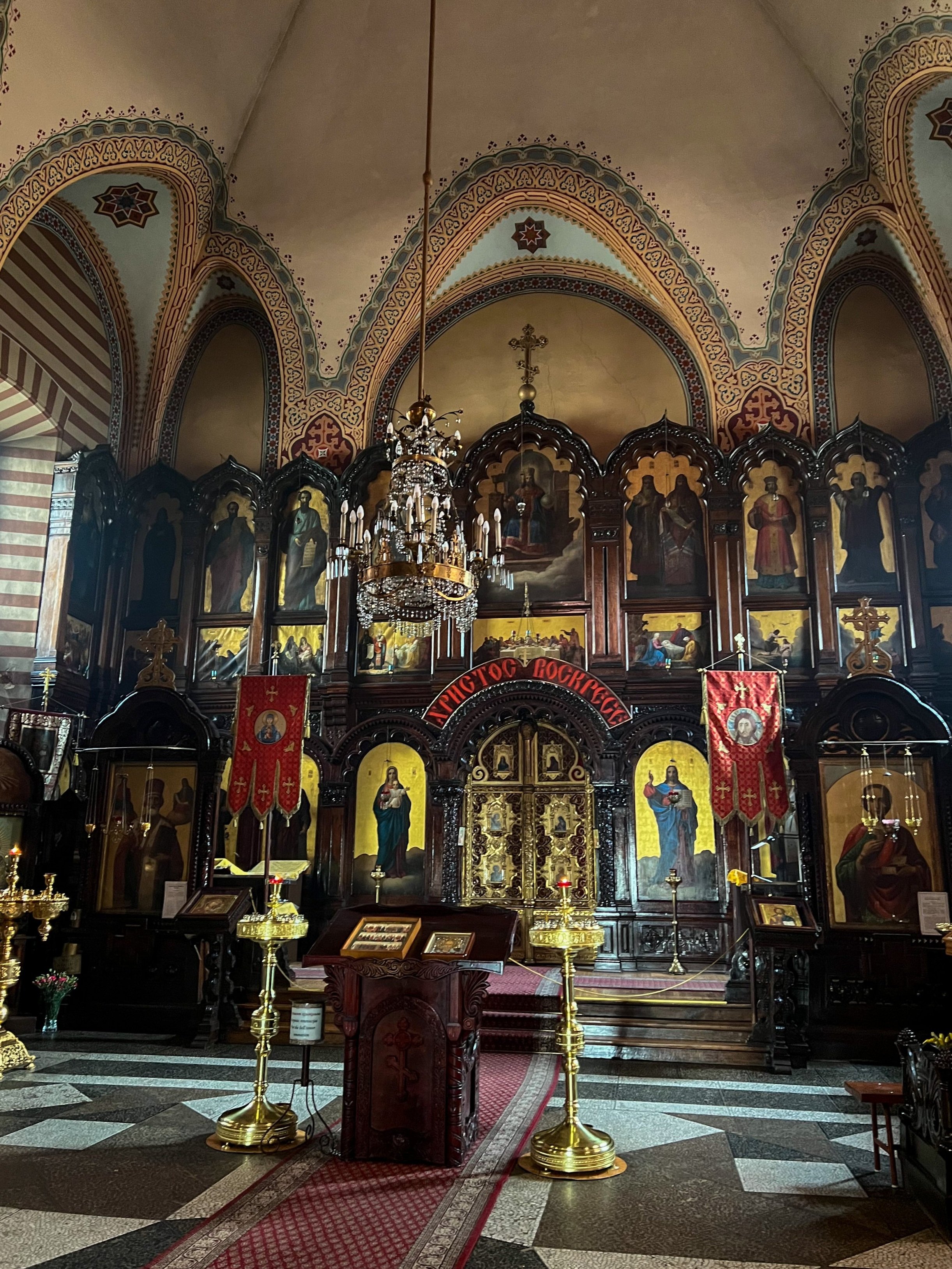
Among the exquisite examples of Lithuanian churches stands the Orthodox Church of St. Nicholas. Legend has it that the first church on this site was constructed by Juliana, the wife of Grand Duke Algirdas. Subsequently, a new Gothic church with Byzantine-style elements was erected in 1514 after the original building was ravaged by fire. This structure suffered significant damage during the 1748 fire but was reconstructed, incorporating Baroque-style embellishments to its facades and a heightened tower. In the 19th century, the church underwent further reconstruction, adopting a Byzantine aesthetic. Despite these alterations, the church has managed to retain numerous authentic Gothic elements, ancient masonry, interior features, and valuable pieces of Byzantine art.
Church of St. Casimir & the Jesuit House
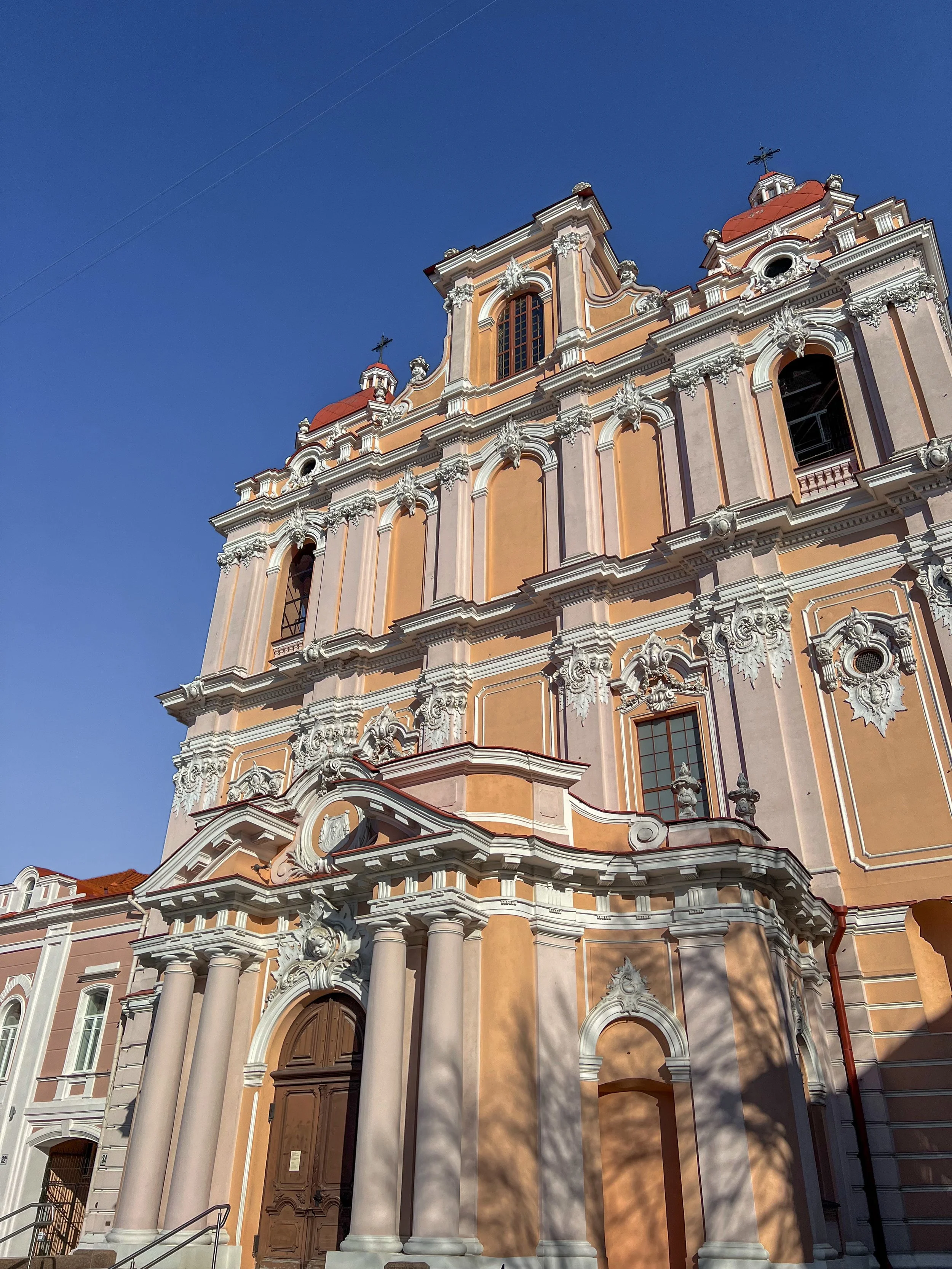
The Church of St. Casimir and the Jesuit House is one of the earliest Baroque architectural ensembles in Vilnius. The cornerstone of the church, which was dragged by as many as 700 people, was laid in 1604. Destroyed by wars and fires a number of times, the building was always restored. In the 18th century, a dome with a crown was built of bricks, and the Interior was decorated with 13 late Baroque altars, most of which were destroyed in the 19th century.
In 1867, the building was adapted for the Russian Orthodox Cathedral by lowering its towers, topping it with onion-shaped helmets and decorating the façade in Neo-Baroque style. After the First World War, the church was restored, and it was renovated after World War II, establishing in the building the museum of atheism. In 1991, the. church was returned to the Jesuits.
Church of All Saints
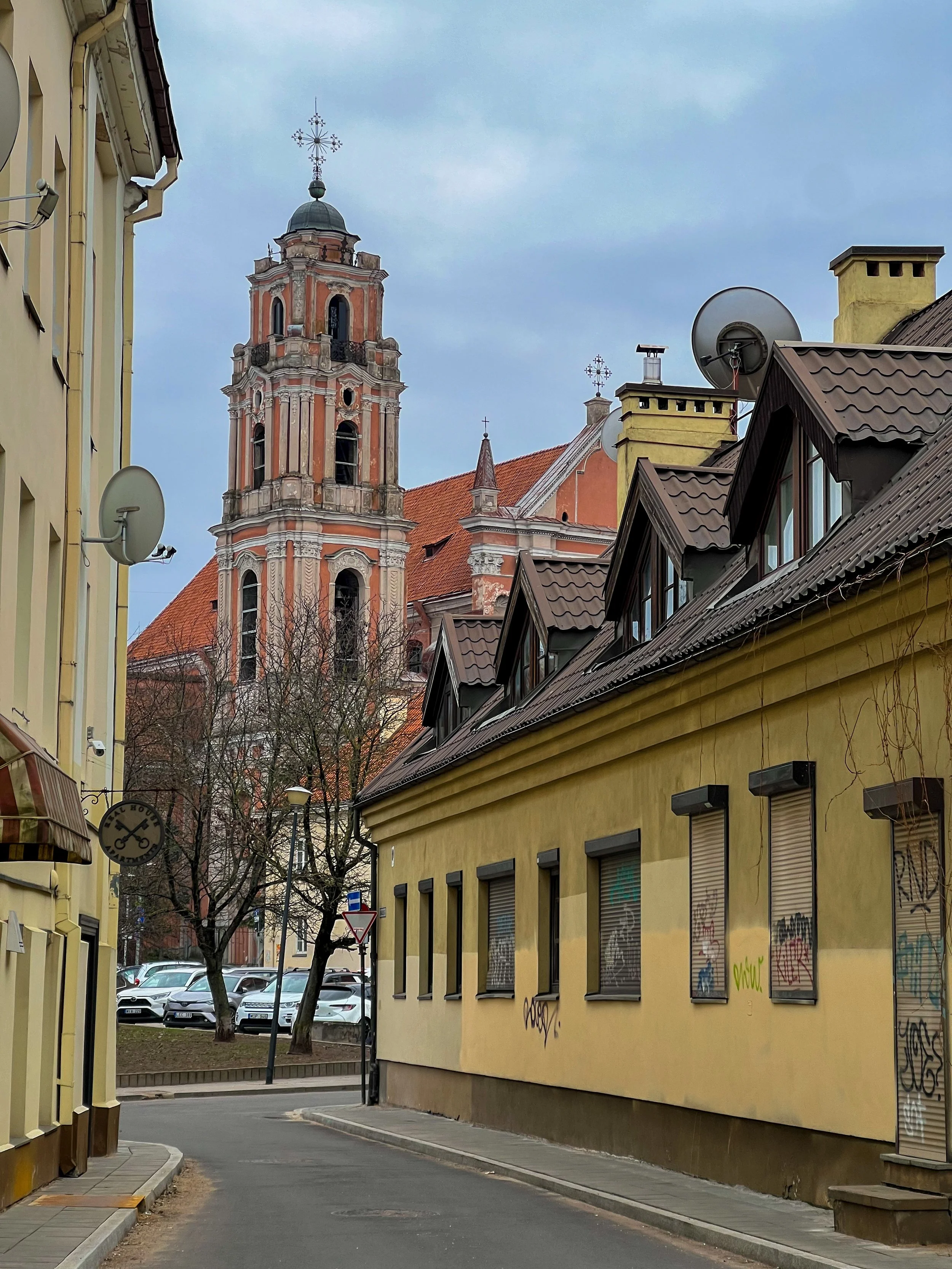
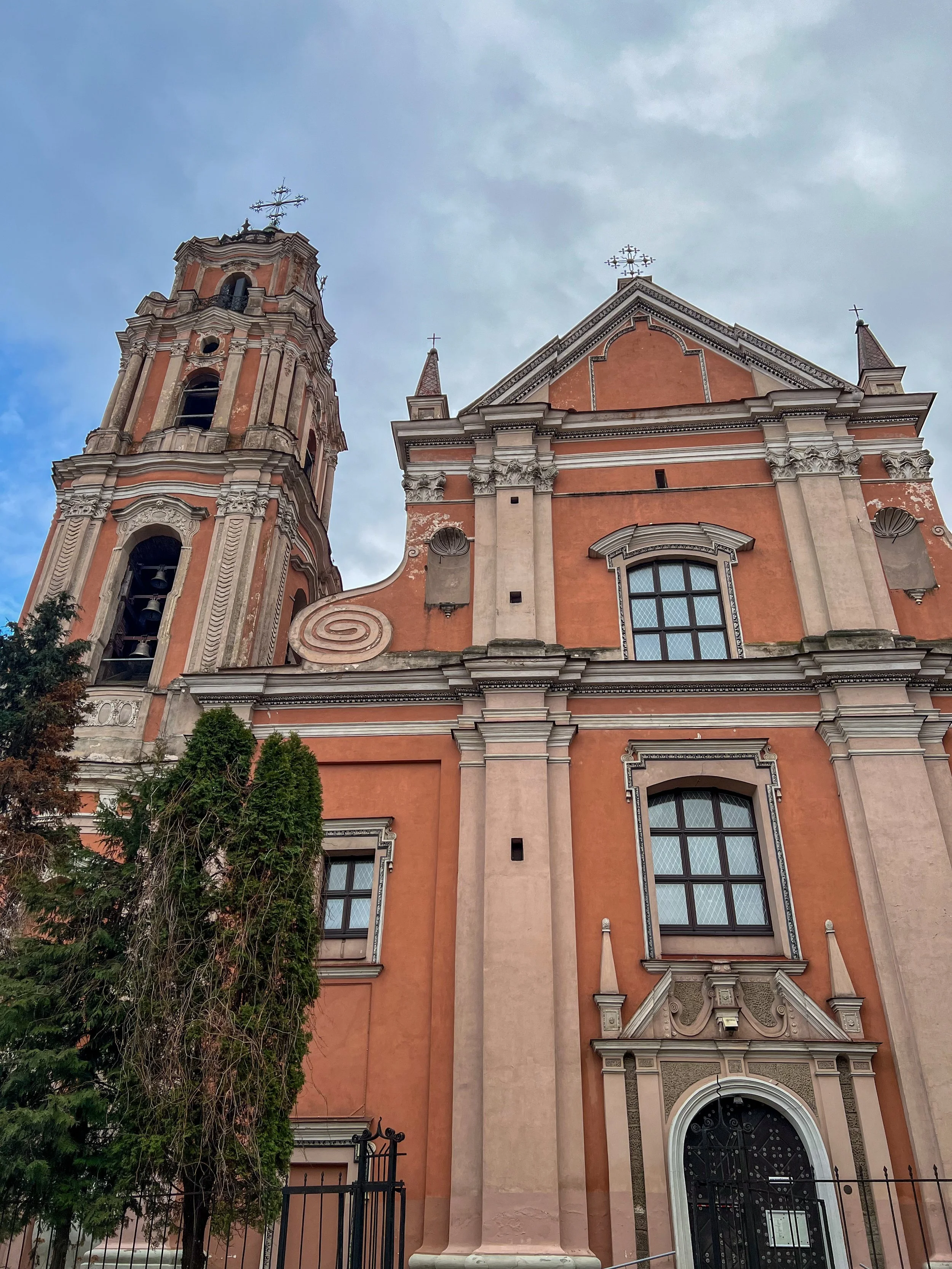
The Church of All Saints, located not too far from the City Hall, is another wonderful example of Lithuanian churches. The building of the church and the Carmelite friary are dominated by the bell tower, constructed in 1743. Its impressive heights and magnificent Late Baroque decorative elements produce a certain contrast to the calm and moderate exterior of the church. Early Baroque style Latin Cross-shaped church built in 1631 can boast the capacity of a basilica and a georgous pediment. The main artistic accent of the facada is its decorative portal.
There are 18 late Baroque altars inside. The two-piece Baroque and Classical altar designed by the architec Martynas Knakfus in 1787 is the most prominent of them. The nearby Gothic buildings were adapted to meet the needs of the Carmelite friary in the late 17th century.
Margutis Easter Egg
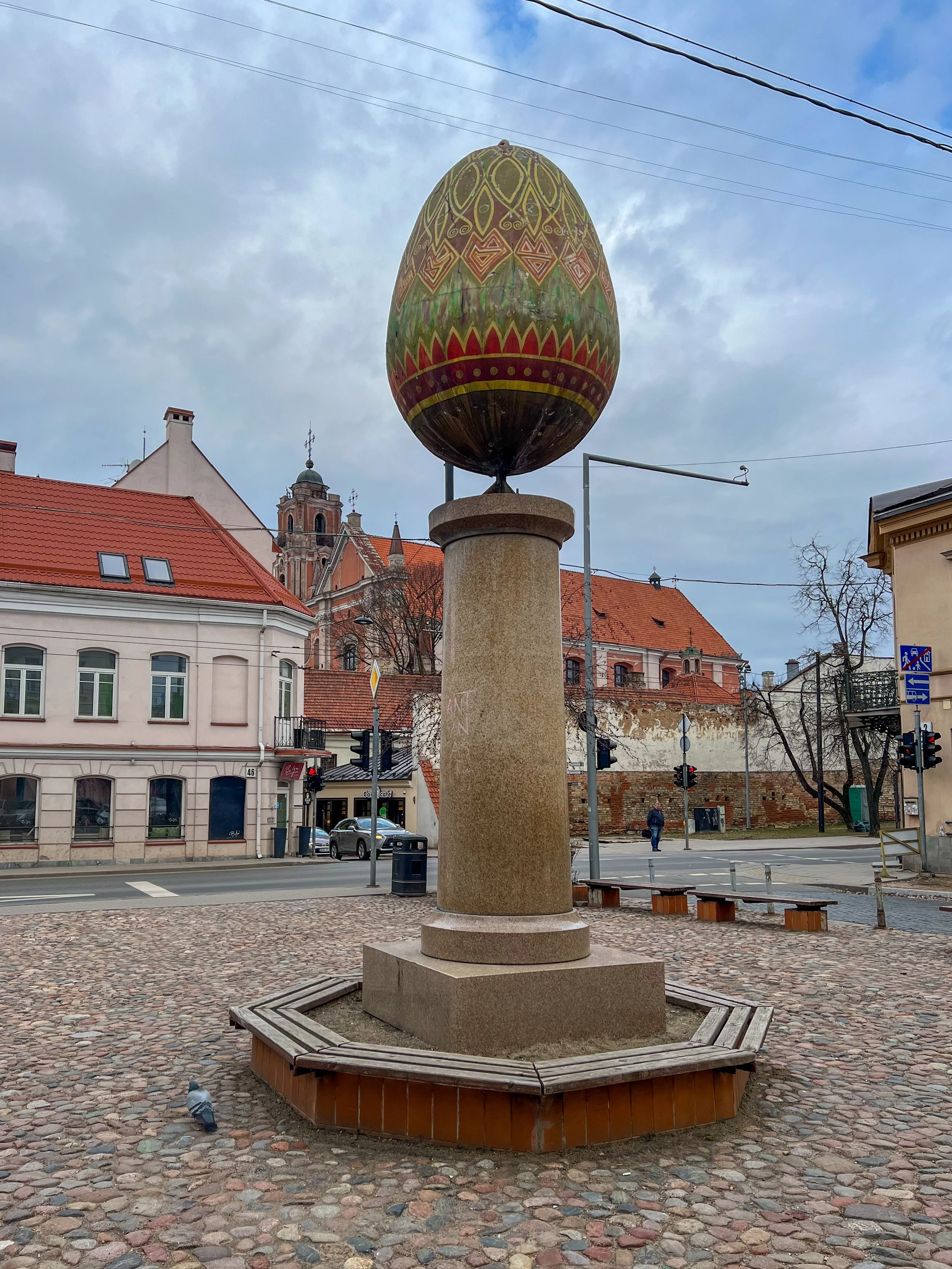
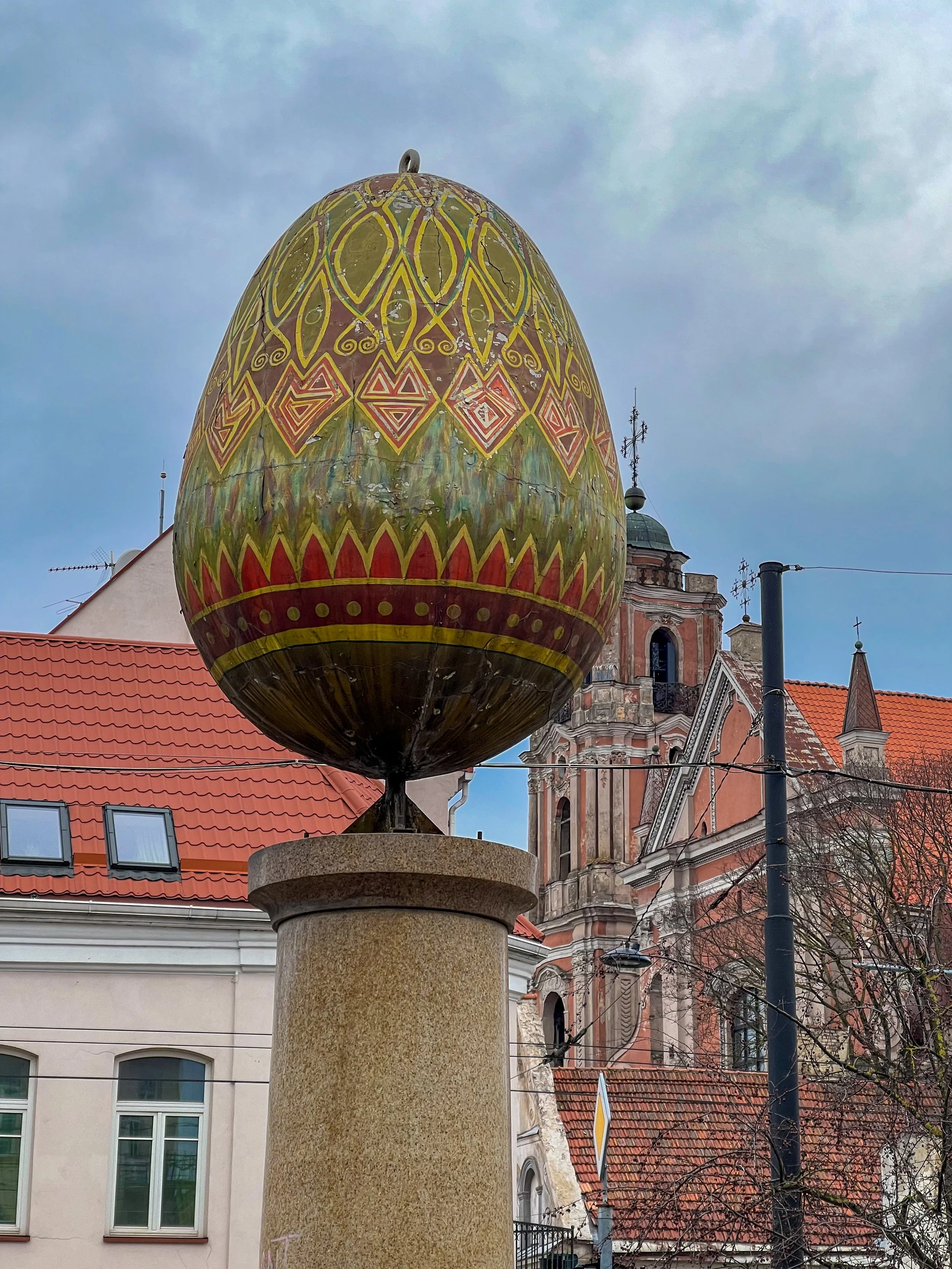
My last stop of the day was the famous Margutis Easter Egg, a striking gypsum sculpture crafted by Romas Vilčiauskas in 2001. Originally situated in Užupis, the egg held symbolic significance, representing a period of revitalization within the neighbourhood.
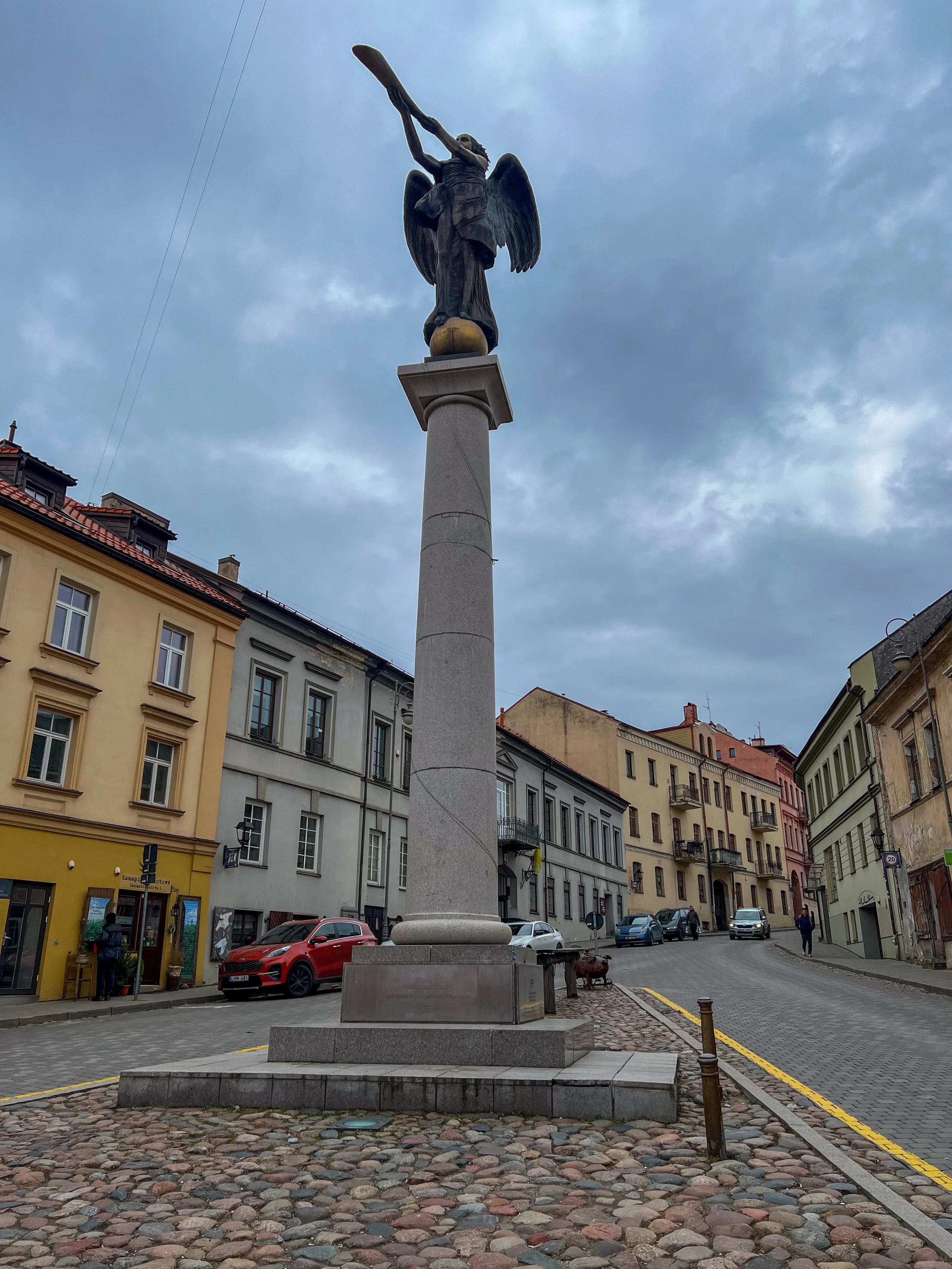
Initially intended as a temporary fixture until funds could be raised for another sculpture, the Angel of Užupis, the egg quickly captured the affection of locals. When the Angel was eventually revealed in 2002, the community expressed a strong attachment to the giant egg. In response to public sentiment, the decision was made to relocate the egg to a small square on Pylimo Street, where it remains today.
After spending two captivating days exploring the charming streets of Vilnius, revelling in its rich history and vibrant culture, it's time to journey onwards to Kaunas, the second largest city in Lithuania.
With its own unique allure and a treasure trove of attractions waiting to be discovered, Kaunas was another unforgettable destination on this Lithuanian adventure. Don’t miss my post about the highlights of Kaunas in one day!
Some links in this post are affiliate links, which means that if you buy through them, we’ll receive a small commission. This will never cost you more and in many cases you will receive a special discount.
As always, all opinions are mine. We appreciate your support!

This article is now available as a mobile app. Go to GPSmyCity to download the app for GPS-assisted travel directions to the attractions featured in this article.


On the outskirts of Kaunas, the 9th Fort Museum stands as a poignant testament to Lithuania’s tumultuous history during World War II. Once a site of tragedy and suffering, this memorial complex has transformed into an educational hub, inviting visitors to explore the complexities of the Holocaust and the impact of war on human lives.
Whether you’re a history enthusiast or simply seeking a deeper understanding of the past, the 9th Fort Museum offers a profound experience. Each corner of this site reveals layers of history, from the chilling accounts of mass executions to the resilience of the human spirit in the face of adversity. Prepare to embark on a visit that not only educates but also inspires reflection and empathy, making your visit to the 9th Fort an unforgettable chapter in your travels through Kaunas.