
Highlights of Kaunas in one day: top attractions for a short visit
Kaunas, Lithuania’s second-largest city, offers a fascinating blend of history, architecture, and culture, making it an ideal destination for a one-day trip. Known for its well-preserved Old Town, vibrant interwar architecture, and deep Jewish heritage, Kaunas provides visitors with an immersive experience through its historical streets and monuments.
If you only have a day to explore, this itinerary will guide you through Kaunas’ most iconic landmarks, offering a glimpse into the city’s rich past and vibrant present.
How to visit Kaunas
For travelers looking to visit Kaunas from Vilnius, several convenient transportation options are available for a seamless day trip. If you’re planning your journey, don’t miss my post about the highlights of Kaunas.
The most straightforward way to reach Kaunas is by bus, with frequent departures from Vilnius' central bus station. The bus ride typically takes about 1.5 to 2 hours and tickets can be easily purchased at the station or online, ensuring a hassle-free start to your trip. Alternatively, travellers can choose the train for a more leisurely experience. The train journey from Vilnius to Kaunas takes around 1 to 1.5 hours, depending on the service.
For those flying into Kaunas, the airport is conveniently located just a short distance from the city center. You can easily reach the city by taking a taxi or rideshare service, which typically takes about 20 minutes. Alternatively, there are also bus services available from the airport to the city, making it accessible for travelers arriving by air.
For a more guided experience, consider joining a day tour that includes transportation to Kaunas. These tours often feature knowledgeable guides who provide insights into the history and culture of the region, ensuring you make the most of your visit without the stress of planning your itinerary.
What to see in Kaunas
Town Hall Square
I started my day at Kaunas Town Hall Square, the heart of the Old Town and the perfect place to begin your exploration. With cobblestone streets, vibrant buildings, and an array of cafés and shops lining the square, it’s a delightful space where history and contemporary life meet seamlessly.
At the heart of the square stands the iconic Kaunas Town Hall, known affectionately as the "White Swan" due to its elegant white exterior and graceful, towering spire. The Town Hall is one of the city’s most recognizable landmarks, built in the 16th century in a mix of Gothic, Baroque, and Renaissance architectural styles. Over the centuries, the building has served various functions, from a merchant’s gathering place to a courthouse, and even a prison. Today, it holds ceremonial events, such as weddings and other formal gatherings, making it a living part of the city’s social fabric.
Inside the Town Hall, you’ll find the Kaunas City Museum, where visitors can explore exhibits showcasing the city’s history, culture, and development. The museum provides a fascinating insight into Kaunas’ evolution from a medieval town to a vibrant cultural center, and visitors can also view the impressive ceremonial halls and historical artifacts. Climbing to the top of the tower offers stunning panoramic views of the Old Town and beyond, a must for photography enthusiasts or those looking to soak in the cityscape from above.
Surrounding the square are many beautiful buildings, each telling a story of Kaunas' past. Many of the structures date back to the 16th and 17th centuries, with the Baroque and Gothic architecture transporting you back in time. Walking through the square allows visitors to appreciate the grandeur of Kaunas during its heyday as a thriving center of trade and commerce.



Cathedral-Basilica of St. Peter and St. Paul
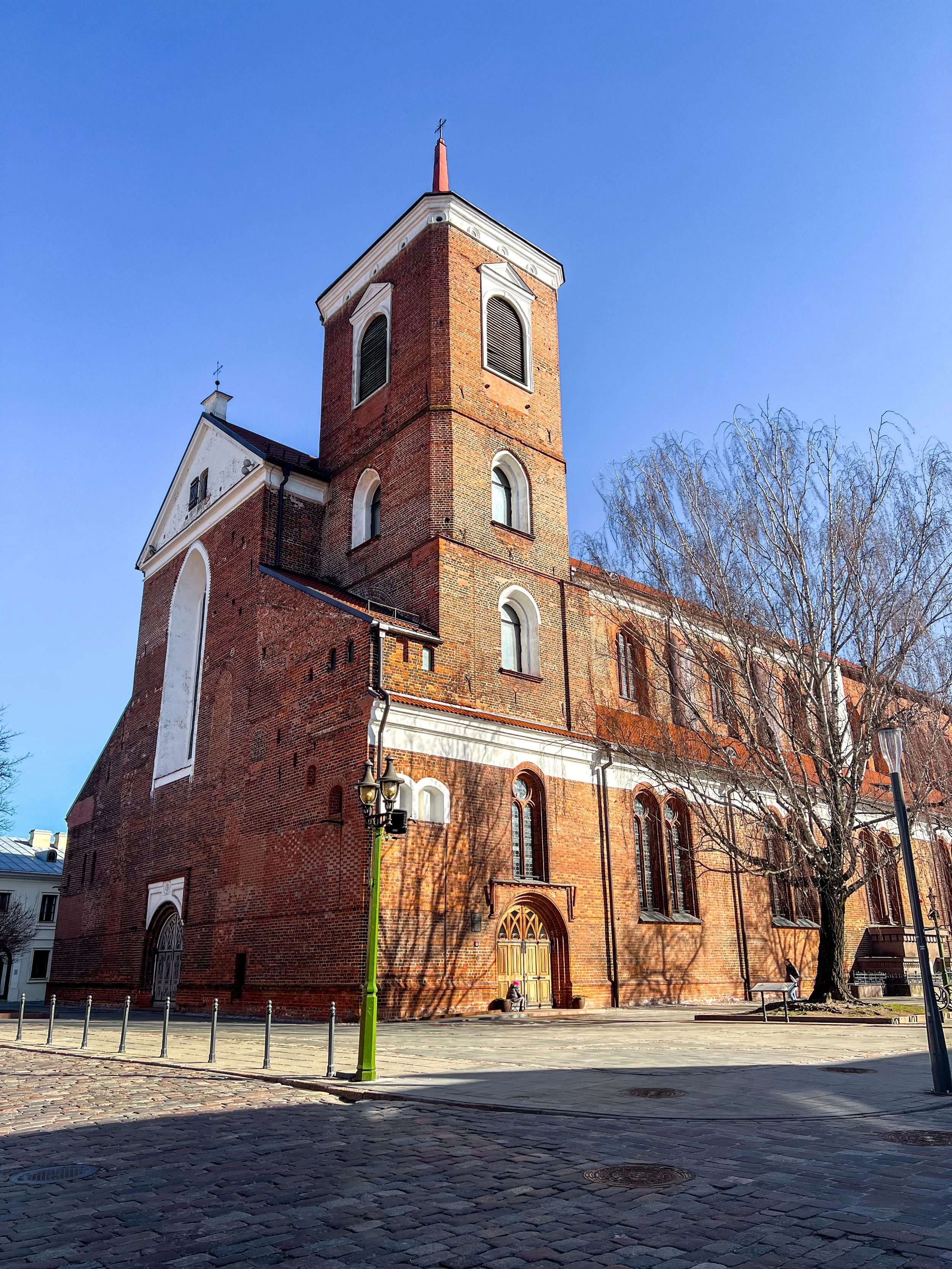
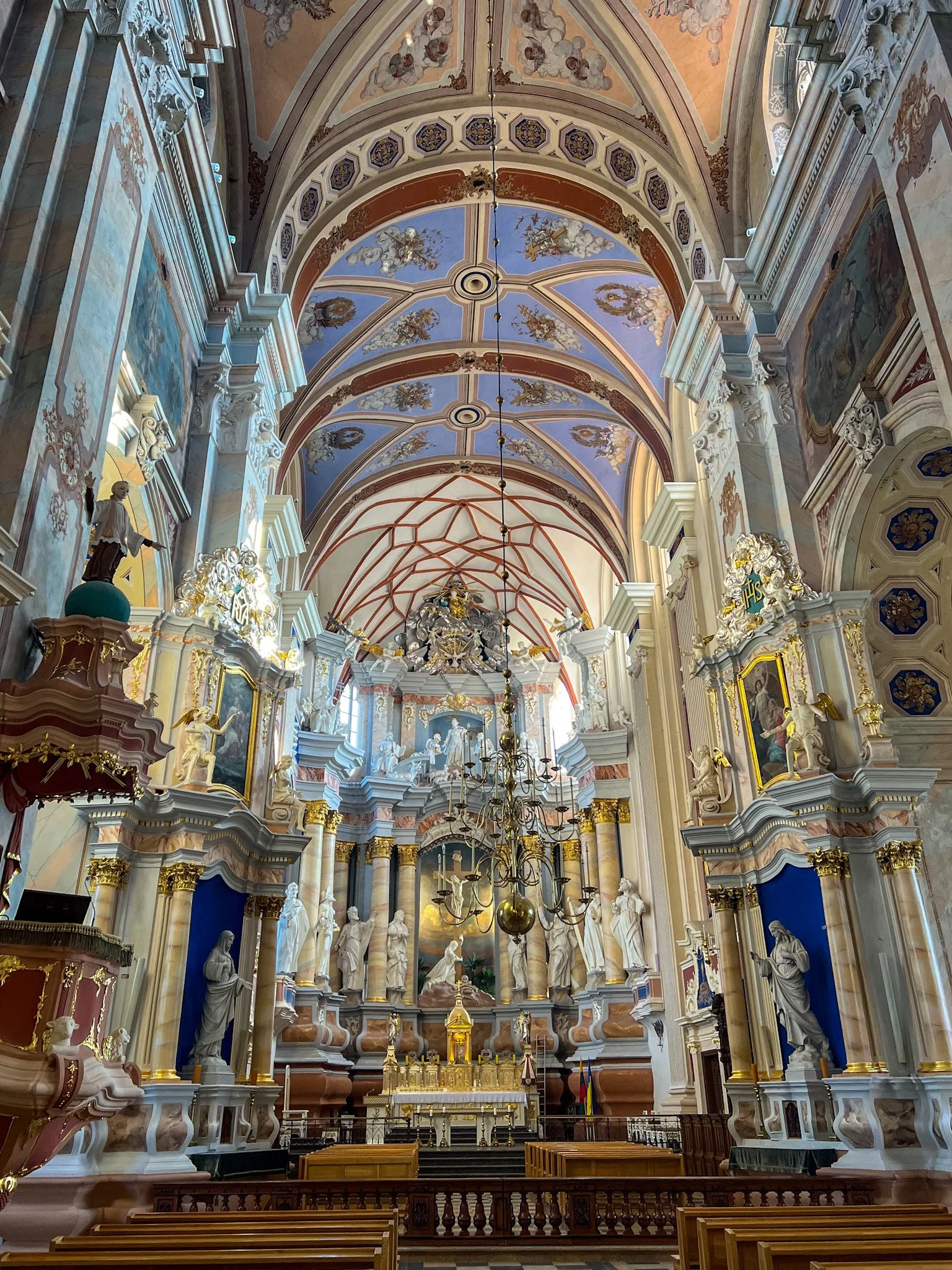
If there’s one thing Kaunas is famous for, it’s the numerous churches scattered throughout its Old Town. Right next to the Town Hall is the Cathedral-Basilica of St. Peter and St. Paul, one of the most historically significant religious sites in Lithuania and the largest Gothic church in the country. Lithuanian Grand Duke Vytautas is believed to be the founder of the cathedral. The monumental architecture of the basilica is dominated by Gothic and Renaissance features, reflecting the transition between these two styles.
Believers hold a special reverence for the sanctuary's miraculous painting, the Pietà (the Distressed Mother of God), which dates back to the late 16th or early 17th century. One of the altars also features a miraculous painting of Mary, Mother of Mercy, which was transferred from the Bernardine Church of St. George the Martyr.
The Basilica's crypt, the Blessed Sacrament Chapel, and the churchyard are the final resting places for many distinguished Lithuanian ecclesiastics. Notable figures buried here include Samogitian Bishop Motiejus Valančius, Archbishop Pranciskus Karevičius, Cardinal Vincentas Sladkevičius, and Prelates Jonas Mačiulis-Maironis and Aleksandras Dambrauskas-Adomas Jakštas, among others.
Pope John Paul II visited Kaunas Cathedral on September 6, 1993, further cementing its significance in the religious and cultural landscape of Lithuania.
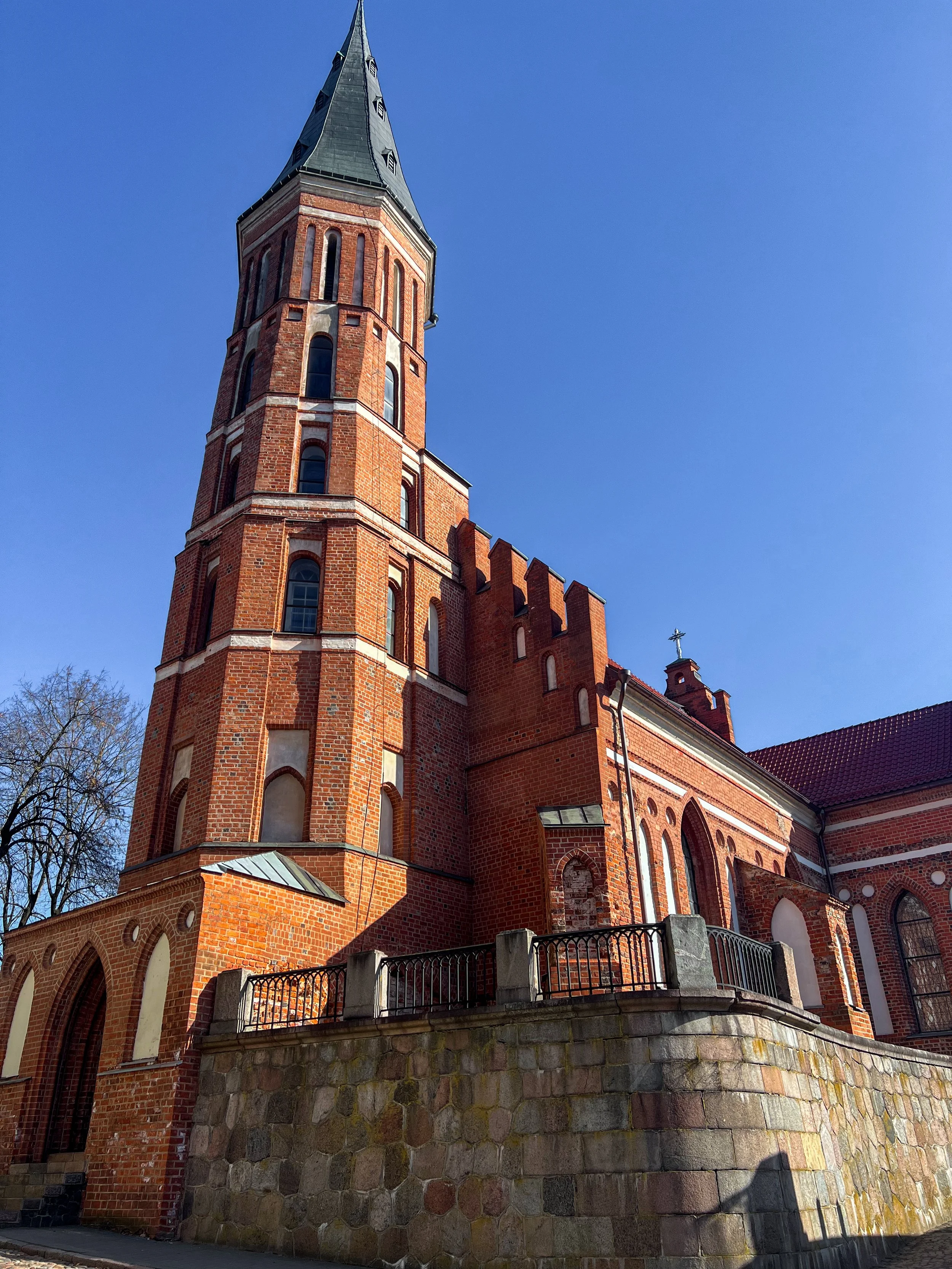
Church of Vytautas the Great
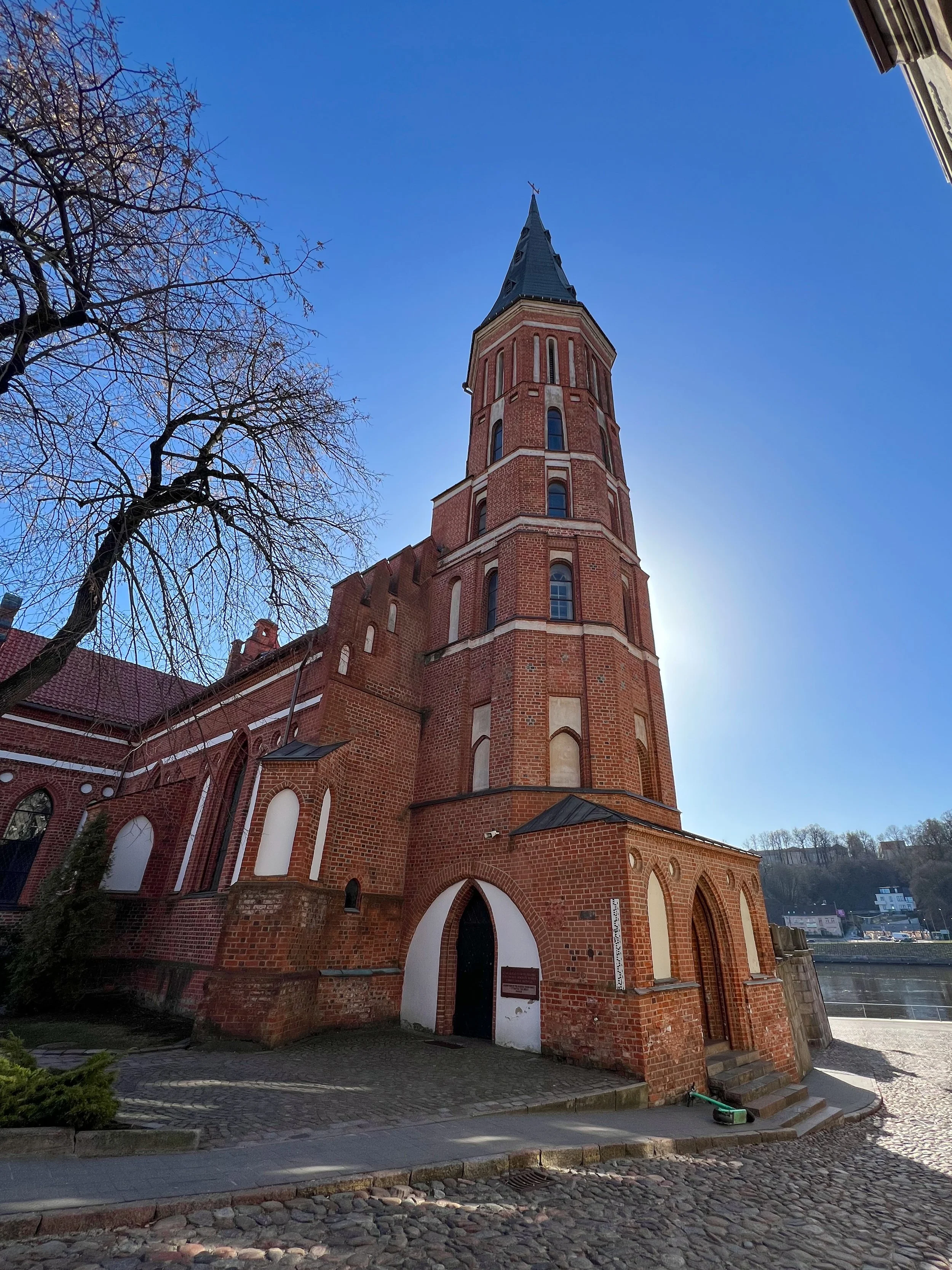
Another site you can’t miss is the Church of Vytautas the Great, also known as Church of the Assumption of the Blessed Virgin Mary. Being the oldest church in the city, dating back to around 1400, it stands out as the only Gothic-style church in Lithuania with a cross-shaped plan. The building's composition is unparalleled in the Grand Duchy of Lithuania and neighbouring countries.
According to historians, Grand Duke Vytautas of Lithuania was nearly defeated in battle against the Tatars and almost drowned in the Vorskla River. In gratitude to the Virgin Mary for his escape, he vowed to build a church on the riverbank. The church was first documented in 1439 and was originally associated with the Franciscans, as indicated by the original black brick crosses adorning its walls.
The layout of this shrine features a massive square base on the first floor, from which an octagonal volume rises—typical of Lithuanian Gothic churches. A pier was constructed near the church, allowing sailing boats and later steamboats to dock.
Interestingly, in 1877, a station was established near the church to measure the water level of the Nemunas River, complete with a gauge mounted on a granite wall. In 2019, a monument to the priest and writer Juozas Tumas-Vaizgantas was unveiled nearby, further enhancing the church's cultural significance.
Church of Most Holy Trinity
A short walk will bring you to the Church of Most Holy Trinity. Constructed between 1682 and 1683, it is one of the earliest Lutheran churches in the city, reflecting the deep-rooted German Lutheran community that thrived in Kaunas during the 17th century.
Originally, the Lutheran population in Kaunas consisted mainly of ethnic Germans, with pastors coming from Prussia or Germany. By the 17th century, it is estimated that there were around 500 Lutherans in the city. This community was active in local governance, often serving as burgomasters alongside Roman Catholics. However, their presence faced challenges; during the Russian occupation in the mid-17th century, their original church located in the Market Square was destroyed. After this devastation, Lutherans were permitted to hold services again in 1676, but under restrictive conditions, requiring them to build their new church away from the main square.
The Holy Trinity Church was constructed as a response to these conditions, yet its design was mandated to have no external indicators of its identity as a church, such as towers or crosses. This changed in 1860-1862 when a tower was finally added during a time when the Roman Catholic influence waned. Interestingly, it wasn't until 1930 that services began to be conducted in the Lithuanian language, marking a shift towards greater national identity within the church.
The interior of the church features a beautifully preserved wooden main altar, dating back to 1692, showcasing the craftsmanship of the period. The church remained a vital part of the community until it was closed by Soviet authorities. Fortunately, it reopened in 1989 and has since been used by the local university, serving as a reminder of the rich Lutheran heritage in Kaunas.

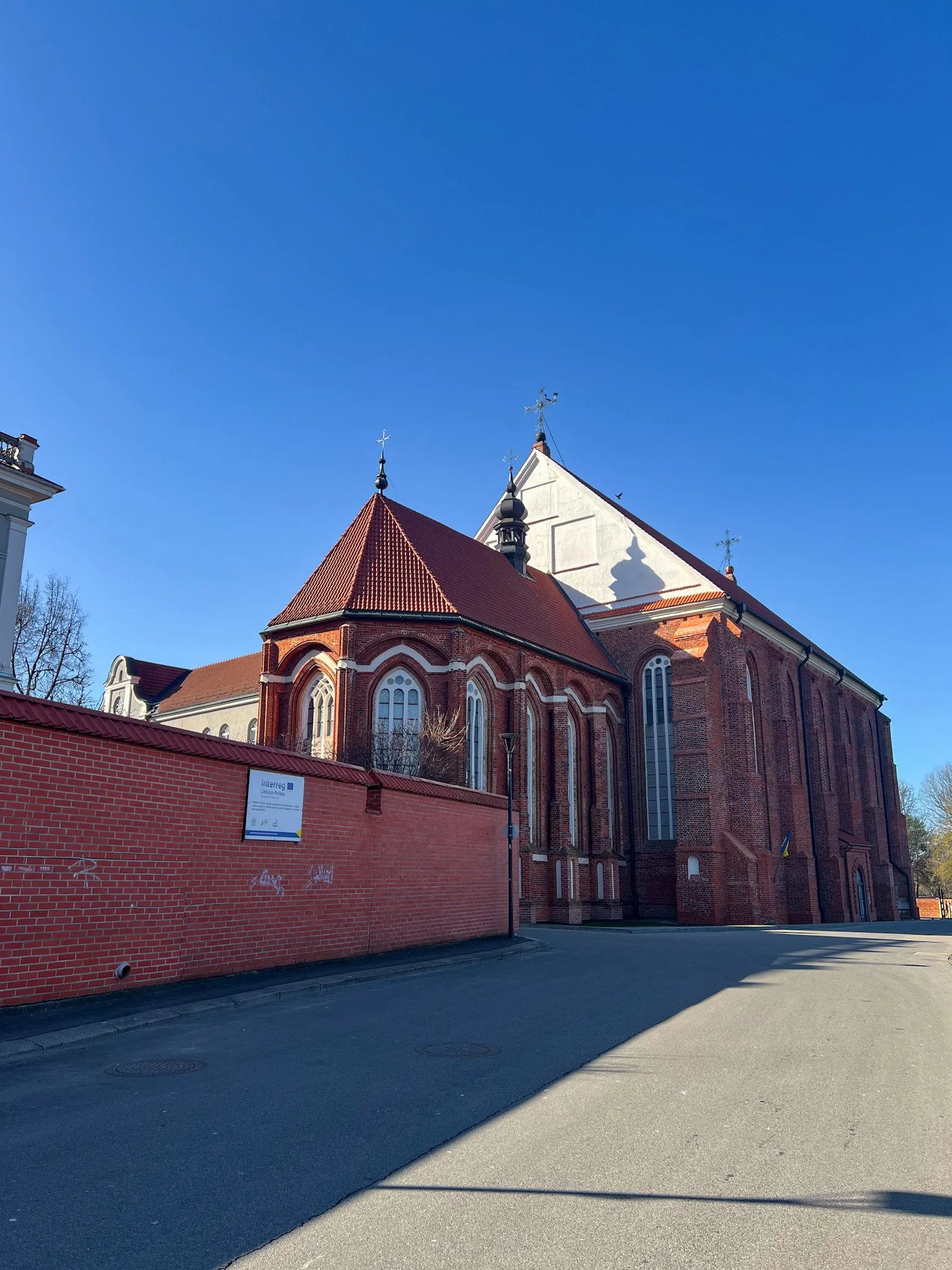
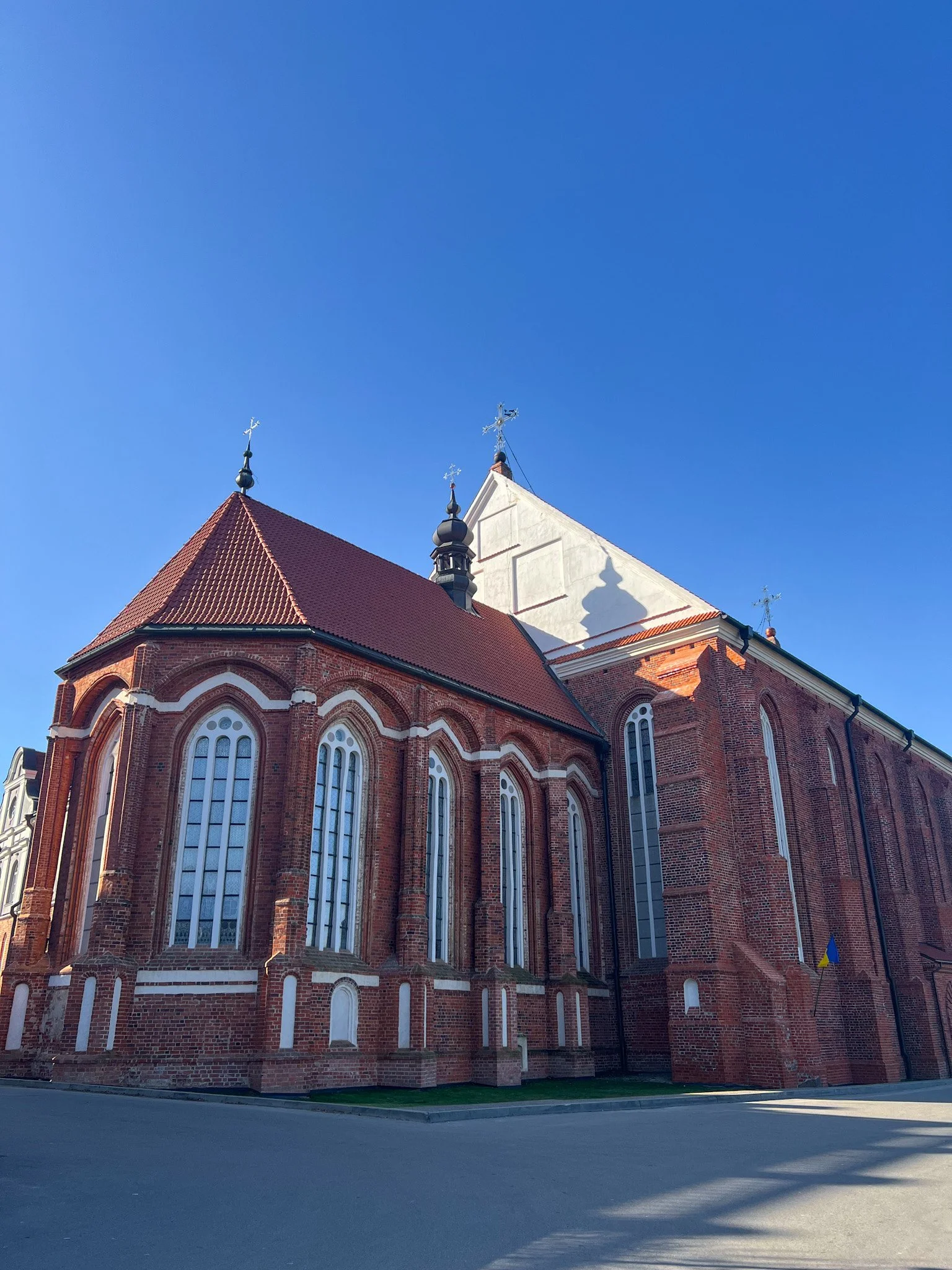
Church of St. George the Martyr
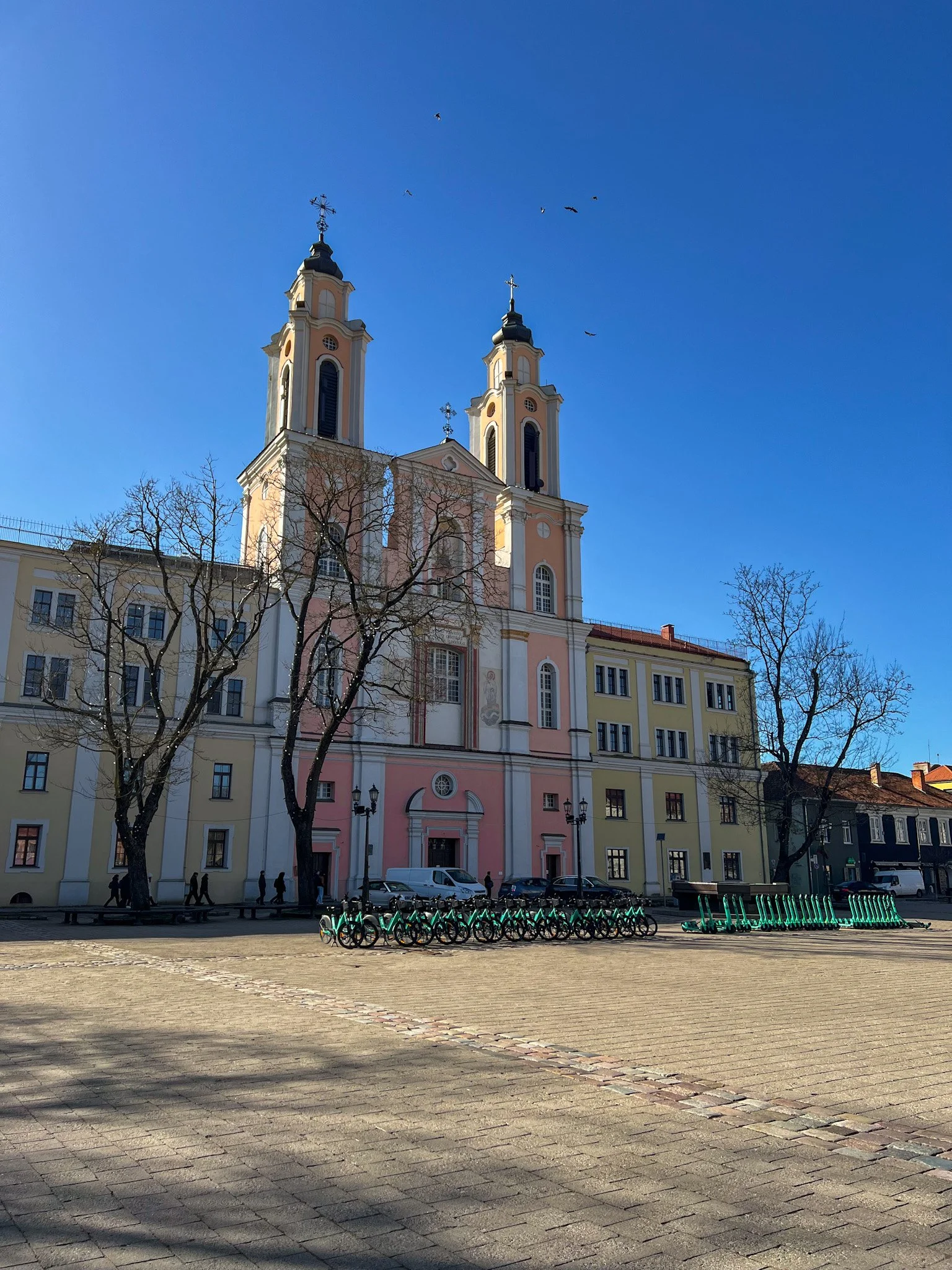
Nearby is the Church of St. George the Martyr, another medieval treasure of Kaunas. The Gothic red brick Bernardine Church and its adjoining two-floor Monastery were constructed at the turn of the 16th century. Together, they create a rectangular walled yard and an enclosed garden, forming a serene space in the heart of Kaunas. Despite suffering from devastating fires, the church, in the first half of the 17th century, boasted an impressive array of 16 altars, reflecting the influence of Bernardine spirituality. This attention to detail attracted the townspeople, who made copious offerings to the church.
At one point, the Bernardine Church was the largest church in Kaunas. In 1731, the Bernardine Order established a school here, making Kaunas a significant center for the study of Bernardine philosophy, with an education program that lasted four years. However, occupation forces and frequent fires led to the complete destruction of all church equipment. Additionally, soldiers from Napoleon’s army vandalized the Monastery during their campaigns.
In 1925, under the design of architect F. Vizbaras, the Monastery’s second floor was added, giving the building a Neo-Baroque appearance. In 1993, the Church and Monastery were returned to the Franciscan Order, restoring their historical and religious significance. The architecture reflects a blend of Baroque and Gothic styles, making it a unique landmark in Kaunas.
Kaunas Castle
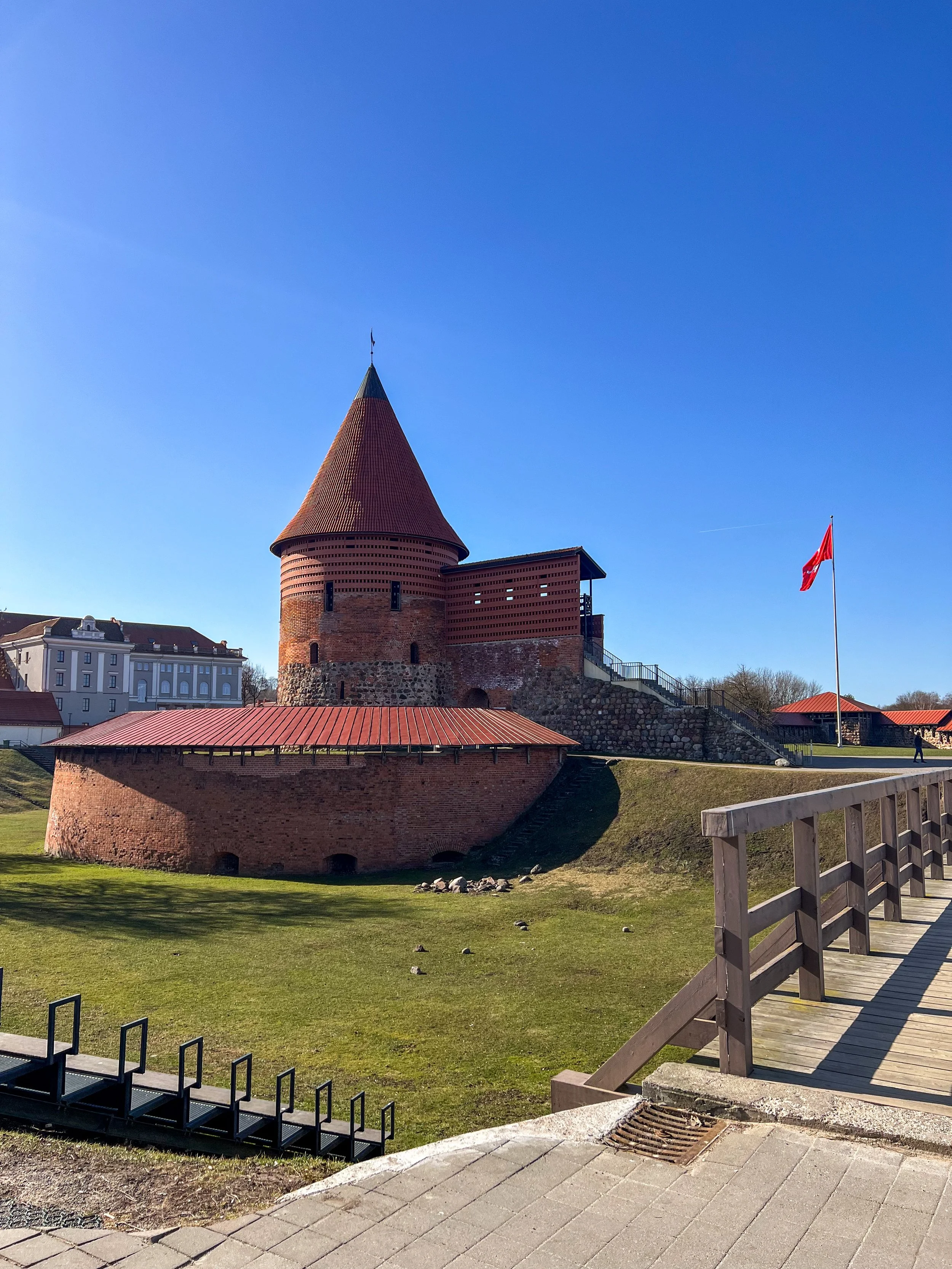
Situated at the confluence of the Nemunas and Neris rivers, Kaunas Castle is one of the oldest Lithuanian stone castles. It was first mentioned in written sources in 1361 as a castle to repel attacks by the Teutonic Order. The castle built in the middle of the 14th century became a strategically important component of the Nemunas-Jüra river defensive system, which protected the core of the Lithuanian state.
The castle was attacked by the Order in the spring of 1362, and occupied and destroyed after a month-long struggle. At the beginning of the 15th century, during the reign of Grand Duke Vytautas, the second castle with 4 stone towers was erected on the foundation of the first castle. Kaunas city started to develop next to the castle, after the privilege granted under Magdeburg Law in 1408. Eventually the castle lost its strategic importance, and the headquarters of the Elder of Kaunas and a prison were housed there.
In the 16th century, an artillery bastion was built near its southeast tower. The castle suffered due to wars with Russia in the middle of the 17th century. From the 17th century until the middle of the 19th century, the Neris River washed away two thirds of the castle territory. The castle was under archaeological research, conservation and restoration from the 1930s to the present day. In 2011, a branch of Kaunas City Museum was established there, housing exhibits on the history of the castle and Kaunas itself. The museum also holds various medieval artifacts and provides detailed information about the battles and events that took place here.
Benedictine Church of Saint Nicholas
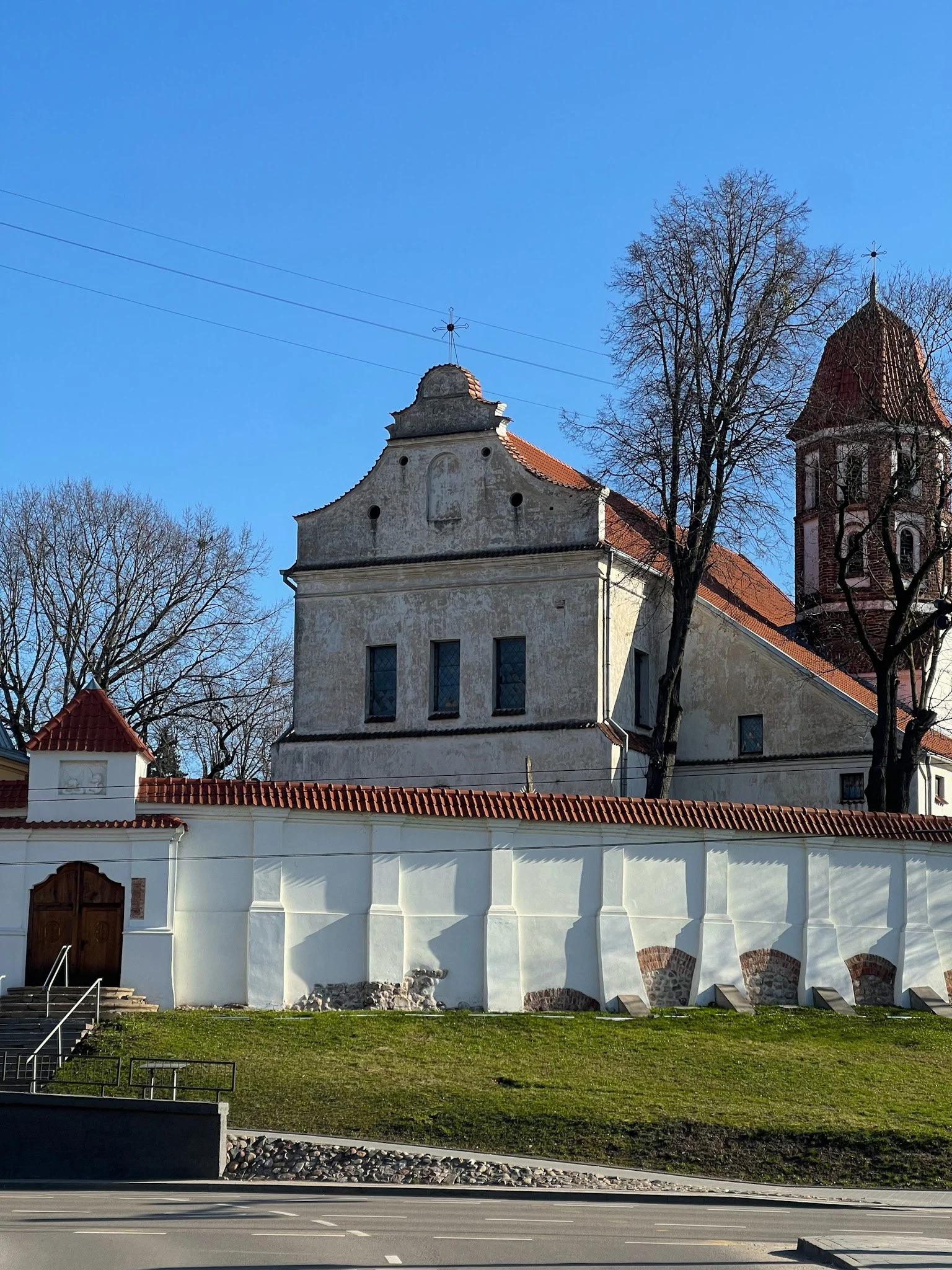
Located on the southwestern slope of Žaliakalnis Hill in the Old Town, the Church of Saint Nicholas dates back to the 15th century. This Gothic-style church is first mentioned in historical documents in 1493, although the church’s origins are steeped in mystery. Its Gothic features, such as the octagonal tower and intricate vaulting, make it a unique architectural gem.
In 1624, the church was given to Benedictine nuns by the nobleman Andrius Skorulskis, and it became the center of their monastery. Over time, the church and the adjacent wooden monastery were renovated and expanded, with significant updates in the 18th and 19th centuries. A notable feature of this period was the construction of a robust brick wall surrounding the complex, which remains to this day. Inside the church, several altars were dedicated to various saints, including Saint Benedict and the Virgin Mary. In the 1930s, prominent Lithuanian artist Liudas Truikys redesigned the church’s interior, contributing to its distinct aesthetic, including stained glass windows and a modern-style altar.
After being closed and repurposed during Soviet times, the church was returned to the Benedictine nuns in 1990. Today, it is a peaceful place of worship and features the continuous adoration of the Blessed Sacrament.

Historical Presidential Palace
Right across the street from the The Church of the Blessed Sacrament you’ll come across the Historical Presidential Palace. Built in a Neo-baroque style, it served as the Presidential Palace during the interwar years and is now a branch of the M. K. Čiurlionis National Art Museum.
The palace was originally constructed in 1846 for a local aristocrat, featuring a symmetrical design with multiple rooms. It underwent several expansions, including the addition of a garden in 1866. Acquired by the Russian government, it served as the residence for the Kovno Governor until it was bought in 1876. During World War I, Kaiser Wilhelm II briefly stayed here in 1915.
Following Lithuania's declaration of independence in 1918, the palace became the official residence of the Lithuanian president, especially after Kaunas was designated as the temporary capital. The building witnessed significant historical events, including the Coup d’État of 1926 and the Last Meeting of the Lithuanian government before the Soviet occupation in 1940.
Under Soviet rule, the palace was repurposed multiple times, including for a movie theater and as the Kaunas teacher's headquarters. After Lithuania regained independence in 1991, the palace was designated a historical landmark. Renovations began, and in 2003, it was officially reopened.
Today, the palace hosts exhibitions dedicated to former presidents and the history of the building itself. Notable displays include items from the collection of ambassador Kazys Lozoraitis, offering visitors a glimpse into Lithuania’s rich history.

Liberty Avenue & Church of St. Michael the Archangel
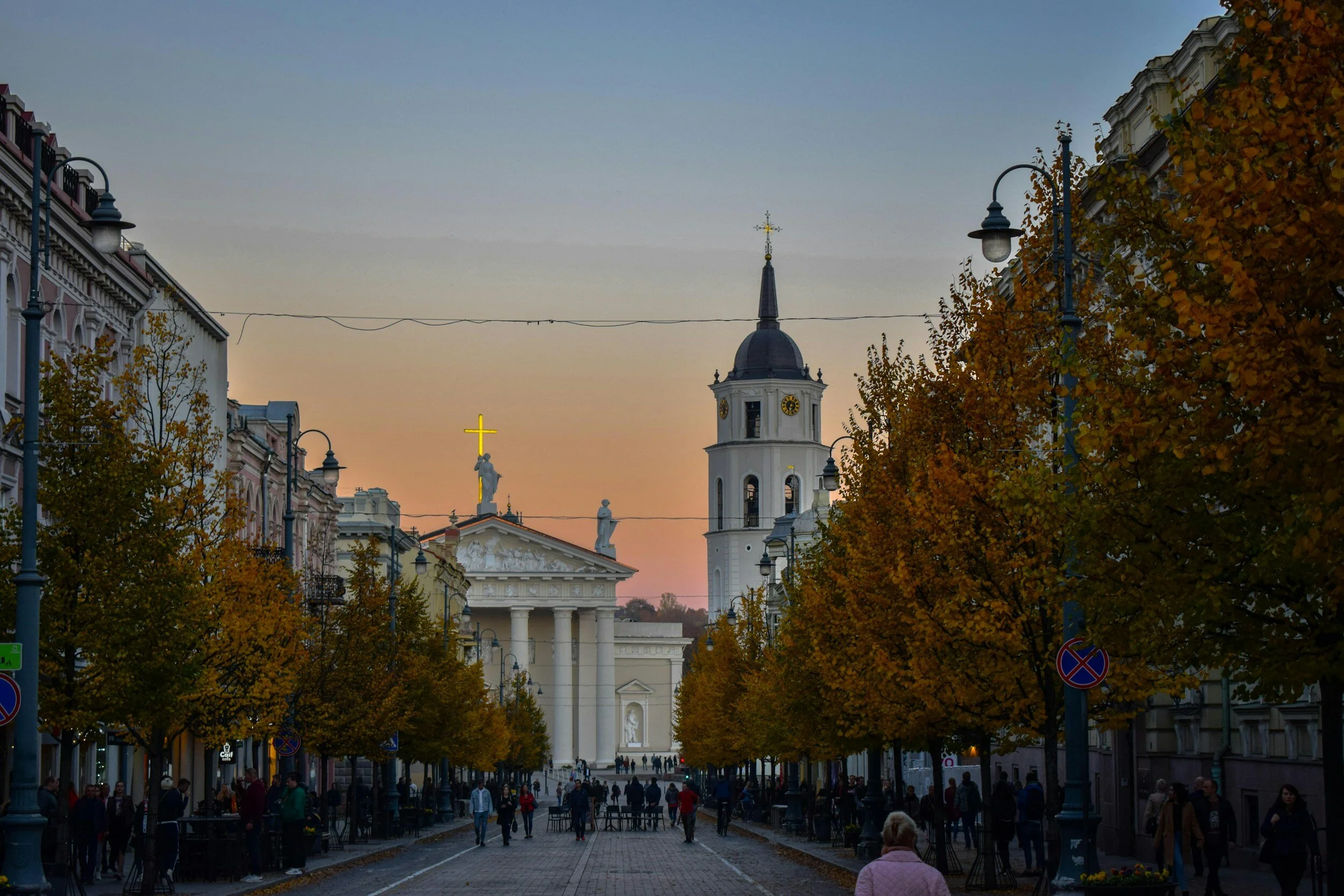
As a final stop during your visit to Kaunas, leave the Old Town behind and head to the famous Liberty Avenue, known locally as Laisvės Alėja. Stretching 1.6 kilometers, it’s the longest pedestrian street in Eastern Europe, and its energy is contagious. Lined with linden trees, outdoor cafés, shops, and art installations, the boulevard is perfect for a leisurely stroll. The fact that no cars are allowed makes it even more relaxing—you can take your time and soak in the surroundings.
As you make your way down the boulevard, you’ll notice how seamlessly the street blends the old with the new. It’s bustling with locals and tourists alike, and you'll find plenty of street performers and musicians adding to the vibrant atmosphere. If you love architecture, take a moment to appreciate the 19th- and early 20th-century buildings, many of which have been preserved or restored. Even though Kaunas Fortress once imposed a height limit on these structures, their unique character is still apparent.
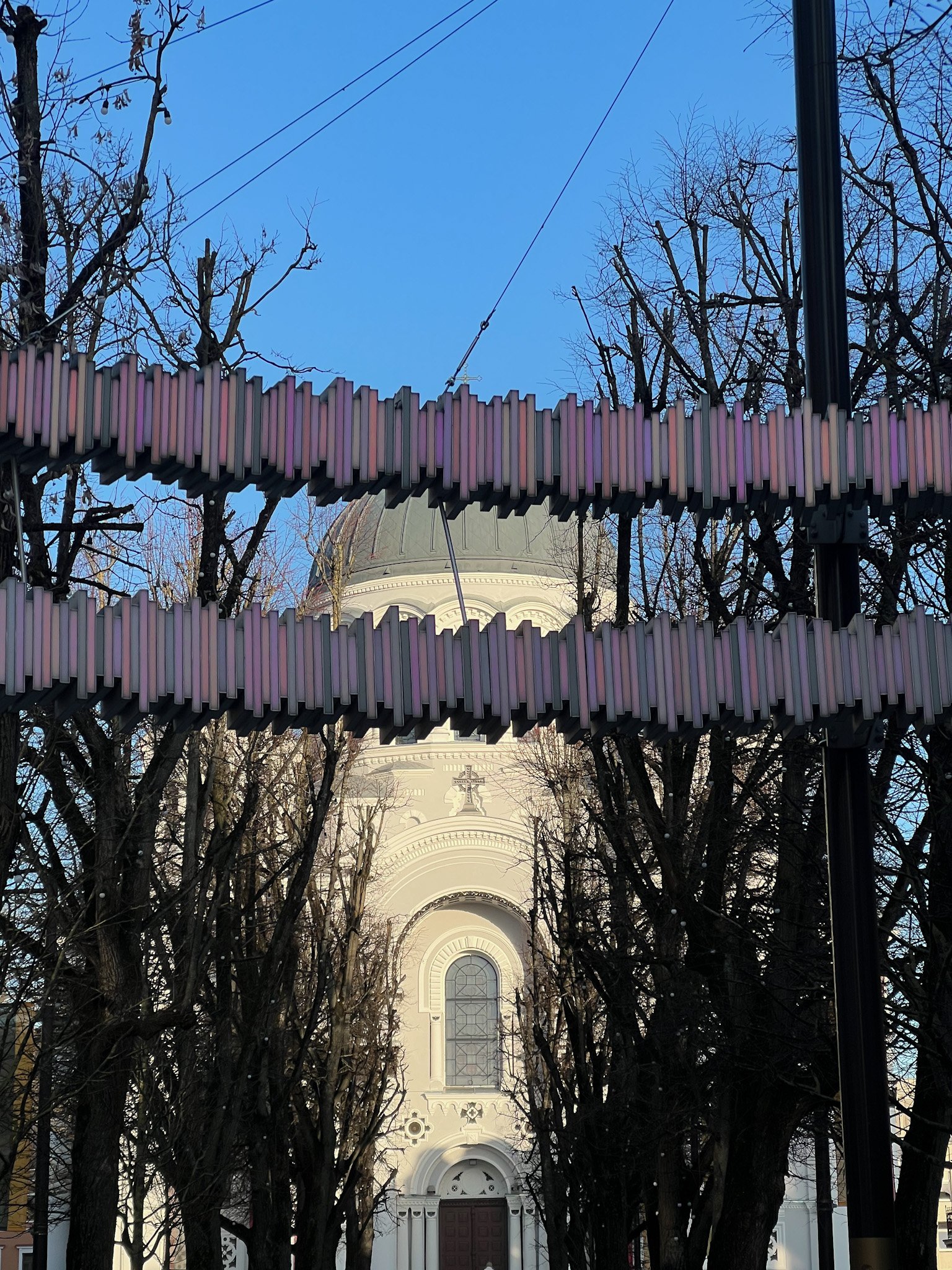
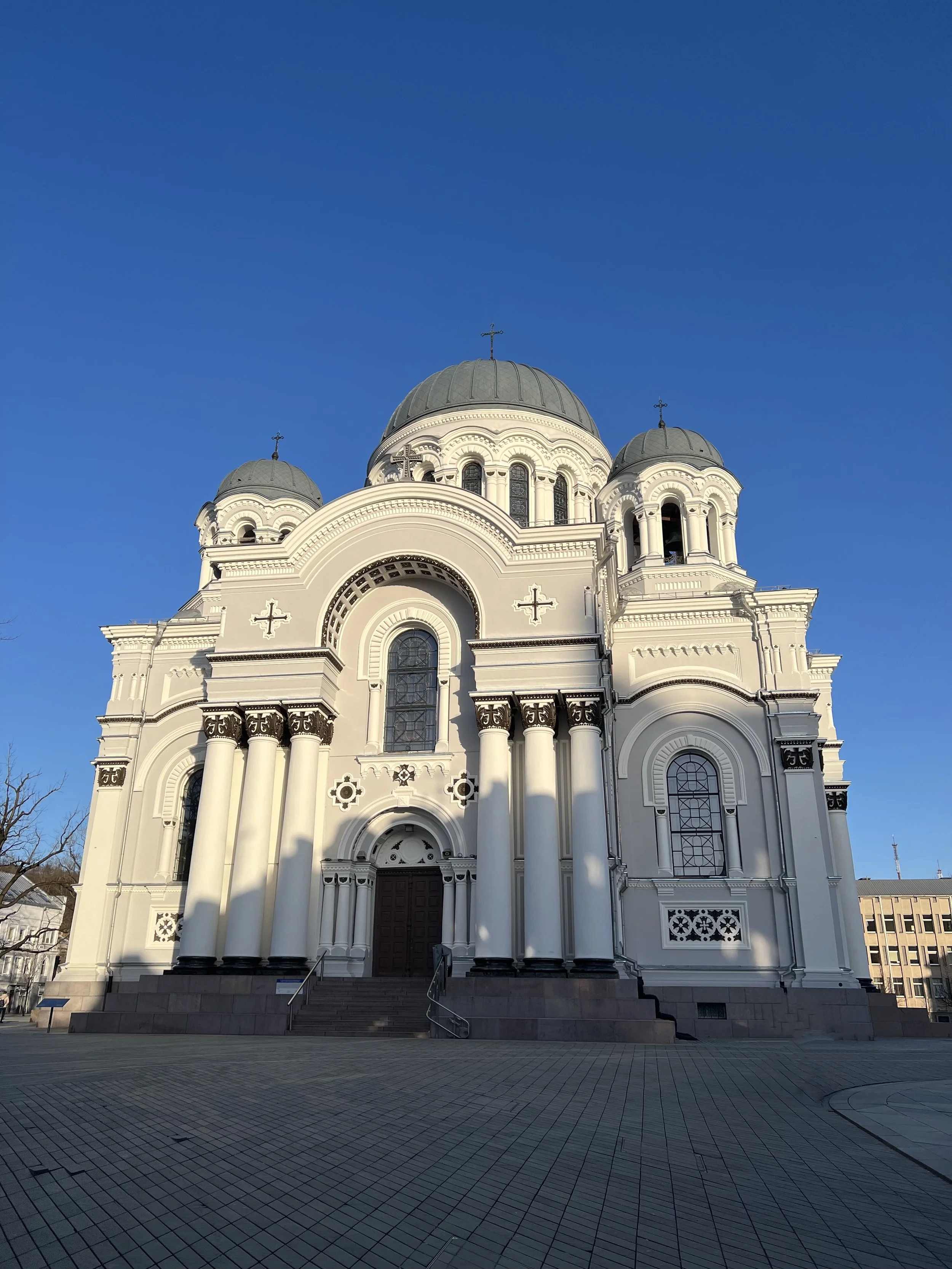
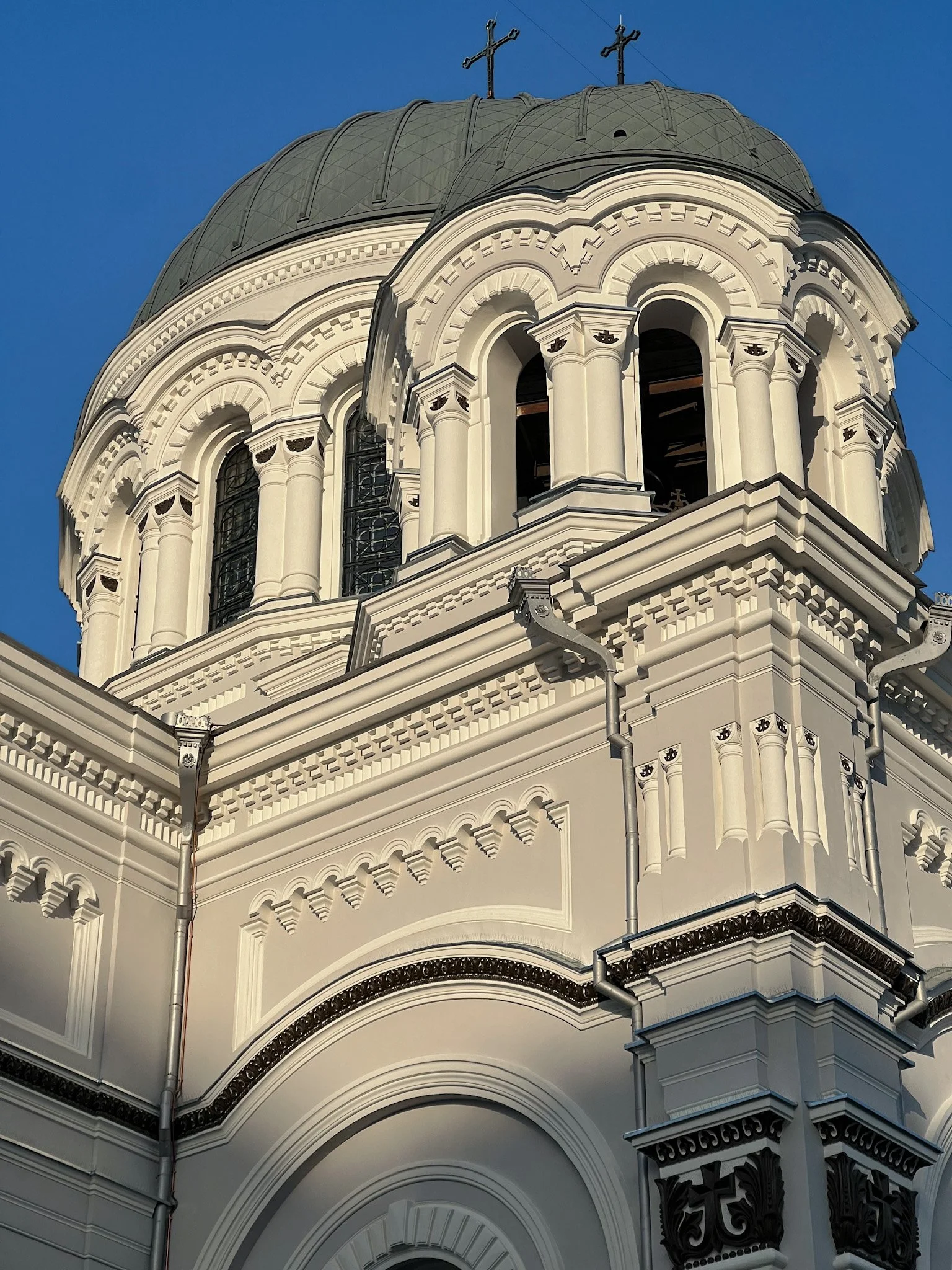
At one end of Laisvės Alėja stands the Church of St. Michael the Archangel, or Soboras as it’s locally known. This towering Neo-Byzantine structure dominates the skyline with its five domes and intricate architectural details. The church was originally built between 1891 and 1895 for the Russian Orthodox garrison of the Kaunas Fortress, but today it serves as a Roman Catholic church.
The church can accommodate 2,000 people, and its interior is breathtaking, with soaring ceilings, Corinthian columns, and stained-glass windows depicting biblical scenes. Don’t miss the chance to look up at the main dome, where you’ll see intricate frescoes of angels.

Jewish Kaunas
A visit to Kaunas goes beyond exploring old churches. The city was once home to a vibrant Jewish community, and their influence has left a lasting impact on the city.
By the late 19th and early 20th centuries, the Jewish population in Kaunas had grown to become a significant and influential part of the city’s social, cultural, and economic fabric. The Jewish quarter was bustling with life, filled with synagogues, schools, and businesses, while Jewish scholars and educators enriched the city’s intellectual environment.
However, this vibrant community faced immense tragedy during World War II, when most of Kaunas’ Jewish population perished during the Holocaust. Despite these dark times, several sites still stand today, preserving the memory of the Jewish community’s once-flourishing presence in the city.
Most of the Jewish heritage sites in Kaunas are concentrated in the Old Town, making it easy to visit them while exploring the city's other attractions. The majority of the buildings are in very poor conditions, so don’t expect magnificent monuments. However, you can’t miss exploring these historical landmarks to gain insight into the Jewish legacy in Kaunas.
Choral Ohel Yaakov Synagogue
The only synagogue still in use in Kaunas is the Choral Ohel Yaakov Synagogue, a significant landmark for the Orthodox Jewish community. Located at 13 East Ožeškienės Street in the Centras eldership, this architectural gem showcases a fascinating blend of Baroque Revival, Renaissance Revival, and Moorish Revival styles. Designed by architects Justyn Golinewicz and Edmund von Mikwitz, the synagogue was completed in 1872 and remains one of the two operating choral synagogues in Lithuania today.
Historically, the Kaunas Synagogue was a central part of Jewish life in the city. Before the Holocaust, it was one of over 25 synagogues and prayer houses in Kaunas, serving as a spiritual and communal hub. Renowned for its striking design, the synagogue claims to house one of the most beautiful arks in the Jewish world, a testament to its architectural and cultural significance.
A poignant memorial dedicated to the estimated 50,000 Lithuanian Jewish children who perished during the Holocaust can be found at the rear of the synagogue. This memorial features 37 stone tablets, each inscribed with the names of towns and cities where these children lost their lives, along with the number of victims from each location. This solemn tribute serves as a reminder of the community's tragic past.
In recent history, the synagogue has faced challenges, including an alarming incident on April 20, 2011, when a sign with anti-Semitic messages was displayed outside its doors, coinciding with the anniversary of Hitler's birthday. Despite such provocations, the Kaunas Synagogue continues to stand as a vital symbol of resilience and cultural heritage for the Jewish community in Lithuania.

Choral Ohel Yaakov Synagogue
Ivonna Nowicka, CC BY-SA 4.0 https://creativecommons.org/licenses/by-sa/4.0, via Wikimedia Commons
L. Zamenhofo Street Synagogue
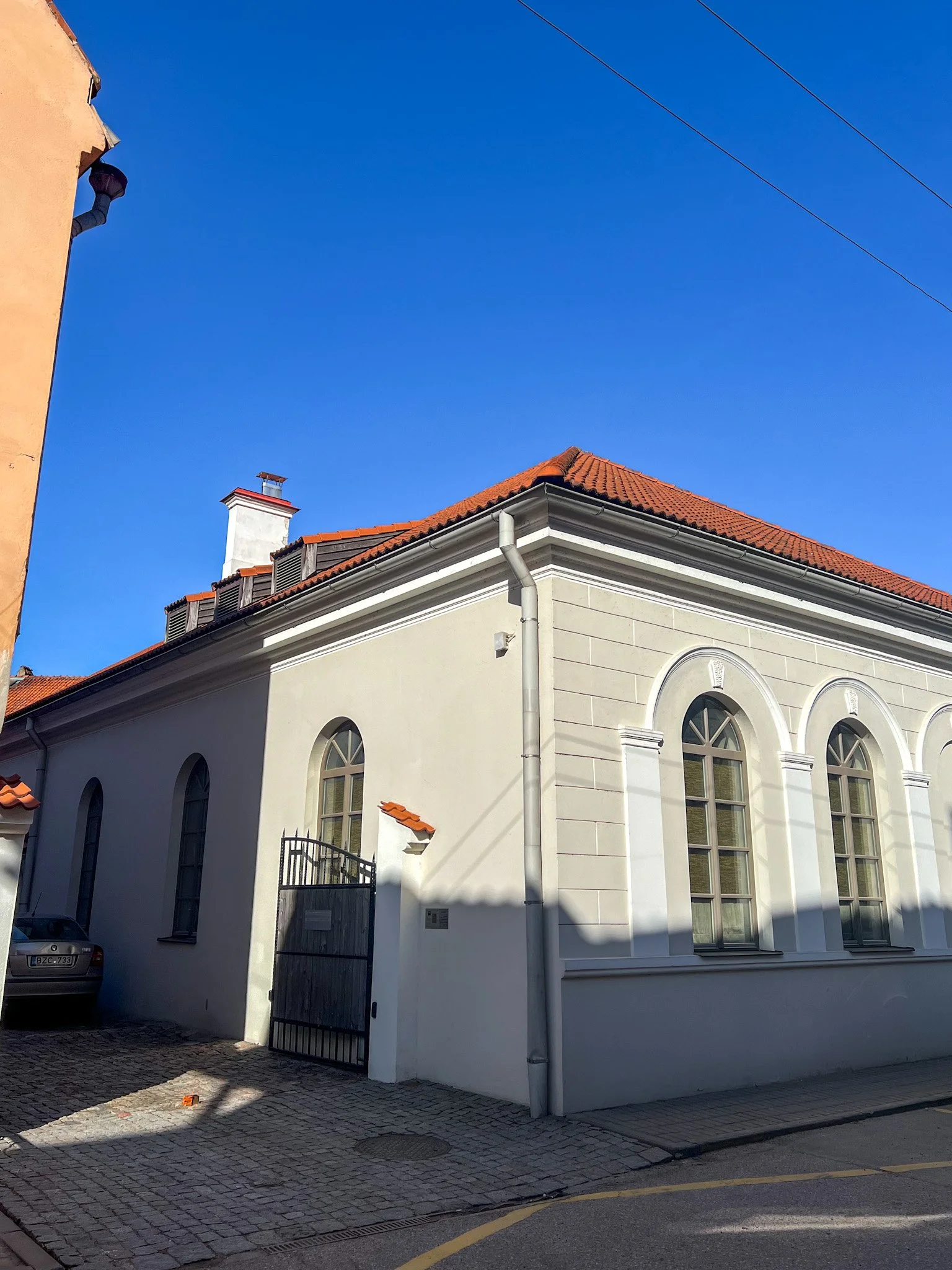
The L. Zamenhofo Street Synagogue, also known as the Neviazh Kloyz, is one of the last remaining examples of Romantic-era synagogues in Lithuania. Constructed in 1850 by Jeckelis L. Neviažskis, this synagogue is a significant historical and architectural site.
Historically, the area where the synagogue stands has a rich background. In 1627, a triangular plot of land was noted to have a house that burned down in 1655, leaving only its cellar. By the late 18th century and into the early 19th century, this plot remained undeveloped and even included a garden. J. L. Neviažskis later built a residence here, which became a hub for the local Jewish community, housing both community activities and a school. By 1852, he constructed a one-story building with two cellars along L. Zamenhofo Street, and additional structures were built by 1860, forming a complex that showcased local architectural heritage from the mid-19th century.
Architecturally, the synagogue is built from brick and features a rectangular layout with a monumental volume. The main facade is oriented towards L. Zamenhofo Street, and the structure is distinguished by its high arched windows, which are framed by low pilasters. Inside, the first floor hosts a spacious main prayer hall designated for men, while women’s services take place on the upper level. Although the interior suffered damage over time, key elements like the bima—an elevated platform for reading the Torah—remain partially intact and have been restored.
The synagogue's legacy continues to be important in Kaunas. Adjacent to the synagogue, a closed courtyard retains a mid-19th-century building that once served as a school, along with two warehouses connected by a fence. During the Soviet era, there were attempts to repurpose the entire complex for various uses, including a restaurant and later a museum. In the early 2000s, the synagogue underwent significant restoration funded by private sources, transforming it into a space that now includes a conference hall.

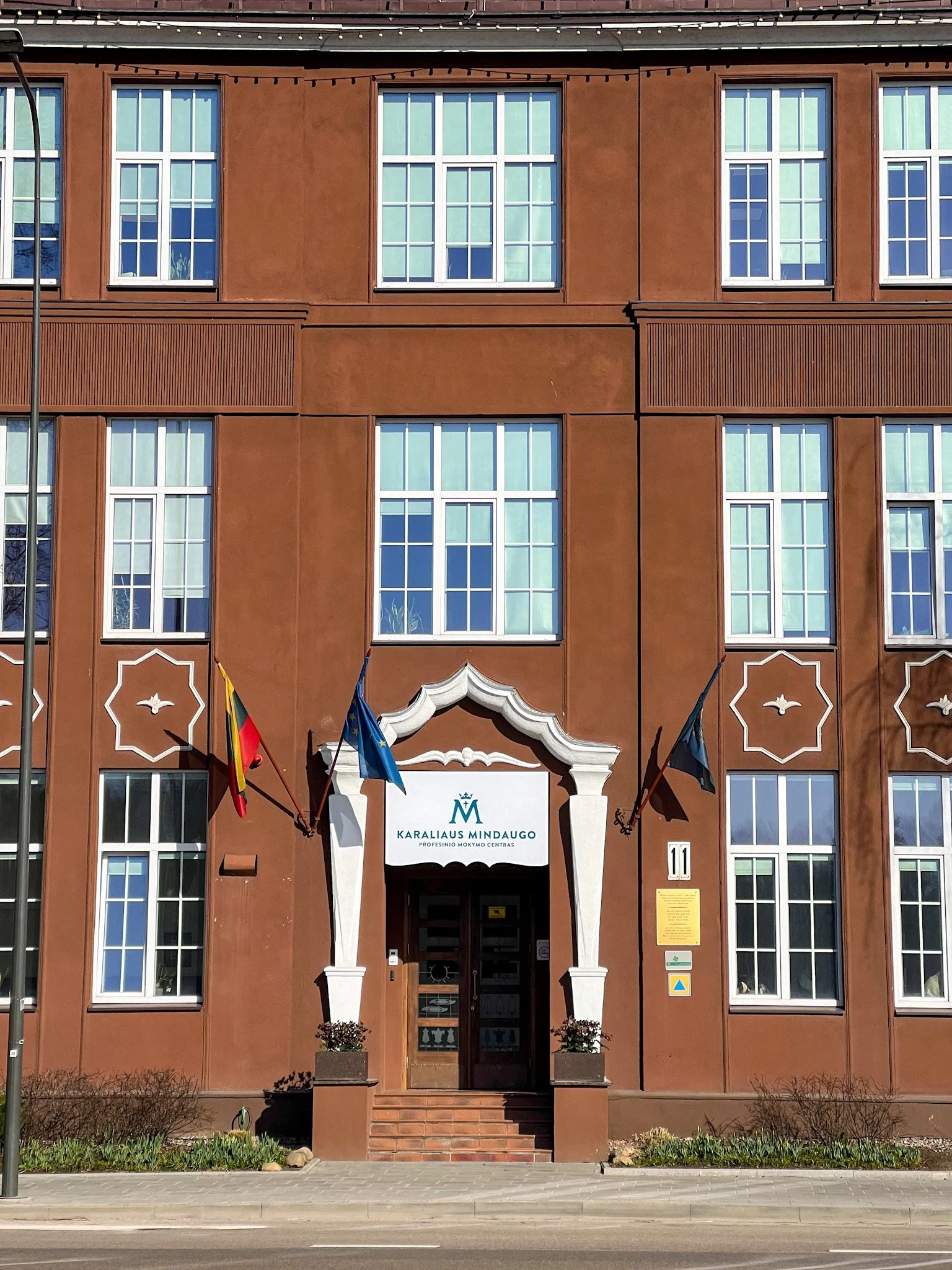
Jewish Schwabe Gymnasium
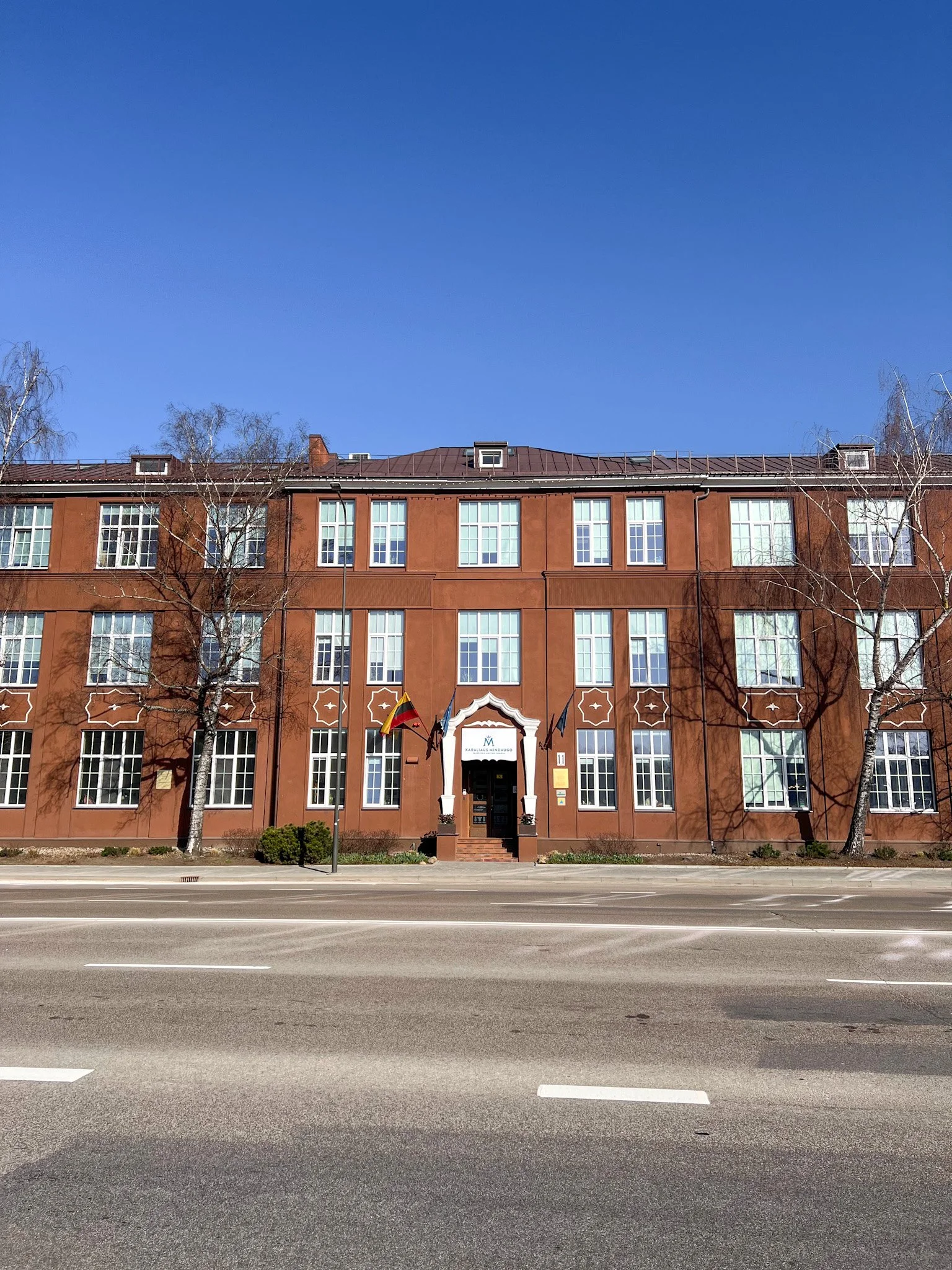
The Jewish Schwabe Gymnasium is one of the most important educational institutions in Kaunas' Jewish history. Opened in the early 20th century, this school was renowned for providing a high standard of education to Jewish students, particularly in the fields of science and humanities. Many of its graduates went on to become prominent scholars, professionals, and leaders both within Lithuania and abroad. The gymnasium was an emblem of the Jewish community's dedication to education, intellectual achievement, and cultural preservation.
The building itself, located in central Kaunas, stands as a reminder of the intellectual life that thrived within the Jewish community. Though today it may no longer function as a school for Jewish students, it still holds historical significance and remains a valuable piece of Kaunas' Jewish legacy. The building's architecture reflects the neoclassical style that was common during the time of its construction, and visitors will find it well-preserved, with informative plaques or markers that shed light on the history of the Jewish Schwabe Gymnasium.
BirStono Synagogue
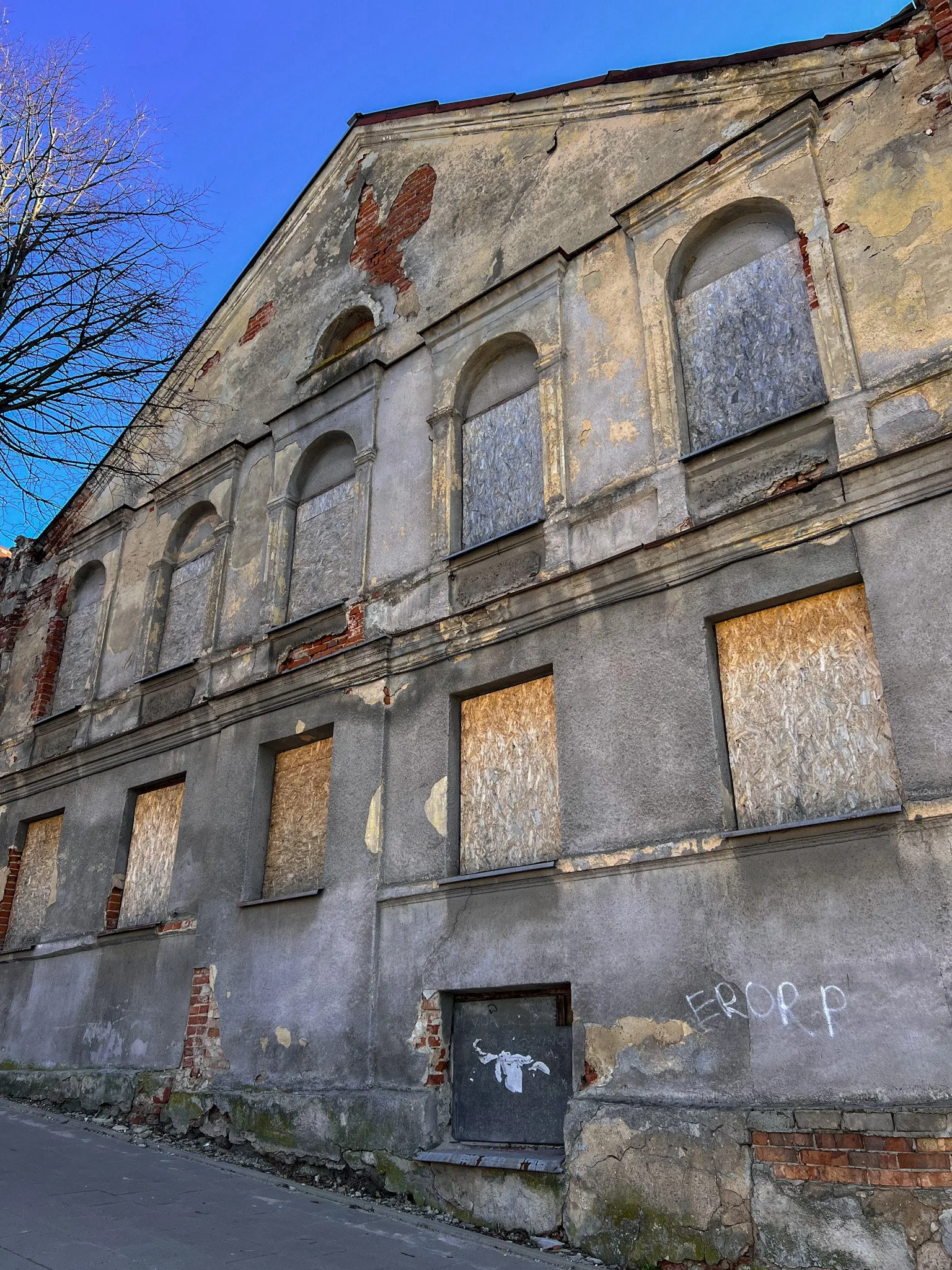
The Birštono Synagogue, located on Birštono Street in Kaunas, also holds a significant place in the city’s Jewish heritage. Built in the 19th century, it has a complex history that reflects the broader changes in Kaunas over the years. After World War II, the synagogue fell into disuse, and during the Soviet era, a portion of the building was demolished to accommodate the expansion of Birštono Street. Today, it stands as one of the few remaining synagogue structures in Kaunas, though its function has shifted significantly.
Currently, the building houses an auto service and other commercial enterprises, which has transformed its original purpose. The architecture of the synagogue is characterized by plastered brick construction, featuring pointed arched windows typical of synagogues. However, most of the synagogue's distinctive features have faded, with only the eastern wall retaining some remnants of its original design. When viewed from Birštono Street, the building no longer resembles a synagogue, as the commercial adaptations have obscured its historical identity.
The location at Birštono g. 14 / Puodžių g. is significant, as the pointed arched windows are a notable element that connects the building to Eastern, particularly Arab, architectural influences. To recognize it as a former place of Jewish worship, one must approach from Puodžių Street, where the eastern wall still displays some characteristics of its synagogue origins.


Hassidic Synagogue
The Kaunas Hassidic Synagogue is another important piece of the Jewish religious fabric that once dominated parts of the city. In 1858, the Russian Empire's government issued an order that allowed Jews in Kaunas for the first time to build homes anywhere in the city. This newfound freedom led to a growing Jewish population, which necessitated the construction of more religious and communal buildings. During the 1850s and 1860s, the first synagogues of traditional Judaism were established, but the first Chasidic kloiz was not built until 1880. Reflecting Chasidism's focus on supporting the poor, the kloiz features a humble design. Its Neo-Renaissance facade remains largely unchanged, maintaining its original form to this day. The building’s layout, which diverges from traditional designs, stems from practical considerations due to its location at a crossroads rather than any intention to rebel against traditional Judaism.
Currently, the former Chasidic kloiz is situated on the Žaliakalnis hillside, positioned at the intersection of Gimnazija Street and Antanas Mackevičius Street. It serves as a boundary between Kaunas Old Town and the Žaliakalnis district. However, the building has lost its original religious function and is now home to an art studio. During the Soviet occupation, it briefly served as a laboratory, but this usage was short-lived. The building was then transferred to the Kaunas department of the Vilnius Art Academy, which had a similar fate to that of the Butchers’ synagogue in Kaunas.
Although the academy did not actively utilize the building during the Soviet era, after Lithuania regained its independence, the Vilnius Art Academy repurposed the structure into a sculpture studio. Inside, remnants of the kloiz's original interior are still visible, providing a tangible connection to its past.

9th Fort Museum
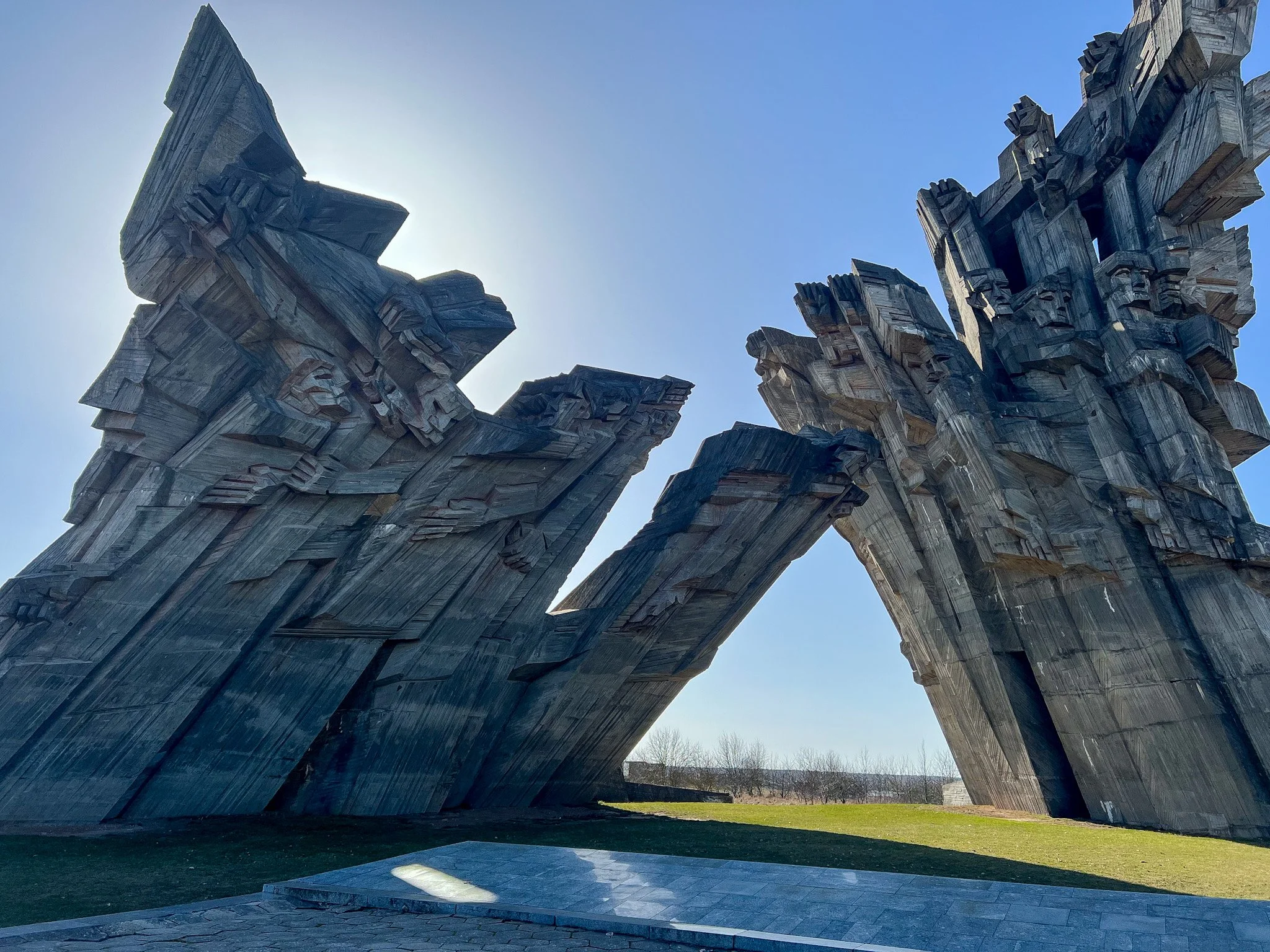
A visit to Kaunas wouldn’t be complete without a visit to the 9th Fort Museum. essential for anyone seeking to understand the complex layers of Lithuania's past. Located just outside the city centre, this poignant site offers a deep insight into Lithuania’s tumultuous history during World War II and the Soviet occupation. Originally built in the late 19th century as part of the Kaunas Fortress, the 9th Fort served as a military outpost and later became a site of tragic significance when it was used by the Nazis as a concentration camp.
The museum's exhibitions provide a stark portrayal of the atrocities committed during the Holocaust, with detailed accounts of the Jewish community that once thrived in Kaunas before the war. Visitors can explore the various galleries that showcase photographs, documents, and artefacts that tell the stories of the victims and survivors.
Don’t miss my post about visiting Kaunas 9th Fort Museum—it’s an essential stop for anyone interested in Lithuania’s history and a powerful reminder of resilience and remembrance.
Some links in this post are affiliate links, which means that if you buy through them, we’ll receive a small commission. This will never cost you more and in many cases you will receive a special discount.
As always, all opinions are mine. We appreciate your support!

This article is now featured on GPSmyCity. To download this article for offline reading or travel directions to the attractions highlighted in this article, go to Walking Tours and Articles in Kaunas on GPSmyCity.


On the outskirts of Kaunas, the 9th Fort Museum stands as a poignant testament to Lithuania’s tumultuous history during World War II. Once a site of tragedy and suffering, this memorial complex has transformed into an educational hub, inviting visitors to explore the complexities of the Holocaust and the impact of war on human lives.
Whether you’re a history enthusiast or simply seeking a deeper understanding of the past, the 9th Fort Museum offers a profound experience. Each corner of this site reveals layers of history, from the chilling accounts of mass executions to the resilience of the human spirit in the face of adversity. Prepare to embark on a visit that not only educates but also inspires reflection and empathy, making your visit to the 9th Fort an unforgettable chapter in your travels through Kaunas.