
Singapore in 3 days: the ultimate itinerary for a short stay
Singapore, the dazzling gateway to Southeast Asia, is a vibrant fusion of cultures, history, and futuristic innovation. From the sleek skyline that defines its modernity to the traditional enclaves that preserve its rich heritage, Singapore is a city that offers an unforgettable experience at every turn. Whether you’re strolling through the picturesque Gardens by the Bay, savouring the flavours of Chinatown, or soaking in the energy of Marina Bay Sands, the Lion City promises an adventure like no other.
In this diverse city-state where Malay, Chinese, Indian, and Western cultures come together, history unfolds in it iconic landmarks. With only 3 days to explore, this ultimate itinerary will guide you through Singapore’s must-see attractions, secret spots, and culinary delights, ensuring that every moment is packed with the essence of what makes Singapore so extraordinary.
Singapore: 3 day itinerary
Singapore, a modern marvel of the world, is a melting pot of cultures and architectural wonder that blends futuristic innovation with deep-rooted traditions. Known as the "Lion City," this small yet dynamic country holds a fascinating array of experiences for any traveler. In just three days, you can journey from ultra-modern skyscrapers to ancient temples, from lush gardens to bustling cultural neighbourhoods.
Like me, most visitors to Singapore only stop by for a short layover on their way to Southeast Asia. Here’s a detailed itinerary to guide you through Singapore, ensuring that you capture the essence of what makes this city so unique. Whether you’re a history buff, a foodie, or an adventurer, Singapore offers something for everyone. This guide will walk you through how to make the most of your time in this enthralling city.
Day 1
Changi Airport
Landing in Singapore is a unique experience. Changi Airport in Singapore is far more than just a transit hub—it's a destination in itself, frequently ranked as one of the best airports in the world. Offering a vast array of activities, sights, and experiences, Changi is a place where travellers can spend hours exploring without ever getting bored. Whether you have a layover or are flying out, here’s an in-depth look at the remarkable things to do and see at Changi Airport.
Changi Airport opened in 1981, aiming to accommodate Singapore’s growing role as an international transit hub. Over the years, it has undergone multiple expansions and renovations, transforming into a state-of-the-art facility that handles over 60 million passengers annually. The airport’s commitment to passenger comfort, efficiency, and world-class amenities has earned it numerous accolades, including the coveted title of "World’s Best Airport" by Skytrax for several consecutive years.
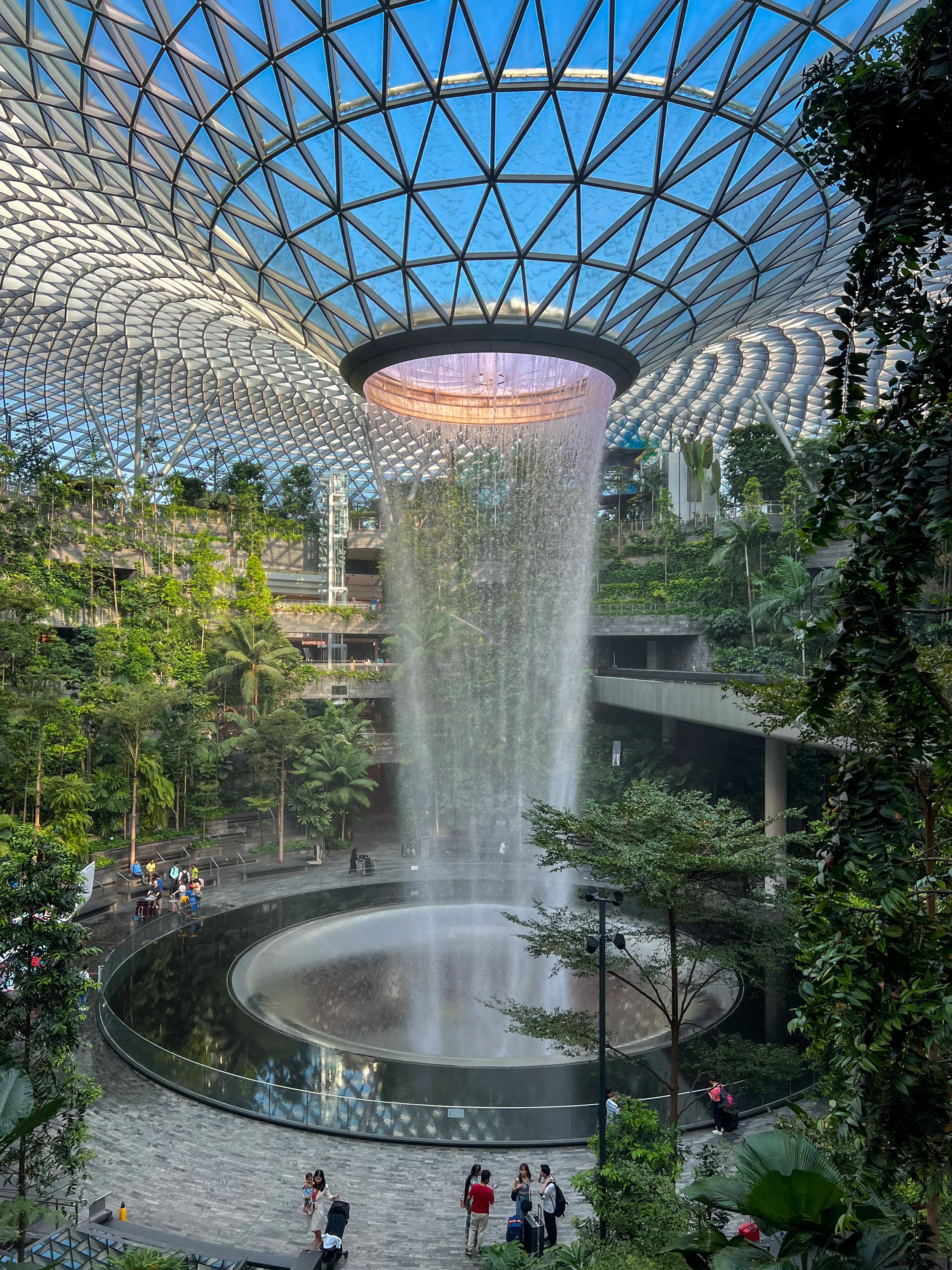
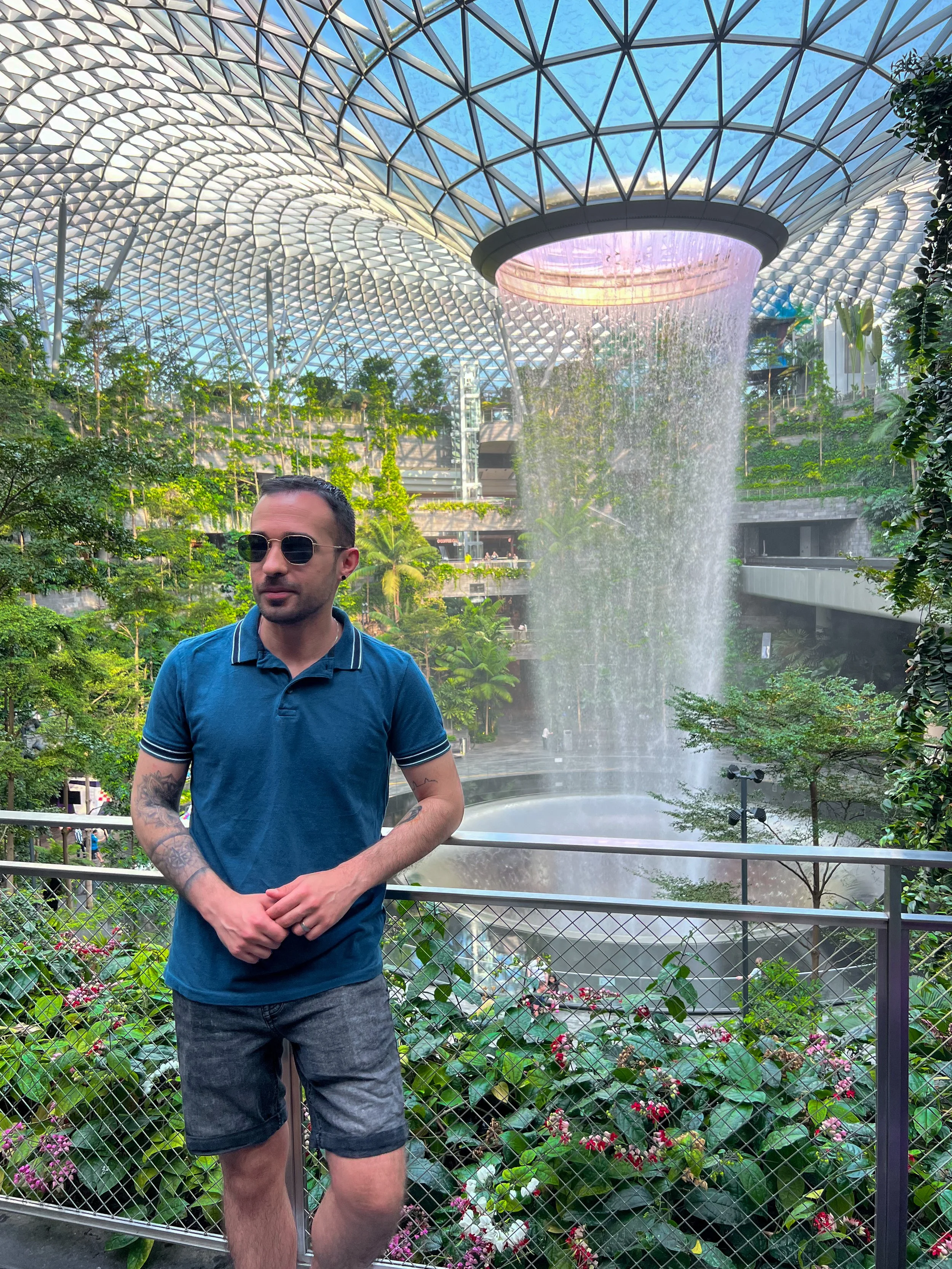
One of the most iconic features of Changi Airport is Jewel, a vast lifestyle hub that connects the terminals and offers an array of attractions. Opened in 2019, Jewel is home to the Rain Vortex, the world's tallest indoor waterfall at 40 meters (130 feet). The waterfall cascades through the centre of a stunning glass dome, surrounded by a lush indoor garden known as the Shiseido Forest Valley. Visitors can walk along the winding pathways that snake through the tropical greenery, offering a serene and immersive experience right in the middle of the airport.
Jewel also features the Canopy Park, where travellers can enjoy activities like bouncing on nets suspended in mid-air, navigating a hedge maze, or walking along glass-bottomed sky bridges. It’s the perfect place for families with kids or anyone looking for a bit of fun and relaxation before a flight. For those with a bit more time, the Changi Experience Studio offers an interactive digital experience, where visitors can learn about Singapore’s aviation history and test their piloting skills through simulations.
One of the most unique features of Changi Airport is its Butterfly Garden. This two-level sanctuary is home to over 1,000 tropical butterflies, offering a tranquil escape for nature lovers. The garden features flowering plants, lush greenery, and a cascading waterfall that creates a serene environment where travellers can unwind and enjoy the sight of butterflies in their natural habitat. It's the world’s first butterfly garden in an airport, another example of Changi’s innovative approach to enhancing passenger experience.
For those who love flowers, the Sunflower Garden offers a bright and cheerful space to relax. It features a stunning array of sunflowers and provides panoramic views of the runway, making it an ideal spot for plane-watching enthusiasts. The Cactus Garden and the Enchanted Garden also offer different botanical experiences, each with its own distinct charm.
Clarke Quay
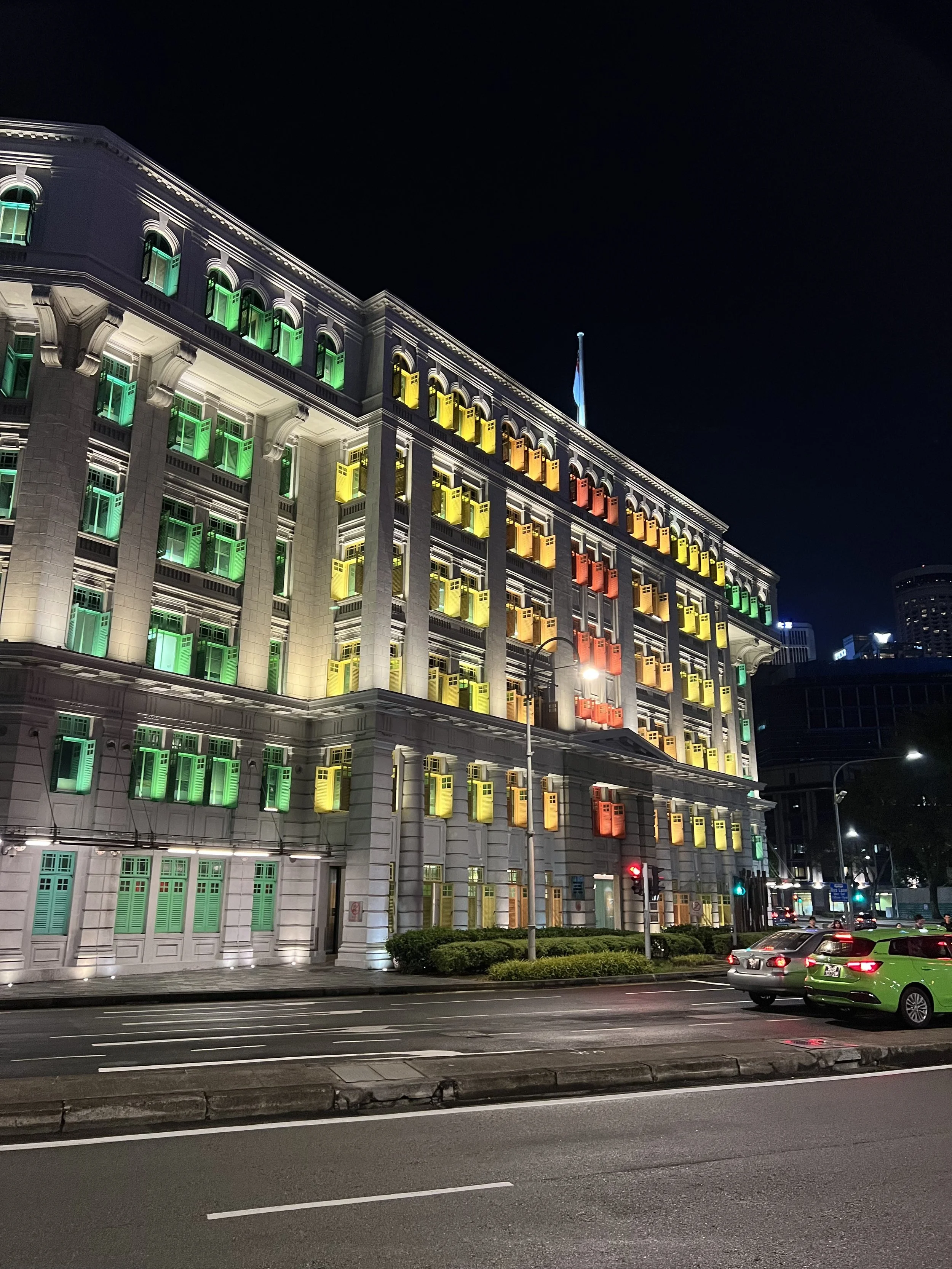
After a quick freshen-up at my hotel, I began my exploration of Singapore at Clarke Quay, the city’s vibrant riverside entertainment district. A hub for entertainment, dining, and nightlife, Clarke Quay seamlessly blends Singapore’s colonial past with its modern cosmopolitan charm. A visit here is a must for anyone wanting to experience the lively atmosphere, rich history, and diverse offerings that make this area so unique.
Clarke Quay derives its name from Sir Andrew Clarke, the second Governor of the Straits Settlements, who played a key role in positioning Singapore as a major port in Southeast Asia during the 19th century. The area’s history stretches back to Singapore’s early days as a bustling trading post. Clarke Quay was once the heart of Singapore’s commercial activity, with warehouses and boatyards lining the river. Cargo boats, known as "bumboats," transported goods along the river, and the quay became a vital centre for trade.
For dinner, Clarke Quay offers a wide variety of options, but when in Singapore, trying the Chili Crab is a must. This iconic dish is a fiery, sweet, and savoury experience that embodies Singapore’s culinary spirit. The combination of fresh crab doused in a rich chili-tomato sauce was the perfect introduction to Singapore’s famed food scene. For dessert, you have to try a durian-flavoured ice cream—a divisive choice given durian’s pungent smell, but one that is uniquely Singaporean.
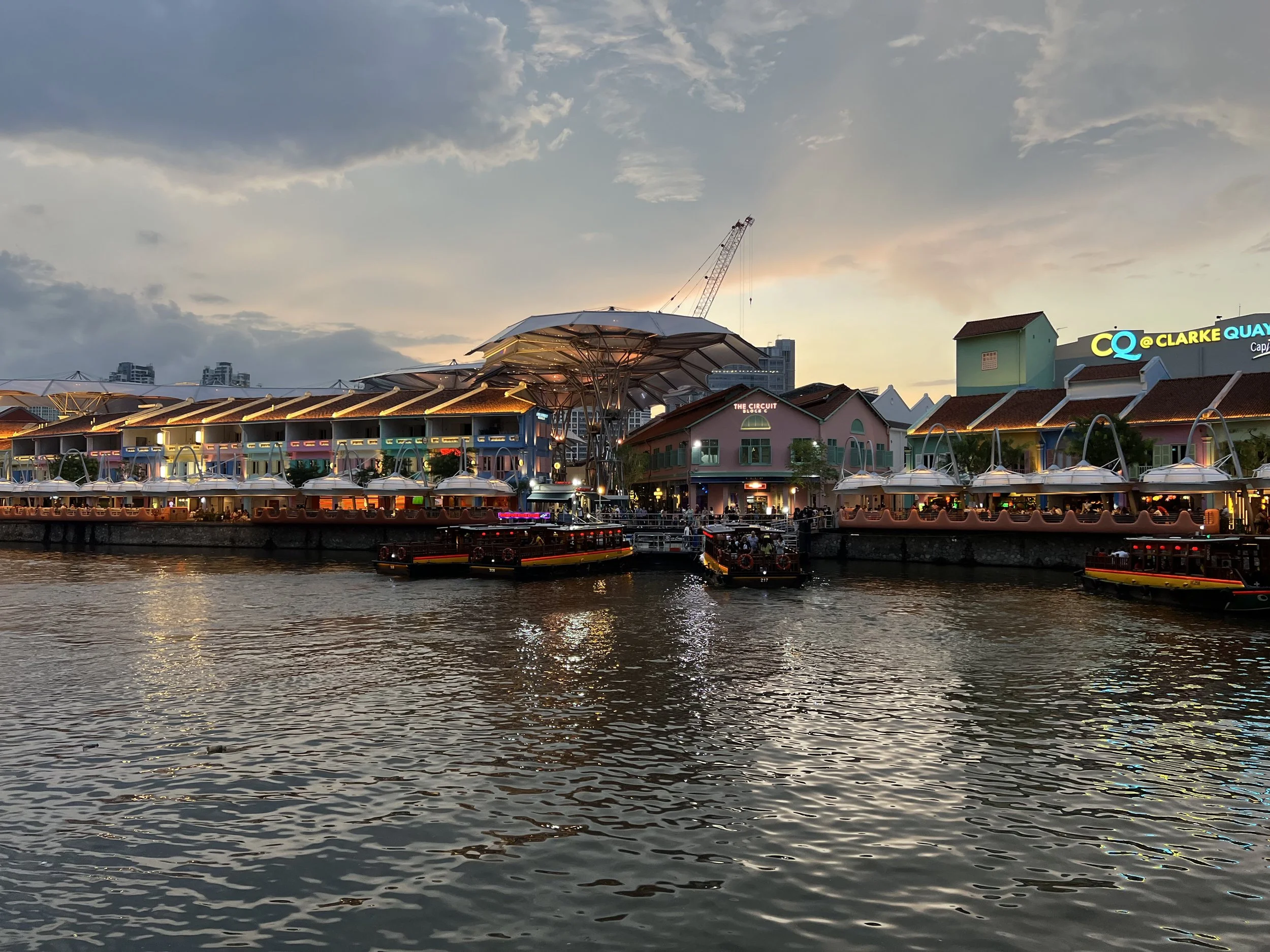
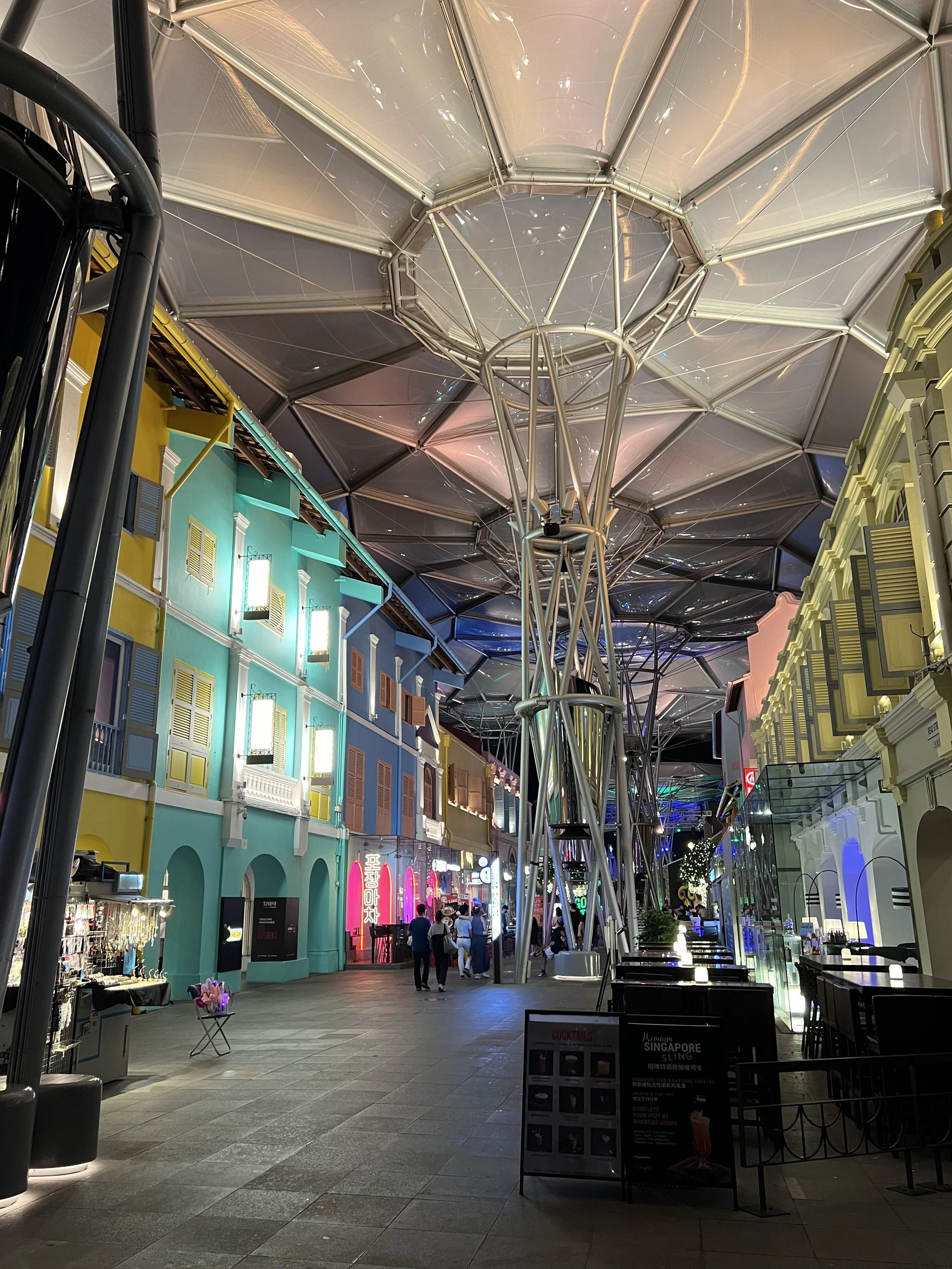
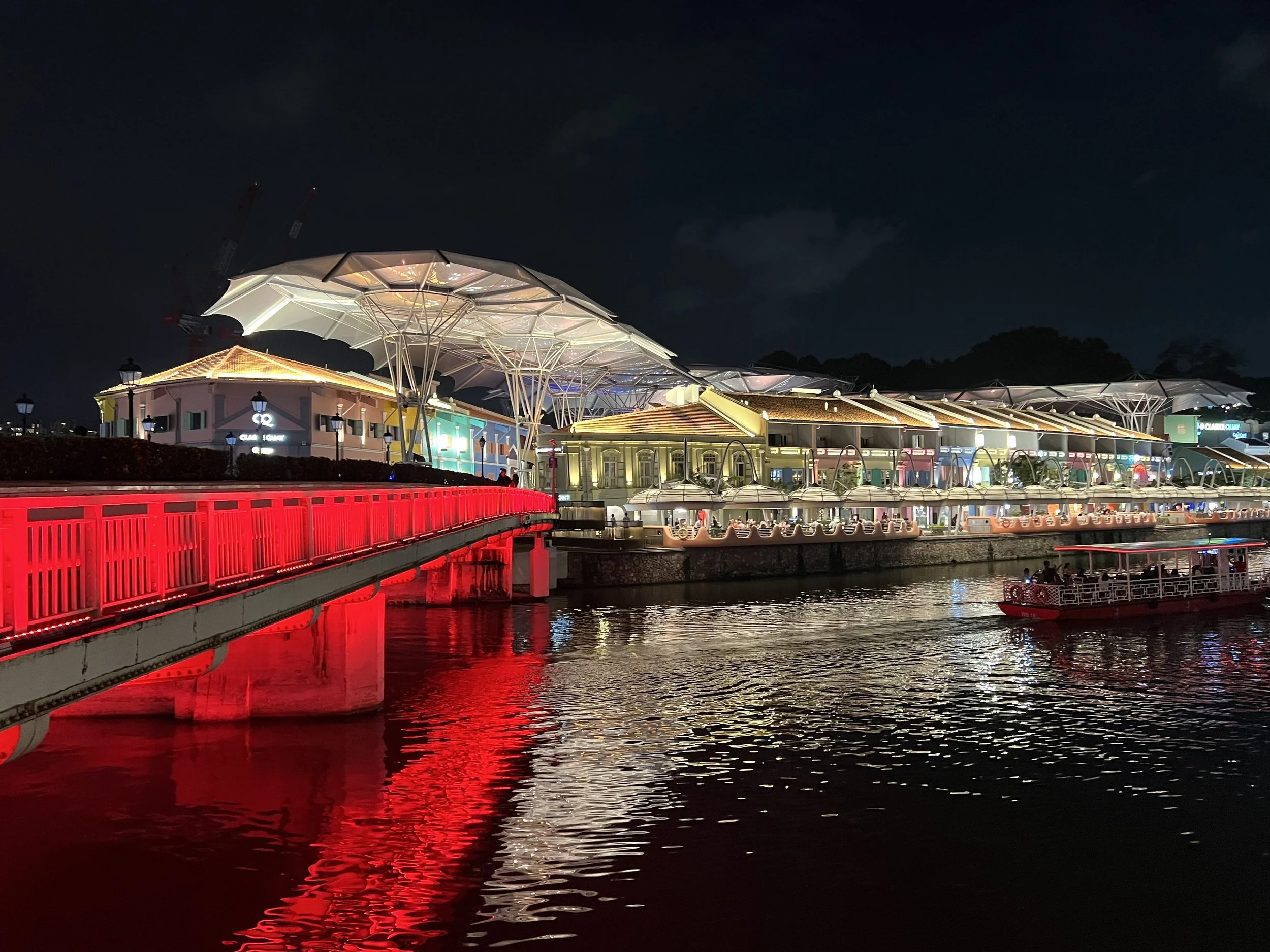
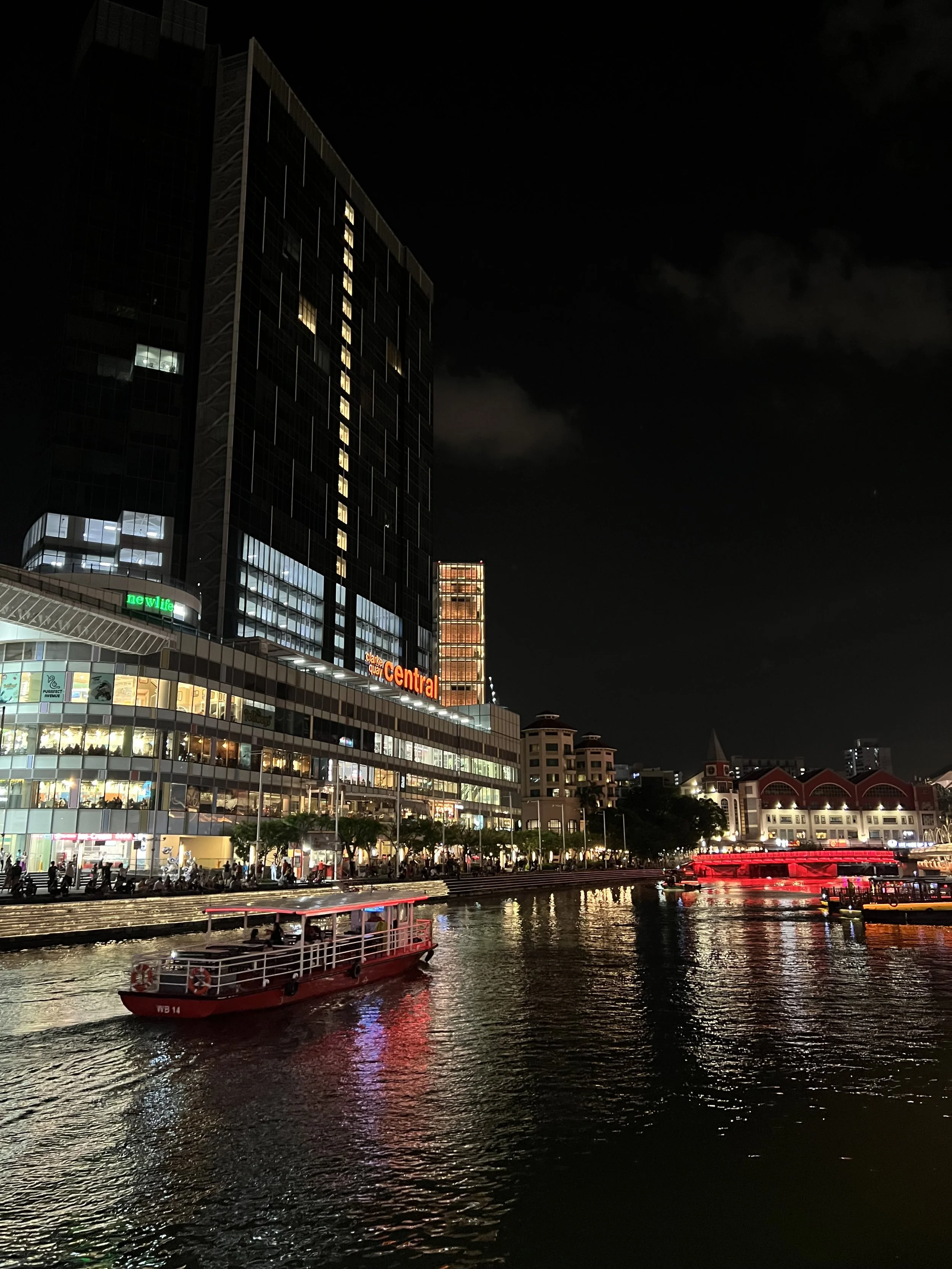
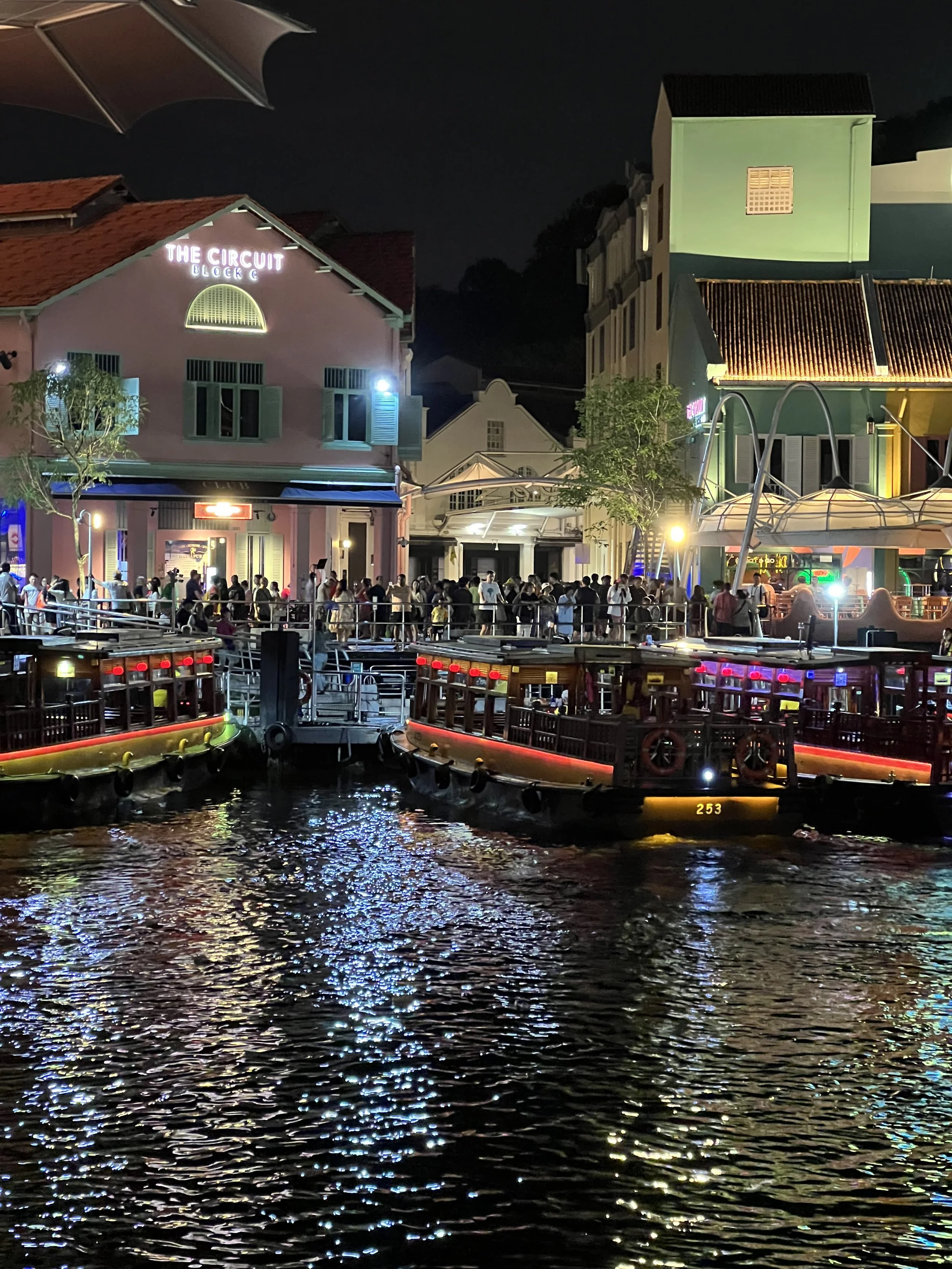
As you drift down the river, you’ll get a sense of how the waterway was central to Singapore’s development. The bumboats, which were once used to ferry goods between ships and the warehouses along the quay, now serve as a charming mode of transport for tourists, providing a unique perspective on the city. Whether during the day or at night when the skyline is illuminated, a river cruise offers a peaceful and scenic escape from the bustling streets of Clarke Quay.
For adventure enthusiasts, Clarke Quay offers more than just dining and shopping. The G-Max Reverse Bungy, a thrilling bungee ride, is one of the area’s standout attractions for those seeking an adrenaline rush. The ride catapults you into the air at breakneck speeds, offering a unique view of the surrounding cityscape, although it’s certainly not for the faint of heart! There’s also the GX-5 Extreme Swing, a similar attraction that offers a more horizontal rush, where participants are swung through the air like a pendulum.
Day 2
Merlion
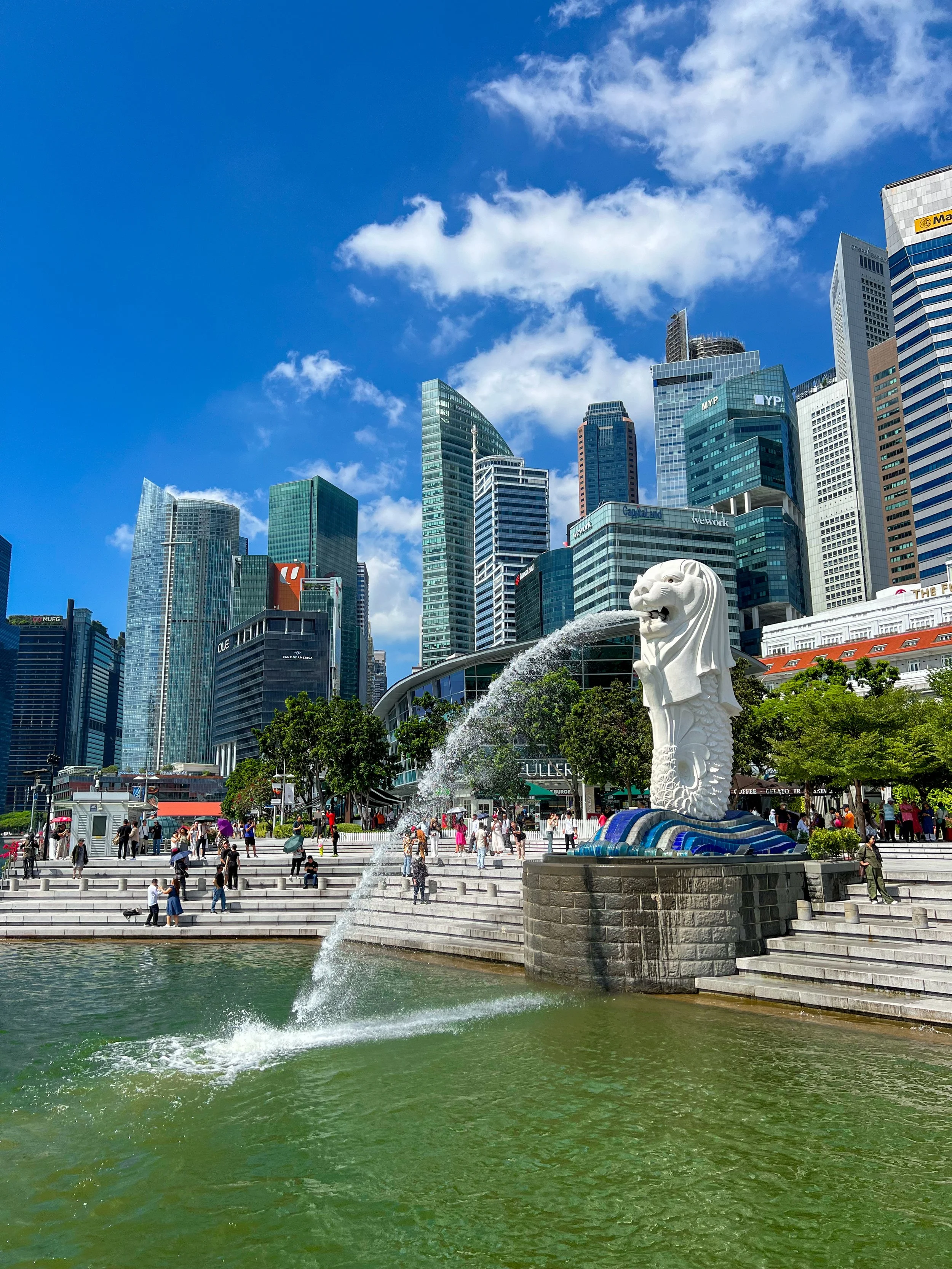
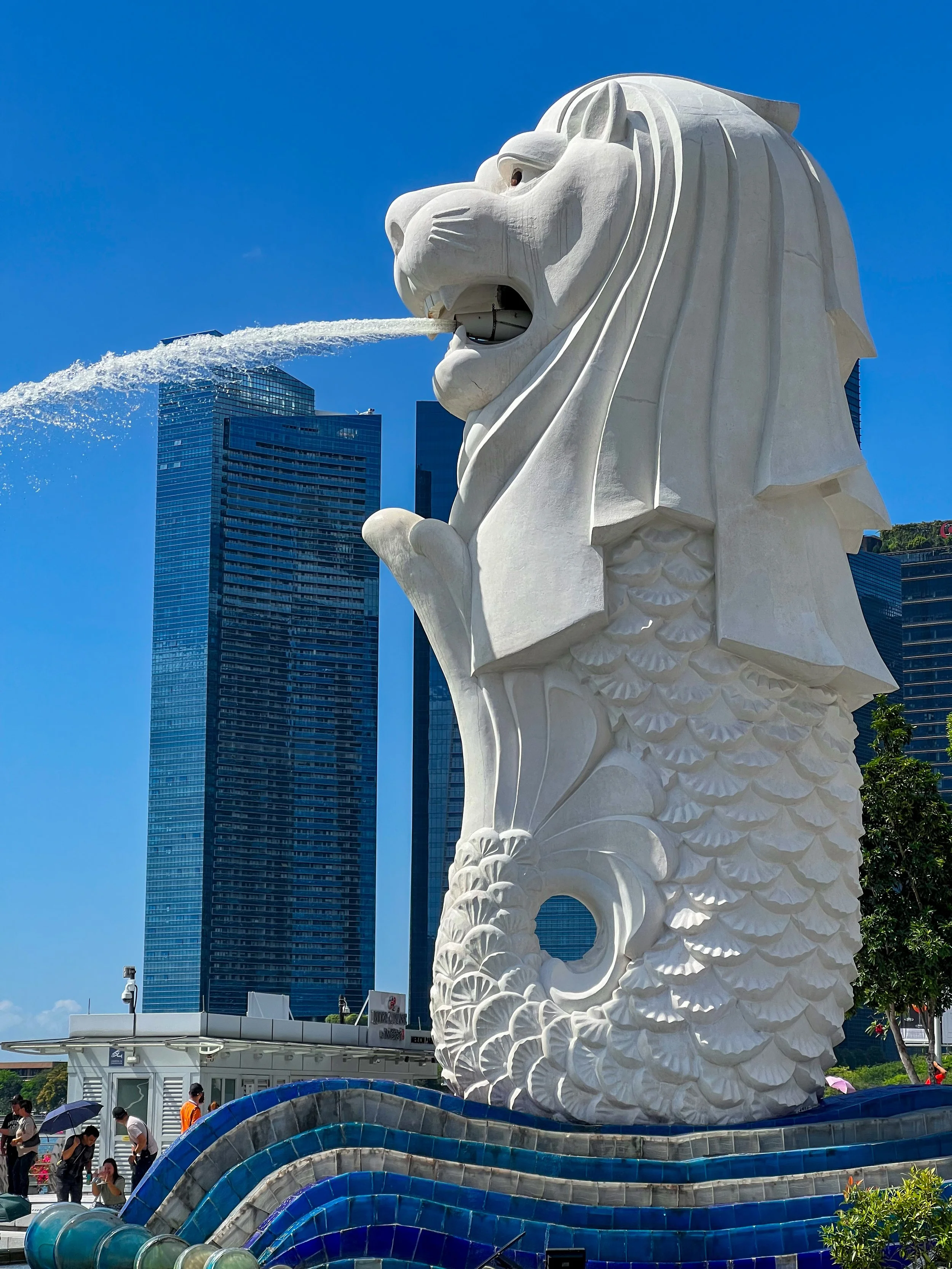
The second day in Singapore was dedicated to the city's most iconic sights and tourist attractions. I started the morning at Merlion Park, home to the emblematic Merlion statue. Standing at the mouth of the Singapore River in Merlion Park, this iconic statue is both a tourist attraction and a reflection of Singapore’s history. The Merlion, with the head of a lion and the body of a fish, represents Singapore’s origins as a fishing village, while the lion’s head is a nod to the country’s original name, "Singapura," meaning "Lion City" in Malay.
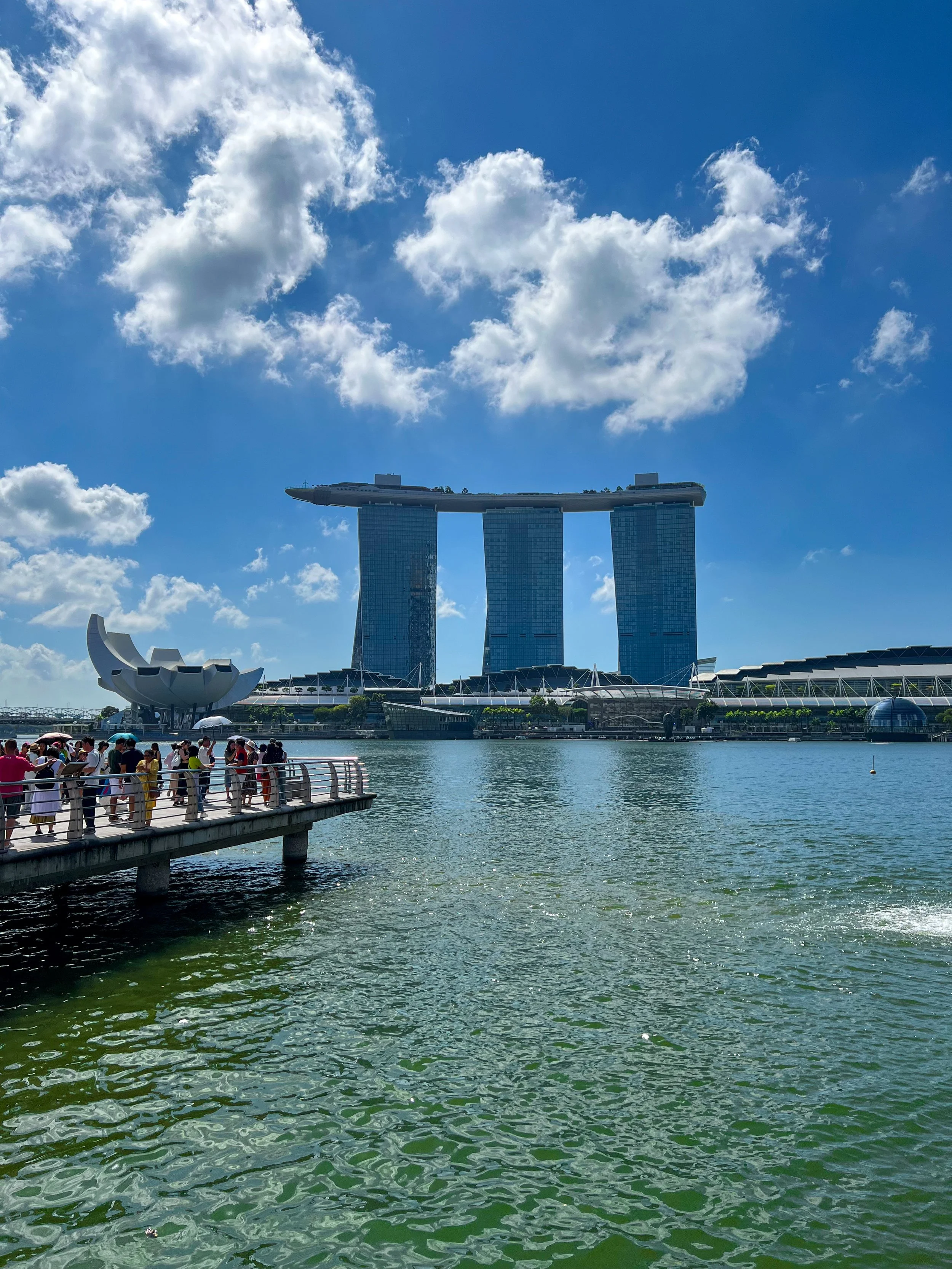
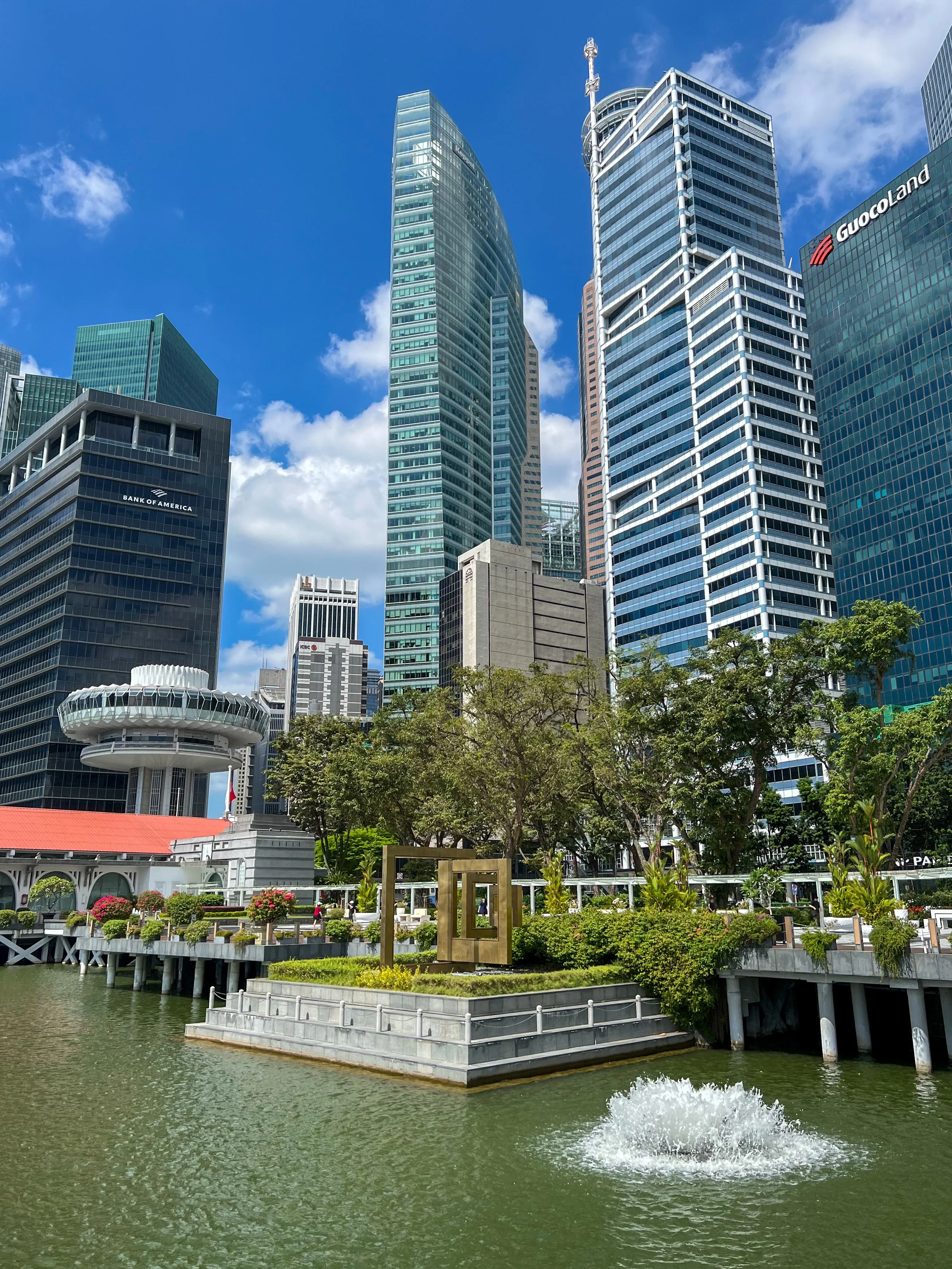
The 8.6-meter-tall Merlion statue spouts water into Marina Bay, creating a picturesque setting that has become a popular photo spot for visitors. Built in 1972, the Merlion was initially located at the Esplanade Bridge but was relocated to its current site at Merlion Park in 2002 to offer more visibility. The park offers stunning views of Singapore’s Marina Bay Sands, the ArtScience Museum, and the city's glittering skyline, making it an ideal location for both day and night visits.
In addition to taking photos with the Merlion, you can enjoy a leisurely walk along the waterfront promenade or relax at nearby cafés. The statue's enduring symbolism as a guardian of prosperity makes it not just an attraction but a vital piece of Singapore’s cultural and historical narrative.
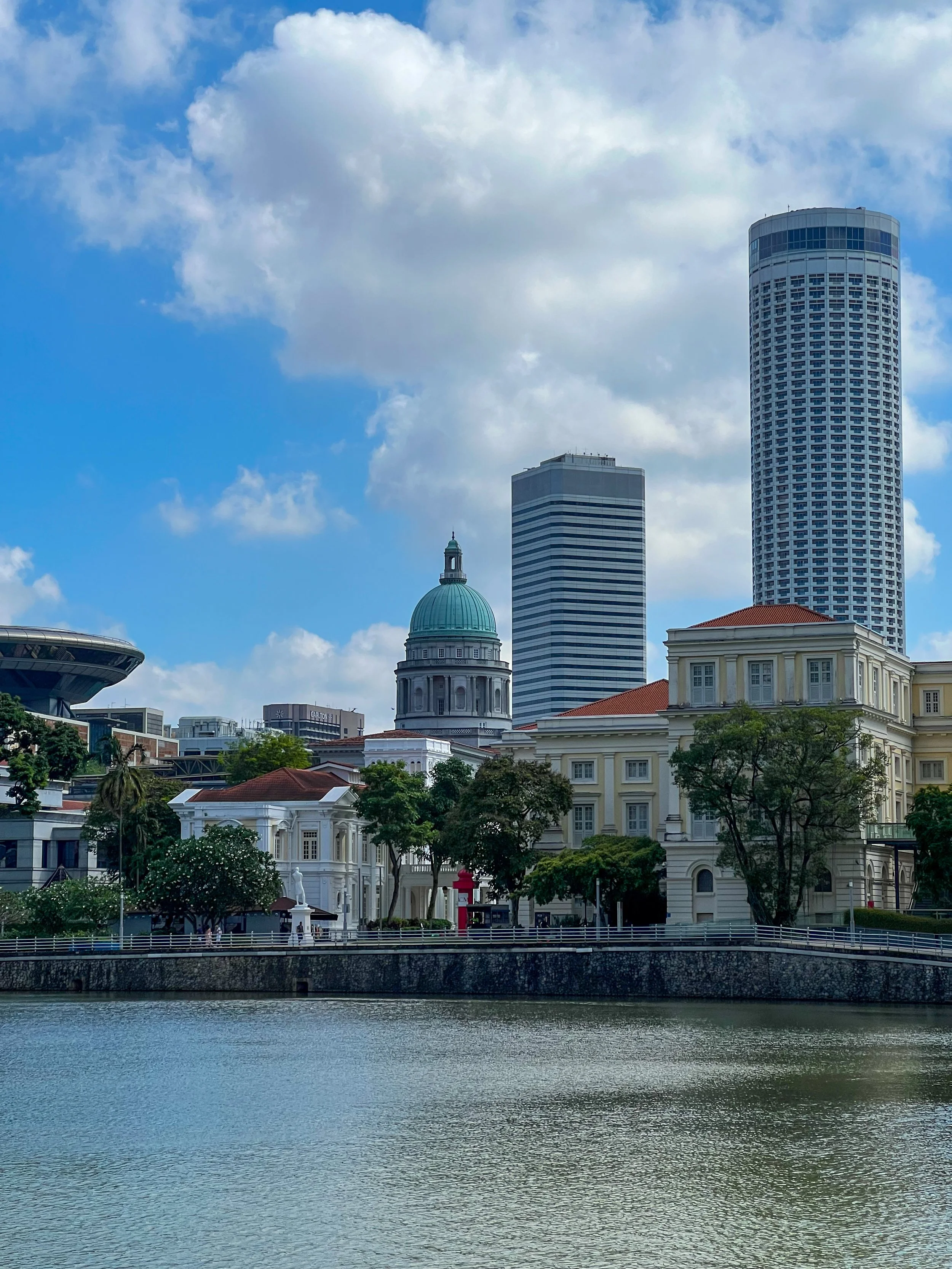
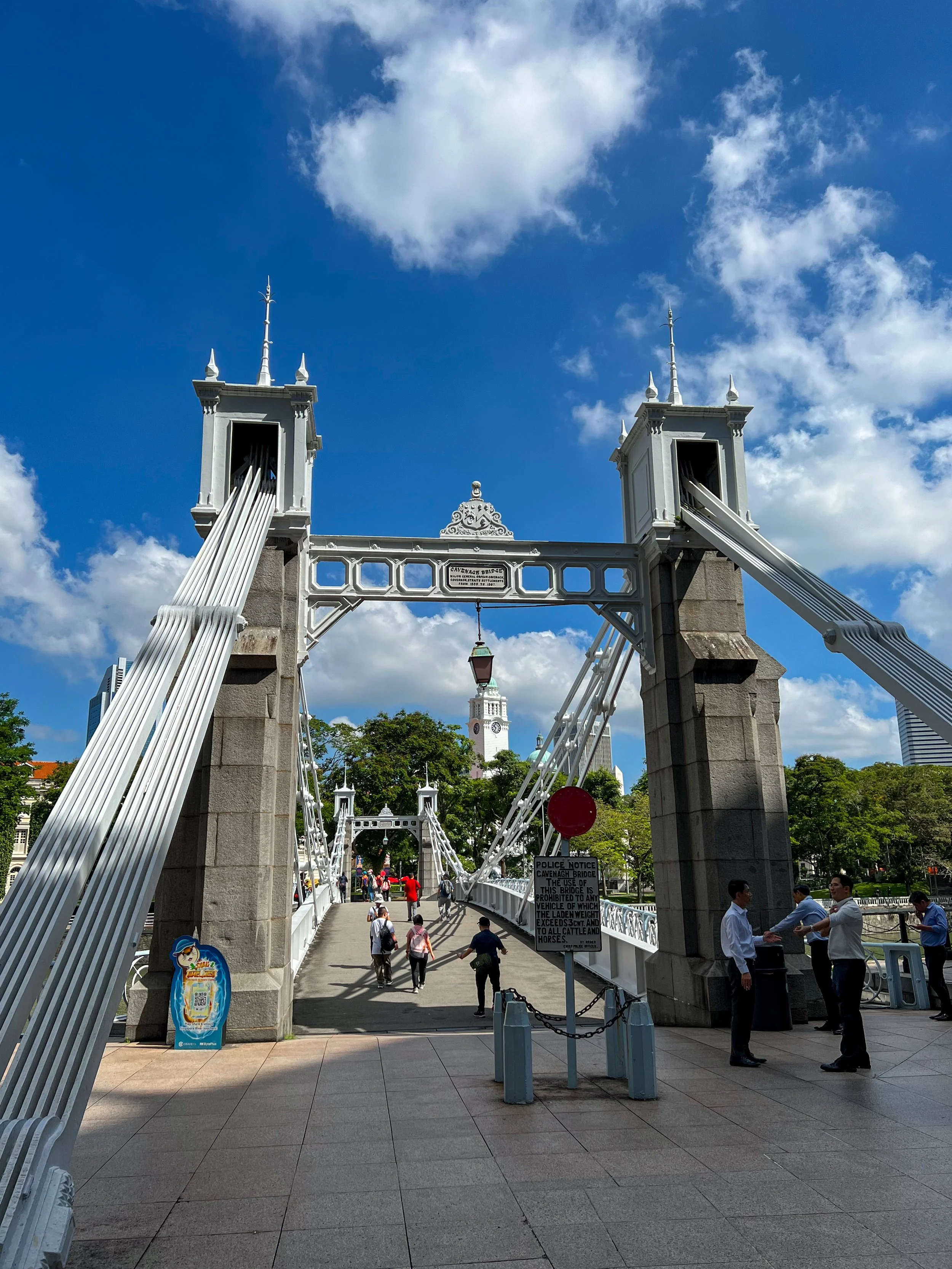
Marina Bay Sands
From Merlion Park, it’s an easy walk to the Singapore Marina, one of the city’s most iconic and futuristic areas, offering a blend of stunning architecture, world-class attractions, and historical significance. Originally a coastal area, the bay underwent massive land reclamation in the 1970s, transforming it into a glittering urban space that reflects Singapore’s modern success while paying homage to its maritime roots.
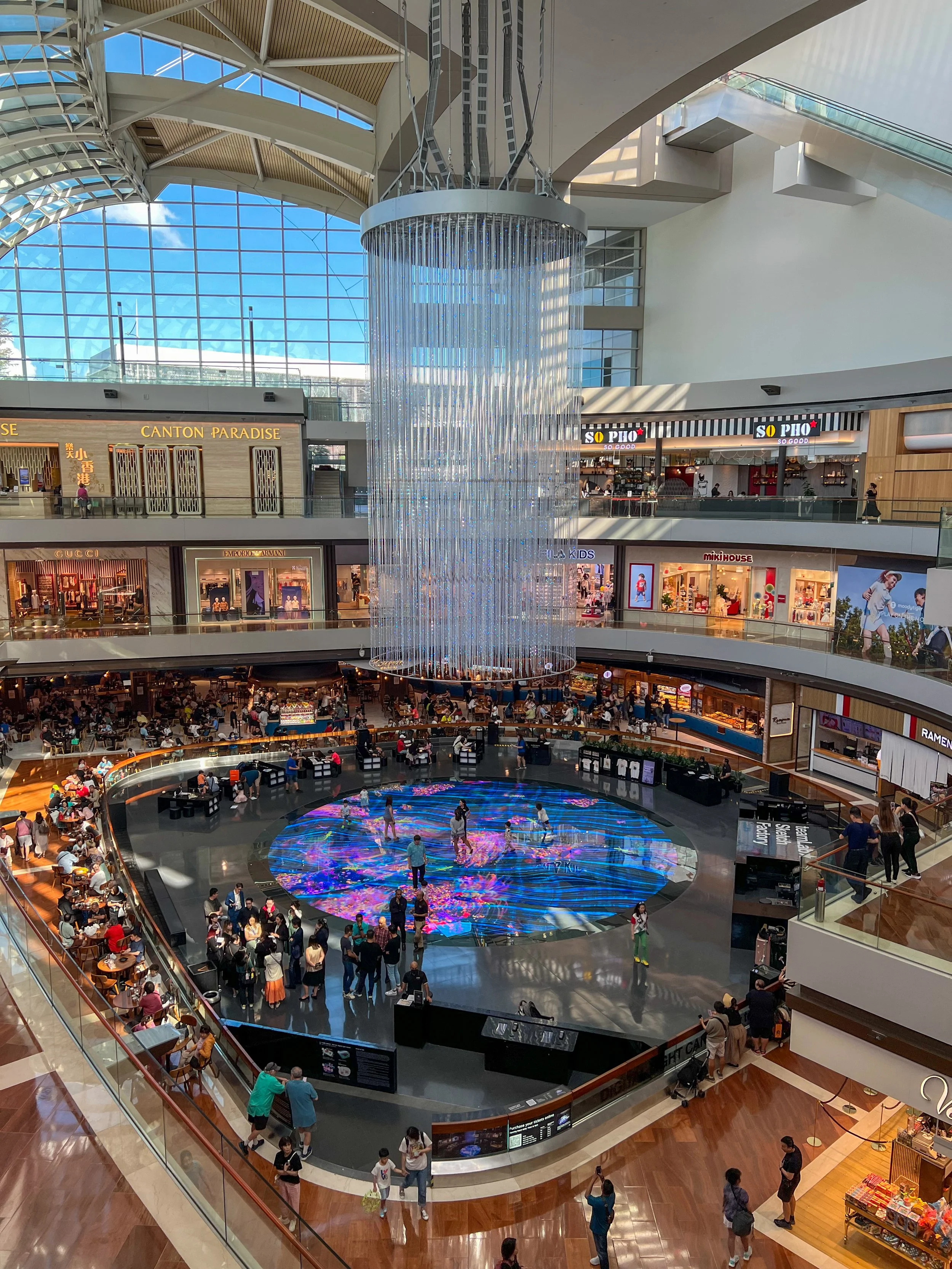
One of the main highlights of Marina Bay is Marina Bay Sands, an architectural marvel known for its three towering structures topped by the Sands SkyPark. The SkyPark offers panoramic views of the entire city and is home to the world’s highest infinity pool. Visitors can also enjoy fine dining, luxury shopping, and world-class entertainment at the Sands complex, which houses a casino, theater, and shopping mall.
Marina Bay is also home to The Helix Bridge, a stunning pedestrian bridge that mimics the shape of a DNA strand and lights up beautifully at night. From here, you can walk to the ArtScience Museum, a lotus-shaped building that hosts cutting-edge exhibitions at the intersection of art and science.
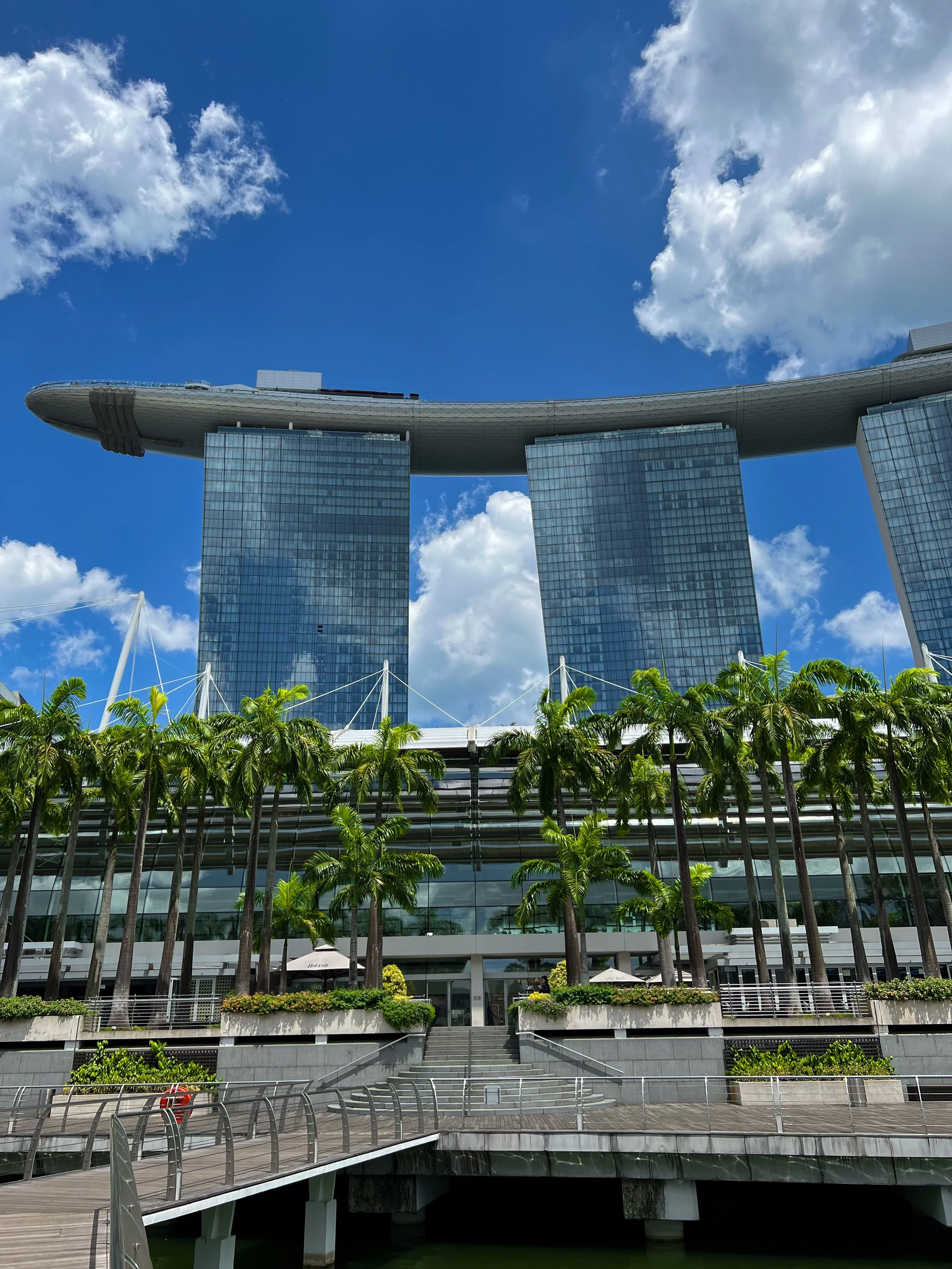
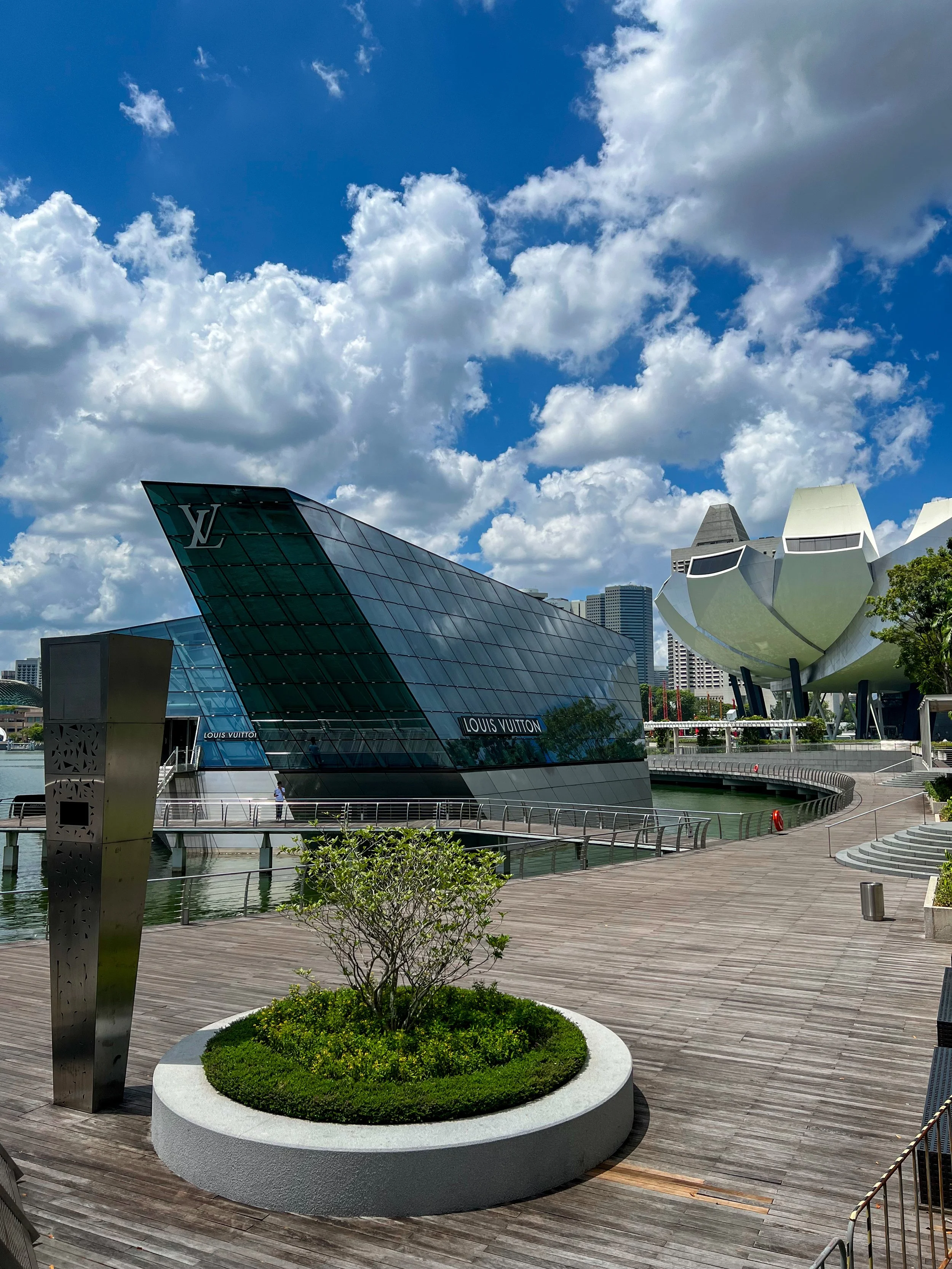
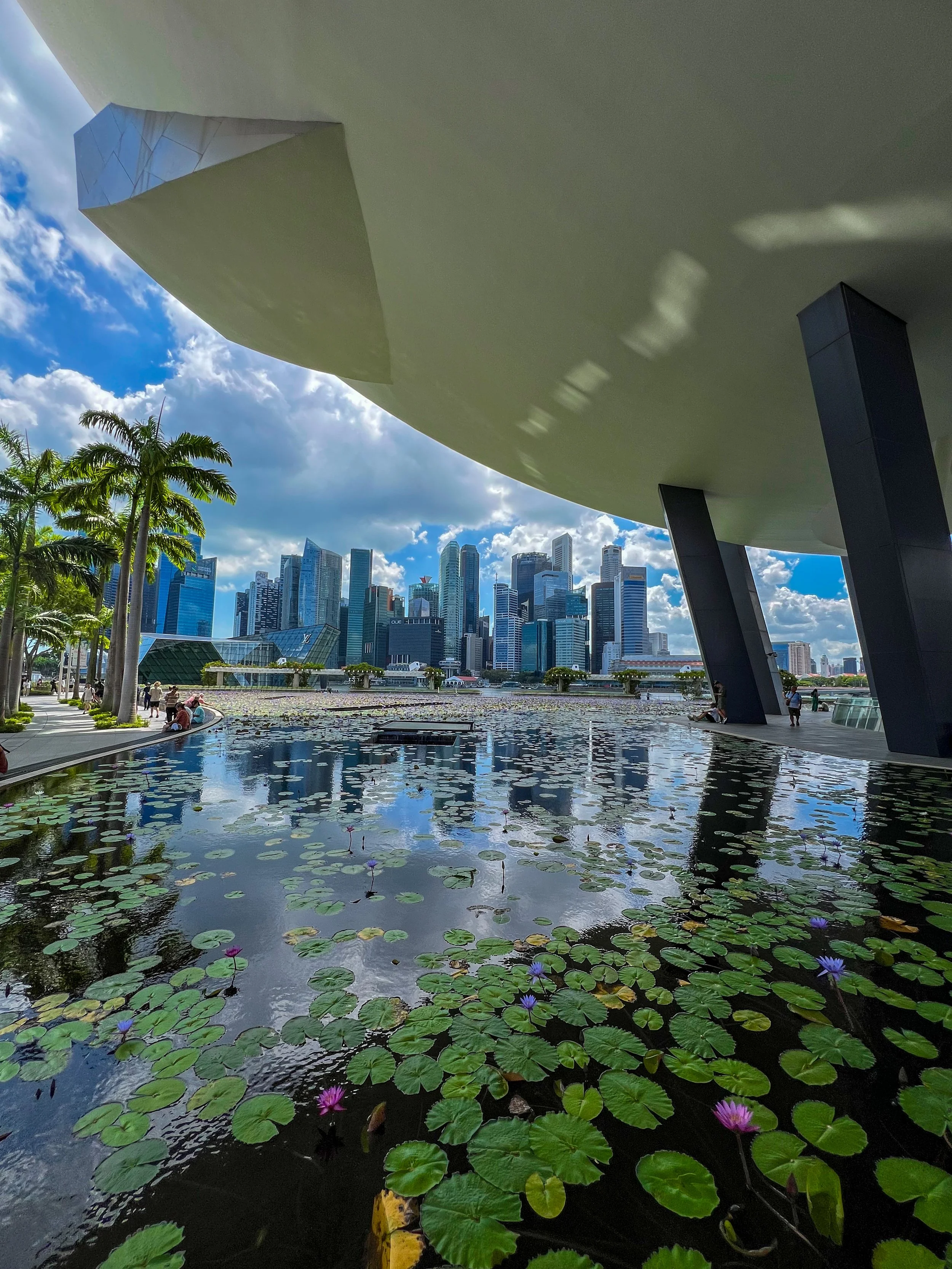
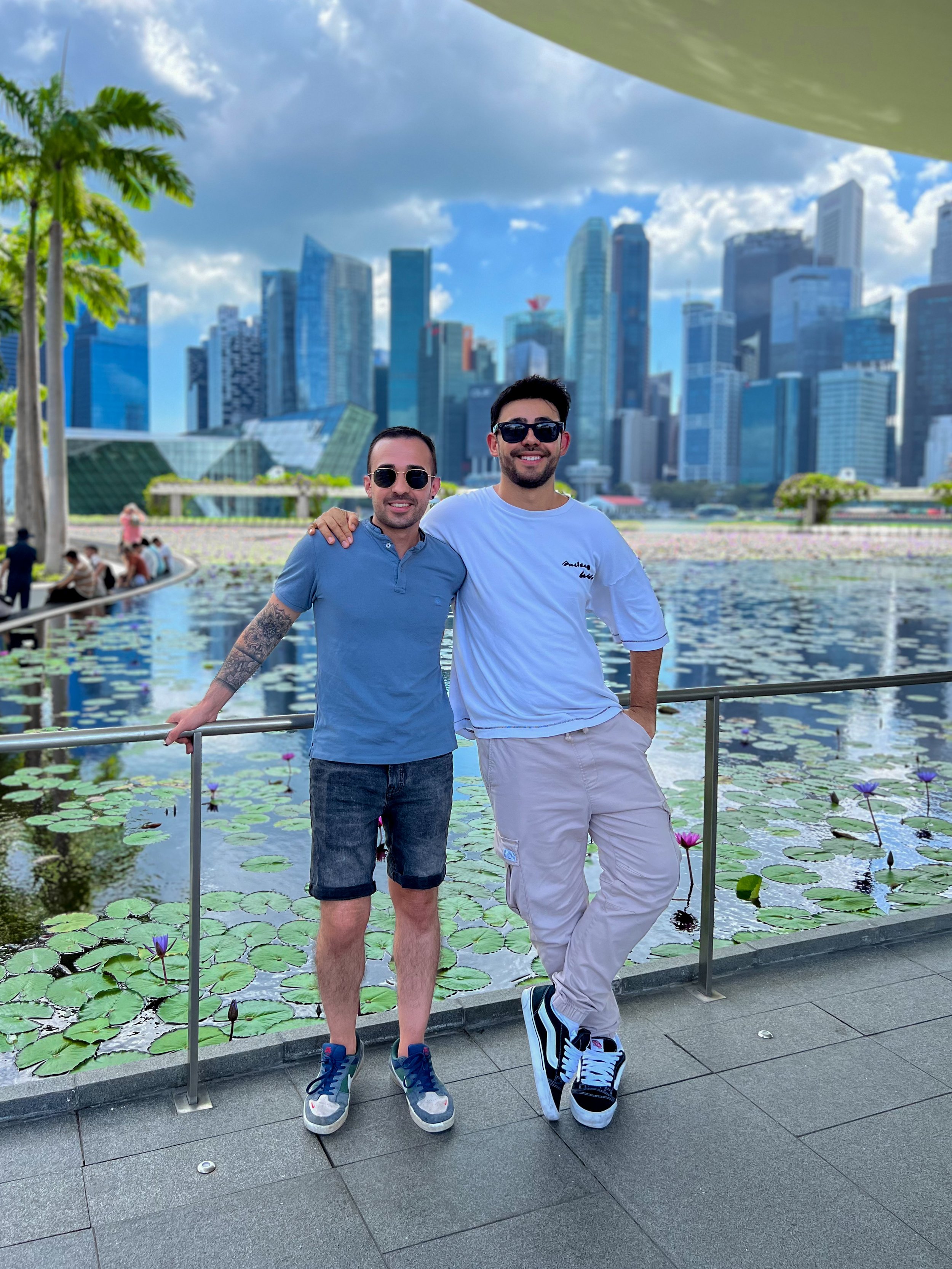
A visit to Marina Bay Sands wouldn’t be complete without venturing up to the SkyPark Observation Deck. This is where you can get one of the most breathtaking 360-degree views of Singapore. From here, I could see not only the bay and skyline but also out to the Singapore Strait and Sentosa Island. I spent some time here, just soaking in the view and appreciating how far Singapore has come in such a short time.
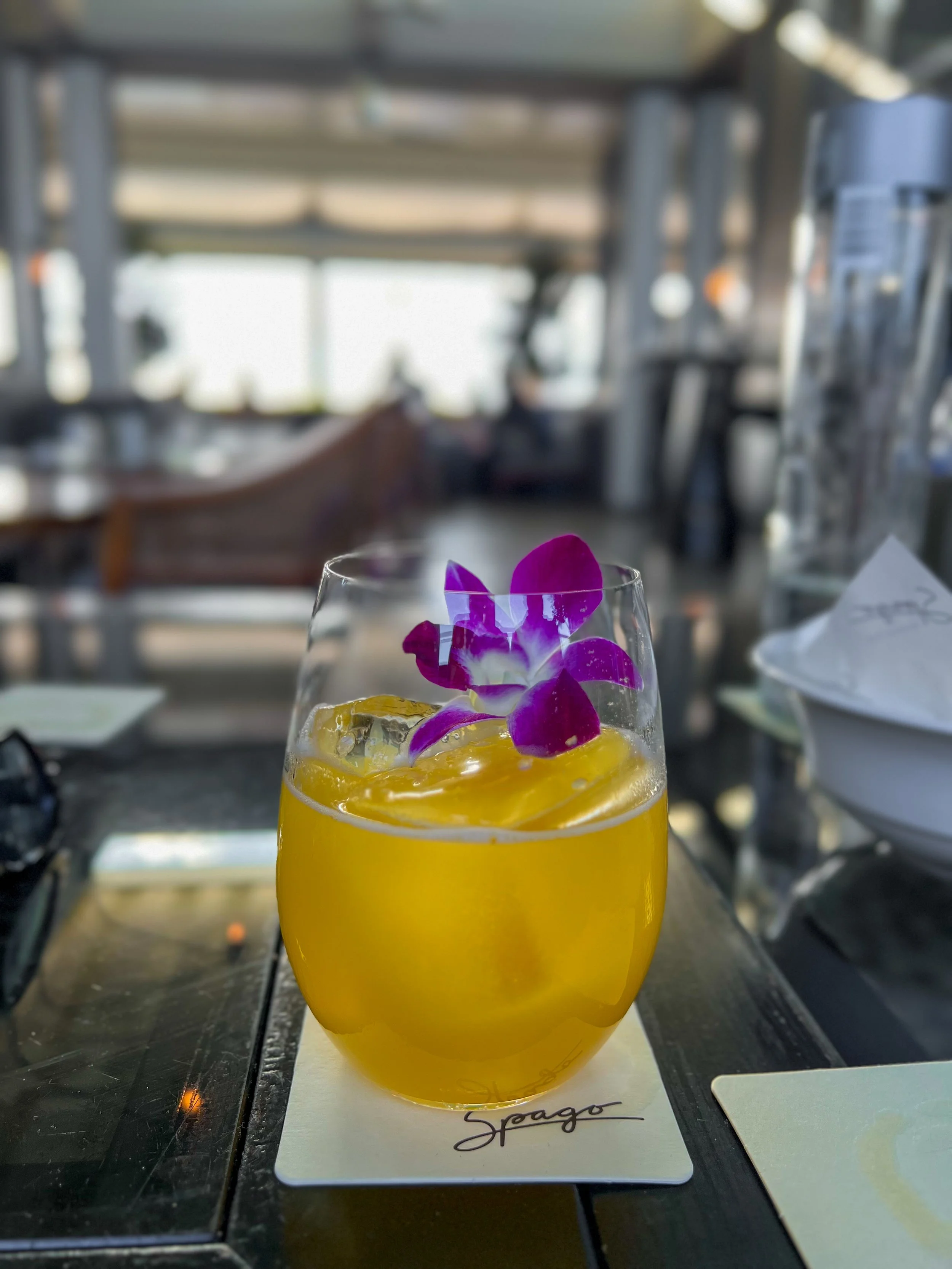
Lunchtime led me to one of the many fine dining options in Marina Bay Sands. I chose Spago, a renowned restaurant by celebrity chef Wolfgang Puck located on the 57th floor of Marina Bay Sands. Dining here is an experience in itself, with spectacular views, world-class service, and a menu that blends Californian cuisine with Asian influences. The food was exquisite, and enjoying it while gazing out over the city gave me a profound sense of just how cosmopolitan Singapore has become.
Gardens by the Bay
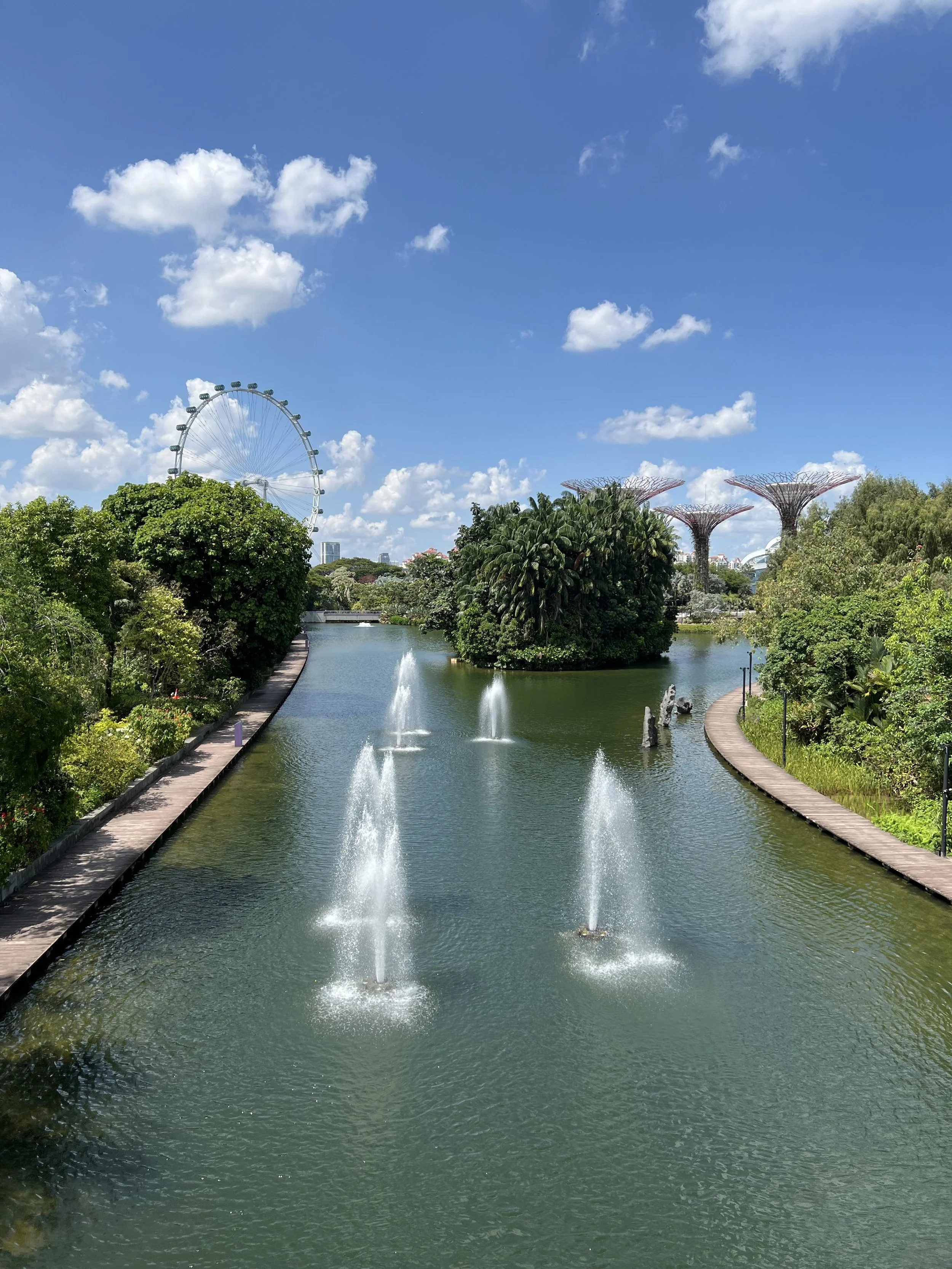
After lunch, I headed to Gardens by the Bay, one of Singapore’s most impressive and futuristic attractions, offering a blend of lush greenery, innovative design, and environmental sustainability. Opened in 2012 as part of Singapore’s plan to become a “City in a Garden,” the 101-hectare garden complex showcases the country's commitment to urban greenery and environmental innovation. Located adjacent to Marina Bay, it’s an oasis of natural beauty that attracts millions of visitors every year.
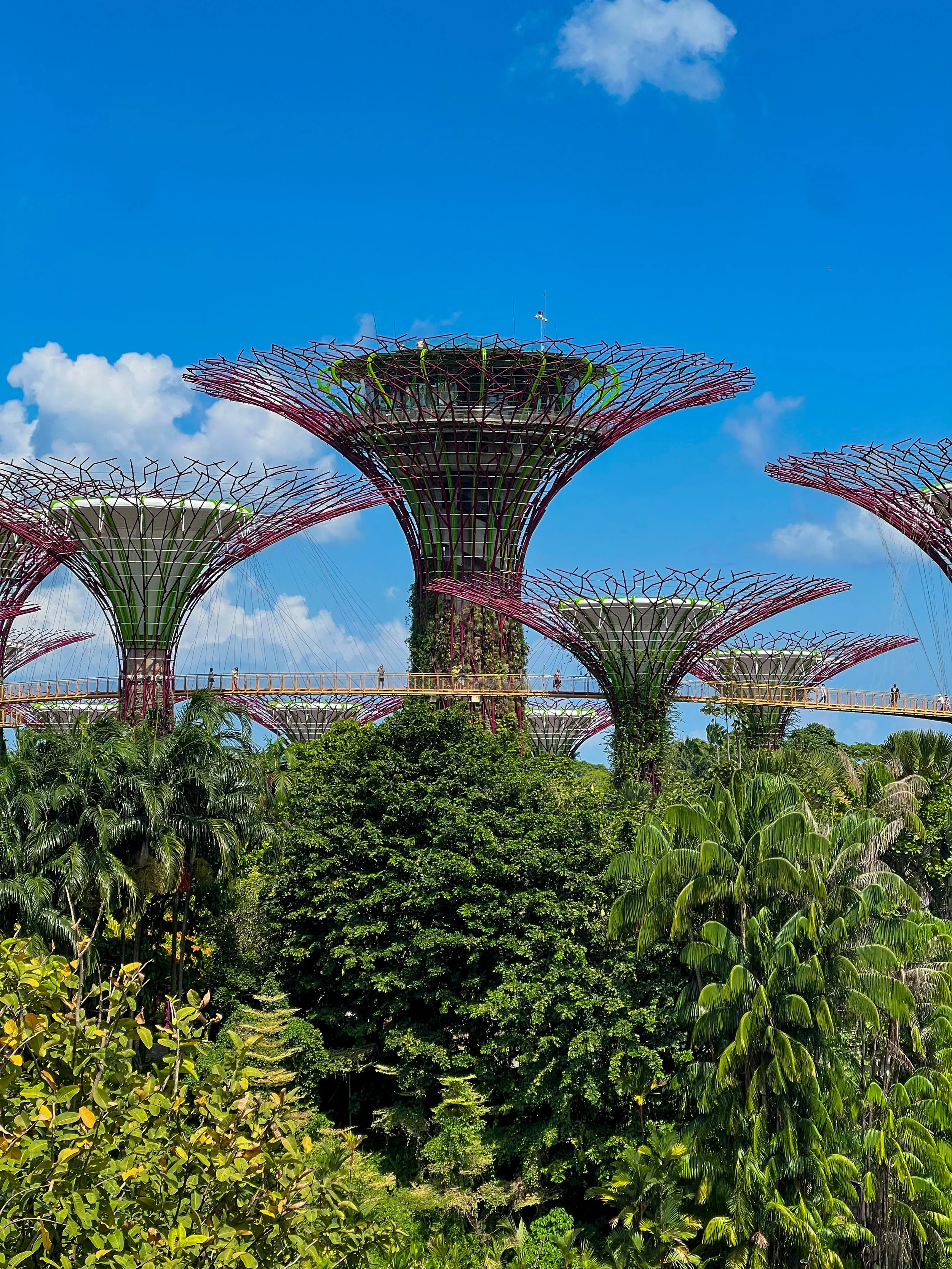
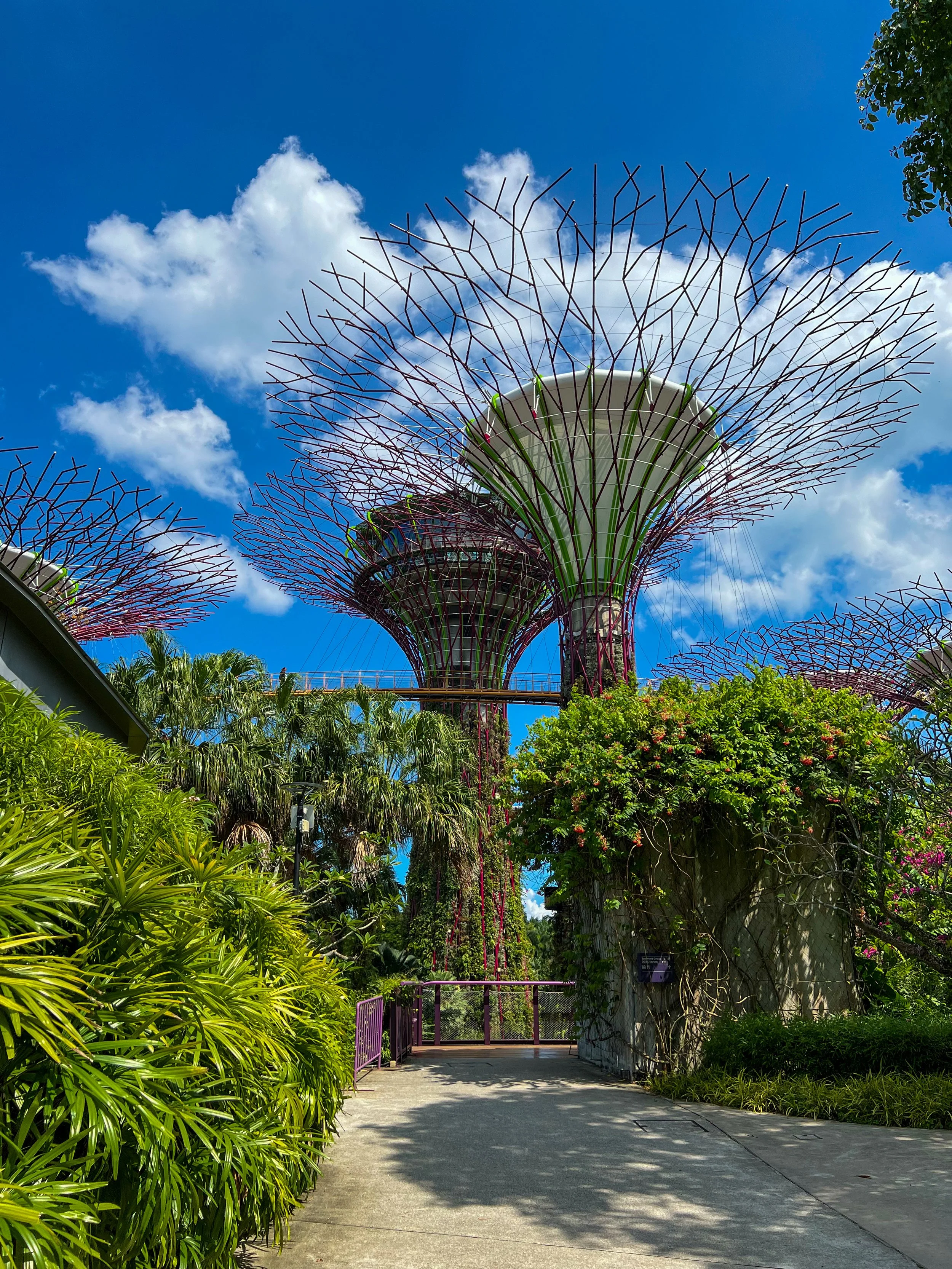
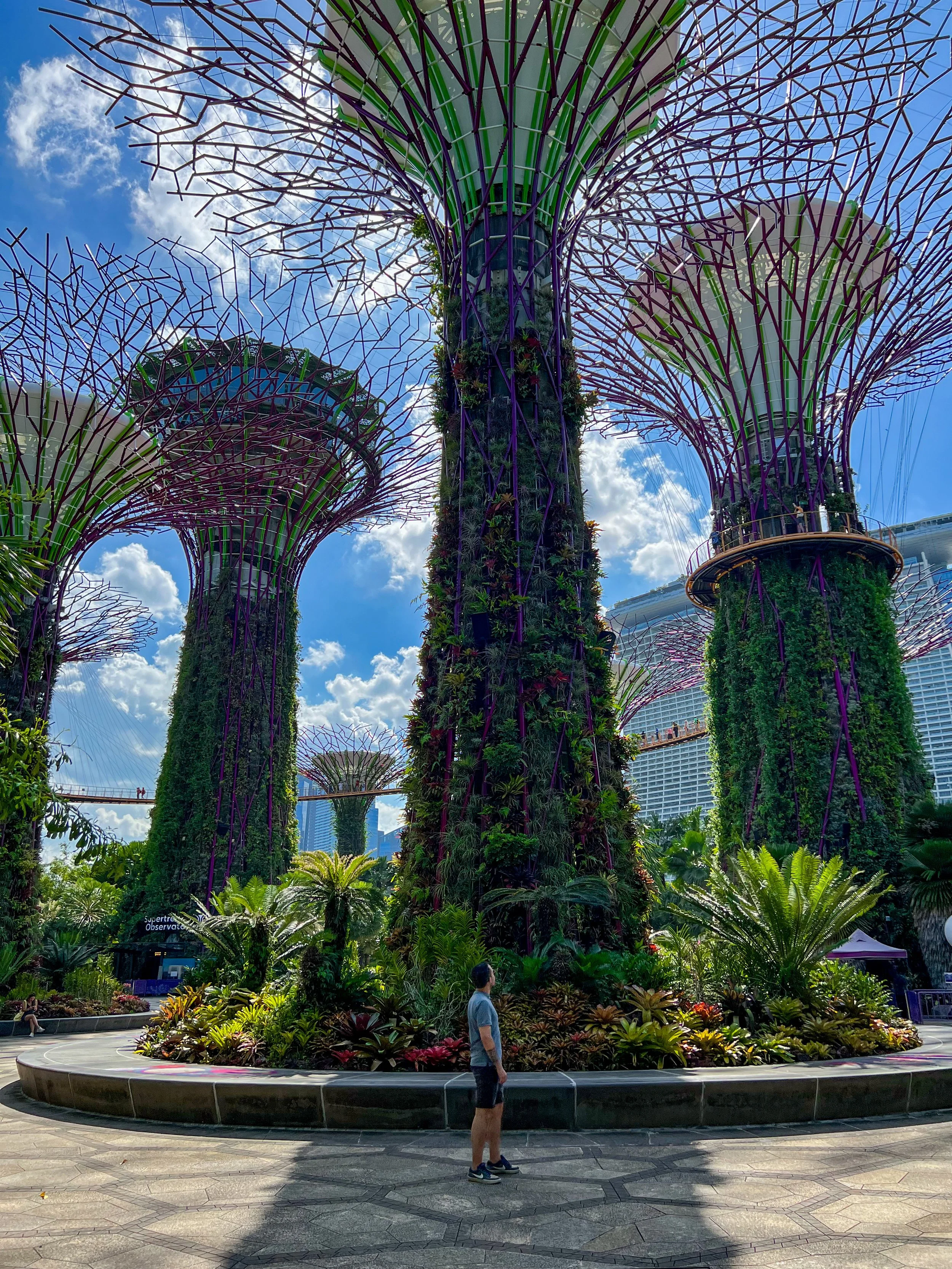
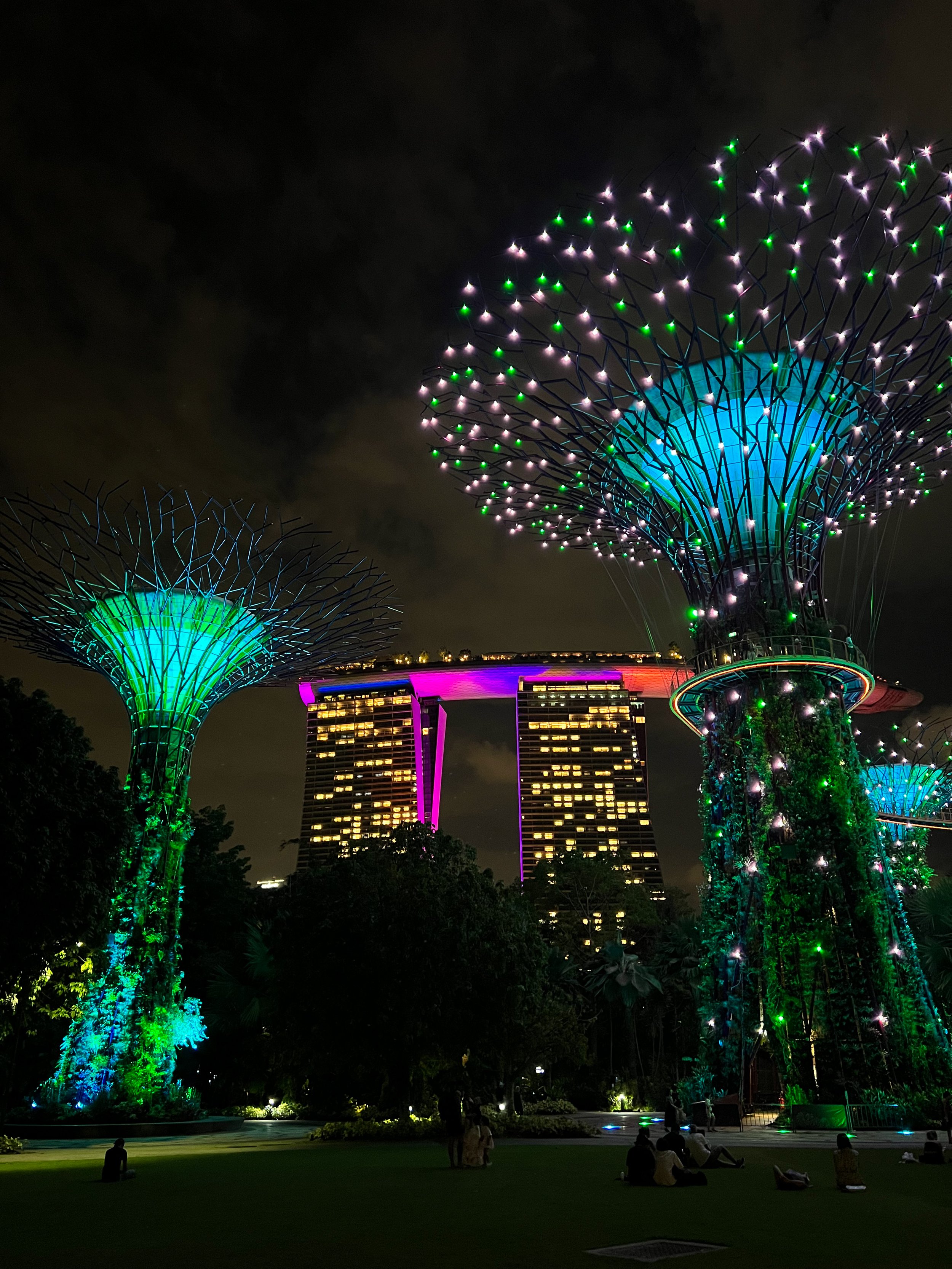
The Supertree Grove is the most iconic feature of Gardens by the Bay. These towering, tree-like vertical gardens range between 25 and 50 meters in height, dominating the landscape with their futuristic design. Covered in a variety of plants like orchids, ferns, and vines, the Supertrees are more than just aesthetic; they are part of the garden’s sustainable ecosystem, generating solar energy and collecting rainwater. The highlight is the OCBC Skyway, a 128-meter aerial walkway that connects some of the Supertrees, offering visitors a bird's-eye view of the gardens and the Marina Bay skyline.
Two other must-visit attractions in Gardens by the Bay are the Flower Dome and the Cloud Forest, both housed in massive glass conservatories. The Flower Dome is the world’s largest glass greenhouse, displaying exotic plants from Mediterranean and semi-arid climates. Inside, you'll find a variety of beautiful displays that change seasonally, ensuring something new with each visit.
Meanwhile, the Cloud Forest mimics a tropical highland environment, complete with a 35-meter-tall indoor waterfall, the tallest of its kind when it first opened. The lush vegetation, cool mist, and towering waterfall create a surreal atmosphere, offering visitors a unique chance to explore different ecological zones as they ascend the mountain via walkways.
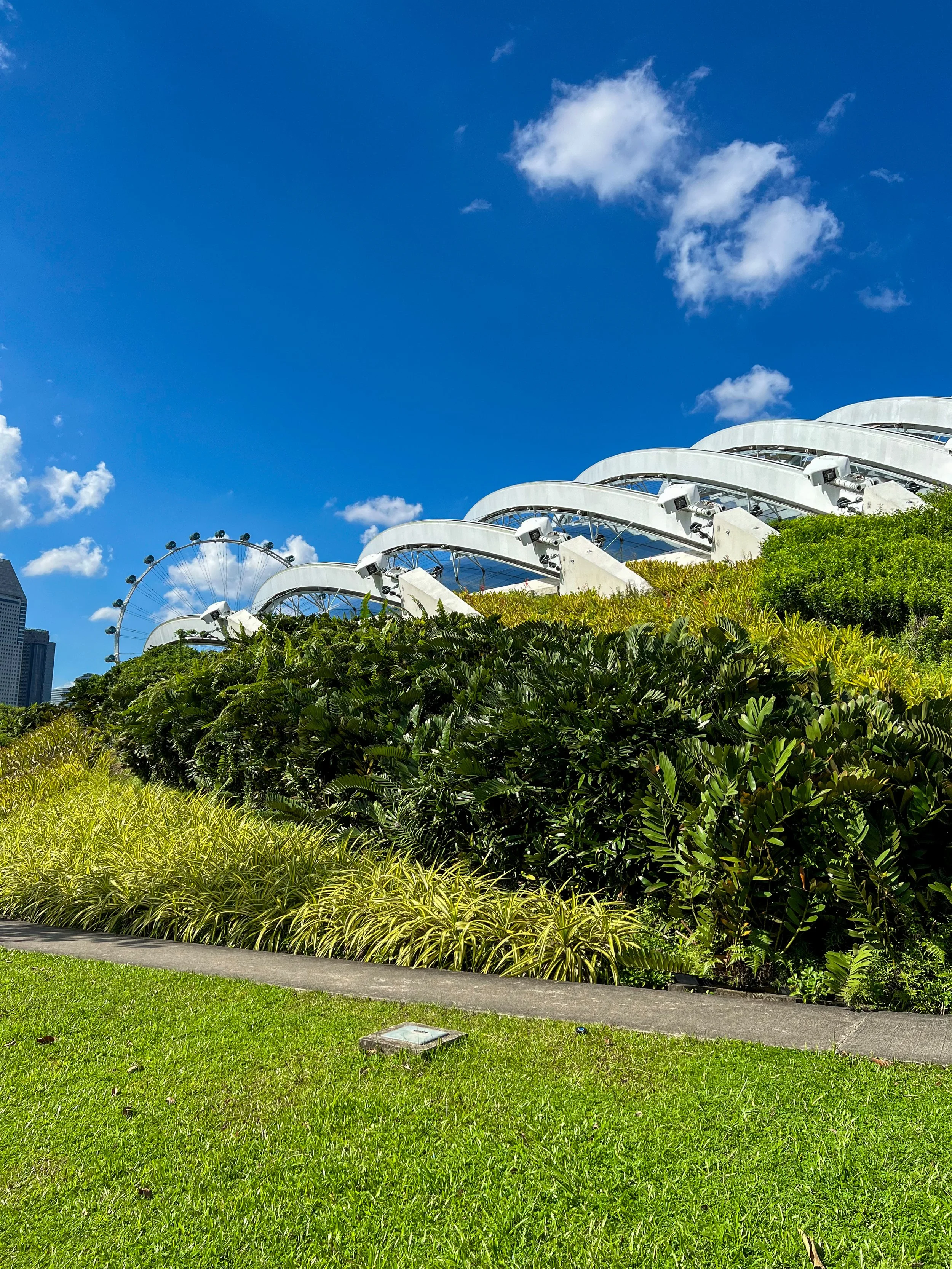
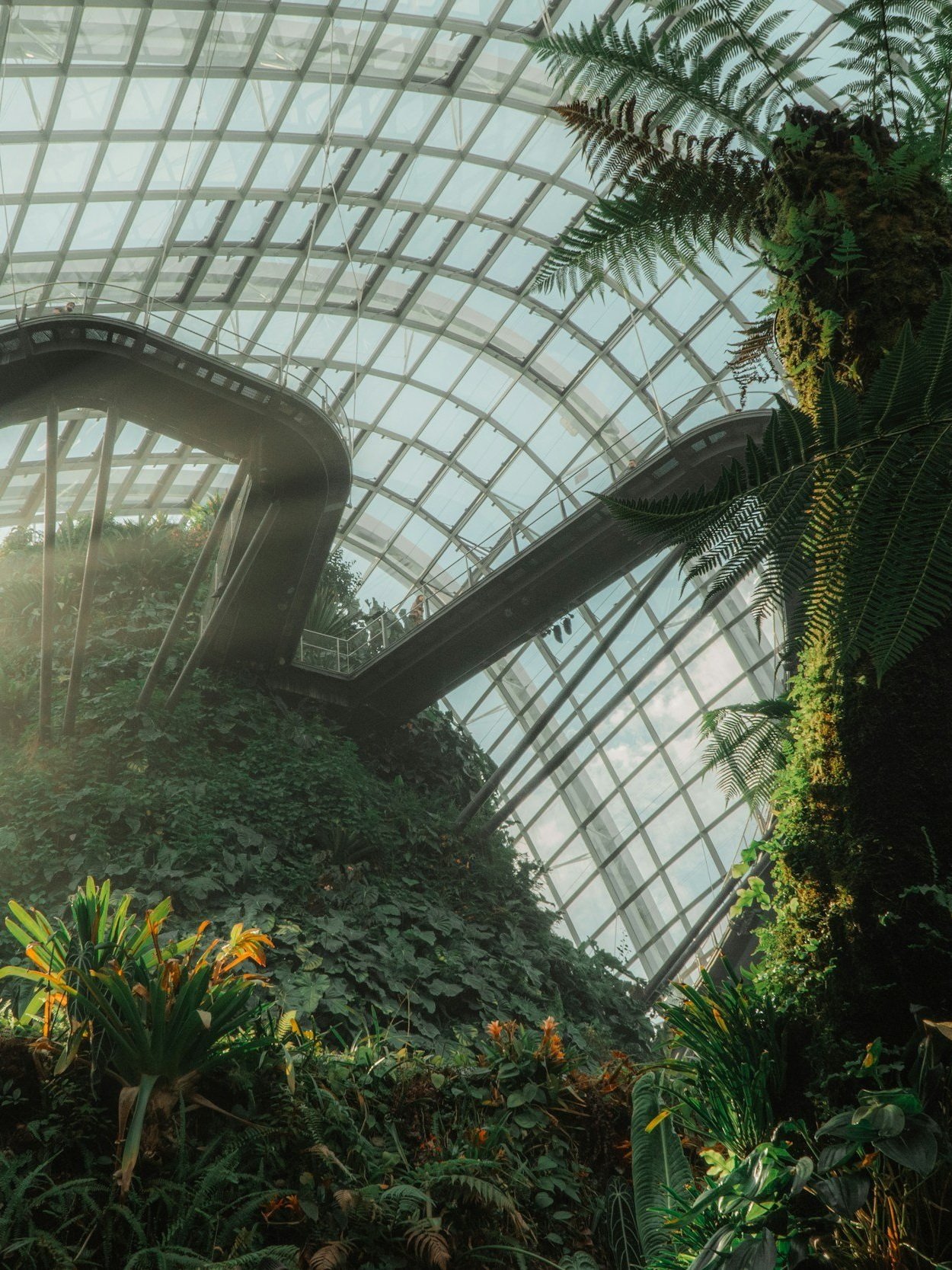
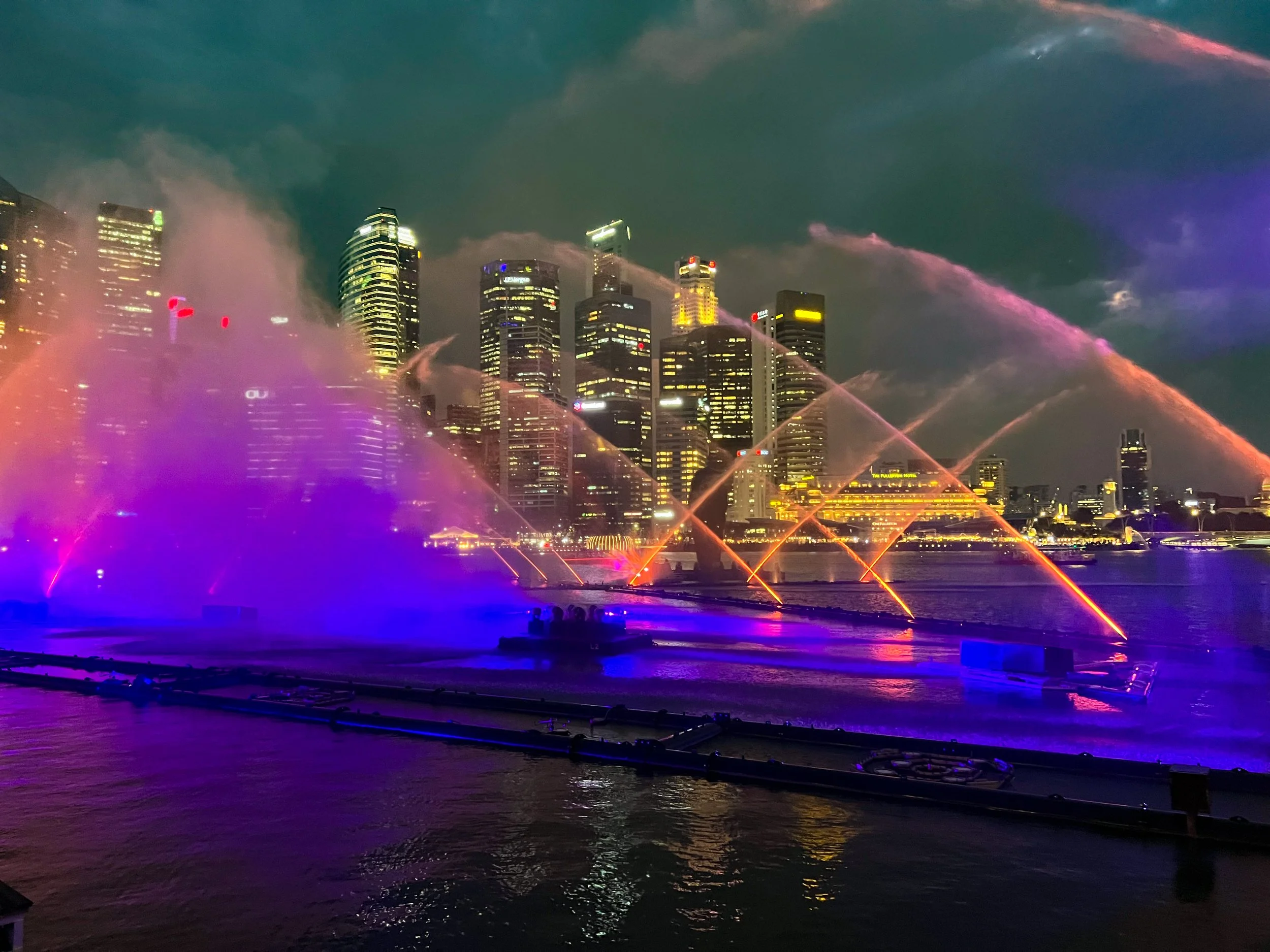
As night falls, you can’t miss Singapore’s two most spectacular light shows—the Spectra Light and Water Show at Marina Bay Sands and the Garden Rhapsody at Gardens by the Bay—offer visitors unforgettable experiences that blend cutting-edge technology with artistic creativity. These shows are free, making them perfect for travelers looking to enjoy stunning performances against the backdrop of Singapore’s iconic skyline.
The Spectra Light and Water Show at Marina Bay Sands is an impressive visual spectacle that happens every evening at the Event Plaza along the waterfront. This 15-minute show combines state-of-the-art light projections, water fountains, lasers, and music in a synchronized performance that tells a story of Singapore’s journey from its humble beginnings to a thriving modern city. The show uses a 12-meter-high water screen to project visuals, while colourful lasers and spotlights illuminate the entire area, making it a breathtaking experience for viewers across Marina Bay.
One of the best places to catch the show is from the Marina Bay Sands Event Plaza, but you can also get great views from across the bay at Merlion Park. For those who want a unique perspective, consider watching from a boat along the Marina Bay, where you can enjoy the show with the city’s skyline as a backdrop. The show runs twice every night, at 8:00 PM and 9:00 PM, with an additional show at 10:00 PM on Fridays and Saturdays.
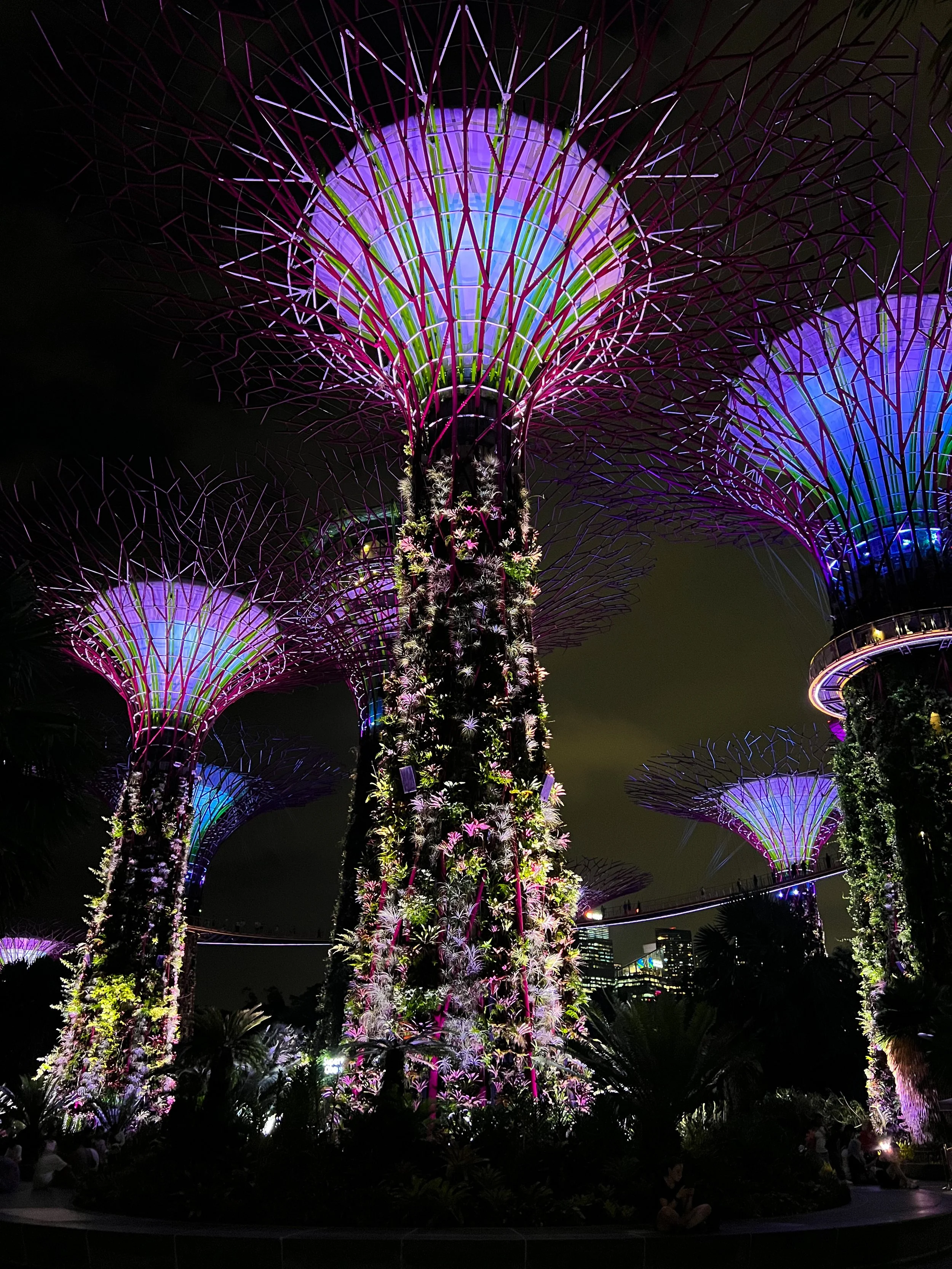
At Gardens by the Bay, the Garden Rhapsody light show takes place in the Supertree Grove, transforming the towering Supertrees into a dazzling display of lights and music. Each tree, fitted with thousands of LED lights, illuminates the night sky in harmony with a rotating selection of musical scores. This 15-minute performance blends nature with technology, offering a completely different atmosphere from the Spectra show. The trees’ changing colours and synchronised movements, combined with the majestic music, create an enchanting experience that leaves visitors in awe.
Unlike Spectra, Garden Rhapsody’s show changes its theme periodically, ranging from classic orchestral scores to contemporary tunes, making each visit a unique experience. The show runs twice nightly at 7:45 PM and 8:45 PM, and the best part is you can enjoy it from right underneath the Supertrees. Some visitors choose to lay down on the grass or benches beneath the towering structures to fully immerse themselves in the light display.
Day 3
Chinatown
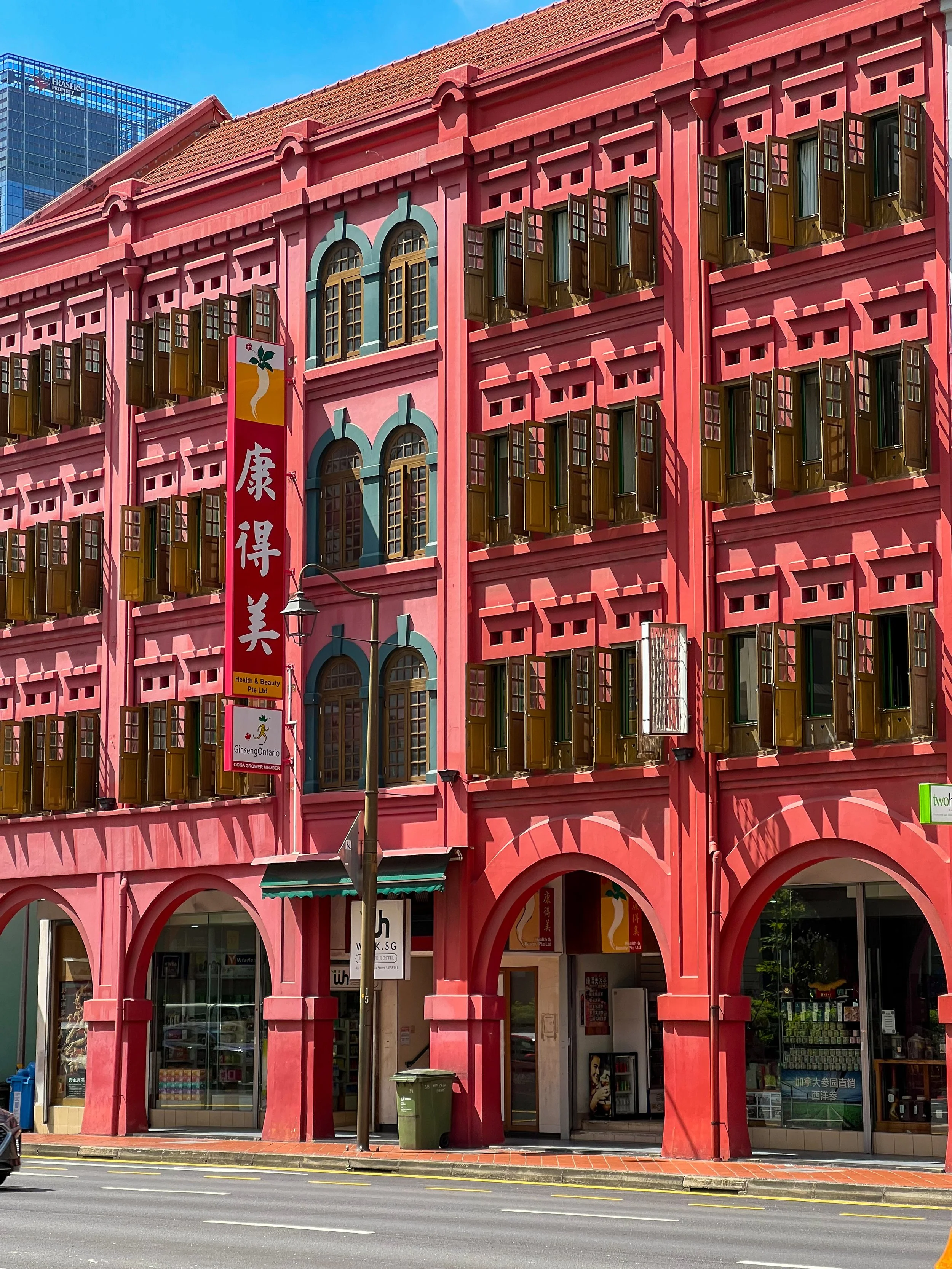
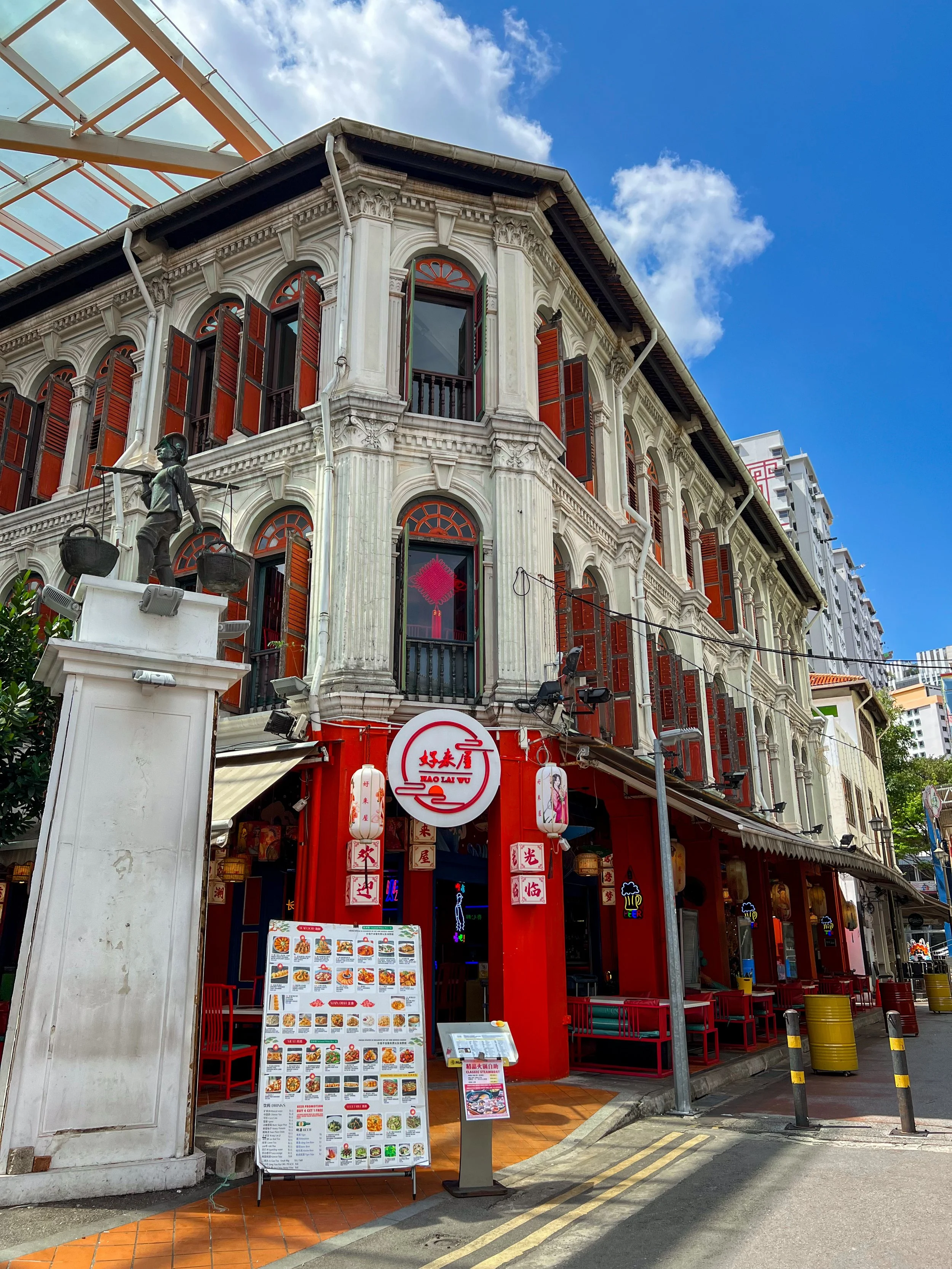
On my third day, I set out to explore Singapore’s diverse neighbourhoods, starting with Chinatown. As you step into Chinatown, you’ll be greeted by a blend of colourful shophouses, bustling markets, and an array of temples, each reflecting the area's deep-rooted cultural heritage. Historically, Chinatown was where Singapore’s early Chinese immigrants settled after arriving in the city in the 19th century, and its streets are still infused with a strong sense of community and tradition.
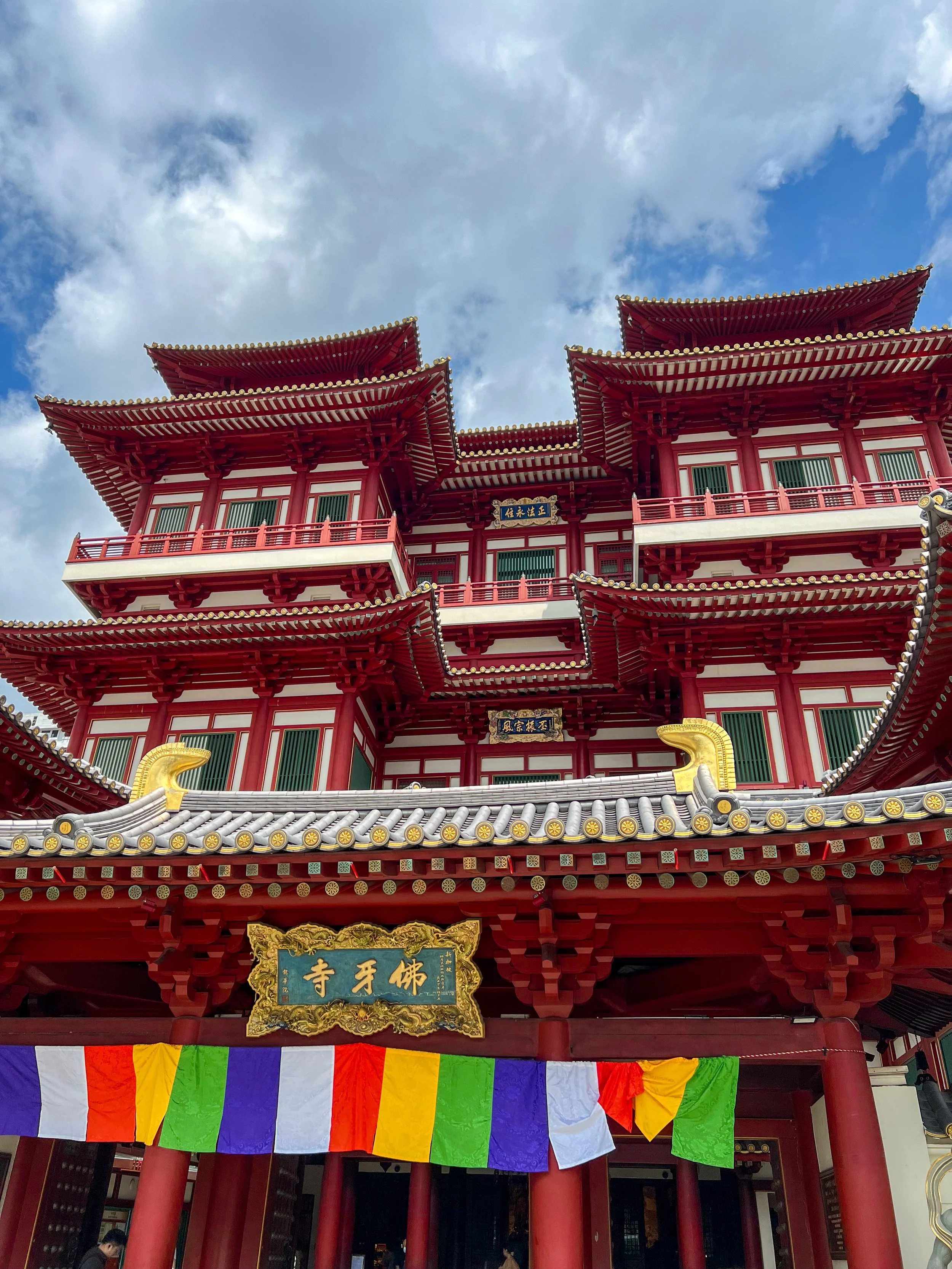
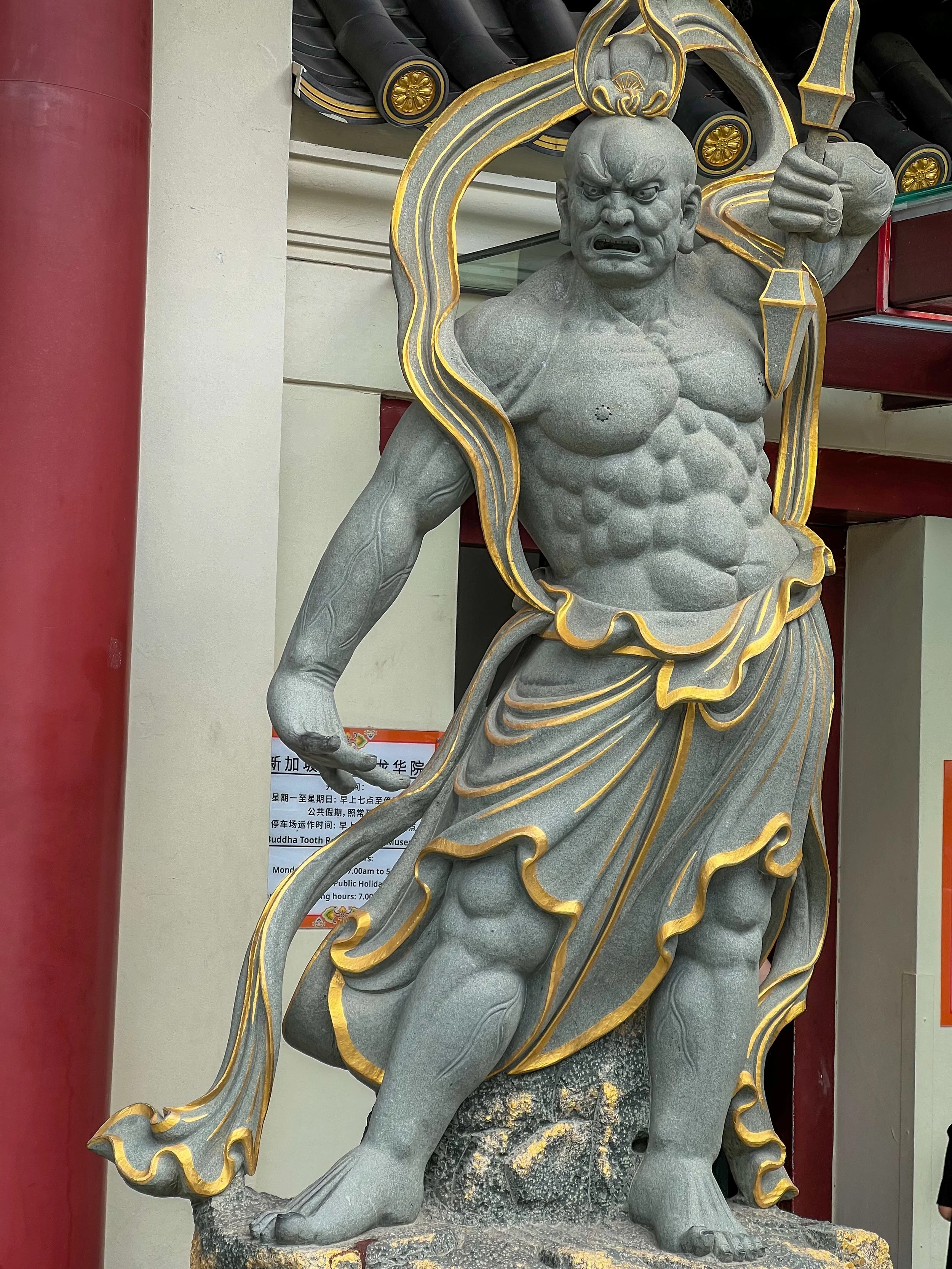
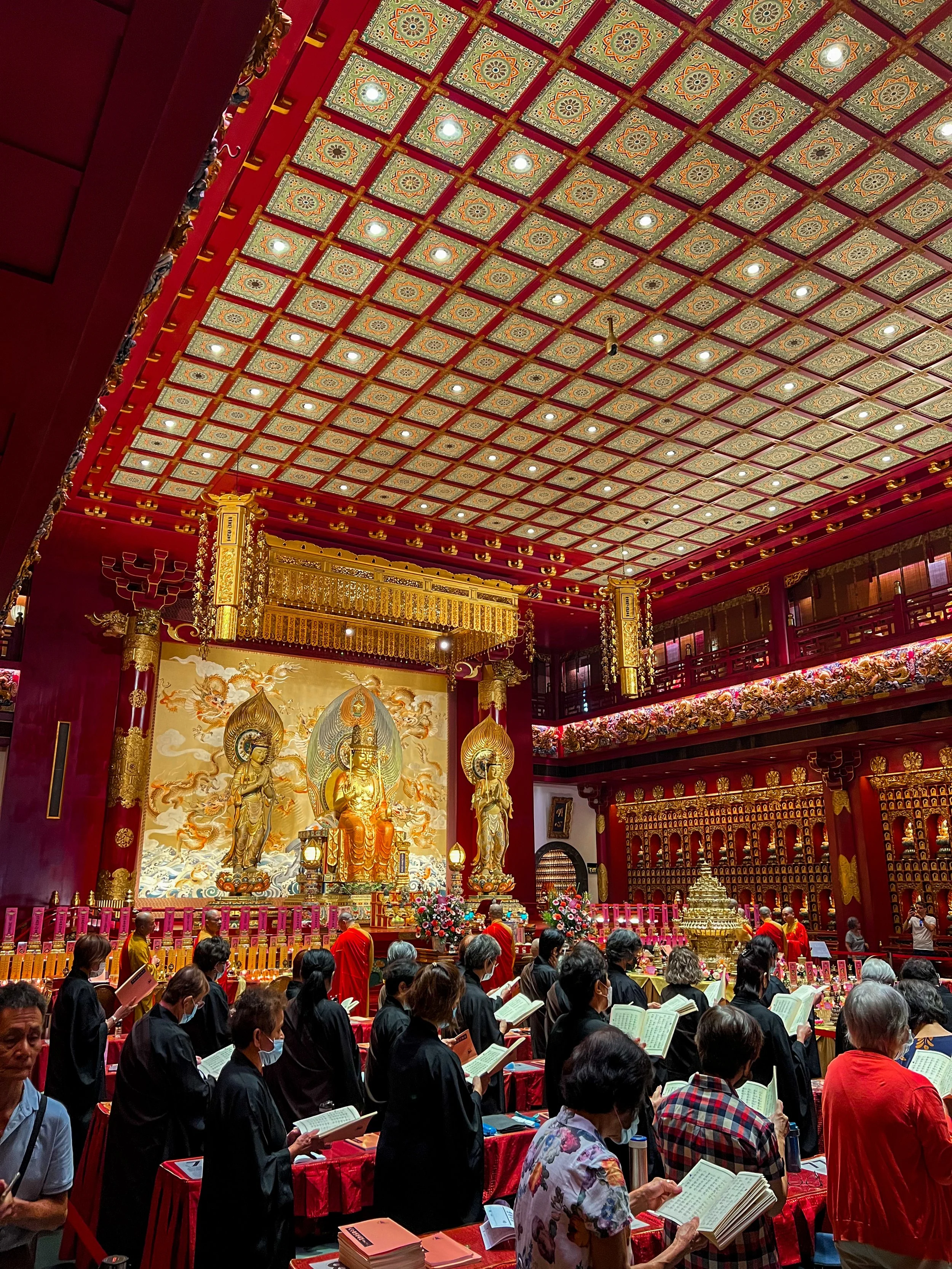
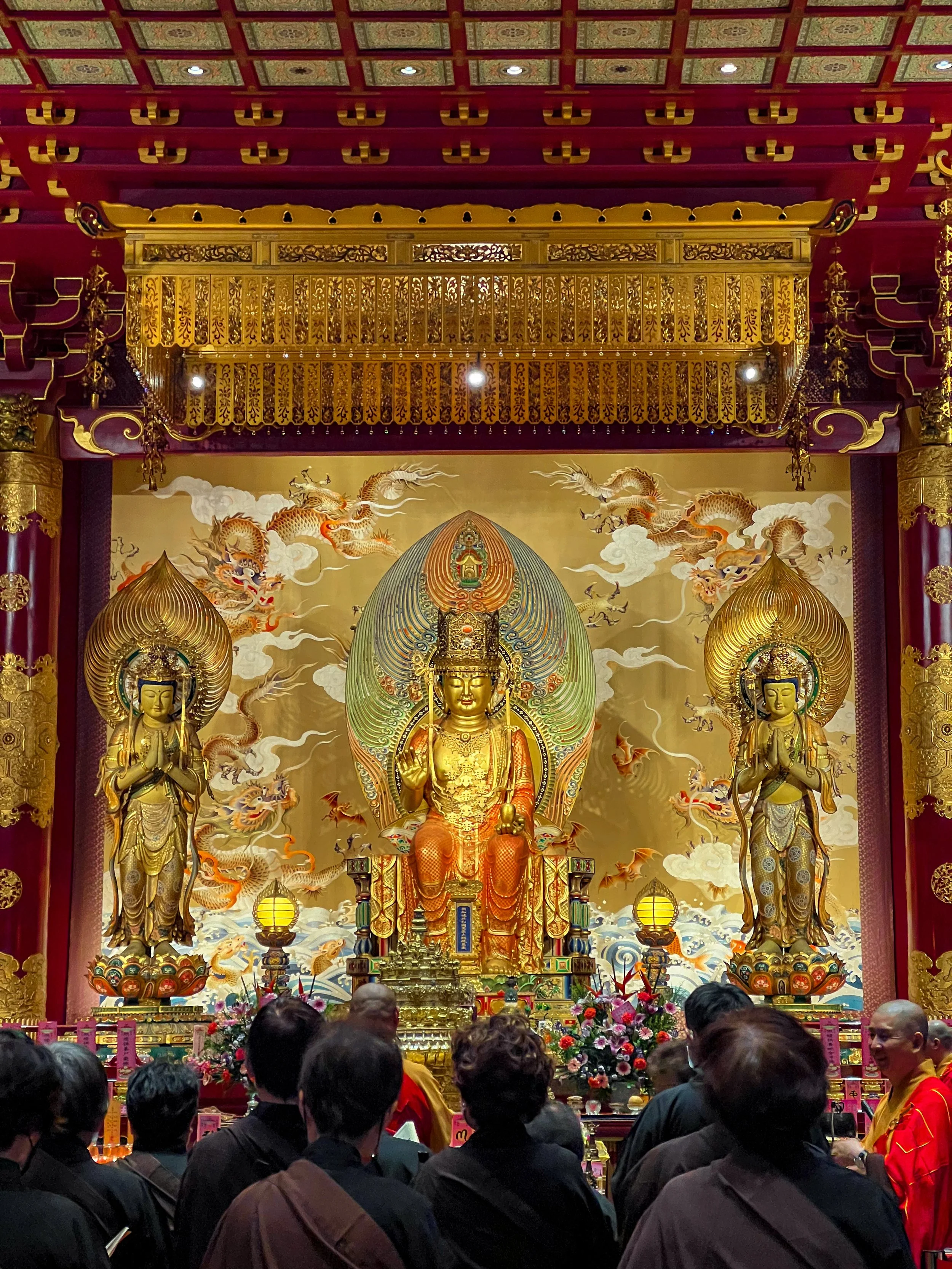
One of the must-visit landmarks in Chinatown is the Buddha Tooth Relic Temple, an iconic five-story structure that houses what is believed to be the left canine tooth of Buddha, discovered in a collapsed stupa in Myanmar. This ornate temple, built in the Tang dynasty architectural style, is not just a religious site but also a cultural museum, showcasing ancient Buddhist art and artefacts. Don’t miss the Sacred Light Hall on the fourth floor, where the sacred tooth relic is displayed. The rooftop garden, with its peaceful prayer wheel, offers a tranquil escape from the lively streets below.
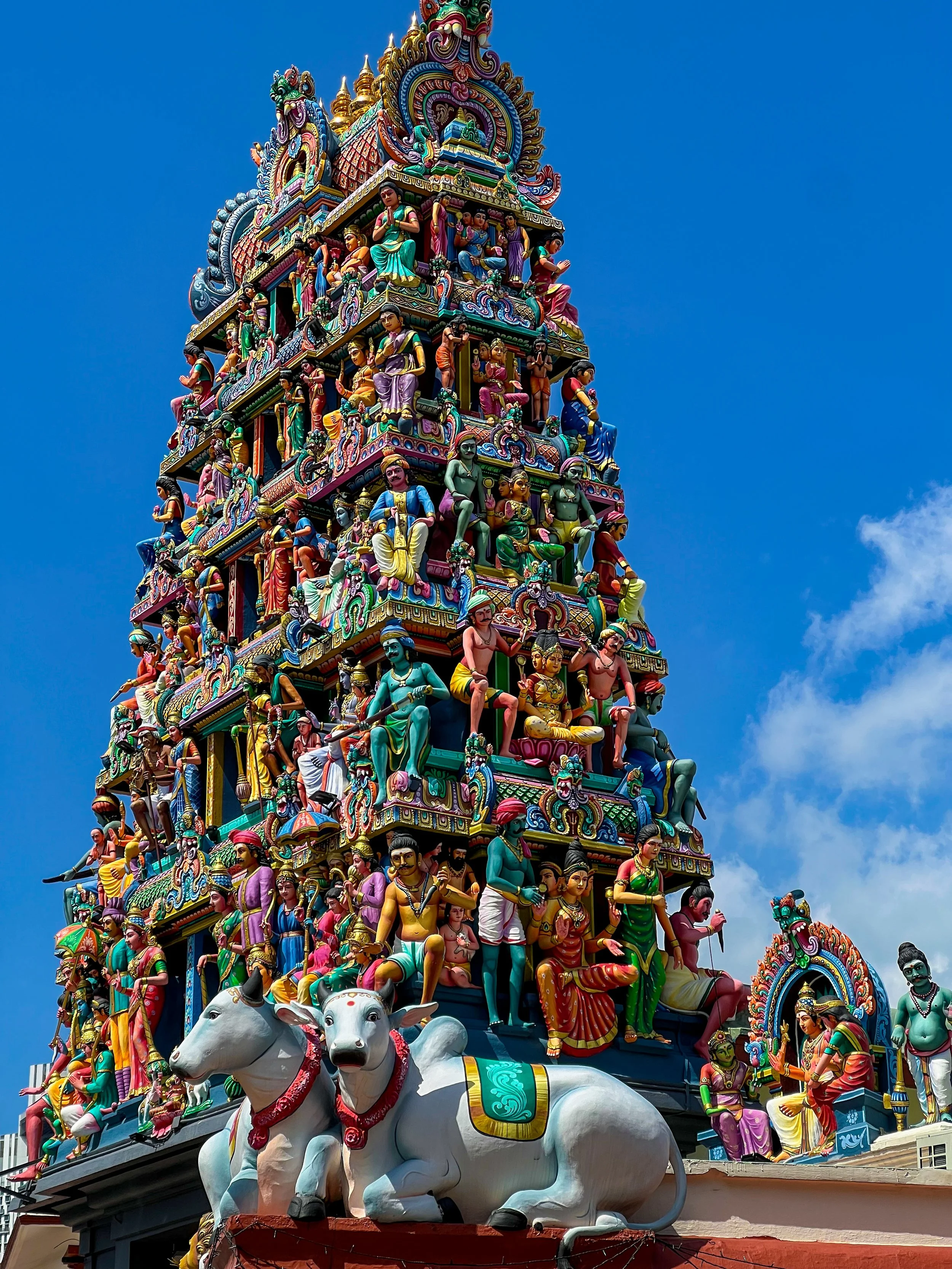
Just a short walk from the Buddha Tooth Relic Temple is the Sri Mariamman Temple, Singapore’s oldest Hindu temple. Founded in 1827 by Naraina Pillai, an Indian merchant and prominent community leader, the temple was originally built to serve the religious needs of early Indian immigrants who came to Singapore seeking new opportunities. Over the centuries, Sri Mariamman Temple has become one of the most important religious and cultural landmarks in Singapore.
One of the temple's most captivating features is its towering gopuram (entrance tower). This majestic, intricately carved tower stands as a colourful beacon on South Bridge Road, instantly catching the eye with its vibrant depictions of Hindu deities, mythological figures, and ornamental motifs. The gopuram, built in the traditional South Indian Dravidian style, is adorned with statues of gods, goddesses, and sacred animals, all painted in a dazzling array of colors. Visitors and photographers alike are drawn to its visual splendour, making it one of the most Instagrammable spots in Singapore.
The temple’s main deity, Goddess Mariamman, is revered for her power to heal diseases and protect against natural calamities. In addition to Mariamman, the temple houses shrines dedicated to various other deities, including Lord Shiva, Lord Ganesha, and Lord Murugan. The temple is an active place of worship, with daily rituals and offerings, giving visitors a glimpse into the spiritual life of Singapore’s Hindu community. It's important to note that, as a functioning temple, respectful attire is required, and shoes must be removed before entering the temple grounds.

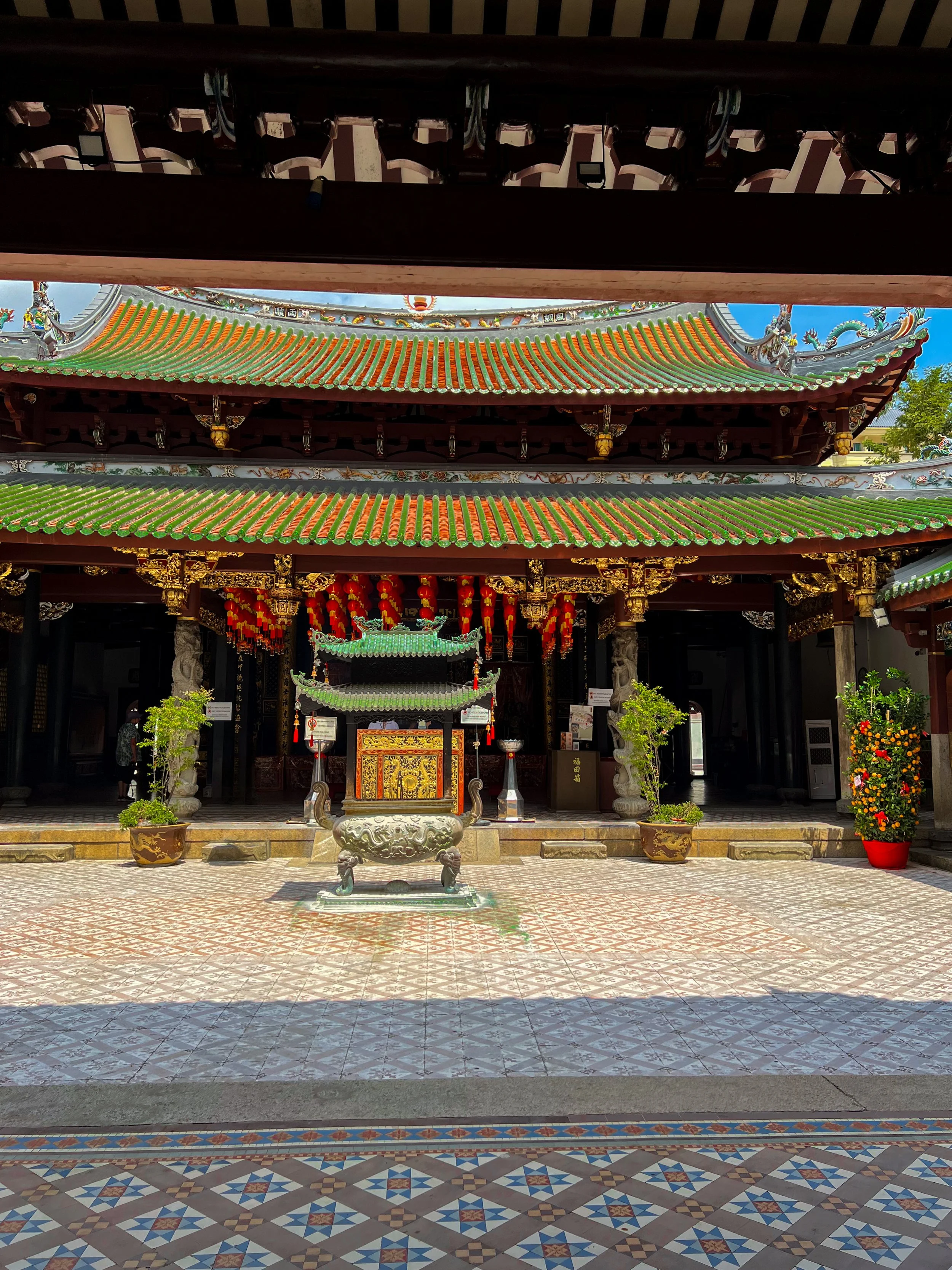
Also located in Chinatown, Thian Hock Keng Temple is one of the oldest and most historically significant temples in Singapore. Built in 1842, this grand temple was dedicated to Mazu, the goddess of the sea, who was revered by early Chinese immigrants, especially sailors and merchants, who believed she provided them protection during their perilous sea voyages. The temple holds deep cultural meaning for Singapore’s early Hokkien community and stands as a symbol of their spiritual devotion and gratitude.
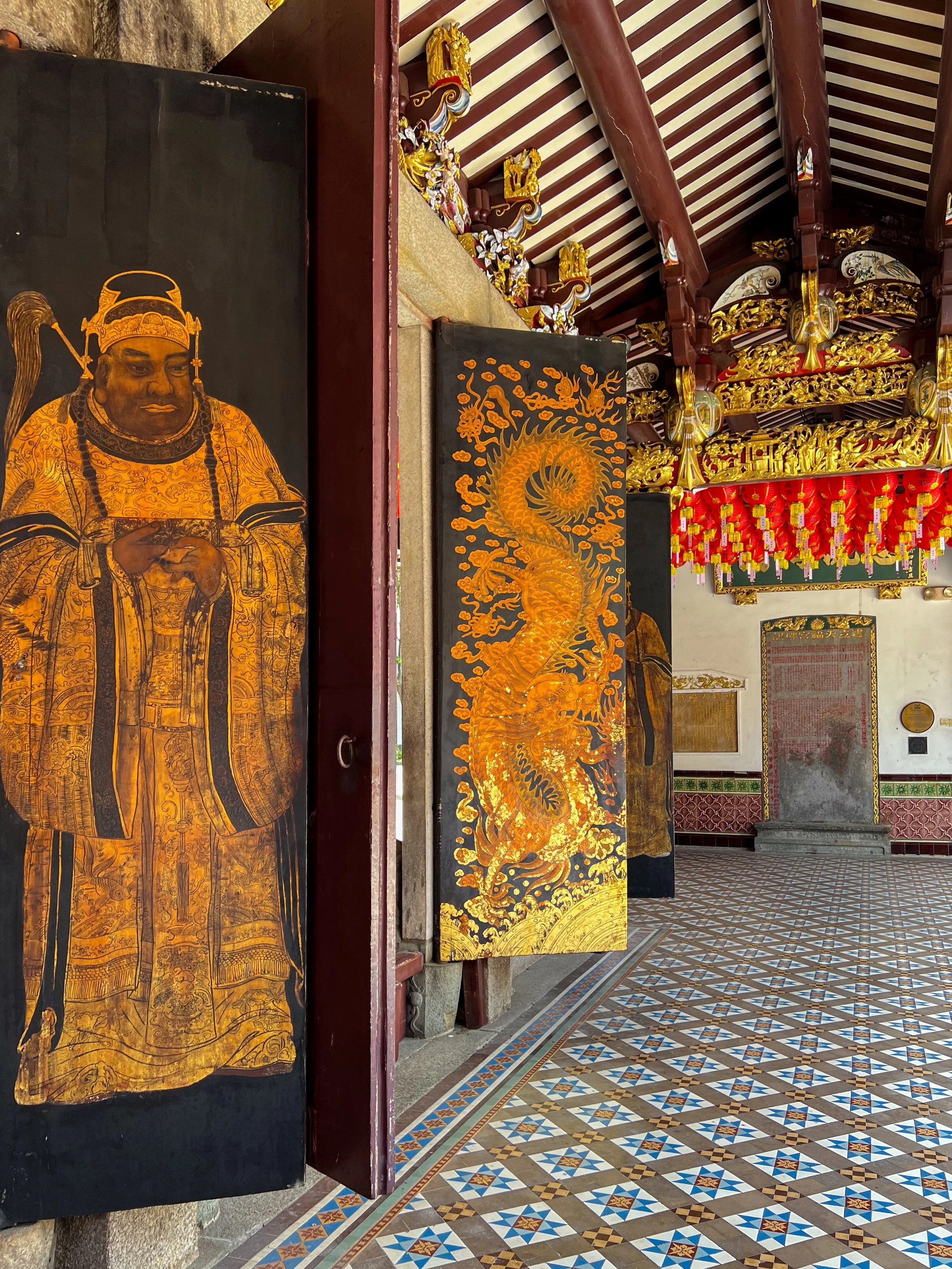
Located along Telok Ayer Street, Thian Hock Keng is a striking example of traditional Southern Chinese architecture. Its intricate carvings, majestic rooflines adorned with dragons, and decorative porcelain tiles reflect the classic styles of Fujian architecture, with materials imported directly from China. What makes the temple unique is that it was constructed without using a single nail—an impressive feat of craftsmanship from the 19th century. As you approach the temple, you’ll be greeted by towering stone lions, which were believed to guard the temple from evil spirits.
Inside the temple, the main altar is dedicated to Mazu, where visitors can observe devotees lighting incense and offering prayers. The temple’s interior is a peaceful sanctuary, with beautifully painted doors, vivid murals, and richly decorated pillars that create a serene atmosphere for reflection and prayer. There are also smaller shrines dedicated to Guanyin, the goddess of mercy, and Confucius, symbolizing the temple’s role as a multifaceted spiritual hub for Singapore’s early Chinese settlers.
Little India
After exploring Chinatown, I headed to Little India, a vibrant neighbourhood known for its colourful streets and rich cultural heritage. Established in the early 19th century, Little India was originally a settlement for Indian immigrants who arrived in Singapore seeking new opportunities. Today, it remains a vibrant hub of Indian culture, brimming with shophouses, aromatic spice shops, and lively markets, making it a must-visit destination for anyone wanting to explore Singapore's multicultural heritage.
A key highlight in Little India is the Sri Veeramakaliamman Temple, a prominent Hindu temple dedicated to the goddess Kali, who is worshipped for her strength and power. Built in 1881, this temple is one of the oldest in Singapore and stands as a testament to the strong Indian community that has flourished here. The temple’s striking gopuram (entrance tower) is adorned with intricately carved statues of Hindu deities, reflecting the rich artistic traditions of South Indian temple architecture.
As you approach the Sri Veeramakaliamman Temple, the vibrant facade of the gopuram is immediately noticeable, with its detailed depictions of deities and mythological scenes.


Kampong Glam
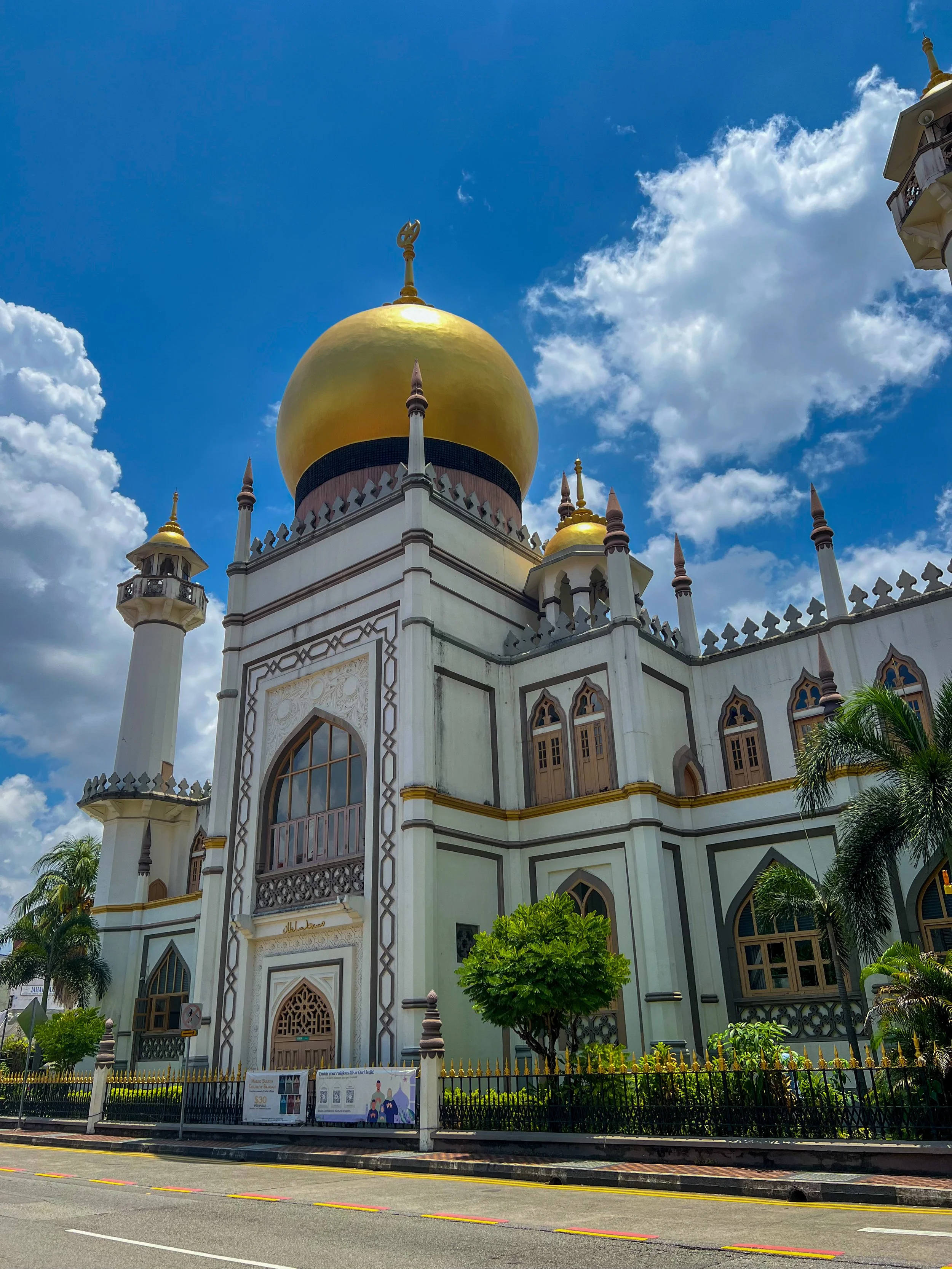
My final stop was Kampong Glam, also known as the Muslim Quarter. Once the heart of the Malay aristocracy, Kampong Glam was historically the seat of the Sultan of Singapore and remains a colorful neighborhood brimming with cultural significance and historical charm.
At the centre of Kampong Glam is the Sultan Mosque (Masjid Sultan), an iconic symbol of the area. Built in 1824 and extensively renovated in 1928, the mosque is distinguished by its magnificent golden dome and towering minarets. The mosque’s grand entrance, with its intricately carved wooden doors and expansive prayer hall, offers a serene space for worship and reflection. The Sultan Mosque is not only a focal point for Singapore’s Muslim community but also an architectural marvel that attracts visitors interested in Islamic art and architecture. The mosque welcomes visitors outside of prayer times, providing a unique opportunity to learn about Islamic practices and the mosque’s historical significance.
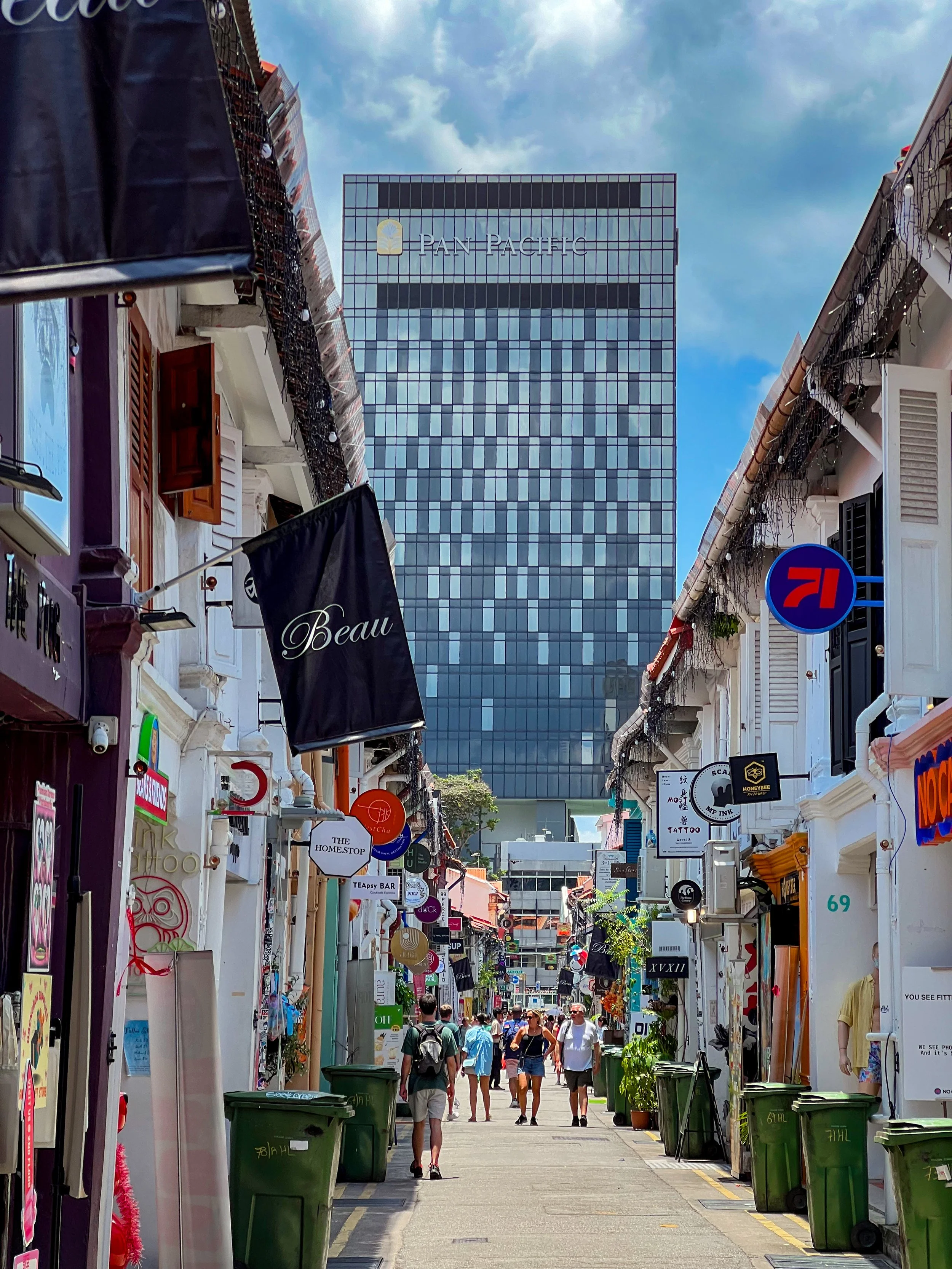
Just a short walk from the Sultan Mosque is Haji Lane, a narrow, vibrant street known for its eclectic mix of boutiques and cafes. This trendy lane is a favourite among locals and tourists alike for its unique fashion stores, vintage shops, and artisanal cafes. It’s a great place to explore if you’re looking for one-of-a-kind fashion pieces, handmade crafts, or just a lively spot to grab a coffee and people-watch.
Lunching in Kampong Glam’s Muslim Quarter is a culinary adventure, where you can savour a delightful array of traditional Malay and Middle Eastern dishes, from aromatic nasi padang to succulent kebabs, amidst the district’s vibrant and historic atmosphere.
Sentosa Island
For the rest of the day, you can’t miss a visit to Sentosa Island, Singapore’s premier leisure destination. Once a British military base, Sentosa has been transformed into a vibrant resort island with an array of attractions that cater to diverse interests. It’s a must-visit spot for anyone looking to experience the best of Singapore’s recreational offerings.
Getting to Sentosa Island is straightforward. You can take the Sentosa Express monorail from VivoCity Mall, which is directly connected to the MRT system. Alternatively, you can take a cable car ride from Mount Faber or HarbourFront for a scenic approach. There’s also the option of walking across the Sentosa Boardwalk, a pleasant and leisurely route from VivoCity.
Universal Studios Singapore is a major draw on the island, bringing the magic of movies to life with its expansive theme park. Opened in 2010, the park features seven themed zones, including Hollywood, New York, Sci-Fi City, and Ancient Egypt. Visitors can enjoy thrilling rides like the Battlestar Galactica roller coasters, take a journey through the Transformers experience, or immerse themselves in the world of Madagascar and Shrek. With its high-quality attractions and entertainment, Universal Studios Singapore is perfect for families and movie enthusiasts alike.
The S.E.A. Aquarium is another highlight, renowned for being one of the largest in the world. Located within the Resorts World Sentosa complex, this awe-inspiring aquarium houses over 100,000 marine creatures. The Open Ocean Habitat provides a 360-degree view of ocean life, including sharks, rays, and schools of colorful fish, making it a captivating experience for all ages.
Adventure Cove Waterpark offers an exciting array of water-based attractions. From the thrilling Riptide Rocket hydro-magnetic coaster to the relaxing Lazy River, the park caters to both adrenaline seekers and those looking for a leisurely day in the water. The Rainbow Reef, where visitors can snorkel among vibrant coral reefs and marine life, is a particularly popular feature.
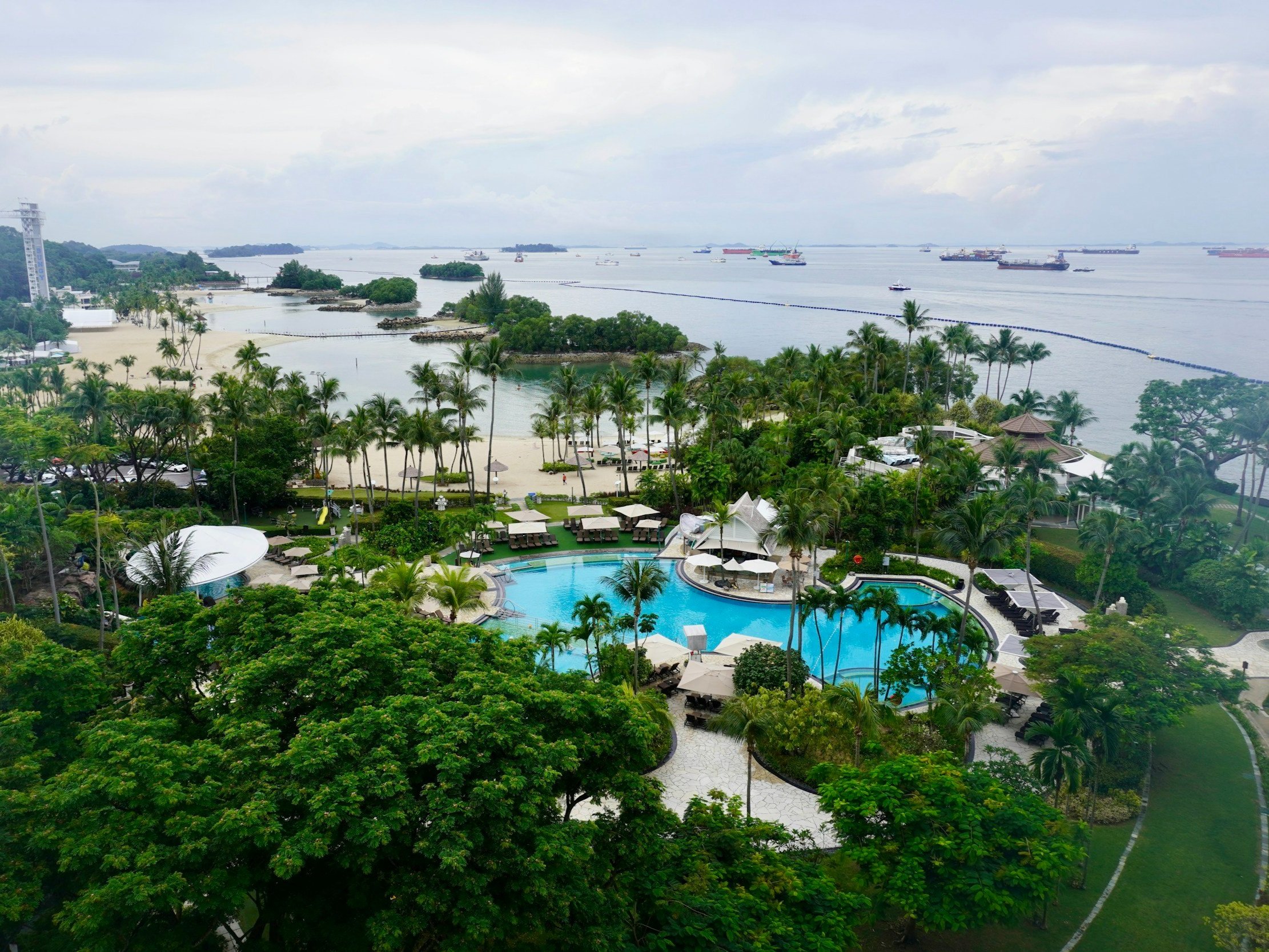
For a more tranquil experience, Sentosa’s beaches offer a picturesque escape from the city. Siloso Beach is known for its vibrant atmosphere, with numerous bars and eateries along the shore. Palawan Beach features a unique suspension bridge connecting to an islet, providing panoramic views of the South China Sea. Tanjong Beach is the most serene of the three, ideal for relaxation and beach sports.
The Sentosa Merlion is another iconic landmark on the island. This 37-meter-tall statue combines the features of a lion and a fish, symbolising Singapore’s maritime heritage and mythical roots. Visitors can ascend to the observation deck for panoramic views of Sentosa and the Singapore skyline.

Some links in this post are affiliate links, which means that if you buy through them, we’ll receive a small commission. This will never cost you more and in many cases you will receive a special discount.
As always, all opinions are mine. We appreciate your support!


Kuala Lumpur is a dynamic city that packs plenty into a short visit—perfect for a quick but memorable getaway.
From the iconic Petronas Towers and bustling Chinatown to the serene Batu Caves, Kuala Lumpur offers a variety of experiences that will leave you in awe. In this 2-day Kuala Lumpur itinerary, we’ll explore the city’s highlights while uncovering its hidden treasures along the way!