
Guide to visit EPIC - The Irish Immigration Museum: what to see, tickets, prices & more
Ireland’s history has always been marked by immigration: the recent economic crisis, decades of religious oppression, the Great Famine of 1845 that pushed one-fourth of the population to travel the seas to America for a chance to survive… for years, the Irish were forced to leave their country, bringing with them their culture and heritage. For a reason, today over 25 million people around the world claim Irish ancestry!
Opened in 2016, EPIC The Irish Immigration Museum in Dublin offers an interactive journey through Irish culture in an incredible display of video and audio, bringing to life the history of the 10 million Irish men and women who left their country in the last centuries in search for a better life.
Check out this post to learn what to expect from your visit to what’s been named ‘Europe’s leading tourist attraction’!
Planning you visit
Location: EPIC can be found in the vaults the CHQ building, located in Custom House Quay, Dublin 1. See map.
Directions: you can easily reach the CHQ by foot from most places in the city centre, as it’s only a 10-minute walk east of O’Connell Street. You can also get the LUAS red line and get off at George’s Dock, located just behind the museum. If you’re visiting Dublin on the Big Bus hop-on-hop-off sightseeing tour, the museum is located right across stop 29.
Opening times: the museum opens daily from 10am to 6pm.
Tickets: entrance fees start at €16.50 per adult, with concessions available for children, students or senior visitors.
EPIC The Irish Immigration Museum: a guided visit
The EPIC Irish Immigration Museum opened only in 2016 inside the beautifully restored CHQ building. Despite its recent opening, it was voted as ‘Europe’s Leading Tourist Attraction’ in the 2019 World Travel Awards.
If you’ve purchased your tickets online, you will only need to show them at the ticket office. You’ll then receive a 'passport' for your visit; a document that is a map of the museum but can also be stamped as you visit all the different exhibitions, guiding you through your journey.
Since the museum is fully interactive and most rooms have touchscreens, all visitors during the COVID-19 pandemic are provided with pointers to avoid having to touch anything.

GEORGE’S DOCK

CHQ building

Entrance to EPIC
The visit to the museum begins with the memories of the land left behind. The exhibition has images of the impressive Irish landscapes: the Ring of Kerry, Giant’s Causeway, Killarney National Park, the Mamturk Mountains of Connemara; all carried in the hearts of Irish immigrants on their long journeys to foreign countries.
During thousands of years, the geographical and cultural landscape of Ireland has been defined by the waves of people coming and leaving. Ireland’s old history of departure can be seen in its ruined stone cottages and overgrown lazy-bed furrows.
The diverse character of its people is a true reflection of Ireland’s story of immigration. For those who left, Ireland always remains their beautiful, mythologised homeland.


The next room has videos from the people who left Ireland in the past, telling their own stories of hope and fear as they discover their new future and what happened to them in their new life.
All emigrants have a turning point in their journey when they have left their homeland but haven’t arrived yet to their new country. Feeling hope and fear is normal, as a new life is beginning for them in a completely new world.
Whether it was a 16-year-old migrant waiting to be processed in the Ellis Island facility in New York or an Irish rebel being deported by ship to the penal colony in Australia, many of them had uncertain lives ahead.


People emigrated because they couldn’t stay; because they wanted to leave, or a mix of both. The next room covers the three elements that have marked the Irish story of emigration: hunger, work and community.
Hunger is still an emotional subject in Ireland, where dispossession pushed people off the land that they relied on to survive and feed themselves. When the country went through periods of intense poverty, such as the Great Famine of 1845-1849, the need to travel to survive and find work was pressing. Some other times, better-paid opportunities appeared elsewhere.
The community also pushed many Irish to migrate. Many Irish people would travel to specific areas where others from their hometown had settled, but many others had to leave under the pressure of their families, often in disgrace.

Poverty wasn’t the only reason why people had to leave. The oppressive laws and social norms forced many people to leave Ireland for centuries. The Penal Laws were successful breaking down the wealth and status of the Catholic population, and many couldn’t tolerate staying at home.
Those who rebelled against the regime were deported to penal colonies. Transportation was mandated by the courts for all types of crimes. It was preferable to the death penalty, but the long voyage leading to a term of forced labour on the other side of the world was dangerous, and many of them never returned.
After the creation of the Irish state in 1922, many of these issues disappeared, but not all children of the new Republic were equally respected. Unmarried mothers were sent abroad with their children, while the LGBTI+ community struggled against the law, with homosexuality being decriminalised only in 1993, as well as the extended social prejudice.


The truth is that there were as many reasons for leaving as people were making the journey. Some of them had to emigrate due to poverty or a need for work, while others found that the State or the society of the time made it impossible to stay. No matter why they left, they brought Ireland with them to the rest of the world.
Irish migrants settled in all regions, making an impact in all areas of life, from politics and sports to the arts. The Irish who left and their descendants have shaped the development of many countries around the world, winning elections, leading revolutions, inventing and exploring. Not to forget about the rich Irish culture, which has influenced the world and how the Irish are seen.


In the last few years, Irish men and women have become considerable contributors in science, from stars and nebulae to sub-atomic particles. This next room in the exhibition, one of the most futuristic and in my opinion the coolest, covers all these Irish scientists that are helping shape how we understand the world.
One of them was Jocelyn Bell Burnell from Belfast, the first person to observe and analyse radio pulsars; or Ernest Shackleton from Co. Kildare, leader of heroics expeditions to Antarctica.
The Irish have also changed the world through invention or innovation. After all, the first submarine was constructed by Robert Fulton for Napoleon Bonaparte, while the modern stethoscope was developed by the Irish physician Arthur Leaned.

A lengthy tradition of the diaspora, mostly for ideological purposes, ensures that the Irish in their new homes have built up a remarkable record of involvement in politics and civic participation. Their Irish heritage is a symbol for many politicians that they wear with pride, believing it can give them an advantage in votes.
The US presidency is the perfect case of Irish electoral involvement. At least 22 presidents can claim some Irish heritage, including Barack Obama.
However, winning votes wasn’t the only way to transform their new country. In other places, Irish people fought for social rights. Mother Jones and Leonora Barry were also high-profile figures of the American trade union movement at the beginning of the 19th century, while John Doherty had a similar role half a century earlier in the United Kingdom.

The Irish love for music was taken with them when they left the country in pursuit of a better future. The huge emigration wave during the famine of the mid-19th century brought Ireland's music and dance to Britain and America. Many of these styles were modified over time, and have now become part of the American stage entertainment.
The emergence of modern technologies in the early 20th century, including sound recording, radio, and cinema, introduced Irish art to an even wider public.

Maybe Ireland's most enduring idea is that it is a country of storytellers and tales. Ireland can be proud of its literary reputation, with four Nobel laureates in Literature to its credit.
Ireland's novels, poetry and plays have spread around the globe, carried by actors from Ireland like Pierce Brosnan, or with Irish heritage, like Monaco's Princess Grace, born Grace Kelly.
The skill of the Irish to tell good stories has also helped broadcasters, comedians and journalists. Nellie Bly, whose grandfather emigrated to the US from Derry, was a leading investigative journalist in the 19th century. She travelled around the world in 72 days, emulating and improving the journey of Phileas Fogg, the fictional character of Jules Verne.
More recently, many listeners considered Terry Wogan the voice of the BBC’s Radio Two, as well as the most recognisable Eurovision commentator.


In the last room, you will find the Irish Family History Centre, where you can consult a professional genealogist to help you find your ancestors in their huge database.
You can also use their screens to search millions of immigration permissions or birth and death certificates to search for your own family members. Over 25 million people around the world claim Irish ancestry today, mainly located in North America, so there are many families that travel to Ireland every year to research and locate their ancestors.

Some links in this post are affiliate links, which means that if you buy through them, we’ll receive a small commission. This will never cost you more and in many cases you will receive a special discount.
As always, all opinions are mine. We appreciate your support!

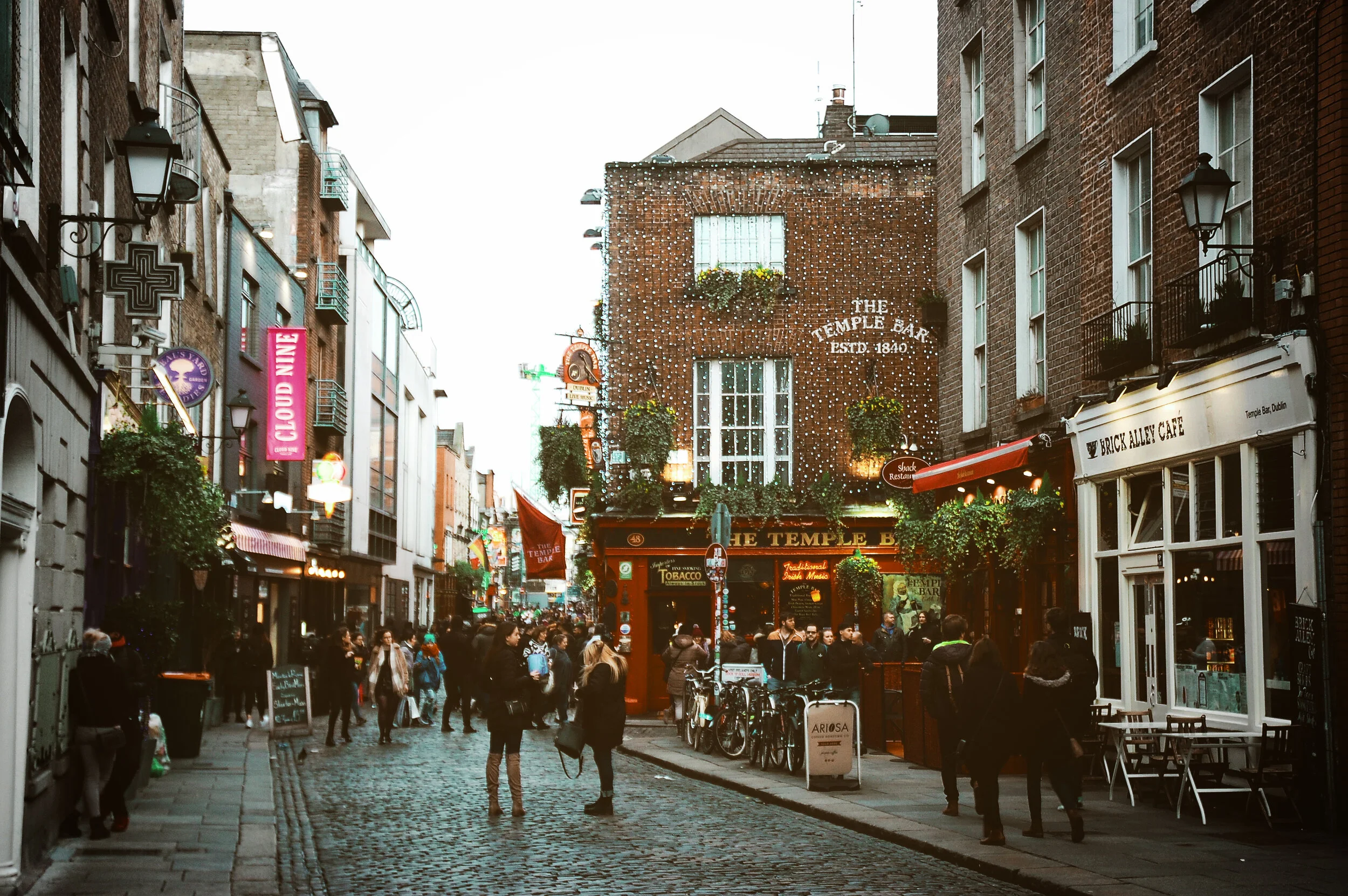

If you’re starting to plan your next holidays once the world opens up again and you’re looking for a quiet but charming destination where social distancing is possible, Ireland is your place!
With one of the most striking natural landscapes of Europe, Ireland offers many somewhat isolated natural and historical sites where you can avoid the herds of tourists that usually stay in the city. Have a look at this post to discover 8 places in Ireland that you can’t miss in your next trip!