
2 days in Krakow - Part II: Kazimierz, the Jewish Ghetto & Oskar Schindler's Factory
With a 25% Jewish population up until 1939, Jews have always been an essential part o the history of Krakow. Settled in the quarter of Kazimierz, they flourished for centuries until World War II, when all Cracovian Jews were confined to a ghetto on the outskirts of the city and expelled from their historic home in Kazimierz.
During my second day in Krakow, I decided to explore Kazimierz, the traditionally Jewish quarter of Krakow where the few synagogues left in the city can still be found. I would continue my visit with the area where the Krakow Ghetto once stood before finishing at Oskar Schindler’s Factory to hear about the Nazi businessman who employed over 12,000 Jews to save their lives during the Holocaust.
Kazimierz
For my second day in Krakow, I woke up with the city covered in snow. After having visited the highlights of the Old Town, during my second day I would explore the Jewish history of the city ahead of my visit the Auschwitz-Birkenau Concentration Camp. Check out my first day in Krakow visiting the highlights of the Old Town!
Most of the points of interest can be found in Kazimierz, the former Jewish quarter of Krakow. Since the area is pretty small, all of them are located within a few minutes walk from each other. I was coming from the Old Town, so my first stop was the Tempel Synagogue, found at the very north end of Kazimierz. Admission costs 5 złoty (approx. €1,10)
Completed by Leopoldstädter Tempel in 1862, it was one of the main Jewish sites of worship. The interior is richly decorated in different colours and gold leaf mixing the Moorish with the Polish style.
During World War II, the Nazis used the synagogue to store ammunition, destroying part of the building. It was vastly renovated between 1995 and 2000. The synagogue is still active, but prayers are held only a few days per year.
Tempel Synagogue
Inscription of the door
Interior
A couple of streets away you will find the Remuh Synagogue, the smallest of all synagogues in Kazimierz. Built in 1553 near the newly established Jewish cemetery (today known as the Old Jewish Cemetery), it was originally known as the New Synagogue to differentiate it from the Old Synagogue that I would visit later. Admission also costs 5 złoty (approx. €1,10), including the cemetery.
The original building, made of wood, was destroyed by a fire in the middle of the 16th century, replacing the structure with a new building in 1557. It went through some renovations during the 17th and 18th century, and the building that we see today belongs to the restoration carried out in 1829.
During the Nazi invasion, the synagogue was also used as a storehouse for ammunition. The building remained almost intact, but most of the internal decoration was lost. Thanks to the efforts of the local Jewish community, it went under major restoration in 1967 to bring back the appearance that the interior had before the war.
Remuh Synagogue
Surrounding the Remuh Synagogue you will also find the Old Jewish Cemetery, also known as the Remuh Cemetery. Dating back to 1535, it hasn't been in use since the year 1800, when the New Jewish Cemetery was created not too far from here.
When Nazi Germany invaded Poland, all tombstones were removed from the cemetery and used as paving stones. Many of them were returned and restored after the war, but they are only a small part of all the tombs that once were there.
Old Jewish Cemetery
In spite of the many years that have past since the war, Kazimierz still keeps a very eerie and heavy atmosphere that make you remember the destruction and suffering what once was one of the largest Jewish population in Europe.
One of the exceptions is Dzielnica Żydowska, or Jewish Square, one of the liveliest areas of the quarter. Filled with restaurants and cafes and surrounded by most of the monuments of Kazimierz, this is a great place for a small break or to get lunch if you’d like to try some traditional Jewish Cuisine.
On the south end of the square, you will find the Old Synagogue of Krakow, the oldest standing synagogue in Poland. Built in 1407 or 1492 (the exact date is uncertain), it is one of the most important Jewish buildings in Europe. Up until the German Invasion of Poland in 1939, it was the main place of worship of the Jewish population in the city, but the building was completely destroyed during World War II.
It was fully renovated in 1959, and today hosts one of the branches of the Historical Museum of Krakow, with an exhibition focusing on the Jewish history of the city. It has an entrance fee of 8 złoty (approx. €1.80).
View of Kazimierz
Restaurant in Jewish Square
Old Synagogue
In 1993, Kazimierz was used as the filming locations for one of the most famous movies directed by Steven Spielberg, winner of 7 Oscars and my favourite film of all times: ‘Schindler’s List’.
The film is based on the real story of Oskar Schindler, a German businessman who saved the lives of over a thousand Jews during the Holocaust by employing them in his factory, that I would visit later that day.
If you’ve watched the film (you should if you haven’t!), you may recognise many of the streets and alleys of Kazimierz that appeared in the film. One of the most famous locations is the courtyard and staircase where Mrs. Dresner hid with her daughter and found the boy Adam, a friend of his son, who helped them escape from the German soldiers that were liquidating the ghetto. The staircase can be found just off Józefa Street.
Courtyard used in ‘Schindler’s List’
‘Schindler’s List’ Staircase
Scene from ‘Schindler’s List’
Jewish Ghetto
Leaving Kazimierz behind and crossing the Wisla River heading south, I reached the area where the Krakow Ghetto was once located. Before 1938, Krakow had a population of around 80,000 Jews, constituting 25% of the population. But after the Nazi invasion of Poland, the German authorities started plans to remove the Jewish population of the city, with tens of thousands getting expelled and being forced to relocate somewhere else.
In 1941, a ghetto was established in the Podgórze district of Krakow for the remaining 35,000 Jews of the city. They chose this location as it was a suburban area with no historical importance, contrary to the traditionally Jewish quarter of Kazimierz. The entire Jewish population of Krakow was forced to relocate to the ghetto bringing with them a maximum of 25kg of their belongings. Their houses and all other possessions were taken by the Nazi authorities.
Memorial to the 65,000 Jews from Krakow killed by the Nazis
The ghetto was liquidated between 1942 and 1943, with most of its surviving population being sent to the nearby extermination camps of Bełżec, Płaszów and Auschwitz.
Today, not much from the ghetto is left apart from some commemorative plaques and the Ghetto Heroes Square, found in the exact place where the doors to the ghetto were once located. Previously known as Zgody Square, it was here that the selections took place, when Jews were divided between those who were fit to work and those who were considered unfit and were condemned to death or sent to the extermination camps.
This memorial square contains 33 empty chairs made of bronze and iron, each of them symbolising one thousand of the Jews that were tragically confined here. Although easily overlooked if you don’t know its meaning, I found the monument particularly powerful in its symbolism of a dark side of Krakow’s history that won’t be easily forgotten.
Ghetto Heroes Square
When the ghetto was established in Podgórze in 1941, all former non-Jewish residents had to leave the area. The only exception was Tadeusz Pankiewicz, owner of the Eagle Pharmacy located on the south end of the Ghetto Heroes Square.
During the existence of the ghetto, Pankiewicz and all his employees provided all kind of assistance to the imprisoned Jews, providing medicines and clothes and working as a point of contact between the Jews inside and outside the ghetto. They also smuggled food and assisted them to avoid deportation, providing hair dyes to make them look younger and therefore fit to work, as well as medication to sedate children and help them remain quiet while hidden.
Thanks to this, Tadeusz Pankiewicz received in 1983 the medal of the Righteous Among the Nations, a title given by the State of Israel to all those non-Jews who risked their lives during the Holocaust to save the lives of the Jews.
The pharmacy still exists today and can be visited as a museum. I found the multimedia exhibition absolutely fantastic, with many of the information hidden in the drawers and cupboards of the pharmacy. It contains testimonials from Jews and Poles describing life in the ghetto, as well as displays of original artefacts from those times. The pharmacy has an entrance fee of 11 złoty (approx. €2.50), but a combined ticket also including Pomorska Street and Oskar Schindler's Factory can be purchased for 32 złoty (approx. €7.5).
Eagle Pharmacy
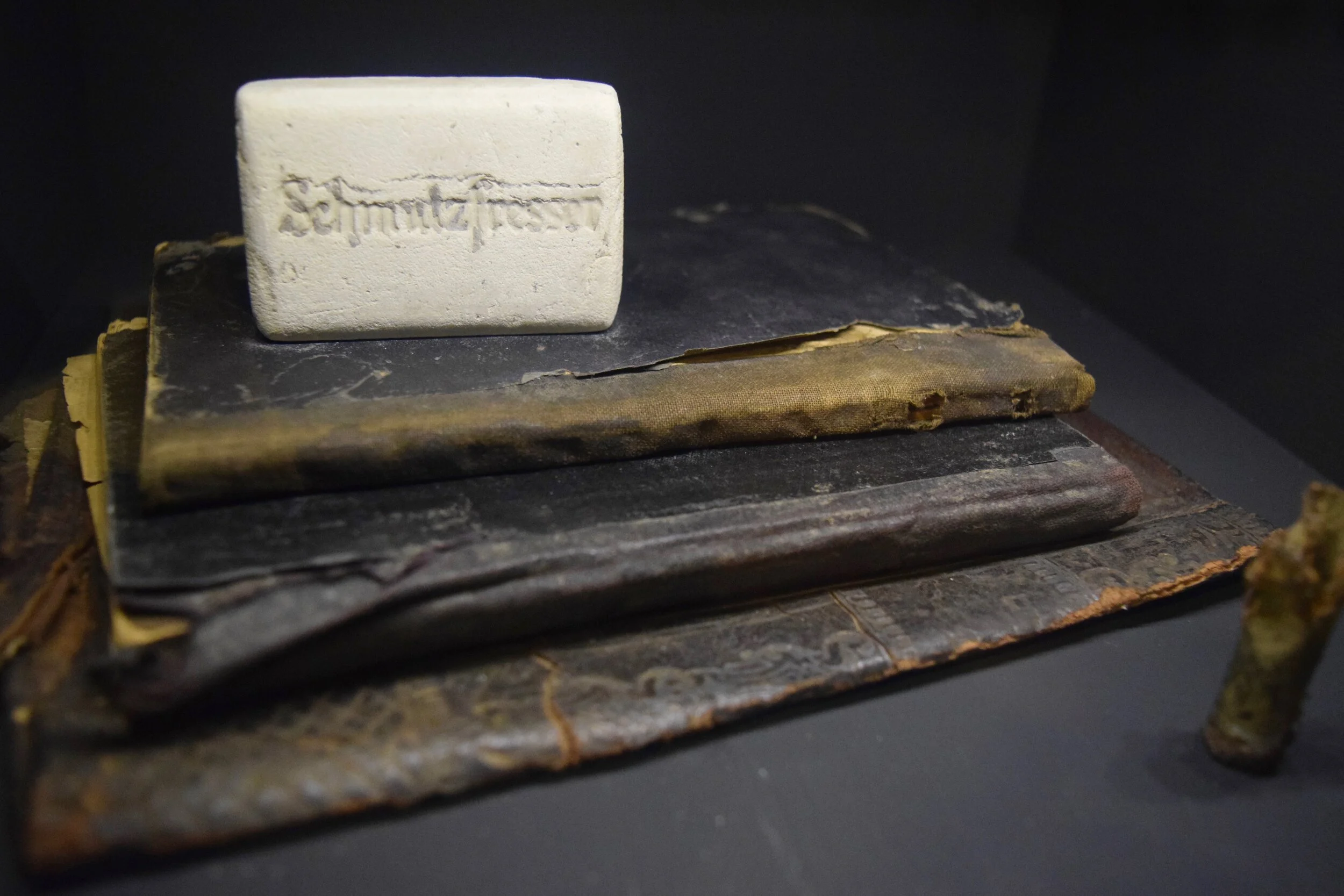
Original objects
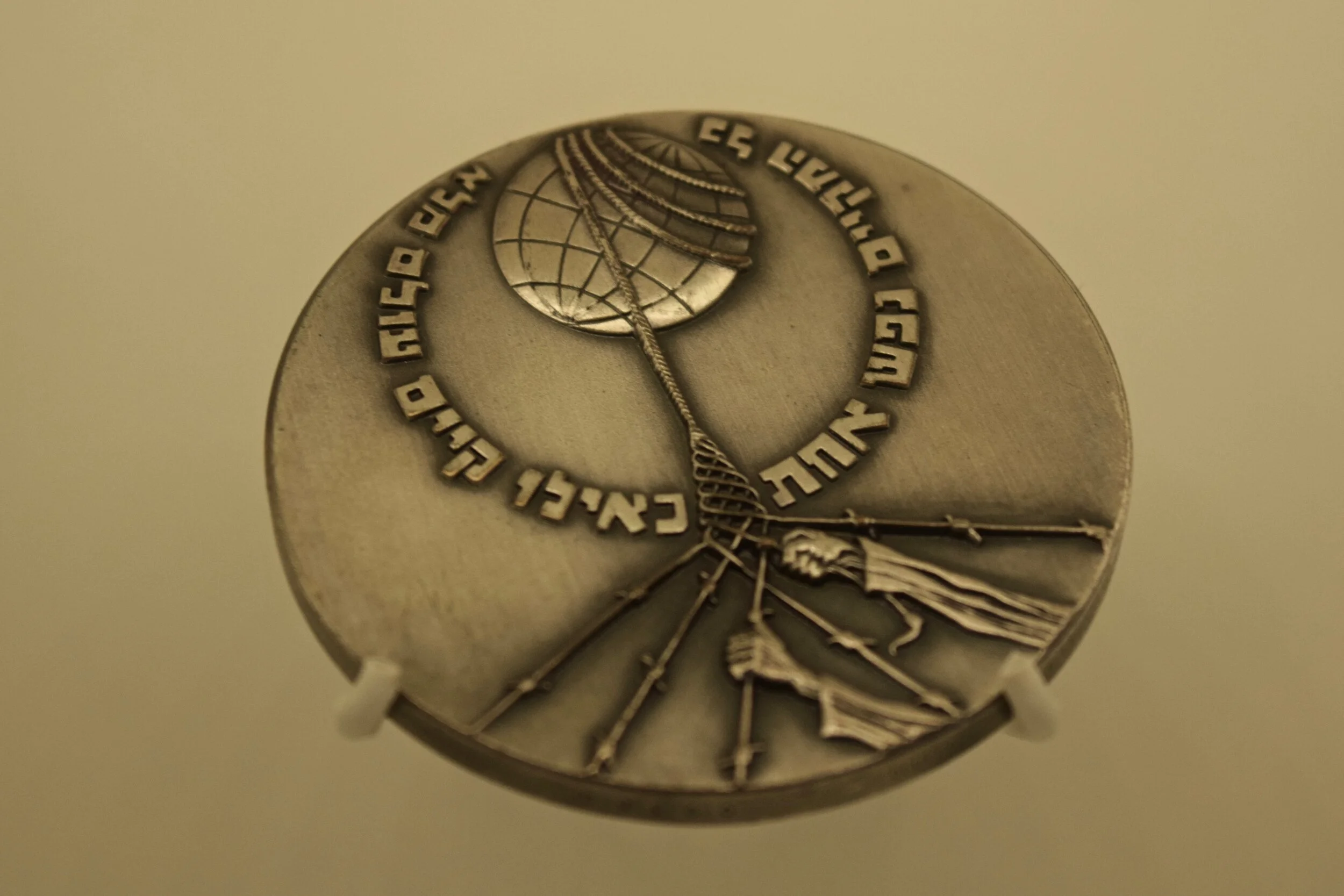
Righteous Among the Nation medal
Oskar Schindler’s Factory
My last visit of the day was Oskar Schindler’s Factory, located at 4 Lipowa Street. Originally known in German as ´Deutsche Emailwarenfabrik´ (DEF), it was here that the German businessman and member of the Nazi party Oskar Schindler employed over 1200 Jews, saving their lives. Many of his employees included women, children and elderly that otherwise would’ve been sent straight to the gas chambers.
He originally hired Jews in his factory only to save on costs, but after discovering their suffering in the concentration camps, he decided to save as many of them as he could by bribing Nazi officials and buying supplies for their workers on the black market to the point of going bankrupt.
When the Germans realised that they were starting to lose the war in 1944, they started dismantling some of their concentration camps and deporting prisoners to the west. Before prisoners were moved from the Kraków-Płaszów camp, Schindler convinced Amon Göth, commander of the camp, to allow him to move his factory to Brněnec (today’s Czechia) and bring his workers with him. A list of 1200 Jews was compiled and all of them were sent to the new factory, saving them from dying in the gas chambers.
By the end of the war, Schindler had spent all his fortune bribing SS officials trying to save the lives of his workers. When the Nazis lost the war, he moved with his wife to Argentina, but after going bankrupt in 1958, he abandoned her and returned to Germany, where he was supported by the surviving Jews of his factory until he died in 1974. He was buried in the Protestant Cemetery of Jerusalem, and he and his wife were named Righteous Among the Nations by Israel in 1993. He is the only member of the Nazi Party that received this honour.
4 Lipowa Street
Oskar Schindler's Factory
Images of the Jews saved by Schindler
Today, the factory has been transformed into a museum with a permanent exhibition about Krakow under the Nazi Occupation. Although it mainly covers the story of Krakow and its inhabitants during World War II, some exhibitions also tell the story of Oskar Schindler and all the Jews that he saved in his factory.
The museum is quite interactive and I found it very interest to learn a bit more about life in Krakow during the war. It includes some theatrical reconstructions of the city, its streets and shops, as well as multiple projections showing how everyday life was in Krakow before and during the war. The museum has an entrance fee of 24 złoty (approx. €5.5), but a combined ticket also including Pomorska Street and the Eagle Pharmacy can be purchased for 32 złoty (approx. €7.5).
Aerial view of Krakow
Original uniform
Memorabilia
Flags with the swastika
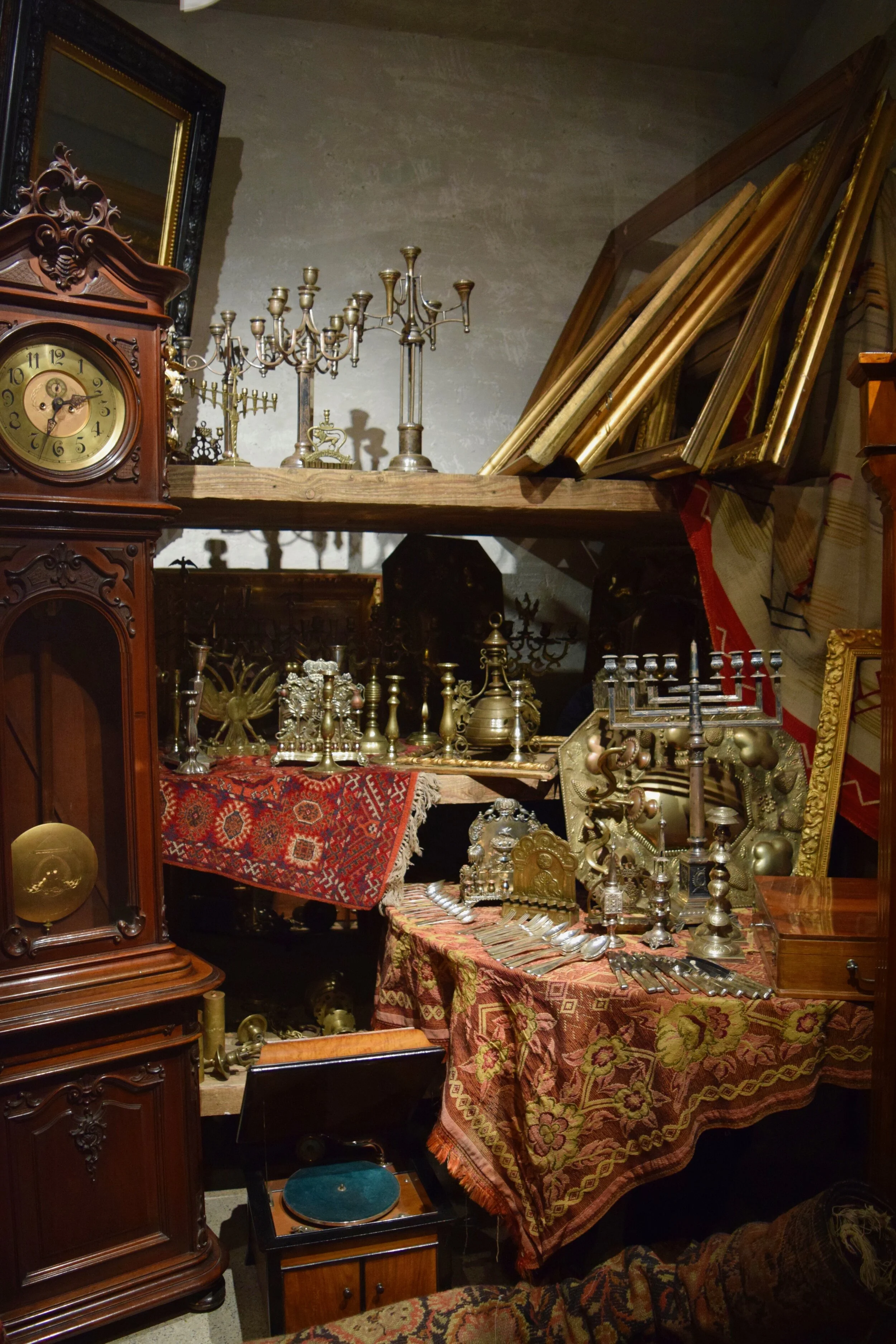
Jew’s belongings
Alternative names of the Main Square of Krakow
Schindler’s Office
List of Schindler’s Jews
Learning about the Jewish part of Krakow is an essential part of a visit to this charming city. Although most of this fascinating culture was lost after the war, the last years have seen a revival and return of some Jews to one of their biggest homelands before the State of Israel was created.
My visit to Kazimierz and the ghetto was the perfect introduction to one of the darkest episodes of human history; next day, I would take a day trip to the Auschwitz-Birkenau Concentration Camp for a guided visit to the horrors of the Holocaust.
Where to…
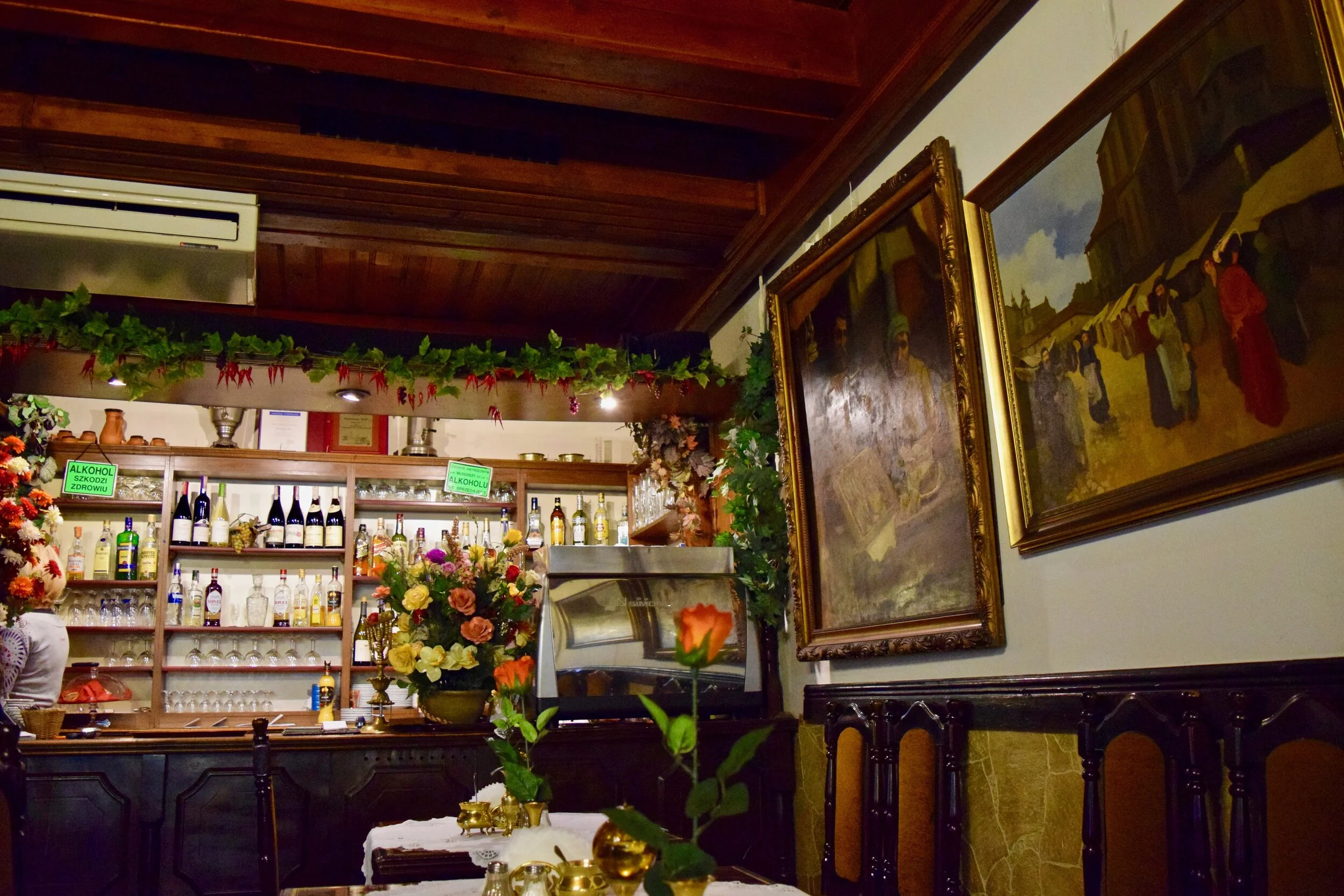
Eat in Kazimierz
Ariel is by far the best-known Jewish restaurant in Kazimierz. With 6 different dining rooms, this is the perfect place to try some the delicious Jewish food, including dumplings, traditional Jewish stew as well as lamb and fish dishes.
Main dishes range from 30 to 50 złoty (€6 to €11), so prices are quite fair.
The restaurant is also well known for its folk nights, where you can listen to some of the most famous folk Jewish bands of Poland while enjoying your dinner. The perfect experience after enjoying a full day exploring Kazimierz!

Sleep in Krakow
If you’re looking for cheap accommodation in a very central location, High Life Hostel may be your place.
Located only an 8 minutes walk from the Market Square, this hostel offers both private and dorm rooms with either private or shared bathroom facilities. Rooms are extremely spacious, which is a plus!
Although the facilities are quite basic, the hostel also offers a common area with a kitchen.
Considering the location, prices are very competitive, at around €33 per night for a private double room.
Some links in this post are affiliate links, which means that if you buy through them, we’ll receive a small commission. This will never cost you more and in many cases you will receive a special discount.
As always, all opinions are mine. We appreciate your support!


Symbol of the atrocities of the Holocaust, the Auschwitz-Birkenau Concentration Camp is one of the most infamous places on Earth. After all, it was here that over 1,1 million people, mainly Jews, died during World War II at hands of the Nazis in the biggest extermination campaign ever seen in history.
During my visit to Krakow, I booked a guided tour to the Auschwitz I and Auschwitz II-Birkenau camps, a very tough but extremely educational and necessary visit to remember the horrors of the past to make sure that they are never repeated.