
Moscow: 4 day itinerary
Moscow, the capital of Russia, is one of the most fascinating places in the world. With its mixture of classical Russian architecture and oversized Soviet constructions, this city has something to offer for everyone.
Even though you can spend a whole lifetime exploring Moscow, here is the itinerary that I followed during my 4 day stay, which should give you enough time to discover all the main highlights. Enjoy!
Planning your trip to Moscow
Getting a tourist visa for Russia
Most nationalities need a visa to enter Russia as a tourist, including nationals of the EU, the United States, Canada, Australia or India.
The process to obtain a Russian visa can be long and tedious, as it will require going to your nearest embassy and fill out tons of papers to justify the reason of your visit. You will also need a letter of invitation, which can be issued by a recognised hotel once your accommodation is booked, or a Russian citizen that knows you personally if you’re staying with them.
While some embassies accept the documents by post, some others will need you to attend in person, which can complicate things if there isn’t an embassy or consulate near the city or in the country where you live.
To avoid all this hassle, the most convenient option is to obtain your visa through iVisa.com, an online passport and visa service that handles the entire application process and paperwork for you. To check if your nationality requires a visa to visit Russia and start the application process, you can use the search box below:
Going from Moscow Airport to the city centre
I arrived in Moscow from St. Petersburg by train, but if you’re coming from abroad, most international travellers will arrive in Moscow from one of its three airports: Sheremetyevo, Domodedovo and Vnukovo Airport. Most o them are located within 30km of the city centre, so you will reach your accommodation in about 45m.
The language barrier can be a big issue in Russia, so to avoid having to figure out public transport or being ripped of by a taxi driver, like it happened to me during my visit to the Catherine Palace, I’d recommend booking your transport in advance. I always book my transfers with Intui.Tavel, a reputable company offering airport transfers in over 20,000 cities around the world, including Moscow.
Places to visit in Moscow: 4 day itinerary
I spent a total of 4 days in Moscow, the perfect a mount of time to see all the main highlights of the city. During my visit, I followed the itinerary below:
Day 1
Morning: Red Square, Ulitsa Varvarka & Christ the Saviour Cathedral
Full of history and art, I thought that the best way to discover and get familiar with this incredible metropolis was taking a guided tour with a professional guide.
For my first day, I booked a private 4h walking tour of Moscow with GetYourGuide. The guide was incredibly knowledgeable and professional, and it was the perfect choice to discover not only the Red Square and its surroundings, but also some other off the beaten path sights.
The itinerary is pretty much open, so you can decide what areas of the city you want to focus on. My experience was fantastic, so if you're also looking for a guided tour of Moscow, I highly recommend the private 4-hour walking tour of Moscow!
My tour started at 9:30am. My guide, Viktor, picked me up from my accommodation, and I headed straight to the city centre.
Our first stop was Teatralnaya Square, Theatre Square, a city square in central Moscow named after the three theatres located on it: Maly Theatre, the Russian Youth Theatre and Russia's most famous auditorium: Bolshoi Theatre.
Bolshoi Theatre
Bolshoi Theatre is one of the most prominent opera and ballet theatres not only in Russia but in the entire world. If you’d like to enjoy one of the pricy but unique ballet or opera performances during your trip to Moscow, Viator offers skip-the-line reserved tickets to the Bolshoi Theatre to attend one of the daily performances at 7pm.
The theatre is especially renowned for its classical ballet performances. During the Communist regime, there were multiple attempts to ban classical ballet, as it was considered outdated and a bourgeois pastime. Thankfully, these plans were never carried out, and Russian classical ballet is still today one of the most prestigious in the world. Tickets tend to be quite pricey, but still, a one in a lifetime experience that you can't miss when you're visiting Russia if you have the chance.
Just across Bolshoi Theatre stands Moscow's last remaining monument to Karl Marx. On the pedestal of the statue you can read his famous quote: "Workers of the world, unite!".
Monument to Karl Marx
On the left hand side of the monument we found the Hotel Metropol, former living quarters of the Soviets during the Bolshevik administration up until the 1930s, when it was reconverted to its original hotel function. Today, it is considered one of the finest examples of Art Nouveau that you can find in Moscow.
At the end of Teatralnaya Square we reached the Resurrection Gate and Chapel, located in Revolution Square. This is the main entrance to the Red Square.
Resurrection Gate & Chapel
Originally built in 1535, both the gate and the chapel were completely destroyed in 1931 by the Soviets to make space for military vehicles driving through the Red Square during the military parades. Luckily, they were reconstructed in the middle of the 90s, restoring their original aspect.
After crossing the arches of Resurrection Gate, I finally arrived at Russia's main symbol: the Red Square and St. Basil's Cathedral. This was one of the moments that I was expecting the most, and it didn't disappoint: the sight was just astonishing.
The Red Square takes is name from the old Russian word ‘krasny’, meaning both 'red' and 'beautiful', and the square clearly still lives up to this meaning. Originally a market square where merchants and occupants of the Kremlin would gather up, the Red Square used to be the location for the military parades during the Soviet Union.
As you enter the square, the State History Museum will be to your right. It holds a collection that covers the history of Russia from the Stone Age up until our days. The building, built in the 18th century in a baroque style, used to be a medicine store and was also occupied by the Moscow University.
State History Museum of Moscow
On the northeastern side of the Red Square you will find the famous department store GUM, built at the end of the 19th century.
This three-level building is filled with hundred of stores and restaurants. The interior is just spectacular, emulating the style of a French train station.
Even though it is located right in the heart of Moscow, I was surprised that most of the stores were completely empty, even though the shopping centre was full of tourists. Probably the inflated prices have something to do with that!
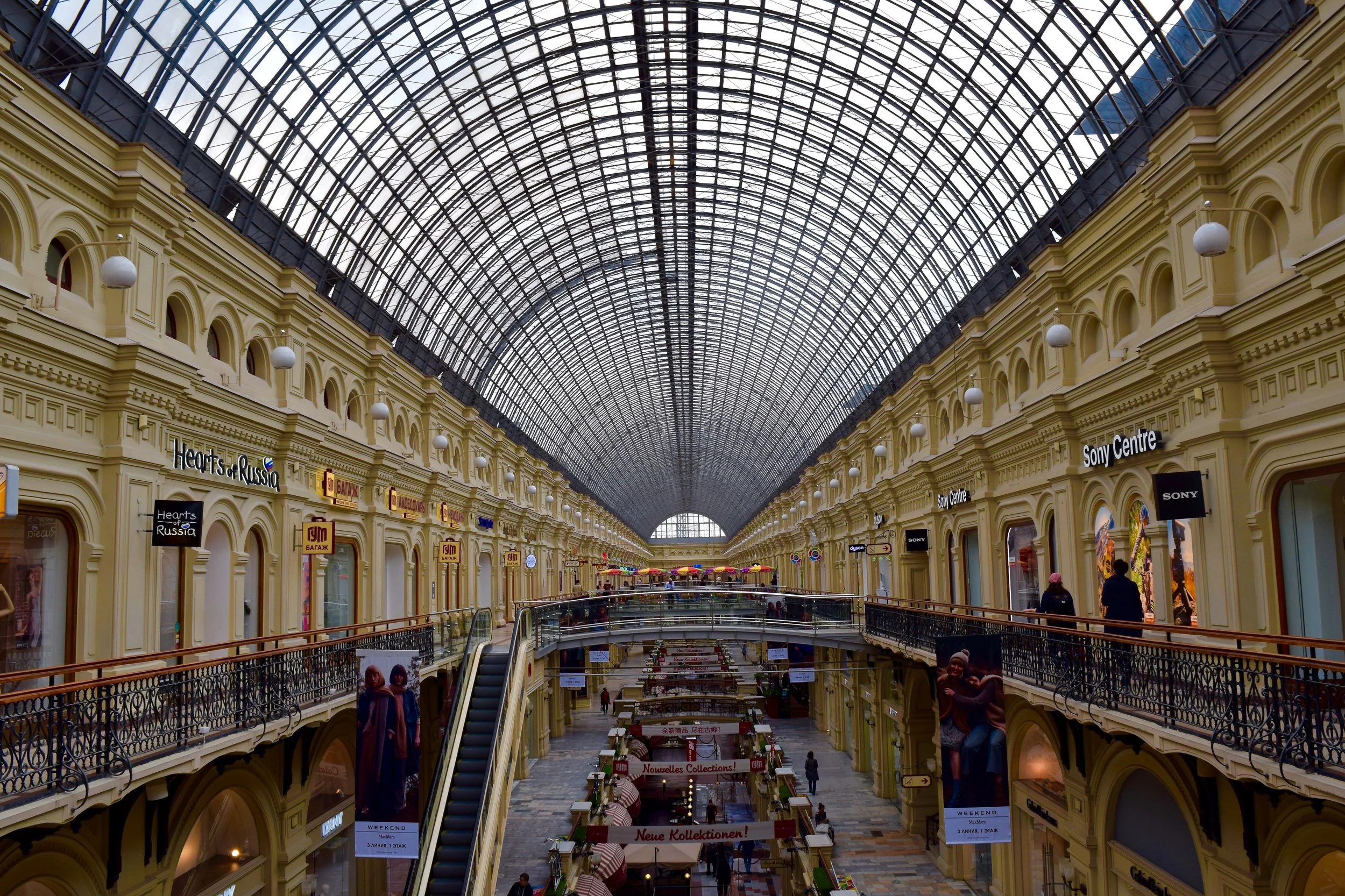
GUM Shopping Centre
At the southern end of the Red Square stands the impressive St. Basil's Cathedral, one of the best-known symbols of Russia. The exterior has one of the most beautiful designs that I've ever seen in a church: the fusion of colours and onion domes is just amazing.
St. Basil's Cathedral was commissioned by Ivan the Terrible in the middle of the 16th century to commemorate the capture of Kazan on the feast of Intercession. In fact, the official name is Intercession Cathedral.
The cathedral is made up of 9 different chapels, all of them representing an important date or event in Russian History. The central core is dedicated to the Intercession, which commemorates the final assault of Kazan in 1552. Every tower is crowned with an onion dome, each of them designed in a different style.
According to the local legend, Ivan the Terrible was so impressed by the beautiful design, that he blinded the architects so they could never construct anything comparable to this cathedral.
St. Basil’s Cathedral
After enjoying the magnificent views in the Red Square, we left it behind us to continue our visit in Ulitsa Varvarka, the oldest street in Moscow. Here, you will find some of the best examples of medieval churches in the city.
The street takes its name from the Church of St. Barbara, a neoclassical building located at the start of the street as you leave the Red Square. St. Barbara, killed by her father at the beginning of the fourth century for her Christian beliefs, was the patron saint of the merchants in Moscow, and it was the merchants who used to live in the area that commissioned this church.
Church of St. Barbara
Right next to it is the English Court, which used to be the old English embassy. Due to the great commercial ties between Russia and England, mainly thanks to the friendship of the Tsars with the British monarchs, many English merchants used to live in this building. In fact, the relationship between both countries was so good that Ivan the Terrible asked Queen Elizabeth I's hand in marriage multiple times, always with no success.
After King Charles I was executed by Oliver Cromwell in 1649, Russia broke all ties with the British Empire, and the English merchants were replaced with the Dutch. The building that you see today, reconstructed following the design of the original construction, was inaugurated by Queen Elizabeth II in 1994.
English Court
Going down the elevated ramp to the right of Ulitsa Varvarka and hidden from all sight of modern Moscow is Znamensky Monastery, easily recognisable by its red-and-white bell tower.
Right next to it you will find the Church of St. George, dating from the 17th century and topped with four green domes surrounding a central golden dome.
Church of St. George & Znamensky Monastery
Just a few minutes away from Ulitsa Varvarka and hidden in the middle of some modern buildings we found the Church of the Trinity in Nikitniki.
This hidden gem from the 17th century is the perfect example of Russian baroque, built with tiers of red and white spade gables and crowned with green onion domes. After the Revolution, there was an important movement to recover the traditional Russian roots. During this time, the same style of this church was used as inspiration of many other buildings in an attempt to recover the Russian identity.
Church of the Trinity in Nikitniki
Turning left at the end of Ulitsa Varvaka, we continued through the beautiful gardens in Staraya Square until we reached the Plevna Chapel.
This memorial was erected in honour of the Russian grenadiers who battled in the Russo-Turkish War at the end of the 19th century, which resulted in the independence of the Balcan Peninsula from the Ottoman Empire thanks to the alliance of the Orthodox countries against the Turks.
Apparently, this spot became the main meeting point for the LGBT community in Moscow a few years ago. Located right across some Government buildings, Putin wasn't especially happy about this and decided to start some unnecessary renovation works in the square that lasted over 3 years, with the sole intention of preventing these gatherings.
Plevna Chapel
In Lubyanka Square you will find the former headquarters of the KGB, the main security agency from the Soviet Union. Today, this neo-baroque building holds the Federal Security Service office.
During the 1930s, thousands of victims of Stalin's purges were sent to this prison: over 4 thousand people were shot dead for their political beliefs just in Moscow alone.
Right across the Lubyanka building you can find a memorial for all those that were murdered by the Communist regime. Its location is not a coincidence; it was placed facing the headquarters of one of the most brutal governmental organisations during the Soviet times.
Lubyanka building: former headquarters of the KGB
From Lubyanka Square we took the metro and headed towards the Cathedral of Christ the Saviour, the biggest Orthodox Christian church in the world. It was originally built at the end of the 19th century to commemorate the victory of the Russians over Napoleon.
In 1931, the cathedral was completely destroyed by Stalin to make way for the Palace of the Soviets, a colossal congress hall and administrative centre planned to be constructed in Moscow. With the break of World War II and the Nazi invasion, this idea of building this Palace was finally put aside. After the dissolution of the Soviet Union, the cathedral was rebuilt between 1995 and 2000 as an exact replica of the original.
The cathedral is also famous for the protest carried out by the Pussy Riot, a feminist punk band who, uninvited, went up to the altar of the cathedral to perform and protest against Putin and the Orthodox Church. After this incident, the three members of the band were sentenced to 2 years in prison, raising a huge international controversy due to the lack of freedom of speech in Russia.
Cathedral of Christ the Saviour
From the Patriarshiy bridge, located just next to the cathedral over the Moskva river, you can get wonderful views of the Kremlin on the north side, and the colossal Peter the Great statue towards the south.
This 98 meter high monument was designed to commemorate the 300 years of the Russian Navy, established by Tsar Peter the Great. It holds the record of being the 8th tallest statue in the world.
The statue has never been welcomed by Muscovites; after all, Peter the Great is well known for moving the Russian capital to St. Petersburg for over 200 years, something that Moscow residents have never forgotten.
It is said that the statue was originally designed to commemorate the 500th anniversary of the first voyage of Christopher Colombus in 1992. However, after the designer didn't manage to sell it to anyone in America, Colombus' head was replaced with Peter the Great and the statue was given a Russian theme and placed in Moscow.
Peter the Great statue
In opposing contrast to Peter the Great, one of the most hated tsars in Moscow, also located in the surroundings of the Cathedral of Christ the Saviour is the Monument to Emperor Alexander II, the Liberator Tsar. Based on a destroyed monument from the end of the 19th century, it was reconstructed in 2005 with private donations in appreciation to the tsar who helped construct the original Cathedral of Christ the Saviour.
Alexander II was a very liberal tsar, who carried out multiple reforms never seen before in Russia. However, for some left-wing extremist groups, that still wasn't enough. In 1881, he was assassinated in St. Petersburg by a bomb thrown by extremists. In the exact place where he was fatally injured today stands the Church of the Saviour on Spilled Blood.
His tragic death put an end to the possibility of bringing a more democratic society to Russia without the need of the Revolution and all the death and devastation that it brought.
Monument to Emperor Alexander II
Afternoon: Victory Park & Poklonnaya Hill
After exploring all the main highlights in the heart of Moscow, we headed to Victory Park to discover a different, off the beaten path side of the city where not too many tourists go.
Built on the spot where Napoleon waited in vain to receive the keys to the Kremlin, this immense complex was originally dedicated to the Russian victory over Napoleon. Since the 80s, the hill also includes the Museum of the Great Patriotic War (name given in Russia to World War II).
The esplanade is just astonishing, decorated with beautiful fountains (one for each year of war) and statues commemorating the sacrifice of the war. In its surroundings you can also visit a memorial mosque, a synagogue and St. George Church; after all, the park was built to honour all faiths and nationalities.
Victory Park
At the top of the hill stands a massive obelisk. With a height of 141,8 meters, each 10cm symbolise one day of war. The top is crowned with Nike, the Greek goddess of victory, and the base has a statue representing St. George slaying the dragon; the patron saint of Moscow.
At your back you can spot the Triumphal Arch of Moscow and 'Moscow City', a modern international business centre still under development. If you’d like to admire one of the best views of Moscow, you can buy tickets to the 354m high observation deck on the 87th floor of the OKO complex.
Just behind the Museum of the Great Patriotic War, hidden from your view, there are some beautiful memorials that are also worth a visit.
Victory Park & 'Moscow City' Business Centre
Among others, you will find the Memorial to the Victims of the Holocaust, in honour of the 6 million Jews killed by the Nazis; as well as the Monument to the United Nations, representing 4 different soldiers (Russian, French, German and British) with the emblem of the United Nations at the very top.
The park is endless, so you can easily spend the rest of the afternoon in here. If you get a sunny day like I did, it's the perfect place for a stroll while you discover all its great memorials and beautiful monuments.

Day 2
Morning: Lenin’s Mausoleum & Alexander Gardens
During my first day in Moscow I didn't have enough time to visit Lenin's Mausoleum, so the second day I went directly to the Red Square early in the morning to avoid the long queues. The Mausoleum only opens from 10AM to 1PM every day except Monday and Wednesday, so usually long queues form outside, especially in high season.
Located on the west end of the Red Square, Lenin's Mausoleum holds the embalmed body of the first head of government of the Soviet Union, Vladimir Lenin. His body has been exposed to the public since his death in 1924, and visitors still wait for hours to pay his respects, or just out of curiosity.
Lenin's Mausoleum
As a history lover, this was an experience that I couldn't miss. I got there approximately 30 minutes before opening time, and there were already quite a few people waiting to get in. Photography and speaking is strictly prohibited inside, so don't even try to sneak a photography as the interior is full of guards that will ensure that you stick to the rules.
The outside of the mausoleum might look rather small, but the interior is actually quite deep, with two underground floors also used as the resting place for important Russian figures and the Kremlin guards. Once your eyes have got used to the darkness inside, you will stumble upon the body of Vladimir Lenin lying in an open casket. In spite of the years, the body has been preserved almost intact. It's incredible to think that you have such a vital figure in modern history right in front of you, almost 100 years after his death.
Lenin's Mausoleum
After visiting Lenin's tomb and spending some additional time walking around the Red Square, I continued with a visit to the Alexander Garden, which extends along the western wall of the Kremlin. Back in the 17th century, the Neglinnaya River ran where the present gardens are located; you can still see the bridges used to enter the Kremlin just a few centuries ago.
After the Napoleonic Wars, Tsar Alexander I reconstructed some parts of the city that had been destroyed by the French, and the river was channelled underground, creating today's beautiful gardens.
Alexander Gardens
Next to the main entrance to the park is the Tomb of the Unknown Soldier and the eternal flame, which was brought from the Field of Mars in Leningrad (present day St. Petersburg). The flame is always flanked by two Russian guards, and you can attend the modest changing of the guard every couple of hours.
Alexander Gardens are the perfect place not only to enjoy a relaxing morning, but also to discover the Kremlin walls with its beautiful towers, all topped by the Communist five-pointed star.
Tomb of the Unknown Soldier
Afternoon: Moscow Metro Tour
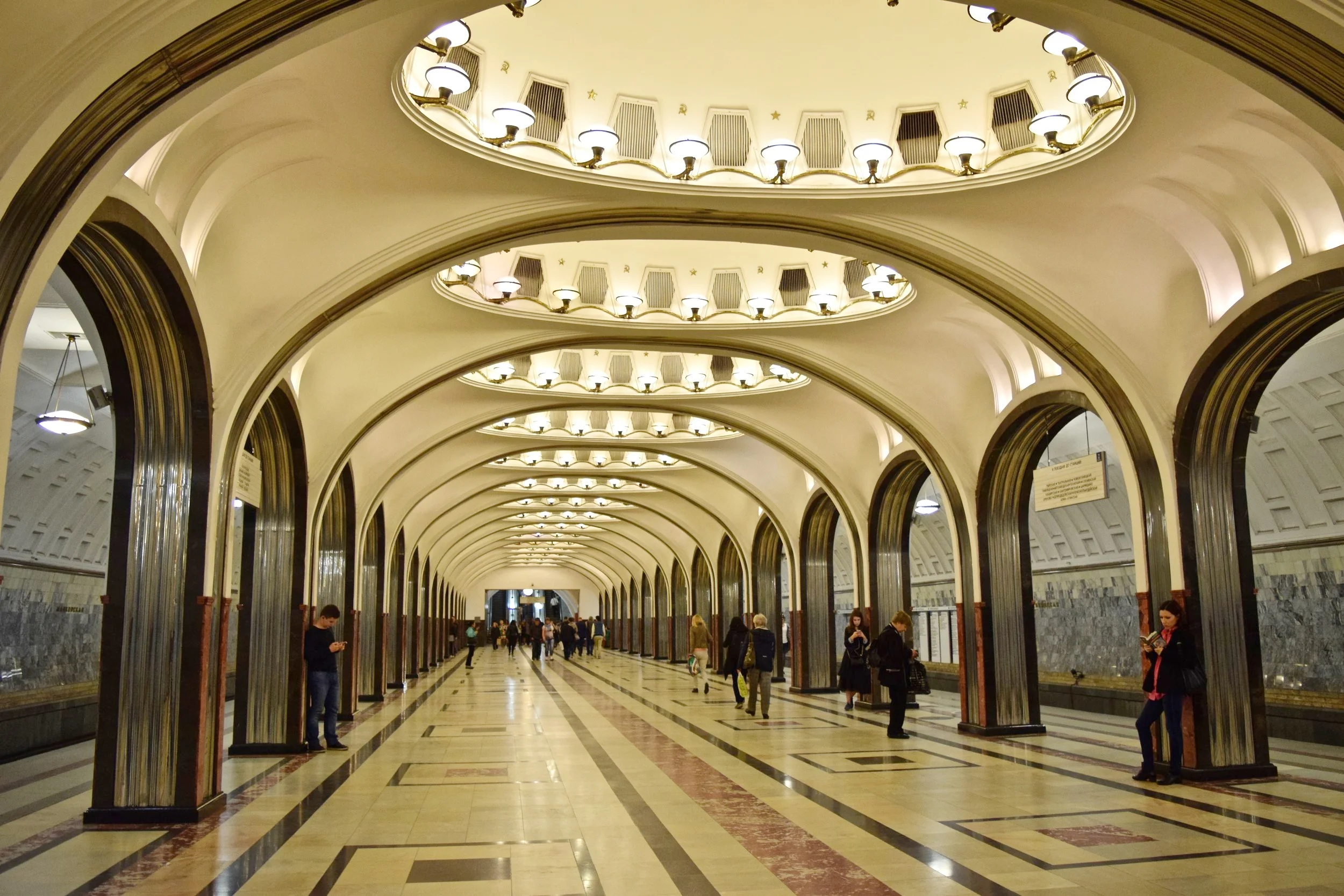
After grabbing a quick lunch at one of the multiple restaurants along the Alexander Gardens, I kept the rest of the afternoon to discover the beautiful stations of Moscow Metro.
I booked the Moscow Metro tour with GetYourGuide, departing at 2PM from the Kutafiya Tower, located right at the end of the gardens and at the entrance of the Kremlin.
The tour was the best choice to learn about the history of Moscow Metro and explore some of its best stations. If you'd like to read more about this visit and the top stations that you can't miss when you're in Moscow, check out my post Moscow Metro: top 7 stations that you can't miss.
Mayakovskaya Metro station
After exploring Moscow Metro and getting some rest, I headed back to the city centre to enjoy the Red Square and its surroundings at night. If the Red Square is a magnificent place during the day, it gets even better when its light up at night without the crowds of tourists.
The views at night are just spectacular: I spent a couple of hours enjoying the shining red lights of the Kremlin walls and St. Basil's Cathedral, and the thousands of small bulbs on the facade of the GUM shopping centre.
Don't forget to save some time and energy during your stay to explore the Red Square and the surrounding area at night!
St. Basil’s Cathedral
Day 3
Morning: Kremlin, Armoury Chamber & Arbat Street
Heart to the Russian political power, the Kremlin has always been an intriguing place that I couldn't wait to visit. The complex is divided into two different sections: the Cathedral Square, and the Armoury Chamber.
Tickets are bought separately, and the process can be quite confusing for visitors, especially if you want to visit the Armoury Chamber. The museum has 4 different sessions: 10AM, 12PM, 14:30PM, and 4:30PM.
Tickets are put on sale only 45 minutes before each session and If you miss one of the sessions or the tickets sold out for the session that you want, you'll need to try again 45 minutes before the next one, which can be a waste of time, especially in high season. Once you have your ticket for the Armoury Chamber, you can then buy a separate ticket for the Cathedral Square on the spot; you can enter at any time so the buying process is much easier.
If you’d prefer to avoid disappointment or waste precious time, a great alternative is to buy skip-the-line tickets to the Kremlin, which also include a 40 minute introduction.
Entrance to the Kremlin
I arrived at the ticket office a few minutes before 10AM and I was lucky enough to get tickets for that session, so I went straight to the Armoury Chamber.
I absolutely loved this museum; one of the best that I visited in Russia. The ticket included a 1h30m audio guide that walks you through the main highlights of the collection. Each session lasts 2 hours and that's the allotted time that you get to explore the exhibitions, so the audio guide is a great choice as it covers pretty much everything that you can't miss in each room.
Armoury Chamber, Kremlin
The tour starts upstairs, with the first two rooms housing a collection of gold and silver objects. You will also find the beautiful Easter Eggs made by the famous Fabergé jewellery firm; the design couldn't be more beautiful. In the following rooms you can enjoy Russian armours and weapons. Downstairs is the extensive collection of coronation and secular dresses, thrones, crowns and carriages from the Russian tsars.
The museum is one of the best that you will find in Moscow, with a beautiful collection Russian and European applied arts from the 5th to the 20th centuries, so I'd definitely recommend purchasing a ticket when you're visiting the Kremlin. Unfortunately, photography is strictly forbidden inside.
After 2h inside the museum, I started exploring Cathedral Square. Here is where the city of Moscow started in the 12th century, getting bigger and bigger as every tsar expanded the fortifications. It always worked as the city fortress, and today it is the official office of the Russian president, as well as one of the main tourist attractions in Russia.
Cathedral Square
The complex is formed by 7 different churches, all included with the entrance ticket. Note that if you want to climb the Ivan the Great Bell Tower, you will need a separate ticket.
The exterior of the cathedrals is quite impressive with the shining golden domes, but the interior is even better: all of them are decorated with beautiful frescos. Photography is not allowed inside.
Just next to the Ivan the Great Bell Tower lies the world's biggest bell, known as the Tsar Bell. Constructed using the remains of a smaller, earlier version, a big chunk of it broke off while it was cooling off. Because of this, the bell was actually never rung.
Next to it is the Tsar Cannon, weighing over 40 tonnes. It holds the record of being the largest bombard in the world, and funnily enough, it has also never been used. The cannonballs placed next to it are just for decoration; they are too big to be used in the cannon.
Ivan the Great Tower & Cathedral of the Archangel
Cathedral of the Annunciation
Church of the Deposition of the Robe
Tsar Bell
Tsar Cannon
I spent the afternoon around Arbat Street, one of the main pedestrian streets in Moscow extending for about one kilometre filled with some of the best shops and restaurants in the city.
If you're looking for a place to eat, you can stop by at Varenichnaya № 1. The interior, decorated in the style of a Soviet typical flat, will transport you a few decades back in time.This retro café was a great surprise, and the food is also delicious! The menu offers some of the most traditional Soviet dishes. I tried the pork pelmeni (dumplings) with crispy onion and butter sauce and they couldn't have been any tastier!


Afternoon: Vorobyovy Gory & Moscow State University
After lunch, I decided to spend the rest of the evening in Vorobyovy Gory (meaning 'Sparrow Hill'), one of the highest points in Moscow and from where you can enjoy one of the best views.
I made the mistake of stopping at Vorobyovy Gory metro stop, in the lower part of the hill. The climb up wasn't the easiest, especially after a long day exploring the Kremlin. The view from the top was well worth the effort, but by stopping at the Universitet metro stop you can avoid a 30 minute walk up-hill through a park that doesn't really have anything interesting.
View of Moscow from Vorobyovy Gory
Once you reach the top, the whole of Moscow will unfold before your eyes, definitely one of the best panoramic views that you can find in the city. Just across the viewpoint stands the imposing Moscow State University, one of 'Stalin's Seven Sisters'.
The Seven Sisters are a group of seven skyscrapers in Moscow, all of them designed in the Stalinist style. The dimensions are just incredible; you can see the buildings from pretty much everywhere in Moscow. The buildings are decorated in a combination of Russian Baroque and Gothic styles.
Moscow State University was constructed between 1949 and 1953, and it's the biggest of the 7 sisters. At 240 meters tall, it actually was the tallest building in Europe from its completion up until 1990. The spire is topped with the Communist star, and if you get closer, you will be able to spot the socialist decoration of the facade.
Moscow State University
Day 4
Morning: Museum of the Great Patriotic War & Novodevichy Convent
I loved Victory Park so much during my first day, that I decided to go back during my last day in Moscow to get inside the Museum of the Great Patriotic War. My original idea was visiting Stalin's Bunker, but I didn't realise that it closed on Saturday. However, this Wold War II museum was a great alternative.
To get a better understanding of World War II from a Russian perspective, GetYourGuide offers a very complete Victory Park and the Museum of the Great Patriotic War history tour.
The interior of the museum is spectacular. As you enter, the first thing that you'll find is the Hall of Glory, a white marble room with the names of over 11,000 recipients of the Hero of the Soviet Union distinction. In the middle is located the sculpture 'Soldier of Victory'. From the ceiling hang strings of glass beads, a symbol of the tears for the dead.
Hall of the Commanders & Grand Stairs
The whole exhibit revolves around the war, with incredible dioramas depicting the most important battles from the Russian point of view. You can even get inside a real scale reproduction of a street in Berlin during the war.
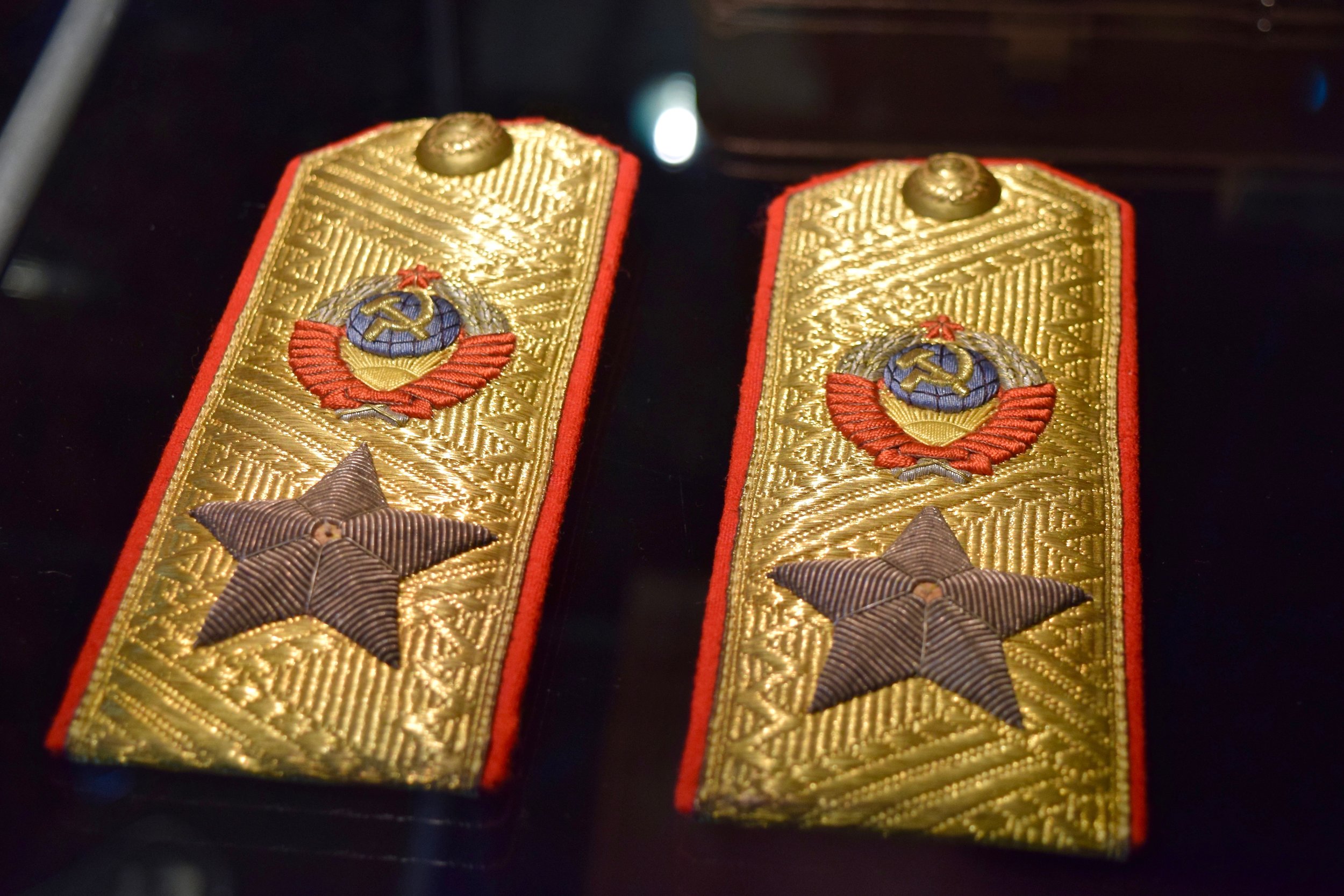
The signs and information are mainly in Russian, with very little English, so unfortunately, many of the exhibits are not very informative unless you speak some Russian. Still, if you like memorabilia from the war, such as clothing, arms and medals, I'm pretty sure that you will enjoy the museum. They also have on display teeth from Auschwitz prisoners, a terrifying reminder of the horrors of the war.
The museum is quite extensive, and you can spend a good couple of hours inside. The Hall of Commanders and the Grand Stairs is particularly beautiful, so try to include this great museum in your itinerary if you have some extra time!
After learning about the World War II from a Russian point of view, I continued my visit with Novodevichy Convent, a UNESCO Heritage Site since 2004.
Built between the 16th and 17th centuries in the Moscow Baroque style, it was used as a defense system of the city. The convent has always had very tight links with the Kremlin, and during its centuries of operation, some of its residents include women from the aristocracy, and even the Tsar's family.
The complex consists of 14 different buildings, enclosed by a wall with twelve towers and two entrance gates, including the beautiful Cathedral of our Lady Smolensk and the Intercession Gate Church. If you walk a few minutes to the park nearby, you will get beautiful views from across the pond.
Intercession Gate Church
Novodevichy Convent
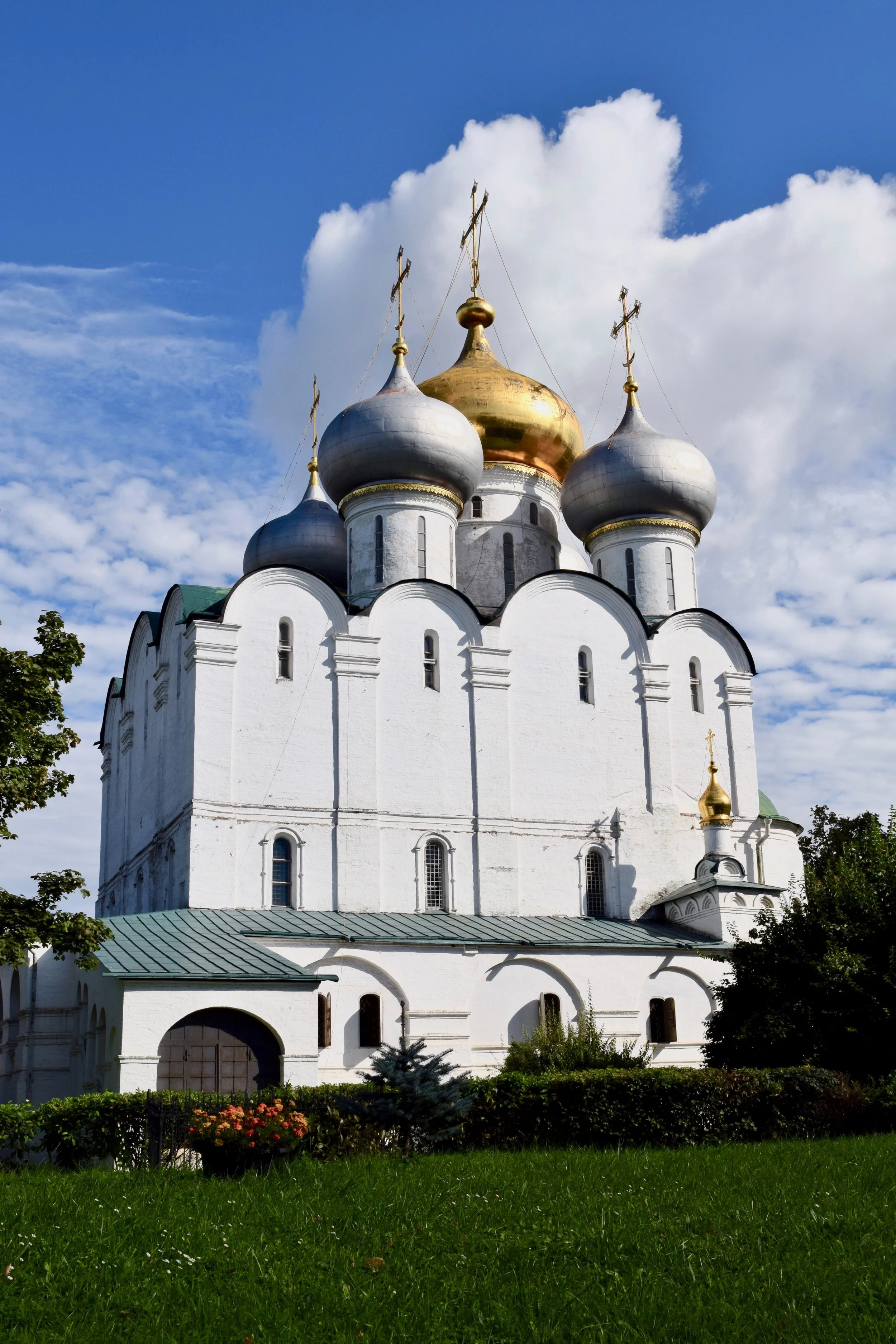
Cathedral of Our Lady of Smolensk
Afternoon: Izmailovo Kremlin & Market
If, like me, you always leave your shopping for the very last minute, Izmailovo Market is your place. Here you will be able to find pretty much anything: art, antiques, Soviet paraphernalia, and any souvenir that you can image, especially the famous matryoshka dolls.
The best day to visit the market is Saturday, when traders from all over Russia will come to sell their goods, so try to plan your visit for this day.
Even if you're not interested in buying anything, Izmailovo Market is a great place to walk around. The Izmaylovo Kremlin is one of the most beautiful constructions in Moscow, and it was one of the highlights during my visit.
The complex has a total of 4 museums, including the Bread Museum, Museum of Russian Toys, The Hut and Bell Tower of Baba Yaga and the Weapons Museum. You can buy in advance a combo ticket for all the Kremlin Izmailovo Museums from Tiquets.com.
Inside the Kremlin you can also find a reconstruction in wood of a traditional Russian church, and the exterior is just stunning with the mixture of styles and colours. I couldn't have chosen a better place to say goodbye to Moscow!
Matryoshka dolls at Izmailovo Market
Entrance to Izmaylovo Kremlin
Food court inside the market
Izmailovsky Market
Some links in this article are affiliate links, which means that if you buy through them, we’ll receive a small commission. This will never cost you more and in many cases you will receive a special discount.
As always, all opinions are mine. We appreciate your support!


Latvia was my first visit to a Baltic country, and it didn't disappoint. Its capital, Riga, is the biggest city in the region and one of the most interesting cities in the north of Europe for a short break. From a beautiful medieval Old Town to one of the best Art Nouveau architecture in the world, Riga was a big surprise and I enjoyed every single moment that I spent in there.
Here is what you can expect to see if you have 48h to spend in the Latvian capital!